Sunrise
Where to catch first light, destination by destination, with access notes and the seasons that work.
 Fabio Achilli from Milano, Italy · CC BY 2.0 via Wikimedia Commons
10 Days in Bali · Year-round
Campuhan Ridge Walk (Ubud)
The paved ridge catches first light over two green valleys; walk it early before the heat and the crowds arrive.
 Made Mayasha · CC BY-SA 4.0 via Wikimedia Commons
10 Days in Bali · April to October (dry season)
Mount Batur summit
A pre-dawn trek up an active volcano to watch sunrise over Lake Batur and, on clear days, Mount Agung and Rinjani beyond.
 PEAK99 · CC BY 3.0 via Wikimedia Commons
10 Days in Thailand · November to February
Tha Tien pier, Bangkok (facing Wat Arun)
On the Bangkok leg, the Old City pier across from Wat Arun catches first light on the temple’s prang before the day’s boat traffic and heat build up.
 Arianos · Public domain via Wikimedia Commons
10 Days in Vietnam · Year-round
Halong Bay cruise deck
Sunrise over the karsts from the top deck, often with an early tai chi session, in the quiet before the day boats arrive.
 Nuno Magalhães · Pexels
Abu Dhabi · November to March; summer dawns are the only walkable outdoor hour
The Corniche breakwater at dawn
The Corniche before seven belongs to the runners and the fishermen: flat pink water, the towers catching first light, and the heat, in winter, entirely absent. Start at the public beach end and walk west with the sun behind you lighting the skyline face-on.
 Tuấn Vũ · Pexels
Abu Dhabi · Year-round; check the tide table and pick a high-water morning
Jubail boardwalk on a high morning tide
When high tide falls near dawn, the mangrove channels fill glass-still, the herons and egrets hunt the shallows in first light, and the boardwalk is essentially yours. Cooler, quieter and more alive than any other early option in the city.
 Mahmoud Alaydi · Pexels
Abu Dhabi · October to April; summer desert mornings are brief but still the coolest hour
The dunes of the Empty Quarter
From Qasr Al Sarab or any overnight desert camp, dawn is the desert's entire argument: apricot dunes turning gold ridge by ridge, cold air, absolute silence. Climb a ridge line east of camp in the dark and wait. This is the photograph the whole trip was for.
 Prof.Lippold · CC BY-SA 4.0 via Wikimedia Commons
Algarve · Year-round; winter dawns are latest and often clearest
Cacela Velha over the Ria Formosa
The east faces the dawn, and the bluff at Cacela Velha is its best seat: first light coming up the lagoon, the tide either sheeting the sand flats with pink or filling the channel below, and nobody around but the shellfish gatherers heading out. The hamlet asks nothing of you at that hour except quiet.
 Chedi Tanabene · Pexels
Algarve · June to September, when early ferries run
Ilha de Tavira from the sand
The ferries start after dawn itself, but take the first crossing of a summer morning and the island's kilometres of Atlantic-facing sand are still empty, the light low and clean, and the day's heat hours away. The walk from the jetty through the pines to the ocean side is part of the ritual.
 Daria · CC BY 3.0 via Wikimedia Commons
Amalfi Coast · April to October
Ravello’s Belvedere (Villa Rufolo terrace area)
Facing east and 350 meters up, Ravello gets the early light over the Gulf of Salerno before the coastal towns below.
 Jebulon · Public domain via Wikimedia Commons
Andalusia Road Trip · November to February for the sun over the Sierra Nevada; year-round for the light on the palace
Mirador de San Nicolas at dawn
The same terrace the whole city uses for sunset is empty at dawn, and the geometry is better. From the mirador the Alhambra bears about 147 degrees, south-southeast, and the Sierra Nevada with Mulhacen bears about 120, so in December the sun comes up at 120 degrees, straight over the highest mountain in mainland Spain, behind the snow, with the palace in silhouette below it. In June it rises at 60 degrees, behind the Sacromonte hill to your left, and the show is the first light hitting the towers. Sunrise in Granada is about 07:53 in mid-September, 08:29 on 24 October, 07:30 the day after the clocks change and 08:24 at the solstice.
 Explorando la provincia de Cádiz · Pexels
Andalusia Road Trip · October to February
Castillo de Santa Catalina, Cadiz, looking back at the city
From the star fort at the north end of La Caleta the cathedral’s golden dome bears about 110 degrees, east-southeast across the beach and the roofs of La Viña. The sun rises at 110 degrees in early November and again in early February, which puts it almost exactly behind the dome on those mornings, and within ten degrees of it from mid-October to late February, so through the winter the dome is backlit at dawn. In summer it rises at 60, up the coast to the left, over the bay bridge.
 Roberto Fiadone · CC BY-SA 4.0 via Wikimedia Commons
Argentina: Buenos Aires and Mendoza Wine Country · Year-round
Reserva Ecológica Costanera Sur
The riverside nature reserve east of Puerto Madero faces the open Río de la Plata, so the sun comes up over water with the city at your back. Runners and birders have the boardwalks to themselves at opening time.
 Bormidayanzon · CC BY-SA 4.0 via Wikimedia Commons
Argentina: Buenos Aires and Mendoza Wine Country · Year-round
A Uco Valley vineyard at first light
Sunrise in the Uco Valley works in reverse: the light comes up behind you and sets the snow line of the Andes glowing pink above the rows. Lodge terraces in Vista Flores and Paraje Altamira are built for exactly this hour.
 Daniel Nouri · Pexels
Athens · Year-round
Areopagus Hill (Mars Hill)
A free, unticketed marble outcrop right beside the Acropolis entrance, with the city below and the sea beyond; quiet and cool before the day’s heat.
 Andrea Schaffer from Sydney, Australia · CC BY 2.0 via Wikimedia Commons
Australia East Coast Road Trip: Sydney to Cairns · Year-round; winter and spring for whales
Cape Byron at first light
The mainland's most easterly point and, for much of the year, the first place on it to see the sun: watch from the lighthouse lawn or the most-easterly-point platform below it, with whales breaching in the light from May to November.
 Kaiser Concha · Pexels
Australia East Coast Road Trip: Sydney to Cairns · Year-round
Boiling Pot, Noosa National Park
Three hundred metres into the park from the Main Beach end, a rock shelf above Laguna Bay with the sun coming up over the sea to the east, surfers paddling out below and the chance of a koala in the trees on the way back.
 Ethan654 · CC BY-SA 4.0 via Wikimedia Commons
Australia East Coast Road Trip: Sydney to Cairns · Year-round; late May to early November for whales
Tomaree Head, Port Stephens
A sunrise climb above Shoal Bay: the headland catches the light first, then the bay and the offshore islands, and in whale season the first blows of the morning are below you.
 Adi K · Pexels
Banff and Lake Louise · June to 12 October, while the shuttle runs; late September for snow on the peaks and larches on the slopes
Moraine Lake rockpile
From the rockpile at the outlet the lake runs away to the south-southwest and the Ten Peaks stand across it from south to west, so the sun rises behind you, over the ridge below the Tower of Babel, and lights the peaks first while the lake is still in shadow. That alpenglow on the Ten Peaks, not the sun itself, is the sunrise. At Lake Louise the table sunrise is about 07:21 in mid-September, 07:46 on 1 October and 08:05 on 12 October; the high ridge to the east puts the lake in shadow long after that. It is only reachable at dawn by the Alpine Start shuttle, by a licensed operator, or as a guest of the lodge.
 David Zhang · CC BY-SA 2.0 via Wikimedia Commons
Banff and Lake Louise · June to October; late September and early October for fresh snow on the glacier
Lake Louise lakeshore
Victoria Glacier lies straight down the lake to the southwest, at about 225 degrees, so at dawn the sun comes up behind you in the east and turns the glacier and Mount Victoria pink before it reaches the water. On a still morning the reflection is whole. Sunrise at Lake Louise is about 07:21 in mid-September, 07:46 on 1 October and 08:05 on 12 October, and around midsummer as early as 05:28. The lakeshore lot charges from 3 am and fills before sunrise, which is why guests of the Chateau and the village hotels have the easiest dawn.
 Soumya.deo · CC BY-SA 4.0 via Wikimedia Commons
Banff and Lake Louise · May to October; September for mist and calm mornings
Two Jack Lake
A small lake on the Minnewanka loop road, twenty minutes from Banff, with Mount Rundle standing due south across the water, so the reflection of Rundle is the picture. In September the sun rises to the east over the Fairholme peaks, Mount Girouard and Inglismaldie, and lights Rundle’s face side-on from the left. Sunrise in Banff is about 07:18 in mid-September and 07:44 on 1 October; the Fairholmes delay it at the lake. Mist often lies on the water in autumn.
 Erzengel · Public domain via Wikimedia Commons
Bangkok · Year-round
Golden Mount (Wat Saket)
A hilltop temple reached by a spiral staircase, with an open view over the Old City’s low rooftops as the light comes up.
 Bjørn Erik Pedersen · CC BY-SA 4.0 via Wikimedia Commons
Bangkok · November to February
Tha Tien pier, facing Wat Arun
The Old City pier directly across from Wat Arun catches the first light on the temple’s prang before the day’s boat traffic and heat build up.
 Enric Fradera · CC BY 3.0 via Wikimedia Commons
Barcelona · May to September
Barceloneta beach
The city beach faces southeast across the Mediterranean, making it one of the few spots in Barcelona with an open sea horizon for sunrise.
 Wei86 Travel · Pexels
Bora Bora · May to October for the clearest dawns
Anau and the east coast road
The sunrise side: first light comes up over the barrier motu and lights Otemanu's east face pink while the lagoon is still glass. Ride or drive the empty loop road with the water on one side and roosters announcing the day on the other.
 TheConduqtor · CC BY-SA 3.0 via Wikimedia Commons
Bora Bora · Year-round
Matira Point, east flank
From the point's eastern curve the sun rises across the south lagoon, with early paddlers out and the beach empty of everyone but people staying nearby. The quiet counterweight to Matira's famous sunsets.
 Flávio Amieiro · CC BY-SA 3.0 via Wikimedia Commons
Rio de Janeiro · All year; the driest and clearest dawns are June to September
Arpoador rock at dawn
The same rock the crowds use at sunset is empty at six in the morning, and faces the other way: the sun comes up out of the sea off the Copacabana side, the light climbs the beach toward Leme and the surfers are already in the water below. The Ipanema side stays in shadow for another hour, which is when to photograph the Dois Irmaos.
 Rodrigosilvestri · CC BY-SA 3.0 via Wikimedia Commons
Rio de Janeiro · Winter and spring for the cleanest air
Mirante Dona Marta in the first hour
The drive-up viewing platform at 360 metres on the Corcovado road, below the Christ and above Botafogo, is the picture-postcard of Sugarloaf, the bay and the beaches beyond. Morning is the time: the light comes up on the Sugarloaf side of the panorama, the air is clearest and the buses have not arrived. It is also the view the helicopter tours sell.
 Allen B · Pexels
Budapest · Year-round; May to September for river mist and warm light
Fisherman's Bastion before the city wakes
The most photographed terrace in Hungary is empty at 6am: the turrets to yourself, the Parliament across the river catching first light, and the lower terraces free at that hour. By 9am the coaches arrive and the same balustrade is a queue. This is the single best argument for jet lag in Budapest.
 Elijah Cobb · Pexels
Budapest · Year-round; autumn mornings bring valley mist on the river
Gellert Hill and the Citadella at dawn
Climb the paths from Elisabeth Bridge as the sky lightens and reach the newly reopened ramparts for sunrise over Pest: the Danube silvering, both banks in shadow, the Parliament dome the first thing the sun finds. The park is free and open, the joggers own it at that hour, and the panorama runs the full length of the city.
 Ejov Igor · Pexels
Budapest · Year-round
Tram 2 with the first commuters
Board tram 2 at the Great Market Hall just after dawn and ride the Pest embankment north: the Chain Bridge, Buda Castle and the Parliament slide past the windows in morning gold for the price of a single ticket, shared with commuters instead of tourists. Sit river-side on the left. The cheapest great view in Europe.
 Amanda S · Pexels
California Coast Road Trip: Highway 1, San Francisco to Los Angeles · Year-round
Andrew Molera State Park (Bluff Trail)
Coastal bluffs that take the first hour of light, with far fewer people than the sunset spots. Read the name honestly though: the gate opens at 8 a.m., and in the September and October window this guide recommends the sun is up between about 07:00 in early September and 07:20 in late October, so this is early light rather than sunrise itself.
 Brennan · Pexels
California Coast Road Trip: Highway 1, San Francisco to Los Angeles · Year-round
Garrapata State Park bluffs
Moody, often foggy morning overlooks just north of Big Sur, good for atmospheric first light without the crowds.
 Tjeerd Wiersma from Amsterdam, The Netherlands · CC BY 2.0 via Wikimedia Commons
Cape Town & the Winelands · November to February
Table Mountain summit
From the summit plateau the sun comes up over False Bay and the Hottentots Holland only around the southern summer. By April it has swung north of east, over the Cape Flats, and in June it rises well north of the bay. The Cableway never opens before sunrise (first car 08:00 at the earliest, against a December sunrise before 05:45), so a summit sunrise means hiking up in the dark, usually Platteklip Gorge.
 Feridun F. Alkaya · CC0 via Wikimedia Commons
Cappadocia · Year-round, weather permitting; most reliable April to June and September to October
Hot air balloon flight over Göreme Valley
Hundreds of balloons lift at first light over the fairy chimneys and valleys, widely considered one of the defining travel experiences in Turkey.
 Bjørn Christian Tørrissen · CC BY-SA 3.0 via Wikimedia Commons
Cappadocia · Year-round
Uçhisar Castle at sunrise
The walk-up alternative to the balloon flight: the highest viewpoint in the region catches the same early light over the valleys, including the balloons themselves rising below. On foot only from an Uçhisar base; from Göreme it is a short pre-dawn drive or taxi.
 icon0 com · Pexels
Chiang Mai · November to February for clear air
The Monk's Trail to Wat Pha Lat
Start the forest path at first light and reach the jungle monastery as the sun clears the valley haze, with the city waking up below the stone terrace and the monks chanting above the waterfall. The best sunrise in Chiang Mai costs nothing but the early alarm.
 Chatchai Jomta · CC BY 3.0 via Wikimedia Commons
Chiang Mai · Cool season mornings; in the rains you may be inside a cloud
Doi Suthep temple terrace at opening
Be on the mountain for the first songthaew and climb the naga stairs while the terrace is still monks, mist and bells. The gold chedi takes the early light before the valley does, and you will have the city viewpoint essentially alone.
 Nguyen Ngoc Tien · Pexels
Chiang Mai · Year-round
Ton Lamyai flower market at dawn
The riverside flower market works through the night, and just before sunrise it peaks: marigold garlands by the thousand, lotus buds for the morning temple trade, and the Ping River turning pink behind the stalls. Walk it, then cross to Warorot as the food floors open.
 Mohan Nannapaneni · Pexels
Corfu · Year-round
Old Fortress lighthouse point
The eastern promontory catches first light over the sea toward the mainland; quiet before the town wakes.
 Paganel · CC BY-SA 4.0 via Wikimedia Commons
Corfu · May to September
Kassiopi harbour, northeast
Facing the strait toward Albania, the northeast coast gets clean sunrises over the water and Mount Pantokrator behind you.
 Jordan Corrales · Pexels
Costa Rica: Arenal, Monteverde & Manuel Antonio · February to April, when the summit is visible most mornings
Arenal Observatory Lodge deck
The cone is clearest in the first hour after dawn before the day's cloud builds; from the lodge deck it fills the sky. Non-guests can buy a USD 22 entrance pass and walk the trails afterwards.
 Cephas · CC BY-SA 4.0 via Wikimedia Commons
Costa Rica: Arenal, Monteverde & Manuel Antonio · February to June, quetzal nesting season
Curi-Cancha at opening
The 7am gate at Curi-Cancha is the Monteverde birder's dawn: quetzals feed on wild avocados in the open forest edge in the first two hours, and it stays quiet next to the big reserve up the road.
 w:User:Tarrazu · Public domain via Wikimedia Commons
Costa Rica: Arenal, Monteverde & Manuel Antonio
Manuel Antonio park at the 7am gate
Not a sunrise so much as first light in the forest: the monkeys and sloths are active before the heat, the beach is empty and the guides have the trails to themselves for an hour.
 Marc Ryckaert (MJJR) · CC BY 3.0 via Wikimedia Commons
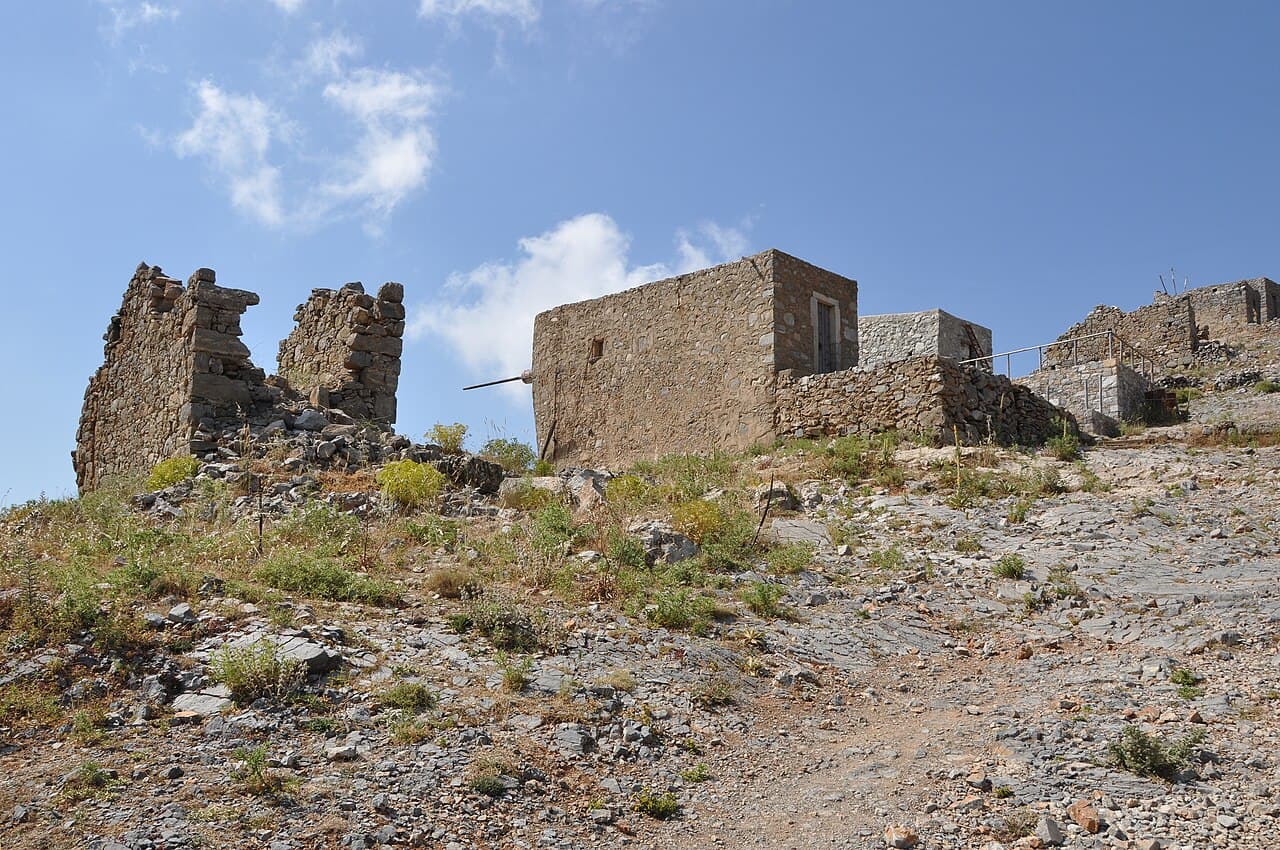
Crete · April to October
Lasithi Plateau windmills
A high mountain plateau in the east dotted with the remains of thousands of white-sailed irrigation windmills, quiet and cool at first light before the day’s heat and traffic arrive.
 Lourakis · CC BY-SA 3.0 via Wikimedia Commons
Crete · Year-round for the sunrise itself; the mirage is reported only in specific weather, typically late May to early June
Frangokastello plain, south coast
The flat coastal plain below the Venetian fort at Frangokastello looks south over the Libyan Sea. Roughly between the autumn and spring equinoxes the sun rises south of east, toward the sea, though the local headlands decide exactly when it clears the water; the rest of the year it comes up further north, over the coast. Locally known, under rare atmospheric conditions in late May, for the "Drosoulites" mirage at dawn.
 Ben Prater · Pexels
Cyclades Island Hopping: How to Plan the Route · May to October
Poulati, Sifnos
The east-coast cliffs below Poulati face the open Aegean, so the sun comes up straight out of the sea with the blue-domed chapel in the frame.
 Dimis Choropanitis · Pexels
Cyclades Island Hopping: How to Plan the Route · May to September
Moutsouna, Naxos
A small east-coast harbour below the emery mines, an hour across the mountains from Chora and almost empty at dawn.
 Ala J Graczyk · Pexels
Cyclades Island Hopping: How to Plan the Route · May to October
Kolympithres, Paros
The wind-carved granite boulders on Naoussa Bay catch first light with nobody on them, several hours before the beach fills.
 McKay Savage from London, UK · CC BY 2.0 via Wikimedia Commons
Dubai · October to April
Kite Beach or Jumeirah Beach, with the Burj Al Arab
The beach faces northwest, so the sun comes up behind you over the city rather than out of the sea: sunrise here swings between about 64 degrees in June and 116 in December. Come for the first warm light on the water and on the Burj Al Arab, which stands to the south along the shore, and for sand that is still cool before the heat sets in.
 Argo Allvee · Pexels
Dubrovnik · April to September, when the delay is largest and the cool shaded hour is worth most
The Old Town’s late first light
Dubrovnik is the rare southern city where the almanac sunrise is close to meaningless, because the Old Town lies on the southwest flank of Srđ with the ridge carrying on east behind Ploče. Cast a ray from the Stradun through SRTM elevation data along the rising arc and the terrain stands 13 to 17 degrees above the horizontal between 45 and 52 degrees of bearing, about 300 metres of hill one kilometre away. The result, computed rather than repeated: on 1 June the sun reaches the street at 06:37 against an almanac sunrise of 05:13, an hour and twenty-four minutes late, and on 15 June at 06:38 against 05:09. In mid-September it is 07:14 against 06:27. Only in midwinter does the city wake on time, five to seven minutes behind the almanac in December and January, because the sun then rises far enough south to miss the ridge entirely. What that buys you is the best hour of the day: the walls open while the eastern half of the circuit is still in shade, the stone is cool, and the first big ships are only just tying up at Gruž.
 Art Anderson · CC BY-SA 3.0 via Wikimedia Commons
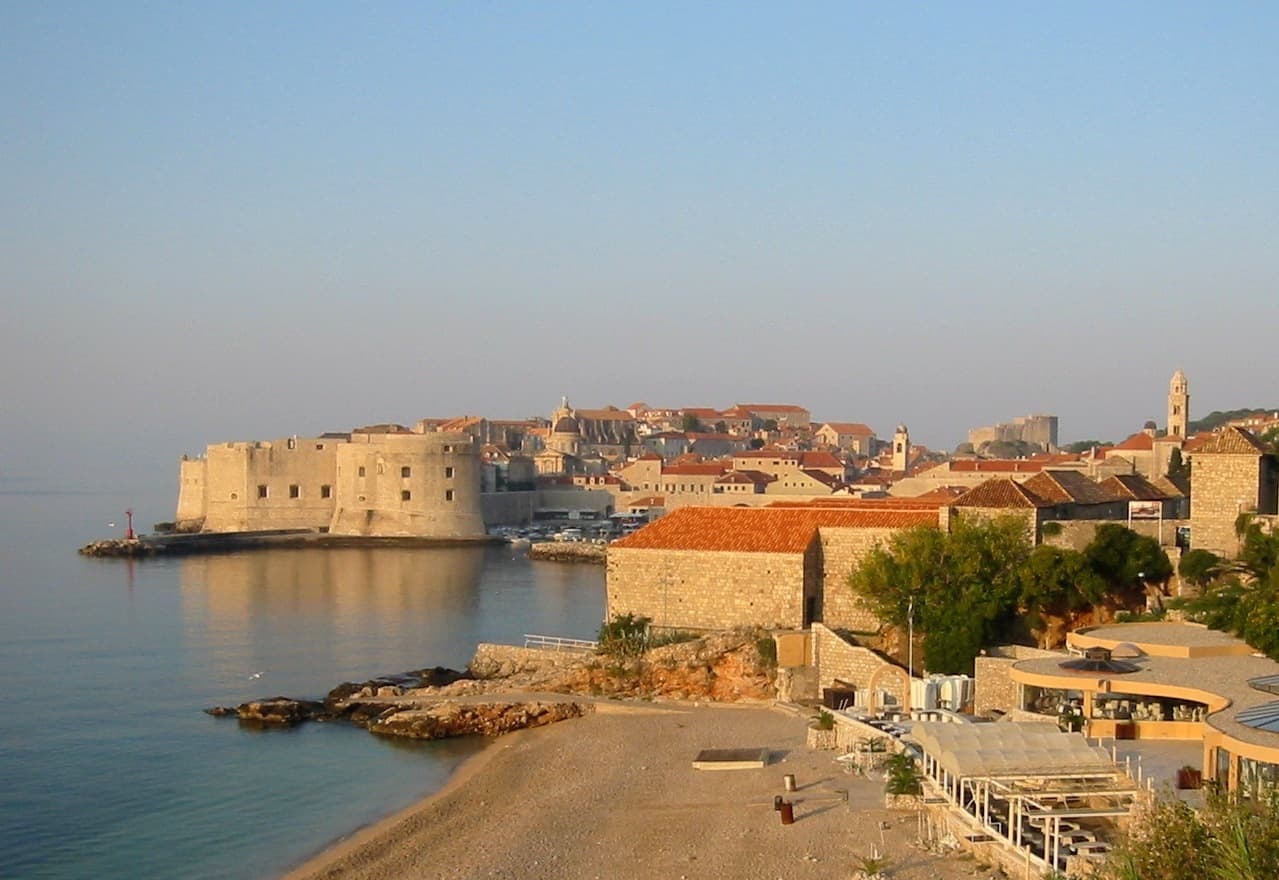
Dubrovnik · Any season, as a warning rather than a recommendation
Banje, and why the sunrise swim does not work there
Banje is the beach everybody walks to from the Ploče gate, and the one many guides suggest for a sunrise swim. The terrain says otherwise. The ridge a kilometre east of it stands 20 to 24 degrees above the horizontal across the whole eastern bearing band, so the beach gets no direct sun until 07:14 on 15 June and 07:41 on 1 October, which is two hours and five minutes and fifty-six minutes behind the respective almanac sunrises. Swim there at 06:30 in July and you are swimming in grey shade with the Old Town lit up behind you, which is its own picture but not the one you planned. For sun on the water early, take the west-facing side of the city instead: Lapad bay and the Babin Kuk coves get the light on the water long before the eastern shore does.
 Balloon_over_Luxor_-_Egypt.jpg: Marcosleal derivative work: Pro2 (talk) · CC BY-SA 3.0 via Wikimedia Commons
Egypt: Cairo, Luxor & the Nile · October to April
Ballooning over the Theban necropolis
Luxor’s dawn balloon flight is the classic for a reason: lift-off in the dark from the west bank, then first light hitting Hatshepsut’s terraces and the tomb valleys beneath a sky full of other balloons. Flights are sunrise-only, weather-cancelled without drama when the wind is up, and cost roughly EGP 2,900 to 3,800 per person with hotel pickup around 4am.
 AXP Photography · Pexels
Egypt: Cairo, Luxor & the Nile · Year-round; alignment days 22 Feb and 22 Oct
Abu Simbel in the morning light
The road departures from Aswan leave around 4am so you walk up while the sun is still low on the four colossi face-on: the temple faces east, and morning is its hour. On 22 February and 22 October the dawn beam reaches the sanctuary itself and the crowds triple.
 Leeno2001 · CC BY-SA 4.0 via Wikimedia Commons
Ella · 29 September to 14 March
Ella Rock summit
The best sunrise in Ella from late September to mid-March. By our terrain model the summit, at about 1,350 metres, sees the sun come up over the lowlands up to six minutes before the almanac time every day from 29 September to 14 March. From mid-March to late September the Namunukula foothills six to eight kilometres east take it by up to seven minutes, which still makes it the least blocked of the Ella viewpoints.
 PIERRE ANDRE LECLERCQ · CC BY-SA 4.0 via Wikimedia Commons
Ella · Mid-November to late January
Little Adam’s Peak
The easy dawn climb, 30 to 45 minutes from the trailhead. By our model the sun rises within five minutes of the almanac time only from 12 November to 29 January; for most of the rest of the year the ridges about five kilometres east hold it back by 12 to 22 minutes, so first light comes well before the disc.
 Kaveen Weerarathna · CC BY-SA 4.0 via Wikimedia Commons
Ella · Clear mornings from January to March and June to August
Lipton’s Seat
The one sunrise in this guide that comes early all year: by our model one to seven minutes before the almanac time, over the lowlands and, on the clearest mornings, towards the sea beyond the east coast. Mist usually closes in by mid-morning.
 Asad Photo Maldives · Pexels
Fiji · Year-round
Taveuni, near the 180th meridian
Taveuni sits by the 180-degree meridian and markets itself as one of the first places to greet the new day; the east coast catches clean ocean sunrises.
 American at German Wikipedia · CC BY-SA 3.0 via Wikimedia Commons
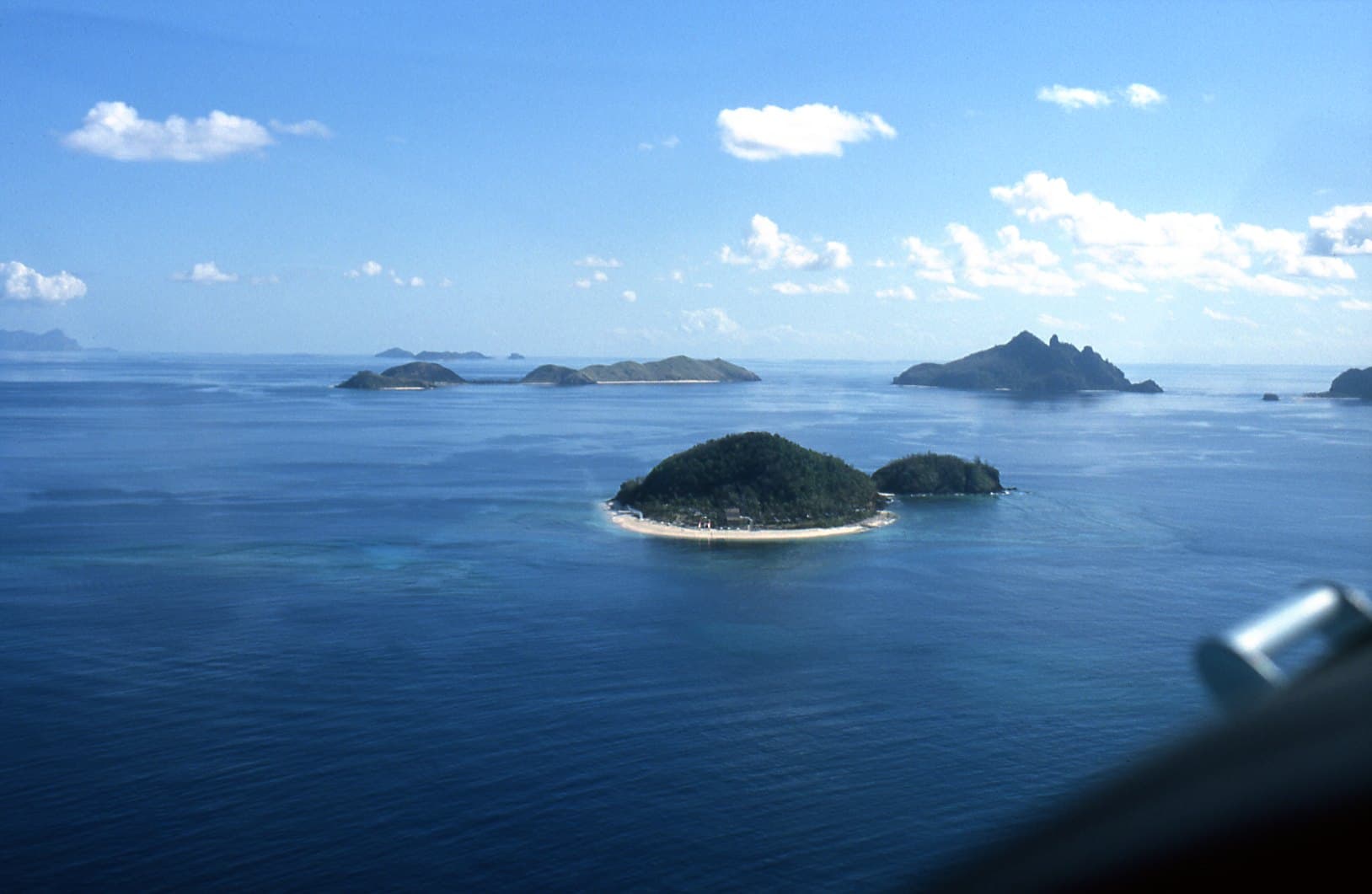
Fiji · Year-round
Coral Coast beaches
The south coast of the main island faces open ocean; early risers get quiet reef-flat sunrises before the resorts wake.
 Heino Ruiso · CC BY-SA 3.0 via Wikimedia Commons
French Riviera (Cote d'Azur) · Year-round
Promenade des Anglais, Baie des Anges
The bay curves east to west, so early light comes in low and gold across the water along the full length of the promenade, best experienced before the joggers and cyclists arrive.
 Ioan Sameli · CC BY-SA 2.0 via Wikimedia Commons
French Riviera (Cote d'Azur) · April to October
Phare de la Garoupe, Cap d’Antibes
A lighthouse and chapel on the wooded spine of Cap d’Antibes, with an open panorama across the bay toward Nice and the Alps that catches the first light well before the headland’s beaches fill up.
 JosephAssisFernandes · CC BY-SA 4.0 via Wikimedia Commons
Goa · November to February for clear air
The Mandovi from Divar island
Goa is a west-facing coast, so the honest answer about sunrise is that it happens over the rivers, not the sea. Divar is the best of them: take the free ferry from Old Goa, ride up to the Our Lady of Compassion church on the island's high point, and watch the light come up over the paddy, the mangroves and the towers of Old Goa across the water. Almost nobody does this.
 Chirayu Vyas · Pexels
Goa · November to March
The Chapora river mouth at Morjim
First light behind the Chapora headland with the river running out through the sandbar, fishing boats going out, and Vagator's cliffs picking up colour opposite. It is a working scene rather than a scenic one, and in nesting season the Forest Department's turtle enclosures are on the sand behind you, which is reason enough to keep your distance and your torch off.
 Laurel Lodged · CC BY-SA 3.0 via Wikimedia Commons
Great Barrier Reef & Cairns · Year-round
Cairns Esplanade boardwalk
The Esplanade faces east across Trinity Bay, catching sunrise over the water before the day’s reef boats depart.
 Hagai Agmon-Snir حچاي اچمون-سنير חגי אגמון-שניר · CC BY-SA 4.0 via Wikimedia Commons
Great Barrier Reef & Cairns · May to October (dry season, clearer skies)
Rex Lookout
A cliffside pull-off on the Captain Cook Highway between Cairns and Port Douglas, looking east over Wangetti Beach and the Coral Sea, with paragliders often overhead once the day warms up. The sun comes up out of the water here; it goes down behind the range at your back.
 ΧΡΗΣΤΟΣ ΜΙΧΑΛΑΙΝΑΣ · Pexels
Greece in 10 Days: Athens, Mykonos & Santorini · May to October
Kato Mili windmills, Mykonos Town
The windmill hill faces the harbor and catches the first light before Mykonos Town’s lanes wake up and the day boats start arriving.
 Lazaros Tsaktsiras · Pexels
Greece in 10 Days: Athens, Mykonos & Santorini · Year-round
Pyrgos castle viewpoint, Santorini
The hilltop ruins above Pyrgos face east over the island’s interior and the sea beyond, well away from the caldera-facing crowds.
 Yassen Kounchev · Pexels
Halkidiki · 30 March to 13 September for the mountain sunrise; the rest of the year it rises out of open sea
Sarti beach, with Mount Athos in it
The hour we would plan a Sithonia week around, and almost nothing written about the region names it. Sarti sits on Sithonia’s east coast looking across the Singitic Gulf at the Athos massif thirty kilometres away, and the summit, 2,033 metres, stands 3.7 degrees above the sea horizon from here. Run the sun against a horizon profile cast from SRTM elevation data and the result is a whole season: from 30 March to 13 September 2026, 168 consecutive days, first light at Sarti comes over the mountain. After the 13th it clears the massif and comes out of open water instead. For two fortnights a year, 13 to 26 April and 17 to 30 August, it clears the summit ridge itself.
 Quang Nguyen Vinh · Pexels
Halkidiki · Late March to mid-April and late August to mid-September for the summit
The Kavourotrypes coves
The same mountain from three and a half kilometres further north, which is enough to move the geometry. From these coves the Athos massif sits on a bearing of about 83 degrees rather than 76, so the summit-ridge sunrise falls on 29 March to 12 April and 31 August to 14 September, a fortnight either side of the Sarti dates. The rest of the year the sun still comes up over something: a profile cast from the waterline finds no bearing in the rising arc that opens onto clear water, because the cove’s own southeastern rock, barely two hundred metres off and only about twenty metres high, stands five degrees up from there. Walk thirty metres back up the beach and the geometry changes, which is the kind of thing only the rock in front of you decides.
 Kirill Lazarev · Pexels
Halkidiki · Three separate runs for the open-sea sunrise, 27 April to 8 May, 16 May to 28 July and 5 to 16 August; late August to October for the silhouette
The Afytos clifftop
Kassandra’s east coast gets the morning, and Afytos gets it from a low cliff with the village behind. What changes through the year is what the sun comes up over. A horizon profile from the clifftop shows the Sithonia ridge, forty kilometres east, taking the sunrise through spring and autumn, and open water in three windows that sit symmetrically around midsummer: 27 April to 8 May, then the long run of 16 May to 28 July, then 5 to 16 August. So a June sunrise here is sea, and a late-September one is a mountain silhouette with the light behind it.
 Markus Winkler · Pexels
Hanoi · Year-round; October and November for the clearest air
Hoan Kiem Lake at first light
The lake belongs to Hanoi between 5 and 7am: tai chi in ranks along the eastern path, badminton without a net, running clubs, and old men playing chinese chess on the benches while the mist sits on the water and the Turtle Tower comes out of it. No entry, no ticket, and the best hour in the city.
 Linh Tran · Pexels
Hanoi · Autumn and winter mornings, when the mist rises off the lake
Tran Quoc Pagoda and the Thanh Nien causeway
The causeway between West Lake and Truc Bach at dawn, with the eleven-tier red stupa catching the first light off the water and the lake still enough to hold the reflection. Fishermen on the Truc Bach side, joggers on the West Lake side, and almost no one photographing it before seven.
 Nguyen Giang · Pexels
Hanoi · Year-round; best on cool misty mornings from November to February
Long Bien Bridge over the Red River
Walk out onto the 1902 spans as the market traffic crosses in the half dark: motorbikes stacked with flowers and produce heading for Long Bien market, the train rumbling through the middle, and the banana fields on the sandbank below coming out of the river mist. Industrial, unglamorous and the most photographed dawn in the city for a reason.
 Melissa Doroquez · CC BY-SA 2.0 via Wikimedia Commons
Maui and Oahu: Planning the Two-Island Hawaii Trip · Year-round; clearest in summer
Haleakalā summit
Above a sea of clouds at 3,000 metres, the reason alarm clocks exist on Maui. It is cold, often near freezing before dawn, so bring every layer you packed.
 MahaloMichael · CC BY-SA 4.0 via Wikimedia Commons
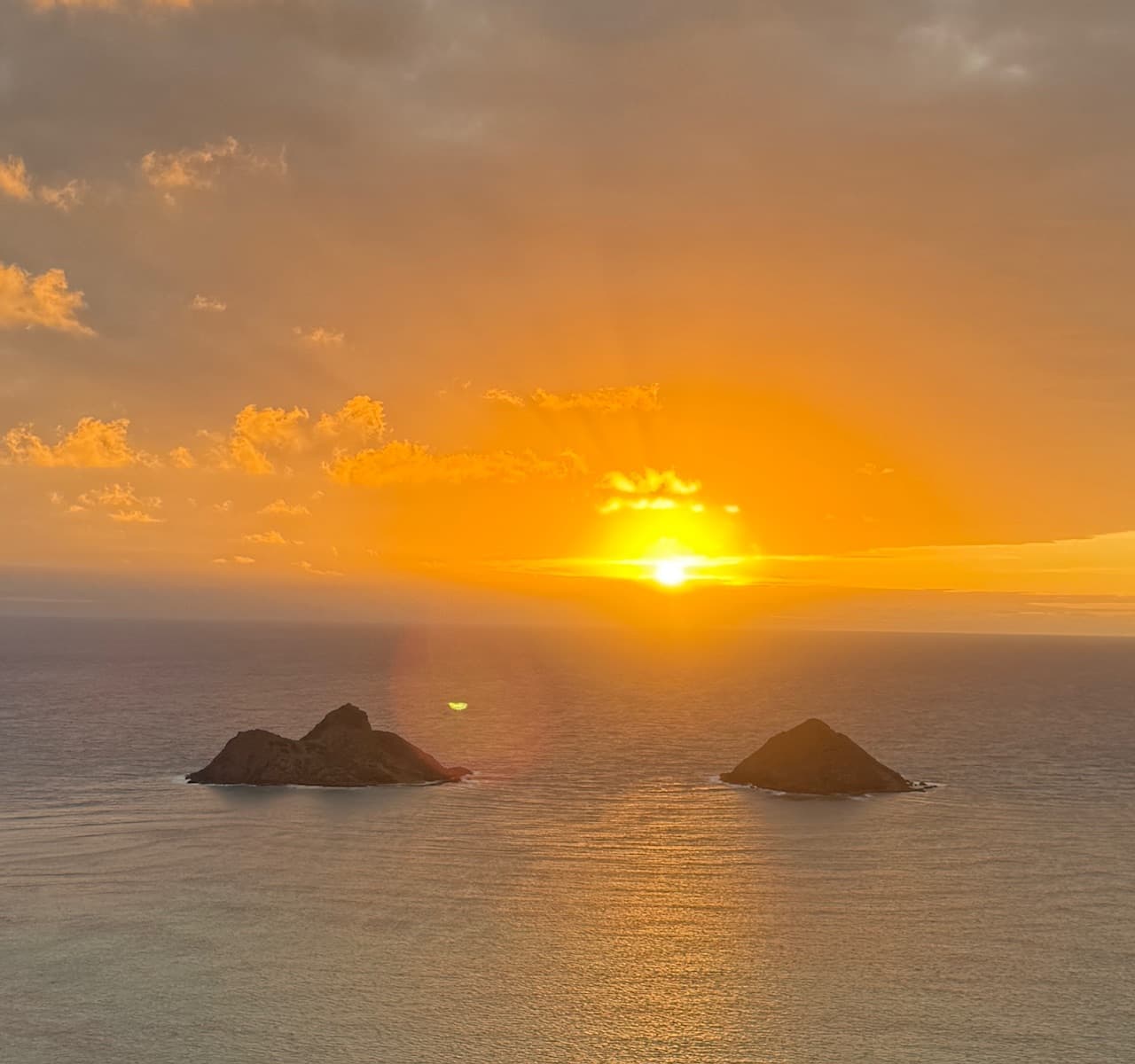
Maui and Oahu: Planning the Two-Island Hawaii Trip · Year-round
Lanikai Beach, Oʻahu
The sun comes up between the twin Mokulua islets on windward Oʻahu’s most photographed beach. Powder sand, still water, and almost nobody at 6am.
 Aaron Zhu · CC BY-SA 3.0 via Wikimedia Commons
Maui and Oahu: Planning the Two-Island Hawaii Trip · Year-round; whales December to April
Makapuʻu Point, Oʻahu
A paved 3-kilometre round-trip trail to a lighthouse lookout on Oʻahu’s easternmost tip, facing straight into the sunrise. In winter, humpbacks pass below the cliffs.
 Võ Văn Tiến · Pexels
Hoi An · Year-round
An Bang Beach
The beach faces east, so the sun rises straight out of the sea; fishing boats work the shallows and the beach bars are still shuttered and quiet.
 Zonghao Feng · Pexels
Hokkaido · May to October
Lake Toya
A caldera lake south of Niseko with quiet, still mornings and views across to the central volcanic island.
 David Sim from London, United Kingdom · CC BY 2.0 via Wikimedia Commons
Ibiza · Year-round
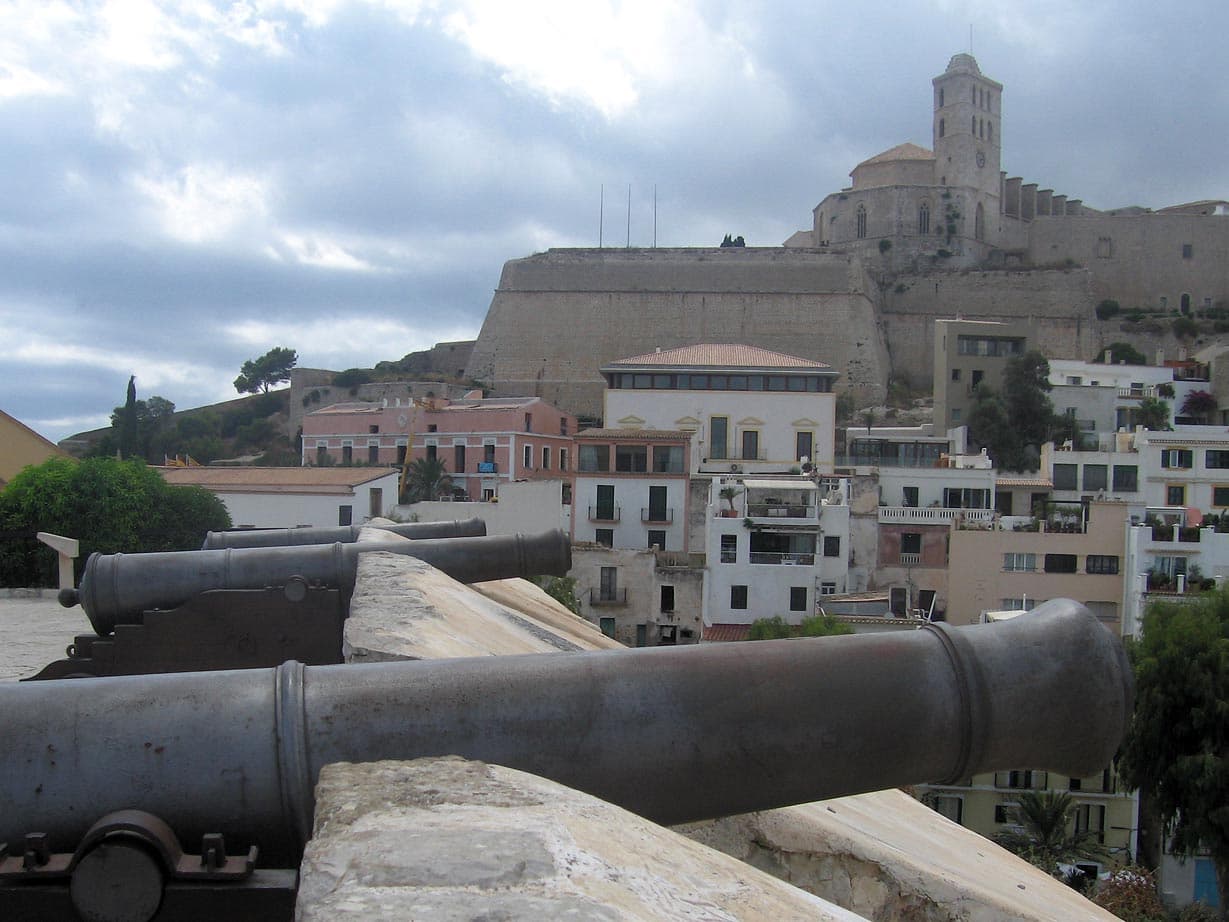
Dalt Vila ramparts at dawn
The bastions of the upper town face east over the port and the open sea toward Formentera; at first light you share half a kilometer of Renaissance wall with the gulls and nobody else. Enter through the Portal de ses Taules and climb to the cathedral terrace.
 Dirk Pothen · Pexels
Ibiza · Year-round
Santa Eulària promenade and Puig de Missa
The palm-lined seafront of the island’s calmest town catches the sun rising straight out of the sea; walk it early, then climb the lanes to the fortified white church of Puig de Missa before the day warms.
 User:Ggia · CC BY-SA 3.0 via Wikimedia Commons
Istanbul · Year-round
Çamlıca Hill (Asian side)
The best-known hilltop on the Asian side, about 270 m up, gives a wide panorama back across the Bosphorus to the Old City skyline as the sun comes up behind you and lights the European shore.
 Sukkim1996 · CC BY-SA 4.0 via Wikimedia Commons
Jeju Island · All year; the clearest skies are from October to February
Seongsan Ilchulbong
Korea’s best-known sunrise, and one the land never blocks. From the summit deck, 182 metres up, our terrain model has the sun coming out of open sea on every day of 2026, about a minute before the almanac time, on bearings from 61 degrees in June to 118 in December: 05:22 on 21 June, 06:19 on 21 September, 07:31 on 21 December. The gates open at 04:30 from May to August, 05:00 in March, April, September and October, and 06:00 from November to February, so there is always time to climb the 30-to-40-minute stair; arrive at the gate when it opens on a clear morning, and expect company. Closed the first Monday of the month.
 Republic of Korea from Seoul, Republic of Korea · CC BY-SA 2.0 via Wikimedia Commons
Jeju Island · Mid-April to August for the sun behind the cone; September to April for a clean sea sunrise
Gwangchigi beach
The beach below the peak, where Olle route 1 ends, is the picture. By our model the sun rises out of open sea from the sand from 1 September to 12 April, about on the almanac time, and from 13 April to 31 August it comes up behind Seongsan Ilchulbong itself, 1.6 km away, as much as 24 minutes late in early July: the silhouette with the rim on fire, and the rock pools in the foreground at low tide. Free, with no gate.
 Coman Yu · Pexels
Jeju Island · All year; April for the canola
Seopjikoji
The headland south of the peak, with a lighthouse on its rock and Tadao Ando’s Glass House at the tip. From the lighthouse hill our model has the sun out of open sea on all 365 days, on the almanac time, with Seongsan Ilchulbong to the left of the frame. It is the easy sunrise, no stairs and no ticket, and in April the canola fields behind you are yellow before the sun is up.
 Sohyeon Bak · CC BY-SA 3.0 via Wikimedia Commons
Jeju Island · All year
Udobong, Udo
The cliff-top at the south end of Udo, about 130 metres up, has open sea under the rising sun all year, about a minute before the almanac, with the lighthouse and the whole of Jeju’s east coast behind you. It is only for people sleeping on Udo, because the first ferry from Seongsan leaves at 07:30 and lands after the sun in every month.
 tom Lok · Pexels
Jeju Island · Hamdeok never; Woljeong-ri May to early August
The sunrises that do not work: Hamdeok, Jongdal-ri and Woljeong-ri
A warning card. Hamdeok, the north coast’s favourite beach, faces north with Seoubong hill at its east end: our model has the sun rising behind the hill on every day of the year, 6 to 36 minutes late, worst in June. Woljeong-ri gets an open-sea sunrise only from 11 May to 2 August, and 3 to 7 minutes late otherwise. From the Jongdal-ri shore, where the haenyeo work, the sun rises behind Udo for most of the year, 2 to 7 minutes late, and clears it only from 14 to 29 December. Drive the extra ten minutes to Seongsan.
 Daniel Zaas · Public domain via Wikimedia Commons
Kenya-Tanzania Safari Route · Year-round
Dawn game drive
The classic safari sunrise: predators are most active at first light, so the early drive out of camp is the day’s prime hour.
 MAKE IT KENYA PHOTO / STUART PRICE · Public domain via Wikimedia Commons
Kenya-Tanzania Safari Route · Dry season (July to October)
Hot air balloon at dawn
Balloon flights lift off before sunrise for first light over the plains, landing for a bush breakfast; book ahead and budget the separate reserve fee.
 McKay Savage from London, UK · CC BY 2.0 via Wikimedia Commons
Kerala Backwaters · November to February for still air and mist; year-round for the ferry traffic
Dawn from a moored houseboat deck
The reason to accept that houseboats cannot move before 8am: you wake up already in the middle of the water with mist on it, fishermen collecting the nets they set at dusk, and the first ferry of the day going past with school children on it. Coffee arrives, the crew starts the kitchen, and nothing happens loudly for an hour. It is the best part of the whole houseboat proposition and most people sleep through it.
 Abhinav Goswami · Pexels
Kerala Backwaters · November to February for migratory species
Kumarakom Bird Sanctuary at opening
The gates open at 6am and the first hour is the only one that matters: darters drying their wings, egrets working the shallows, kingfishers going off like alarms, and from November the migratory arrivals. The walkway is short and the watchtower gives you the lake edge; a guide doubles what you notice. By 9am the light is flat, the birds are quiet and the day is elsewhere.
 P.K.Niyogi · Public domain via Wikimedia Commons
Kerala Backwaters · Year-round; clearest from December to March
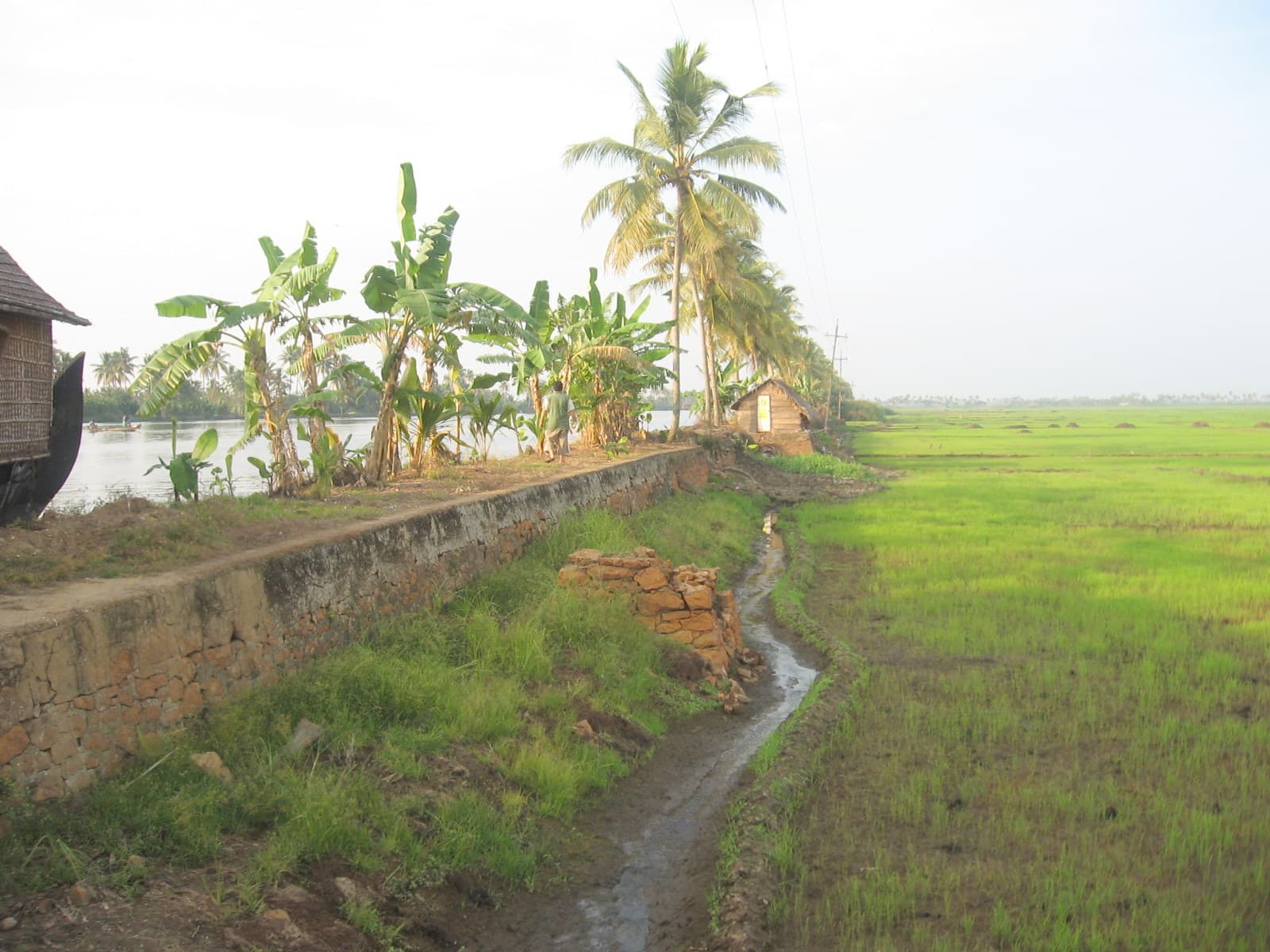
The Thanneermukkom embankment at first light
Standing on the bund with Vembanad running away in both directions is the only place you see the lake as a single object rather than as a channel. At sunrise the water goes metallic, the far shore is a line of palms, and the fishermen working off the barrage are already an hour into their day. Ten minutes of walking, a long look, and a conversation if you want one.
 Pok Rie · Pexels
Koh Phangan · Year-round
Haad Rin Nok: open sea every morning
The party beach faces east into nothing, and our ray cast finds no land above the sea horizon at any sunrise bearing of the year, from about 66 degrees at the June solstice to 114 in December. The sun is on the sand one or two minutes after the almanac time on every date we checked. On the morning after a party you share it with the cleaners and the last dancers; on any other morning it is the best-kept secret of the island's most famous beach.
 André Cook · Pexels
Koh Phangan · Year-round; calmest from February to September
Thong Nai Pan Noi: the sun out of the sea in front of the hotels
The best beach on the island faces the sunrise, and the ray cast from the middle of Noi finds open water across the whole arc; the headlands on either side stay well outside it. From a beachfront room at Anantara or Buri Rasa it is in front of the bed, and the bay is sheltered by its headlands at that hour for most of the year. The price is that this coast never sees a sunset, which goes behind the ridge at the back of the bay.
 Mmarkin · CC BY-SA 4.0 via Wikimedia Commons
Koh Phangan · Year-round, weather permitting; no boats in a monsoon swell
Haad Yuan: the boat-only sunrise
Fifteen minutes by longtail from Haad Rin, the first of the east-coast bays faces the same open sea, and the ray cast finds it as clear as Haad Rin Nok on every date. The difference is the company: a few bungalows, one bar, and whoever slept there. Sleep there; the boats do not run before the sun.
 The Shejz · Pexels
Koh Samui · February to August
Chaweng and Choeng Mon beaches
The east-facing beaches catch sunrise over the Gulf; Chaweng and calm Choeng Mon are the easiest spots for first light before the day heats up.
 Yulia · Pexels
Kuala Lumpur · Year-round; May to August for the clearest skies
KLCC Park before the city wakes
The park gates open early and the first hour belongs to joggers on the rubberised loop, tai chi groups by the lake and the Petronas Towers going from grey to silver as the light arrives. The symmetry shot across the Lake Symphony pool is cleanest now, before the fountain shows and the crowds. Free, and the coolest hour of the KL day.
 Jess Chen · Pexels
Kuala Lumpur · Year-round; weekday mornings are quietest
Batu Caves at opening
Be at the foot of the golden Murugan statue when the site opens and climb the 272 painted steps in shade and near-silence: temple bells, incense from the first pujas, macaques still sleepy, and the cathedral-sized main chamber lit by the shaft of morning sky through its open roof. By 10am the tour buses arrive and the staircase becomes a procession.
 Ceha Rabbani · Pexels
Kuala Lumpur · Year-round
Dataran Merdeka at first light
The colonial core is the one part of KL that is genuinely empty at dawn: the Sultan Abdul Samad Building's copper domes catching the first sun, the flagpole shadow crossing the old cricket green, and the river confluence mist still on Masjid Jamek a street away. Photographers get the arches to themselves for an hour.
 Basile Morin · CC BY-SA 4.0 via Wikimedia Commons
Kyoto · Year-round
Fushimi Inari torii path
Arriving at or before sunrise is the only realistic way to photograph the torii tunnels empty; the shrine and paths are open 24 hours.
 Irina Senti · Pexels
Kyoto · Spring and autumn for color
Kiyomizu-dera at opening
The gates open at 6:00, so arriving then gives soft early light over the wooden stage and the temple grounds before tour groups arrive.
 YFS Visuals · Pexels
Langkawi · November to March for the clearest skies
Tanjung Rhu sandbars
First light comes up behind the limestone islets and the tide-bared sandbars of the northeast bay, with casuarinas for a foreground and usually nobody else on the kilometer of sand. Our pick for sunrise on the island.
 Zaireey · CC BY-SA 4.0 via Wikimedia Commons
Langkawi · Year-round
Dataran Lang waterfront, Kuah
The eagle statue catches the day's first warm light with the ferry channel and the Andaman behind it, and the square is empty apart from joggers. Worth pairing with a morning ferry departure or an early run to the Kilim jetty.
 F Mira from Lisbon, Portugal · CC BY-SA 2.0 via Wikimedia Commons
Lisbon · Year-round
Miradouro das Portas do Sol
Facing east over Alfama’s rooftops and the Tagus, this terrace catches the sunrise with far fewer people than at sunset. By our terrain model the sun comes up over the low land across the estuary, 18 to 60 kilometres away, within a minute or two of the almanac time all year: about 06:10 in late June and 07:50 in December.
 Wikimedia Commons · Public domain via Wikimedia Commons
Lisbon · Year-round
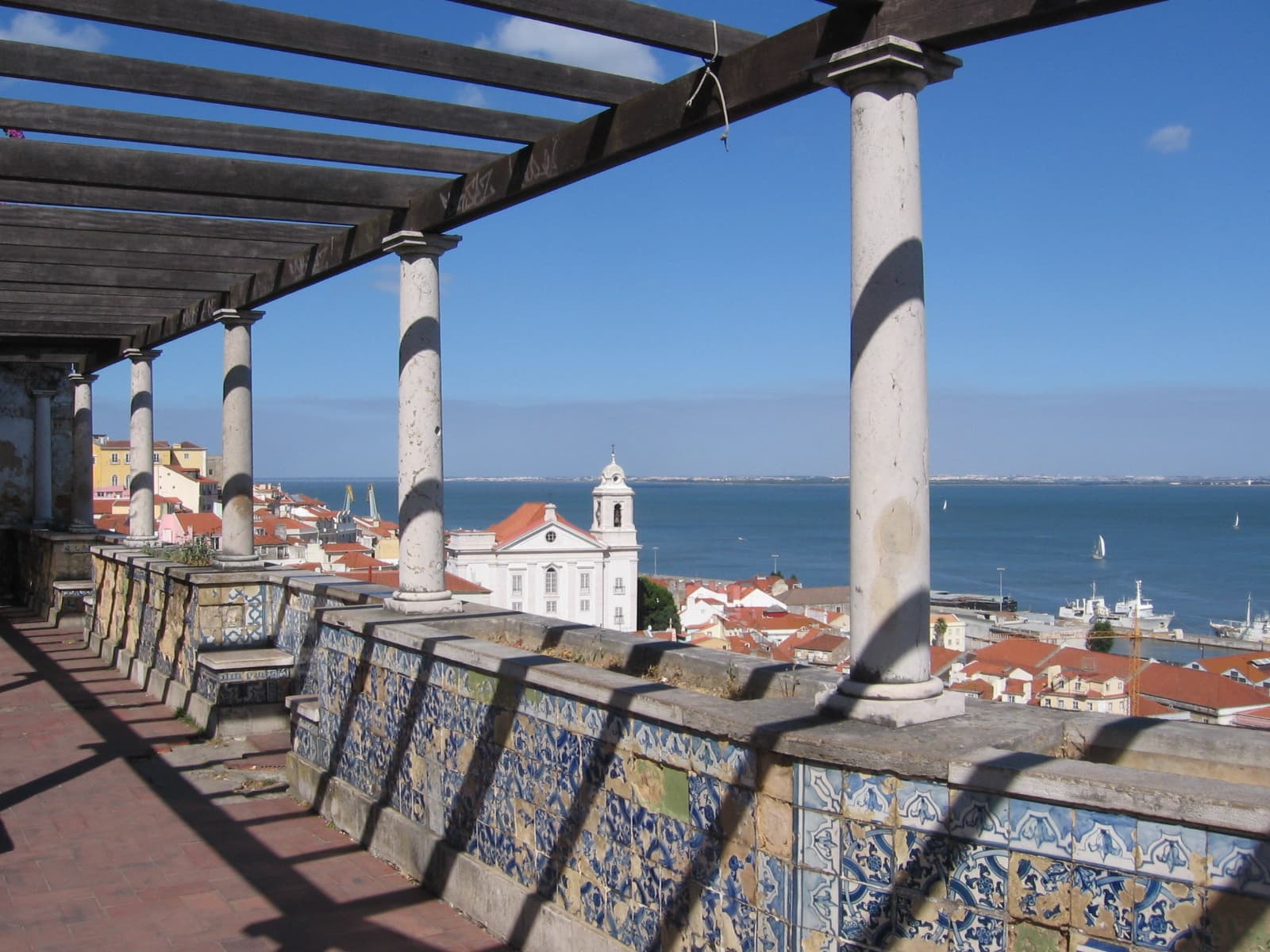
Miradouro de Santa Luzia at dawn
The tiled terrace next door to Portas do Sol looks south and east over the river, and this is the time to have it: the sunrise over the estuary comes a minute or so before the almanac all year, and the bougainvillea and azulejo panels are in soft light before the tour groups arrive.
 Stan Shebs · CC BY-SA 3.0 via Wikimedia Commons
Los Cabos · Year-round
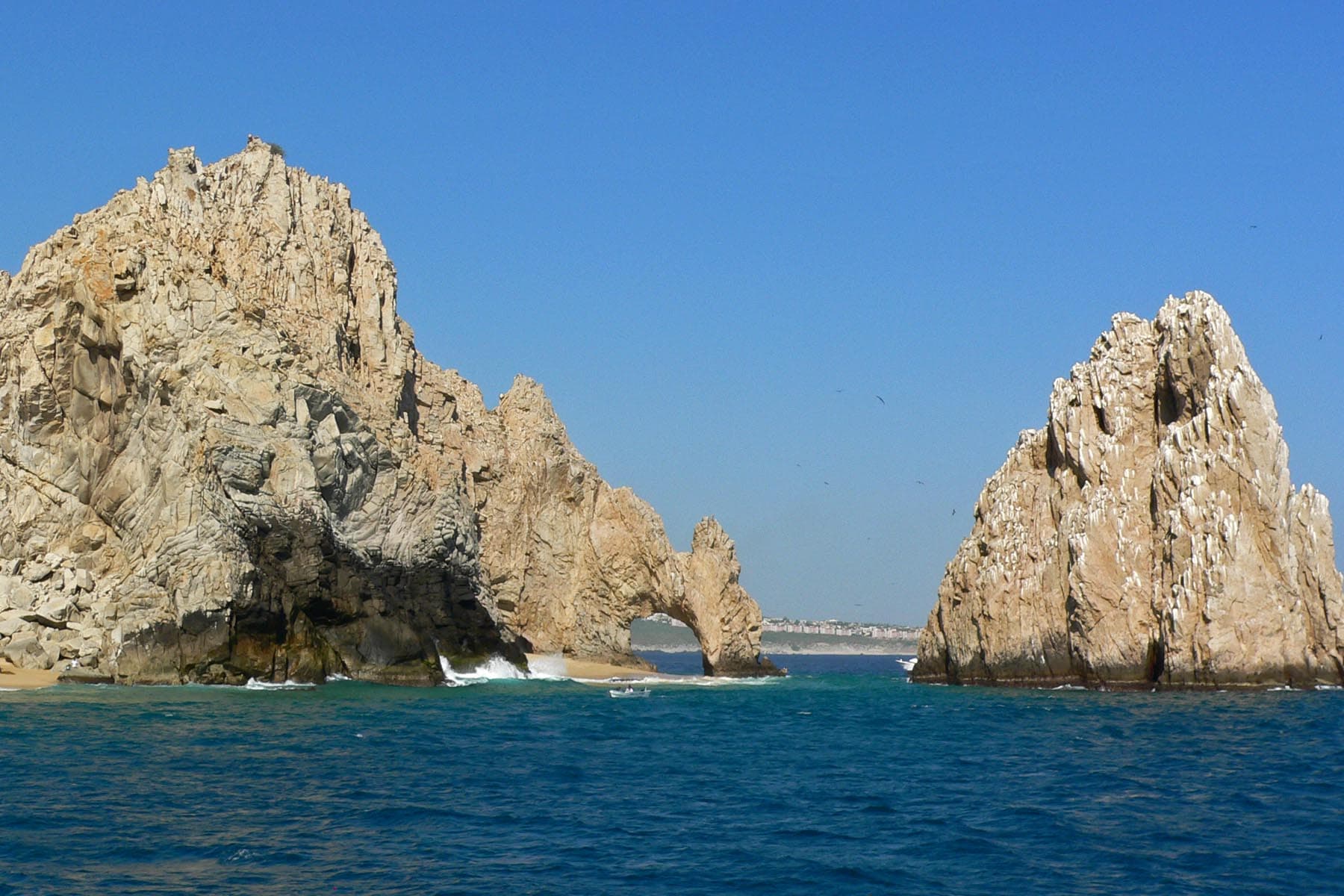
Playa Palmilla
The corridor’s calmest swimming cove faces east into the Sea of Cortez; first light comes up over the water with fishing pangas heading out from the point.
 Odelon Burgos · Pexels
Los Cabos · November to April
Estero San José boardwalk
Dawn is the birding hour at the estuary: herons, egrets and ospreys over still water before the day’s heat, with the sun rising over the sea end of the lagoon.
 Wikimedia Commons · CC BY-SA 3.0 via Wikimedia Commons
Madrid · Year-round
Retiro Park, Estanque Grande
The boating lake of the Retiro is calm and nearly empty at dawn, before the joggers and the tour groups. The sun rises at 06:44 on 21 June and 08:07 on 27 September, and reaches the water once it clears the trees on the eastern side of the park.
 ╚ DD╔ from Male, Maldives · CC BY-SA 2.0 via Wikimedia Commons
Maldives Overwater Villas · Year-round
Overwater villa deck, east-facing
Request an east-facing villa if sunrise from bed matters most; the lagoon usually turns pink and gold well before the resort itself wakes up.
 Asad Photo Maldives · Pexels
Maldives Overwater Villas · Dry season (December to April) for the calmest crossing
Sandbank at dawn during a snorkel excursion
Early-departure snorkel or sandbank boat trips reach an empty sandbank while the light is still low, before the heat and any other boats arrive.
 Rafael Ortega Díaz · CC BY-SA 4.0 via Wikimedia Commons
Mallorca · Year-round
Portixol promenade, Palma
The seafront walk east of the cathedral toward the old fishermen’s quarter of Portixol is Palma’s dawn ritual: joggers, coffee kiosks and the first light spreading over the bay.
 Margo Evardson · Pexels
Mallorca · May to October
Mirador Es Colomer, Formentor
The clifftop balcony on the Formentor road catches first light over the sea and the Colomer rock; before 10:00 the road is open to cars even in summer, which makes sunrise the drivers’ hour.
 Polina ⠀ · Pexels
Malta · All year; June to September for the swim
St Peter’s Pool
The sunrise of the islands. The rock pool on the Delimara peninsula faces open sea to the east, and by our terrain model the sun comes out of the water there on every day of 2026, on bearings from about 60 degrees in June to 119 in December: 05:45 on 21 June, 06:53 on 27 September. A swim before the day-trippers arrive is the reward.
 Pham Ngoc Anh · Pexels
Malta · 10 February to 1 November
The Upper Barrakka Gardens
Valletta’s balcony faces the harbour mouth, and from 10 February to 1 November the sun rises out of open sea beyond it, about a minute before the almanac time because of the height of the bastion. In winter it comes up over the low land of Kalkara on the far side of the harbour, still on time. First light on the Three Cities and the fortifications of Fort St Angelo is the photograph.
 H. H. · Pexels
Malta · All year
Tigne Point, Sliema
The tip of Sliema faces open sea to the east with nothing in the way, and our model has the sun coming out of the water on every day of the year, less than a minute before the almanac time. It is the easy sunrise for anyone sleeping in Sliema or St Julian’s.
 Docrgd · CC BY 4.0 via Wikimedia Commons
Malta · Around 20 March and 22 September
Mnajdra at the equinox
Heritage Malta says the doorway of Mnajdra’s South temple is aligned with the sunrise at the spring and autumn equinoxes, and at the solstices the first rays pass along the sides of the doorway to light decorated slabs inside. Our terrain model puts the first direct sun on the temple about 20 minutes after the almanac sunrise at the equinoxes, because the ground rises towards Hagar Qim, and about half an hour after it in June. The park is not open at dawn: this is for Heritage Malta’s occasional ticketed equinox tours, which we did not find announced for 2026.
 Гульнара Бектемировна · CC BY 4.0 via Wikimedia Commons
Mauritius · Year-round
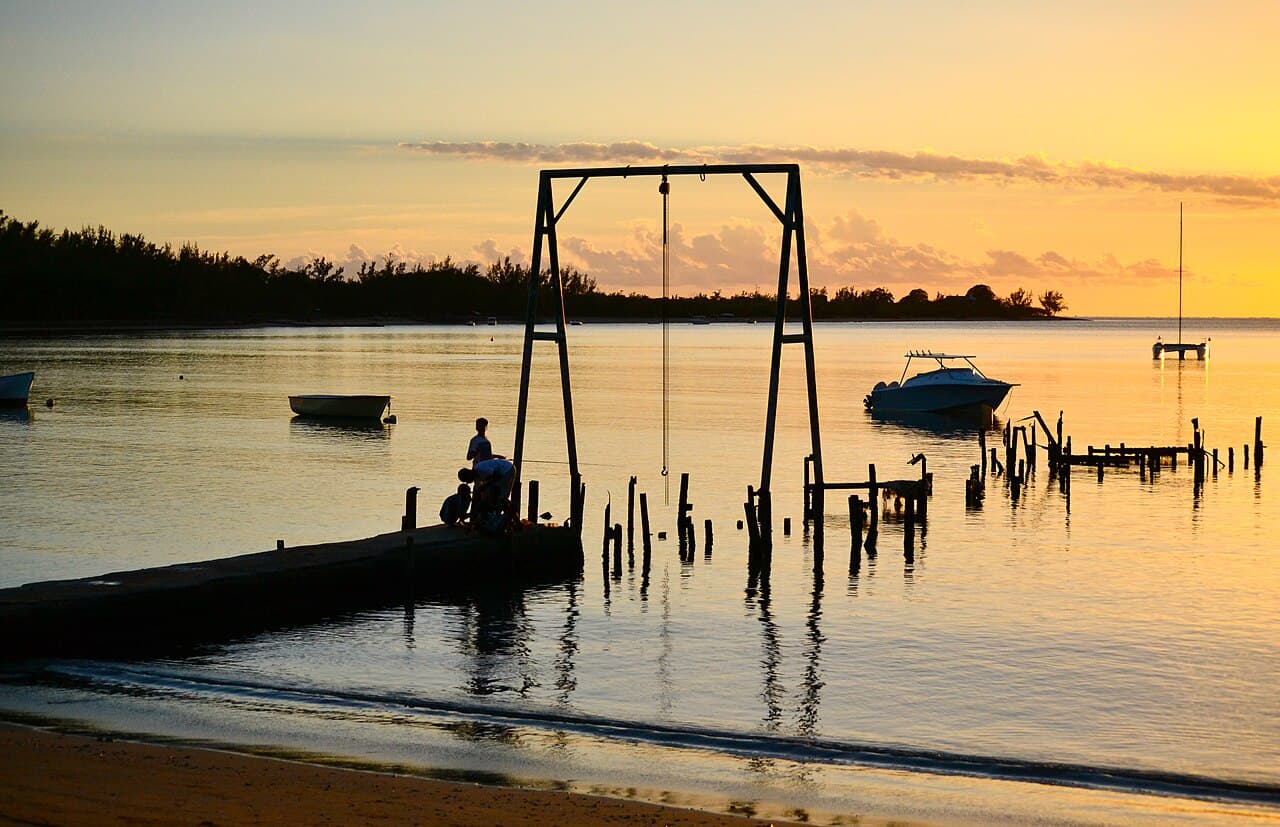
Belle Mare and the east coast: every day of the year
The sunrise bearing at this latitude runs from about 65 degrees at the June solstice to about 115 at the December one, and from Belle Mare beach the terrain data finds nothing but ocean across the whole of that arc out to 40 km. The same is true of Pointe d'Esny in the south-east and Poste Lafayette in the north-east. This is the honest case for the east coast: whatever the wind is doing, the sun comes up out of the sea in front of your room on every morning of the year.
 Sualkdd · CC BY-SA 3.0 via Wikimedia Commons
Mauritius · 16 March to 27 September
Cap Malheureux: the red-roofed church, but only in winter
The small church of Notre-Dame Auxiliatrice on the northern tip, with Coin de Mire islet behind it, is the most photographed building on the island and is usually sold as a sunrise. It works only for half the year. The coast east of it runs south-east toward Grand Gaube, and the ray cast finds low land 250 m to 1.5 km away at every sunrise bearing above about 92 degrees. So the sun comes up out of open water here from about 16 March to 27 September, and for the whole of the December to February high season it rises behind the Grand Gaube shore instead.
 Simisa (talk · contribs) · CC BY-SA 3.0 via Wikimedia Commons
Mauritius · 16 September to 26 March
Gris Gris: the cliffs in summer
On the south coast at Souillac the reef gives out and the ocean hits black cliffs, with a blowhole and a headland the island calls Roche qui Pleure. The sunrise is open here only when the sun comes up south of east, from about 16 September to 26 March; through the southern winter the cliffs to the east block it. That happens to be the right way round, because summer is when the swell is quieter and the cliff path is safer.
 Globos aerostaticos (Wikimedia Commons) · CC BY-SA 3.0 via Wikimedia Commons
Mexico City · Year-round; dry-season mornings (November to April) are clearest and calmest
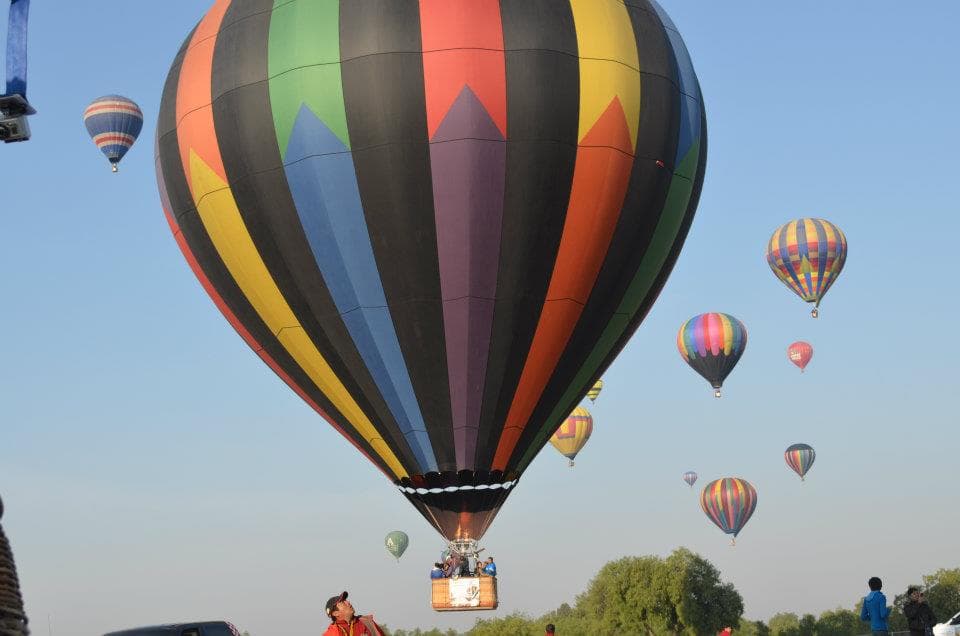
Hot-air balloon over Teotihuacan
The one alarm worth 5am in this city's orbit: balloons lift off beside the archaeological zone at first light and drift over the Pyramids of the Sun and Moon as the valley mist burns off, the Avenue of the Dead drawn below like a plan. Flights run about 45 minutes and land in the fields; operators bundle breakfast and site transfer, and the move is to fly at dawn and walk in when the gates open at 8am, ahead of the buses. Book direct with an established operator for roughly 2,500 to 4,000 pesos rather than the cheapest reseller: this is a category where the median is safe and the bargain is not.
 Chivista · Public domain via Wikimedia Commons
Mexico City · Year-round; rainy-season mornings are reliably clear
Chapultepec first section with the runners
The Bosque opens early and its first hours belong to the city: runners circling the lake, rowers setting out, the castle catching first sun above the trees before the museums or crowds exist. Walk the Gran Avenida from the Metro Chapultepec gate as the light comes through the ahuehuetes, and be at the castle gate when it opens with the park already in your legs. The most pleasant free morning in the city, and the correct warm-up for an Anthropology Museum day.
 Magaly Taboada · Pexels
Mexico City · Year-round
The Zocalo before the city wakes
At 7am the largest square in the hemisphere is nearly empty: the cathedral doors opening for first mass, the flag ceremony crossing the stones, the Templo Mayor's ruins in shadow a block away and the whole Centro still belonging to the people who work it. Photographers get raking light down Madero to the Torre Latinoamericana; everyone else gets the only hour the historic centre feels its actual age. Have breakfast at El Cardenal when it opens and start the Centro day two hours ahead of everyone.
 Colourpicture Publishers, Inc. · Public domain via Wikimedia Commons
Miami · Year-round
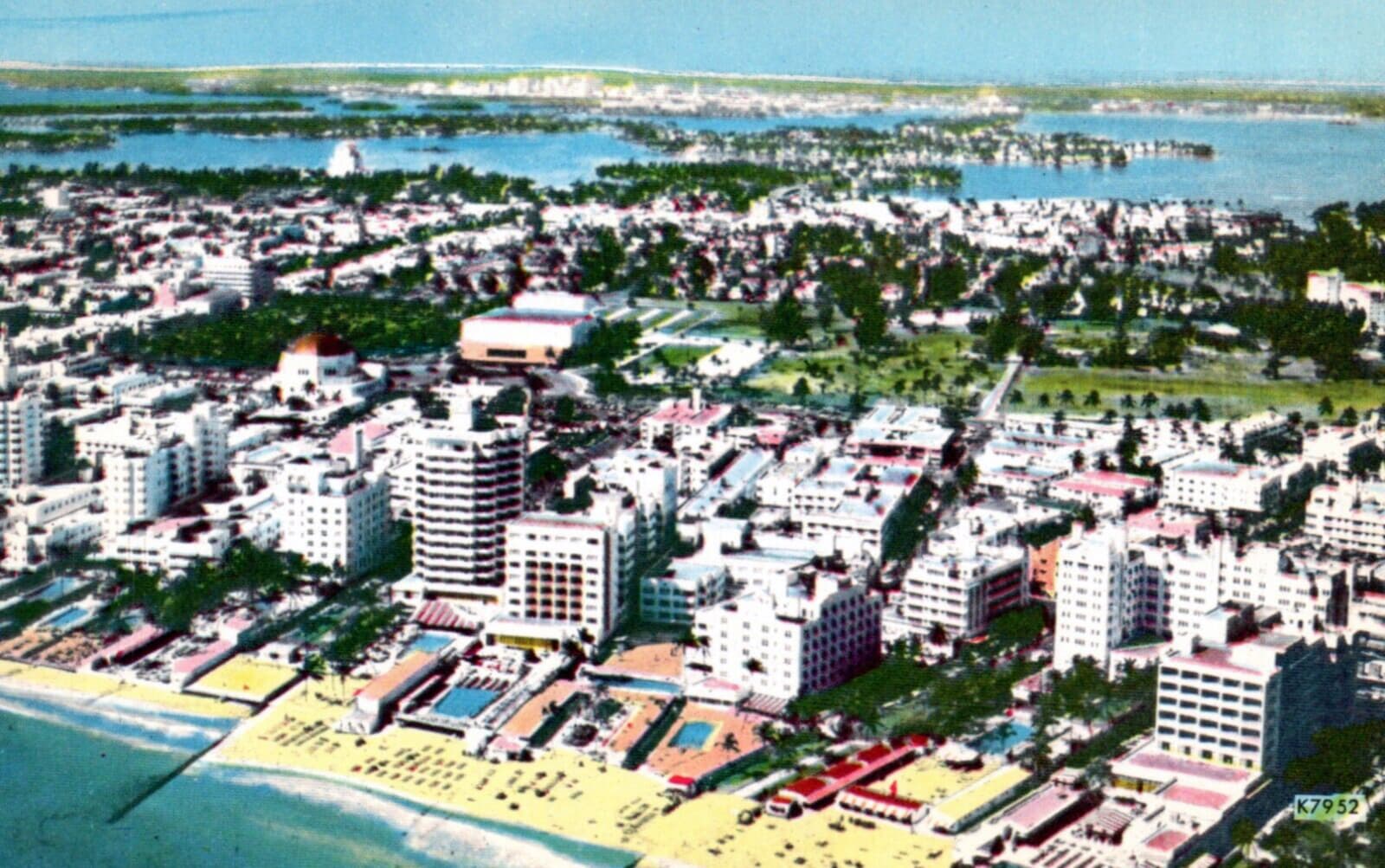
South Pointe Park and Pier
The southern tip of Miami Beach faces east over the Atlantic, with a 450-foot pier and lawns that stay quiet at first light.
 Ken Lund from Reno, Nevada, USA · CC BY-SA 2.0 via Wikimedia Commons
Miami · Year-round
Bill Baggs Cape Florida beach, Key Biscayne
The east-facing beach below the lighthouse looks out over open water, well away from the South Beach crowds.
 Steffen Schmitz (more photos) · CC BY-SA 4.0 via Wikimedia Commons
Mirissa · 8 August to 5 May
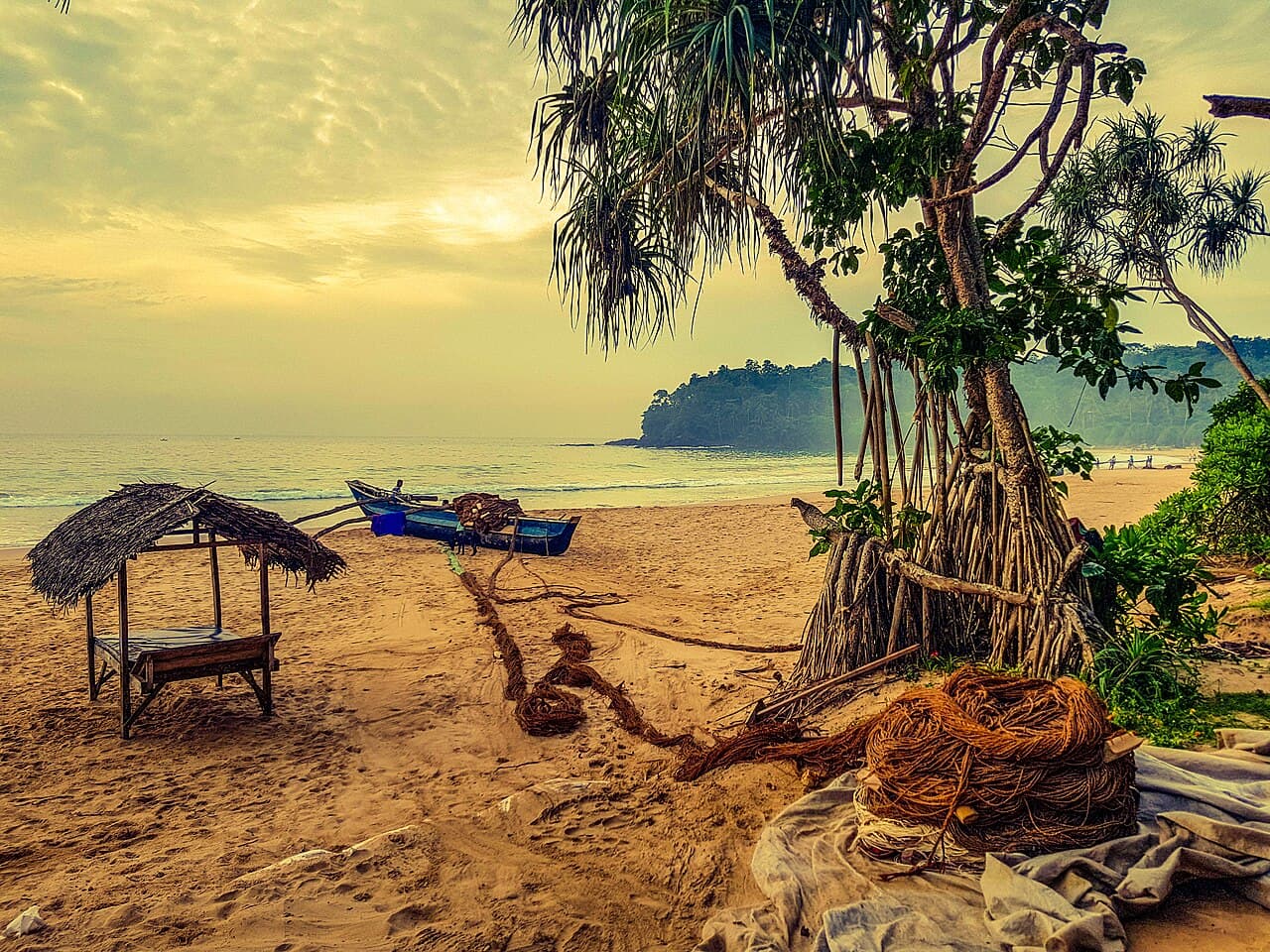
Dondra Head
The southern tip of the island, below the lighthouse, is the one place near Mirissa where the sun rises out of the open sea: by our model from 8 August to 5 May, within half a minute of the almanac time, and over the low land of the point only from 6 May to 7 August. Sunrise is between about 05:52 in mid-May and 06:25 in early February.
 Nilan.iro · CC BY-SA 4.0 via Wikimedia Commons
Mirissa · 4 February to 20 March and 24 September to 7 November
Talalla beach
The long, empty bay east of Dondra faces south-east, and by our model the sun rises out of the sea from the sand from 4 February to 20 March and again from 24 September to 7 November; the rest of the year it clears the low eastern point within about five minutes of the almanac time. A sunrise beach that is usually quiet.
 Alexey Komarov · CC BY-SA 4.0 via Wikimedia Commons
Mirissa · All year, on clear mornings
Coconut Tree Hill at first light
Not a sun-on-the-horizon sunrise: the hill faces the sea to the south and west, and the sun comes up over the coast to the east behind the palms of the hill itself, clearing them 25 to 45 minutes after the almanac time by our model, which reads the tops of the trees as ground. What you get instead is the grove and the empty beach in soft light and, in season, no crowd. Go to Dondra for the real thing.
 Emre Koşak · Pexels
Morocco: Marrakech, Sahara & Chefchaouen · Year-round, best March to May and September to November
Erg Chebbi dunes at sunrise
Climb a dune near camp before the heat rises; the low light on the sand is the single most photographed moment of this trip.
 sailko · CC BY 2.5 via Wikimedia Commons
Mykonos · May to September
Kalafatis Beach
An east-facing beach on the opposite side of the island from the sunset crowds, with an open horizon for the sunrise.
 ftrc · CC BY-SA 2.0 via Wikimedia Commons
Mykonos · May to September
Fokos Beach
A remote, undeveloped cove on the northeast coast, reached by dirt road, with almost nobody else there for an early start.
 Zde · CC BY-SA 4.0 via Wikimedia Commons
Naxos · 12 May to 1 August
Apollonas, out of the open sea
The one sunrise on Naxos we would set an alarm for in summer. From the beach at Apollonas the sun comes straight out of open water from 12 May to 1 August, on time to the minute, on bearings of 59 to 66 degrees: Ikaria lies north of the arc and Fourni, 90 kilometres out, is below the horizon. Outside that window the headland on the east side of the bay, with the Kalogeros spur behind it, gets in the way, and the delay grows fast: an hour and six minutes at the equinoxes, an hour and forty-four in December.
 Zde · CC BY-SA 3.0 via Wikimedia Commons
Naxos · Autumn and winter, and Donousa in early April or early September
Moutsouna and the islands to the east
The east coast port gets the sunrise in the opposite season to Apollonas. From the seaward side of the harbour headland, the sun rises out of open sea from 28 January to 25 February and 11 October to 14 November; over the Makares islets, ten kilometres out, in March and from mid-September to early October; out of Donousa, twenty kilometres away, from 1 to 14 April and 29 August to 11 September; and out of Amorgos, 41 to 44 kilometres off, from mid-November to late January. In summer, 15 April to 28 August, the Azalas headland just north of the harbour delays it by 4 to 21 minutes: a summer sunrise here needs a spot with a clear view north-east, which we did not compute.
 Holger Uwe Schmitt · CC BY-SA 4.0 via Wikimedia Commons
Naxos · All year, for the light on the marble, not the sun itself
Chora: why first light is late
Chora faces west, and its sunrise is a lesson in the island’s size. On 21 June the almanac says 05:58, but the sun has to clear the mountains of north Naxos first, the Anathematistra massif about fifteen kilometres to the north-east, and first light reaches the Portara at 06:11, thirteen minutes late. At the equinoxes the Chylokastro hill, 2.7 kilometres east, makes it 33 minutes late. On the Kastro top it is 06:17 on 21 June, and down on the harbour front, where the Kastro hill itself stands in the way, 06:33. What Chora gets instead is the moment the first light reaches the Portara and the Kastro while the harbour below is still in shade.
 Chris Davies · CC BY 3.0 via Wikimedia Commons
New York City · Year-round
Brooklyn Bridge Park, DUMBO
The park faces west across the East River, so at sunrise the sun comes up behind you over Brooklyn and lights the Lower Manhattan towers head-on. Pebble Beach and Pier 1 are the spots; cross the bridge early, before the crowds.
 King of Hearts · CC BY-SA 4.0 via Wikimedia Commons
New York City · Year-round
Battery Park, Lower Manhattan
From the southern tip of Manhattan the sun rises to the east over Governors Island and Brooklyn, while the Statue of Liberty, out in the harbor to the southwest, catches the first light. It is quiet here before the Statue City Cruises ferries start running.
 Eclipse Chasers · Pexels
New Zealand South Island Road Trip: The 10-Day Loop · Year-round; autumn mornings bring mist
That Wānaka Tree at dawn
On a calm morning the lake goes still and the willow stands against first light on the Southern Alps, with a shoreline of tripods keeping quiet behind it.
 kari Kittlaus · Pexels
New Zealand South Island Road Trip: The 10-Day Loop · Year-round; winter dawns are late and golden
Hooker Valley first light
Dawn from the White Horse Hill trailhead under Aoraki, with alpenglow on the country’s highest peak before the day walkers arrive.
 そらみみ · CC BY-SA 4.0 via Wikimedia Commons
Okinawa · Mid-September to early November, and mid-February to late March
Chinen Misaki Park: the sun over Kudaka Island
Kudaka is the island the Ryukyu Kingdom held to be the landing place of its gods, and Sefa Utaki was built to face it. From the clifftop park at Chinen Misaki, a few minutes' drive from Sefa Utaki, the island lies low on the eastern horizon between bearings of about 86 and 106 degrees, five to eight kilometres out. By our calculation the sun comes up beyond it from about 10 February to 28 March and again from about 15 September to 2 November, and over its middle from about 7 to 15 March and 29 September to 7 October. Kudaka is flat, about 20 m at most, so the sun rises from the open sea just behind it rather than out of the land: the island is a dark line in front of the sunrise, which is the better picture.
 Kugel~commonswiki · CC BY-SA 4.0 via Wikimedia Commons
Okinawa · Year-round
Cape Hedo: open sea every morning
At the northern tip the ray cast finds nothing but ocean across the whole sunrise arc, from about 63 degrees at the June solstice to about 116 at the December one. Few people are there at dawn, because it is two and a half hours from Naha; from a night in Kunigami or Nago it is the sunrise to get up for.
 David Stanley from Nanaimo, Canada · CC BY 2.0 via Wikimedia Commons
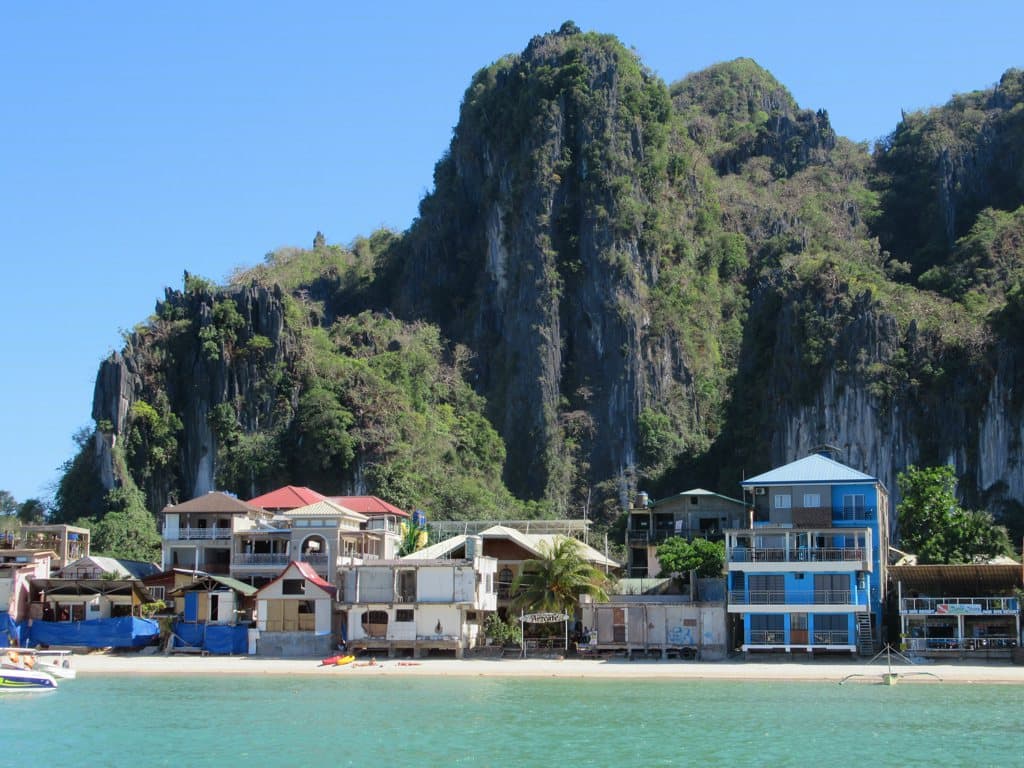
El Nido, Palawan · Year-round
First light on the Taraw cliffs
El Nido faces west, so the town’s dawn show is reflected: the rising sun lights the limestone wall behind town gold while the bay is still grey and the first tour boats load. Coffee on the beachfront around 5:45 to 6am gets the best of it.
 Joewen bragasin · CC BY-SA 4.0 via Wikimedia Commons
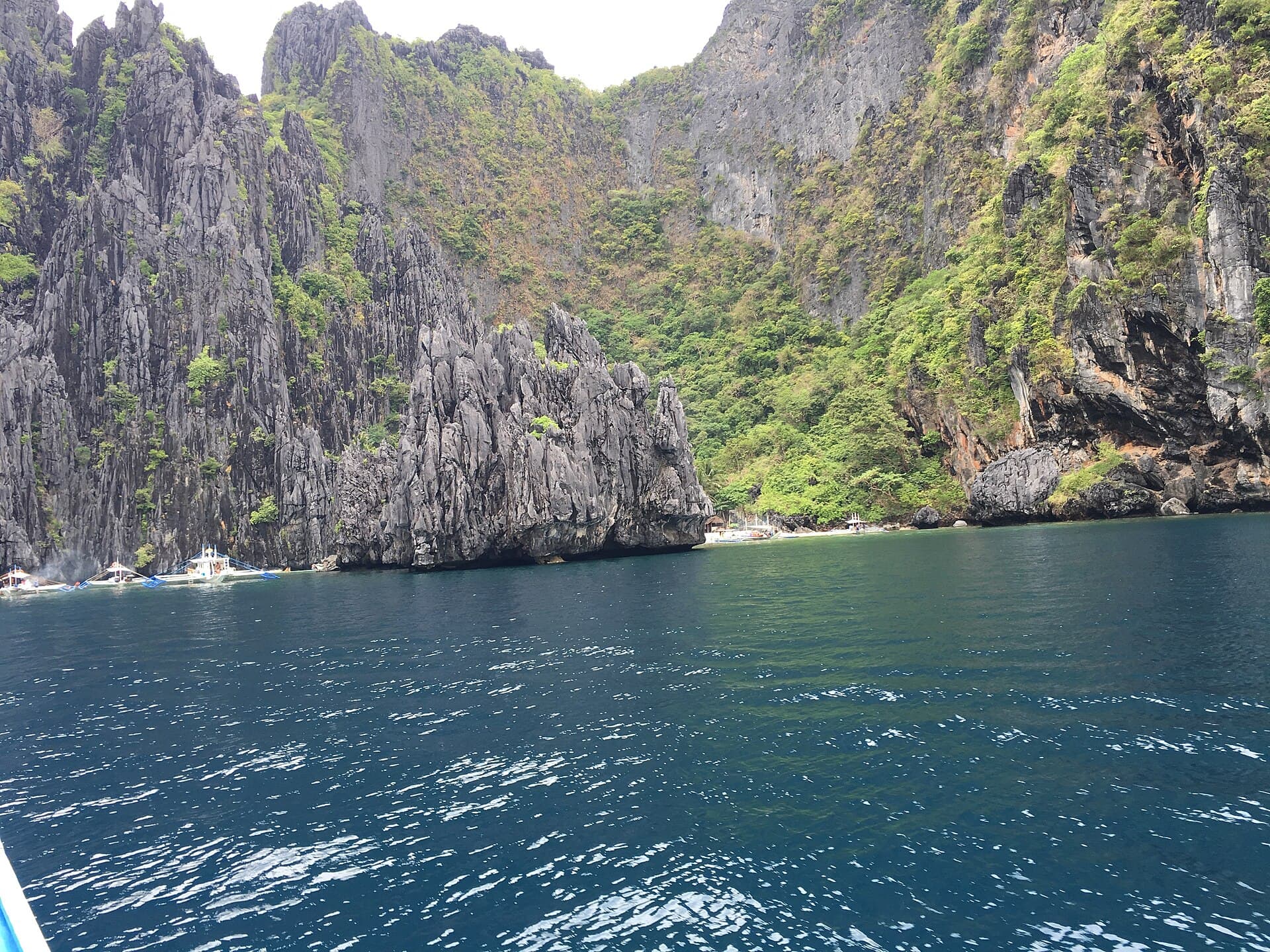
El Nido, Palawan · November to May
Nacpan at dawn
Sleeping on Nacpan buys the beach at its best hour: four kilometres of sand with nobody on it, fishermen pushing bangkas out through the shorebreak, and soft light before the day-trip tricycles arrive around mid-morning.
 Rob Mowe · Pexels
Paphos, Cyprus · Year-round
Petra tou Romiou
The one Paphos coast that faces the sunrise: the sea stacks stand out from a shore that runs east toward Limassol, so first light arrives from behind them, over open water in the winter months and further up the coast in high summer. Come at first light rather than a fixed hour, before the coaches: the floodlights are off and the pebbles are the colour of the rock.
 No machine-readable author provided. Mgiganteus assumed (based on copyright claims). · CC BY 2.5 via Wikimedia Commons
Paphos, Cyprus · April to October
The Kouklia ridge above the coast
From the ridge at Aphrodite Hills the land drops through carob and olive to a long open stretch of coast, and first light runs up it from the direction of Limassol before it reaches the sea below. A quiet alternative if you are already staying out this way.
 Shuichi Aizawa · CC BY 2.0 via Wikimedia Commons
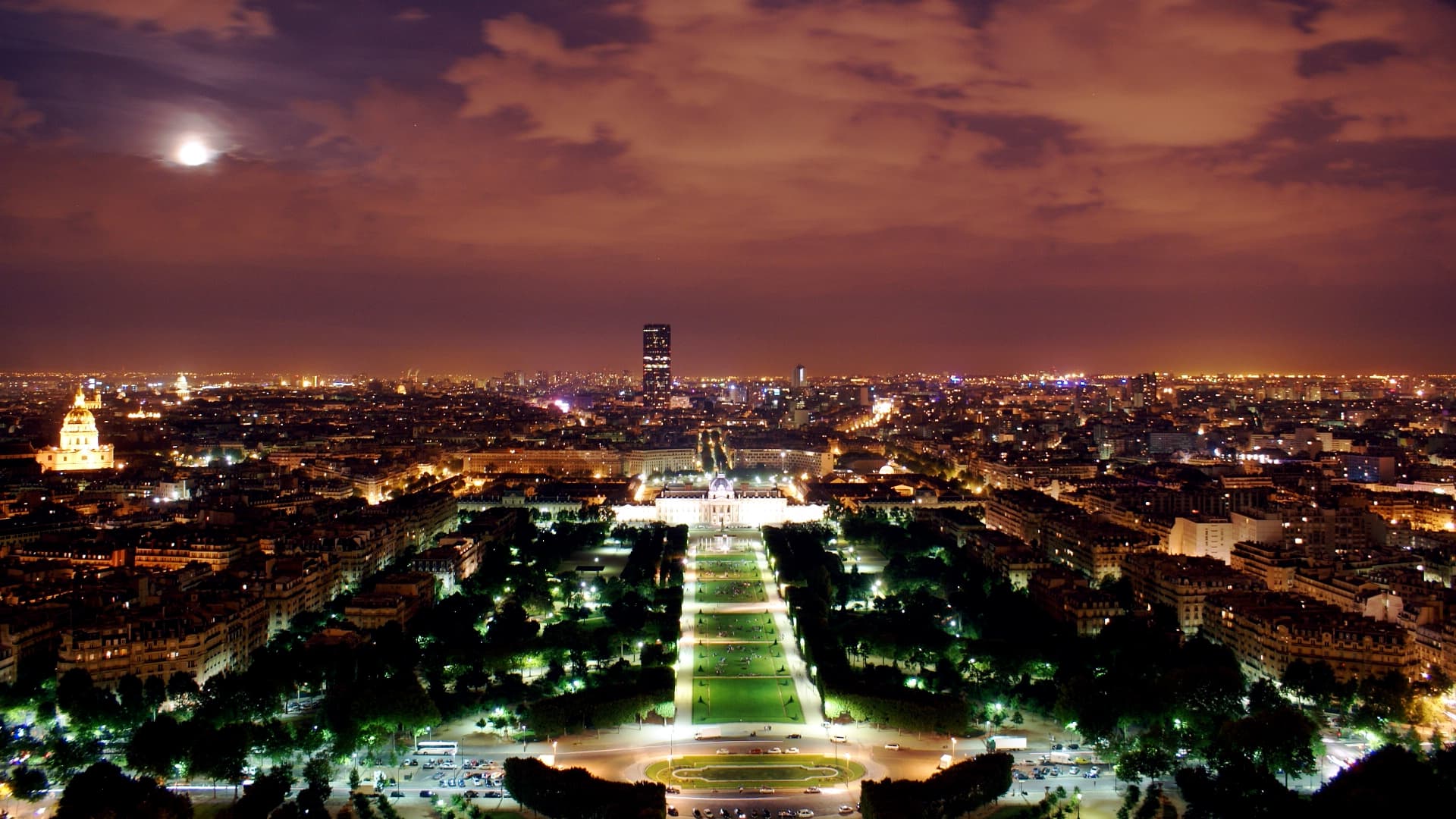
Paris · Year-round
Pont Alexandre III and the Seine
The ornate 1900 bridge catches the first light along the river, with the Eiffel Tower and Invalides framed at either end.
 Diliff, edited by Fir0002 · CC BY 2.5 via Wikimedia Commons
Paris · April to October
Montmartre vineyard and Rue Saint-Vincent
The small working vineyard just below Sacré-Cœur catches early light with almost no one else around before the day-trip crowds arrive.
 Winky from Oxford, UK · CC BY 2.0 via Wikimedia Commons
Patagonia: Torres del Paine and El Chalten · November to March; mornings only, as the towers are backlit after about 13:50
Base Torres, the towers in the morning
The three towers stand to the west of the lake at Base Torres, so they face the rising sun and turn red at first light while the lake below is still in shadow. From October to March the sun rises between about 85 and 129 degrees, over the low steppe to the east, and the tops catch it at or just before the table sunrise: about 05:36 at Chileno on 1 December and 06:57 on 15 February. On our SRTM model the lakeshore itself gets direct sun 20 to 30 minutes later in December and January, and roughly at sunrise in early November and mid-February, when the sun comes up through the gap of the Ascencio valley. The catch is the rule: CONAF prohibits walking the trails without daylight, and civil dawn at Chileno is about 04:52 on 1 December, 45 minutes before sunrise, while the climb from Chileno takes well over an hour and a half. So the famous sunrise photograph means a hike in the dark that the park forbids. We would leave at first light and arrive to towers lit straight on for the rest of the morning.
 LBM1948 · CC BY-SA 4.0 via Wikimedia Commons
Patagonia: Torres del Paine and El Chalten · Year-round; October to March if you are on the penguin boat
The Costanera, Punta Arenas, over the Strait of Magellan
The waterfront road of Punta Arenas faces east across the Strait of Magellan to the low shore of Tierra del Fuego, so the sun comes up out of the water or over that flat distant coast all year, within a few minutes of the table time. The sunrise bearing swings from about 50 degrees in June, over the north-east of the strait, to about 133 degrees in December. Sunrise is about 05:11 in mid-December, 07:12 on 1 October and 09:59 at its latest on 1 July. The penguin boats check in at 06:00 to 06:30, so in October and March you see the sunrise from the boat; from November to January the sun is up before check-in.
 Jorge Cachambi · Pexels
Patagonia: Torres del Paine and El Chalten · October to April
Laguna de los Tres and the Fitz Roy
The east face of the Fitz Roy looks straight down the valley toward the steppe, which is why it glows orange at sunrise: the summit sees the sun at the table time over the flat country to the east, about 05:41 at El Chalten in mid-December and 07:22 on 1 October. On our terrain model the sun reaches the lake viewpoint itself within a quarter of an hour of that from October to March. Seeing it means sleeping near the top of the trail and climbing the last steep 400 metres in the dark, and the town portal’s own advice is to plan the walk around daylight; check the current park rules at the portal before you plan it. Laguna Capri, lower on the same trail, gets direct sun 27 to 52 minutes after sunrise but has the Fitz Roy reflected in it on a still morning.
 C messier · CC BY-SA 4.0 via Wikimedia Commons
Peloponnese · Year-round; September and October give the calmest sea
The sea walls of Monemvasia
The rock faces due east into open water, and the lower town sits on that seaward face, so sunrise comes straight up out of the Myrtoan Sea in front of the walls with nothing in the way. In September that is around 07:00 to 07:20 by Greek time, and creeps to about 07:45 by 24 October; the clocks then go back and it drops to around 06:50 for the rest of the month. Either way it is a civilised hour, and the lane is empty. Walk to the far end of the sea wall by the church of Panagia Chrysafitissa for the widest horizon.
 Adrien Olichon · Pexels
Peloponnese · Autumn to spring for the sun over the water; year-round for the walk
Arvanitia promenade, Nafplio
The paved path around the base of the Acronafplia rock, from the harbour to the Arvanitia cove, looks south-southeast over the Argolic Gulf, which makes it Nafplio’s morning walk rather than its evening one. Nobody is on it at seven except swimmers heading for the cove.
 Thomas Quine · CC BY 2.0 via Wikimedia Commons
Peru: Cusco & Machu Picchu · Dry season (May to October)
Machu Picchu, first entry
There is no separate sunrise ticket; book the earliest entry slot and take the first bus up from Aguas Calientes for the quietest light over the ruins.
Thomas Quine · CC BY 2.0 via Wikimedia CommonsPeru: Cusco & Machu Picchu · Dry season (May to October)
Intipunku (the Sun Gate)
The pass where the Inca Trail meets the citadel gives the classic elevated view back over Machu Picchu in the morning.
 Wikimedia Commons · CC BY-SA 3.0 via Wikimedia Commons
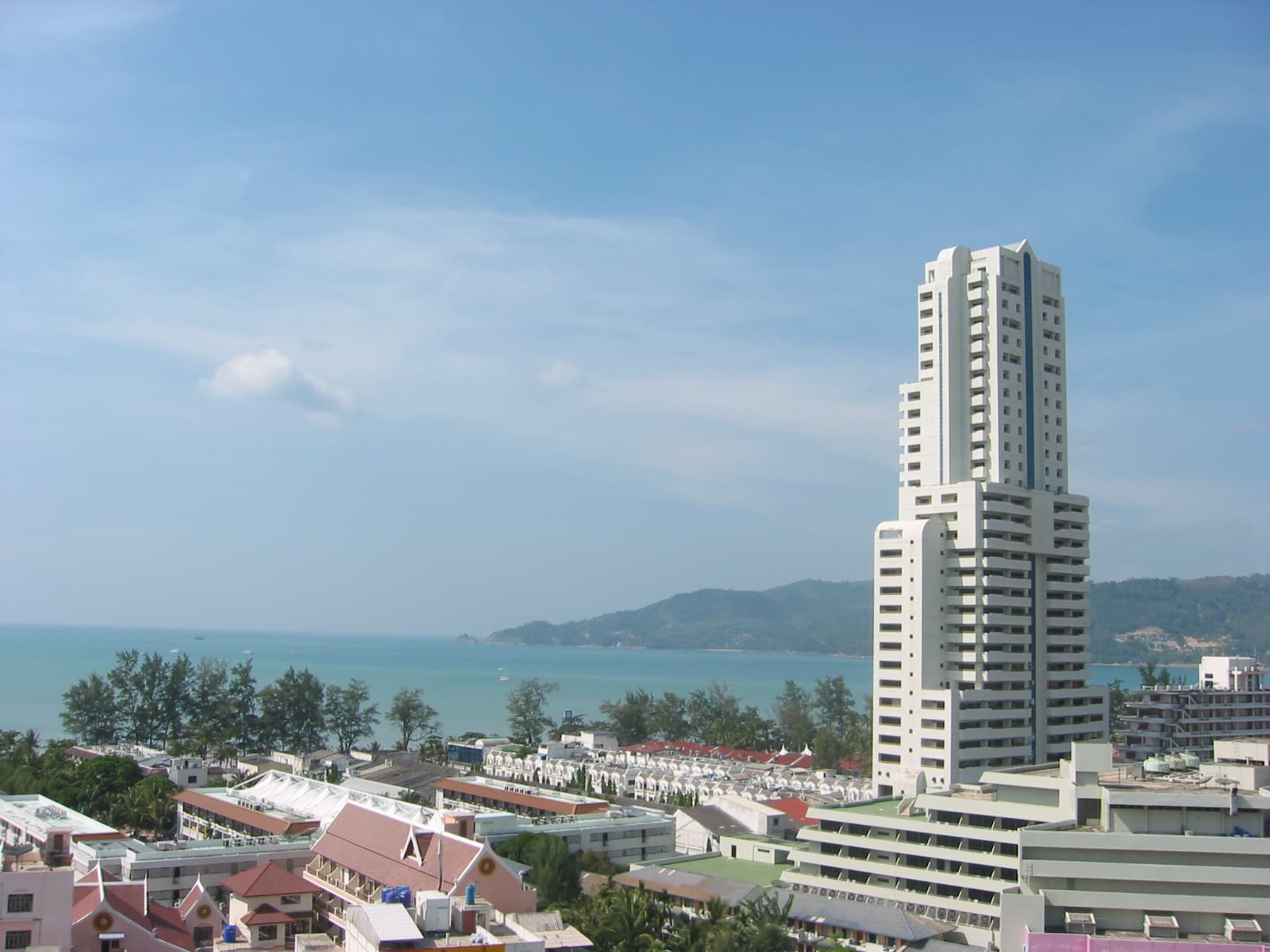
Phuket · November to April
Cape Panwa and Ao Yon (southeast)
The southeast peninsula faces Phang Nga Bay and catches first light over the water, a quiet counterpoint to the sunset-facing west coast.
 Dilek Tunç · Pexels
Prague · Year-round; September and October for river mist
Charles Bridge before seven
The most photographed bridge in Central Europe is genuinely empty at 6am, and in autumn there is mist coming off the Vltava under it. Walk east to west so the castle is ahead of you catching first light, then keep going into Mala Strana while the lanes are still shuttered. By 9am the same 516 metres is a slow-moving crowd. This is the strongest argument for jet lag in Prague.
 User:Miaow Miaow · Public domain via Wikimedia Commons
Prague · Year-round; spring and autumn for clean light
Vysehrad ramparts at first light
The Baroque walls above the river face north-west down the whole line of the Vltava, so at sunrise the castle ridge two kilometres away lights up while you are still in shadow. The ramparts and grounds are open and free at that hour, and joggers and dog walkers own them; the Slavin cemetery keeps its own posted hours and opens later, so save it for the way back. Follow the river path back into town for breakfast at Naplavka.
 ŠJů (cs:ŠJů) · CC BY-SA 3.0 via Wikimedia Commons
Prague · Year-round
Tram 22 up to the castle with the commuters
Board tram 22 on the left bank and ride it up through Mala Strana and the hairpins to Prazsky hrad or Pohorelec while the city is still going to work. The route climbs past the Baroque palaces, threads under the castle walls and delivers you to Hradcany before the ticket offices open, for the price of a single ticket in the app. Sit on the right going up. The cheapest good view in the city.
 Wikimedia Commons · CC BY-SA 3.0 via Wikimedia Commons
Provence · Mid-May to early September, when the summit road is open and the sun rises over the high Alps
The summit of Mont Ventoux
Sunrise over the Alps. From 1,910 metres the sun comes up over the high peaks 100 to 110 kilometres to the east, over the southern Écrins around Freissinières from mid-May to the end of July and over the Ubaye peaks near Barcelonnette in April and August, within a minute of the almanac time; in winter, when the road is shut, it would rise up to six minutes early over the lower ranges. On 21 June the almanac says 05:55 and the Alpine sunrise comes a minute earlier.
 Nuno Alves · CC BY-SA 4.0 via Wikimedia Commons
Provence · Mid-June to mid-July, for the flowers
The Valensole plateau
The lavender sunrise, and a late one. The Préalpes de Digne stand 18 to 26 kilometres to the east, the Montdenier and L’Agra above Saint-Jurs in summer, the mountains above Moustiers at the equinoxes, and the sun clears them 18 to 22 minutes after the almanac time from April to August: about 06:12 on 21 June against 05:53. That extra time is useful: the fields are in soft, blue light before the direct sun reaches them.
 Sebleouf · CC BY-SA 4.0 via Wikimedia Commons
Provence · All year; best early in the morning before the coaches
Gordes from the east
The classic view of Gordes is from the D15 below the village to the east, looking back at the houses stacked up the rock. Morning is when the sun is on them. In summer the Monts de Vaucluse above Saint-Saturnin-lès-Apt hold the sunrise about 15 minutes late, so the village takes the first light around 06:11 on 21 June; at the equinoxes the delay is only three or four minutes.
 Wikimedia Commons · Public domain via Wikimedia Commons
Queenstown · Year-round
Queenstown Hill Time Walk
A walking track above town facing east over Lake Wakatipu and The Remarkables, catching early light on the peaks before the town wakes.
 Mahmoudalrawi derivative work: MagentaGreen · CC BY-SA 4.0 via Wikimedia Commons
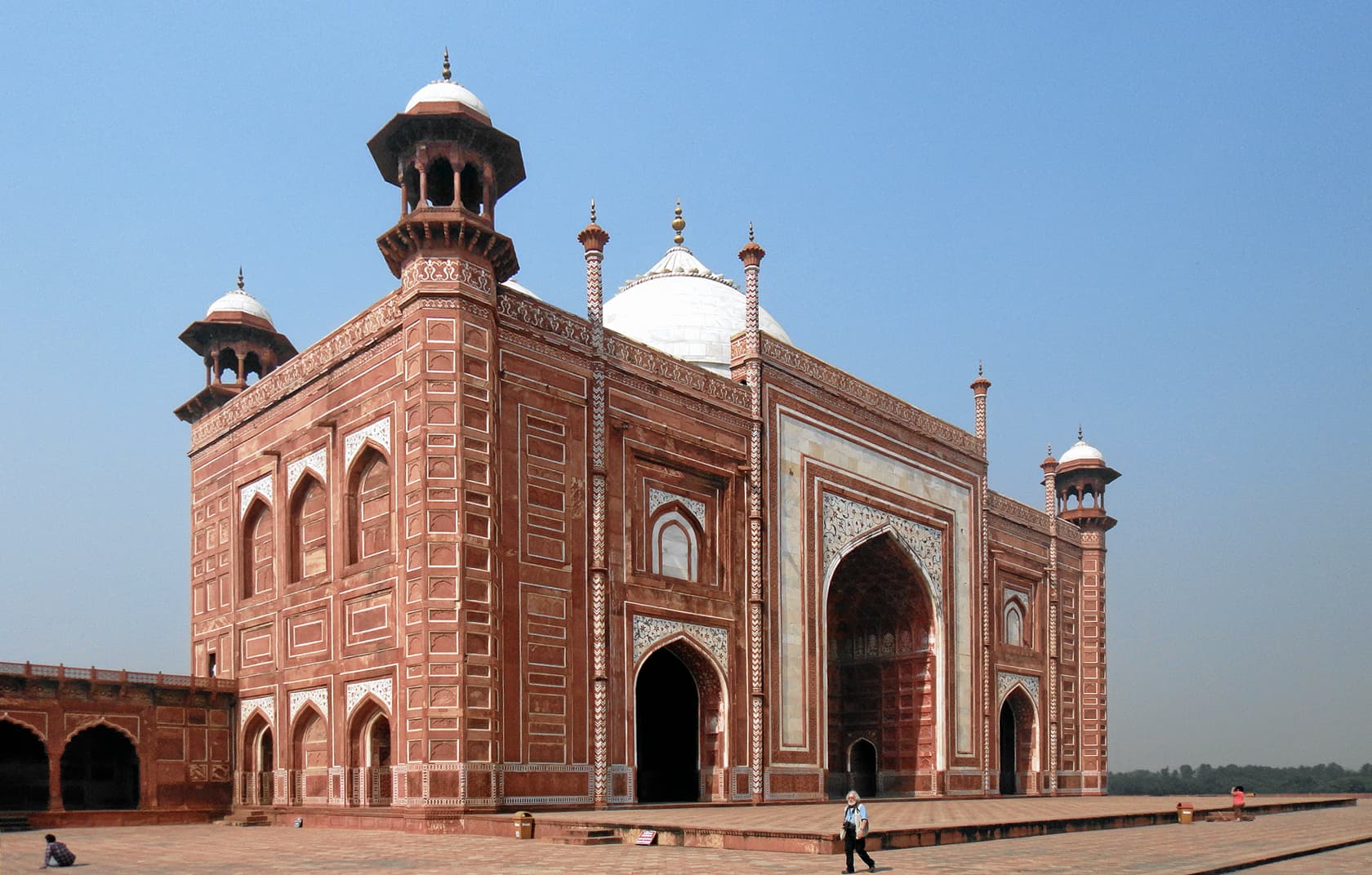
Rajasthan Golden Triangle · October to March
Taj Mahal at sunrise
The marble shifts color in early light and the crowds are far thinner than midday; the site opens near dawn for exactly this.
 Dhirad, picture edited by J. A. Knudsen · CC BY-SA 3.0 via Wikimedia Commons
Rajasthan Golden Triangle · October to March
Fatehpur Sikri early morning
The abandoned Mughal capital is cooler, quieter and better lit for the sandstone before the tour buses arrive from Agra.
 George Alex · Pexels
Rhodes · Year-round
Mandraki harbor and the deer columns
First light comes up over the harbor mouth where the bronze deer Elafos and Elafina top the columns legend assigns to the Colossus, with the three windmills and the fort of St Nicholas behind; the Old Town walls glow minutes later.
 dronepicr · CC BY 2.0 via Wikimedia Commons
Rhodes · May to October
Tsambika beach
The east-facing sweep of golden sand catches the sun rising straight out of the Aegean, with the monastery cliff in silhouette above; in summer you will share it only with the first swimmers.
 Diliff · CC BY-SA 2.5 via Wikimedia Commons
Rome · Year-round
Gianicolo (Janiculum Hill) terrace
The best sunrise panorama over the whole historic center, from St Peter’s dome to the Vittoriano, with almost nobody there before 7am.
 BeBo86 · CC BY-SA 3.0 via Wikimedia Commons
Rome · Year-round
Pincio Terrace, Villa Borghese
A closer, easier sunrise view over Piazza del Popolo and the rooftops toward St Peter’s, an easy walk from the Centro Storico.
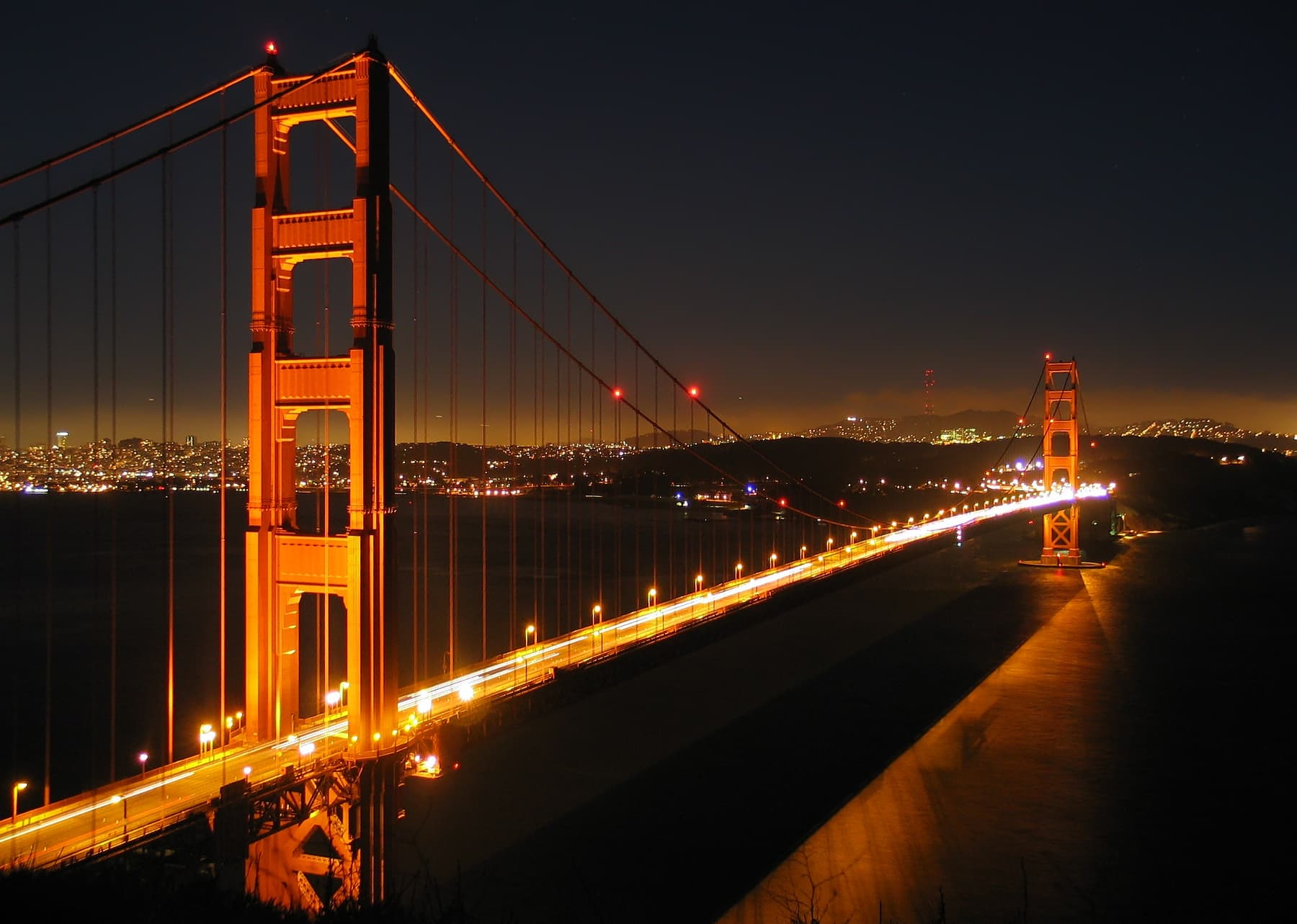 Image taken by Daniel Schwen · CC BY-SA 3.0 via Wikimedia Commons
San Francisco and Napa Valley · Year-round
Baker Beach
A mile-long Presidio beach with the Golden Gate Bridge and Marin Headlands in view; catches soft early light with far fewer people than midday.
 Pierre André · CC BY-SA 4.0 via Wikimedia Commons
San Francisco and Napa Valley · Year-round
A Napa hillside vineyard morning
The hillside terraces above Rutherford, such as at Auberge du Soleil, catch first light over the valley’s vineyards.
 Dim Leventis · CC BY-SA 2.0 via Wikimedia Commons
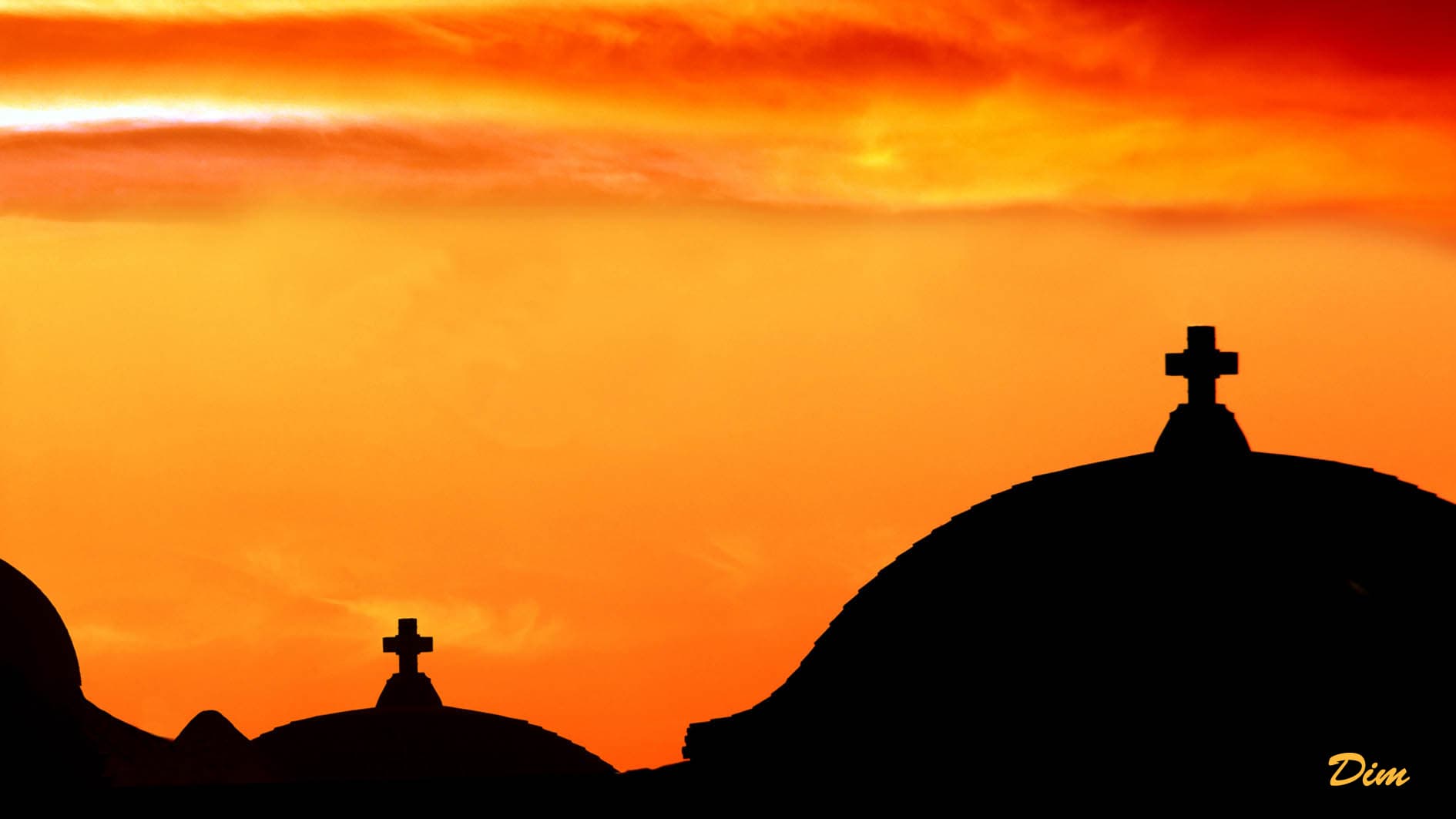
Santorini · Year-round
Pyrgos castle viewpoint
The hilltop ruins above Pyrgos face east over the island’s interior and the sea beyond, a quiet counterpoint to the caldera-facing crowds.
 Norbert Nagel · CC BY-SA 3.0 via Wikimedia Commons
Santorini · May to September
Kamari beach
The black-sand beach on the southeast coast faces the open sea, giving a clean sunrise without needing to fight for a caldera-facing spot.
 Chris · CC BY 2.0 via Wikimedia Commons
Sardinia · Year-round
Poetto beach, Cagliari
The city’s long beach looks out over the Gulf of Cagliari; the sun comes up over the water while the kiosks are still shut, with the Sella del Diavolo headland closing the western end.
 trolvag · CC BY-SA 3.0 via Wikimedia Commons
Sardinia · April to October
Cala Gonone waterfront
The Cala Gonone waterfront looks broadly east across the Gulf of Orosei: from the little harbour the sun comes up out of the sea before the first boats leave for the calas.
 Simon_sees from Australia · CC BY 2.0 via Wikimedia Commons
Seminyak · Year-round
Seminyak Beach at dawn
The west-facing beach is quiet and cool at dawn, good for a walk or a run along the empty sand before the beach clubs open.
 Arturbraun · CC BY-SA 4.0 via Wikimedia Commons
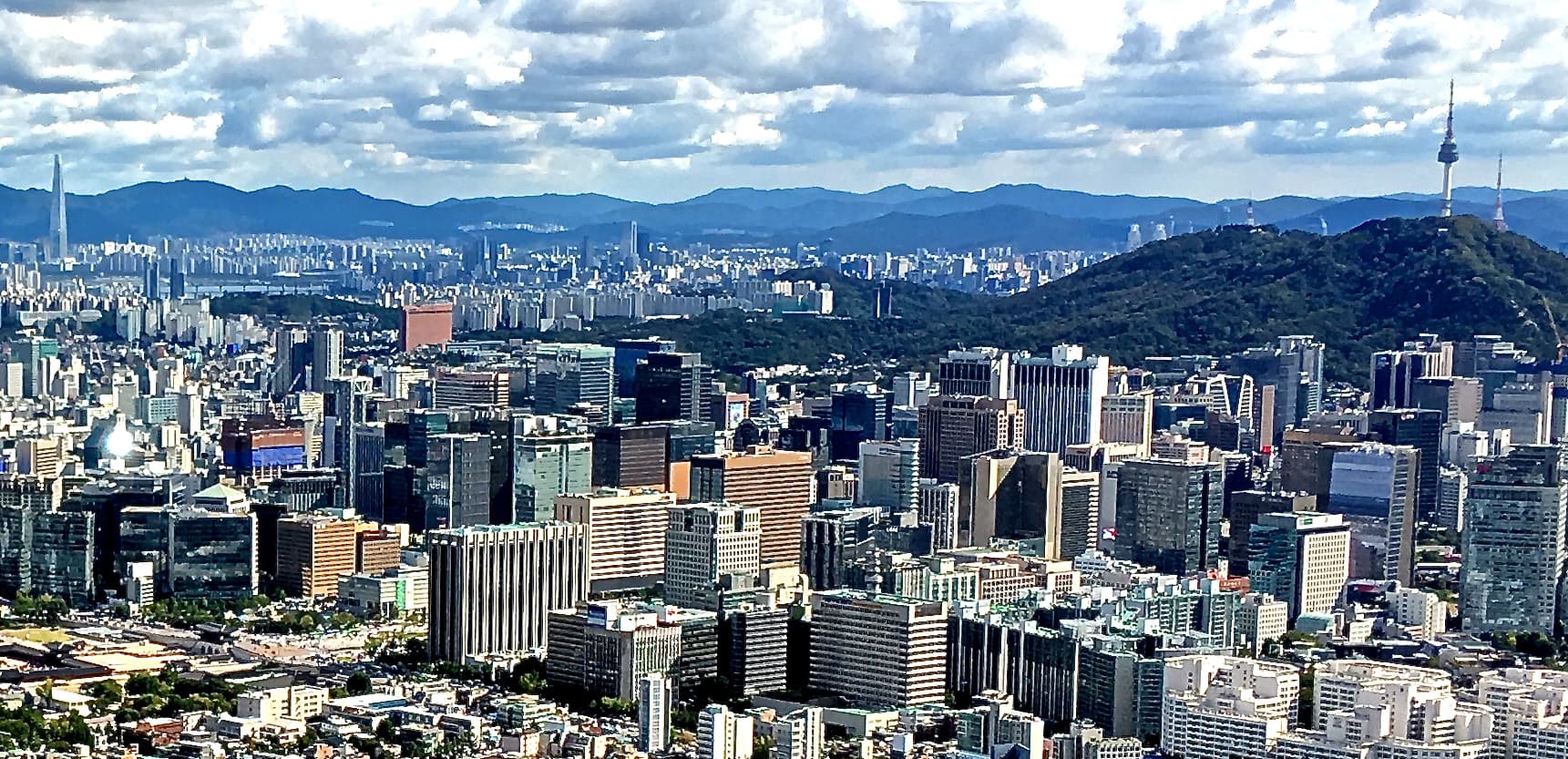
Seoul · April to October
Han River at Banpo Bridge
Quiet early light over the river before the Banpo Bridge fountain and evening crowds arrive, with the city skyline behind.
 Rajesh Chetty · Pexels
Seychelles · Year-round; sunrise moves only between about 05:53 and 06:28 all year
Anse Volbert and the east coast of Praslin
The east-facing bays get the light first, and under five degrees south of the equator the sun comes up fast: it clears the horizon a little after six every morning of the year, give or take about a quarter of an hour, and it is fully day within half an hour. Anse Volbert’s long shallow bay turns the whole thing pink at low tide. There is no season to wait for and no alarm-clock arithmetic to do, which is the underrated luxury of travelling under five degrees off the equator.
 Alexandre Moreira · Pexels
Seychelles · May to September, when the mornings are driest
Copolia at first light
The trail opens at eight, so this is a late sunrise rather than a dawn one, but the hour after opening is the one to take: the mist is still sitting in the valleys, the granite dome is empty, and Sainte Anne and its islands float below in flat morning water. An hour up, 100 rupees at the gate, and the best view-to-effort ratio in the country.
 Nicolas Chadeville · CC BY-SA 4.0 via Wikimedia Commons
Sicily · Year-round
Ortigia lungomare and Fonte Aretusa
The seafront path around Ortigia faces east over the Ionian Sea; quiet before the market and cafes open.
 Federico Alfio Maria Vinci · CC BY-SA 4.0 via Wikimedia Commons
Sicily · April to October
Piazza IX Aprile, Taormina
The terrace above the bay catches early light over the sea and Etna’s silhouette before the town wakes up.
 Someformofhuman · CC BY-SA 3.0 via Wikimedia Commons
Singapore · Year-round
East Coast Park
A long seafront park east of the city center facing the Singapore Strait, popular with joggers and cyclists at first light.
 Bernard Gagnon · CC BY-SA 4.0 via Wikimedia Commons
Split to Dubrovnik Road Trip · Year-round; autumn and winter for the sun over the water rather than the mountains
The Riva, Split, at first light
The harbour promenade in front of the palace faces south over the water, so at dawn the sun comes up on your left over the eastern side of the harbour and the mountains behind the city, and the first light runs along the palace’s sea front and the palm trees of the Riva before the cafes open. The bearing of sunrise swings from about 57 degrees in June, over the mountains inland toward Klis, through due east at the equinoxes to about 123 degrees in December, over Bacvice and the low coast beyond it. Because the horizon on that side is mountains, the sun clears them some minutes after the table time. Sunrise in Split is about 05:12 at its earliest in mid-June, 06:31 in mid-September, 07:18 on 24 October, 06:20 the day after the clocks change and 07:27 at its latest on the last day of the year.
 Diego F. Parra · Pexels
Split to Dubrovnik Road Trip · September to April, when the sun rises clear of the Srd ridge
Banje beach and the Ploce shore, Dubrovnik
From Banje beach, just east of the Ploce gate, the Old Town lies to the west-southwest, about 250 degrees, across the old harbour, which means the rising sun is behind you and falls straight onto the eastern walls, the Revelin fortress and St John’s tower at the harbour mouth. In summer it rises at about 57 degrees, behind the Srd ridge, which delays it; by December it rises at about 123 degrees, over the coast toward Cavtat, and lights the walls much sooner after dawn. Sunrise in Dubrovnik is about 05:09 at its earliest in June, 06:25 in mid-September, 07:10 on 24 October, 06:12 the day after the change and 07:14 at the winter solstice.
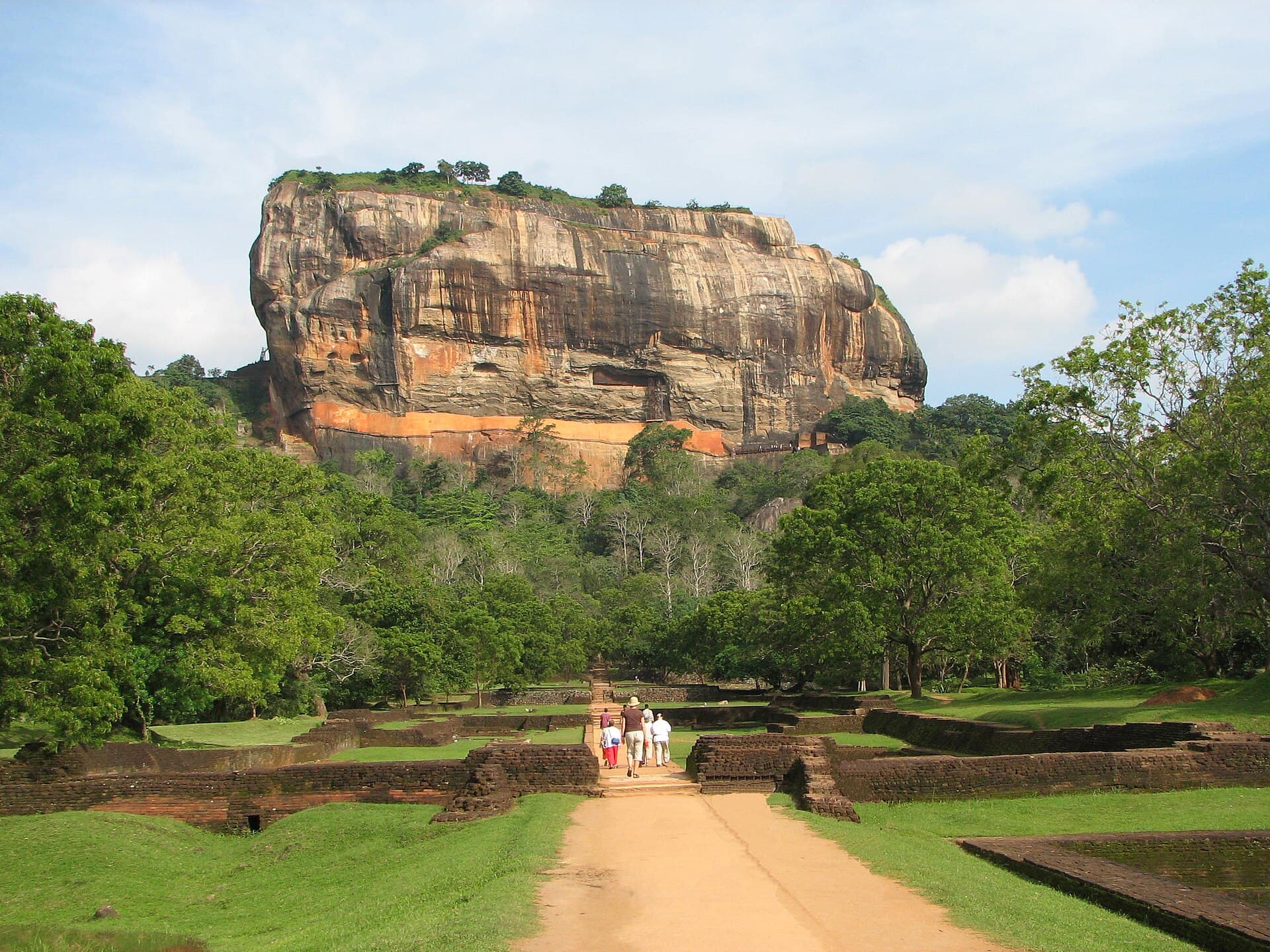 Bernard Gagnon · CC BY-SA 3.0 via Wikimedia Commons
Sri Lanka Round Trip · Year-round, clearest December to March
Sigiriya Rock summit
Start the climb before dawn and you reach the summit as the sun comes up over the surrounding jungle and lakes. It is also the coolest and quietest time to be on the rock.
 Gayomiw · CC BY-SA 4.0 via Wikimedia Commons
Sri Lanka Round Trip · December to March for the clearest skies
Ella Rock or Little Adam’s Peak
Hilltop viewpoints above Ella catching sunrise over the tea-covered ridgelines of the hill country.
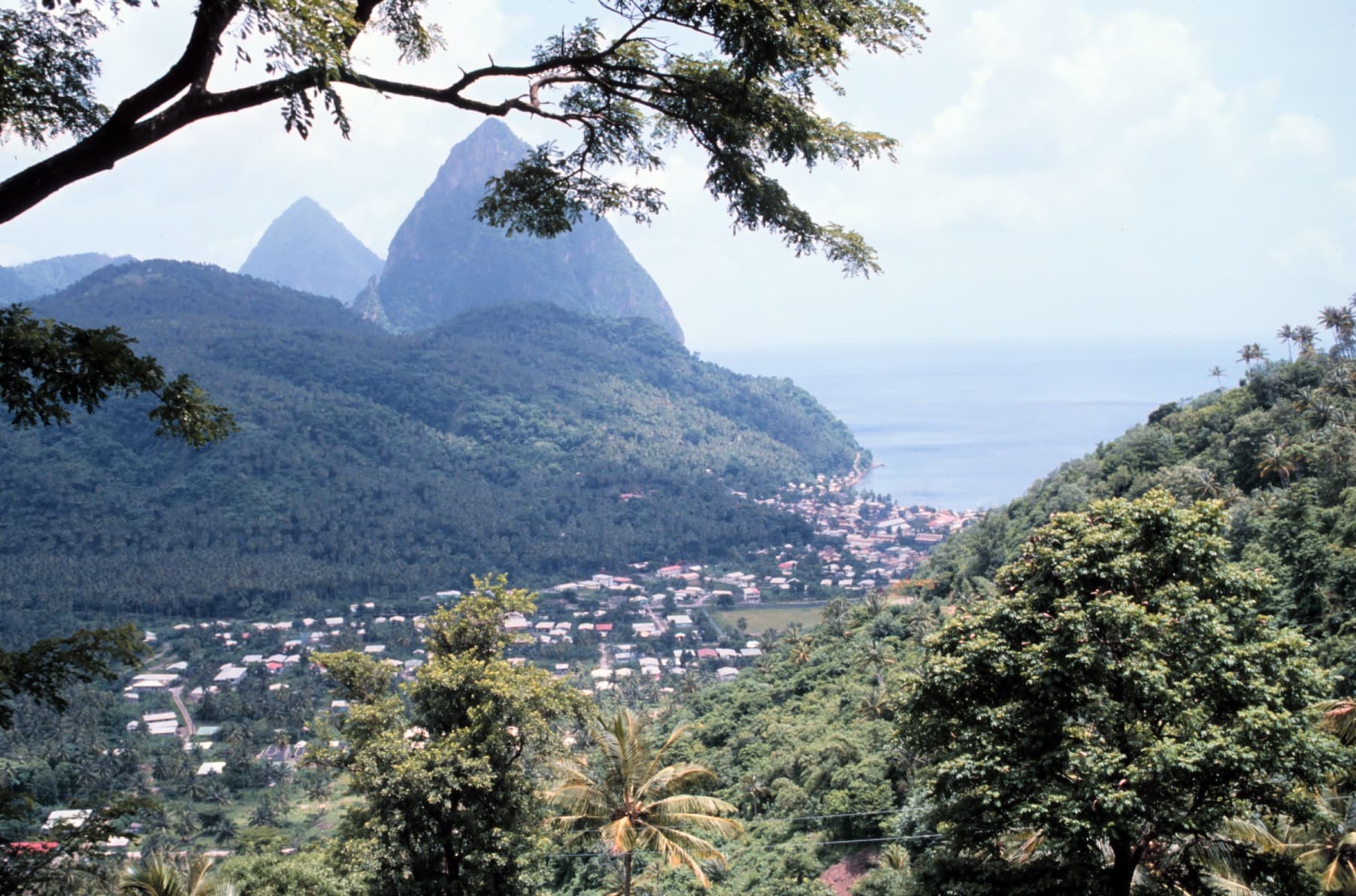 Wikimedia Commons · Public domain via Wikimedia Commons
St Lucia · December to June, before the day’s wind builds
Cas en Bas and the Atlantic dawn
The island faces its sunrises east into the Atlantic: from Cas en Bas beach over the hill from Cap Estate, first light comes up over the trade-wind surf with kitesurf rigs still furled and horses being led down for the morning rides. The north’s easiest dawn outing.
 Wikimedia Commons · CC BY-SA 3.0 via Wikimedia Commons
St Lucia · Year-round
First light on the Pitons
The Pitons face west, so dawn lights them from behind: from a Soufriere-side balcony or the jetty, the peaks emerge as silhouettes that slowly gain their green while the bay is still glass. The quietest hour in the busiest corner of the island, worth setting an alarm for at least once.
 Diliff · CC BY-SA 3.0 via Wikimedia Commons
Sydney · Year-round
Mrs Macquarie’s Chair
A carved sandstone point in the Royal Botanic Garden facing the Opera House and Harbour Bridge; first light catches both.
 Christian Mehlführer, User:Chmehl · CC BY 2.5 via Wikimedia Commons
Sydney · Year-round
Bondi Beach
The ocean-facing eastern beaches catch sunrise straight off the water, with early surfers and swimmers already out.
 Samar L. · Pexels
Tel Aviv · Year-round; summer for the cool hour, winter for storm light
The empty promenade, Jaffa to Frishman
The sun rises behind the city here, not over the sea, and the gift of dawn is the emptiness: the whole tayelet in soft pink light with only runners, swimmers doing laps inside the breakwaters and the first matkot players. Walk or ride north from Jaffa's hill as the sandstone catches colour, and finish with the first coffee at a beach kiosk as the towers light up. In summer this is also the only genuinely cool hour of the day.
 Chris Hunkeler from Carlsbad, California, USA · CC BY-SA 2.0 via Wikimedia Commons
Tel Aviv · Year-round
Park HaYarkon with the rowers
First light on the Yarkon is the city's quiet secret: sculls and kayaks on flat water, herons in the reeds, and the lawns to yourself before the day heats. Rent a bike and take the river path east as far as the mood holds, then loop back to the port for breakfast as its market opens. On Saturday mornings this is where half of secular Tel Aviv exercises.
 Ville Miettinen from Helsinki, Finland · CC BY 2.0 via Wikimedia Commons
Tokyo · Autumn to winter for clearest air
Tokyo Skytree, Sumida
Early observation-deck sessions catch sunrise over the eastern suburbs and, on clear winter mornings, Mount Fuji on the horizon.
 JJ Harrison (https://www.jjharrison.com.au/) · CC BY-SA 2.5 via Wikimedia Commons
Turkish Riviera (Bodrum to Antalya) · Year-round
Kaleiçi Roman Harbour, Antalya
The circular old harbor faces east across the Gulf of Antalya, so first light comes up over the water with the Taurus mountains catching pink behind the city; the marina is quiet and open before the day boats start loading.
 Nikita Pishchugin · Pexels
Turkish Riviera (Bodrum to Antalya) · May to October
Lara Beach, Antalya
The long sand strip east of the Düden cliffs looks southeast down the gulf, and summer sunrises come up directly over the sea, hours before the sunbed rows fill.
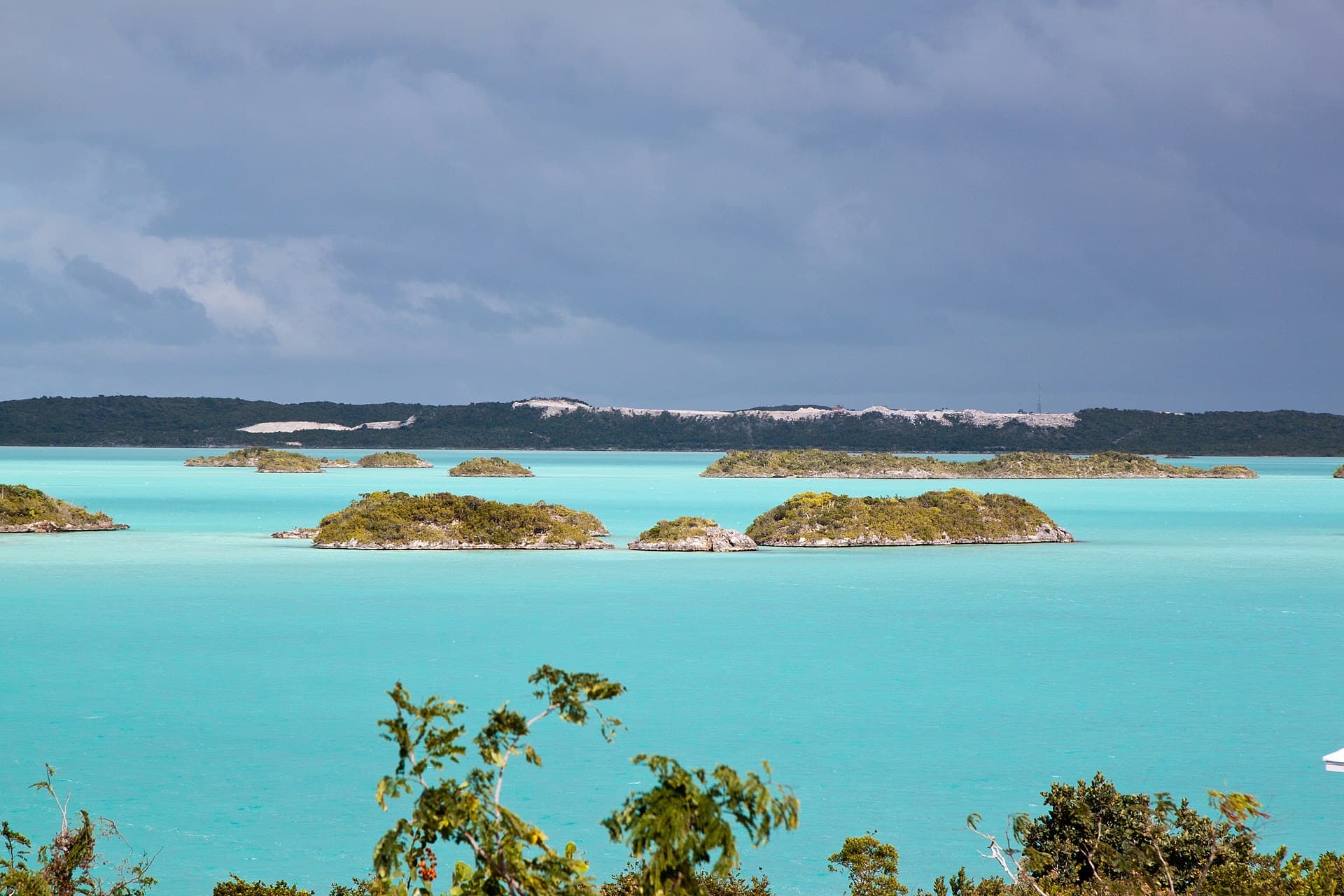 Tim Sackton · CC BY-SA 2.0 via Wikimedia Commons
Turks and Caicos · 10 November to early February
Long Bay Beach, in winter
The only beach on Providenciales where the sun comes up out of open Atlantic rather than over a cay or a headland, and only for part of the year. From roughly 10 November to the start of February the sunrise bearing swings far enough south, past 108 degrees, to clear the land and the banks to the east, and the light arrives across the shallow lagoon with the kite rigs still furled on the sand. Outside that window the sun rises behind the low ground and reefs off the eastern end of the island.
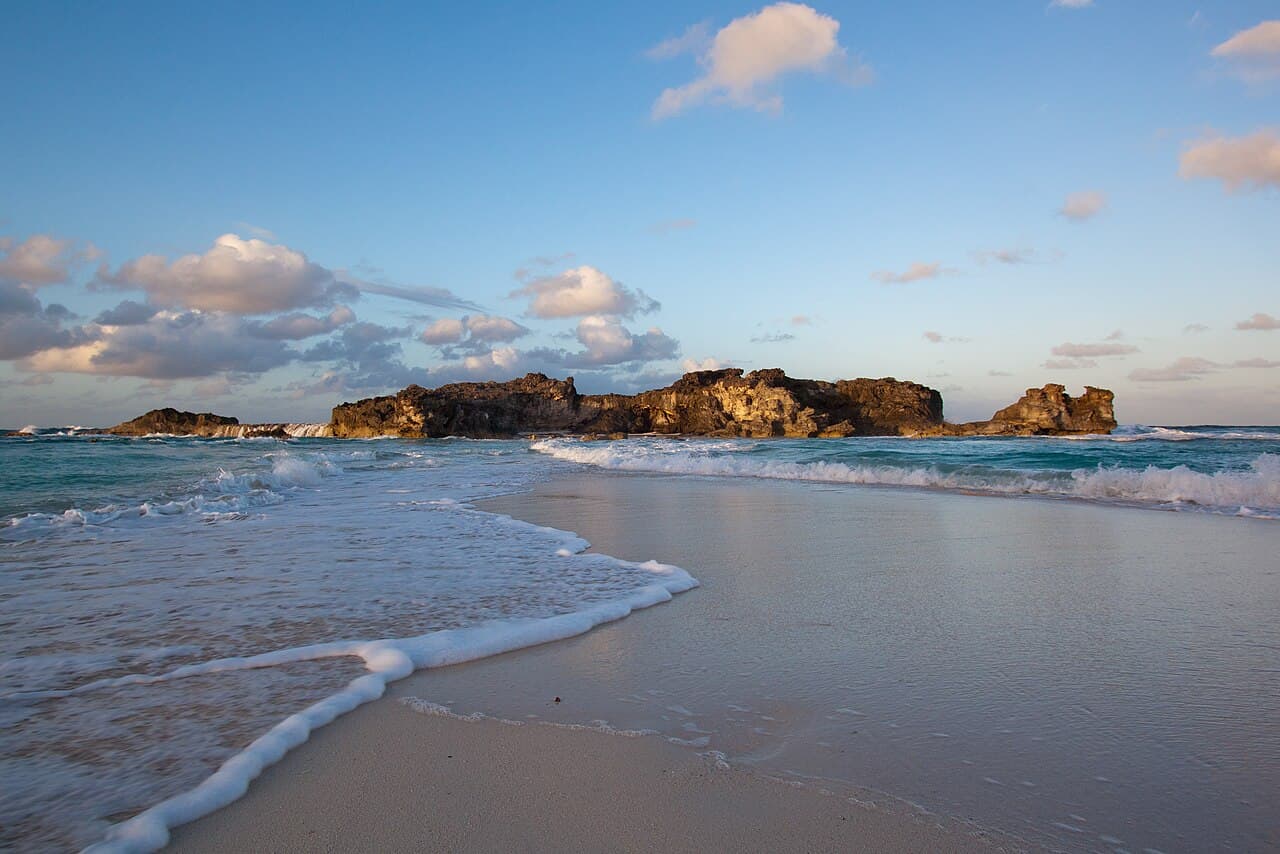 Tim Sackton · CC BY-SA 2.0 via Wikimedia Commons
Turks and Caicos · Late March to mid-September
Mudjin Harbour, Middle Caicos
The most dramatic coast in the country, and it faces the right way for most of the year: from late March to mid-September the sunrise bearing sits north of 87 degrees and comes up over open Atlantic beyond the cliffs and the blowholes. Standing on the bluff above the beach at first light, with the sea working the limestone below, is the single best hour we would plan for on these islands. In winter the sun rises behind the low land to the east instead.
 lo.tangelini from Soliera / Modena, Italia · CC BY-SA 2.0 via Wikimedia Commons
Tuscany · Year-round
Piazzale Michelangelo, Florence
The classic hillside terrace across the Arno; quiet and cool before the tour groups arrive, with the Duomo and the whole historic center laid out below.
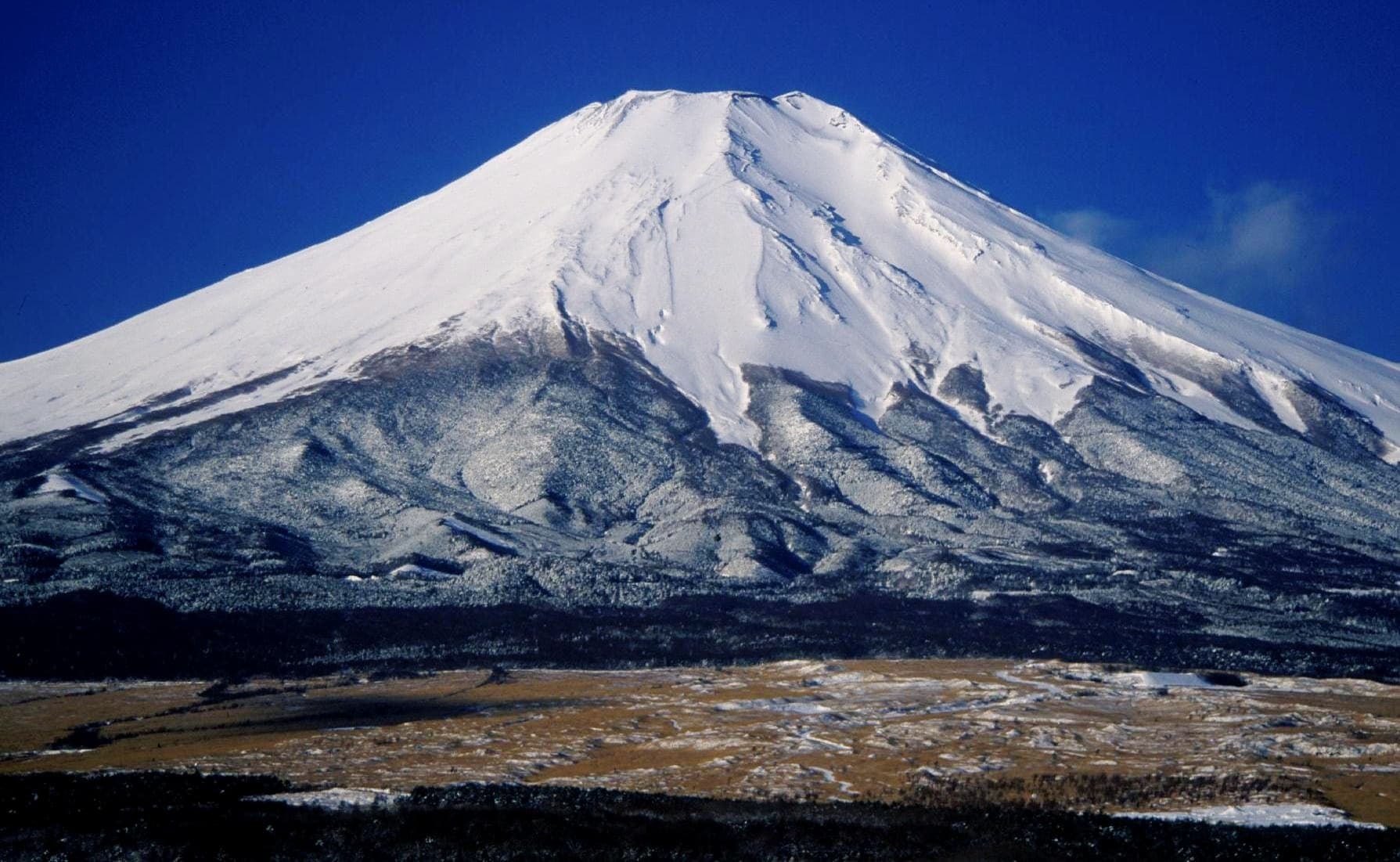 Alpsdake · CC0 via Wikimedia Commons
Two Weeks in Japan · Year-round
Tsukiji Outer Market at opening
Arriving as the market opens gives clean light on the stalls and the shortest lines for the freshest sushi breakfast in Tokyo.
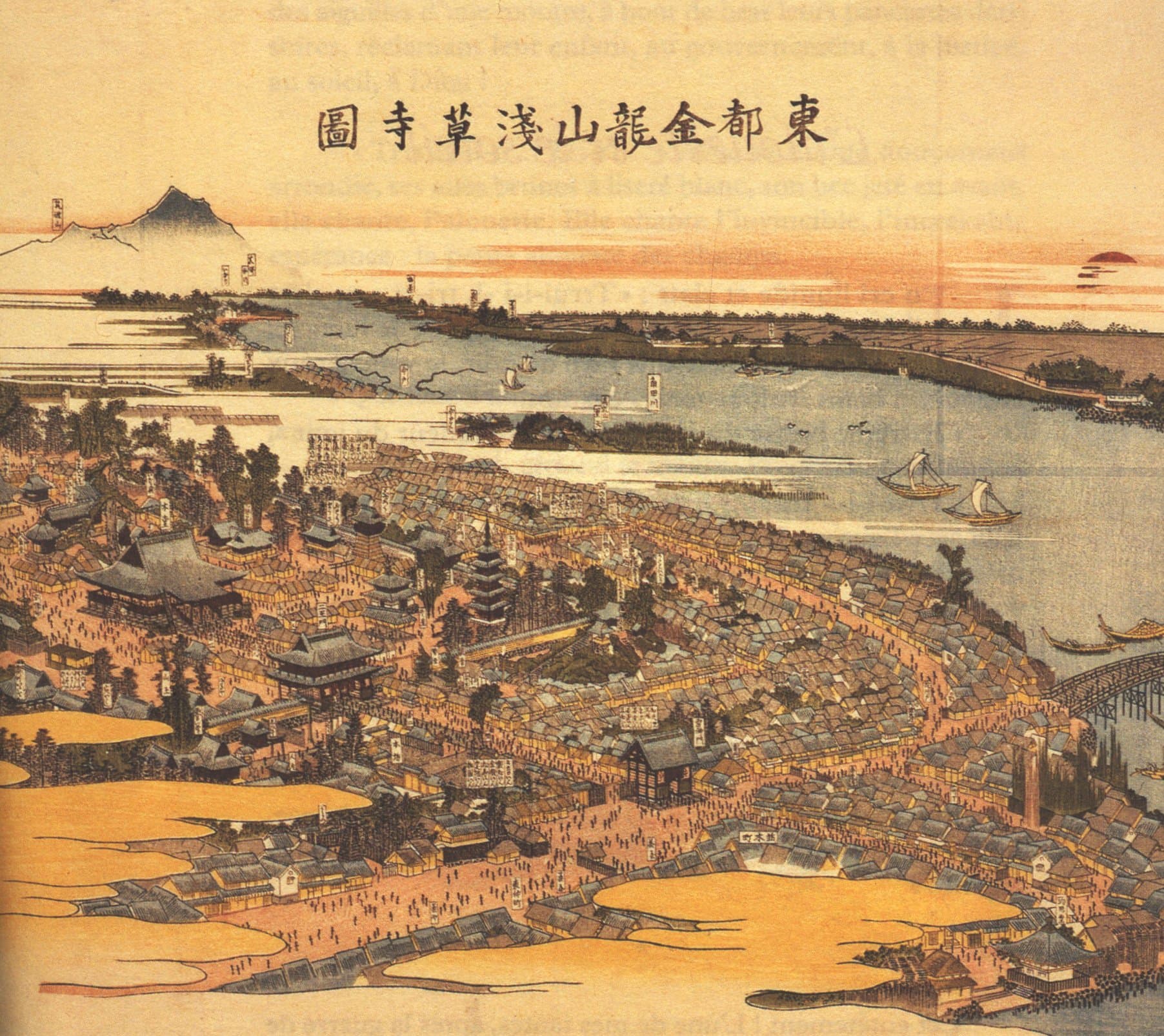 Hokkei · Public domain via Wikimedia Commons
Two Weeks in Japan · Autumn and winter for the clearest Fuji views
Lake Ashi, Hakone
Early morning on the lake, before the tour boats start, can catch still water and, on clear days, Mount Fuji reflected beyond the torii.
 Maros M r a z (Maros) · CC BY-SA 3.0 via Wikimedia Commons
Two Weeks in New Zealand · Year-round
Lake Wakatipu from Queenstown
The lake and the Remarkables catch early alpine light; the town waterfront and the Frankton arm are easy, calm spots before the day starts.
 Karora · Public domain via Wikimedia Commons
Two Weeks in New Zealand · Year-round
Lake Taupō, central North Island
The huge lake faces east across the water to the sunrise, with the Tongariro peaks on the southern horizon.
 Wikimedia Commons · CC BY-SA 3.0 via Wikimedia Commons
Ubud · Year-round
Campuhan Ridge Walk
The paved ridge catches first light over two green valleys, and an early start gets you along it before the heat and the crowds.
 Arabsalam · CC BY-SA 4.0 via Wikimedia Commons
Ubud · April to October (dry season)
Mount Batur summit
A pre-dawn trek up an active volcano northeast of Ubud for sunrise over Lake Batur and distant peaks.
 Christian Mehlführer, User:Chmehl · CC BY 2.5 via Wikimedia Commons
Utah Mighty 5 and Grand Canyon Road Trip · All year; best September to October
Bryce: Sunrise Point and Bryce Point
The rim faces east over lower country, so the sun comes up on time or early: in October within three minutes of the almanac at Sunrise Point, and from November to February a few minutes early, because the observer stands above the horizon. Only from late April to mid-August does the Aquarius Plateau, 25 to 30 kilometres away, hold it back, by seven to ten minutes. The light hits the hoodoos below you first.
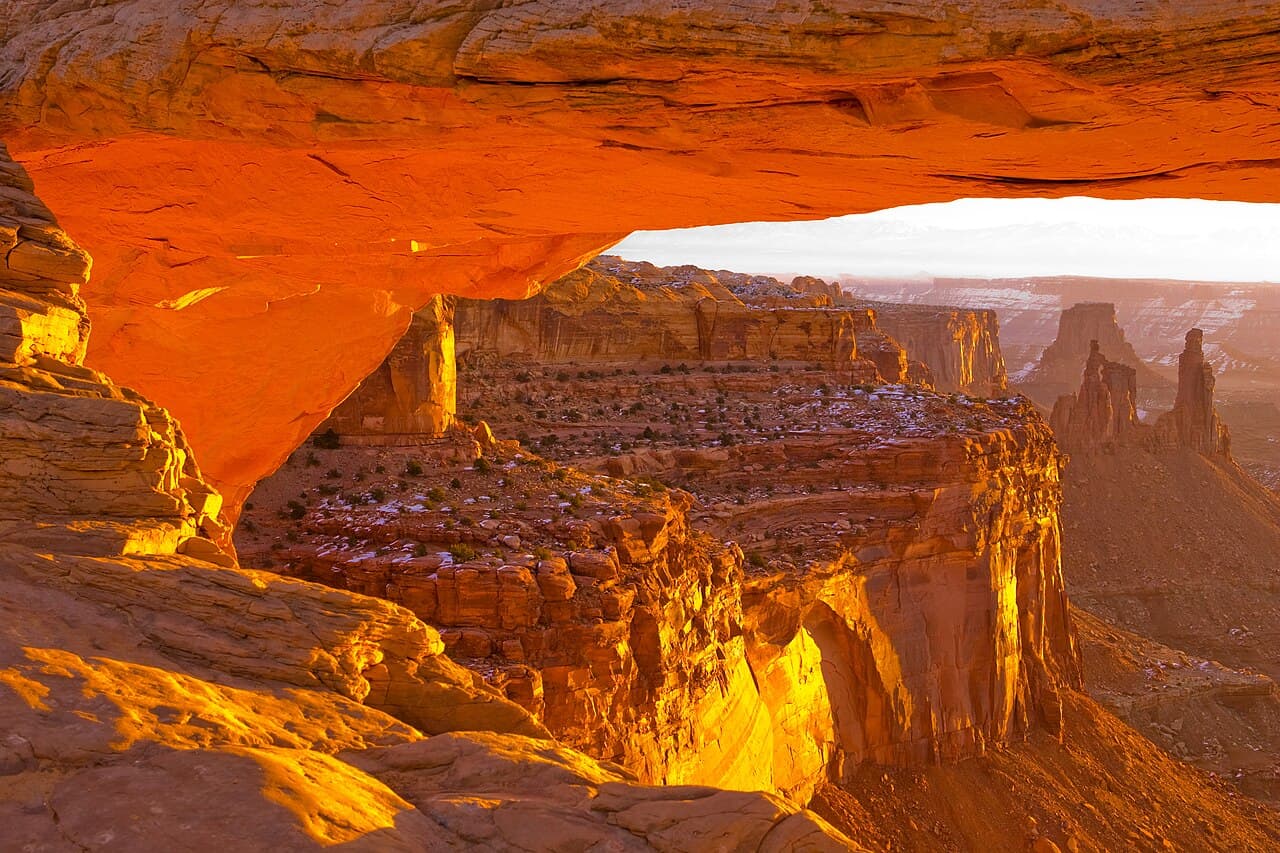 Alwynloh · CC BY-SA 4.0 via Wikimedia Commons
Utah Mighty 5 and Grand Canyon Road Trip · October to early March for an open horizon
Mesa Arch, Canyonlands
The arch frames the canyon below and glows on its underside when the sun rises behind it. From October to early March the horizon is open and the sun appears within three minutes of the almanac. In spring and late summer it rises behind the La Sal Mountains, 55 kilometres away, seven to eleven minutes late.
 Moyan Brenn from Italy · CC BY 2.0 via Wikimedia Commons
Utah Mighty 5 and Grand Canyon Road Trip · All year; the Merrick Butte sunrise in early October and early March
Monument Valley from The View
The classic dawn behind the Mittens and Merrick Butte. Our computation finds the sun rising from behind Merrick Butte, 2.3 kilometres away, between about 6 and 16 October and again from about 25 February to 7 March, up to 24 minutes after the almanac; on other autumn mornings it clears the open horizon close to on time.
 Bernard Spragg. NZ from Christchurch, New Zealand · CC0 via Wikimedia Commons
Utah Mighty 5 and Grand Canyon Road Trip · All year
Grand Canyon: Lipan Point and Mather Point
Both rims stand above an open horizon to the east. Lipan Point, near Desert View, sees the sun within four or five minutes of the almanac all year; Mather Point, by the main visitor centre, is open in early October and loses five or six minutes later in the month to the rim curving round to the east.
 Don Graham from Redlands, CA, USA - God bless it! · CC BY-SA 2.0 via Wikimedia Commons
Utah Mighty 5 and Grand Canyon Road Trip · All year
Zion: the canyon floor
Not a sunrise spot, but a fact to plan by: the walls hold the sun back for hours. On Zion Park Boulevard by the entrance it arrives 87 to 114 minutes after the almanac in October; on the canyon floor by Zion Lodge it arrives around 10:20 to 10:35, almost three hours late. Start the Narrows or the long hikes in shade and cool air; the light on the high walls is the show.
 Stavros Argiropoulos from Greece · CC BY-SA 2.0 via Wikimedia Commons
Venice · Year-round
Piazza San Marco at first light
The only realistic way to see the square without a crowd in it. Before about 7am there are pigeons, delivery trolleys and almost nobody, and the basilica facade takes low light beautifully.
 Marcello Rocchesso · Pexels
Venice · Year-round
Punta della Dogana
The stone point where the Grand Canal meets the Giudecca canal, facing east across the basin to San Giorgio and the Lido. Sunrise comes up over the water with the Salute dome behind you.
 Helena Jankovičová Kováčová · Pexels
Venice · Year-round
Rialto Bridge at dawn
The Grand Canal view everyone photographs, minus the several hundred people who are on the bridge by mid-morning. The market boats unloading below are the better subject.
 Harvey Barrison from Massapequa, NY, USA · CC BY-SA 2.0 via Wikimedia Commons
Zanzibar · Year-round
Paje or Jambiani beach (southeast coast)
The east-facing lagoon beaches catch clean sunrises over open water, quiet before the kitesurf schools set up for the day.