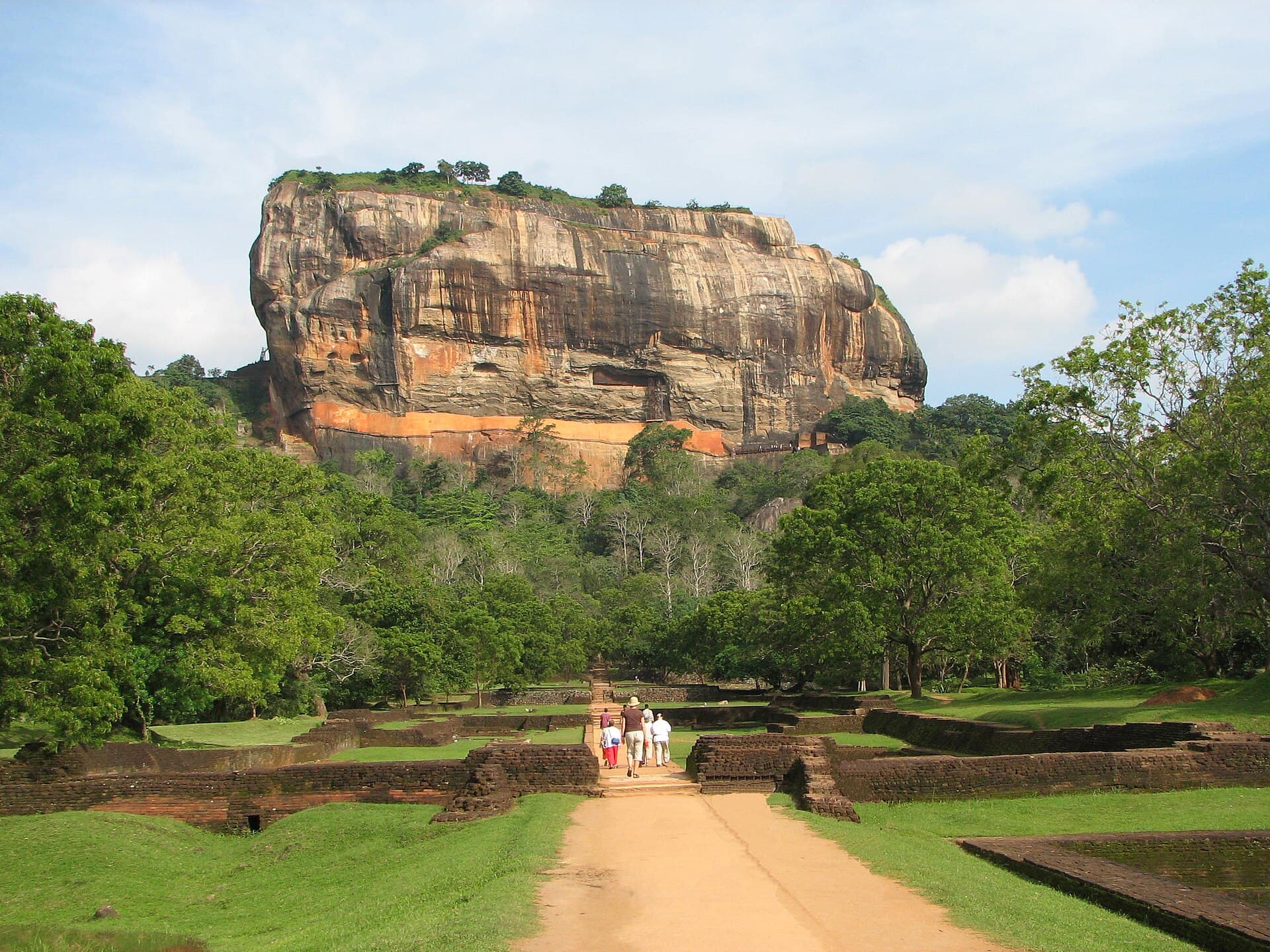
Sri Lanka · Matara District, the south coast
Mirissa
Get the free 30-day ETA online before you fly: Israeli passport holders have been on Sri Lanka’s free list since 25 May 2026, but the authorisation must be issued before arrival. From Colombo airport it is about 184 kilometres by road, most of it on the Southern Expressway, leaving at Kokmaduwa about nine kilometres from the harbour. Book a whale trip for the morning after you arrive: Raja and the Whales checks in at 06:00 and sails at 06:30, charges 20,000 rupees an adult, and runs daily from November to the end of April. Swim on Mirissa beach in the calm months only and near the lifeguards, walk up Coconut Tree Hill for a sunset between late August and mid-April, take a surf lesson in Weligama Bay, and go to Dondra Head or Talalla if you want a sunrise over the sea. Give the Hiriketiya Chabad house a call before you count on it, and expect no direct flight from Tel Aviv this season.
 Rovin Shanila / CC BY-SA 4.0 via Wikimedia Commons
Overview
Mirissa is a fishing town and a crescent of sand on the south coast of Sri Lanka, about 150 kilometres from Colombo in the district of Matara, and it is where most people on a Sri Lanka round trip come to stop moving for a few days. It is also the island’s main departure point for whale watching: blue whales, sperm whales and dolphins feed off the edge of the continental shelf south of here, and the boats leave the fisheries harbour at dawn from November to April. Around the bay are the postcard pieces, the palms of Coconut Tree Hill on the eastern headland, Parrot Rock in the middle of the beach and the small cove called Secret Beach behind the harbour. Ten minutes west is Weligama, a wide, gentle bay where beginners learn to surf, with a private island villa in it; 20 to 30 minutes east is Dondra Head, the southern tip of the island and its tallest lighthouse. For an Israeli reader this is familiar ground: a stretch of coast with a Chabad house in Weligama and a lot of Israeli travellers, which is also where local resentment of that presence boiled over in Hiriketiya in August 2026.
Come to Mirissa between December and March, book the earliest whale boat and choose the operator by its approach rules rather than its price. Raja and the Whales prints its own code: slow to under seven knots within 400 metres, never closer than 100 metres, engine in neutral if a whale closes the gap, and no swimming with the animals. The 100-metre minimum and the ban on swimming without the Director-General’s approval are in the 2012 regulations; the rest is the operator’s own code, and several cheaper boats ignore even the legal part. Then use the geometry we computed. Coconut Tree Hill is a true sea sunset from 29 August to 13 April, within half a minute of the almanac time; Parrot Rock from 1 October to 12 March; the middle of the beach only from 3 November to 8 February, and for the rest of the year the sun sets behind the western headland up to 13 minutes early. Weligama beach loses its sunset 20 to 31 minutes early all year behind the headland where Cape Weligama stands, and Cape Weligama itself, on top of that headland, has open sea from 1 September to 10 April but loses up to 26 minutes in June. For sunrise the whole bay faces the wrong way; Dondra Head sees the sun rise out of the sea from 8 August to 5 May, and Talalla beach from 4 February to 20 March and again from 24 September to 7 November. These are computed figures, good to about two minutes; palms and buildings are not in the model.
Best for
Couples · Whale watching · Beach days · Beginner surfers · Backpackers and slow travellers · Photographers
Daily itinerary
3 to 5 days
Two things about Mirissa need a calendar. The first is the sea. The whale boats run from November to April, when the south-west monsoon is over and the Galle station records average under 90 millimetres of rain a month from January to March; from May to September the same sea is rough enough that the main operator closes for three months and the beach itself has rip currents strong enough to keep the police lifesaving unit busy. The second is the sunset, which is not the sure thing the photos suggest. We ran every sunset of 2026 against the terrain: from Coconut Tree Hill the sun drops into open sea only from 29 August to 13 April, and from mid-April to late August it sets behind the Weligama headland instead. From the middle of Mirissa beach the sea sunset is shorter still, 3 November to 8 February. The cliff at Cape Weligama gets the open-sea sunset from 1 September to 10 April, and the beach at Weligama never does. Plan the sunset, not just the drink.
Best time to visit
Mirissa has the south-west coast’s weather, the opposite of Ella’s. The nearest long-running station is Galle, 34 kilometres west, and in the WMO 1991-2020 normals it is wettest in May, with 316 millimetres over 17 rain days, and in October, with 345 millimetres over 18 days, and driest from January to March, with 71 to 90 millimetres a month over six or seven rain days. June to August are wet but not the wettest, 162 to 184 millimetres a month, with a rough sea from the south-west monsoon; September climbs again to 261 millimetres. Temperatures barely move: the average daily high is between 29 and 32 degrees all year, and nights stay at 23 to 26. So the season is December to March, with November and April as the shoulders on either side, which is also when the whale boats run. Hambantota, 90 kilometres east along the same coast, is far drier in the monsoon months, 31 millimetres in July, which is why the beaches at Hiriketiya and Tangalle feel different in summer.
- December to March: The dry season on this coast: 71 to 90 millimetres a month from January to March at Galle, the calmest sea and the daily whale boats. Sunset into the sea from Coconut Tree Hill all season, from the middle of the beach until 8 February and from Parrot Rock until 12 March. Dondra Head has an open-sea sunrise all winter.
- April and May: April is a fair shoulder month with about 202 millimetres of rain and the last whale departures; Sinhala and Tamil New Year in mid-April fills hotels with Sri Lankan families. May is the wettest month at Galle, 316 millimetres, and the whale season is over.
- June to August: The south-west monsoon: 162 to 184 millimetres a month, a rough sea, red flags on the beach and the whale boats mostly tied up. Hummanaya blowhole near Dickwella is at its strongest. The east coast, Arugam Bay, is in its season instead.
- September to November: The second inter-monsoon, wet again in September and October, 261 and 345 millimetres. The Coconut Tree Hill sea sunset returns on 29 August, Parrot Rock’s on 1 October, the beach’s on 3 November. Whale trips restart in earnest in November.
Things worth knowing
- Poya days: every full moon is a public holiday in Sri Lanka, and alcohol is not sold, including on the beach. The remaining dates in 2026 are 25 October, 24 November and 23 December; the first of 2027 is 22 January.
- Sinhala and Tamil New Year (mid-April): the country’s biggest family holiday; south-coast hotels fill with Sri Lankan travellers.
- Whale season (November to April): the operators’ own calendar. Raja and the Whales runs daily from November to the end of April or early May, weather-permitting trips from August to October, and nothing from May to July.
- Galle Literary Festival: the festival has said it will return in 2027, in Galle Fort, an hour west; dates were not announced when we checked.
Where to stay
 dronepicr · CC BY 2.0 via Wikimedia Commons
Mirissa beach and Bandaramulla
The main crescent, about a kilometre of sand facing south between the fisheries harbour and Coconut Tree Hill, with Parrot Rock in the middle. Behind it the Bandaramulla lanes hold most of the guesthouses, the roti shop and the cafés; the beach restaurants put tables and lanterns on the sand at night. Everything here is on foot: the harbour for the whale boats is a 15-minute walk from the middle of the beach, the hill about ten.
Best for: No car · Beach evenings · Whale boats on foot · Short stays
Rip currents when the sea is up, above all from May to October: swim between the flags near the lifeguards. The beach faces south, so by our model the sun leaves the sand behind the western headland up to 13 minutes before the almanac sunset from February to early November, and the sea sunset is only from 3 November to 8 February.
 Mohamed Shafraz · Pexels
Coconut Tree Hill and Udupila
The laterite headland at the eastern end of the beach, topped by a much-photographed coconut grove, with the Udupila lanes and the Matara road behind it. The hotels here, Triple O Six on the main road and the guesthouses of Udupila, are a walk from both the hill and the beach. Ernst Haeckel drew these red cliffs at sunset in 1881.
Best for: Sunset on the hill · Quieter lanes · Couples
The hill is private land and the path can be closed or a small fee asked; it was fenced for a few weeks in early 2021. Steep, muddy after rain, and crowded at sunset in season.
 Alexey Komarov · CC BY-SA 4.0 via Wikimedia Commons
The harbour and Secret Beach
The western end: the fisheries harbour where the whale boats and the tuna fleet tie up, the operators’ offices on the road outside it, and, over the headland to the south, the small cove of Secret Beach with a couple of shacks. The Galle road runs past towards Weligama.
Best for: Early whale departures · A quiet cove · Watching the fishing fleet
Diesel and fish at the harbour end; Secret Beach faces south-west into the headland, so by our model it never gets a clean sea sunset and loses up to 18 minutes in June.
 Sergei Gussev · Pexels
Kamburugamuwa and the beaches towards Matara
East of the headland the A2 coast road passes a string of quieter beaches around the 153-kilometre post, where the small luxury hotels sit right on the sand: Sri Sharavi, the Lantern, Ubuntu and Imagine. Three kilometres from central Mirissa by the hotels’ own figures.
Best for: Small beachfront hotels · Couples who want quiet · A pool by the sea
A tuk-tuk to the beach restaurants and the harbour. The sea here is open and can be rough; these are pool-and-view stays in the monsoon.
 PIERRE ANDRE LECLERCQ · CC BY-SA 4.0 via Wikimedia Commons
Weligama Bay
A wide, shallow bay about six kilometres west, where the waves break slowly over sand and dozens of surf schools teach beginners. The town is a working place with a railway station, the Kushtarajagala rock carving, a fish market and the Chabad house on Buhari Masjid Road; the beach road has the Marriott, W15, hostels with rooftops and Taprobane Island, the villa on its own rock a short wade offshore.
Best for: Learning to surf · Families · The Chabad house · Big-hotel comforts
Not a swimming beach when the surf is up, and the bay is closed to the west by the headland: by our model the sun sets behind it 20 to 31 minutes before the almanac time every day of the year. Traffic on the coast road.
 Atlantic Ambience · Pexels
Midigama and Ahangama
West of Weligama the coast turns into reef points and surf camps: Lazy Left and Ram’s Right at Midigama, more breaks and cafés at Ahangama, and Cape Weligama on the headland between. This is where the surfers who have outgrown Weligama Bay stay.
Best for: Intermediate surfers · Surf camps and cafés · The Cape Weligama cliff
Shallow reef at Ram’s; the railway and the main road run between the guesthouses and the sea. Midigama beach itself loses the sunset up to 37 minutes in June and only sees a sea sunset from 17 October to 24 February.
 Malik Cil · Pexels
Hiriketiya, Dickwella and Talalla
An hour east, past Dondra: Talalla’s long empty beach, then Dickwella with its resort and the giant seated Buddha, and the horseshoe cove of Hiriketiya, a surf village with cafés and a Chabad house that opened in the summer of 2026. Sri Lanka Railways’ coastal line ends at Beliatta beyond.
Best for: A smaller surf bay · Retreat-style stays · A second base for the parks
Hiriketiya was the scene of protests against the new Chabad house from 14 August 2026, with stones and firecrackers thrown; check the house’s status before you plan a Shabbat there. Hiriketiya bay faces south-east and loses the sunset 19 to 67 minutes early by our model.
Where to sleep
Cape Weligama
luxury · Kalukanda Road, the Weligama headland
Best for: Couples · The cliff-edge pool · Sunset from 1 September to 10 April
- Resplendent Ceylon’s cliff-top resort, with a crescent Moon Pool on the edge of the headland and private and shared pools among the villas
- Three restaurants, The Atlas, The Society and the chef’s table Tableau, and a cove beach below
- By our terrain model the cliff sees the sun set into open sea from 1 September to 10 April, half a minute to a minute after the almanac
- From 11 April to 31 August the sun sets behind the headland to the north-west, up to 26 minutes early in June
- A drive from Mirissa’s beach restaurants and harbour
- Rates are not printed
Weligama Bay Marriott Resort & Spa
resort · 700 Matara Road, Pelana, Weligama
Best for: Families · A big-brand resort · Weligama Bay on foot
- A full resort on the bay road with pools, a spa and several restaurants: the Weligama Kitchen buffet from 06:30 to midnight, Big Fish for seafood from 19:00 to 22:30, the Mirissa Baking Company deli, Tides Bar and the Surf’s Up pool and beach bar
- The surf schools of Weligama Bay start at the door
- Marriott points and standards, useful for a first night after the flight
- A large tower resort, not a beach hideaway
- Weligama beach loses the sunset 20 to 31 minutes early behind the headland by our model
- Rates only through the booking engine; the hotel’s overview page blocked our reader, so the room count is unconfirmed
Ubuntu Beach Villas by Reveal
villa · 53A Galle Road, Kamburugamuwa
Best for: A whole villa for a family or two couples · A private beach section · Design
- Eight bedrooms and two pools in glass-fronted villas on a secluded stretch of beach away from the main bay, rented whole or as a four-room half
- A bistro and bar on site
- Half-board rates printed on the site from 25,000 rupees a person
- Whole-villa or half-villa only, so it suits groups more than a couple alone
- About three kilometres from central Mirissa; a tuk-tuk to the harbour and the beach restaurants
- Third-party clone listings exist; book through revealthecollection.com
Sri Sharavi Beach Villas & Spa
boutique · 153 km post, Galle Road, Kamburugamuwa
Best for: Couples · A saltwater pool · Yoga and a spa
- Fourteen rooms in four beach villas and a spa building, on the sand three kilometres east of Mirissa
- What the hotel calls the largest saltwater pool on the south coast, a spa, yoga and cooking classes
- The Beach Hut restaurant with Sri Lankan curries and the day’s fish; a Platinum Good Travel Seal for sustainability
- On the A2 coast road; a tuk-tuk to town
- Rates only on the booking page, with stay-five-pay-four and seasonal discounts
- The open sea here is not for swimming in the monsoon
Lantern Boutique Hotel by Reveal
boutique · 71 Galle Road, Kamburugamuwa
Best for: Couples · A small hotel right on the sand · Quiet
- Six rooms, Ocean Suites and Deluxe Ocean View, with balconies and terraces facing the sea
- On the beach away from Mirissa Bay, so uncrowded by the hotel’s own description
- The 71 Bistro and Bar with Sri Lankan-inflected cooking
- The hotel’s page does not mention a pool
- Remote from the beach restaurants; a tuk-tuk each way
- Clone booking sites use the Lantern name on several domains; the hotel books through revealthecollection.com
Imagine Villa Hotel
boutique · 234 Ekanaykawatta, Kamburugamuwa
Best for: Couples · Food · An infinity pool on the beach
- Ten beachfront rooms and suites with an infinity pool
- A kitchen led by a Belgian-Sri Lankan chef, with yoga on offer
- Describes itself as gay-friendly; three kilometres from Mirissa beach by its own figure
- Small, so it books out in season
- Rates not printed
- A tuk-tuk to town and the harbour
Mandara Resort Mirissa
resort · 416 A, the Weligama end of Mirissa
Best for: A resort with a spa · The river mouth · Plunge-pool rooms
- A pool and an Ayurvedic spa where the Polwathumodara river meets the sea, with the beach a few steps away by the hotel’s description
- Superior Sea View, Plunge Pool, Deluxe with Jacuzzi and Lagoon View rooms
- The Pandanus restaurant and other dining on site
- At the Weligama end of the bay, so Coconut Tree Hill and the harbour are a ride away
- A conventional resort format; the room count is not printed
- Its older domain mandararesort.com no longer answers; book on mandarahotels.com
Triple O Six
design · Bandaramulla, on the Matara road near Coconut Tree Hill
Best for: Large suites · Coconut Tree Hill on foot · Couples
- Suites of up to 100 square metres, named Triple O Six, Spice, Sugar and Salt, plus two room types
- A pool and a restaurant, and a walk to both the hill and the beach
- A direct-booking discount on its own site
- On the A2 main road, so expect traffic noise at the front
- No nightly rates printed
- The total room count is not printed
Paradise Beach Club Mirissa
value · 140 Ven. Gunasiri Mahimi Mawatha, Mirissa beach
Best for: On the main beach · An infinity pool · Walking to everything
- A beachfront hotel on the main crescent with an infinity pool and a restaurant on the sand
- The whale-boat harbour and Coconut Tree Hill both within a walk
- A beach-club setting: sunbeds, the pool and the restaurant open straight onto the sand
- Several copycat domains use its name; the site we verified is paradisebeachclubmirissa.net, with the hotel’s own phone and a Sri Lankan e-mail
- Beach-bar noise at night in season
- Rates only through the booking engine
W15 Weligama
boutique · 506 New Galle Road, Weligama
Best for: Surf lessons from the door · A pool and spa at a fair price · Weligama town
- Steps from the sand of Weligama Bay, with a pool, a spa, a restaurant and a beach bar
- Executive Suite, Ocean View Deluxe, Superior and Standard rooms
- A TripAdvisor Travellers’ Choice award in 2024
- Weligama, not Mirissa: ten minutes by tuk-tuk to the whale harbour
- A surf and fishing bay rather than a swimming beach, and the sunset goes behind the headland 20 to 31 minutes early
- Rates not printed
Talalla Retreat
unique · Talalla South, Gandara, east of Dondra
Best for: Yoga and surf weeks · An empty beach · A second base towards the parks
- Beachfront on Talalla’s long, quiet bay with a freshwater pool, a spa and a restaurant
- Yoga and Pilates classes included with a stay
- Printed rates: Sea View Villas USD 132 to 188, Deluxe 96 to 152, Bamboo Huts 105 to 133 and air-conditioned bungalows 70 to 98 a night, plus 18 percent VAT, when we checked
- About 25 kilometres east of Mirissa, so this is a Talalla stay, not a Mirissa one
- A retreat atmosphere that not everyone wants
- By our model Talalla beach loses the sunset 6 to 14 minutes early behind the western point
Dickwella Resort & Spa
family · Batheegama, Dickwella
Best for: Families · Two private beaches · Water sports
- A Browns Hotels resort on a point with beaches on both sides, an ocean-facing pool and the Ayuwasa spa
- Three restaurants and bars, a water-sports centre and a kids’ club
- Standard, Superior and Family rooms and Turtle Bay Suites
- About 35 kilometres from Mirissa, close to but not on Hiriketiya bay
- A large, group-oriented resort
- Rates not printed; the room count is not confirmed on the site
The Secret Mirissa
value · Bandaramulla, Mirissa
Best for: A guesthouse with a pool · Self-catering · Budget couples
- Four en-suite rooms plus a cabana, a bungalow and the Moon Villa around a pool in a garden
- Breakfast and self-catering, about ten minutes’ walk from the beach by the guesthouse’s own wording
- Family-run, with a sister spa nearby
- No restaurant on site
- Rates not printed
- Ten minutes to the sand, not on it
Essential experiences
 Arian Zwegers · CC BY 2.0 via Wikimedia Commons
Whale watching from Mirissa harbour
The reason many people come. The continental shelf is narrow off Dondra Head, and blue whales, sperm whales, Bryde’s whales and spinner and bottlenose dolphins are seen a few miles out from November to April. Boats check in at the fisheries harbour around 06:00 and leave about 06:30; a trip lasts two to eight hours, four to five on average, and can go far out. Raja and the Whales, an established operator, charges 20,000 rupees an adult and 10,000 for children aged 5 to 11 (under-fives free), runs daily from November to the end of April or early May, weather-permitting from August to October, and not at all from May to July. Other boats quote 16,000 rupees with breakfast (from an operator that also advertises a swim stop), or USD 60 including a USD 20 wildlife levy. Choose by conduct, not price: the Sea Mammals (Observation, Regulation and Control) Regulations of 2012, made under the Fauna and Flora Protection Ordinance, require licensed vessels and a 100-metre minimum distance, and swimming with whales is prohibited without the Director-General of Wildlife Conservation’s approval, yet some boats still sell a swim stop and travel writers have counted 17 boats around one whale. Take seasickness tablets the night before; the boats do not turn back for a sick passenger.
Raja and the Whales: trips and prices ↗Raja and the Whales: approach guidelines ↗View on map ↗
 Swanthika · CC BY-SA 4.0 via Wikimedia Commons
Coconut Tree Hill
A laterite headland at the eastern end of Mirissa beach, about 17 metres above the sea by the terrain tiles, planted with a much-photographed grove of tall coconut palms. It is private land, about 400 perches split between a Sri Lankan and a foreign owner; one owner fenced it off in January 2021 and reopened it after a public outcry a few weeks later. There is no ticket, though a small fee of 100 to 200 rupees is sometimes asked on the path and parking costs about 100. The path starts from the Matara road behind the Bandaramulla beach and takes about ten minutes. By our model the sun sets into open sea from here from 29 August to 13 April, within half a minute of the almanac time; from 14 April to 28 August it goes down behind the Weligama headland to the west-north-west, up to four and a half minutes early. Sunrise is the wrong way round: the sun comes up over the coast to the east and clears the palms of the hill itself only some 25 to 45 minutes after the almanac time, so the morning show is the low light on the trunks and the empty beach, not the sun on the horizon.
 Icaptures84 · CC BY-SA 4.0 via Wikimedia Commons
Parrot Rock
The rocky islet in the middle of Mirissa beach, a few metres offshore, reached by wading at low water and by a scramble up steps to a small platform that looks both ways along the sand. Time it for the tide and mind the waves on the crossing when the sea is up. By our model the sun sets into the sea from the top from 1 October to 12 March; the rest of the year the western headland takes it up to ten minutes early, most of all in June and July.
 Alexey Komarov · CC BY-SA 4.0 via Wikimedia Commons
Secret Beach
A small cove south of the fisheries harbour, over the western headland, with rock pools and a shack or two, reached by a lane off the Galle road. It is not secret, but it is quieter than the main beach and calmer in a moderate sea because the headland shelters it. It faces south-west into that same headland, so by our model it never gets a clean sea sunset and loses up to 18 minutes in June.
 Honeplus · CC BY-SA 3.0 via Wikimedia Commons
Weligama Bay and its surf schools
A wide, sandy bay six kilometres west where the waves break slowly and far out, which is why it is the country’s main beginner surf bay. Dozens of schools line the beach road; Freedom Surf School, one of the established ones, prints a lesson from USD 15, a day course from USD 40 and board hire at USD 2 an hour. The bay is also where the stilt fishermen pose: the men on poles you see in the photographs now mostly sit there for tourists and expect a few hundred rupees for the picture. Kushtarajagala, a three-metre rock carving of a bodhisattva from the sixth to ninth centuries, stands beside the Matara road in the town.
Freedom Surf School Weligama ↗Kushtarajagala on OpenStreetMap ↗View on map ↗
 Rovin Shanila · CC BY-SA 4.0 via Wikimedia Commons
Taprobane Island
The one-house island in Weligama Bay, a rock of about two and a half acres a short wade off the beach at low water. The self-styled Count de Mauny-Talvande built its neo-Palladian villa in the 1920s; the American writer Paul Bowles owned it from 1952 to 1957, and for the last three decades it belonged to the Anglo-Australian hotelier Geoffrey Dobbs, founder of the Galle Literary Festival, who lived and entertained there and died on 18 August 2026. It has been let as a five-bedroom villa with a staff of five, an infinity pool and its own chef; check who is letting it now. Everyone else looks at it from the beach: there is no day access.
 Charaka Ranasinghe · CC BY 2.0 via Wikimedia Commons
Dondra Head lighthouse
The southernmost point of Sri Lanka, 20 kilometres east of Mirissa past Matara, with the country’s tallest lighthouse: 49 metres, seven floors and 196 steps, lit in March 1890 and run by the Sri Lanka Ports Authority. Whether you can climb it depends on the keeper and the day; older reports describe an informal fee, newer ones say the tower is closed and permission comes from Colombo, so treat the inside as a bonus. The Vishnu devale of Devinuwara, one of the island’s great pilgrimage temples, is a kilometre inland. By our model this is the sunrise spot of the guide: the sun comes up out of the open sea from 8 August to 5 May, within half a minute of the almanac time, and over the low land of the point only from May to early August.
 John Cahil Rom · Pexels
Polhena reef and the turtles
A reef-sheltered beach on the western edge of Matara, eight kilometres east, where a lagoon inside the coral makes the safest swimming on this stretch and green turtles graze close to shore. Local men sell seaweed to feed them and offer to hold them for photographs; do neither. Snorkel at a distance, in the calm months, and let the turtles come or not. The coral inside the reef is damaged, but there are plenty of fish.
 Michael Gunther · CC BY-SA 4.0 via Wikimedia Commons
Matara: the Star Fort and Paravi Duwa
The district capital, 12 kilometres east, is a working town with two Dutch forts. The main fort on the river mouth was rebuilt by the Dutch in the 1640s and holds the old town; the Star Fort, a small six-pointed fort with a moat across the river, was built after the 1761 rebellion and finished in 1765, and is the only one of its shape in the country. On the seafront a footbridge, opened in 2008, leads to the temple on the islet of Paravi Duwa. Half a day, easily combined with Polhena and Dondra.
 UmarAzwer · CC BY-SA 4.0 via Wikimedia Commons
Midigama surf points
Ten kilometres west of Mirissa, past Weligama, the coast turns to reef breaks: Lazy Left, a long left-hander over reef suited to intermediate surfers, and Ram’s Right, an A-frame with a steep take-off over shallow reef for the experienced. Surf camps and cafés cluster between the railway and the beach. Not for beginners, who belong in Weligama Bay.
 Thilanka Kasunjith · CC BY-SA 4.0 via Wikimedia Commons
Hummanaya blowhole and Wewurukannala
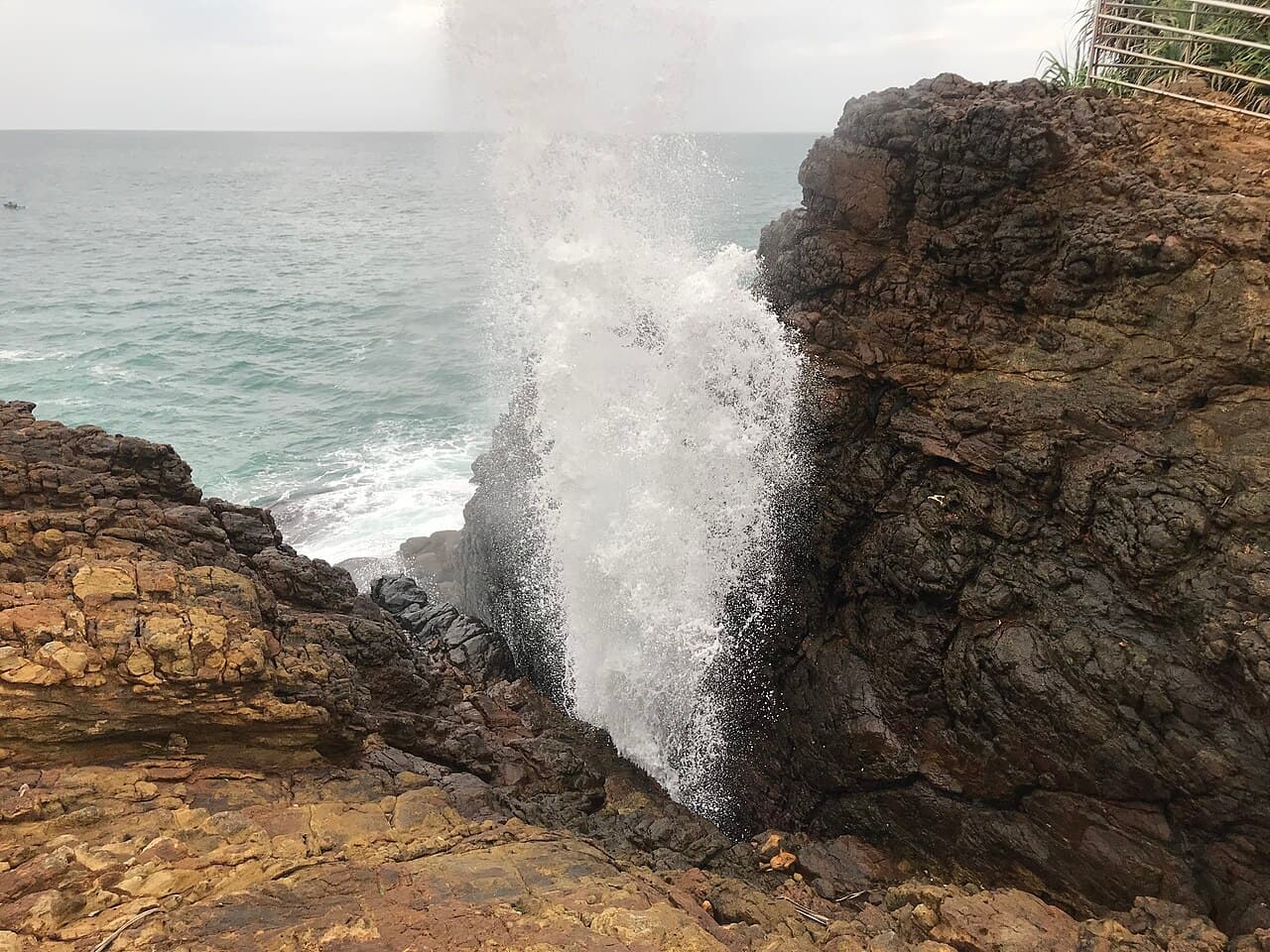
Two stops on the way east past Dickwella. Hummanaya at Kudawella is the island’s only blowhole, a fissure in the rocks that throws spray 25 to 30 metres into the air when a swell runs, which means it performs best in the south-west monsoon, from May to August, and can be a damp squib in the calm season. Wewurukannala Vihara, inland at Dickwella, has a seated Buddha about 50 metres tall, the largest in Sri Lanka, with a tunnel of painted hell scenes beneath it. Dress for a temple at Wewurukannala.
 Malik Cil · Pexels
Hiriketiya
A horseshoe cove about 35 kilometres east, where a gentle beach break inside and a reef on the point made a surf village out of a fishing hamlet within a decade. Cafés, yoga decks and small villas line the lane down to the sand. It faces south-east, so by our model the sunset goes behind the western point 19 to 67 minutes early, and the sunrise clears the eastern headland 3 to 18 minutes late. This is also where a Chabad house opened in the summer of 2026. Protests took place outside it from Friday 14 August, reported variously as residents led by Buddhist monks and as tourism workers, with crowds put at 100 to 200; stones and firecrackers were thrown, Israelis heading to the Shabbat meal were turned back, and the landowner then served a 14-day eviction notice. Check before you count on it.
 Achini Jayawrdana / CC BY-SA 4.0 via Wikimedia Commons
 Arian Zwegers / CC BY 2.0 via Wikimedia Commons
Food & drink
 Abhishek Shekhawat · Pexels
Pol roti at a roti shop
Coconut flatbread, cooked on a hot plate and folded around vegetables, egg, cheese or chicken, then the sweet ones with banana and honey. Mirissa’s roti shops are a cheap, filling meal.
 me · CC BY-SA 4.0 via Wikimedia Commons
Rice and curry
Red or white rice with several small curries, most of them vegetable, dhal and a sambol; the family-run places cook it best at lunchtime, and on the coast it comes with the day’s fish.
 Jkwinter · CC BY-SA 4.0 via Wikimedia Commons
Ambul thiyal
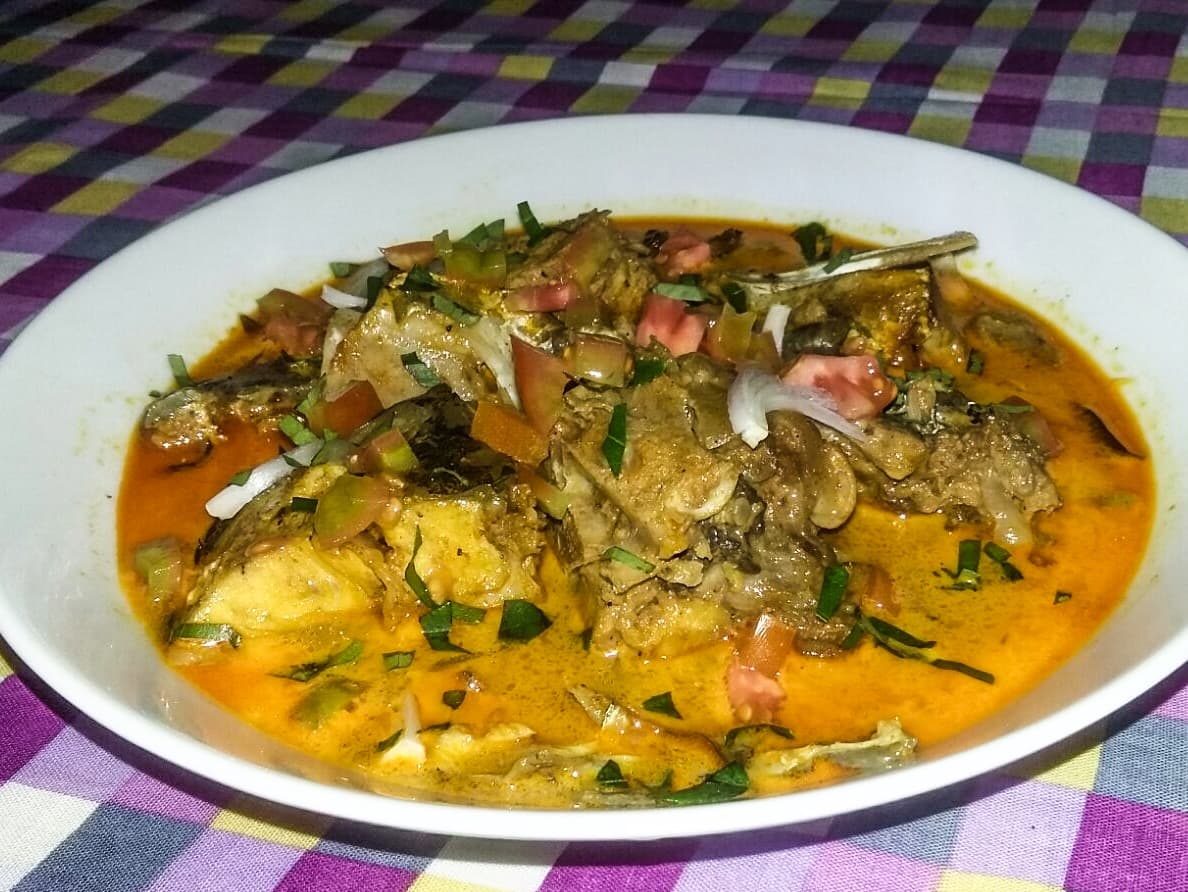
The southern sour fish curry: tuna cubes cooked almost dry with goraka, a sour fruit, black pepper and curry leaves, so that it keeps for days without a fridge. The dish of the fishing coast, and Mirissa is a tuna harbour.
 Julia Filirovska · Pexels
Beach seafood barbecue
At night the beach restaurants lay the catch on ice, you point, they weigh it and grill it. Ask the price per kilo before they weigh.
 ROMAN ODINTSOV · Pexels
Kottu roti
Chopped godamba roti stir-fried on a hot plate with vegetables, egg or meat, onion and chilli; the clatter of the blades is the sound of a Sri Lankan evening.
 Northwalker · CC0 via Wikimedia Commons
Hoppers and egg hoppers
Thin, bowl-shaped pancakes of fermented rice batter and coconut milk, crisp at the edges, with an egg cracked into the middle for an egg hopper. Breakfast and evening food.
 Hafiz Issadeen, Dharga Town, Sri Lanka · CC BY 2.0 via Wikimedia Commons
Curd and treacle
Buffalo-milk curd set in a clay pot with kithul palm treacle poured over it, the dessert of the south; the roadside stalls between Matara and Tangalle sell it by the pot.
Isso wade
Lentil fritters topped with small prawns, fried and sold from carts on the beach road; eat them hot.
Rice and curry is a lunch dish; in the evening the menu turns to seafood, kottu and Western plates for travellers. Beach restaurants set tables on the sand from about 18:00 and many are cash only. Bills in hotels and larger restaurants usually add a service charge of up to 10 percent and VAT, which has been 18 percent since January 2024. Alcohol is not sold on Poya days, every full moon, and the beach bars go quiet.
Where to eat
No.1 Dewmini Roti Shop
institutionThe family roti shop in a garden off Udupila Road, with savoury and sweet rotis and rice and curry. Hours are not printed; it is a lunch and early-evening place.
Last researched 2026-09-30
Zephyr Restaurant & Bar
sunset-venueThe big beach bar in the middle of the crescent: beanbags on the sand by day, a catch-of-the-day fish station at sunset and a bar late. An older Yamu review put mains for two at around 2,500 rupees, so expect considerably more now; the beach sunset here is over the sea only from 3 November to 8 February by our model, and behind the headland for the rest of the year.
Last researched 2026-09-30
Shady Lane
cafeA tropical vegetarian café and shop with a second branch in Arugam Bay: smoothie bowls, avocado toast, oat pancakes and good coffee under the trees. Posting in September 2026, so open this season; the Arugam Bay branch runs 08:00 to 16:00 and Mirissa keeps similar daytime hours.
Last researched 2026-09-30
The Slow
casualA beachfront vegan and gluten-free restaurant on the Matara road side of the bay, open 08:00 to 22:00 daily, with rooms and apartments attached. Fresh, locally sourced plates and a surf-beach view.
Last researched 2026-09-30
The Atlas at Cape Weligama
fine-diningThe main restaurant of Resplendent Ceylon’s cliff-top resort, with The Society bar and the chef’s table Tableau alongside. Book ahead as a non-resident and come for the last hour of light: by our model the cliff has an open-sea sunset from 1 September to 10 April.
Last researched 2026-09-30
Hangtime Hostel rooftop
sunset-venueThe rooftop café of a surf hostel above Weligama Bay, open 07:30 to 21:30 daily, with sushi rolls at 1,800 to 2,600 rupees, paninis, smoothies, yoga classes at 2,500 and open-mic evenings. The bay loses its sunset early behind the headland, but the sky show over the water is the point.
Last researched 2026-09-30
Rise
modernAn Italian restaurant and bed-and-breakfast on the bay road, led by chef Simone, that reopened on 2 October 2025 after a closure. Dinner from 17:00 to 21:00, Tuesday to Sunday; closed Mondays.
Last researched 2026-09-30
Ceylon Sliders
cafeA courtyard café, rooftop and surf shop in a boutique hotel on the Weligama beach road, open 08:00 to 17:00, with a sister site in Ahangama that runs 07:30 to 21:00. Good coffee and the surf crowd.
Last researched 2026-09-30
Sunrises
 Steffen Schmitz (more photos) · CC BY-SA 4.0 via Wikimedia Commons
Dondra Head
The southern tip of the island, below the lighthouse, is the one place near Mirissa where the sun rises out of the open sea: by our model from 8 August to 5 May, within half a minute of the almanac time, and over the low land of the point only from 6 May to 7 August. Sunrise is between about 05:52 in mid-May and 06:25 in early February.
8 August to 5 May · Park by the lighthouse gate and walk to the rocks on the seaward side; the tower itself may be closed. · The lighthouse silhouetted against the first light from the western rocks; a long lens for the fishing boats coming in.
 Nilan.iro · CC BY-SA 4.0 via Wikimedia Commons
Talalla beach
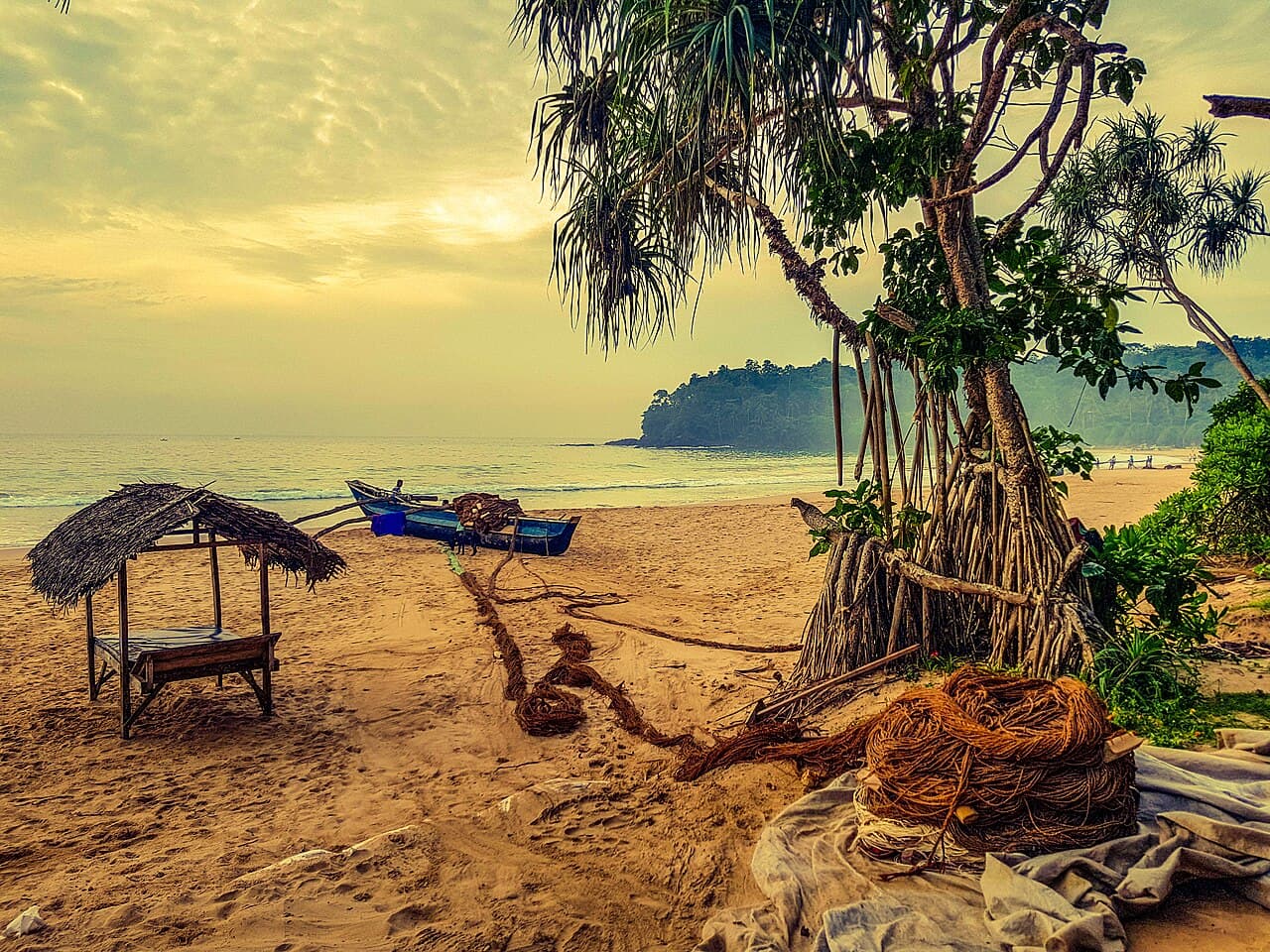
The long, empty bay east of Dondra faces south-east, and by our model the sun rises out of the sea from the sand from 4 February to 20 March and again from 24 September to 7 November; the rest of the year it clears the low eastern point within about five minutes of the almanac time. A sunrise beach that is usually quiet.
4 February to 20 March and 24 September to 7 November · Lanes from the Matara to Tangalle road down to the beach; no facilities at dawn. · The whole arc of the bay in the first light, with the fishing boats being pushed out.
 Alexey Komarov · CC BY-SA 4.0 via Wikimedia Commons
Coconut Tree Hill at first light
Not a sun-on-the-horizon sunrise: the hill faces the sea to the south and west, and the sun comes up over the coast to the east behind the palms of the hill itself, clearing them 25 to 45 minutes after the almanac time by our model, which reads the tops of the trees as ground. What you get instead is the grove and the empty beach in soft light and, in season, no crowd. Go to Dondra for the real thing.
All year, on clear mornings · Private land; a small fee may be asked. Muddy after rain. · The palm trunks lit from the side about half an hour after sunrise; wide angle from the lower terrace.
Sunsets
 Sachin Kaveesha Fernando · CC BY-SA 4.0 via Wikimedia Commons
Coconut Tree Hill
The famous one, and it holds for most of the year: by our model the sun sets into open sea from the top of the hill from 29 August to 13 April, within half a minute of the almanac time. From 14 April to 28 August it goes down behind the Weligama headland to the west-north-west, up to four and a half minutes early, still a fine sky but not a sea sunset. Sunset runs from about 17:48 in early November to 18:27 in late July.
29 August to 13 April · Path from the Matara road behind Bandaramulla, about ten minutes; private land, a small fee may be asked. · Silhouetted palms against the sun from the lower terrace; the whole beach and Parrot Rock from the top, lit from behind you.
 Alexey Komarov · CC BY-SA 4.0 via Wikimedia Commons
Parrot Rock
From the platform on top of the rock the sun sets into the sea from 1 October to 12 March by our model; from mid-March to the end of September the western headland takes it up to ten minutes early. Time it with a low tide for the crossing, and get down before dark.
1 October to 12 March · Wade across at low water and climb the steps; slippery, and not for the crossing in a big sea. · The whole crescent of beach lit by the last sun from the top, or the rock itself from the sand.
 Thedani Karasnagoda · CC BY-SA 4.0 via Wikimedia Commons
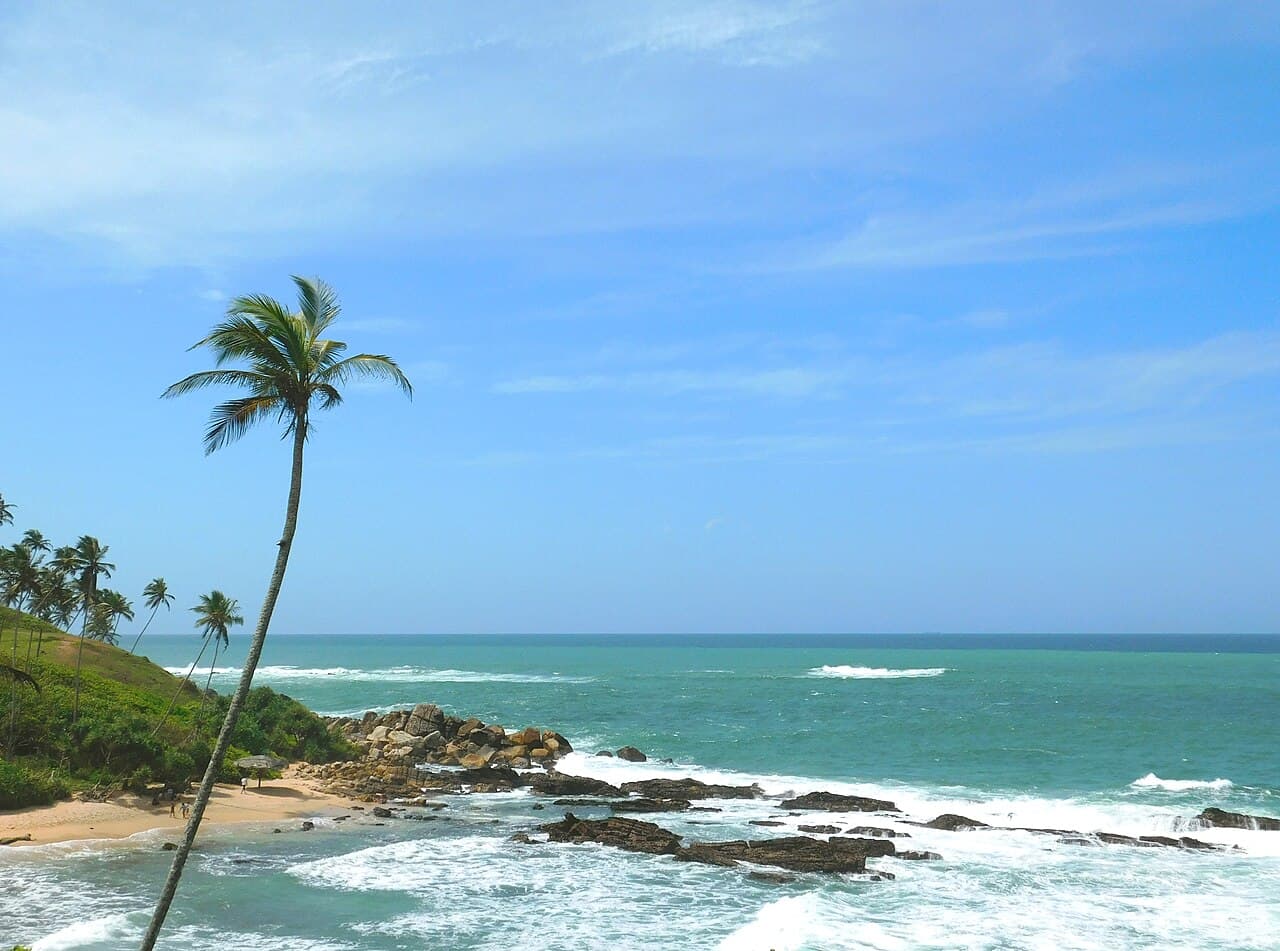
Mirissa beach, from the sand
The middle of the crescent faces south, and the western headland closes the view: by our model the sun sets into the sea from the beach only from 3 November to 8 February, and for the rest of the year it disappears behind the headland up to 13 minutes early, most in June and July. The beach bars still fill for the sky; just know the sun itself is gone before the almanac time.
3 November to 8 February · Free; the whole beach is public. · Parrot Rock silhouetted against the afterglow from the east end of the beach.
 Arian Zwegers · CC BY 2.0 via Wikimedia Commons
Cape Weligama cliff
The headland between Weligama and Midigama stands about 38 metres above the sea, and from its edge, where the Cape Weligama resort has its pool and restaurants, the sun sets into open water from 1 September to 10 April, half a minute to a minute after the almanac time because of the height. From 11 April to 31 August it sets behind the headland to the north-west, up to 26 minutes early in June. Book a table at The Atlas or a drink at The Society to be there.
1 September to 10 April · Through the resort, for guests and diners. · The Moon Pool and the cliff line against the sun; Weligama Bay and Taprobane below to the east in the afterglow.
 calflier001 · CC BY-SA 2.0 via Wikimedia Commons
Weligama Bay: the sunset that is not one
A warning rather than a recommendation. The bay is closed on the west by the Cape Weligama headland, and by our model the sun sets behind it 20 to 31 minutes before the almanac time on every day of the year. The rooftops on the bay road get a fine sky over the water and Taprobane Island in silhouette, but not the sun on the horizon. Walk up onto the headland instead, or go to Coconut Tree Hill.
None for the sun itself; the afterglow all year · Public beach; the rooftops are cafés and hostels. · Taprobane Island against the orange sky from the beach in front of it.
Day trips
 Ankur Panchbudhe from Pune, India · CC BY 2.0 via Wikimedia Commons
Galle Fort
The Dutch-walled town on its peninsula an hour west, a UNESCO World Heritage Site since 1988, with ramparts you can walk all the way round, the Dutch Reformed Church, the lighthouse, boutiques and cafés in the old merchant houses and a Maritime Museum in the Dutch warehouse. Walking the fort is free; museum fees are set by the Central Cultural Fund and change, so check at the door. Combine with Handunugoda tea estate near Ahangama, the white-tea garden that offers a one-hour tour, on the way back.
About 34 km, 40 to 60 minutes by road; also by train from Weligama · A full day, or an afternoon into the evening for the rampart sunset
Galle Fort ↗Central Cultural Fund: Galle museums ↗View on map ↗
 Eslam Mohammed Abdelmaksoud · Pexels
Dondra Head, Matara and Polhena
The short eastern loop: sunrise at Dondra Head, the Devinuwara Vishnu temple, then Matara’s Star Fort and the Paravi Duwa temple on its islet, and a swim inside the reef at Polhena with the turtles. Back in Mirissa for lunch.
20 to 30 minutes each way · A morning
 Sanduweragoda · CC BY-SA 4.0 via Wikimedia Commons
Udawalawe National Park
The closest reliable elephant safari to the south coast: about 111 kilometres and under two hours from Mirissa to the park gate, with herds around the reservoir most of the year. Foreign adult entry starts from about USD 42 plus taxes, with a jeep and driver on top; go for the afternoon session and come back after dark, or leave Mirissa at 04:00 for the morning. Yala is further, about 141 kilometres, and its most popular blocks 1 and 2 are closed from 14 September to 15 October 2026; blocks 3 to 6 stay open.
About 111 km, 1 h 45 min each way · A long day, or overnight near the park
 Eleleleven from Bielefeld, Deutschland · CC BY-SA 2.0 via Wikimedia Commons
Hiriketiya, Hummanaya and Wewurukannala
East along the coast for a day: the giant Buddha at Wewurukannala, the blowhole at Kudawella if a swell is running, lunch in one of Hiriketiya’s cafés and a swim in the cove. In the monsoon months this is when the blowhole performs; in the calm season it may only sigh.
About 35 to 40 km, 45 to 60 minutes each way · A day
After dark
 Charith Kodagoda · Pexels
Dinner on the sand
diningThe beach restaurants lay tables and lanterns on the sand from about 18:00, with the day’s fish on ice to choose from; ask the price per kilo before they weigh it. Zephyr is the loudest, the smaller places at the Bandaramulla end quieter.
 Atlantic Ambience · Pexels
Shabbat at Chabad Weligama
communityChabad Sri Lanka lists Shabbat meals and prayers at its Weligama house, 17 Buhari Masjid Road, ten minutes from Mirissa by tuk-tuk. Register ahead and confirm it is open for your dates.
 Atlantic Ambience · Pexels
The harbour at dusk
walkThe tuna fleet comes and goes from the fisheries harbour at the western end, and the whale boats are hosed down for the morning. A quiet walk out along the breakwater; by our model the sun sets behind the western hill from here from late September to mid-March.
Daily itinerary
Four days in Mirissa in whale season
Arrive from the airport by the expressway, whales at dawn on day two, a surf morning in Weligama, a sunrise at Dondra and the forts of Matara. Built for November to April.
- 1
Arrive, the beach and the hill
relaxedDrive from Colombo airport by the Southern Expressway, about 184 kilometres, leaving at Kokmaduwa; two and a half to three hours.Pol roti at No.1 Dewmini Roti Shop.Check in, swim between the flags if the sea is calm, wade out to Parrot Rock at low tide.Coconut Tree Hill, a sea sunset from 29 August to 13 April; arrive 40 minutes early.Fish from the ice at a beach restaurant; agree the price per kilo first.Early night: the whale boat checks in at 06:00.Car and driver from the airport, then on foot.Estimate: Arriving by train: Colombo Fort to Weligama on the coastal line, then a tuk-tuk for the last six kilometres
- 2
Whales
moderateCheck in at the harbour at 06:00, sail at 06:30 with an operator that keeps to the 100-metre rule; four to five hours at sea, sometimes more. Seasickness tablets the night before.Late lunch at Shady Lane or The Slow.Rest, then Secret Beach over the headland for a quiet swim in the sheltered cove.From the sand at Zephyr if the date falls between 3 November and 8 February; otherwise Parrot Rock, which has the sea sunset from 1 October to 12 March; from 13 March to 13 April, Coconut Tree Hill.Rice and curry, or the kottu carts.Estimate: Raja and the Whales does not sail from May to July; outside the season swap this day for Galle Fort
- 3
Weligama Bay and the cliff
moderateTuk-tuk to Weligama for a two-hour beginner surf lesson in the bay, then Kushtarajagala on the way into town and Taprobane Island from the beach.Sushi on the Hangtime rooftop.Midigama to watch Lazy Left and Ram’s Right, or the pool.A booked drink at The Society or dinner at The Atlas, Cape Weligama, for the open-sea sunset from the cliff between 1 September and 10 April.The Atlas, or back to Mirissa.Tuk-tuks all day; Weligama is six kilometres west.Estimate: Chabad Weligama for Friday night if the day falls on a Shabbat · Rise for Italian instead of The Atlas (dinner 17:00 to 21:00, closed Mondays)
- 4
Dondra at dawn, Matara, onward
moderateLeave 45 minutes before sunrise for Dondra Head, where the sun rises out of the sea from 8 August to 5 May, then the Devinuwara temple and Matara’s Star Fort.Curd and treacle from a roadside stall, lunch in Matara or back in Mirissa.A swim inside the reef at Polhena with the turtles, then onward: Galle and the airport to the west, or Udawalawe, Ella and the hill country to the north-east.Car and driver for the loop and the onward journey.Estimate: Hiriketiya and Hummanaya instead of Matara, an hour east
Two nights on a round trip
Mirissa as the beach stop between Galle and the hill country: one dawn at sea, one sunset on the hill.
- 1
From Galle, the beach and the hill
relaxedArrive from Galle, 34 kilometres along the coast.Roti at Dewmini.The beach, Parrot Rock at low tide.Coconut Tree Hill: a sea sunset from 29 August to 13 April, and still the best spot on this coast outside it, when the headland takes the sun only up to four and a half minutes early.Fish on the sand. - 2
Whales, then the hills
moderateThe 06:30 whale boat in season, four to five hours.A late lunch in town.Drive north-east: Udawalawe is about 111 kilometres, Ella about 180.Estimate: Out of whale season, a surf lesson in Weligama Bay at 07:00 instead
Getting around
- Colombo’s Bandaranaike International Airport (CMB) is the gateway. No Tel Aviv to Colombo flight appeared on the Ben Gurion flight board for 29 September to 3 October 2026; Arkia flew the route non-stop in autumn 2025 and we found no announced return. Most Israelis connect through the Gulf or India.
- Israeli passport holders have been on Sri Lanka’s list of 40 nationalities that receive a free 30-day tourist ETA since 25 May 2026, with double entry. The ETA must still be issued online at eta.gov.lk before you fly.
- By road, Mirissa is about 184 km from the airport and 148 km from Colombo Fort, most of it on the E01 Southern Expressway; leave at Kokmaduwa (interchange 10), about nine kilometres from the harbour, or at Godagama for Matara. A car toll of about 700 rupees applies from Kottawa to Godagama. Allow two and a half to three hours from the airport; Galle Fort is 34 km west, Ella about 180 km north-east.
- By train: the coastal line from Colombo Fort through Galle and Weligama to Matara and Beliatta was running again by 22 December 2025 after Cyclone Ditwah, and was little affected. Weligama station is about six kilometres from Mirissa harbour and Mirissa’s own small station about four kilometres north-east of the beach; reserved seats open 30 days ahead on the Sri Lanka Railways portal.
- Walk: the beach, the harbour, Coconut Tree Hill and the Bandaramulla lanes are all on foot; the harbour is 15 minutes from the middle of the beach.
- Tuk-tuks: about 100 rupees for the first kilometre and 80 to 100 a kilometre after; Mirissa to Weligama 400 to 600. Agree the fare first. Ride-hailing coverage on the south coast is patchy.
- Local buses run along the Galle to Matara coast road every few minutes in daylight; cheap and slow.
- For Dondra at dawn, Galle Fort, Udawalawe and Hiriketiya, hire a car and driver for the day.
Things worth knowing
- · Coming for whales between May and July, when the main operator does not sail at all; August to October are weather-permitting only, and the sea is rough.
- · Swimming outside the flags when the sea is up: the Mirissa police lifesaving unit pulled four foreigners out of a current at Kotawila in October 2025 and an Australian out of a rip on 19 September 2026.
- · Expecting a sea sunset from the beach bars in June: the sun sets behind the western headland up to 13 minutes early, and into the sea only from 3 November to 8 February.
- · Choosing the cheapest whale boat: pick one that prints and keeps the 100-metre rule and does not sell a swim with the whales.
- · Planning a Shabbat at the Hiriketiya Chabad house without calling first, after the August 2026 protests and eviction notice.
Budget
| Low | Expected | Comfortable | |
|---|---|---|---|
| Accommodation style / per night | LKR 9,000≈ $27 | LKR 30,000≈ $91 | LKR 120,000≈ $363 |
| Food style / per day | LKR 3,000≈ $9 | LKR 7,000≈ $21 | LKR 18,000≈ $54 |
| Local transport / per day | LKR 800≈ $2 | LKR 3,000≈ $9 | LKR 9,000≈ $27 |
| Estimate / per day | LKR 1,000≈ $3 | LKR 8,000≈ $24 | LKR 20,000≈ $60 |
Estimate · LKR · 2026-09-30. Our estimates in Sri Lankan rupees, per room per night for two and per person per day otherwise, on 30 September 2026, when the Central Bank of Sri Lanka rate was 330.83 rupees to the US dollar and the Bank of Israel rate of 29 September 3.072 shekels, so about 108 rupees to the shekel. A whale trip is 16,000 to 20,000 rupees a person and sits in the attractions band; a surf lesson from about 5,000; Udawalawe with a jeep, fees and a driver for the day is the top of the day-trip band. Guesthouse doubles from about 9,000 in the low season, the small beachfront hotels 40,000 to 120,000, Cape Weligama far above that. · 1 USD = LKR 331 (14 Oct 2026)
Things worth knowing
Frequently asked questions
When is whale-watching season in Mirissa?
November to April. Raja and the Whales, an established operator, sails daily from November to the end of April or early May, runs weather-permitting trips from August to October and closes from May to July. December to March combines the whales with the driest weather.
How much does whale watching cost in Mirissa?
Raja and the Whales charges 20,000 rupees an adult and 10,000 for children aged 5 to 11, under-fives free; other boats quote 16,000 rupees with breakfast (one that also sells a swim stop) or USD 60 including a USD 20 wildlife levy. Trips leave about 06:30 and last four to five hours on average.
Is it legal to swim with whales in Sri Lanka?
Not without the approval of the Director-General of Wildlife Conservation, under the 2012 Sea Mammals regulations, which also set a 100-metre minimum distance. Some boats still sell a swim stop; we would not book them.
Where is the best sunset in Mirissa?
Coconut Tree Hill, where by our terrain model the sun sets into open sea from 29 August to 13 April. Parrot Rock has a sea sunset from 1 October to 12 March, and the middle of the beach only from 3 November to 8 February. For the rest of the year the western headland takes the sun early.
Is Coconut Tree Hill free?
There is no ticket. The hill is private land, and a small fee of 100 to 200 rupees is sometimes asked on the path, with about 100 for parking. It was fenced off for a few weeks in early 2021 and reopened after a public outcry.
Is Mirissa beach safe for swimming?
In the calm months, between the flags and near the lifeguards, yes. The beach has rip currents, above all from May to October; the police lifesaving unit made rescues in October 2025 and September 2026. Polhena’s reef lagoon is the safe swim on this coast.
How do I get from Colombo airport to Mirissa?
By road: about 184 kilometres, most of it on the Southern Expressway, leaving at Kokmaduwa about nine kilometres from the harbour; allow two and a half to three hours with a car and driver. By train: the coastal line from Colombo Fort to Weligama, then a tuk-tuk for the last six kilometres.
Do Israelis need a visa for Sri Lanka?
Israel is on the list of 40 countries whose nationals get a free 30-day tourist ETA since 25 May 2026. You still have to apply online at eta.gov.lk before flying.
Is there a Chabad house near Mirissa?
Yes, in Weligama at 17 Buhari Masjid Road, ten minutes away, with Shabbat meals and a travellers’ centre. The newer Hiriketiya house, an hour east, was the target of protests in August 2026 and received an eviction notice; confirm its status before you plan around it.
Where can I see the sunrise over the sea near Mirissa?
Not from Mirissa beach, which faces south. By our model Dondra Head, 20 kilometres east, has an open-sea sunrise from 8 August to 5 May, and Talalla beach from 4 February to 20 March and 24 September to 7 November.
Sources (32)
- Raja and the Whales: check-in 06:00 and departure 06:30 from Mirissa harbour, trips of 2 to 8 hours averaging 4 to 5, LKR 20,000 per adult and 10,000 per child aged 5 to 11, daily November to the end of April or early May, limited August to October, closed May to July · official · 2026-09-30
- Raja and the Whales’ approaching guidelines: reduce speed to under 7 knots within 400 metres of the nearest whale, never approach closer than 100 metres to any whale, porpoise or dolphin, approach from the side and parallel, place the engine in neutral if the distance cannot be kept, and no swimming with, touching or feeding marine wildlife · official · 2026-09-30
- ECOLEX record of the Sea Mammals (Observation, Regulation and Control) Regulations, No. 1 of 2012, Gazette Extraordinary No. 1774/27 of 6 September 2012, made under the Fauna and Flora Protection Ordinance, with vessels licensed by the Director-General of Wildlife Conservation · government · 2026-09-30
- The Morning reported on 23 February 2025 that the regulations require a 100 m minimum distance from whales, that swimming with whales is prohibited without the Director-General’s approval, that enforcement is shared by the Department of Wildlife Conservation, MEPA and the Coast Guard, and that the DWC hotline is 1992 · reputable-local · 2026-09-30
- Whale Watching Club, Mirissa, advertises trips at LKR 16,000 per adult including government tax with breakfast, operating July through May, and a swimming stop weather permitting · official · 2026-09-30
- whale-watching-mirissa.com lists USD 60 per adult including a USD 20 wildlife tax and USD 40 for children aged 5 to 11, with the best season November to April · official · 2026-09-30
- Atlas and Boots (30 April 2020) counted 17 boats around one whale off Mirissa and one boat carrying 80 passengers · independent-travel · 2026-09-30
- WMO 1991-2020 climate normals for Galle (43495, 13 m): monthly precipitation 86.8, 71.1, 89.9, 201.9, 315.9, 184.0, 172.6, 161.9, 260.9, 344.5, 282.6 and 175.9 mm from January to December; rain days 6.6, 5.8, 6.9, 11.8, 17.2, 16.6, 15.1, 14.2, 17.1, 18.2, 14.9 and 11.2; mean daily maximum 29.0 to 31.6 C and minimum 23.4 to 26.0 C · government · 2026-09-30
- WMO 1991-2020 climate normals for Hambantota (43497): monthly precipitation 41.2 mm in June, 30.8 in July and 59.4 in August, against 221.8 in November · government · 2026-09-30
- Sri Lanka’s ETA site: with effect from 25 May 2026 nationals of 40 countries, Israel among them, are eligible for a free 30-day tourist ETA, to be obtained before arrival · government · 2026-09-30
- Israel National Security Council travel warning for Sri Lanka: level 2, occasional threat, recommendation to take heightened precautions; Foreign Ministry note on storms, floods and mudslides in the monsoon periods (dataset pulled 30 September 2026) · government · 2026-09-30
- The Ben Gurion airport flight board dataset on data.gov.il, covering 29 September to 3 October 2026, returned no rows for Colombo (CMB) · government · 2026-09-30
- Israel Hayom reported on 25 September 2025 that Arkia began non-stop A330 flights from Tel Aviv to Colombo, the only Israeli carrier flying the route direct · reputable-local · 2026-09-30
- Chabad Sri Lanka lists houses in Ella (Club Villa), Arugam Bay (Panama Road), Weligama (17 Buhari Masjid Road), Colombo (70 Green Path) and Hiriketiya (New Tangalle Road, Dikwella 81200), each with a travellers’ centre and Shabbat meals · official · 2026-09-30
- JNS reported violence outside the Chabad house in Hiriketiya in August 2026, with protesters including Buddhist monks, stones and firecrackers thrown and Israelis heading to the Shabbat meal turned back · reputable-local · 2026-09-30
- The Jerusalem Post reported protests of about 100 people at the Hiriketiya Chabad house on Friday 14 August 2026 and again on Saturday night, a broken window, no arrests, and Sri Lankan media complaints about Israeli tourists’ permits, visas and coastal regulations · reputable-local · 2026-09-30
- Fact Crescendo: Dikwella police confirmed about 200 tourism workers protested at the Hiriketiya Chabad House fearing it would deter foreign visitors; the landowner issued a 14-day eviction notice and the protesters dispersed; the facility ran on a five-year commercial lease · reputable-local · 2026-09-30
- Newswire reported on 24 October 2025 that four foreign nationals caught in a strong current at Kotawila, in the Mirissa police area, were rescued by lifeguards of the Police Lifesaving Unit · reputable-local · 2026-09-30
- Gossip Lanka News reported that a 30-year-old Australian caught in a strong rip current while bathing at Mirissa on 19 September 2026 was rescued by the Mirissa Police Life Saving Unit · reputable-local · 2026-09-30
- The Central Bank of Sri Lanka indicative rate on 30 September 2026 was 330.8319 rupees to the US dollar · government · 2026-09-30
- The Bank of Israel representative rate on 29 September 2026 was 3.072 shekels to the US dollar · government · 2026-09-30
- The Inland Revenue Department gives the standard VAT rate as 18 percent from 1 January 2024 · government · 2026-09-30
- Public Holidays Sri Lanka lists the 2026 Poya days Vap on 25 October, Ill on 24 November and Unduvap on 23 December, and Duruthu on 22 January 2027 · independent-travel · 2026-09-30
- Daily FT reported on 25 August 2026 that Geoffrey Dobbs, Anglo-Australian hotelier, founder of the Galle Literary Festival in 2007 and owner of The Sun House in Galle, died on 18 August 2026 aged 73, having lived and entertained on the island off Weligama · reputable-local · 2026-09-30
- Wikipedia’s Coconut Tree Hill article: a lateritic headland at Mirissa with a coconut plantation on about 400 perches of private land, fenced in January 2021 and reopened in February 2021, drawn by Ernst Haeckel in 1881 · independent-travel · 2026-09-30
- Wikipedia’s Dondra Head Lighthouse article: 49 m, built 1887 to 1890, 7 floors and 196 steps, operated by the Sri Lanka Ports Authority · independent-travel · 2026-09-30
- Wikipedia’s Galle Fort article gives the fort as a UNESCO World Heritage Site inscribed in 1988 · independent-travel · 2026-09-30
- Lanka Newspapers reported on 14 September 2026 that Yala National Park’s most popular zones closed to visitors from that day; a commercial park site gives the closure of Blocks 1 and 2 as 14 September to 15 October 2026 · reputable-local · 2026-09-30
- A safari operator’s fee table published 20 December 2025 gives foreign adult entry to Yala and Udawalawe from USD 42 before taxes · independent-travel · 2026-09-30
- The Habaraduwa sea turtle hatchery describes keeping hatchlings in tanks until they are old enough, with visitors releasing them for a small entrance fee · official · 2026-09-30
- AWS Terrain Tiles, a public elevation dataset derived from SRTM and other sources, supports the horizon profiles computed for each viewpoint in this guide · independent-travel · 2026-09-30
- Solar positions and almanac sunrise and sunset times follow the NOAA solar calculator equations · government · 2026-09-30