Mauritius · Indian Ocean
Mauritius
Flic en Flac and Tamarin on the west coast for sheltered swimming, dolphins at dawn and the sunset every evening. Le Morne in the south-west for the mountain, the kite lagoon and the most photographed corner of the island. Grand Baie and Trou aux Biches in the north for the widest choice of restaurants and the softest evenings. Belle Mare and the east coast for the big-name resorts and a sunrise over open ocean every day of the year. Bel Ombre in the south for the wild coast. Port Louis for the market, the immigration depot that changed the island, and lunch. Chamarel and the Black River Gorges for the day the beach can wait.
 "dronepicr" / CC BY 2.0 via Wikimedia Commons
Overview
Mauritius is a resort island with a real country behind it, and that is the whole point of choosing it over the other Indian Ocean names. The hotels sit on a reef-ringed lagoon that goes almost all the way round, so the swimming is calm nearly everywhere; but behind them is a road network, a light rail line, a capital with a market and a Chinatown, tea estates, a rum distillery, a mountain range you can walk, and one point three million people whose ancestors came from India, Africa, France and China and who eat accordingly. You can do a week here without leaving your hotel, and many people do. Our reading is that this is the one lagoon island where leaving the hotel is the better trip, and where the two decisions that matter most, which coast and which month, are usually made backwards.
Pick the month first, then the coast, then the hotel. Late September to early December is the window we would book: the trades have slackened, the rain has not arrived, the sea is warming again, and although the cyclone season formally opens in November, the storms that matter almost always come between January and March. If you can only travel in July or August, stay west or north and enjoy a cool, dry, breezy island that swims at about 24C; do not book a windward east-coast resort in those months because a brochure showed it in February. Then read the board basis before the room category: half board is the Mauritian default, all-inclusive is a supplement almost everywhere, and the government adds 3 euros per person per night on top of whatever the hotel quotes. For an Israeli reader there is one more line: Israel's National Security Council rates Mauritius level 2, with specific wording about hostility since the war, while it rates the Seychelles level 1. That does not decide the trip, but it belongs in the decision.
Best for
Couples and honeymooners · Families who want a lagoon and a real place · Kitesurfers in winter · Food that changes every day · Hikers who like a beach afterwards · An Indian Ocean week without the Maldives bill
Daily itinerary
8 to 10 days
The wind. Mauritius sits in the south-east trades, and they blow hardest in the southern winter, June to September, when NOAA's station at Plaisance airport averages about 18 km/h against 13 to 14 in February and March. That makes the east and south coasts, where several of the most famous resorts stand, the windward side exactly when Europe and Israel are thinking about winter sun, while the west and north sit in the lee. In the southern summer, November to April, the trades ease and the east comes into its own, but that is also the cyclone season. So the coast you should book is a function of the month you can travel, not of which hotel has the better photographs. The second thing is that this is an island of open-water sunsets: every beach on the west coast from Le Morne to Trou aux Biches looks at an empty horizon at every sunset bearing of the year, which the terrain data confirms and the marketing for the east coast quietly omits.
Best time to visit
Mauritius has a warm, humid summer from November to April and a cool, dry, breezy winter from June to September, with May and October as the transition months; the meteorological service puts the difference between the two seasons at only 4.3C. At Plaisance airport on the south-east coast, NOAA's daily observations over 2016 to 2025 give mean daily highs from about 24.9C in July to about 30.3C in February and March, and mean lows from about 19.2C to 24.2C; the meteorological service's island-wide means put the warmest months at January and February. The real variables are wind, rain and cyclone risk rather than heat. The winter trades average about 18 km/h from June to August at that windward station; the summer brings roughly two thirds of the island's rain, with February and March the wettest months and October the driest. The cyclone season runs from November to May, and the storms that matter usually arrive between January and March.
- November to mid-December: The best value on the calendar. Mean highs around 28 to 30C, the trades easing, rain still moderate. Divali usually falls here and the island lights up for it. Book this before you book anything else.
- Mid-December to April: Hot and humid, 30C days and 24C nights, the wettest months in February and March, and the cyclone season. The east coast is at its calmest, which is why its resorts fill. Watch the forecasts, book flexible, and know that a Class III warning confines you to the hotel.
- May: The transition month. Rain falling away, wind picking up, sea still around 26C. A good month for the east coast before the trades arrive in earnest.
- June to August: Winter. Dry, breezy, cool at night, and windward on the east and south. The west and north are sheltered and pleasant. Kitesurfing at Le Morne, whales off Tamarin, and the cheapest rooms of the year outside the European school holidays.
- September to October: The wind drops through September, the sea is at its coolest and then starts to warm, and October is the driest month of the year. Whale season still running. Our second-favourite window after November.
Things worth knowing
- Humpback whale season off the west coast, broadly July to November, with resident sperm whales in the deep water beyond the reef all year. Trips run from Tamarin and Black River under the 2012 regulations: paid whale and dolphin watching only between 06:00 and noon, no swimming with whales at all.
- Divali, the Hindu festival of lights, on 8 November in 2026: the island's largest festival, with houses and streets lit for the evening and sweets shared with neighbours. A public holiday.
- Maha Shivaratri in February or early March: hundreds of thousands of pilgrims walk to Ganga Talao, the crater lake in the south, over the preceding days, many carrying decorated wooden structures. Roads in the centre and south fill with walkers; drive slowly or, better, walk part of it.
- Kitesurfing season at Le Morne, roughly April to November and strongest and most consistent from June to August; the lagoon and the One Eye wave draw riders from everywhere.
Where to stay
 Gonzolito · CC BY-SA 4.0 via Wikimedia Commons
Grand Baie and Pereybere
The north-coast resort town and the island's closest thing to a holiday strip: a sheltered bay with the biggest concentration of restaurants, bars, shops and boat operators in the country, and Pereybere's smaller, prettier beach a few minutes up the road. It is also the coast that looks north-west, which matters for the evening: the bay's own western arm blocks the sunset horizon for most of the year, so the sun goes into the sea from Grand Baie's beach only from about mid-May to the end of July. For the rest of the year you drive ten minutes south to Mont Choisy or Trou aux Biches for it.
Best for: Restaurant choice · Nightlife · Boat trips to the northern islets · A base without a car
The beach at Grand Baie itself is small, busy with boats and not the reason to come; the good sand is at Pereybere, Mont Choisy and Trou aux Biches. Petty theft is a known problem here according to the UK Foreign Office.
 Michał Sołowiej · Pexels
Trou aux Biches and Mont Choisy
The north-west coast between Grand Baie and Port Louis: a long run of casuarina-backed public beach, calm shallow water inside the reef, a sheltered position in the trade-wind lee, and an open sea horizon at every sunset bearing of the year. Mont Choisy is the longest public beach in the north and fills with Mauritian families at weekends, which is a recommendation. Trou aux Biches has the resorts and the dive centres.
Best for: Calm swimming · Year-round sunsets · Families · Diving and snorkelling · A quieter north
Trou aux Biches Beachcomber, the flagship here, is closed from 15 May to 15 October 2026 for refurbishment. Weekend crowds on Mont Choisy are real, and the road behind the beach is busy.
 Arne Müseler · CC BY-SA 3.0 de via Wikimedia Commons
Flic en Flac and Wolmar
The west coast's main beach: several kilometres of white sand in the lee of the island, with the lagoon at its calmest, the sun setting into open water every evening of the year by our terrain ray cast, and a mixed village of resorts, apartments, supermarkets and cheap restaurants behind it. Wolmar, the southern end, holds the bigger hotels. It is the best all-round base on the island for a first visit, and the one we would pick for a winter trip.
Best for: First-time visitors · Sheltered swimming · Sunsets · Self-catering · Value
The village itself is functional rather than pretty, and the public beach can be busy at weekends. The lagoon is shallow with rock and coral underfoot in places: reef shoes.
 carrotmadman6 from Mauritius · CC BY 2.0 via Wikimedia Commons
Tamarin and Black River
The stretch of west coast south of Flic en Flac where the reef breaks and the mountains come down to the sea: a surf bay, a salt-pan landscape, a marina, and the harbour that the dolphin and whale boats leave from at first light. This is the island's most active corner, with the Black River Gorges rising straight behind it, and it has grown a residential expat scene with cafes and a good Saturday market. Not a resort strip.
Best for: Dolphins and whales at dawn · Surfing · Hiking access · Cafes and a market · Villa stays
Tamarin Bay is a surf beach rather than a lagoon, so swimming is not the point. Dawn boat trips mean dawn starts; the regulations stop paid watching at noon.
 "dronepicr" · CC BY 2.0 via Wikimedia Commons
Le Morne
The south-western peninsula under Le Morne Brabant, the 556 m mountain that the island puts on every poster and that UNESCO inscribed for its history as a refuge of escaped slaves. Large resorts line the western and northern beaches, one more faces the kite lagoon to the south, and the mountain trail starts from the road behind. It is the most beautiful corner of Mauritius and it is a corner: everything else is a drive.
Best for: The view · Kitesurfing · Hiking the mountain · Honeymoons · Sunsets over open water
Isolated from the restaurant towns; you eat at the resorts or drive twenty minutes to Chamarel or Black River. The south side of the peninsula is windy by design.
 Jyoti Pur · Pexels
Bel Ombre and the south coast
The south is the wild side: a reef that breaks up into cliffs and blowholes toward Souillac and Gris Gris, sugar estates running up to the Black River Gorges, and one planned resort strip at Bel Ombre with a golf course, a nature reserve and a restored plantation house. It is quieter and windier than the west and the lagoon is narrower, but the landscape is the island's most dramatic.
Best for: Scenery · Golf · A quieter luxury base · Cliffs and blowholes
Windward in winter and a long drive from the north. Swimming outside the Bel Ombre lagoon is not advised on much of this coast.
 Jyoti Pur · Pexels
Blue Bay and Mahebourg
The south-east, five minutes from the airport: Blue Bay's marine park with the island's best snorkelling straight off a public beach, and Mahebourg, an old port town with a waterfront, a naval museum and a Monday market that the island drives to. Ile aux Aigrettes, the restored islet run by the Mauritian Wildlife Foundation, is reached from here. A good first or last night, and a better base than its distance from the resort coasts suggests.
Best for: Snorkelling · A first or last night near the airport · Ile aux Aigrettes · Local food · Budget stays
Windward in winter; the bay is sheltered but the coast beyond it is not. Few large hotels, which is either the point or the problem.
 Domoina · Pexels
Belle Mare and the east coast
The east is where the big names are: a long white beach at Belle Mare, a wide lagoon, and a chain of luxury resorts from Belle Mare down to Trou d'Eau Douce and Anahita. The sunrise comes up out of open ocean here every day of the year, and the lagoon is at its glassiest in the southern summer. In the southern winter, June to September, this is the windward coast, and a beach that looks like a postcard in February is a wind-blown one in July.
Best for: Luxury resorts · Sunrises · Summer calm, November to April · Ile aux Cerfs · Golf
Winter wind. Thin on independent restaurants and on anything to do outside the resorts, which is why the resorts here are all-in propositions.
 Benoît Prieur · CC0 via Wikimedia Commons
Port Louis
The capital, small, hot, and worth a morning rather than a night: the Central Market, the Chinatown grid, the Aapravasi Ghat immigration depot where half a million indentured workers first stepped onto the island, the Blue Penny Museum and the Caudan waterfront. The Metro Express runs from here up to the plateau towns. Nobody stays here and nobody should skip it.
Best for: The market · History · Street food · A rainy day
Very quiet after dark and at weekends; the Foreign Office names the business district among the places not to walk alone at night. Parking is hard; take the Metro or a taxi in.
 Arne Müseler · CC BY-SA 3.0 de via Wikimedia Commons
The central plateau: Moka, Curepipe and the Beau Bassin towns
Where Mauritians live. A string of towns at 400 to 550 m along the Metro Express line, cooler and wetter than the coast, with the Eureka plantation house at Moka, the tea country toward Bois Cheri and Ganga Talao, the best dholl puri stalls, and the Jewish detainees memorial at Beau Bassin. Nobody comes to Mauritius to stay here; the point is that it is thirty minutes from every coast.
Best for: Food · History · A cool afternoon · Tea estates
Rain and drizzle are the plateau's weather; NOAA's Vacoas station averages about 350 mm in January against about 295 at the coast, with highs three degrees lower.
Where to sleep
One&Only Le Saint Geran
luxury · Belle Mare peninsula, east coast
Best for: The east coast benchmark · Couples who want a private peninsula · Serious dining without leaving
- Its own peninsula between the ocean and a lagoon, so there are two kinds of water on the property
- At least four named dining rooms on its site: RIVA on the beach, TAPASAKE over the water, PRIME for the grill and Le Badamier under the tree, with more behind the page fold
- A published fifth-night-free offer for stays of five, which is unusual at this level
- East coast: windward from June to September
- No published nightly rate on the site, so comparison shopping is guesswork
- A large, established resort rather than an intimate one
Constance Prince Maurice
luxury · Poste de Flacq, north-east coast
Best for: Quiet luxury · Couples · A floating dinner
- Le Barachois, a floating restaurant reached along a lantern-lit pontoon through the mangroves, is the most distinctive dinner on the east coast
- A Leading Hotels of the World member on a sheltered inlet rather than the open beach
- Access to the Legend and Links golf courses at its sister resort
- The inlet setting means less classic beach than Belle Mare a few kilometres south
- Windward coast in winter
- No published nightly rate
Four Seasons Resort Mauritius at Anahita
luxury · Anahita, east coast near Trou d'Eau Douce
Best for: Families in villas · Golf · Halal-certified dining
- All-villa layout with private pools
- Eight named restaurants and bars from an Italian trattoria to a beach grill, and all meat certified halal, which is worth knowing for observant guests
- An Ernie Els golf course on the estate
- East coast wind in winter
- Estate scale: you are driven around it in buggies
- Rates are on request
 Tejcoomar Luchmun (E-commerce Executive at LUX* Resorts & Hotels Head Office) · CC BY-SA 4.0 via Wikimedia Commons
LUX* Le Morne
resort · Le Morne peninsula, south-west
Best for: The Le Morne view from the beach · Couples · A resort that publishes what its all-inclusive covers
- Sits at the foot of the mountain on the sheltered western side of the peninsula, with the sunset horizon open all year
- Eight named outlets including an eight-seat omakase counter and a plant-based concept
- A downloadable all-inclusive package document, which is rarer than it should be
- Isolated from restaurant towns; dinner out means a drive to Chamarel or Black River
- No published nightly rate
- Shares the peninsula with several other large resorts
The St. Regis Le Morne Resort
luxury · Le Morne peninsula, south-west
Best for: All-suite luxury under the mountain · Kitesurfers who want a butler · Spa stays
- An all-suite property facing the kite lagoon on the southern side of the peninsula
- Rebranded from JW Marriott back to St. Regis in May 2025
- The mountain is literally over the pool
- The flag has changed twice since 2021: St. Regis until then, JW Marriott until May 2025, St. Regis again; older recommendations and reviews may describe a different operation
- Marriott's own site blocked our reads on publish day, so the details here come from dated trade reports rather than the hotel
- The southern side of the peninsula is the windy side
Dinarobin Beachcomber Golf Resort & Spa
resort · Le Morne peninsula, south-west
Best for: Couples who want an adults-only area inside a family resort · Golf · Eight restaurants between two hotels
- A dedicated adults-only area with its own pool, plus a free kids' club for 3 to 11, so it works for both
- Dining rights across eight restaurants shared with its neighbour Paradis Beachcomber
- Twenty-five years old in 2026 and still cited in the top twenty of Tripadvisor's 2026 list, by its own account
- Feels like half of a bigger complex, because it is
- The all-inclusive package is an optional supplement covering lunch and a selection of drinks, not a full board
- No published rate
Heritage Le Telfair Golf & Wellness Resort
romantic · Bel Ombre, south coast
Best for: The wild south coast · Adult-only suite categories · A plantation-house dinner
- Plantation-style architecture on the Bel Ombre estate with a nature reserve behind it
- Four suite categories marked adult-only alongside a full family programme, so the two do not collide
- Le Chateau de Bel Ombre is listed in the resort's own dining nav; we could not read beyond the name
- Windward coast in winter and a long way from the north
- No hours or rates published on the pages we read
- The lagoon here is narrower than the west coast's
Sugar Beach, A Sunlife Resort
resort · Flic en Flac, west coast
Best for: The west coast in winter · Families · Sunsets from the room
- Plantation-style buildings on the sheltered west coast with the sun setting into open water all year
- Dining across seven restaurants and bars shared with its sister La Pirogue next door
- A published family offer of 20 percent off a second room for a child or teenager
- 238 rooms: a big resort
- Rebranded from Sun Resorts to Sunlife, so older material under the old name is stale
- Board basis and rates not stated on the pages we read
Royal Palm Beachcomber Luxury
luxury · Grand Baie, north coast
Best for: Small-scale luxury in the north · Walking to Grand Baie's restaurants · Couples
- Only 69 suites, a Leading Hotels of the World member in its 40th year
- The one luxury address from which you can walk into Grand Baie
- Sheltered north coast
- Grand Baie's beach is not the island's best, and its sunset horizon is blocked for most of the year
- No restaurant names or hours on the page we read
- Exclusivity marketing alongside a full kids' club
La Maison 20 Degres Sud
boutique · Pointe Malartic, Grand Baie
Best for: Adults only · Something that is not a resort · A dinner cruise on an old boat
- Thirty-six rooms in an old coconut grove on the northern tip, and the island's only Relais & Chateaux member
- Adults only by policy, which almost nothing else at this level here is
- L'Atlas restaurant, a wine cellar, and a gastronomic cruise on what it says is the oldest motor boat on the island
- Small beach, small property: this is a house, not a playground
- The site is French-first; rates are on request
- Grand Baie's sunset problem applies
Veranda Grand Baie
value · Grand Baie, north coast
Best for: A genuine all-inclusive at four-star prices · Walking to town · A first Mauritius trip on a budget
- Marketed as a four-star all-inclusive, which is the exception on an island of half-board five-stars
- In Grand Baie itself, so the restaurants and boat trips are on foot
- A Mauritian group with five hotels, so you can move coast to coast within one loyalty scheme
- Grand Baie's beach and sunset limits apply
- The group's published address is its head office at Mapou, not the hotel, which confuses map searches
- Restaurant names and hours were not on the page we read
Trou aux Biches Beachcomber Golf Resort & Spa
family · Trou aux Biches, north-west coast
Best for: Families with small children · The sheltered north-west, once it reopens in mid-October 2026 · Villas
- Kids' club with its own restaurant and pool, a teens' club and free weekday babysitting for one to three year olds
- Twenty-seven two and three bedroom villas
- Trou aux Biches beach, calm and west-facing, with the sunset into open water
- CLOSED from 15 May to 15 October 2026 for refurbishment, by its own notice; do not book a stay in that window
- Six restaurants but no names or hours published
- The all-inclusive is an optional supplement
Lakaz Chamarel Exclusive Lodge
unique · Piton Canot, Chamarel, inland south-west
Best for: A night in the hills · Hikers · Couples who have had enough lagoon
- An eco-lodge in the hills above Chamarel with open-air showers and some private pools, minutes from the Black River Gorges trails
- The View Bar opens 16:30 to 19:30, which covers the sunset from the mountain side
- The only entry on this list that is not on a beach, and the one we would add to any resort week
- No beach: the sea is a twenty-minute drive
- No published rate or board basis
- Rain: this side of the mountains is wetter than the coast
Bubble Lodge, Bois Cheri
unique · Bois Cheri tea estate, south-centre
Best for: A night under the stars on a tea estate · One-night contrasts · Golfers, oddly
- Transparent dome lodges on the Bois Cheri tea estate, half board included, with an 18-hole course and a private beach at La Flibuste thrown in
- Half board is stated on the site, so you know what you are buying
- A second set of bubbles on Ile aux Cerfs
- A bubble is a bubble: no walls, and the plateau nights are cool and often wet
- One or two nights, not a week
- Rates only through the booking engine
Essential experiences
 Damini Gokool · Pexels
Le Morne Brabant
The 556 m basalt block on the south-western tip, inscribed by UNESCO in 2008 as a cultural landscape for its history as a refuge of escaped slaves, and the most photographed thing on the island. The trail starts on the peninsula road behind the resorts and climbs through forest to a saddle and then a steep, exposed final section; hiking write-ups and the trail-status trackers describe it as open 07:00 to 16:00 with a last start around 14:30, with staff at the steep section turning back anyone they judge unprepared to go on without a guide, and guided hikes at about Rs 1,500 with pickup. The Heritage Trust Fund closed the trail briefly from 29 August to 7 September 2026. Its own site blocked our reads, so treat the hours as what walkers report, not as gospel, and check on the day.
 CEphoto, Uwe Aranas · CC BY-SA 3.0 via Wikimedia Commons
Black River Gorges National Park
The island's largest national park, about 17,000 acres, which the tourism authority rounds to 2 percent of the island and which works out closer to 3, holding the last real stretch of native upland forest, more than 50 km of trails, and Black River Peak at 828 m, the highest point in Mauritius. The Petrin visitor centre on the eastern edge is the usual start: a mostly flat trail from there leads to a lookout over the gorges with the sea beyond, the Macchabee trail drops into the forest, and the gorges viewpoint on the Chamarel road needs no walking at all. Entry is free by every account we could find, but the National Parks and Conservation Service's site is a broken shell and could not confirm it, so we say it with that caveat. Nine bird species found nowhere else live here; the Mauritian Wildlife Foundation runs guided birding walks from Petrin.
 Magda Ehlers · Pexels
Chamarel Seven Coloured Earth Geopark and waterfall
A small fenced dune field of volcanic soil in seven bands of colour that do not mix, with two viewpoints over the 100 m Chamarel waterfall and a giant tortoise enclosure on the same ticket, all self-guided along a path of about 3 km. It opens 8:30 to 17:30 from October to May, with the last ticket at 17:00, and 8:30 to 17:00 from June to September, every day including Sundays and public holidays; non-residents pay Rs 800 and children of 5 to 11 Rs 400. Pay in rupees or by card; the gate takes no foreign cash. The ticket does not include Ebony Forest or the illusion house opposite, which are separate businesses.
 "dronepicr" · CC BY 2.0 via Wikimedia Commons
Rhumerie de Chamarel
An agricultural rum distillery in a handsome modern building in the Chamarel valley, making white, aged and flavoured rums from cane grown around it. The guided visit with tasting runs Monday to Saturday from 9:30 to 16:30, costs Rs 800 for adults and Rs 400 for 16 and 17 year olds, needs no booking and ends with the whole range poured free; a private version at Rs 1,500 runs to 15:30 by reservation. Closed on Sundays, which matters for a Chamarel day plan.
 S Molteno · CC BY-SA 4.0 via Wikimedia Commons
Ebony Forest, Chamarel
A private reserve replanting a remnant of the ebony forest that once covered the island, next door to the coloured earth and a better use of the same hour if you want the country rather than the postcard. The self-guided hike costs Rs 600 for non-residents, a 25-minute wheelchair-accessible loop Rs 300, a guided birding walk from 9am Rs 2,500 by booking, and a two-hour jeep drive Rs 1,600 at set departures; buying online saves 10 percent on most of them.
 आशीष भटनागर · CC BY-SA 3.0 via Wikimedia Commons
Aapravasi Ghat
The remains of the depot on the Port Louis waterfront where, from 1849, indentured labourers from India first stepped onto the island; about half a million passed through, and their descendants are most of the country. UNESCO inscribed it in 2006. The interpretation centre and the outdoor site are free, open Monday to Friday 9:00 to 16:00 and Saturday 9:00 to 12:00, closed Sundays and public holidays, and a self-guided visit takes about an hour; guided visits can be booked ahead. There is no parking on site: use the Caudan waterfront and walk. Note that aapravasighat.org is a squatted marketing page; the trust fund is at aapravasi.govmu.org.
 Sputniktilt · CC BY-SA 3.0 via Wikimedia Commons
Blue Penny Museum
A small, good museum of the island's history at the Caudan waterfront, built around the 1847 Blue Penny and Red Penny stamps, two of the rarest in the world. The originals are shown for only ten minutes at a quarter past every hour to protect them, so time your entry. Open Monday to Saturday 9:30 to 16:00, closed Sundays and public holidays; non-residents pay Rs 325, children and students Rs 200, a family of four Rs 820. No photography in the stamps room.
 Sushil Dawka · CC BY-SA 4.0 via Wikimedia Commons
Port Louis Central Market and Chinatown
The covered market on the edge of the old town is where the island shops: fruit and vegetables downstairs, spices, herbal remedies, dholl puri counters and alouda stalls, and a craft floor upstairs where the bargaining is expected. Chinatown is a few blocks east along Royal Road, with boulette counters and the older Chinese restaurants. Go in the morning; the market is a municipal one with no published hours, and the stalls thin out through the afternoon. Watch your bag: the Foreign Office names Port Louis for petty theft.
 B.navez · CC BY-SA 3.0 via Wikimedia Commons
Sir Seewoosagur Ramgoolam Botanic Garden, Pamplemousses
One of the oldest botanic gardens in the southern hemisphere, laid out under the French in the 18th century, with the giant Victoria amazonica water lilies, an avenue of palms and a spice corner. Open every day including public holidays from 8:30 to 17:30; non-Mauritians pay Rs 300, children under 5 go free, and the Sunday free entry applies to Mauritians only. Guides wait at the gate and are worth the small extra for the trees you would otherwise walk past. About twenty minutes from either Port Louis or Grand Baie.
 Abu Shawka · CC0 via Wikimedia Commons
Ile aux Aigrettes
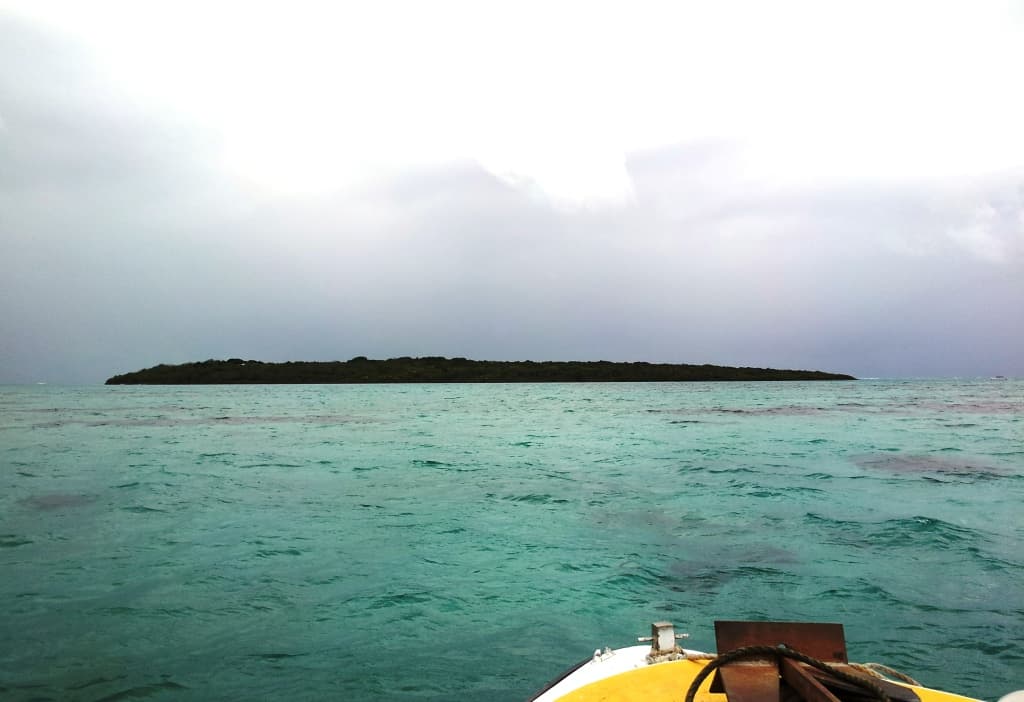
A 26-hectare coral islet 850 m off the south-east coast in Mahebourg Bay, restored by the Mauritian Wildlife Foundation into the last piece of dry coastal forest on the island, with pink pigeons, giant tortoises and the endemic skinks that were wiped out on the mainland. The foundation's standard eco-tour is a guided walk of about 1.5 to 2 hours including the short boat crossing from Pointe Jerome; tailor-made birding and photography tours can be arranged. The price and the running days are not printed on the site and its booking widget did not load for us, so book by email a few days ahead and ask.
Mauritian Wildlife Foundation: Ile aux Aigrettes ↗View on map ↗
 Jyoti Pur · Pexels
Blue Bay Marine Park
A protected lagoon of one to five metres off the public beach at Blue Bay, five minutes from the airport, with the island's best snorkelling straight from the sand: brain coral gardens, parrotfish, wrasse and the occasional turtle. Glass-bottom boats work from the beach through the day. Fishing is banned inside the park. Wear reef shoes on the rock and coral edges, do not stand on the reef, and bring your own mask if you can.
 Martin Falbisoner · CC BY-SA 4.0 via Wikimedia Commons
Ganga Talao (Grand Bassin)
A crater lake at about 550 m in the south, held sacred by Mauritian Hindus and marked at the entrance by a 33 m statue of Shiva; temples line the shore and the site is free and open. In the days before Maha Shivaratri, on 6 March in 2027, hundreds of thousands of pilgrims walk here from every corner of the island, many carrying decorated wooden shrines, and the roads of the centre and south belong to them. Dress modestly, remove shoes at the temples, and if you drive during the pilgrimage, drive slowly.
Domaine de Labourdonnais
A restored 1850s plantation house at Mapou in the north, with the orchards and rum distillery of the estate around it and a good restaurant. Open 9:00 to 17:00 with last admission at 15:45; the estate and gardens alone cost Rs 150, the self-guided house and grounds Rs 750 for adults and Rs 600 for children, and the guided house tour at 10:00 and 14:00 Rs 950 and Rs 800, VAT included. Note that the old chateaulabourdonnais.com domain has expired and is a parking page; the live site is domainedelabourdonnais.com.
 Naomi Lubrich · CC BY-SA 4.0 via Wikimedia Commons
Beau Bassin Jewish Detainees Memorial and St Martin cemetery
In December 1940 the British deported about 1,580 Jewish refugees, who had reached Haifa from Nazi-controlled Europe on the Atlantic, to Mauritius, and held them in Beau Bassin prison for four years and seven months until August 1945. 128 of them died here and are buried in the Jewish section of St Martin cemetery, by the memorial's own count, next to which a small memorial and information centre opened in November 2014. It opens Wednesdays and Fridays 10:00 to 16:00 and Sundays 10:00 to 13:00, closes on public holidays and on Yom Kippur, is free, and offers guided tours by arrangement. For an Israeli visitor it is the most affecting hour on the island, and almost nobody goes.
 Lukas von Daeniken from Schweiz · CC BY-SA 2.0 via Wikimedia Commons
La Vanille Nature Park
A park in the wet south at Riviere des Anguilles built around one of the world's largest herds of Aldabra giant tortoises, which you walk among, plus a crocodile farm and an insectarium. Open every day 9:00 to 17:00 including public holidays, closed only on 25 December and 1 January; non-residents pay Rs 975 for adults and Rs 685 for children of 3 to 12. The park itself says to arrive before 15:00 for the full experience. Best with children, and best combined with Gris Gris and Rochester Falls on a south-coast day.
 pyraniton · CC BY 3.0 via Wikimedia Commons
Casela Nature Parks
A large wildlife and adventure park at Cascavelle on the west coast, with a safari area of zebra and giraffe, big-cat enclosures, zip lines and a toboggan. Open daily 9:00 to 17:00 including public holidays, closed 25 December and 1 January. The park publishes resident prices and seasonal promotions but we could not find the standard non-resident adult price anywhere on its own site, and the third-party figures disagree, so budget for something above Rs 1,000 and check at the gate or the booking site. Not the place for the animal-welfare-minded; the walks and the hikes elsewhere on this coast are.
 CARRERE Radjiv / CC BY-SA 3.0 via Wikimedia Commons
 indeepdark / CC BY-SA 1.0 via Wikimedia Commons
Food & drink
 Yoann74 · CC BY-SA 4.0 via Wikimedia Commons
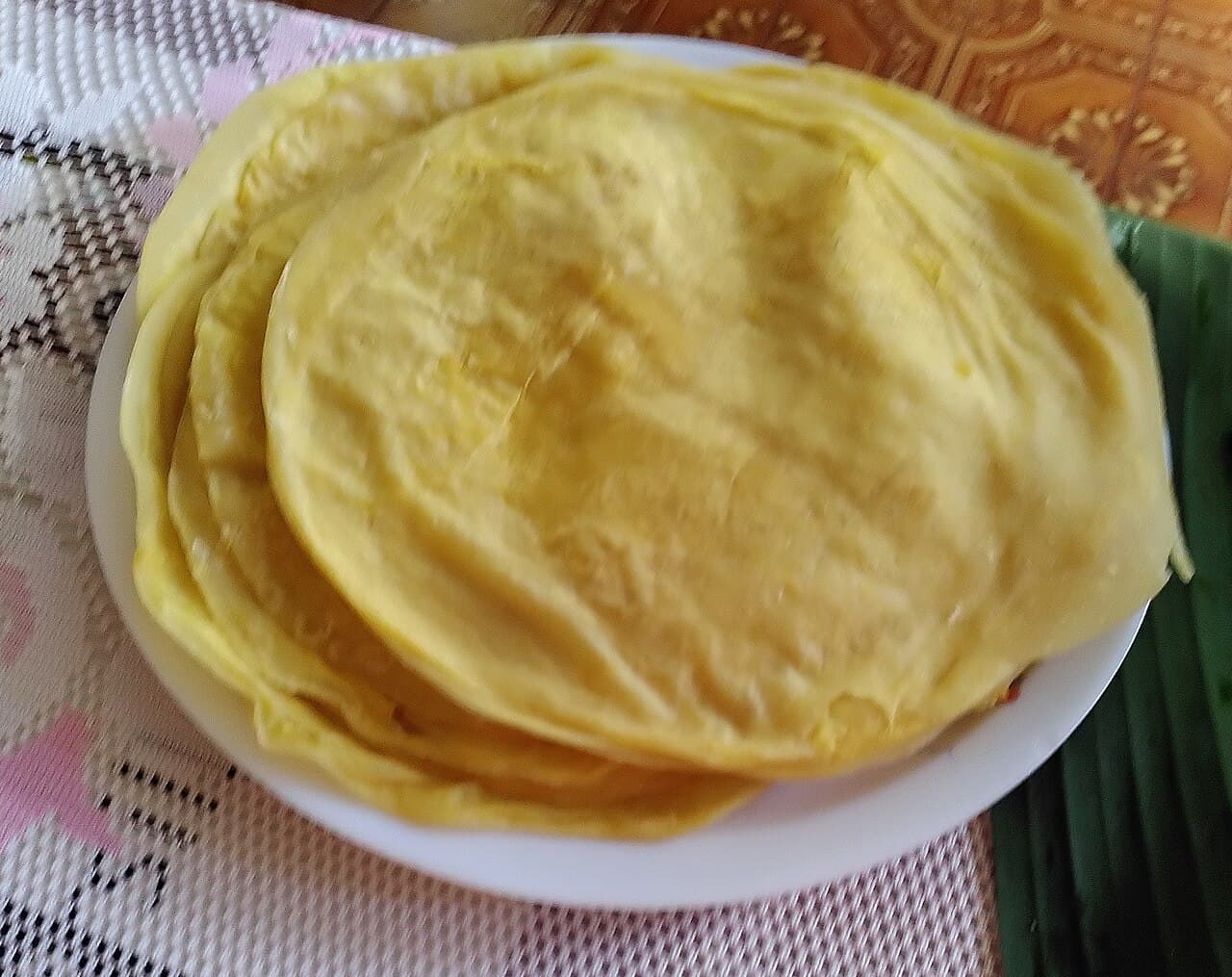
Dholl puri
A thin flatbread stuffed with ground yellow split peas, folded around bean curry, chutney and pickle and sold in pairs from stalls and vans for a handful of rupees. The island's everyday breakfast and lunch, and the first thing to eat.
 Anoha · CC BY-SA 3.0 via Wikimedia Commons
Gateau piment
Small deep-fried split-pea fritters with chilli, eaten alongside dholl puri or stuffed into a bread roll. Everywhere, and best hot from the oil.
 Benoît Prieur · CC0 via Wikimedia Commons
Rougaille
The tomato, onion, garlic and thyme sauce that is the closest thing to a Mauritian house dish, with fish, sausage, chicken or egg. Home cooking; look for it at table d'hote places rather than resort menus.
 Benoît Prieur · CC0 via Wikimedia Commons
Vindaye
Fish or octopus pickled in mustard seed, turmeric, garlic and vinegar and served cold, a Franco-Indian dish that rarely makes the tourist menus and should.
Boulettes
Chinese-Mauritian steamed dumplings of fish, meat or chayote, sold by the bowl in broth from counters around Chinatown in Port Louis. A snack, and a good one.
Mine frites and bol renverse
Stir-fried noodles and the "upside-down bowl" of rice, meat and a fried egg turned out onto the plate: the two Chinese-Mauritian lunches you will see most often, filling and cheap.
Briani
The layered rice and meat dish of the island's Muslim community, made for weddings and Fridays and sold from specialist counters. Heavier than the street food and worth a lunch on its own.
 Bapak Alex · CC BY 4.0 via Wikimedia Commons
Salade de coeur de palmiste
The "millionaire's salad": shredded raw palm heart, expensive because the palm dies to give it. Order it once, at a place that says where its palms come from.
 Benreis · CC BY 3.0 via Wikimedia Commons
Salade d'ourite
Cold octopus salad with onion, chilli and lime, the standard seaside starter. Freshness varies by venue more than by recipe.
Alouda
A cold milk drink with basil seeds and agar jelly, the island's cousin of falooda, sold from stalls at the Port Louis market. Sweet, and exactly right at eleven in the morning there.
Gateau patate and napolitaine
The sweet-potato and coconut fritter of the street stalls, and the pink-iced jam biscuit of every bakery. Neither is fine food; both are the island.
Lunch is midday to about two, dinner from about seven; the resorts run later. Half board, breakfast and dinner, is the resort norm, which makes lunch the meal to take out of the hotel: a dholl puri stall, a Chinatown counter or a Chamarel table with a view costs a fraction of the resort grill and is better. Tips are not expected; some high-end restaurants add 10 to 15 percent service, so read the bill before adding. In the markets, bargaining is normal and the price is agreed before you buy. Many independent restaurants close on a fixed weekday and on public holidays, of which Mauritius has about sixteen a year; the ones in this guide list theirs.
Where to eat
Le Capitaine
institutionOpen since 1989 on the Grand Baie waterfront, and one of the few places on the island that publishes its hours plainly: every day, 11:00 to 23:00. Fish, lobster, tiger prawns, calamari and a signature Thermidor Isle de France, mains from Rs 650. A search summary gave it a Monday closure and a split schedule; its own site says otherwise, and we trust the site. Book for dinner.
Last researched 2026-09-18
La Bonne Chute
institutionA Tamarin fixture that says it has been serving since 1969: lunch 11:30 to 14:30 and dinner 19:00 to 22:00 on Monday and Wednesday to Saturday, the bar later. Its own page prints a Monday-to-Saturday line next to a note that it is closed on Tuesdays, Sundays and public holidays; we follow the closure note, and it asks you to call on the eve of a holiday to check, which is the kind of honesty we like. That Tuesday closure is why our Le Morne hiking day does not end here.
Last researched 2026-09-18
Le Chamarel Restaurant
sunset-venueA hillside terrace above Chamarel looking down over Le Morne and the lagoon, and lunch only: open every day 9:00 to 16:00 with the last lunch orders at 15:00 and the bar until 15:45. There is no dinner, no takeaway, and a smart-casual request. Book, especially for a terrace table, and do not plan it as a sunset dinner because it will be closed. Palm-heart salad, octopus, venison in season.
Last researched 2026-09-18
Varangue sur Morne
fine-diningA colonial-style veranda on the Plaine Champagne road with the Black River Gorges falling away below it, serving a Mauritian fine-dining menu that draws on all four of the island's kitchens. Lunch only, every day from noon to 16:30 according to its listing on the island's restaurant platform, which is where its hours live; reservations expected. Pair it with the gorges viewpoint a few minutes up the road.
Last researched 2026-09-18
Domaine Anna
modernPavilions over ponds on an old sugar-estate property just inland from Flic en Flac, with a Chinese-led menu that crosses into Creole, Indian and European dishes. Its listing on the island's restaurant platform rendered without its hours for us; the secondary sources agree on Tuesday to Sunday, lunch and dinner, closed Mondays, which we print with that caveat. Reserve, and do not turn up on a Monday.
Last researched 2026-09-18
Escale Creole
institutionA mother-and-daughter table d'hote in a garden at Moka, on the road between the two coasts, serving the home cooking the resorts do not: rougaille, vindaye, brede greens, chutneys. Weekday lunches only, roughly noon to 14:30, and by reservation, according to the listings we could read; its own page on the restaurant platform did not render. Call first. It is the lunch we would build a coast-to-coast transfer day around.
Last researched 2026-09-18
Dewa and Sons
street-foodThe stall that Mauritians name first when you ask about dholl puri, in Rose Hill on the plateau rather than in Port Louis as some guides place it. It sells out; go in the morning. No website and no published hours, and we could not read its social page, so treat this as a local institution located by its address and confirmed by the queue rather than by a schedule.
Last researched 2026-09-18
Sunrises
 Гульнара Бектемировна · CC BY 4.0 via Wikimedia Commons
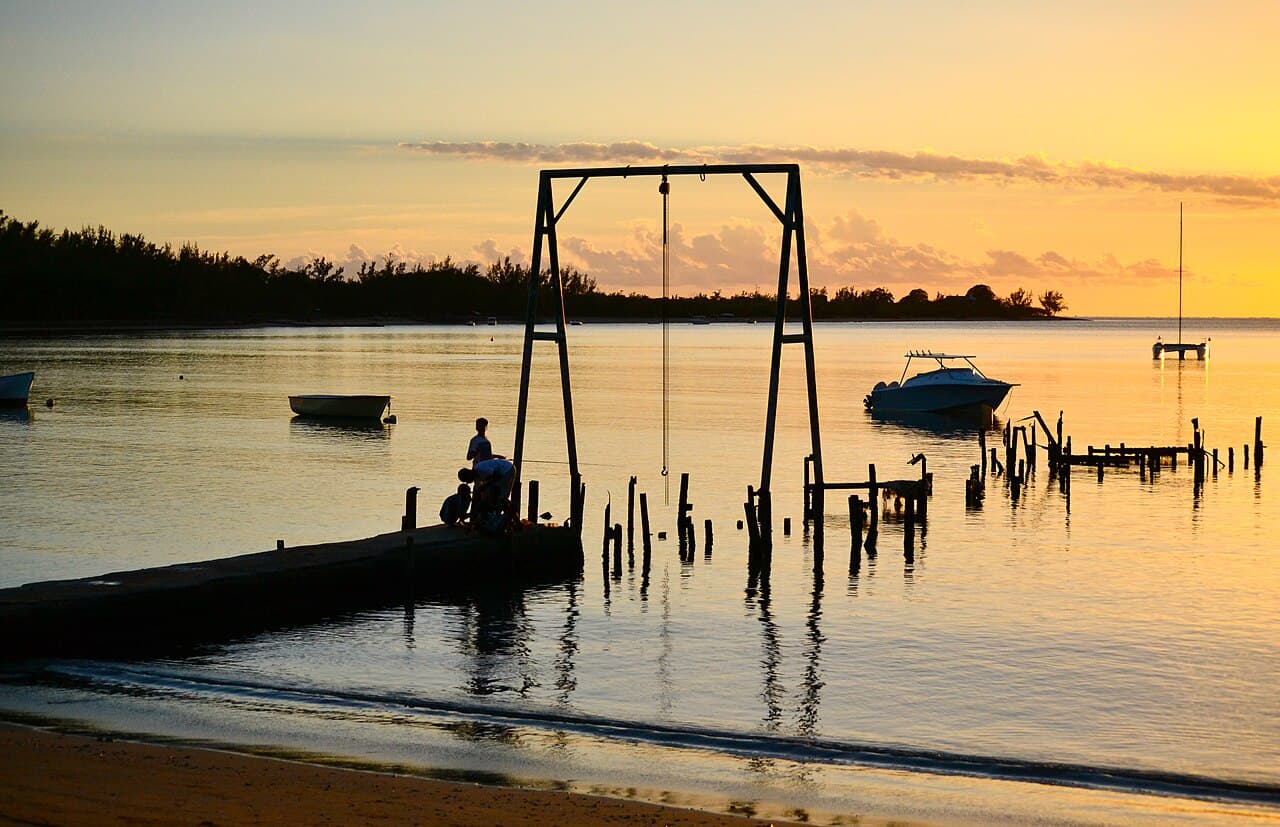
Belle Mare and the east coast: every day of the year
The sunrise bearing at this latitude runs from about 65 degrees at the June solstice to about 115 at the December one, and from Belle Mare beach the terrain data finds nothing but ocean across the whole of that arc out to 40 km. The same is true of Pointe d'Esny in the south-east and Poste Lafayette in the north-east. This is the honest case for the east coast: whatever the wind is doing, the sun comes up out of the sea in front of your room on every morning of the year.
Year-round · Walk-on from any east-coast resort or the public beach at Belle Mare. · The lagoon is at its glassiest before the trades build, and in the southern winter that is a short window; by mid-morning the east coast is in the wind.
 Sualkdd · CC BY-SA 3.0 via Wikimedia Commons
Cap Malheureux: the red-roofed church, but only in winter
The small church of Notre-Dame Auxiliatrice on the northern tip, with Coin de Mire islet behind it, is the most photographed building on the island and is usually sold as a sunrise. It works only for half the year. The coast east of it runs south-east toward Grand Gaube, and the ray cast finds low land 250 m to 1.5 km away at every sunrise bearing above about 92 degrees. So the sun comes up out of open water here from about 16 March to 27 September, and for the whole of the December to February high season it rises behind the Grand Gaube shore instead.
16 March to 27 September · Ten minutes by car from Grand Baie. Buses run along this road but not this early. · The church faces the sea with Coin de Mire to the north-west, so the light on the roof is the shot; the sun itself is off to the right.
 Simisa (talk · contribs) · CC BY-SA 3.0 via Wikimedia Commons
Gris Gris: the cliffs in summer
On the south coast at Souillac the reef gives out and the ocean hits black cliffs, with a blowhole and a headland the island calls Roche qui Pleure. The sunrise is open here only when the sun comes up south of east, from about 16 September to 26 March; through the southern winter the cliffs to the east block it. That happens to be the right way round, because summer is when the swell is quieter and the cliff path is safer.
16 September to 26 March · About 25 minutes from the airport and Blue Bay, an hour from the west coast. · The blowhole works on a swell; the early light on wet black rock is the picture.
Sunsets
 "dronepicr" · CC BY 2.0 via Wikimedia Commons
Flic en Flac: the everyday sunset
The sunset bearing here swings from about 245 degrees at the December solstice to about 295 at the June one, and from Flic en Flac beach the terrain ray cast finds open water across all of it out to 40 km. So does it from Tamarin, from the Albion lighthouse, from Pointe aux Piments, from Mont Choisy and from Trou aux Biches: the whole west coast of Mauritius is a sunset coast on every day of the year. Flic en Flac is simply the one with the longest public beach and the most places to sit with a drink, and it is where the island itself comes on a Sunday evening.
Year-round · Walk-on from anywhere in Flic en Flac or Wolmar; about 45 minutes from the airport by car. · Shoot south along the beach toward Le Morne, which stands on the horizon about 20 km away, for a foreground; the sea in front of you is just sea.
 Fatih Turan · Pexels
Le Morne: the mountain behind you, the sea in front
From the western beach of the Le Morne peninsula the horizon is open at every sunset bearing of the year, and the mountain is behind you catching the last light, which is why the resorts here charge what they do. One curiosity from the terrain work: Reunion's Piton des Neiges, 3,070 m high and 203 km away on a bearing of 249 degrees, is on paper just tall enough to break the refracted horizon from this beach, and the sun sets on that bearing for about ten days in late January and ten in mid-November. In practice haze at 200 km hides it almost always. We mention it because it is true, not because you should plan around it.
Year-round · About an hour from the airport, twenty minutes from Chamarel. There is a public beach with parking at the village end of the peninsula. · Turn round. The mountain face goes orange and then pink after the sun has gone, and the kites over the southern lagoon give scale.
 "dronepicr" · CC BY 2.0 via Wikimedia Commons
Mont Choisy and Trou aux Biches: the north's real sunset
Grand Baie is the town people stay in and Mont Choisy is where they should walk for the evening. The long public beach and Trou aux Biches next to it face west across open water, and the ray cast finds nothing above the horizon at any sunset bearing. On a Sunday it is full of Mauritian families with picnics under the casuarinas, which is the best version of it.
Year-round · Ten minutes by car or bus from Grand Baie, on the Port Louis road. · The casuarina line gives you silhouettes; the water is shallow and reflective at low tide.
 Christian A. · Pexels
Grand Baie, and what it actually gives you
Worth saying plainly because the town is sold on its evenings: Grand Baie's beach at La Cuvette looks north-west into a bay whose western arm, the Pointe aux Canonniers peninsula, sits 250 m to 1.5 km away across every sunset bearing from 245 to 285 degrees. The ray cast finds the horizon open only at 290 degrees and above, which the sun reaches from about 14 May to 29 July. For the other 288 days, including the whole December to April high season, the sun goes down behind low land and houses. The sky is still good. The sun meeting the water is ten minutes away at Mont Choisy.
Mid-May to late July for the sun on the water; year-round for the light · Walk-on from anywhere in Grand Baie. · The boats in the bay and the colour on the water rather than the horizon.
Day trips
 "dronepicr" · CC BY 2.0 via Wikimedia Commons
The Chamarel loop: coloured earth, rum, ebony and the gorges
The day the beach can wait, and the reason to have a car. From the west coast the road climbs through Case Noyale to Chamarel in half an hour: the Seven Coloured Earth and its waterfall viewpoints first, when the light is on the dunes and before the coaches, then the Rhumerie de Chamarel for the guided visit and the tasting, lunch at Le Chamarel Restaurant or Varangue sur Morne, both lunch-only, then the Black River Gorges viewpoint on the Plaine Champagne road and the Ebony Forest walk if there is energy and daylight left; the forest's page gives prices but no closing hour. Come down to Le Morne's western beach for the sunset. The distillery is closed on Sundays and the two restaurants stop lunch at 15:00 and 16:30, so the order matters.
About 30 minutes from Flic en Flac to Chamarel; the whole loop is under 60 km of driving · A full day
 Benoît Prieur · CC0 via Wikimedia Commons
Port Louis and Pamplemousses
Half a day in the capital and half in the garden. Park at the Caudan waterfront or, better, drive to Rose Hill, eat a dholl puri at Dewa and Sons and take the Metro Express in. Aapravasi Ghat first, free, Monday to Friday 9:00 to 16:00; then the Central Market and Chinatown for the boulettes and the alouda; then the Blue Penny Museum timed for a quarter past the hour, when the stamps come out. After lunch, twenty minutes north to the Pamplemousses botanic garden, open to 17:30, with the Domaine de Labourdonnais a little further on if the day is long. Aapravasi Ghat closes at noon on Saturdays and the city is shut on Sundays, so this is a weekday.
About 40 minutes from the airport or Flic en Flac, 25 from Grand Baie · A full day, weekdays only
 ZoschH · CC BY-SA 4.0 via Wikimedia Commons
Blue Bay, Ile aux Aigrettes and the south coast
The south-east and south in one loop from the airport corner. Snorkel the Blue Bay marine park from the beach in the morning while the water is calm, cross to Ile aux Aigrettes with the Mauritian Wildlife Foundation for the guided walk among tortoises and pink pigeons, eat in Mahebourg, and then drive west along the wild coast: the Rochester Falls with their basalt columns, La Vanille's tortoises if there are children, and Gris Gris at Souillac for the cliffs and the blowhole. On a Monday, Mahebourg's waterfront market is the lunch stop. The wildlife foundation's tour needs booking by email a few days ahead.
Blue Bay is 5 minutes from the airport; Gris Gris about 25 minutes further west · A full day, or the day you land or leave
Mauritian Wildlife Foundation: Ile aux Aigrettes ↗View on map ↗
 Guillaume Meurice · Pexels
Dolphins and whales off Tamarin at dawn
Spinner and bottlenose dolphins rest in Tamarin Bay most mornings, and from July to November humpbacks pass the deep water beyond the reef where sperm whales live all year. The law shapes the trip: paid watching only between 06:00 and noon, boats no closer than 50 m to dolphins and 100 m to whales, swimming with dolphins only between 06:00 and 09:00 with three people in the water at a time, and no swimming with whales at all. So you leave Black River or Tamarin in the dark, you are back by mid-morning, and an operator who offers an afternoon swim is not one to book. Look for the PC number on the boat and the licence.
Boats leave from Black River and Tamarin, 10 minutes south of Flic en Flac · Three to four hours from a dawn start
 Francesco Ungaro · Pexels
Ile aux Cerfs and the east lagoon
The islet off Trou d'Eau Douce is the east coast's day out: boat shuttles cross from the village jetty in a few minutes, the beaches are public, and the operators sell parasailing, the golf course and lunch. There is no fee for the island, only the boat, and the catamaran day trips that add a barbecue and a stop at the Grande Riviere Sud-Est waterfall are the better version. Go early, before the coaches, and accept that this is the busy, sold version of the lagoon rather than the quiet one; for quiet, walk the beach south of Belle Mare instead.
Trou d'Eau Douce is 15 minutes from Belle Mare and about 45 from the airport · Half a day, or a full day on a catamaran
 B.navez · CC BY-SA 3.0 via Wikimedia Commons
Rodrigues, which is not a day trip
About six hundred kilometres east and about an hour and a half by air, and a different country in everything but law: a wide lagoon, a Creole-speaking island of fishermen, octopus drying on lines, and almost no resorts. It rewards three or four nights, not one, and it is the extension we would add to a second Mauritius trip rather than a first. Air Mauritius is the only carrier on the route; schedules and fares live on its site and we have not verified them.
About 1 hour 35 minutes by air from SSR airport · Three or four nights
After dark
 David Ramsamy · Pexels
Sunday evening on Flic en Flac beach
local-experienceThe island itself comes to the west coast on a Sunday: extended families under the casuarinas, grills, music from car doors, children in the shallows until dark, and the sun going into the sea in front of all of it. Buy something from a van and sit down. Free, and the most Mauritian hour of the week.
 NOTE: This image is a panorama consisting of 8 frames that were merged or stitched in Panorama Studio. As a result, this image necessarily underwent some form of digital manipulation. These manipulations may include blending, blurring, cloning, and color and perspective adjustments. As a result of these adjustments, the image content may be slightly different from reality at the points where multiple images were combined. This manipulation is often required due to lens, perspective, and parallax distortions. · CC BY-SA 3.0 via Wikimedia Commons
Le Barachois floating dinner
dinnerConstance Prince Maurice's restaurant sits on pontoons over a fish reserve, reached along a lantern-lit walkway through the mangroves, and the resort places its floating bar for the sunset over the inlet. The one east-coast dinner we would book from another hotel.
 Martin Falbisoner · CC BY-SA 4.0 via Wikimedia Commons
The View Bar at Lakaz Chamarel
sunset-venueOpen 16:30 to 19:30 in the hills above Chamarel, which covers the sunset from the mountain side of the island on every day of the year. Drive up from the coast, drive down in the dark with care.
 mwanasimba from La Réunion · CC BY-SA 2.0 via Wikimedia Commons
Grand Baie after dark
nightlifeThe one town on the island with a bar and restaurant strip: Le Capitaine on the water until 23:00, the bay lit up, taxis waiting. Know that the sun sets behind the western arm of the bay for most of the year, so have the sundowner at Mont Choisy and come here afterwards.
Daily itinerary
Eight days, landing Saturday: the west coast first, then the east
The shape we would book, and the weekdays are doing work. Four nights on the west coast for the sheltered water, the mountains and the sunsets, then a coast-to-coast day across the plateau, then three nights on the east for a different lagoon and the sunrise. Landing on a Saturday puts the dolphin boat on a Sunday morning, the Chamarel loop on a Monday when the distillery is open, the Le Morne hike on a Tuesday when La Bonne Chute is shut so dinner is elsewhere, the plateau crossing on a Wednesday when the Beau Bassin memorial and Escale Creole are both open, and Port Louis on a Friday when Aapravasi Ghat keeps full hours. Nights: four in Flic en Flac or Tamarin, three at Belle Mare or Blue Bay.
- 1
Land, and go west
relaxedArrive at SSR airport via Dubai, Addis Ababa or Paris. Immigration wants the printed All-in-One form with its QR code, or you fill in the disembarkation card; Israelis need no visa. Collect the car: the drive to Flic en Flac is about 45 minutes across the south of the island.In the village at Flic en Flac, or at the hotel.The beach, and nothing else. The lagoon here is shallow and calm; wear something on your feet for the rock at the edges.From the sand. Flic en Flac faces an open horizon at every sunset bearing of the year.Domaine Anna, ten minutes inland, is reported open Saturdays; otherwise the hotel.Early. Tomorrow starts in the dark.Rental car from the airport; the drive is motorway most of the way.Estimate: If you base yourself in the north instead, swap the first four nights to Trou aux Biches; the geometry of the week still works.
- 2
Dolphins at dawn, then Sunday on the beach
moderateA licensed boat from Black River or Tamarin at about 06:00 for the dolphins in Tamarin Bay and, from July to November, the humpbacks beyond the reef. Paid watching stops at noon by law and swimming with dolphins at 09:00, so this is a morning.Back in Flic en Flac; La Bonne Chute is closed on Sundays.Rest, then the beach as the Mauritian families arrive for the Sunday evening.Flic en Flac, with the island.From the vans on the beach, or the hotel.Free.Operator pickup or a ten-minute drive to the harbour.Estimate: Skip the boat and sleep; do it on day 4 morning before the hike instead, though that makes a long day.
- 3
The Chamarel loop
fullUp the hill to the Seven Coloured Earth at opening, 8:30, then the Rhumerie de Chamarel for the guided visit and tasting; it is closed on Sundays, which is why this is Monday.Le Chamarel Restaurant on its terrace above the coast, last lunch orders 15:00, or Varangue sur Morne until 16:30. Book either.The Black River Gorges viewpoint on the Plaine Champagne road, and the Ebony Forest walk if there is time.Down to the public beach on the western side of Le Morne.La Bonne Chute in Tamarin, open Mondays 19:00 to 22:00, on the way home.Free.Car all day; under 60 km of driving.Estimate: With children, swap the Ebony Forest for the illusion house opposite the coloured earth.
- 4
Le Morne Brabant
fullStart the mountain trail as early as the gate allows, 07:00 by every report, with water and proper shoes; the first section is a forest path, the second a steep scramble where staff turn back anyone unprepared to continue without a guide. Hire one if in doubt.Late, at a Le Morne resort beach restaurant or back in Tamarin.The Le Morne beach, or watching the kites on the southern lagoon from the shade.Le Morne again, from the western beach, with the mountain going pink behind you.Not La Bonne Chute, which is closed on Tuesdays; a resort dining room at Le Morne, or Flic en Flac.Free.Car to the trailhead on the peninsula road; about 30 minutes from Flic en Flac.Estimate: If the trail is closed, as it was for ten days at the turn of September, take a kite lesson on the lagoon instead.
- 5
Across the plateau: Rose Hill, Beau Bassin, Moka
moderateLeave the west coast early. Dholl puri at Dewa and Sons in Rose Hill before it sells out, then the Beau Bassin Jewish Detainees Memorial at St Martin cemetery, open Wednesdays 10:00 to 16:00, free, with a guided tour if you emailed ahead.Escale Creole at Moka, a weekday table d'hote by reservation, for the home cooking.Eureka House at Moka if it is open, then down to the east coast: Belle Mare is about 45 minutes from Moka.You are on the wrong coast for it now; the east gives you the morning instead.At the resort on half board.Early. Sunrise is at about 05:20 to 06:45 depending on the month.Car; the plateau towns sit on the motorway between the coasts.Estimate: Replace Eureka with the Quatre Bornes market, which has its textile day on Thursdays if your week runs a day later.
- 6
Sunrise, then Ile aux Cerfs
moderateOn the beach at Belle Mare before dawn: the sun comes up out of open ocean here every day of the year. Then the boat from Trou d'Eau Douce to Ile aux Cerfs, early, before the coaches.On the islet, or on a catamaran if you took the day-trip version.The lagoon, which in the southern summer is at its glassiest and in winter is where you learn what a trade wind is.Behind the island. A drink at the resort bar.Le Barachois at Constance Prince Maurice if you booked it, which is the east-coast dinner worth leaving your own hotel for.Free.Car to the jetty at Trou d'Eau Douce, 15 minutes; or the resort's own shuttle boat.Estimate: Golf at Anahita or Belle Mare Plage for the golfers; the lagoon for everyone else.
- 7
Port Louis and Pamplemousses
fullDrive to the capital, about 50 minutes, and park at Caudan. Aapravasi Ghat, free, then the Central Market and the boulette counters of Chinatown, then the Blue Penny Museum timed for a quarter past the hour.Briani or mine frites in town; the market's counters are the cheapest lunch on the island.The Pamplemousses botanic garden, twenty minutes north, open to 17:30. The Domaine de Labourdonnais is a further ten minutes, but its last admission is 15:45, so it only fits if you leave the capital before lunch.Back on the east coast; or detour to Mont Choisy on the north-west coast for the sun on the water, which adds an hour.The resort.Pack.Car. Port Louis parking is the hard part; Caudan is the answer.Estimate: Rain on the plateau is common: this is the day to move if the forecast is bad, since nothing in it is weather-dependent.
- 8
Blue Bay, and home
relaxedCheck out and drive south to Blue Bay, 40 minutes from Belle Mare and five from the airport. Snorkel the marine park from the beach while the water is calm; if you booked the Mauritian Wildlife Foundation's Ile aux Aigrettes tour for this morning, it leaves from Pointe Jerome next door.Mahebourg waterfront.Return the car and fly. Evening departures via Dubai leave enough time for the morning; check yours.Everything today is within ten minutes of the airport, which is the point of ending in the south-east.Estimate: With a night flight, add La Vanille or Gris Gris in the afternoon.
Six days, landing Saturday or Monday: one base in the west for the winter
The weekdays matter here too: a Saturday or Monday arrival keeps Chamarel off a Sunday, puts Port Louis on a weekday and lands the Beau Bassin memorial on one of its Wednesday or Friday openings. For June to September, when the east and south are windward and the west is in the lee. One base at Flic en Flac, Tamarin or Le Morne, no coast change, dawn boats and hill days rather than beach days, and the sunset every evening from the same sand. The sea is about 24C, the nights are cool, the trades keep the humidity off, and the rooms are the cheapest of the year outside the school holidays.
- 1
Arrive
relaxedLand, collect the car, drive west: about 45 minutes to Flic en Flac, an hour to Le Morne.The beach, in the lee, with the wind audible on the hills behind you and absent on the sand.From the beach.The hotel.Car from the airport. - 2
Whales
moderateA licensed boat from Black River at 06:00: this is the humpback season, and the sperm whales are there regardless.Tamarin, at La Bonne Chute if it is not a Tuesday or Sunday.Rest, then a walk on the Tamarin salt pans or the beach.Tamarin Bay, where the surfers are.Flic en Flac.Ten minutes to the harbour.Estimate: Kite lesson at Le Morne, since this is the wind season.
- 3
Chamarel
fullColoured earth at 8:30, the distillery after; not a Sunday.Le Chamarel Restaurant, on the terrace, last orders 15:00.Ebony Forest or the gorges viewpoint. In winter the hills are clearer than in summer.Le Morne western beach.A Le Morne resort or Tamarin.Car, 60 km loop. - 4
The mountain
fullLe Morne Brabant from 07:00, with a guide for the upper section unless you are sure. Winter is the season for it: cooler, drier, and the trail is less slippery.Late and large.Nothing.Wherever you are sitting.The hotel; check the weekday closures before driving anywhere.Car to the trailhead.Estimate: Black River Gorges from Petrin instead: flatter, longer, and the endemic birds.
- 5
The plateau and the capital
fullDrive to Rose Hill for dholl puri, leave the car, and take the Metro Express into Port Louis: Aapravasi Ghat, the market, Chinatown, the Blue Penny Museum. On a Wednesday or Friday, the Beau Bassin memorial is on the way.The market counters.Metro back, and the botanic garden at Pamplemousses if the day is young; otherwise the beach.Flic en Flac.Domaine Anna, not on a Monday.Car to Rose Hill, Metro in, which avoids Port Louis parking.Estimate: Weekday only: Port Louis empties at the weekend.
- 6
Depart
relaxedA last swim. The drive to the airport is 45 minutes; allow more if the flight is mid-morning, since the motorway past Port Louis is slow at that hour.Fly, or on a night flight, Blue Bay for the afternoon.Return the car at the airport.
Getting around
- Sir Seewoosagur Ramgoolam International Airport (MRU) is at Plaisance in the south-east corner, not near Port Louis as many booking apps imply. Free-flow driving times from the airport: Blue Bay and Mahebourg about 5 minutes, Bel Ombre about 50, Flic en Flac about 45, Port Louis about 40, Belle Mare about an hour, Le Morne a little over an hour, Grand Baie and Trou aux Biches about an hour; add a third in daytime traffic on the motorway past Port Louis.
- There is no nonstop flight between Tel Aviv and Mauritius: the Ben Gurion flight board carried no Mauritius rows at all in the days around publication. The practical routes are Emirates or flydubai to Dubai and Emirates onward, Ethiopian via Addis Ababa, or Air France or El Al to Paris and Air Mauritius or Air France onward; Turkish Airlines was still absent from the Tel Aviv board on publish day, so Istanbul is not currently a connection.
- Israeli passport holders do not need a visa: Israel is listed as "No visa required" in the Passport and Immigration Office's country-by-country table. Every visitor must hold a passport valid beyond the stay, a return or onward ticket, funds for the stay and a confirmed accommodation booking. Visas and extensions, where needed, are free.
- Fill in the free Mauritius All-in-One Travel Digital Form online before you fly and print the PDF with its QR code; it is shown on arrival and replaces the paper disembarkation card. The tourism authority warns that any site charging for it is not official. As of September 2026 there are also Ebola-related restrictions on anyone who has been in DR Congo or South Sudan in the previous 21 days.
- Customs: foreign passport holders may bring goods to a value of Rs 15,000 duty free plus personal effects, and adults choose one of three alcohol and tobacco options, for example 250 g of tobacco, one litre of spirits and two litres of wine or beer.
- Rent a car. Mauritius drives on the left, the island is about 45 km east to west and 61 km north to south, and the tourism authority puts the coast-to-coast drive at about 1 hour 15 minutes. Hire companies commonly ask for a year's driving experience and sometimes an international permit; check before you book. Petrol was Rs 70.65 a litre from 14 August 2026 under the State Trading Corporation's price notice.
- Buses go almost everywhere and are cheap, running roughly 05:30 to 20:00 in the towns and 06:30 to 18:30 in the country, with a late Port Louis to Curepipe service. Port Louis has two stations: Victoria Square for the south and the plateau, Immigration Square for the north and east. Express buses cost a little more and stop less.
- The Metro Express light rail links Port Louis to the plateau towns as far as Curepipe, runs every day including public holidays from 06:00 to 19:00 at about ten-minute intervals, and a rechargeable MECard costs Rs 150 with Rs 100 of credit loaded. It is the easy way into Port Louis from Rose Hill or Curepipe, and the easy way to avoid parking there.
- Taxis are negotiated, not metered: agree the fare before you get in. There is no Uber; a local app called Yugo offers fixed-price bookings. Hotel taxi desks charge more than the rank outside.
- Boats: the Ile aux Cerfs shuttle leaves from Trou d'Eau Douce, catamarans to Ile aux Benitiers from Black River and Le Morne, and the Mauritian Wildlife Foundation's own boat to Ile aux Aigrettes from Pointe Jerome near Mahebourg. Licensed commercial boats carry a PC registration number; the tourism authority tells visitors to look for it.
Things worth knowing
- · Booking the east coast for July or August because the brochure was shot in February. The trades average about 18 km/h at the windward station in those months; the west and north are in the lee.
- · Assuming all-inclusive. Half board is the Mauritian norm; all-inclusive is a supplement at most resorts and covers different things at each. Download the package document before you decide.
- · Forgetting the 3 euro per person per night tourist fee, charged at check-in on top of the room rate for everyone aged 12 and over, since 1 October 2025.
- · Waiting on Grand Baie beach for the sun to set into the sea. It does so only from mid-May to late July; drive to Mont Choisy.
- · Booking a dolphin swim for the afternoon. The regulations limit paid watching to 06:00 to noon and swimming with dolphins to 06:00 to 09:00; anyone selling later is not licensed or not telling you.
- · Treating the airport as being near Port Louis. It is in the far south-east; a northern resort is about an hour away.
Budget
| Low | Expected | Comfortable | |
|---|---|---|---|
| Accommodation style / per night | €90≈ $103 | €280≈ $322 | €700≈ $804 |
| Food style / per day | €15≈ $17 | €45≈ $52 | €110≈ $126 |
| Local transport / per day | €3≈ $3 | €30≈ $34 | €80≈ $92 |
| Estimate / per day | €5≈ $6 | €20≈ $23 | €60≈ $69 |
Estimate · EUR · 2026-09-18. Quoted in euros because that is how the resorts price themselves; local life runs in rupees, at roughly 54 to 55 to the euro and about 47.5 to the US dollar on publish day (an open exchange-rate feed; the Bank of Mauritius site was unreachable, and the State Trading Corporation used 47.80 in its August notice). The low band is a guesthouse or apartment in Flic en Flac, Mahebourg or Pereybere with buses and market food; the expected band is a four or five star resort on half board with a rental car; the comfortable band is a luxury resort with the all-inclusive supplement and a driver. Add 3 euros per person per night in government tourist fee for everyone aged 12 and over, charged at check-in. VAT is 15 percent and is normally inside the prices you see. Tips are not expected; some high-end restaurants add 10 to 15 percent service. · 1 USD = €1 (18 Sep 2026)
Things worth knowing
Frequently asked questions
Mauritius or the Seychelles?
Mauritius if you want a real island behind the resort: roads, buses, a market, mountains, tea, rum, food from four continents, and rooms that cost a step less because there are a great many more of them. The Seychelles if the beach itself is the trip: granite boulders, fewer people and a smaller, wilder lagoon. Neither has a nonstop from Tel Aviv. For an Israeli reader there is one more difference: Israel's National Security Council rates the Seychelles level 1, no warning, and Mauritius level 2 with wording about a significant rise in hostility since the war and an increased motivation to harm Israelis or Jews in the country. Read that on the official site and weigh it yourself; we report it because it is there.
Which coast should we book?
It depends on the month. From June to September the south-east trades blow hardest and the east and south coasts are windward; stay west (Flic en Flac, Tamarin, Le Morne's western beach) or north (Trou aux Biches, Grand Baie). From November to April the trades ease and the east coast lagoon is at its calmest, though this is the cyclone season. October and May work almost anywhere. The west coast has the sunset every day of the year; the east has the sunrise.
Is all-inclusive the norm?
No. Half board, breakfast and dinner, is the Mauritian default at the five-star resorts, and all-inclusive is an optional supplement whose contents vary: at the Beachcomber hotels it adds lunch and a selection of drinks, at LUX* it is a downloadable package, at Veranda Grand Baie it is the whole product. Read the document before you pay for it, and remember that the best lunches on the island cost a few euros in a market.
What does the tourist fee cost and who pays it?
Three euros per person per night for every guest aged 12 or over staying in a hotel, guesthouse, tourist residence or domaine, collected by the accommodation at check-in and remitted to the Mauritius Revenue Authority. It has applied since 1 October 2025. Residents, Mauritian passport holders, holders of premium visas and residence permits and children under 12 are exempt.
How do we get there from Israel?
With one stop. There is no nonstop, and the Ben Gurion board carried no Mauritius flights in the publication week. Emirates and flydubai fly Tel Aviv to Dubai several times a day and Emirates flies Dubai to Mauritius; Ethiopian connects through Addis Ababa on flights that also carry El Al codeshare numbers; and Air France or El Al to Paris connects to Air Mauritius or Air France. Turkish Airlines had not returned to Tel Aviv as of publish day. Israelis need no visa; fill in the free All-in-One travel form before you fly.
Is it safe, and is the sea safe?
The UK Foreign Office calls most crime non-violent, with petty theft common in Port Louis, Grand Baie and Flic en Flac, and advises against walking alone at night on beaches and in the Port Louis business district; the tourist police are on 999. In the water the lagoons are reef-protected, shark incidents are described by the tourism authority as extremely uncommon, and the real hazards are stonefish and sea urchins, so wear reef shoes on rock and coral. The tap water has been treated to WHO standards since 2012. Drug laws are severe even for transit passengers.
Can we see whales?
Humpbacks pass the west coast roughly July to November, and sperm whales live in the deep water beyond the reef all year. Trips leave Tamarin and Black River early because the law only allows paid watching between 06:00 and noon, keeps boats 100 m from whales and 50 m from dolphins, allows swimming with dolphins only between 06:00 and 09:00 with a maximum of three people in the water, and bans swimming with whales entirely. Book a licensed operator and go at dawn.
Sources (22)
- The Israel National Security Council travel-warnings dataset on data.gov.il, resource last modified 14 September 2026, carries three records for Mauritius: the NSC entry states a significant rise in hostility since the Iron Swords war including protests, incitement and incidents, an increase in the motivation of terror elements to harm Israelis or Jews in the country, and a level 2 occasional threat with a recommendation for heightened precautions; the Foreign Ministry entry says to stay alert and follow the media; the Seychelles is listed by the NSC at level 1 with no travel warning · government · 2026-09-18
- The Mauritius Revenue Authority states that following changes to the Tourism Authority Act a Tourist Fee of 3 euros per tourist aged 12 or above per night applies from 1 October 2025 in hotels, guesthouses, tourist residences and domaines, collected by the accommodation and remitted monthly, and does not apply to children under 12, guests staying free, residents, Mauritians living abroad with a Mauritian passport, or holders of a valid premium visa or residence permit · government · 2026-09-18
- The Mauritius Revenue Authority's traveller allowances page, in force since 1 September 2025, gives foreign passport holders a duty-free goods allowance of Rs 15,000 plus personal effects, and lets adults choose one of three options: 250 g tobacco with 1 litre of spirits and 2 litres of wine or beer, 250 g tobacco with 2 litres of spirits, or 250 g tobacco with 4 litres of wine or beer · government · 2026-09-18
- Mauritius Meteorological Services describes a warm humid summer from November to April and a relatively cool dry winter from June to September with October and May as transition months, mean summer and winter temperatures of 24.7C and 20.4C, January and February the warmest months with average day maxima of 29.2C, July and August the coolest with night minima of 16.4C, long-term annual rainfall of 2010 mm with February and March wettest and October driest, summer carrying 67 percent of the rain, and coastal sunshine of 7.5 to over 8 hours a day · government · 2026-09-18
- NOAA GSOD station 619900 at Sir Seewoosagur Ramgoolam International Airport, Plaisance, over 2016 to 2025, gives mean daily maxima from 24.9C in July to 30.3C in February and March, mean daily minima from 19.2C in August to 24.2C in February and March, mean wind from 13.1 km/h in March to 18.3 km/h in August, and approximate monthly rainfall from about 50 mm in September and October to about 295 mm in January; the Vacoas station at 425 m runs about three degrees cooler with about 350 mm in January · government · 2026-09-18
- NOAA Coral Reef Watch's Southern Mauritius virtual station gives averaged monthly mean sea surface temperatures from 23.4C in August and September to 27.7C in February and March, and on 16 September 2026 recorded 24.3C with a positive anomaly of about 1.2C, zero degree heating weeks and no bleaching alert · government · 2026-09-18
- The Mauritius Meteorological Services cyclone warning system defines Class I as issued 36 to 48 hours before gusts of 120 km/h, Class II to allow about 12 hours of daylight before such gusts, Class III to allow about 6 hours, and Class IV when gusts of 120 km/h are recorded and expected to continue · government · 2026-09-18
- The UK Foreign, Commonwealth and Development Office advice for Mauritius, updated 4 September 2026 and current on 18 September 2026, states that the tropical cyclone season usually runs from November to May, that during a cyclone you are not allowed to leave your accommodation and car insurance often becomes invalid, that most crime is non-violent with petty crime common in Port Louis, Grand Baie and Flic en Flac, that the tourist police can be reached on 999, that stonefish stings are rare but can be fatal, that same-sex sexual activity was decriminalised in October 2023, that drug penalties are severe including for transit passengers, that the All in One travel form must be completed online before arrival, and that Ebola-related entry restrictions apply to travel from DR Congo and South Sudan within the previous 21 days · government · 2026-09-18
- The Mauritius Tourism Promotion Authority states that tips are not mandatory but some high-end restaurants add a 10 to 15 percent service charge, that tap water has been treated to WHO standards since 2012, that the time zone is UTC+4, that plugs are British three-square-pin and two-round-pin at 220 to 230 V, that English is official with French and Creole spoken, that the lagoons are reef-protected so shark risk is extremely uncommon while stonefish, lionfish, urchins and jellyfish can sting, and that the All in One travel form is free with any paid third-party service not endorsed · tourism-board · 2026-09-18
- The Tourism Authority (Dolphin and Whale Watching) Regulations 2012 define a prohibited zone of 50 m around a dolphin and 100 m around a whale and a regulated zone to 150 m and 200 m, require a licence and a skipper's licence, prohibit swimming, diving or snorkelling with a whale, feeding, touching, approaching head-on or from behind and circling, restrict paid dolphin and whale watching to 06:00 to noon and paid swimming with dolphins to 06:00 to 09:00 with no more than three swimmers including a life-saver in the water at once, and bar kitesurfing, jet skiing, paragliding, diving and windsurfing within 500 m of a dolphin or whale · government · 2026-09-18
- Tour operators on the west coast describe the humpback whale season as roughly July to November with sperm whales present all year and trips departing Tamarin and Black River into the open ocean beyond the reef · independent-travel · 2026-09-18
- The Beau Bassin Jewish Detainees Memorial and Information Centre states that in December 1940 about 1,580 Jewish men, women and children who had fled Nazi-controlled Europe were deported to Mauritius and spent four years and seven months in Beau Bassin central prison before leaving in August 1945; the centre opened in November 2014 at Raymond Rivet Road, St Martin Cemetery, Beau-Bassin, opens Wednesdays and Fridays 10am to 4pm and Sundays 10am to 1pm, closes on public holidays and Yom Kippur, and is free with guided tours by arrangement · museum · 2026-09-18
- Le Capitaine, Royal Road, Grand Baie, a seafood restaurant open since 1989, states it is open daily 11:00 to 23:00 seven days a week, with mains from Rs 650 and a signature Thermidor Isle de France · restaurant-official · 2026-09-18
- La Bonne Chute Restaurant and Bar, Royal Road, Tamarin, publishes restaurant hours of Monday to Saturday 11:30am to 2:30pm and 7:00pm to 10:00pm, states it is closed on Tuesday and Sunday and on public holidays, and asks callers to check on the eve of a public holiday · restaurant-official · 2026-09-18
- Le Chamarel Restaurant at La Crete, Chamarel, states it is open Monday to Sunday 9:00 to 16:00 with lunch service closing at 15:00 and the bar open 9:00 to 15:45, is not open for dinner, does not offer takeaway, and recommends smart casual dress · restaurant-official · 2026-09-18
- Open exchange-rate feed on 18 September 2026: 1 euro = 54.64 Mauritian rupees, 1 euro = 1.1486 US dollars, 1 euro = 3.478 shekels; the Bank of Mauritius indicative-rate page was unreachable on publish day · independent-travel · 2026-09-18
- The Mauritius Tourism Promotion Authority states that Mauritius has two types of bus, standard and express, that the island is about 45 km east to west and 61 km north to south, that there is no Uber but a local app called Yugo, and that licensed commercial boats carry a PC registration number · tourism-board · 2026-09-18
- Kitesurfing guides describe the Le Morne season as roughly April to November with the strongest and most consistent wind from June to August, a flat lagoon suited to beginners, Little Reef and Manawa as beginner and intermediate wave spots, and One Eye outside the lagoon as a fast, hollow reef break for expert riders only · independent-travel · 2026-09-18
- Hiking write-ups aggregated on publish day describe the Le Morne Brabant trail as open 07:00 to 16:00 with a last start around 14:30, free to hike unguided with staff checking hikers at the steep second section, guided hikes at about Rs 1,500 including pickup, and a closure by the Le Morne Heritage Trust Fund from 29 August to 7 September 2026; the Trust Fund's own site blocked automated reading · independent-travel · 2026-09-18
- Diwali 2026 falls on Sunday 8 November 2026 by the Hindu lunar calendar · independent-travel · 2026-09-18
- The Annex to the Mauritius Budget Speech 2026-2027 extends the MRA's stay-of-assessment provision to the non-remission of Tourist Fee collected and requires VAT-registered providers of hotel or tourist residence accommodation to remit 50 percent of VAT in foreign currency · government · 2026-09-18
- Mauritius Meteorological Services published the Southwest Indian Ocean cyclone name list for the 2026-2027 season beginning with Agueda, Bertrand, Celiwe, Dira and Emmie · government · 2026-09-18


