Seychelles · Indian Ocean
Seychelles
Mahe for arrival, the Morne Seychellois ridge, Victoria’s market and the long southern beaches. Praslin for the Vallee de Mai palm forest, Anse Lazio and Anse Georgette, and as the hub for the boat trips to Curieuse, Cousin and Aride. La Digue for Anse Source d’Argent, bicycles and a pace that makes the other two feel busy. The private islands, from North and Fregate to the Waldorf Astoria out on Platte, are a separate and much more expensive holiday that happens to share an airport.
 Fabhawk / CC BY-SA 2.0 fr via Wikimedia Commons
Overview
Seychelles is 115 islands scattered across a million square kilometres of the Indian Ocean, and the handful you can actually reach are granite: not coral atolls but the eroded peaks of a drowned microcontinent, which is why the beaches have those absurd rounded boulders and why the interior is rainforest rather than palm scrub. Three of those islands hold almost everyone. Mahe has the airport, the capital, the mountains and the buses. Praslin has the coco de mer forest and the two beaches that win the magazine polls. La Digue is nine square kilometres with almost no cars and the stretch of sand that appears on most of the postcards. 2026 has been a strange year here: visitor numbers are down 8.5 percent on 2025 and running roughly level with 2024, the United Kingdom is down 27 percent and Scandinavia down 32, while Russia is up 27.5 percent and has quietly become the largest single source market ahead of Germany. The country turned fifty on 29 June. And on 1 January the government abolished the sustainability levy on small guesthouses while leaving it on the resorts, which means the tax code now openly rewards the way we would tell you to travel here anyway.
Go in April or between October and November if you possibly can: those are the two inter-monsoon windows, when the sea is at its calmest on both coasts at once and the beach in the photograph is most likely to be the beach you get. May is the edge of that window rather than inside it, and gets windier on the east coast as the trades set in. Sleep in a small guesthouse for at least part of the trip, not only because Seychellois self-catering is genuinely good but because since 1 January 2026 properties with 24 rooms or fewer pay no sustainability levy at all, against 100 rupees per person per night at the big resorts. Book the ferry rather than the domestic flight for at least one leg, take the cashless Visitor Travel Card on Mahe instead of a rental car for the first two days, and treat Cousin Island as the one excursion to book around rather than fit in, because it opens only on weekday mornings and only through tour operators. And accept the light: dinner here starts after dark, every night of the year.
Best for
Honeymoons · Beach and boulder photography · Snorkellers · Birdwatchers and nature travellers · Island hoppers · Travellers who would rather unpack twice than five times
Daily itinerary
9 to 12 days
Two things, and both of them are structural rather than scenic. The first is that Seychelles sits under five degrees south of the equator, so the clock barely moves all year: sunrise falls between about 05:53 and 06:28 and sunset between about 18:09 and 18:41, whatever the month, and daylight itself varies by roughly half an hour across the whole year rather than the many hours you get further north or south. There are only about twenty minutes of usable light after the sun goes. There is no long summer evening to plan around, ever. The second is that two monsoons take turns, and they decide which coast you can swim on. The British Foreign Office puts it more bluntly than any brochure: the west coast is unsafe for swimming during the December to March monsoon, the east coast is unsafe from May to September, and the southern beaches are unsuitable year round. That single sentence is the most useful thing anyone will tell you about this country, and it is why picking a hotel here by photograph is a genuine mistake. The other oddity: honeymoon is a recorded purpose of visit in the national arrival statistics, alongside holiday and business, and it accounted for 13.6 percent of arrivals in the first week of September.
Best time to visit
There is no bad month for temperature: it sits around 27 to 30C all year and the sea runs 26 to 30C, so you can swim in any week you choose. What changes is the wind, and with it which coast is calm. The northwest monsoon runs roughly December to March: hotter, wetter, heaviest rain around December and January, but light winds. The southeast trades run roughly May to September: drier, breezier, best for walking and sailing, choppier for snorkelling, and the season that pushes seaweed onto exposed beaches. April and October to November are the transitions, and they are the prize: calm water on both coasts at once. Seychelles is not in the cyclone belt, which is a real and unusual advantage in this ocean; only the far southern outer islands, Aldabra and Farquhar, carry that risk.
- December to March: Northwest monsoon: humid, the wettest stretch of the year around December and January, light winds and calm seas on the east. The Foreign Office rates the west coast unsafe for swimming in these months, which matters if your hotel faces that way. Peak pricing over Christmas and New Year.
- April: The first inter-monsoon window and one of the two best months of the year: light winds, calm water on both coasts, strong visibility for snorkelling and diving. Our pick alongside October. May still often reads as part of this window, but it is the edge of it rather than the middle.
- May to September: Southeast trades: drier and a degree or two cooler, superb for the Morne Seychellois ridge and for sailing, but the east coast is the unsafe side now and seaweed accumulates on exposed sand. July and August are the driest months and also the busiest of the middle of the year.
- October to November: The second transition and the quietest good weather of the year. Seas settle on both sides, the crowds have gone home, and rates sit below both peaks. If your dates are flexible, this is where we would put them.
Things worth knowing
- Seychelles marked fifty years of independence on 29 June 2026, with four days of events across Mahe, Praslin and La Digue under the theme Nou Pep, Nou Lidantite, Nou Desten.
- Festival Kreol, the national Creole culture festival, falls each October and is the liveliest cultural week of the year to be on Mahe.
- Turtle nesting: hawksbills come ashore through the southern summer, and Curieuse runs a controlled Nesting Sea Turtle Trail from October to early March for an extra 150 rupees. On Praslin the hotels along Anse Kerlan give their own window as September to February.
- The northwest monsoon brings the biggest rain around December and January; the sustainability levy change of 1 January 2026 has already reshaped what small guesthouses charge.
Where to stay
 Matteo Parisi · Pexels
Beau Vallon, Mahe
The long north-northwest-facing bay that most first-timers use as a Mahe base: a genuinely wide beach with real waves at times, the island’s densest cluster of hotels, dive shops and independent restaurants, and a bus route into Victoria over the hill in about twenty minutes. It is the most social stretch of sand in the country and the easiest place to be without a car.
Best for: First-time visitors · A car-free Mahe base · Diving and boat trips · Eating outside a resort
It is the busiest beach in Seychelles and the Foreign Office singles it out for rip currents when the sea is rough. The 2025 beachfront rebuild put a lifeguard post here, which is more than almost any other beach in the country has, but do not read that as blanket cover. It is also the part of Mahe where opportunistic theft is most often reported, so do not leave bags on the sand.
Victoria and the Mahe interior
One of the smallest capital cities in the world, and a working one: the Sir Selwyn Selwyn-Clarke market, a scaled-down copy of Big Ben at the crossroads, the botanical garden and the ferry jetty for Praslin all sit within a short walk. Behind it the land climbs fast into Morne Seychellois National Park, where the Copolia and Trois Freres trails start.
Best for: Market mornings · Ferry departures · Hiking the ridge · A cultural half-day
Almost nobody sleeps here and that is the right call: the town empties after the market and the offices close. Keep valuables low-key in the back streets.
 Matteo Parisi · Pexels
Southern Mahe: Anse Intendance to Baie Lazare
The wilder end of the main island, where the road runs out above a series of big, empty, surf-washed bays. Anse Intendance is the famous one: a wide arc of steep sand with no village behind it, backed by takamaka trees and, at one end, one of the country’s grandest resorts. Quiet, green, and a real drive from anywhere.
Best for: Empty beaches · Photography · A second Mahe base · Resort seclusion
The Foreign Office describes the southern beaches as unsuitable for swimming year round, and Intendance in particular has a hard shore break and no lifeguard. It is a beach to walk and photograph, not one to swim laps off. You will also need a car or a lot of taxi fares.
 So Seychelles from Mahe, Seychelles · CC BY 2.0 via Wikimedia Commons
Anse Volbert and Cote d’Or, Praslin
Praslin’s main resort strip on the sheltered northeast coast: a long calm bay with a swimmable shallow shelf, a scattering of hotels and guesthouses, boat operators running to Curieuse and Cousin, and enough restaurants to eat out every night. Twenty minutes from the Vallee de Mai and about the same from Anse Lazio.
Best for: A Praslin base · Boat excursions · Families · Easy swimming
This is the east coast, which is the exposed side from May to September: expect wind and seaweed in the trade-wind months, when the northwest corner of the island reads better.
 Holger Wulschlaeger · Pexels
Anse Kerlan and the northwest tip, Praslin
The quieter, more expensive end of Praslin, wrapped around the headland that holds Anse Georgette and Anse Lazio. Two of the island’s grandest hotels sit here and there is very little else, which is the appeal. This is the sheltered side when the southeast trades are blowing.
Best for: Honeymoons · The two headline beaches · Quiet in trade-wind season
Almost no independent restaurants: you will eat in your hotel most nights or drive. Anse Georgette sits behind a resort and access has to be arranged.
 Vika Glitter · Pexels
La Passe and Anse Reunion, La Digue
La Digue’s only real settlement, a few hundred metres of jetty, bike-hire sheds, shops and guesthouses on the west coast, with the L’Union Estate gate and the road to Anse Source d’Argent a fifteen-minute cycle south. There are almost no private cars on the island: a capped pool of taxis and electric buggies, a lot of bicycles, and the ox-carts that used to do the work are now effectively a novelty ride rather than transport.
Best for: Cycling everywhere · Anse Source d’Argent · Slowing down · Guesthouse stays
Small island, small supply: guesthouses and the good restaurants book out months ahead over Christmas and in July and August. The east-coast beaches, Grand Anse and Anse Cocos among them, have serious currents and are the wrong side of the island from May to September.
Where to sleep
Four Seasons Resort Seychelles
luxury · Petite Anse, Baie Lazare, Mahe
Best for: Honeymoons · A private-feeling beach on the main island · Staying on Mahe without staying in the crowd
- Around 67 villas and residences terraced down a forested hillside to Petite Anse, one of the prettiest small bays on Mahe
- Beach, spa and dive centre on a bay that almost nobody reaches by road, while the airport is still under an hour away
- The kitchen keeps moving: a beachfront Neapolitan restaurant, Il Forno, opened in June 2026, and the resort added a resident marine biologist programme in August 2026
- The hillside is genuinely steep and you will live in a buggy, which is charming for two days and tiring for ten
- Entry rates run around USD 1,600 to 1,700 a night before the sustainability levy, service and tax
- Petite Anse is legally a public beach but the only practical way in is through the resort gate, so non-guests need approval in advance
STORY Seychelles
resort · Beau Vallon, Mahe
Best for: A first or last night near the airport side of the island · Beau Vallon without a car · Couples who want restaurants within walking distance
- Around 100 keys, most of them suites, plus a row of beach pool villas, directly on the Beau Vallon sand
- The rare Seychelles resort where you can walk out of the gate to a dozen independent restaurants and dive shops
- Buses to Victoria run over the hill from the road outside, so the whole island opens up without a rental car
- This is a busy public town beach, not a private cove: expect vendors, joggers and the Wednesday evening market crowd
- The Foreign Office flags rip currents at Beau Vallon when the sea is rough, and lifeguard cover in Seychelles is thin
- Over 50 rooms, so you pay the top band of the sustainability levy at 100 rupees per person per night
Anse Soleil Beachcomber
value · Anse Soleil, Baie Lazare, Mahe
Best for: Southern Mahe on a normal budget · Self-catering with a beach at the bottom of the steps · Travellers who want a family-run place rather than a brand
- Family-owned and open since December 1995, on a small cove at the quiet southwestern corner of Mahe
- A mix of hotel rooms, self-catering chalets with kitchenettes and pool villas, with its own restaurant on site
- Small enough to fall under the 2026 levy exemption, so nothing is added per person per night
- You need a car: this corner of Mahe is a long way from Victoria and the bus is slow
- The cove is small and shared, and the road down to it is steep and rough
- No resort facilities to speak of, which is the trade you are making
Constance Lemuria
luxury · Anse Kerlan, Praslin
Best for: Golfers · Anse Georgette on your doorstep · Honeymoons on Praslin
- Home to the only 18-hole championship golf course in Seychelles, laid out through granite and palm on the island’s northwest tip
- Around 96 suites and villas across three beaches, one of which is Anse Georgette, routinely voted among the best beaches anywhere
- The sheltered side of Praslin when the southeast trades are blowing, which is exactly when the resort strip on the other coast gets windy
- Anse Georgette sits behind the resort and the access arrangement for non-guests has been changing: if you are not staying, call ahead rather than turn up
- Spread out and hilly, so buggies again
- Very little to walk to: dinner is on site most nights
Raffles Seychelles
luxury · Anse Takamaka, Praslin
Best for: All-villa privacy · Plunge pools with a view · A quieter corner of Praslin
- 87 pool villas, every one of them freestanding with its own plunge pool and terrace above Anse Takamaka
- Genuinely all-villa, so there is no room block and no corridor: the whole property reads as a hillside village
- A short drive from both the Vallee de Mai and the Baie Ste Anne jetty for La Digue
- Rates start around USD 686 and typically land nearer USD 1,000 a night, before levy and service
- The bay below is pretty but small, and the villas are a climb above it
- Praslin’s independent restaurants are a taxi ride away
Chalets Cote Mer
apartment · Baie Ste Anne, Praslin
Best for: Families · Self-catering on Praslin · Being five minutes from the La Digue ferry
- A family-run spread of ocean-view rooms, 80 square metre waterfront suites with kitchenettes and larger two and three bedroom villas with barbecues
- Minutes from the Baie Ste Anne jetty, which makes La Digue a genuinely easy day out rather than a production
- Its own restaurant, so self-catering is a choice rather than an obligation
- Baie Ste Anne is a working harbour village, not a beach resort strip: the swimming is better elsewhere on the island
- You will want a car or a lot of taxis to reach Anse Lazio and the Vallee de Mai
- Simple rather than stylish
Le Domaine de L’Orangeraie
boutique · La Passe, La Digue
Best for: The best-appointed rooms on La Digue · Honeymoons on a car-free island · A hilltop spa
- The most polished property on La Digue, built up a hillside behind La Passe with a spa near the top of it
- Walking and cycling distance from the jetty, the village and the L’Union Estate gate
- Published rates start around EUR 640 for a garden room, which on this island buys real comfort
- Not on a beach: the sand is a short walk or ride away
- Pool villas run to about EUR 1,330 a night, which is Praslin resort money on a much smaller island
- La Digue is quiet after dark by design, so this is not a base for people who want options
Le Repaire Boutique Hotel
boutique · Anse Reunion, La Digue
Best for: A midrange La Digue base · Walking to the jetty · Eating well without leaving the building
- Eighteen rooms in three grades, from standard through sea view to beachfront, on the west coast strip near the jetty
- Its own Italian and seafood restaurant, which is one of the more reliable dinners on the island
- Free kayaks and two small pools, and everything on La Digue is a bike ride away
- Small and popular: it books out well ahead over Christmas and in the July and August peak
- The pools are modest and the beach in front is a narrow strip at high tide
- Dinner needs a reservation in season
Chalets Bamboo Vert
value · Anse Reunion, La Digue
Best for: A ten-room La Digue guesthouse · Walking from the ferry with your bags · Creole home cooking
- Ten rooms within walking distance of the harbour, which on a car-free island is the whole game
- Breakfast and a Creole dinner served on site, with the village shops and restaurants a short walk away
- Ten rooms means no sustainability levy at all under the rules that took effect on 1 January 2026
- Simple rooms: this is a guesthouse, not a boutique hotel
- No pool and not directly on a swimming beach
- Ten rooms also means it fills early in high season
Six Senses Zil Pasyon
luxury · Felicite Island
Best for: A private island without leaving the inner islands · Boulder-strewn coastline · Serious spa time
- Thirty pool villas plus larger residences on Felicite, a granite island of its own about fifteen minutes by boat from La Digue
- The boulders here are the equal of Anse Source d’Argent and you will often have them to yourself
- Close enough to Praslin and La Digue that a day out is possible, which is not true of the far-flung private islands
- Entry rates land around USD 1,600 a night and the top residences run many times that
- Island resorts pay the top band of the levy, 100 rupees per person per night, on top of everything else
- You are committed: there is no walking out to another restaurant
North Island
unique · North Island
Best for: Total seclusion · Conservation-led private islands · A once-in-a-lifetime splurge
- Eleven private villas on a granite island that has been through one of the Indian Ocean’s most ambitious rewilding projects
- Staff and habitat to guest ratios that almost nowhere else can match
- Reached by helicopter or boat from Mahe, which is part of what you are buying
- Pricing is on request, which is its own answer
- Self-contained to the point of being a separate holiday from the country around it
- Check the address before you book: the shorter domain without the hyphen is a parked page held by a domain portfolio company, not the resort
Essential experiences
 A.Savin · FAL via Wikimedia Commons
Vallee de Mai
A 19.5 hectare remnant of the palm forest that covered Praslin before anyone arrived, and one of the smallest natural UNESCO World Heritage sites in the world. Six endemic palms grow together here and nowhere else, among them the coco de mer, whose double nut is the largest seed of any plant on earth. It is also the last stronghold of the Seychelles black parrot. Entry is 450 rupees, free for children under 12, payable in rupees, euros, dollars or sterling in cash or by card, and tickets can be bought online for one entry within ten days of the date you pick. Open 08:30 to 16:30 with last entry at 15:30, every day except 25 December and 1 January. Paths run from about 1.5 to 4 km; the visitor centre and the first stretch of forest are wheelchair accessible. A combination ticket with the neighbouring Fond Ferdinand reserve is sold on the same system, and the foundation also runs an evening safari from 19:00 to 21:00.
Vallee de Mai tickets ↗Seychelles Islands Foundation ↗View on map ↗
 mysurrogateband · Pexels
Anse Source d’Argent and L’Union Estate
Routinely called the most photographed beach in the world, and whether or not that survives scrutiny it is certainly the image Seychelles sells itself on: a shallow lagoon threaded between granite boulders the size of houses, on La Digue’s southwest shore. The only way in is through L’Union Estate, a former coconut and vanilla plantation that charges 150 rupees for foreign nationals. The pass is valid for the day, and if you buy it after 16:30 it carries over to the next day, which is the cheapest trick on the island. Open every day from 06:00 to 18:00, with later entry during the festive season for the light installations. Inside the estate: the old plantation house, an ox-driven copra mill, a vanilla plantation, La Digue’s oldest cemetery, a pen of Aldabra giant tortoises beneath a granite monolith, and since late 2025 a Takamaka rum showroom in the plantation house with a tasting bar at the pirogue shed. Be warned that it is not much of a swimming beach: a reef flat that dries out at low tide and pushes an unpredictable surge between the boulders at high tide, so it is better for wading and bathing than for actually swimming, and how it reads depends entirely on the tide.
 Vika Glitter · Pexels
Cousin Island Special Reserve
A 29 hectare granite island two kilometres off Praslin that was bought outright in 1968, by what is now BirdLife International, to save the Seychelles warbler: 26 birds were left, all of them in one mangrove swamp on this island. It was the first reserve anywhere to be bought by an international conservation body, and the government declared the island and the water 400 metres around it a Special Reserve in 1974. It worked: the plantation became forest again, and Cousin is now the most important hawksbill turtle breeding site in the western Indian Ocean. Entry is 600 rupees for non-residents and free for children under 12, and it is open only Monday to Friday from 09:45 to 12:30, closed at weekends and on public holidays. You cannot arrive independently: licensed operators bring you from Praslin and then transfer you into the reserve’s own boats, so that nothing hitches a ride ashore. There are no shops, no facilities and nowhere to stay. Of everything in this guide, this is the one to plan the week around rather than slot in.
 mysurrogateband · Pexels
Curieuse Marine National Park
The island where the giant tortoises walk around loose rather than living in a pen: hundreds of Aldabra tortoises were introduced between 1978 and 1982 and there is a nursery on the island where young ones are raised to about five before release. Curieuse is also the only place besides Praslin where the coco de mer grows naturally, and a boardwalk carries you through the mangrove swamp at Baie Laraie, where six of the seven Seychelles mangrove species grow. Entry is 300 rupees for non-residents over 12, and between October and early March a controlled Nesting Sea Turtle Trail runs for another 150. The park pages give the hours as 09:00 to 17:00 daily while the authority’s general visitor page says 08:00, so treat the earlier hour as optimistic. Rangers take cards only: there is no cash payment on the island.
Curieuse (Seychelles Parks and Gardens Authority) ↗View on map ↗
 Pedro ocejo · CC BY-SA 3.0 via Wikimedia Commons
Sainte Anne Marine National Park
Six islands and the water between them, ten minutes by boat off Victoria, and the first marine protected area ever declared in the Indian Ocean, back in March 1973. It holds some of the largest seagrass meadows in the granitic islands, which is why green turtles graze here and why the snorkelling over the shallow reefs is the easiest good snorkelling near the capital. Entry is 200 rupees for non-residents over 12, payable by card. Glass-bottomed boat trips run daily from Victoria and Eden Island. Note that Sainte Anne island itself now holds a five-star hotel and access to it is restricted, and several nesting beaches inside the park are closed to visitors.
 David Stanley · CC BY 2.0 via Wikimedia Commons
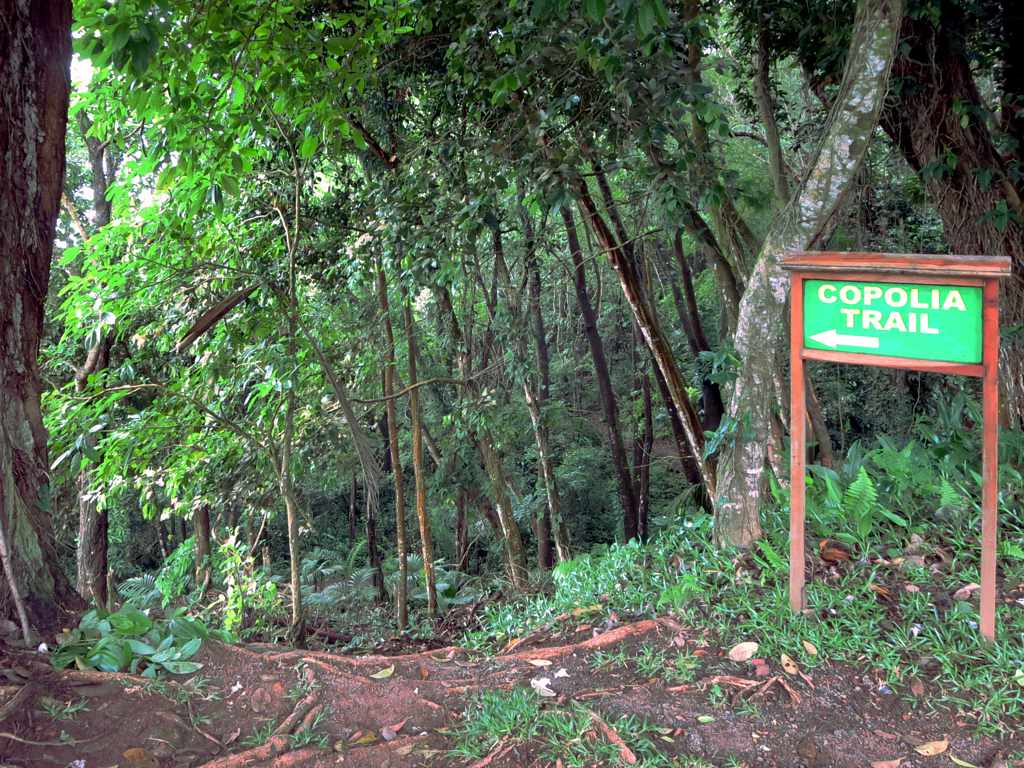
Copolia and the Morne Seychellois trails
Mahe’s interior is a national park and the trails are the cheapest serious thing to do in Seychelles. Copolia is the one everybody should do: about 100 rupees, an hour up through mist forest and pitcher plants to a granite dome with the whole east coast and Sainte Anne laid out below. Trois Freres and Glacis Noire cost 150 and 100 rupees and run 08:00 to 16:00. The summit of Morne Seychellois itself is 250 rupees, a licensed guide is compulsory, and the trail is open only from 08:00 to 12:00, so an afternoon start is not an option. Anse Major, which reaches a beach you cannot drive to, is 150 rupees. All trails are free for residents and for children under 12.
La Plaine St Andre and Takamaka rum
A plantation house built in 1792 on the east coast of Mahe, leased and restored by the Trois Freres Distillery in 2008 and now the home of Takamaka rum. It is the best-value outing on the island: open Monday to Saturday 10:30 to 16:30, with free guided tours at 11:00, 13:00 and 15:00 on weekdays and at 11:00 and 14:00 on Saturdays. A tasting flight of the Seychelles series or the premium St Andre rums costs 175 rupees. There is a small museum, a medicinal garden replanted with the herbs the estate once grew, the ruins, a rum shack and a food truck, and two Aldabra giant tortoises called Taka and Maka. Drive south from the airport on the east coast road for seven kilometres.
 Chris Luengas · Pexels
Victoria: the market and the clock tower
One of the smallest capitals on earth, and you can see it properly in a morning. The Sir Selwyn Selwyn-Clarke market is the point: fish laid out on slabs at dawn, mounds of chilli and green mango, vanilla pods, and takeaway plates for well under 100 rupees. It is busiest early and on Saturday mornings and closed on Sundays; parts of the building have been through renovation work recently, so ask where the traders are if the hall looks quiet. Around it sit the little silver clock tower, a scaled-down copy of one on London’s Victoria Street, the Hindu temple, the cathedral and the botanical garden a short walk south at 250 rupees.
 mysurrogateband · Pexels
Aride Island
The northernmost granite island and the seabird one: more breeding seabirds than all the other granitic islands together, and the only place where the Wright’s gardenia grows wild. Entry is 650 rupees for adults and 300 for children aged 4 to 13. It normally opens Monday to Friday, with weekends only by arrangement with the island manager, but the landing is a beach landing through surf and it closes for long stretches during the southeast trades. When we checked on 10 September 2026 the island’s own site said it was closed until the end of the southeast monsoon, which is exactly the pattern to expect: treat Aride as a bonus if the sea allows rather than a fixture in the plan.
 hartono subagio · Pexels
Aldabra Atoll
The other Seychelles World Heritage site, and the reason your Vallee de Mai ticket costs what it does: the money from Praslin funds the running of an atoll more than 1,000 km away. Aldabra holds the largest population of giant tortoises on earth and has no airstrip, no harbour, no jetty, no helipad and nowhere to stay. Every visitor arrives by live-aboard vessel, either sailing several days from Mahe or flying by charter to Assumption Island and then covering the last stretch by boat, which the foundation does not arrange for you. Every vessel needs clearance in advance. Around 445 tourists a year make it. Worth knowing that the foundation’s own page quotes the daily impact fee two different ways, as USD 250 per person per day in one place and EUR 200 per day in another, so confirm the figure when you request clearance.
 Riccardo Cocconcelli · Pexels
Anse Lazio
The beach that wins the polls on Praslin: a deep curve of pale sand between two granite headlands at the island’s northern tip, with takamaka trees for shade and two restaurants at either end. It swims best from about October to April; local beach guides consistently report a rip setting up at the northern end during the southeast trades, and like nearly every beach here it has no permanent lifeguard. Getting there means a steep road over the hill from Anse Boudin, and it fills from mid-morning when the tour boats and taxis arrive, so early is the whole trick.
 Radosław Botev · CC BY-SA 4.0 via Wikimedia Commons
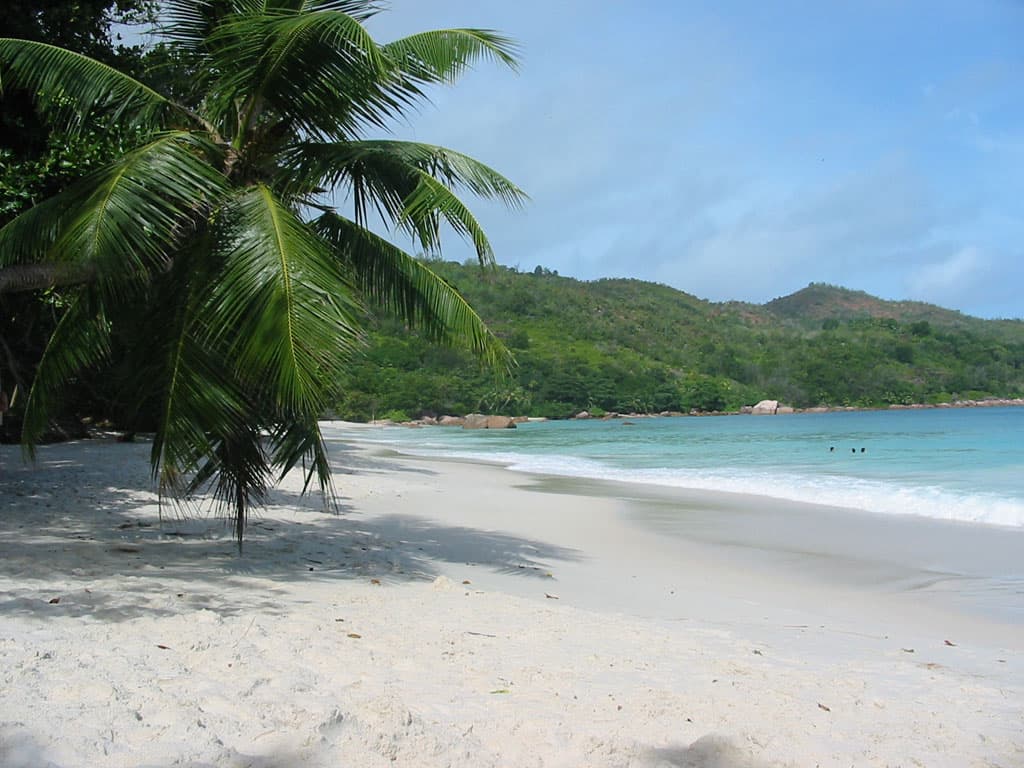
Anse Intendance
The most cinematic beach on Mahe and the least swimmable: a wide, steep arc of sand on the exposed southern coast with no reef in front of it, a heavy shore break and no lifeguard. The Foreign Office describes the southern beaches as unsuitable for swimming year round, and this is the one it means. Go for the walk, the takamaka trees and the light at either end of the day, and do your swimming on the sheltered coast.
 Bjørn Christian Tørrissen / CC BY-SA 4.0 via Wikimedia Commons
 Wikimedia Commons / CC BY-SA 2.0 de via Wikimedia Commons
Food & drink
Pwason griye
Whole grilled reef fish, usually job fish, bourgeois or grouper, with rice and a chatini relish on the side. This is the benchmark: if a kitchen does this well it does everything well.
Kari koko zourit
Octopus curry in coconut milk, and the dish people fly home dreaming about. It needs the better part of an hour of slow cooking, so it is a lunch dish: small local places tend to have it ready around half past twelve and sold out by two.
Ladob
Ripe plantain or breadfruit simmered in coconut milk with vanilla and nutmeg, somewhere between a pudding and a compote. More a home and market dish than a menu one, and there is a savoury salt-fish version too.
Bouyon brede
A broth of leafy greens, usually morelle or watercress, with fish or meat and sometimes neither. The everyday Creole soup, and the easiest thing to eat well as a vegetarian.
 Hashtag Melvin · Pexels
Gato piman and fish samosas
Chilli and lentil fritters, and thin-pastry samosas filled with tuna or job fish. The two things to buy from a market stall for small change while you decide what to do with the day.
Salade de palmiste
Millionaire’s salad, made from the heart of a palm. Worth knowing that the endemic palmiste has been protected since 1998, so what you eat now is ordinary coconut palm rather than a felled endemic tree.
 ROMAN ODINTSOV · Pexels
Takamaka rum and SeyBrew
The national rum, distilled on Mahe by Trois Freres, and the national lager. A tasting flight at the distillery estate costs 175 rupees; a SeyBrew in a local restaurant runs around 60 to 80.
Eating out here splits sharply. Resort restaurants price in euros and land somewhere between 600 and 1,200 rupees for a main. Independent local places serve a plate of grilled fish or octopus curry for 150 to 300, and a full local dinner for two with drinks comes in around 700 to 1,000. Market takeaways and food trucks sit under 100 a plate. Lunch is the serious Creole meal of the day and the slow-cooked curries run out by early afternoon, so plan the good eating for midday and keep dinner simple. Because the sun sets between about 18:09 and 18:41 all year and the light is gone twenty minutes later, dinner in Seychelles is always after dark, and kitchens outside the resorts close earlier than you expect.
Where to eat
Marie Antoinette
institutionOpen since 1972 in a colonial house above Victoria, and still the clearest introduction to Creole cooking in the country: a fixed menu of grilled fish, tuna steak, chicken curry, aubergine fritters, rice and salads for 450 rupees, or 325 for the vegetarian version. Monday to Saturday. Nobody comes here for the decor and everybody comes back.
Last researched 2026-09-10
Villa Chez Batista
casualA thatched, sand-floored beach restaurant on the south coast that has been grilling fish and lobster for decades, with a Sunday Creole buffet that draws Seychellois families as much as visitors. There are eighteen simple rooms attached if the afternoon runs long.
Last researched 2026-09-10
Bravo Restaurant
modernOn the Eden Island marina since February 2010, and the safe answer when a group cannot agree: Creole and seafood alongside grills, pizza and sushi, with a happy hour from three to six Monday to Thursday. Ten minutes from Victoria and about the same from the airport, which makes it a sound last night.
Last researched 2026-09-10
Bonbon Plume
casualUnder thatch at the end of Anse Lazio, which means you can swim, eat grilled fish and swim again without putting shoes on. Lunch runs daily from about 12:30 to 15:00 and dinner only by arrangement for larger groups. It closes for the month of June, which is worth checking before you build a day around it.
Last researched 2026-09-10
Le Repaire
modernThe restaurant at the boutique hotel of the same name near the jetty, and the one place on La Digue where an evening reservation is genuinely worth making in high season. Italian technique on Seychellois ingredients, which on an island of grilled-fish plates is a welcome change of gear.
Last researched 2026-09-10
The Rum Shack at La Plaine St Andre
barThe bar and food truck in the grounds of the Takamaka estate, open Monday to Saturday 10:30 to 16:30 alongside the free distillery tour. A tasting flight is 175 rupees and there are two Aldabra tortoises in the garden. It is the best value few hours on Mahe and it works in any weather.
Last researched 2026-09-10
Sir Selwyn Selwyn-Clarke market takeaways
marketThe market hall and the stalls and food trucks around it are where Victoria eats: takeaway plates of curry and rice for well under 100 rupees, snacks for 25 to 50, and the fish slabs at their best first thing. Busiest early and on Saturday mornings, closed Sundays. Renovation work has moved traders around in recent years, so ask rather than assume.
Last researched 2026-09-10
Sunrises
 Rajesh Chetty · Pexels
Anse Volbert and the east coast of Praslin
The east-facing bays get the light first, and under five degrees south of the equator the sun comes up fast: it clears the horizon a little after six every morning of the year, give or take about a quarter of an hour, and it is fully day within half an hour. Anse Volbert’s long shallow bay turns the whole thing pink at low tide. There is no season to wait for and no alarm-clock arithmetic to do, which is the underrated luxury of travelling under five degrees off the equator.
Year-round; sunrise moves only between about 05:53 and 06:28 all year
 Alexandre Moreira · Pexels
Copolia at first light
The trail opens at eight, so this is a late sunrise rather than a dawn one, but the hour after opening is the one to take: the mist is still sitting in the valleys, the granite dome is empty, and Sainte Anne and its islands float below in flat morning water. An hour up, 100 rupees at the gate, and the best view-to-effort ratio in the country.
May to September, when the mornings are driest · Steep and slippery after rain; proper shoes rather than sandals.
Sunsets
 Ladyredsea · CC BY-SA 4.0 via Wikimedia Commons
Beau Vallon beach
The bay faces north-northwest, which makes it the default sunset beach on Mahe, and the one that shifts most with the season. Under five degrees south of the equator the sun sets around 293 degrees in June and around 246 degrees in December, so in the middle of the year it drops well to the north of west, out along the open bay, and around Christmas it sets to the south of west, closer to the headland. What does invert here is the season rather than the bearing: June is the cool, dry, windy half of the year, not the summer.
April to September puts the sun furthest out over the open water of the bay · Silhouette sits 26 km out on a bearing of about 300 degrees and anchors the frame, which means the midyear sunset drops almost exactly behind it and the December one falls well to the left of it. You have about twenty minutes of usable light after the sun goes: civil twilight here runs 21 to 23 minutes all year, not the hour you get further from the equator.
 Ben & Gab · CC BY 2.0 via Wikimedia Commons
Anse Kerlan and the northwest tip of Praslin
Praslin’s west-facing corner is where the island watches the sun go down, over open ocean with nothing between you and Africa. It is also a turtle beach: hawksbills come ashore along Anse Kerlan from around September into February, which means the same evening walk can turn into something better. Keep well back and keep torches off if you find one.
Year-round; September to February adds nesting turtles · The sun sets due west at the equinoxes, in late March and late September, which is when it drops cleanly down the axis of the beach.
 Tobias Alt, Tobi 87 · CC BY-SA 4.0 via Wikimedia Commons
Anse Source d’Argent late in the day
The estate gate closes at six and the sun sets after that all year, so visitor access ends before the sunset itself. What you can have is the hour before, when the day-trip boats have gone back to Praslin and the low sun rakes across the boulders, which is the light everybody actually wants anyway. Buy the pass after half past four and it carries into the next morning as well.
Year-round · The gate closes at 18:00 outside the festive season and you are expected to be out by then, so plan the late-afternoon light rather than the sunset. · Low tide exposes the reef flat and the reflections; check the tide before you pick your afternoon.
Day trips
 Moritz Feldmann · Pexels
Curieuse and St Pierre from Praslin
The standard and genuinely good Praslin boat day: across to Curieuse to walk among free-roaming Aldabra giant tortoises and through the mangrove boardwalk at Baie Laraie, a barbecue lunch on the beach, then a snorkel stop at the granite knuckle of St Pierre on the way back. Budget 300 rupees each for the Curieuse park fee on top of the boat, and note that rangers take cards only. Operators leave from Anse Volbert and Baie Ste Anne in the morning and are back by mid-afternoon.
About 30 minutes each way from Anse Volbert · Full day
 mysurrogateband · Pexels
Cousin Island
The one excursion worth building the week around, and the one most people miss because of its hours. Cousin opens to visitors only Monday to Friday from 09:45 to 12:30, you can only go with a licensed operator, and you transfer into the reserve’s own boats at the island so that nothing invasive comes ashore with you. What you get is an island returned to itself: nesting hawksbills, fairy terns sitting on bare branches, and Seychelles warblers that exist because somebody bought this island in 1968. Entry is 600 rupees.
About 20 minutes by boat from Praslin · Half day, mornings only
La Digue as a day from Praslin
Fifteen minutes on the Cat Rose ferry from Baie Ste Anne and you are on an island with almost no cars. Hire a bicycle at the jetty, ride fifteen minutes south to the L’Union Estate gate, pay the 150 rupees, and spend the middle of the day on Anse Source d’Argent. If you have the legs, walk on across the island to Grand Anse, but do not swim there: the east-coast beaches have a heavy shore break and real rips from May to September and there are no lifeguards. Adult return fares run around 15 euros each way.
15 minutes each way by ferry · Full day
 Heru Vision · Pexels
Sainte Anne Marine Park from Victoria
The easy half-day from Mahe and the right answer on an arrival or departure day: ten minutes out of Victoria or Eden Island into the first marine protected area ever declared in the Indian Ocean, six islands, seagrass meadows full of grazing green turtles and shallow reefs you can snorkel without a boat licence or a wetsuit. Glass-bottomed boats run the same water for anyone who would rather stay dry. Park entry is 200 rupees, card only.
10 minutes by boat from Victoria · Half day
After dark
Bazar Labrin at Beau Vallon
marketThe weekly beachfront market on Mahe, running Wednesday evenings from roughly four until nine: grilled fish, Creole snacks, craft stalls and a local crowd. The beachfront was rebuilt and reopened as the Beau Vallon Beach Bazaar in June 2025 with 22 kiosks, food stalls and a lifeguard post, so this is a market with proper facilities now rather than trestle tables in the sand.
The Vallee de Mai night safari
natureThe Seychelles Islands Foundation runs an evening walk through the palm forest from 19:00 to 21:00, booked on the same ticketing system as daytime entry. The forest at night is a different animal: geckos, tree frogs, fruit bats overhead and the sound of the palms doing what they have done here for millions of years.
Dinner after dark, every night of the year
planningNot an experience so much as a fact to plan around. The sun sets between about 18:09 and 18:41 in every month, and there are only about twenty minutes of usable light afterwards. There is no lingering northern-European evening here and no sunset dinner on a terrace at nine. Eat your big Creole meal at lunch, take sunset as a drink rather than a course, and expect kitchens outside the resorts to be winding down by half past nine.
Daily itinerary
Nine days, two bases, one day trip
The plan we would book: three nights on Mahe to land softly and see the mountains and the market, then five on Praslin with La Digue as a day out, and back to Mahe for the flight. Two hotels rather than four, which is the point, though it still adds up to four ferry crossings. The whole thing works without a rental car if you would rather not drive. One scheduling constraint governs everything: Cousin Island opens only on weekday mornings, so count forward from your arrival day and shuffle the numbered days if day five lands on a weekend.
- 1
Land on Mahe, go north
relaxedArrive at Seychelles International Airport, which sits on the east coast about fifteen minutes from Victoria. Show the Travel Authorisation you bought before flying and immigration issues the free visitor’s permit that actually admits you: two different documents, and only the first one costs anything. Collect a visitor bus card at the airport if you plan to use the buses, and change a little money.Transfer over the hill to Beau Vallon and do nothing at all. The bay faces north-northwest and is usually the most sheltered swimming on Mahe, though the Foreign Office warning about the west coast covers these months too, so read the sea and the flags on the day rather than the calendar.On the sand at Beau Vallon. The sun goes somewhere between about 18:09 and 18:41 whatever the date, and the light is gone about twenty minutes later.One of the independent restaurants on the Beau Vallon strip, within walking distance of the beach.Airport to Beau Vallon is 30 to 40 minutes by taxi. Most Mahe taxis do not take cards, so have rupees or euros.Estimate: If you land late, stay near the airport at Eden Island and move north in the morning
- 2
Victoria, the market and the ridge
moderateInto Victoria early for the Sir Selwyn Selwyn-Clarke market while the fish is still being laid out, then the clock tower, the Hindu temple and the botanical garden at 250 rupees.A takeaway plate from the market stalls for under 100 rupees, eaten in the botanical garden.The Copolia trail: 100 rupees at the gate, an hour up through mist forest to a granite dome above the whole east coast. The gate is open 08:00 to 16:00, so go straight after lunch rather than late.Back at Beau Vallon.If it is a Wednesday, eat at the Bazar Labrin on the beachfront instead of sitting down anywhere.Buses run Victoria to Beau Vallon over the hill in about twenty minutes and are fully cashless: tap the visitor card, one card per person.Estimate: Swap Copolia for the Trois Freres trail at 150 rupees if you want more climbing · On a wet day, do La Plaine St Andre instead
- 3
South Mahe, rum and the wild coast
moderateDrive or taxi south down the east coast to La Plaine St Andre, seven kilometres past the airport. The estate opens at 10:30 and the free guided tour runs at 11:00; a tasting flight is 175 rupees.At the rum shack and food truck on the estate, or on the sand at Villa Chez Batista around at Anse Takamaka.Anse Intendance for the walk and the photographs. Do not plan to swim: the southern beaches carry a hard shore break year round and there are no lifeguards.Back on the west coast at Anse Soleil or Petite Anse.Early and local; kitchens on this side of the island close sooner than you think.This is the day that justifies a hire car, at roughly 45 to 65 euros. Drive on the left, and the mountain roads are narrow with uncovered storm drains.Estimate: Skip the car and take the Sainte Anne marine park boat from Victoria instead, at 200 rupees entry
- 4
Ferry to Praslin
relaxedThe Cat Cocos catamaran from Victoria to Baie Ste Anne takes an hour and fifteen minutes. Boarding closes half an hour before departure and you need your passport, so leave the beach earlier than feels necessary.On Praslin after checking in, at Anse Volbert or wherever your base is.Nothing ambitious. Swim off the Cote d’Or shelf, which is shallow and calm on the northeast side from about October to April.Praslin faces its sunsets from the northwest tip, so tonight take it where you are and save Anse Kerlan for later in the week.One of the Anse Volbert restaurants.Economy main cabin runs about 56 euros one way; the upper deck is 62 and business 77. Book ahead in high season, and confirm departure times against a live booking rather than the posted graphic: the operator’s own schedule page was still serving the January to December 2025 sheet when we checked in September 2026, even though the site advertises a 2026 and 2027 timetable. The crossing durations on that page are given in text and are current; the departure times on the graphic are not.Estimate: The 15-minute Air Seychelles Twin Otter hop from Mahe if the sea state or the schedule argues against the ferry
- 5
Cousin Island, then the palm forest
fullCousin Island, and this is why the day is fixed: it opens only Monday to Friday from 09:45 to 12:30 and only through licensed operators, who transfer you into the reserve’s own boats at the island. Entry 600 rupees.Back on Praslin.The Vallee de Mai, 450 rupees, open until 16:30 with last entry at 15:30. Take one of the longer loops rather than the short one; the forest gets quieter the further in you walk.Anse Volbert.Quietly, near your base.Book the Cousin boat before you fly. It is the single most schedule-constrained thing in this guide.Estimate: If Cousin is full, take the Curieuse and St Pierre boat today and move the Vallee de Mai to tomorrow
- 6
La Digue
moderateThe Cat Rose ferry from Baie Ste Anne to La Digue takes fifteen minutes and costs about 15 euros each way. Hire a bicycle at the jetty and ride south.In La Passe village, or bring something: there is not much at the far end of the estate.L’Union Estate at 150 rupees: the copra mill, the vanilla plantation, the tortoises under the granite monolith, and then Anse Source d’Argent for the rest of the afternoon. Buy the pass on arrival, not late: the after-16:30 rollover is only worth anything if you are sleeping on La Digue.Back at the jetty. The estate gate shuts at 18:00 and the sun sets somewhere between ten and forty minutes later depending on the date, so the sunset itself happens elsewhere.Le Repaire near the jetty if you have booked; otherwise a village kitchen.Check the last ferry back to Praslin before you cycle anywhere and give yourself a wide margin.Estimate: Stay two nights on La Digue instead of day-tripping, and drop a Praslin night
- 7
Curieuse and the tortoises
moderateThe boat to Curieuse from Anse Volbert: giant tortoises walking loose, the nursery where young ones are raised to about five, and the mangrove boardwalk at Baie Laraie where six of the seven Seychelles mangrove species grow. Park entry 300 rupees, card only.Barbecue on the beach, which is how every operator runs this day.A snorkel stop at St Pierre on the way home, then back to Anse Volbert by mid-afternoon.Anse Kerlan or Anse Georgette on the northwest tip, which is where Praslin actually watches the sun go down. Hawksbills nest along Anse Kerlan from about September into February, so walk carefully and keep torches off.On the northwest side if you have stayed for the sunset.Anse Georgette sits behind Constance Lemuria and the access rule for non-guests has been changing; call ahead rather than turn up.Estimate: Swap for Aride Island if the sea is calm and the island is open, which it often is not during the southeast trades
- 8
Anse Lazio and a slow day
relaxedAnse Lazio early, before the taxis and the tour boats arrive from mid-morning. It swims best from about October to April; in the trade wind months a rip sets up at the northern end and there is no lifeguard.Under the thatch at the end of the beach, though check that it is not June, when the beach restaurant closes for the month.Nothing. This is the day the trip earns.The northwest tip again.Somewhere you already know you like.Anse Lazio is over a steep hill from Anse Boudin; taxi or drive rather than walk it in the heat.Estimate: The Praslin National Park trails or Fond Ferdinand if you would rather walk than swim
- 9
Ferry back and fly
relaxedThe Cat Cocos back to Victoria, an hour and a quarter. Give the connection real margin: this is a sea crossing and the operator will not refund a missed flight.At the Eden Island marina, ten minutes from the airport.Sainte Anne marine park by glass-bottomed boat if you have hours to fill, or the botanical garden.Fly.A ferry-to-flight connection on the same day is doable but tight in rough weather. If your flight is an early one, sleep on Mahe the night before. Note that the weekly Tel Aviv nonstop arrives on a Thursday and leaves on a Wednesday, so it fits a six or a thirteen night trip rather than this nine-day shape: on those dates either fly a one-stop or stretch the plan by adding nights on Praslin.Estimate: Fly the Twin Otter back from Praslin in fifteen minutes if the ferry timing does not work · Stretch to thirteen nights and keep the direct flight, adding a second base on La Digue
Five days, one base on Praslin
For a short trip, or a Seychelles add-on to something else, unpack once. Praslin is the island we would choose: it has the palm forest, the two headline beaches, the boat trips to Cousin and Curieuse, and La Digue fifteen minutes away. You still cross to Mahe at each end and to La Digue in the middle, but you only check in once. The one date rule: day three has to be a weekday for Cousin, so any arrival except Thursday or Friday works as written. If you fly the weekly Tel Aviv nonstop you land on a Thursday, which puts day three on a Saturday, so swap days two and three.
- 1
Arrive and go straight over
relaxedLand at Mahe and connect: either the Cat Cocos ferry from Victoria, an hour and a quarter, or the fifteen-minute Twin Otter from the domestic terminal next door.Check in on the Cote d’Or strip and swim.Wherever you are.Anse Volbert.The domestic terminal sits beside the international one, which makes the flight connection genuinely simple if the ferry times do not suit.Estimate: Sleep on Mahe if you land in the evening and cross in the morning
- 2
Vallee de Mai and Anse Lazio
moderateThe Vallee de Mai at opening, 08:30, before the tour groups and while the black parrots are still calling. 450 rupees, longer loop.At the visitor centre cafe or back on the coast.Anse Lazio for the afternoon.The northwest tip at Anse Kerlan.Near your base.Estimate: Fond Ferdinand instead of the Vallee de Mai on a combination ticket
- 3
Cousin, weekday mornings only
moderateCousin Island, 09:45 to 12:30, Monday to Friday, licensed operators only, 600 rupees. Book this before you fly and build the rest of the trip around it: if your day three falls on a Saturday or Sunday, swap it with day two or day four rather than hoping.Back on Praslin.Rest, or the Praslin park trails.Anse Kerlan.Quietly.Estimate: Curieuse and St Pierre if Cousin is full or it is a weekend
- 4
La Digue
moderateThe fifteen-minute ferry from Baie Ste Anne, then a bicycle.La Passe.L’Union Estate and Anse Source d’Argent.Back on Praslin.Anse Volbert.Estimate: Curieuse instead if you did La Digue as a stopover on arrival
- 5
Back to Mahe and out
relaxedFerry or Twin Otter back with real margin.Eden Island or the Sainte Anne marine park if you have the hours.Fly.Estimate: A last swim at Beau Vallon if the timing allows
Getting around
- Seychelles International Airport sits on the east coast of Mahe at Pointe Larue, about fifteen minutes from Victoria and thirty to forty from Beau Vallon. The domestic terminal for the inter-island Twin Otters is next door.
- Air Seychelles put the nonstop between Tel Aviv and Mahe back on 20 August 2026 after most of a year without it. It runs once a week on an Airbus A320, leaving Ben Gurion on Thursdays at 04:50 and reaching Mahe at 12:10, and returning from Mahe on Wednesdays at 21:30 to land at Ben Gurion at 02:50. The flight takes about six hours and twenty minutes and the fare includes a meal and 30 kg of baggage. We could not read this off the airline’s own site, which blocks automated access, so it rests on two independent press reports and should be reconfirmed when you book.
- Otherwise Mahe is a one-stop from almost anywhere: Emirates from Dubai, Qatar Airways from Doha, Ethiopian from Addis Ababa, Kenya Airways from Nairobi, Turkish from Istanbul in season, Air Seychelles itself from Abu Dhabi, Colombo, Johannesburg, Mauritius and Paris. Air Tanzania added Dar es Salaam in May 2026, and Discover Airlines, Condor and Edelweiss run seasonal services from Frankfurt and Zurich over the European winter.
- Nobody needs a visa for Seychelles, whatever nationality they hold. What everybody needs is an electronic Travel Authorisation, bought before departure at seychelles.govtas.com and nowhere else. Budget around 12 euros all in for standard processing; faster tiers exist and cost considerably more.
- On arrival a visitor’s permit is issued free for up to three months, extendable in three-month blocks to a maximum of twelve at 5,000 rupees a time. Immigration can ask to see a return or onward ticket, confirmed accommodation and sufficient funds, so have the booking references to hand.
- The Cat Cocos catamarans run Mahe to Praslin in an hour and fifteen minutes, Mahe to La Digue in an hour and forty-five via Praslin, and Praslin to La Digue in fifteen minutes. There is also a direct Mahe to La Digue run that the operator puts at about an hour and ten, faster than the Praslin leg because it skips the call there, but it does not operate every day and the days it runs have changed, so confirm it against a live booking rather than a posted timetable. Boarding closes thirty minutes before departure and you need your passport.
- Ferry fares one way: Mahe to Praslin about 56 euros in the main cabin, 62 on the upper deck and 77 in business; Mahe to La Digue about 68, 74 and 89. Praslin to La Digue is about 15 euros on the Cat Rose, though that fare is published by the booking agents rather than by the operator, so check it at the jetty. Children aged two to eleven pay roughly half and infants go free.
- Air Seychelles flies Mahe to Praslin in fifteen minutes on 19-seat Twin Otters through the day, and also serves Bird, Denis and D’Arros. Expect to pay roughly a hundred US dollars one way and to be held to a domestic baggage allowance nearer 15 kg than an international one, though we could not confirm either figure on the airline’s own site, which blocks automated access: price it at booking.
- SPTC buses on Mahe and Praslin are fully cashless: you cannot pay the driver, and every passenger needs their own card or the app. The Visitor Travel Card is prepaid and gives unlimited tap-on tap-off travel on standard services across both islands: 100 rupees for one day, 198 for four consecutive days and 363 for eight, or 5, 12 and 22 euros if you pay in euros at the operator’s own posted prices. Buy it in advance online and collect it at the airport Information Desk between 06:00 and 18:00, which is where collection moved to from the old Travel Plus counter.
- Cars hire from around 45 to 65 euros a day. Driving is on the left, the roads on Mahe are narrow and steep with hairpins and uncovered storm drains, and sudden heavy rain cuts visibility fast. A national licence held for at least a year is generally accepted for a stay under three months, though some rental firms ask for an international permit anyway.
- La Digue has almost no private cars: a capped pool of taxis, electric buggies, hotel shuttles and a great many bicycles, at roughly 150 rupees a day. The ox-carts that once did the hauling are now a novelty ride rather than transport.
Things worth knowing
- · Booking three islands in a week. Every move costs the better part of a day once you add the check-out, the jetty, the crossing and the check-in. Two islands is the right number for nine days.
- · Choosing the hotel from the photograph without checking which coast it is on. The west coast is unsafe for swimming from December to March and the east coast from May to September, so the same hotel is a different holiday depending on the month.
- · Assuming you can pay a bus driver. The buses are entirely cashless and each passenger needs a card of their own.
- · Turning up at Cousin Island on a weekend or in the afternoon. It opens only Monday to Friday, 09:45 to 12:30, and only through licensed operators.
- · Planning a Morne Seychellois summit for the afternoon. That trail is open 08:00 to 12:00 only and a licensed guide is compulsory.
- · Leaving the ferry-to-flight connection tight. A rough sea day and a delayed catamaran is not the airline’s problem.
Budget
| Low | Expected | Comfortable | |
|---|---|---|---|
| Accommodation style / per night | SCR 1,600≈ $115 | SCR 4,500≈ $323 | SCR 16,000≈ $1,148 |
| Food style / per day | SCR 350≈ $25 | SCR 900≈ $65 | SCR 2,200≈ $158 |
| Local transport / per day | SCR 100≈ $7 | SCR 450≈ $32 | SCR 1,200≈ $86 |
| Estimate / per day | SCR 150≈ $11 | SCR 500≈ $36 | SCR 1,100≈ $79 |
Estimate · SCR · 2026-09-10. Quoted in Seychelles rupees per person per day, except accommodation, which is per room per night on a double-occupancy basis. The Central Bank of Seychelles put the average dealer rate at 14.68 rupees to the US dollar and 16.70 to the euro on 9 September 2026, so the expected daily figure of roughly 1,850 rupees per person before accommodation is about 126 dollars or 111 euros. The low band assumes a guesthouse with a kitchenette, buses and market food; the comfortable band assumes a resort, taxis and restaurant dinners. The day-trip figure replaces that day’s transport and attractions bands rather than adding to them, since a boat day rolls both into one price. Add the tourism environmental sustainability levy on top of every night: nothing at properties with 24 rooms or fewer since 1 January 2026, 75 rupees per person per night at 25 to 50 rooms, and 100 at anything larger, at island resorts and on yachts, with children of twelve and under exempt. Park and reserve entries are separate and add up quickly: Vallee de Mai 450, Cousin 600, Aride 650, Curieuse 300, Sainte Anne 200, L’Union Estate 150, Copolia 100. · 1 USD = SCR 14 (17 Sep 2026)
Things worth knowing
Frequently asked questions
Do I need a visa for Seychelles?
No. Seychelles requires no visa of any nationality, which makes it one of the most open countries in the world. What you do need is an electronic Travel Authorisation, bought before you fly at seychelles.govtas.com, the only official site. Budget around 12 euros all in for standard processing, with faster tiers available at higher cost. On arrival you get a visitor’s permit free for up to three months, and immigration may ask for a return ticket, a confirmed booking and evidence of funds.
When is the best time to go?
April, and October into November. Those are the two inter-monsoon windows, when the sea is generally calmest on both the east and west coasts at once, which opens up the widest choice of beaches and gives the best underwater visibility of the year. May is transitional: it often still reads as a good month, but the southeast trades build through it and the east coast gets choppier as they do. December to March is hot, humid and wet with the west coast rough; May to September is drier and breezier with the east coast rough and seaweed on the exposed sand. The temperature barely moves all year, so this is a question about wind, not warmth.
Which islands should I choose?
Two, not three, unless you have a fortnight. Mahe has the airport, the capital, the mountains and the best trails. Praslin has the Vallee de Mai, Anse Lazio and Anse Georgette, and it is the launch point for Cousin, Curieuse and Aride. La Digue has Anse Source d’Argent and almost no cars, and it works beautifully as a day trip from Praslin or as a two-night stop. The usual mistake is trying to fit all three plus a private island into a week and spending half of it in transit.
How do I get between the islands?
By ferry or by Twin Otter. Cat Cocos runs Mahe to Praslin in an hour and a quarter for about 56 euros in the main cabin, and Praslin to La Digue takes fifteen minutes on the Cat Rose for about 15. Air Seychelles flies Mahe to Praslin in fifteen minutes for roughly a hundred dollars. Book ahead in high season, be at the jetty half an hour before departure with your passport, and get your departure times from a live booking rather than the posted timetable: the ferry company’s schedule page was still showing the January to December 2025 sheet when we checked in September 2026, even while the site advertised a 2026 and 2027 schedule.
Is there a direct flight from Israel?
Yes, again. Air Seychelles restored the weekly nonstop between Tel Aviv and Mahe on 20 August 2026 after most of a year without it. It leaves Ben Gurion on Thursday mornings at 04:50 and lands at Mahe at 12:10, and comes back from Mahe on Wednesday evenings at 21:30 to reach Tel Aviv at 02:50, about six hours and twenty minutes each way, with a meal and 30 kg of baggage included. One weekly flight is a real constraint on trip length, so many travellers still use a one-stop through the Gulf or Addis Ababa. We could not verify this schedule on the airline’s own site, which blocks automated access, so confirm when booking.
How expensive is Seychelles really?
Expensive, but less uniformly than its reputation suggests. Resort rooms run from several hundred to several thousand dollars, and resort dinners are 600 to 1,200 rupees a main. But a normal day of eating out once, moving around and paying into a reserve or two runs about 1,850 rupees a head before the room, which is around 126 dollars, and a frugal one of guesthouse self-catering, market food and the bus card comes in nearer 600. Since 1 January 2026 small properties with 24 rooms or fewer pay no sustainability levy at all, against 100 rupees per person per night at the big resorts, so the cheaper option got a little cheaper this year. Almost all food except fish and fruit is imported, which is why groceries surprise people.
Can I swim everywhere?
No, and this is the most important safety point in the guide. The UK Foreign Office states that the west coast is unsafe for swimming during the December to March monsoon, the east coast is unsafe from May to September, and the southern beaches are unsuitable year round. Very few beaches have lifeguards, Beau Vallon is specifically flagged for rip currents when the sea is rough, and La Digue’s east-coast beaches such as Grand Anse and Anse Cocos have a heavy shore break and serious currents in the trade wind months. Anse Source d’Argent is famous but is a shallow, tide-dependent reef flat, better for wading than for swimming.
Where can I see giant tortoises?
Curieuse is the real answer: hundreds of Aldabra giants introduced between 1978 and 1982 roam free there, and the island runs a nursery raising young ones to about five before release. Entry is 300 rupees, card only. On La Digue there is a pen of them at L’Union Estate, included in the 150 rupee entry, and two live in the garden at the Takamaka rum estate on Mahe. Aldabra itself, which has the largest population on earth, is more than a thousand kilometres away, has no airstrip or accommodation, and receives around 445 visitors a year by chartered vessel.
What is the one thing to book before I fly?
Cousin Island. It opens only Monday to Friday from 09:45 to 12:30, only through licensed tour operators, and visitors transfer into the reserve’s own boats at the island so nothing invasive lands with them. It is the world’s first internationally owned nature reserve, bought in 1968 to save the Seychelles warbler, and it is now the most important hawksbill breeding site in the western Indian Ocean. Plenty else needs booking too, from La Digue guesthouses to the ferries in high season, but this is the one that has to fit your dates rather than the other way round.
Sources (14)
- Visitor arrivals to the week ending 6 September 2026 totalled 238,426 year to date, down 8.5 percent on 260,602 in the same period of 2025; week 36 brought 6,084 visitors, of whom 279 were resident in Israel, 4.6 percent of the total, while Russia leads the year at 30,992 ahead of Germany at 29,396; honeymoon is a recorded purpose of visit, at 13.6 percent of week 36 arrivals · government · 2026-09-10
- The Tourism Environmental Sustainability Levy of SCR 25 per person per night on small accommodation establishments of 1 to 24 rooms was abolished with effect from 1 January 2026 by the Environment Protection (Tourism Environmental Sustainability Levy) (Amendment) Regulations 2025 · government · 2026-09-10
- From 1 January 2026 the levy is SCR 75 per person per night for establishments of 25 to 50 rooms and SCR 100 for larger establishments, island resorts and yachts, with citizens, residents, airline and yacht crew and children aged 12 and under exempt · reputable-local · 2026-09-10
- Seychelles requires no visa of any nationality; visitors need an electronic Travel Authorisation before departure and receive a free visitor’s permit of up to three months on arrival, extendable to twelve months at SCR 5,000 per three-month extension, subject to a return or onward ticket, confirmed accommodation and sufficient funds · government · 2026-09-10
- The Central Bank of Seychelles average authorised dealer note rates on 9 September 2026 were 14.6833 rupees to the US dollar and 16.7039 to the euro · government · 2026-09-10
- UK Foreign Office travel advice states that the west coast of Seychelles is unsafe for swimming during the December to March monsoon, the east coast is unsafe from May to September, southern beaches are unsuitable year round, few beaches have lifeguards and Beau Vallon can have dangerous rip currents when the sea is rough · government · 2026-09-10
- Vallee de Mai charges SCR 450, opens 08:30 to 16:30 with last entry 15:30 every day except 25 December and 1 January, is 19.5 hectares, was inscribed as a UNESCO World Heritage site in December 1983 and is the stronghold of the coco de mer and the Seychelles black parrot · unesco · 2026-09-10
- Seychelles Parks and Gardens Authority 2026 tariff for non-residents over 12: Curieuse SCR 300, Ste Anne, Baie Ternay, Port Launay and Ile Cocos SCR 200 each, Copolia SCR 100, Trois Freres SCR 150, Anse Major SCR 150, Glacis Noire SCR 100, Morne Seychellois SCR 250 with a licensed guide mandatory and the trail open 08:00 to 12:00, Veuve Reserve SCR 150 unguided or SCR 200 guided, National Botanical Garden SCR 250; park fees on site are payable by card only · national-park · 2026-09-10
- Cousin Island Special Reserve charges SCR 600 for non-residents, free under 12, opens Monday to Friday 09:45 to 12:30 only, is reached through licensed tour operators who transfer visitors to the reserve’s own boats for biosecurity, was bought in 1968 by the International Council for Bird Preservation as the world’s first internationally owned reserve and is the most important hawksbill breeding site in the western Indian Ocean · national-park · 2026-09-10
- L’Union Estate on La Digue charges SCR 150 for foreign nationals, opens daily 06:00 to 18:00 including public holidays, and a pass bought after 16:30 is valid the following day; Takamaka rum opened a showroom in the plantation house and a tasting bar at the pirogue shed in late 2025 · official · 2026-09-10
- La Plaine St Andre opens Monday to Saturday 10:30 to 16:30 with free guided tours weekdays at 11:00, 13:00 and 15:00 and Saturdays at 11:00 and 14:00, and a rum tasting at SCR 175 per person; the estate was built in 1792 and leased to Trois Freres Distillery in 2008 · official · 2026-09-10
- Cat Cocos operates five high-speed catamarans between Mahe, Praslin and La Digue with crossings of 1h15, 1h45 via Praslin, 1h10 direct and 15 minutes Praslin to La Digue, boarding closing 30 minutes before departure · ferry · 2026-09-10
- Air Seychelles resumed a weekly nonstop between Tel Aviv and Mahe on 20 August 2026, Ben Gurion departure Thursdays 04:50 arriving Mahe 12:10 and Mahe departure Wednesdays 21:30 arriving Tel Aviv 02:50, about 6 hours 20 minutes on an Airbus A320 with a meal and 30 kg baggage included · reputable-local · 2026-09-10
- Aldabra Atoll has no airstrip, harbour, jetty, helipad or accommodation, is reached only by vessel with prior clearance from the Seychelles Islands Foundation and receives around 445 tourists a year; the foundation’s own page gives the daily impact fee as USD 250 in its visitor information and EUR 200 in its FAQ · unesco · 2026-09-10


