Chile and Argentina · Magallanes (Chile) and Santa Cruz (Argentina)
Patagonia: Torres del Paine and El Chalten
A night in Punta Arenas and a morning with the penguins of Isla Magdalena. Three hours north to Puerto Natales on the Seno Ultima Esperanza. Then Torres del Paine: the Base Torres hike at the east end, the catamaran across Lago Pehoe to the Frances valley, the boat to the front of the Grey glacier, or the whole W on foot between refugios. Over the border at Cerro Castillo to El Calafate for the Perito Moreno glacier from the boardwalks, a boat or the ice itself. North to El Chalten for the Fitz Roy at Laguna de los Tres and Cerro Torre at Laguna Torre.
 LBM1948 / CC BY-SA 4.0 via Wikimedia Commons
Overview
Torres del Paine in Chile and the Fitz Roy range above El Chalten in Argentina are the two great mountain parks of southern Patagonia, a day’s drive apart across a border in the steppe, with the Perito Moreno glacier in between. This is the trip people plan for years: granite towers over a glacial lake, a glacier front 70 metres high that breaks into the water while you watch, condors over the road and guanacos in the grass beside it. It is also a trip where the rules changed this year. From 1 May 2026 Torres del Paine sells a one-day pass or a pass for two to ten days, online only, 32,400 or 48,500 Chilean pesos for a foreign adult, with no refunds. Guides were compulsory for the Base Torres trail and the W this past winter and the rule was lifted in mid-September; the O circuit is closed until at least the end of October 2026, and in November 2025 five trekkers died in a blizzard on its highest pass, the John Gardner. The Argentine side now charges its park fee at El Chalten as well as at the glacier, 50,000 Argentine pesos a day for a foreigner. The refugios have raised their prices again: a dormitory bed in the Las Torres sector starts at 230 dollars a night in high season before a meal. None of that makes it less worth doing. It makes planning the whole point.
Decide first between the park by car and the park on foot, because they are different trips. With a car and a lodge you do Torres del Paine in day hikes: Base Torres, the Frances valley by catamaran, the Grey glacier by boat, and you sleep in a bed with the wind outside. On the W you carry a day pack or a full one between five refugios and campsites that have to be booked for every night, and at Las Torres prices a full-board refugio night costs about 370 dollars a person. Either way we would give Torres del Paine four nights inside or beside the park and the Argentine side four, and we would not try to fit both into a week. The second decision is the season. November and March are our months: the refugios open, the O usually open from November, the light long, and fewer people than in the December to February peak, when the wind is also at its strongest. April has the red lenga forests and the best puma weeks but short days and cold nights. The third is honesty about the famous sunrise at Base Torres. CONAF, which runs the park, prohibits walking its trails without daylight; at Chileno, the nearest refugio, civil dawn in December comes about 45 minutes before sunrise, not enough to climb to the lake in time. The towers face east and stay lit all morning. Go up at first light and sit there at eight.
Best for
Hikers · Couples · Photographers · Wildlife · Glaciers and mountains · A once-in-a-lifetime trip
Daily itinerary
10 to 14 days
Few mountain regions this famous are this empty. Between Punta Arenas and El Chalten, about 700 kilometres by road, there are a handful of towns, no fuel inside Torres del Paine, and phone signal in almost none of it. The weather is the other difference: wind that averages its highest from October to January, exactly when everyone comes, and four seasons in an afternoon at any time of year. At 51 degrees south the midsummer day lasts sixteen and a half hours, and both countries keep the same clock all year, three hours behind UTC, which is why the sun sets after ten at night in December in Puerto Natales. The classic mistakes: trying to see both parks in a week, arriving without a booking for every night on the trail, and planning the Base Torres sunrise when the park forbids walking its trails in the dark.
Best time to visit
November to March, with November and March our pick. Punta Arenas averages 10.7 degrees in January and 1.7 in July on the Chilean met office’s 1991-2020 normals, with only 390 mm of rain a year; El Calafate in the Argentine steppe gets 161 mm. The mountains are far wetter and colder than either town, and the weather changes by the hour. Wind is the real season: on a 30-year reanalysis it blows hardest from October to January and is calmest from May to August. Daylight runs from 16 hours 33 minutes at the December solstice to 7 hours 55 minutes in June at the latitude of the park. The refugios and most lodges open from October to April; the O circuit, closed for the winter, is due to reopen in November after a CONAF safety check; the penguins of Isla Magdalena are there from October to March.
- October: The season opens: the Pehoe catamaran to Paine Grande runs twice a day from 1 October and more often from the 16th, the Lago Grey boat from 1 October, Chileno refugio from 1 October. The O stays closed until at least the end of the month. The penguins return to Isla Magdalena. Sunrise in Puerto Natales moves from about 07:18 to 06:14 across the month.
- November: Our first pick: the O due to reopen after CONAF’s check, the Dickson and Los Perros refugios open in the first days of the month by Vertice’s published dates, green steppe, and days of nearly sixteen hours by the end of the month. Windy.
- December to February: Peak season and peak wind. The longest days of the year: sunset about 22:04 in Puerto Natales and 21:53 in El Chalten in mid-December, sunrise near 05:30. Book the refugios and the good lodges months ahead. El Calafate’s Fiesta Nacional del Lago runs in February, and in 2027 it marks 150 years since Francisco Moreno named Lago Argentino.
- March: Our second pick: the crowds thinning, the refugios still open to the end of the month and later, and sunset back to about 20:13 in Natales by mid-month. Dickson and Los Perros close at the end of March.
- April: Autumn: the lenga beech forests turn red and orange, the pumas are easiest to find, the catamaran drops to two sailings from 16 April and the refugios close at the end of the month. Sunset about 19:03 in Natales on 15 April.
- May to September: Winter. Snow, short days (sunrise near 10:00 in June in Punta Arenas), most lodges closed, a guide required on the main trails in 2026, the O closed. Explora Torres del Paine and Hotel Lago Grey stay open all year. Punta Arenas holds its Carnaval de Invierno in early July.
Things worth knowing
- Ultra Paine, Torres del Paine (26 September 2026): trail races from 5 to 50 kilometres in and around the park, two days after we published.
- Patagonian International Marathon, Torres del Paine (early September; 5 and 6 September in 2026): road and trail distances up to the marathon on the park’s roads.
- Fiesta Nacional del Lago, El Calafate (February): the town’s festival for Lago Argentino, with rodeos and a week of evening shows; February 2027 is the 150th anniversary of the lake’s naming on 15 February 1877, and dates are usually confirmed in December.
- Carnaval de Invierno, Punta Arenas (early July; 3 to 5 July in 2026): the winter carnival and its parade on the Costanera del Estrecho, the thirtieth edition in 2026.
Where to stay
 Gillermo Adolfo · CC BY 3.0 via Wikimedia Commons
Punta Arenas
The regional capital on the Strait of Magellan, a wool-and-shipping city of grand houses around the Plaza Munoz Gamero, and the airport most flights from Santiago land at. It is where the penguin boats to Isla Magdalena leave from, and where the drive north begins: 247 kilometres to Puerto Natales, about three hours on a paved road. One night, two if the penguin boat is the next morning.
Best for: The first night · The Magdalena penguin boats · King crab · Sunrise over the strait
The Museo Regional de Magallanes in the Braun-Menendez palace has been closed to the public since May 2023 with no reopening date. Windy, and far from the mountains.
 Kari Robles · CC BY-SA 3.0 via Wikimedia Commons
Puerto Natales
The small town on the Seno Ultima Esperanza that serves Torres del Paine: the buses to the park leave from here, the rental cars are here, the supermarkets for trail food are here, and so is the last fuel before the park, about 114 kilometres and two hours of driving from the Laguna Amarga gate. The waterfront faces west across the sound to the mountains of the Antonio Varas peninsula, and the town has the best restaurants on the route. Two nights before the park and one after is the rhythm most people fall into.
Best for: Base for the park by bus · Restaurants · Sunset over the sound · Buying trail food
There is no fuel in or around Torres del Paine, so fill up here. The bus to the park takes two hours or more each way, which is why sleeping inside the park saves a day.
 Tom D'Arby · Pexels
Torres del Paine: the Las Torres sector
The eastern end of the park, where the Ascencio valley climbs to the base of the three granite towers. The Laguna Amarga gate, the Welcome Center, Hotel Las Torres, EcoCamp and the Central, Norte and Chileno refugios are all here, and the Base Torres hike starts at the door. Awasi and Tierra Patagonia sit outside the park boundary on this side, on estancias toward Lago Sarmiento.
Best for: The Base Torres hike · Pumas on the Laguna Amarga side · Lodges with guided days
No phone signal and no fuel. Stoves are banned at Chileno for fire risk. The rooms here cost what they cost because there is nowhere else to sleep.
 William Warby · Pexels
Torres del Paine: Lago Pehoe and Lago Grey
The middle and west of the park. Pudeto on Lago Pehoe is where the catamaran crosses to Paine Grande, the start of the Frances valley and the Grey trail; the Salto Grande waterfall and the short Mirador Cuernos walk are beside it. Hosteria Pehoe sits on its own island in the lake, Explora’s lodge at the Salto Chico outflow. Further west, Hotel Lago Grey faces the icebergs of Lago Grey and runs the boat to the glacier.
Best for: The Cuernos across Lago Pehoe · The Grey glacier by boat · The Frances valley as a day hike
The road from the Laguna Amarga side to Pudeto is 25 kilometres of gravel, and from Pudeto to Hotel Lago Grey nearly an hour. Wind on Lago Pehoe can cancel the catamaran.
 Diego Delso · CC BY-SA 3.0 via Wikimedia Commons
El Calafate
The Argentine town on the south shore of Lago Argentino that exists for the Perito Moreno glacier, 77 kilometres and about an hour and a half away by road. A long main street of outdoor shops, parrillas and cafes, the Laguna Nimez bird reserve at the edge of town, an airport with flights to Buenos Aires, and the boats to Estancia Cristina and the Upsala glacier from Punta Bandera. Two nights for the glacier; the bus from Puerto Natales takes about five hours.
Best for: The Perito Moreno glacier · Parrilla lamb · Flights to Buenos Aires · Sunset over Lago Argentino
The glacier is a day trip, not a walk from town. The bus terminal charges a boarding tax of 4,000 pesos, cash only.
 Jose Luis Vanasco · Pexels
El Chalten
A small village at the foot of the Fitz Roy range, founded in 1985 and styled Argentina’s national trekking capital, where the trails to Laguna de los Tres and Laguna Torre start from the end of the street. 213 kilometres north of El Calafate, about three hours by bus. Nights here are for bars, brewpubs and early beds.
Best for: Laguna de los Tres and the Fitz Roy · Laguna Torre · Trails from the door · Brewpubs
The park fee is now charged at the El Chalten portals as well, card or QR only. One fuel station. Many hotels and restaurants close from May to September.
Where to sleep
Hotel Cabo de Hornos
value · Plaza Munoz Gamero, Punta Arenas
Best for: The first night · Walking to dinner · The penguin boat next morning
- On the main square of Punta Arenas, a walk from the restaurants
- Deluxe rooms of 25 m2 with views over the Strait of Magellan
- Parking listed for guests, useful the night before collecting or after dropping a car
- A big city hotel rather than a characterful one
- Standard rooms are 23 m2
- Room rates are not published on its site
The Singular Patagonia
design · Puerto Bories, 5 km north of Puerto Natales
Best for: Sleeping in a national monument · The splurge night in Natales · Architecture
- Built into the century-old Puerto Bories cold-storage plant, declared a National Monument in 1996, with the old machinery kept as a museum
- On the shore of the Seno Ultima Esperanza, with the sound and the mountains in front of the rooms
- A member of Leading Hotels of the World
- Five kilometres from town, so dinner out means a drive or a taxi
- Season and programme prices are not published on the pages we read
- The museum draws day visitors from midday
NOI Indigo Patagonia
boutique · Waterfront, Puerto Natales
Best for: Walking to the restaurants · The waterfront sunset · A spa after the trail
- 61 rooms on the Natales waterfront, in the centre of town
- A rooftop spa with hot tubs over the sound
- A walk to the restaurants and the waterfront
- Parking is not stated on its page
- Waterfront rooms and interior rooms differ a lot
- Busy with groups in high season
Yagan House
value · O’Higgins, central Puerto Natales
Best for: Before and after the W · Couples on a budget · Gear rental
- A small eco hostel with doubles and twins, some with private bathrooms, and a four-bed dorm
- Runs tours and rents trekking gear from the house
- A short walk from the bus terminal and the supermarkets
- Shared bathrooms in the cheaper rooms
- Its website’s FAQ is copied from a hotel template and cannot be trusted; ask by email
- Hostel noise
Explora Torres del Paine
luxury · Salto Chico, Lago Pehoe, inside the park
Best for: All-inclusive guided days · The Cuernos from the room · Winter as well as summer
- 50 rooms at the Salto Chico outflow of Lago Pehoe, with the Paine massif across the water
- All-inclusive: more than 40 guided explorations, meals and drinks, the spa, the park entrance fees and transfers from Puerto Natales
- Open all year, which few places here are
- Sold as multi-night programmes: its site prices eight nights across two of its lodges from 7,000 dollars a person
- You see the park on the lodge’s schedule
- Formerly called explora Patagonia or Hotel Salto Chico, which confuses older reviews
Tierra Patagonia
design · Lago Sarmiento, on the park’s eastern edge
Best for: Design in the steppe · Guided excursions twice a day · A three-night stay
- 40 suites in a long timber building on a bluff over Lago Sarmiento, facing the Paine massif
- All-inclusive: meals, open bar with house wines, a full-day or two half-day excursions daily and airport transfers from Puerto Natales for stays of three nights or more
- Three MICHELIN Keys in 2026 by the hotel’s own awards list
- Outside the park boundary, so drives to the trailheads
- Packages blacked out from 20 December to 1 January
- Closed in winter, reopening in mid-September
Awasi Patagonia
luxury · Estancia Tercera Barranca, east of the park
Best for: A private guide and vehicle · Puma tracking · Privacy
- 14 villas on a private estancia, each with its own guide and 4x4 vehicle, so the day is yours
- A Relais & Chateaux member with a restaurant for its guests only
- On the eastern side of the park, where most puma sightings happen
- Prices and minimum stays are not published on the pages we read
- Its FAQ says it closes from April to October while its homepage announces a winter 2027 opening, so ask
- A long drive to the Grey and Pehoe side
Hotel Las Torres Patagonia
unique · Las Torres sector, at the Base Torres trailhead
Best for: Walking to Base Torres from the door · All-inclusive without the super-luxury price · Before or after the W
- 74 rooms on the private Las Torres reserve at the foot of the Ascencio valley
- Optional all-inclusive programmes of two to five nights, from 2,590 dollars from October 2026
- The same company runs the Central, Chileno, Cuernos and Frances refugios, so W packages start here
- A trailhead hotel, busy with hikers coming and going
- High rates for a trailhead hotel
- Its own help pages still use last season’s park-ticket labels
Hosteria Pehoe
romantic · An island in Lago Pehoe
Best for: The Cuernos at sunrise across the lake · The catamaran next morning · A night inside the park without all-inclusive
- On its own island in Lago Pehoe, reached by a footbridge, with the Cuernos del Paine across the water
- The nearest lodging to the Pudeto catamaran
- Published rates in dollars, breakfast included: a standard double was 350 in the 2025-26 high season and 260 in October
- 2026-27 rates were not yet published when we checked
- Simple rooms for the price; you pay for the setting
- pehoe.com is a parked page, not the hotel’s; book through hosteriapehoe.cl
Hotel Lago Grey
unique · Lago Grey, west of the park
Best for: Icebergs from the window · The boat to the Grey glacier · Open all year
- On the shore of Lago Grey, where icebergs from the glacier drift up to the beach
- Runs the Grey III boat to the glacier front, three sailings a day
- Open all year, with all-inclusive programmes as well as bed and breakfast
- It recommends at least three nights, which is a lot for one corner of the park
- Standard rooms are in separate cabins
- Nearly an hour of gravel from Pudeto
Patagonia Camp
unique · Lago Toro, Ruta Y-290, south of the park
Best for: Yurts in the lenga forest · All-inclusive with a smaller bill than the big lodges · Couples
- Yurts on raised walkways in the forest above Lago Toro, at km 74 of the Y-290
- All-inclusive in two versions, shared or private: full board, excursions and transfers
- No Wi-Fi in the yurts, which is the point
- Shared transfers run on a regular schedule only from November to April
- South of the park, a drive from the Base Torres trailhead
- Yurt walls and Patagonian wind
EOLO
luxury · Estancia Alice, between El Calafate and the glacier
Best for: The splurge on the Argentine side · Silence in the steppe · The glacier road
- 17 rooms on a 10,000-acre estancia off the road to the Perito Moreno glacier
- A Relais & Chateaux member
- All-inclusive stays with riding, biking and walking from the house, by reports
- A drive to town for anything else
- Season and prices not published on the pages we read
- The steppe is not the mountains; the peaks are a view, not the door
Esplendor El Calafate
value · Cerro Calafate, above the town
Best for: Parking included · A pool after the glacier · The lake from the room
- Lake-view and mountain-view rooms on the hill above town, about 75 kilometres from the glacier
- An indoor pool and spa
- Parking included in the rate, and three accessible rooms
- Uphill from the main street
- A chain hotel (Wyndham), not a characterful one
- Room count and prices not stated
Los Cerros del Chalten
boutique · Hillside above the main street, El Chalten
Best for: The comfortable end of El Chalten · A restaurant in the hotel · Views up the valley
- A boutique hotel and spa on the hillside above the village, open October to April
- Its own restaurant, so no walk out after a long hike
- The trailheads a short walk away
- Closed from May to September
- Prices not shown on its site
- Clone booking sites use its name; book on loscerrosdelchalten.com.ar
Destino Sur Hotel & Spa de Montana
boutique · Lionel Terray, El Chalten
Best for: A pool and sauna after Laguna de los Tres · Arriving with a car · Duplexes for four
- Premium rooms of 35 m2 and duplexes of 46 m2 for up to five
- Pool, jacuzzi and sauna
- Its own parking and an airport minibus
- Room count not stated
- On a side street, a walk to the bars
- Seasonal dates not stated; check before booking out of season
Essential experiences
 Alejandro Mallea · Pexels
Base Torres
The hike to the lake at the foot of the three towers: about 19 kilometres there and back from the Welcome Center and Hotel Las Torres with nearly 900 metres of climbing, up the Ascencio valley past Refugio Chileno and then a steep last hour on boulders to the moraine above the lake. Allow eight to ten hours. CONAF lifted the winter guide requirement in mid-September 2026 and said in April that it would not apply the planned access quota for Base Torres this season, so no extra booking is needed beyond the park pass; microspikes and poles are recommended and can be required when the trail is icy. CONAF prohibits walking the park’s trails without daylight, and the rangers close the upper trail in the afternoon, so start early and do not plan to come down late. The towers face east: they are lit from sunrise until about solar noon, near 13:50 on the clock in summer, and backlit after it.
 Pavel Špindler · CC BY 3.0 via Wikimedia Commons
The W trek
The park’s classic multi-day walk, named for the shape it traces along the south face of the Paine massif: Base Torres at one end, the Frances valley in the middle, the Grey glacier at the other, four to five days and roughly 70 to 80 kilometres depending on the variant. There is no wild camping: you sleep at authorised refugios and campsites run by two concessionaires, Las Torres Patagonia in the east (Central, Chileno, Cuernos, Frances) and Vertice in the west (Paine Grande, Grey), and CONAF’s rules make a reservation part of being allowed on the trail. For 2026-27 a Las Torres dormitory bed costs from 230 dollars from November to March and full board 140 more; a fully equipped tent at Chileno is 160 a person. Vertice’s Grey refugio charges 114 for a made-up bed, 110 for full board and 11 for a campsite. CONAF’s segment times: Los Cuernos to Hotel Las Torres 4.5 hours, Italiano to Los Cuernos 2.5, Paine Grande to Italiano 2.5, Grey to Paine Grande 3.5.
 Marek Piwnicki · Pexels
The O circuit and the John Gardner Pass
The full loop round the Paine massif, the W plus the wild back side through the Dickson, Los Perros and the John Gardner Pass, usually seven to nine days, walked counter-clockwise only on the section from Los Perros over the pass. In January 2026 CONAF dropped its requirement for a guide on the O and introduced a new safety protocol that closes trails on thresholds of wind, precipitation and temperature. That followed 17 November 2025, when a blizzard caught about thirty trekkers who had set out from Los Perros before dawn and killed five on the pass. The O closed for the winter in May and stays closed until at least the end of October 2026; CONAF reopens it only after a weather and safety assessment. Vertice’s published dates open the Dickson refugio on 2 November and Los Perros on 3 November. The crossing from Los Perros to Grey is given by Vertice as 18 kilometres and ten to twelve hours.
 Marek Piwnicki · Pexels
The Pehoe catamaran and the Frances valley
The catamaran crosses Lago Pehoe from Pudeto to Paine Grande in about half an hour, and for day visitors it is the way into the middle of the W: from Paine Grande it is about 2.5 hours to the Italiano ranger station and the mouth of the Frances valley, which climbs between the Paine Grande and the Cuernos to lookouts over hanging glaciers. 28,000 Chilean pesos a person each way. From 16 October 2026 to 15 April 2027 the boat leaves Pudeto at 08:00, 10:30, 16:15 and 18:00 and Paine Grande at 08:40, 11:20, 17:00 and 18:40; in early October and late April it runs twice a day. That is the operator’s Spanish page; its English page gives only three sailings, 10:30, 16:15 and 18:00, from 16 to 31 October, with no morning boat until November and then a first sailing at 08:30. In late October, plan the Frances valley around the 10:30 boat and confirm by email. Wind cancels it.
 Betty Wills (Atsme) · CC BY-SA 4.0 via Wikimedia Commons
The Grey glacier by boat
Hotel Lago Grey’s Grey III sails up Lago Grey past the icebergs to the front of the Grey glacier, about two hours and three quarters in all, with a pisco sour on board. From 1 October 2026 to 30 April 2027 the round trip costs 120,000 Chilean pesos for an adult and 60,000 for children of 5 to 12; one way, for hikers going to or from Refugio Grey, 110,000. Three sailings a day at 09:30, 13:00 and 16:00, with check-in an hour before, and the boat needs 25 passengers to go. The dock is a 25 to 30 minute walk along the Grey beach.
 Remi Jouan · CC BY-SA 3.0 via Wikimedia Commons
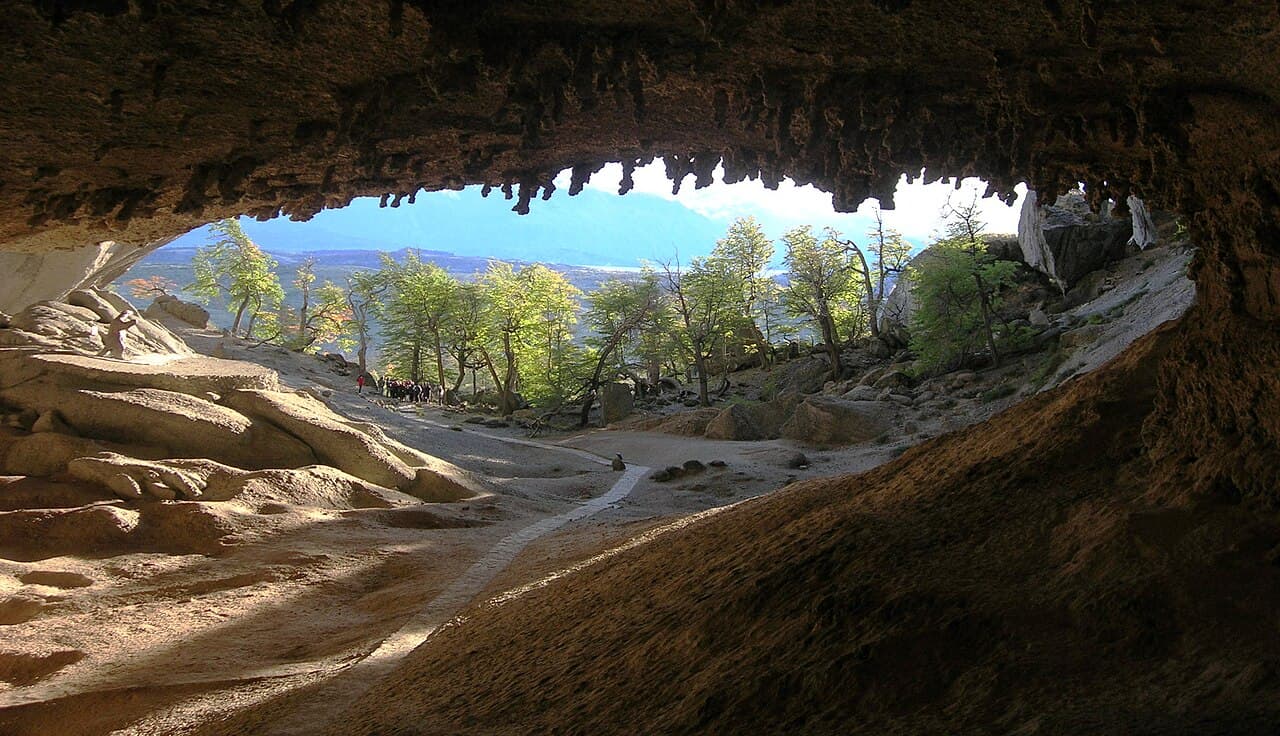
Cueva del Milodon
A huge cave in the hills about 25 kilometres north-west of Puerto Natales where remains of the milodon, an extinct giant ground sloth, were found at the end of the 19th century, the find Bruce Chatwin built In Patagonia around. A CONAF natural monument with a life-size sloth at the entrance and short trails to smaller caves and the Silla del Diablo rock. 12,000 Chilean pesos for a foreign adult, open 08:00 to 18:30 from 15 September; part of the inner trail is closed until the end of 2026. Half an hour from town, on the road to the park.
 Ik T, desde Kanagawa, Japón. · CC BY 2.0 via Wikimedia Commons
Isla Magdalena penguins
A small island in the Strait of Magellan, the Monumento Natural Los Pinguinos, where Magellanic penguins nest in burrows from October to March. Two operators from Punta Arenas: Fiordos del Sur’s ferry, about an hour and a half each way with an hour on the island, 100,000 Chilean pesos for an adult from 1 October 2026 to 31 March 2027 (130,000 with a snack and hotel pickup), and Solo Expediciones’ fast boat with the sea lions of Isla Marta, 06:30 to 12:00, 124 dollars. The colony is far smaller than the figures still printed everywhere: a lawsuit filed in February 2026 cites official counts that fell from about 70,000 breeding pairs to about 7,000, and the monument was closed from April to September 2026. Both operators sell the new season from 1 October; confirm the island is open before you pay.
 omar Basly · Pexels
Perito Moreno glacier
A glacier front about five kilometres wide ending in Lago Argentino, 77 kilometres and an hour and a half by road from El Calafate, in the Los Glaciares National Park. From the Magallanes peninsula a network of boardwalks faces it across a narrow channel, close enough to hear the ice crack and watch blocks fall. The park fee from 1 June 2026 is 50,000 Argentine pesos a day for a foreigner, with half off a second day within 72 hours, paid by card, in cash or online. Hielo y Aventura’s Safari Nautico, an hour on the water below the south face, costs 80,000 pesos all year, park fee separate. Give the boardwalks three hours at least; the ice is most active on warm afternoons.
National parks: fees ↗Hielo y Aventura: rates ↗View on map ↗
 omar Basly · Pexels
Walking on the Perito Moreno: Minitrekking and Big Ice
Hielo y Aventura is the only company allowed onto the glacier. Minitrekking, a short walk on the ice in crampons as part of a day of about nine and a half hours with transfers and the boardwalks, costs 395,000 Argentine pesos to 31 October and 420,000 from 1 November, about 260 to 280 dollars. Big Ice, a full day of about twelve hours with three hours on the ice, runs from 15 September to 30 April for ages 18 to 50 only, from 550,000 pesos on the rate card and 630,000 on the tour page; the park fee is not included. Book weeks ahead for summer.
 Bren Pintelos · Pexels
Laguna de los Tres
The lake under the east face of the Fitz Roy, and the hike most people come to El Chalten for: about four hours from the village through lenga forest and past Laguna Capri to the Poincenot area, then a steep climb of about 400 metres that takes more than an hour to the lip of the moraine, where the lake and the granite suddenly appear. Allow eight to nine hours there and back, 20 to 24 kilometres. The park fee is charged at the El Chalten portals as well now, card or QR code only. The last hour is exposed, loose and often very windy; turn back if the wind is pushing you off balance.
 360around · CC BY 2.0 via Wikimedia Commons
Laguna Torre
The other great El Chalten walk, easier than Laguna de los Tres: up the Fitz Roy river valley to the glacier lake below Cerro Torre, the needle that was the most disputed summit in climbing history. Seven to eight hours there and back, with little climbing after the first hour. Icebergs from the Grande glacier float in the lake. Cerro Torre is often in cloud, so keep a clear day for it if you can choose.
 Gorkaazk · CC BY 3.0 via Wikimedia Commons
Estancia Cristina and the Upsala glacier
A pioneer sheep farm on the north-west arm of Lago Argentino, reached only by boat past the icebergs of the Upsala glacier from Punta Bandera, 47.5 kilometres west of El Calafate. The day visit is about ten hours with six at the estancia, from 245 dollars with the Upsala glacier and 295 with trekking; to stay the night costs from 1,680 dollars a person in a double for one night, full board and excursions included, from 15 October to 14 December 2026 and in March and April 2027. Open 1 October to 30 April.
 Thesingularhotels · CC BY-SA 3.0 via Wikimedia Commons
Puerto Bories and The Singular museum
The meat-freezing plant that the Sociedad Explotadora de Tierra del Fuego built at Puerto Bories in the 1910s, when this whole region was sheep estancias shipping frozen mutton to Europe. Its engine rooms and machinery are kept as a museum inside The Singular hotel, a National Monument since 1996, and open to non-guests daily from 12:00 to 17:00 for 10,000 Chilean pesos. Five kilometres north of Puerto Natales, and the best short answer to the question of why anyone came to live here.
 Stefan.straub / CC BY-SA 4.0 via Wikimedia Commons
 Diego Delso / CC BY-SA 3.0 via Wikimedia Commons
Food & drink
 lucassbraga · Pexels
Cordero al palo
Patagonian lamb split and roasted for hours on an iron cross beside a wood fire, the dish of both sides of the border. On the Argentine side it is cordero al asador; order it at a parrilla and share.
 Daniela Ronda · CC BY-SA 4.0 via Wikimedia Commons
Centolla
Southern king crab from the channels of Magallanes, served as a chowder, gratin, in empanadas or simply cold with mayonnaise. The Punta Arenas restaurants have made it their signature; ask the price by weight first.
 Thomas Fuhrmann · CC BY-SA 4.0 via Wikimedia Commons
Guanaco and hare
Wild meats that appear on a few regional menus in Punta Arenas and Natales, usually braised or in a stew. Not for everyone; a real taste of the steppe.
 Banfield · CC BY-SA 3.0 via Wikimedia Commons
Calafate
The dark blue berry of a thorny steppe shrub, in jam, ice cream, pisco sours and beer. Local legend says whoever eats it will come back to Patagonia.
 Maggy López · Pexels
Asado and bife de chorizo
On the Argentine side, the grill: beef, lamb, chorizo and morcilla off the parrilla, with chimichurri and a Malbec from the north. Portions are large.
 Marcelo Verfe · Pexels
Trout
Rainbow and brown trout from the lakes and rivers around El Chalten and El Calafate, grilled or smoked. Introduced, not native, and on every menu.
 Eduardo López López · CC BY-SA 2.0 via Wikimedia Commons
Pisco sour and Patagonian beer
The pisco sour is Chile’s aperitif, poured on the Lago Grey boat among other places. Puerto Natales and El Chalten each have craft breweries.
Chileans lunch from about 13:00 and dine from 20:00; Argentines later, rarely before 21:00, and many kitchens in El Calafate and El Chalten close in the afternoon between lunch and dinner. Chilean law requires restaurants to suggest a tip of at least ten percent on the bill; it is voluntary and goes to the staff. In Argentina about ten percent is customary. Cards work in most restaurants on both sides; carry some cash for small places. Book dinner in high season in Puerto Natales and El Calafate. On the trail, refugio meals are the only food you do not carry, and they have to be booked with the bed.
Where to eat
La Marmita
modernA small regional kitchen on Plaza Sampaio cooking guanaco, hare and lamb alongside vegetarian dishes, one of the best-loved tables in Punta Arenas. No working website; its Facebook page is the contact.
Last researched 2026-09-24
Sotito’s
institutionThe long-established seafood restaurant near the Punta Arenas waterfront, known for centolla in every form. No website; call or walk in.
Last researched 2026-09-24
Cafe Kaiken
casualA small restaurant cooking homemade pasta since 2005, with gluten-free pasta too. Its own site gives Wednesday to Monday, 13:00 to 15:00 and 19:00 to 22:00: closed on Tuesdays.
Last researched 2026-09-24
Mesita Grande
casualThin-crust pizza and pasta at long communal tables on the square, a Natales favourite with a sister branch in Punta Arenas. Monday to Saturday 12:00 to 22:00 and Sunday 13:00 to 20:00 by its own site.
Last researched 2026-09-24
El Asador Patagonico
institutionThe grill on the Natales square, with lamb roasting on the cross by the fire. No website; its Facebook page is the contact.
Last researched 2026-09-24
La Tablita
institutionThe El Calafate parrilla since 1968, just over the stream from the centre, with lamb on the asador in the window. Its site is la-tablita.com; the similarly named .com.ar belongs to a deli in Buenos Aires.
Last researched 2026-09-24
Casimiro Bigua
modernTwo restaurants a few doors apart on the main street, a gourmet restaurant and grill at number 963 and a parrilla and asador at 993, with a third in Ushuaia.
Last researched 2026-09-24
Pura Vida
casualA relaxed, homely restaurant at the west end of the main street with stews, pies and vegetarian dishes and a window on the lake. No website of its own; a directory page uses its name. Dinner only, from 19:30, by the latest map survey.
Last researched 2026-09-24
La Tapera
casualA log cabin off the main street with a fire, trout and lamb, and a room full of hikers. No website; walk in or ask at your hotel.
Last researched 2026-09-24
La Cerveceria
barA brewpub on the main street since 1999, with its own beers and hearty plates. Instagram is its only site.
Last researched 2026-09-24
Sunrises
 Winky from Oxford, UK · CC BY 2.0 via Wikimedia Commons
Base Torres, the towers in the morning
The three towers stand to the west of the lake at Base Torres, so they face the rising sun and turn red at first light while the lake below is still in shadow. From October to March the sun rises between about 85 and 129 degrees, over the low steppe to the east, and the tops catch it at or just before the table sunrise: about 05:36 at Chileno on 1 December and 06:57 on 15 February. On our SRTM model the lakeshore itself gets direct sun 20 to 30 minutes later in December and January, and roughly at sunrise in early November and mid-February, when the sun comes up through the gap of the Ascencio valley. The catch is the rule: CONAF prohibits walking the trails without daylight, and civil dawn at Chileno is about 04:52 on 1 December, 45 minutes before sunrise, while the climb from Chileno takes well over an hour and a half. So the famous sunrise photograph means a hike in the dark that the park forbids. We would leave at first light and arrive to towers lit straight on for the rest of the morning.
November to March; mornings only, as the towers are backlit after about 13:50 · A wide lens for the towers over the lake from the moraine; the light is frontal and hard by ten, so the first two hours are the best of it. Wind makes the lake glassy only in the calm early hours.
 LBM1948 · CC BY-SA 4.0 via Wikimedia Commons
The Costanera, Punta Arenas, over the Strait of Magellan
The waterfront road of Punta Arenas faces east across the Strait of Magellan to the low shore of Tierra del Fuego, so the sun comes up out of the water or over that flat distant coast all year, within a few minutes of the table time. The sunrise bearing swings from about 50 degrees in June, over the north-east of the strait, to about 133 degrees in December. Sunrise is about 05:11 in mid-December, 07:12 on 1 October and 09:59 at its latest on 1 July. The penguin boats check in at 06:00 to 06:30, so in October and March you see the sunrise from the boat; from November to January the sun is up before check-in.
Year-round; October to March if you are on the penguin boat · The old pier and the ships at anchor make the foreground; the wind off the strait is strongest in spring and summer.
 Jorge Cachambi · Pexels
Laguna de los Tres and the Fitz Roy
The east face of the Fitz Roy looks straight down the valley toward the steppe, which is why it glows orange at sunrise: the summit sees the sun at the table time over the flat country to the east, about 05:41 at El Chalten in mid-December and 07:22 on 1 October. On our terrain model the sun reaches the lake viewpoint itself within a quarter of an hour of that from October to March. Seeing it means sleeping near the top of the trail and climbing the last steep 400 metres in the dark, and the town portal’s own advice is to plan the walk around daylight; check the current park rules at the portal before you plan it. Laguna Capri, lower on the same trail, gets direct sun 27 to 52 minutes after sunrise but has the Fitz Roy reflected in it on a still morning.
October to April · Wind is usually lowest just after dawn; the reflections at Capri last only until the first breeze.
Sunsets
 Solange Muñoz · CC BY-SA 3.0 via Wikimedia Commons
The waterfront, Puerto Natales
The town faces west across the Seno Ultima Esperanza to the mountains of the Antonio Varas peninsula, so every sunset is over the water toward the peaks. The sun sets far round to the south-west in summer, at about 231 degrees in December, and to the north-west in winter, at about 310 in June. It goes behind hills, not into the sea: on our SRTM model the ridges stand 1 to 3.5 degrees high, so the sun disappears 8 to 26 minutes before the table time, least in November to January and most in late April and early September, when it sets behind the higher ground to the west-north-west. In practice that means about 21:55 in mid-December rather than 22:04, 19:53 on 1 October and 20:04 in mid-March. The black-necked swans and the old pier make the foreground.
Year-round; November to February for the long twilight after a very late sunset · Stay for the half hour after the sun has gone, when the snow on the peaks across the sound turns pink. The wind drops some evenings; the swans do not.
 David · CC BY 2.0 via Wikimedia Commons
Mirador de los Condores, El Chalten
A short, steep walk of under an hour from the village to a lookout over the town and the Fitz Roy range to the west. The massif stands 6 to 9 degrees above the lookout on our SRTM model, so the sun disappears behind the mountains about 40 to 60 minutes before the table sunset all year: about 20:59 in mid-December against a table 21:53, 19:18 on 1 October. From the lookout the Fitz Roy is at about 303 degrees and Cerro Torre at about 288, and on our model the sun goes down behind the Fitz Roy massif in the last week of April and in mid-August and behind Cerro Torre in the first half of April and in the first days of September. The model smooths the needles, so treat these as windows of a week or two. In summer the sun sets well to the left of both, over the southern ridges, and the show is the backlit skyline.
April and late August to early September for the sun behind the peaks; any clear evening for the skyline · A long lens compresses the Fitz Roy and Cerro Torre behind the village roofs. Sunset in El Chalten is about 21:53 at its latest in mid-December, 20:02 on 1 October and 17:57 in mid-June.
 Miguel · CC BY-SA 2.0 via Wikimedia Commons
Lago Argentino, El Calafate
The lakeshore on the edge of town, at the Laguna Nimez reserve and along the Costanera, looks west up Lago Argentino toward the Andes. The sun sets over the lake between about 234 degrees in December and 309 in June, behind distant ranges and the nearer headlands 1 to 2 degrees up, so on our model it disappears 7 to 17 minutes before the table time, the most in December and January: about 21:39 in mid-December against a table 21:56, and 19:49 on 1 October. Flamingos and black-necked swans on the lagoon behind you.
Year-round · The lake turns milky turquoise with glacier flour; the colour is best in the last hour of light.
Day trips
 David Stanley from Nanaimo, Canada · CC BY 2.0 via Wikimedia Commons
Isla Magdalena from Punta Arenas
The penguin colony in the Strait of Magellan, by Fiordos del Sur’s ferry (100,000 Chilean pesos, about an hour and a half each way) or Solo Expediciones’ fast boat with the sea lions of Isla Marta (124 dollars, 06:30 to 12:00), both from October to March. The colony is a fraction of its old size; confirm the island is open.
About 1.5 hours each way by ferry · Half day
 Carlos Foresti · Public domain via Wikimedia Commons
Cueva del Milodon and Puerto Bories
Two short stops on the road north of Puerto Natales: the giant ground sloth’s cave, 12,000 pesos, and the museum of the old freezing plant at The Singular, 10,000 pesos from midday. Easy on the day you drive to the park, or a half day in town.
30 minutes from Puerto Natales · Half day
 Lorraine Kinnear · Pexels
Torres del Paine as a day trip from Puerto Natales
Possible, and a long day: Bus-Sur leaves Natales at 07:00 and reaches Laguna Amarga at 09:00, and the return bus leaves Laguna Amarga at 20:00, back at 21:30, which leaves just enough time for Base Torres. 18,000 Chilean pesos one way or 35,000 return in 2026-27, plus about 5,000 cash for the shuttle to the Welcome Center and the park pass. With a car, the Pudeto catamaran, Salto Grande and the Mirador Cuernos walk make a second, gentler day.
About 2 hours each way · Full day
 isol · CC BY-SA 3.0 via Wikimedia Commons
Estancia Cristina and the Upsala glacier from El Calafate
A boat past the icebergs of the Upsala glacier to a pioneer estancia reachable only across the lake, from 245 dollars, about ten hours on the boat and at the estancia, twelve with the road to Punta Bandera. The day that shows you the ice field’s scale.
1 hour by road, then the boat · Full day
 Andreas Bogala (= Derbogi) · Public domain via Wikimedia Commons
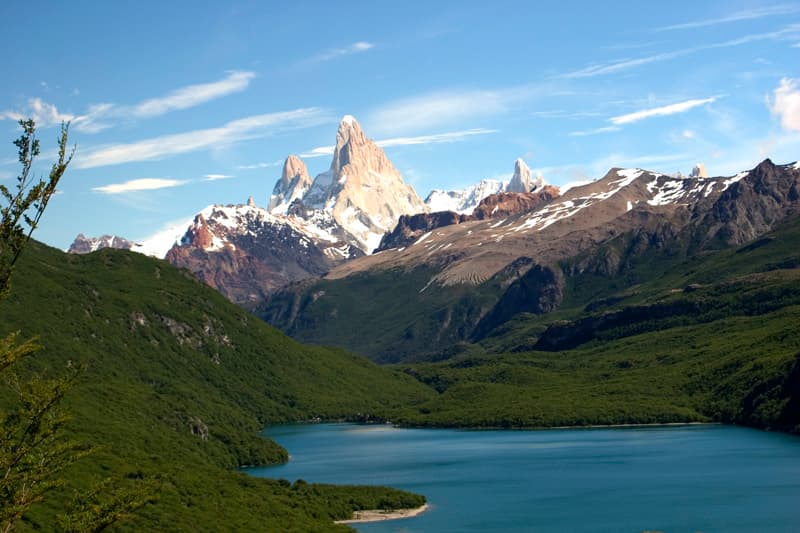
Lago del Desierto from El Chalten
At the end of 33 kilometres of gravel road north of El Chalten, a long forest lake toward the Chilean border, with the Chorrillo del Salto waterfall on the way and short walks at the south end. A good day for weather too bad for the high trails.
About 1 hour by road · Half day
After dark
The long evenings of December
eveningBoth countries keep UTC-3 all year, so at midsummer the sun sets after 22:00 in Puerto Natales and civil dusk lasts until nearly 23:00. Dinner in daylight, a walk on the waterfront at ten, and blackout curtains for the night.
 Alexis Alvarez · CC BY-SA 4.0 via Wikimedia Commons
A refugio evening on the W
foodDinner at long tables with hikers from everywhere, boots drying by the stove and the weather forecast pinned to the wall. Book the meal with the bed; there is nothing else.
 Mafalda25 · CC BY-SA 4.0 via Wikimedia Commons
Cordero al asador in El Calafate
foodThe Patagonian lamb roasted for hours on an iron cross, carved at the table at La Tablita or Casimiro Bigua. Argentines eat late; so should you.
 Jose Luis Vanasco · Pexels
Beer in El Chalten
eveningThe brewpubs on San Martin fill after the day hikes; a local beer and a hot stew are the recognised reward for Laguna de los Tres.
Daily itinerary
Twelve days, Punta Arenas to El Calafate one way
The plan we would book: a night in Punta Arenas and the penguins, two in Puerto Natales, four inside Torres del Paine by car, the car back in Natales and the bus over the border, two in El Calafate and two in El Chalten, then a flight from El Calafate to Buenos Aires. Two rules: Bus-Sur runs Natales to El Calafate on Tuesdays, Thursdays and Saturdays at 07:30, and from October also at 15:30 on those days, and Turismo Zaahj ran a daily 07:00 departure last season, so check both and fix day eight first; and Cafe Kaiken closes on Tuesdays. Fly in via Santiago; from late November 2026 El Al’s scheduled Buenos Aires route makes the way home a domestic flight and one nonstop.
- 1
Punta Arenas
relaxedFly Santiago to Punta Arenas. From Israel there is no nonstop to Chile: connect in Europe or Sao Paulo to Santiago, then a domestic flight south.The Plaza Munoz Gamero and the Costanera. Sleep early for the penguin boat.Sotito’s for centolla, or La Marmita for regional cooking.Taxi from the airport; no car yet.Estimate: If the flight lands late, go straight to the hotel
- 2
Magdalena and the road north
fullCheck in at the Prat pier at 06:00 for Fiordos del Sur’s ferry to Isla Magdalena, 100,000 pesos, or take Solo Expediciones’ fast boat from 06:30. In October and March the sun comes up over the strait from the boat.Back in Punta Arenas at midday.Collect the rental car and drive 247 kilometres north to Puerto Natales, about three hours on a paved road.The Natales waterfront.Cafe Kaiken, unless it is a Tuesday; Mesita Grande otherwise.Collect the car in the city after the boat, not at the airport on day one. Returning it in Puerto Natales makes it a one-way rental; ask for the drop fee when booking.Estimate: Skip the penguins from April to September, when the monument is closed, and drive north in the morning
- 3
Puerto Natales
relaxedBuy the Torres del Paine pass online at pasesparques.cl, the two-to-ten-day pass at 48,500 pesos, and save the QR code offline: there is no internet at the gate. Then the Cueva del Milodon, about 25 kilometres north.In town.The Puerto Bories museum at The Singular from 12:00, 10,000 pesos. Supermarket for trail snacks and a full tank of fuel: there is none in the park.The waterfront again, or a drink at the museum.El Asador Patagonico for cordero al palo.Short drives only. Fill the tank tonight.Estimate: A kayak or boat on the sound if the wind allows
- 4
Into the park
moderateNorth on Ruta 9 via Cerro Castillo to the Laguna Amarga gate, about 114 kilometres and two hours or more, guanacos on the verges. Show the QR code at the gate, open 07:00 to 21:00 from October to April.At the hotel or a picnic.Check in on the Las Torres side and walk the first stretch of the Ascencio valley to see the trail you will climb tomorrow.Long light over the Paine massif; in December it sets after 22:00.At the lodge.All gravel inside the park; drive slowly and watch for guanacos and wind gusts when opening doors.Estimate: Stay at Hotel Las Torres, EcoCamp or, outside the park, Tierra Patagonia or Awasi
- 5
Base Torres
fullLeave at first light for Base Torres: about 19 kilometres there and back with nearly 900 metres of climbing, past Chileno to the boulders and the lake. The towers are lit straight on all morning.A packed lunch at the lake, or at Chileno on the way down.Down by mid-afternoon, before the rangers close the upper trail. Eight to ten hours in all.At the lodge, early.No driving. Microspikes and poles in the pack if there has been snow.Estimate: In bad weather, walk only to the Chileno viewpoint and try again tomorrow
- 6
Lago Pehoe and Lago Grey
moderateDrive to Pudeto, about 40 minutes. Walk to the Salto Grande waterfall and the Mirador Cuernos, with the Cuernos across Lago Pehoe.Picnic at Pudeto.On to Hotel Lago Grey, nearly an hour, for the 16:00 Grey III boat to the glacier front, 120,000 pesos, two hours and three quarters.The icebergs on Lago Grey.Hotel Lago Grey or Hosteria Pehoe, where you sleep.About 55 kilometres of gravel in the day. The boat needs 25 passengers; have the Frances valley as tomorrow’s plan either way.Estimate: Take the 13:00 boat and walk the Grey beach to the lookout after it
- 7
The Frances valley
fullThe first catamaran from Pudeto to Paine Grande, 28,000 pesos: 08:00 or 08:30 from November, and in late October possibly not before 10:30. Walk about 2.5 hours to the Italiano ranger station and up into the Frances valley as far as time allows.A packed lunch in the valley, with the hanging glaciers of the Paine Grande opposite.Back to Paine Grande for the 17:00 or 18:40 catamaran to Pudeto.Back at the lodge.A long day on foot; turn round in time for the boat, as the next is tomorrow.Estimate: If the catamaran is cancelled for wind, drive the park roads to Lago Sarmiento and the Laguna Amarga side for guanacos and condors instead
- 8
Over the border to El Calafate
moderateDrive out of the park and back to Puerto Natales, about two hours, and return the car.Natales.The 15:30 Bus-Sur departure to El Calafate, which runs on Tuesdays, Thursdays and Saturdays from October, about five hours, 40,000 Chilean pesos, through the Rio Don Guillermo border. Chilean exit and Argentine entry at the border.Late, in El Calafate, as Argentines do.Keeping the Chilean car in Chile avoids the notarised cross-border permit and Argentine insurance, about 130 dollars with one rental company. Pay the 4,000-peso terminal tax in El Calafate in cash.Estimate: With the cross-border permit arranged when booking, drive across yourself; the Argentine post at Rio Don Guillermo is open 08:00 to 20:00
- 9
The Perito Moreno glacier
fullBy tour bus or rental car to the glacier, 77 kilometres. The park fee is 50,000 Argentine pesos for a foreigner.At the boardwalk cafe or a picnic.Three hours on the boardwalks, and the Safari Nautico boat below the south face, 80,000 pesos; or the day on the ice with Minitrekking, booked ahead.Lago Argentino from the Costanera, or Laguna Nimez if it is still open.La Tablita for lamb.Rent a car in El Calafate for two days, or use the tour buses.Estimate: Big Ice instead, a twelve-hour day for ages 18 to 50 · Estancia Cristina by boat on a second day in El Calafate
- 10
North to El Chalten
moderateThe bus or the car north on Ruta 40 and Ruta 23, 213 kilometres, about three hours, with the Fitz Roy growing in the windscreen across Lago Viedma.El Chalten.Check in and walk up to the Mirador de los Condores, under an hour, for the view of the village and the range. The park fee is charged at the Los Condores portal too, so buy the three-day Flexipass, 100,000 pesos for three entries, rather than paying 50,000 at each portal.From the Condores lookout; the sun goes behind the massif 40 to 60 minutes before the table time.La Tapera.One fuel station in El Chalten; fill up in El Calafate.Estimate: Stop at the La Leona roadhouse on the way
- 11
Laguna de los Tres
fullStart early for Laguna de los Tres: about four hours through the forest past Laguna Capri, then the steep last hour to the lake under the Fitz Roy. The park fee is charged at the portal, by card or QR only.At the lake, out of the wind if you can find it.Back the same way, eight to nine hours in all.La Cerveceria, with a beer brewed on the premises.On foot from the village.Estimate: In high wind or cloud, go to Laguna Torre instead and swap with tomorrow
- 12
Laguna Torre or home
moderateWith an evening flight, the first part of the Laguna Torre trail to the Cerro Torre viewpoint and back.Back to El Calafate airport, about three hours, and the flight to Buenos Aires.Leave a margin: the road is long and the flights few. El Al’s Buenos Aires to Tel Aviv flights are scheduled to run twice a week from 29 November.Estimate: Add a night and walk the whole of Laguna Torre, seven to eight hours
Eight days, the W trek from Puerto Natales
For readers who want to walk: the W from east to west with a night at each of five refugios or campsites, no car, the park buses from Puerto Natales and the catamaran out. Every night must be booked before you go, with Las Torres Patagonia for Chileno, Cuernos and Frances and with Vertice for Paine Grande and Grey. At Las Torres prices a full-board bed costs about 370 dollars a person a night, at Vertice about 224, so budget roughly 1,500 dollars a person for the five nights before the park pass and the boats. Start any day of the week.
- 1
Arrive in Puerto Natales
relaxedFly to Punta Arenas and take the Bus-Sur coach from the airport or the city to Puerto Natales, about three hours and a quarter, 11,000 pesos.Buy the two-to-ten-day park pass online and save the QR code offline. Rent anything missing: poles, microspikes, a warm layer.Mesita Grande.No car on this plan.Estimate: Fly direct to Puerto Natales on a seasonal flight from Santiago
- 2
To Chileno
moderateThe 07:00 Bus-Sur to Laguna Amarga, arriving 09:00; the shuttle to the Welcome Center, about 5,000 pesos in cash.On the trail.Up the Ascencio valley to Refugio Chileno, a few hours of steady climbing.At Chileno; stoves are banned in this sector.The main bag stays in Natales at the hotel if you can arrange it.Estimate: Sleep at Central by the Welcome Center and do Base Torres as a full day tomorrow
- 3
Base Torres to Los Cuernos
fullAt first light, up to Base Torres from Chileno and back down, with the towers lit from the east.At Chileno.The shortcut path from Chileno toward Los Cuernos along Lago Nordenskjold.At Los Cuernos.The longest day of the trek.Estimate: Go back down to Central and take the next day’s walk to Cuernos from there, 4.5 hours by CONAF’s time
- 4
The Frances valley
fullLos Cuernos to Italiano, 2.5 hours, leaving the big pack at the ranger station.In the valley.Up the Frances valley toward the lookouts under the Paine Grande glaciers, then down to Frances for the night.At Frances.Estimate: Turn back at the first lookout if the cloud is down
- 5
To Paine Grande
moderateFrances to Italiano, 30 minutes, then along the shore of Lago Skottsberg to Paine Grande, 2.5 hours.At Paine Grande.Rest, or the start of the Grey trail to the first lookout.Lago Pehoe from the refugio.At Paine Grande.Estimate: Continue to Grey the same day if the weather is closing in tomorrow
- 6
To Grey
moderatePaine Grande to Refugio Grey, 3.5 hours by CONAF, past Laguna Los Patos and the lookouts over Lago Grey.At Grey.The walk to the glacier viewpoints and the suspension bridges beyond the refugio.At Grey.Estimate: Take the one-way Grey III boat from Refugio Grey to Hotel Lago Grey, 110,000 pesos, and end the trek here
- 7
Out of the park
fullGrey back to Paine Grande, 3.5 hours.The catamaran to Pudeto, 28,000 pesos, and the connecting bus to Puerto Natales; confirm the connection when you book, as boats and buses are not run by the same company.El Asador Patagonico, for the meal you have been thinking about for five days.If wind cancels the catamaran, refugio staff will know the plan; carry a margin day if your flight is tight.Estimate: Take the 11:20 catamaran and be in Natales by the afternoon
- 8
Home, or on to Argentina
relaxedThe bus to Punta Arenas airport, or to El Calafate for the Argentine side.Fly.From Natales, Bus-Sur runs to El Calafate on Tuesdays, Thursdays and Saturdays.Estimate: Continue with days 8 to 12 of the twelve-day plan
Getting around
- From Israel there is no nonstop flight to Chile. The usual routes connect in Europe or Sao Paulo to Santiago, then fly south to Punta Arenas or, in season, Puerto Natales; the Ben Gurion flight board listed no flight to Santiago, Buenos Aires or Sao Paulo on 23 and 24 September 2026. El Al has announced a nonstop Tel Aviv to Buenos Aires route from November 2026, twice a week, which trade press dates to 29 November; it had not flown when we published. From Buenos Aires, El Calafate is a domestic flight.
- Israeli passport holders need no visa for Chile or for Argentina for tourist stays of up to 90 days. Argentina’s Decree 366/2025 requires foreign visitors to hold health insurance; how strictly it is checked at the border is unclear, but public hospitals already bill uninsured foreigners, so carry the policy.
- Punta Arenas airport (PUQ) has flights from Santiago and Puerto Montt; Puerto Natales (PNT) has seasonal flights from Santiago; El Calafate (FTE) has flights to Buenos Aires and a few other Argentine cities. Bus-Sur coaches call at Punta Arenas airport on the way to Puerto Natales, eleven departures a day, about three hours and a quarter, 11,000 Chilean pesos one way.
- Chile’s border inspection, the SAG, requires a sworn declaration from everyone entering the country, including by land from Argentina: fresh or dried fruit and vegetables, meat and sausages, and bee products such as honey must be declared, and undeclared goods are fined. The form can be filled in online up to a day before.
- The road: Punta Arenas to Puerto Natales is 247 kilometres of paved road, about three hours. From Natales to the Laguna Amarga gate is about 114 kilometres north via Cerro Castillo, two hours or more; CONAF gives the Y-290 by Lago Porteno as a shorter way in, about 80 kilometres, to the south of the park. Inside the park the roads are gravel, and from Laguna Amarga to Pudeto is 25 kilometres.
- Fuel: CONAF states plainly that there are no fuel stations in the park or around it. Fill up in Puerto Natales. El Chalten has one station. Chilean 93-octane petrol averaged about 1,497 pesos a litre after a rise on 10 September 2026; in Argentina regular petrol averaged about 2,205 pesos on 1 September.
- Park buses: Bus-Sur’s 2026-27 catalogue lists departures from the Natales terminal at 07:00, 12:00, 14:30 and 18:00, reaching Laguna Amarga two hours later and continuing to Pudeto and the Administration; returns leave Laguna Amarga at 11:00, 15:00 and 20:00. 18,000 pesos one way, 35,000 return; to the Grey sector 30,000 and 45,000. A separate shuttle, cash only, links Laguna Amarga to the Welcome Center, 7 kilometres; the fare is printed as 3,000, 4,500 and 5,000 pesos in different places, so carry 5,000.
- Across the border: Bus-Sur runs Puerto Natales to El Calafate on Tuesdays, Thursdays and Saturdays at 07:30, and from October also at 15:30 on those days, and back on Wednesdays, Fridays and Sundays at 08:00, plus 16:30 on Tuesdays, Thursdays and Saturdays from October: about five hours, 40,000 pesos. Turismo Zaahj and Marga Taqsa also run the route, Zaahj daily at 07:00 last season; check their 2026-27 timetables. The crossing is Rio Don Guillermo at Cerro Castillo, where Argentina’s Gendarmeria gives the hours as 08:00 to 20:00. A Chilean rental car may cross only with a notarised permit and Argentine liability insurance arranged at booking; one company prices it at about 130 dollars for up to 15 days.
- El Calafate to El Chalten: 213 kilometres of paved road, about three hours by the regular buses of Cal-Tur, Chalten Travel and Taqsa. El Calafate to the Perito Moreno boardwalks is 77 kilometres. Lago del Desierto is 33 kilometres of gravel beyond El Chalten.
- Park passes: Torres del Paine tickets are sold only on pasesparques.cl, CONAF’s official ticket site, and cannot be cancelled or refunded; bring the QR code on paper or as a screenshot, because the gate has no internet. The Los Glaciares fee can be paid online at ventaweb.apn.gob.ar or at the southern gate by card or in cash; at the El Chalten portals, card or QR only.
Things worth knowing
- · Arriving at a refugio or campsite without a booking. There is no wild camping in Torres del Paine, and a reservation is part of being allowed on the W and the O.
- · Planning the Base Torres sunrise. CONAF prohibits walking the trails without daylight; at Chileno civil dawn comes about 45 minutes before the sun, which is not enough for the climb.
- · Running out of fuel. There is none in or around Torres del Paine; fill up in Puerto Natales.
- · Believing the old prices. The park fee changed on 1 May 2026, El Chalten now charges the national park fee, and many websites still print last season’s numbers.
- · Trying both parks in a week. The border crossing alone takes most of a day.
- · Crossing to Argentina in a Chilean rental car without the notarised permit and insurance arranged when booking.
- · Lighting anything in the park. Fires are banned outside designated areas and punished with fines of up to 2,000,000 pesos, up to three years in prison or, for foreigners, expulsion.
- · Flying a drone. Drones are prohibited in Torres del Paine.
Budget
| Low | Expected | Comfortable | |
|---|---|---|---|
| Accommodation style / per night | $90 | $280 | $900 |
| Food style / per day | $30 | $60 | $130 |
| Local transport / per day | $20 | $55 | $110 |
| Estimate / per day | $15 | $45 | $140 |
Estimate · USD · 2026-09-24. Quoted in US dollars per person per day, except accommodation, which is per room per night for two, averaged across a trip that mixes town hotels with a few nights in or near the park. The comfortable band still does not reach the all-inclusive lodges, which price per person and by programme: Explora sells eight nights from 7,000 dollars a person, and Hotel Las Torres all-inclusive from 2,590 for two to five nights. On the W, a Las Torres dormitory bed with full board is about 370 dollars a person a night and a Vertice one about 224. Rates: 1 dollar = 959 Chilean pesos (Banco Central de Chile, 24 September 2026), 1,516 Argentine pesos (BCRA, 23 September) and 3.017 shekels (Bank of Israel, 23 September), so 1,000 Chilean pesos is about 3.15 shekels and 1,000 Argentine pesos about 2 shekels. The Torres del Paine two-to-ten-day pass is about 51 dollars and the Los Glaciares daily fee about 33; the Grey boat about 125, Magdalena about 104, Minitrekking about 260 to 280 and Big Ice about 360 to 415.
Things worth knowing
Frequently asked questions
How many days do I need for Torres del Paine and El Chalten?
Ten to fourteen for both. Give Torres del Paine four to five nights, by car with day hikes or on foot on the W, and El Chalten two or three, with two in El Calafate for the Perito Moreno glacier, and at the start a night in Punta Arenas and two in Puerto Natales. With a week, choose one side. Torres del Paine alone needs at least three full days inside the park.
W trek or O circuit?
The W for most people: four to five days along the south face of the massif, with Base Torres, the Frances valley and the Grey glacier, and refugios every night. The O adds the wild back of the massif over the John Gardner Pass, seven to nine days, counter-clockwise only on its northern section. The O is closed until at least the end of October 2026 and reopens after CONAF’s safety check; five trekkers died on the pass in a blizzard in November 2025. Choose the O only with experience, time for weather days and a willingness to turn back.
When should I book the refugios?
As soon as your dates are fixed. Las Torres Patagonia and Vertice were both selling the 2026-27 season in September 2026, and for December to February the popular sites, Chileno and Frances above all, fill months ahead. Each company is booked separately, and you need a reservation for every night on the trail.
Chile or Argentina: which side of Patagonia?
If you can only do one, Chile’s Torres del Paine is the bigger, wilder park, with the W and the towers, but it costs more and needs more planning. Argentina gives you the Perito Moreno glacier, which nothing in Chile matches for sheer spectacle, and El Chalten, where the trails start from the village and need no booking beyond the park fee, and you can walk to the Fitz Roy in a day. With ten days or more, do both: they are a bus ride of about five hours apart.
When is the best time to visit Patagonia?
November to March, and our picks are November and March. December to February is peak season with the longest days and the strongest winds. October is quiet, cold and windy, with the O closed. April brings the autumn colours and the best puma weeks but short days. From May to September most lodges and refugios close, and in 2026 a guide was compulsory on the main trails in winter.
How much does Torres del Paine cost to enter in 2026-27?
From 1 May 2026 a foreign adult pays 32,400 Chilean pesos, about 34 dollars, for one day, or 48,500, about 51 dollars, for a pass valid for two to ten consecutive days. Children 12 and under are free. Tickets are sold only online at pasesparques.cl and cannot be refunded. Across the border, Los Glaciares costs 50,000 Argentine pesos, about 33 dollars, a day at both the glacier and El Chalten.
Can I see the sunrise at Base Torres?
Not within the rules. CONAF prohibits walking its trails without daylight, and at Chileno, the nearest refugio, civil dawn in December comes about 45 minutes before sunrise, not enough for the steep climb to the lake. The towers face east and stay lit straight on all morning, so going up at first light still gives you the view at its best.
Is Patagonia safe for Israeli travellers?
The Israeli National Security Council lists no warning for Chile and level 1, normal precautions, for Argentina. The Foreign Ministry’s line for Chile asks travellers to respect the rules in parks and nature reserves, and Torres del Paine’s 2011 fire, blamed on an Israeli backpacker, is the incident most people there remember. The practical risks are weather, wind and cold, and the park’s fire rules are enforced with fines and expulsion.
Can I drive a rental car from Chile into Argentina?
Only with a notarised permit and Argentine liability insurance arranged when you book; one rental company prices them at about 130 dollars for up to 15 days, and spontaneous crossings are not possible. The simpler plan is to return the Chilean car in Puerto Natales, take the bus to El Calafate, about five hours, and rent again there if you need a car.
Do I need a guide in Torres del Paine?
Not in summer. CONAF lifted the guide requirement for the O from January 2026 and for the W and Base Torres from mid-September 2026. In the 2026 winter, from late April to mid-September, a certified guide was compulsory on both, and a similar rule is likely next winter.
Sources (26)
- Israeli government open-data travel-warnings dataset (last modified 14 September 2026): Chile, National Security Council: no warnings; Foreign Ministry: stay alert, follow the media, respect the laws and regulations where you travel, especially in parks and nature reserves; Argentina, National Security Council: normal precautions, no travel warning (level 1) · government · 2026-09-24
- Israel Airports Authority flight board dataset, 23 to 24 September 2026: no flights to or from Santiago, Buenos Aires or Sao Paulo listed · airport · 2026-09-24
- El Al confirmed a Tel Aviv to Buenos Aires launch for the fourth quarter of 2026, twice weekly with Boeing 787-9 aircraft · reputable-local · 2026-09-24
- CONAF: the new Torres del Paine tariff system of a single-day pass and a pass of 2 or more days valid for up to 10 continuous days entered into force on 1 May 2026 · national-park · 2026-09-24
- Pases Parques, Torres del Paine product: foreign adult CLP 32,400 daily and CLP 48,500 for 2 or more days; summer hours 07:00 to 21:00; no cancellations or refunds · national-park · 2026-09-24
- CONAF lifted the guide requirement for the Macizo Paine circuit from 1 January 2026 and introduced a trail-operation protocol with weather thresholds · national-park · 2026-09-24
- CONAF lifted the guide requirement for Base Torres and the W from 16 September 2026; the O and the John Gardner Pass remain closed until 1 November · reputable-local · 2026-09-24
- CONAF brought the Torres del Paine winter season forward to 27 April 2026, with a certified guide, microspikes, poles and a headlamp required on Base Torres and the W · reputable-local · 2026-09-24
- CONAF announced the temporary closure of the W circuit during June and July 2026 · reputable-local · 2026-09-24
- Five trekkers died in a blizzard on the John Gardner Pass on the Torres del Paine O circuit on 17 November 2025 · reputable-local · 2026-09-24
- The Biodiversity and Protected Areas Service is preparing the transition of Torres del Paine for 2027 · reputable-local · 2026-09-24
- Las Torres Patagonia Refugio Central lodging rates 2026-27: dorm bed from USD 230 November to March and USD 200 in October and April; full board USD 140 · official · 2026-09-24
- Administracion de Parques Nacionales fee table valid from 1 June 2026: Los Glaciares foreigners ARS 50,000 daily at both the Perito Moreno and the El Chalten portals · national-park · 2026-09-24
- Argentine consulate in Tel Aviv: holders of Israeli ordinary, official and diplomatic passports do not need a visa for Argentina for stays of up to 90 days · government · 2026-09-24
- Chile’s migration service: tourists may stay up to 90 days; the Chilean embassy in Israel states Israeli citizens do not need a visa for tourism · government · 2026-09-24
- Argentina Decree 366/2025 (Boletin Oficial, 29 May 2025) requires foreign visitors to hold health insurance · government · 2026-09-24
- On 8 February 2012 the Puerto Natales court granted the Israeli tourist accused over the Torres del Paine fire a conditional suspension of proceedings; he paid USD 10,000 to CONAF and committed to two years with KKL on the reforestation campaign · reputable-local · 2026-09-24
- On 4 August 2015 Chile’s Supreme Court ordered the Israeli tourist to indemnify the State in a civil case over the 2011 Torres del Paine fire · reputable-local · 2026-09-24
- In January 2013 CONAF signed an agreement with KKL and received a first contribution to grow 50,000 native plants at the Dorotea nursery in Puerto Natales to restore Torres del Paine · reputable-local · 2026-09-24
- Mala Espina fact-check, 20 January 2026: CONAF Magallanes reported 52 expulsion measures covering 174 people since 2012, of which 17 measures and 53 people (about 30 percent) involved Israelis; the viral 73 percent claim is false · reputable-local · 2026-09-24
- In January 2014 four Israeli tourists who burned paper at Campamento Italiano were stopped at the Rio Don Guillermo crossing, fined CLP 452,991 and barred from entering Chile for three years · reputable-local · 2026-09-24
- SII: hotels registered for the exemption do not charge VAT on accommodation services to foreign tourists without domicile in Chile when payment is received in foreign currency (FAQ updated 12 June 2025) · government · 2026-09-24
- Direccion del Trabajo: restaurants and bars must suggest a tip of at least 10 percent on the bill; the tip is voluntary · government · 2026-09-24
- Banco Central de Chile dolar observado for 24 September 2026: CLP 959.39 per USD (via the mindicador.cl mirror); BCRA reference rate Com. A 3500 on 23 September 2026: ARS 1,516 per USD; Bank of Israel representative rate 23 September 2026: ILS 3.017 per USD · government · 2026-09-24
- Punta Arenas climate normals 1991-2020 (Direccion Meteorologica de Chile): mean temperature 10.7 C in January and 1.7 C in July, annual precipitation 390.2 mm · independent-travel · 2026-09-24
- Ultra Paine 2026 takes place on 26 September 2026 with distances from 5 to 50 km · event-organizer · 2026-09-24


