Italy · Sardinia
Sardinia
The north-east (Costa Smeralda, La Maddalena, Gallura) for the famous granite coves and the glamour; the north-west (Alghero, Stintino, Capo Caccia) for a walkable Catalan-flavoured town and La Pelosa; the east (Gulf of Orosei, Baunei) for cliff-backed beaches reached by boat or on foot; the south (Cagliari, Chia, Villasimius) for the capital, dunes and the mildest autumn. The Barbagia interior around Nuoro and Oliena is the counterweight to all of it.
 fotografia di Rosanna C. / CC BY 2.5 via Wikimedia Commons
Overview
Sardinia is the Mediterranean’s second-largest island and the one whose water most often gets compared to the Caribbean: granite coves in the north-east, a limestone wall of cliffs and hidden beaches on the east, dunes and lagoons in the south, and a rugged interior that was building stone towers a thousand years before Rome. By 2026 the island’s beach culture has also changed shape. Its most photographed beaches now run on daily caps and QR codes: 1,500 a day at La Pelosa, 1,100 at Tuerredda, and 250 people at a time at Cala Goloritzé, with a few euros charged per head and August slots that can go within minutes of release. That is not a reason to skip Sardinia. It is a reason to plan it, which is what this guide is for.
Book the beaches before you book the restaurants. La Pelosa opens 500 of its 1,500 daily places for booking at any time ahead and releases the other 1,000 two days out at 9am; Cala Goloritzé, which admits 250 people at a time, opens three days ahead at midnight and can go within minutes in high summer. If a booked beach is the point of a day, sleep within an hour of it. And skip the Costa Smeralda unless the point is the Costa Smeralda: the same water, usually cheaper and less formal, is about 30 minutes north in Palau (and across the ferry on La Maddalena) or about an hour south in San Teodoro.
Best for
Couples · Beach lovers · Road trips · Food and wine · Families with a car · Hikers and boat days
Daily itinerary
8 to 12 days
Unlike Sicily, Sardinia is not a history-first island: the sea comes first, the nuraghi and the shepherd interior come second, and the towns are small. Unlike Mallorca or Ibiza, it is big and slow: 270 kilometres top to bottom, no motorway across the middle, and four distinct coasts that do not talk to each other much. A week means two coasts done properly; even the eight-day route below is a fast sampler with a move every two nights.
Best time to visit
Late May to June and September to early October are the sweet spots: swimmable sea (warmest in September), most beach clubs and boat operators running, and the booked beaches far easier to get into than in July and August. August is the month to avoid unless you have booked everything, including the beach.
- April to May: Wildflowers, mild days, cool sea. Sant’Efisio fills Cagliari on 1 May; the beach-booking season starts at La Pelosa on 15 May.
- June: The sea warms, the daily caps and fees start at Tuerredda (from 2 June) and the boat trips run in full. Often the month we would pick.
- July to August: Peak heat and crowds; each capped beach is inside its booking season, and Ferragosto week is the busiest of the year across the island.
- September: Warmest sea, first empty beaches, harvest in the vineyards. Autunno in Barbagia begins in the interior villages.
- October: Still swimmable in the first half; La Pelosa and Tuerredda bookings end mid-month and the coast starts closing down.
Things worth knowing
- Sant’Efisio, Cagliari (1 to 4 May): a four-day procession from Cagliari to Nora and back, with costumed groups from across the island; held every year since the 1650s.
- Festa del Redentore, Nuoro (22 to 29 August 2026, 126th edition): the great costume parade of Sardinian villages on Sunday 23 August, ending with the pilgrimage to Monte Ortobene.
- Autunno in Barbagia (September to December): the interior villages take turns opening courtyards, workshops and kitchens on successive weekends.
Where to stay
 Superbass · CC BY-SA 3.0 via Wikimedia Commons
Costa Smeralda and Gallura (Porto Cervo, San Pantaleo, Palau)
The famous north-east: pink granite, turquoise coves and the 1960s resort strip the Aga Khan built around Porto Cervo. The Costa Smeralda proper is a roughly 55 km stretch of very expensive coast around Porto Cervo; the same water continues cheaper north to Palau and La Maddalena and south to San Teodoro.
Best for: Couples · Iconic hotels · Boat days · La Maddalena archipelago
August brings the island’s steepest room rates and heavy traffic around the resorts; most beach access is by car and the car parks fill by mid-morning.
 jimmyroq · CC BY-SA 2.0 via Wikimedia Commons
Alghero and the north-west (Stintino, Capo Caccia, Bosa)
A walled seaside town with a Catalan past and its own dialect, a real old town to eat in without a car, and within an hour La Pelosa at Stintino, the Capo Caccia cliffs and Neptune’s Grotto, and the pastel river town of Bosa to the south.
Best for: First-time visitors · Walkable evenings · Food · La Pelosa
La Pelosa needs a booking from mid-May to mid-October; Alghero’s own beaches are pleasant rather than spectacular.
 Petra Nesti · Pexels
Gulf of Orosei and Ogliastra (Cala Gonone, Baunei, Santa Maria Navarrese)
The east coast’s limestone wall: 40 kilometres of cliffs hiding beaches with no road to them (Cala Luna, Cala Mariolu, Cala Goloritzé), reached by boat from Cala Gonone or Santa Maria Navarrese or on foot from the Baunei plateau. The wildest coast on the island and the one that most rewards a hike.
Best for: Hikers · Boat days · Snorkelling · Photographers
Cala Goloritzé admits 250 people at a time and Cala Mariolu, reached mainly by boat, has its own landing cap; rough seas cancel boat trips at short notice.
 Petra Nesti · Pexels
Cagliari and the south (Chia, Villasimius, Poetto)
The capital is a real city with a hilltop Castello, the island’s principal archaeology museum and an 8-kilometre town beach at Poetto. Within an hour either way are the dunes of Chia and Tuerredda to the west and the Villasimius coves to the east, on what is usually the island’s mildest coast, swimmable latest into the autumn.
Best for: Cities plus beach · Families · Archaeology · Longest season
Tuerredda runs a 1,100-a-day booking from 2 June to 15 October; Cagliari itself is hot and quiet in mid-August.
 Avisadehh · CC0 via Wikimedia Commons
Barbagia interior (Nuoro, Oliena, Orgosolo)
The mountainous heart around Nuoro: shepherd villages, Cannonau vineyards, the Supramonte limestone, the painted murals of Orgosolo and the Gorropu gorge. This is where the food and the culture in the rest of the guide come from, and the antidote to a beach-only week.
Best for: Food · Culture · Hiking · A night away from the coast
Mountain roads are slow and winding; plan by hours, not kilometres, and expect little English in the villages.
Where to sleep
Hotel Cala di Volpe, a Luxury Collection Hotel
luxury · Costa Smeralda (Cala di Volpe bay)
Best for: A once-in-a-lifetime Costa Smeralda stay · Design history · Golf and tennis
- The 1960s Jacques Couëlle original, restyled and reopened for the 2026 season on 16 April
- 121 rooms and suites over its own bay, with the Pevero golf course nearby
- Managed by Marriott for Smeralda Holding, so loyalty status counts
- July and August rates sit at the top of the Italian resort market
- Seasonal: closed roughly October to April
- The bay is lovely but the beach itself is small for the room count
Romazzino, A Belmond Hotel, Costa Smeralda
luxury · Costa Smeralda (Romazzino bay)
Best for: Couples · A beach hotel rather than a marina hotel · Belmond loyalists
- Michele Busiri Vici’s whitewashed 1960s building on its own sandy beach
- 94 rooms and suites plus 6 villas, seawater and freshwater pools, spa
- Under Belmond (LVMH) since 2024, with rooms being renovated in phases
- Seasonal, roughly late May to early October
- Renovation phases mean room standards vary; ask what you are booking
- A car is still needed for anything beyond the hotel and Porto Cervo
Villa Las Tronas Hotel & Spa
boutique · Alghero (Lungomare Valencia)
Best for: Couples · A historic base you can walk into town from · Sea without a resort
- A 24-room former aristocratic villa on its own promontory over the Gulf of Alghero
- Outdoor seawater pool, indoor heated pool and spa
- A few minutes on foot from the walled old town
- Rocky shore and piers rather than a sandy beach
- Formal, old-school style is not for everyone
- Small room count means summer books out early
Su Gologone Experience Hotel
unique · Oliena, Barbagia (Supramonte)
Best for: Food and craft · A night in the interior · Couples · Hikers
- Family-run since 1967 by the Palimodde family, grown from a spring-side restaurant into 71 rooms
- Rooms and suites decorated with Sardinian art and craft from the hotel’s own workshops
- The restaurant is a reason to come on its own; the Su Gologone spring is next door
- Inland: 30 to 40 minutes to Cala Gonone and the sea
- Rustic-luxury rather than polished; not a resort
- Very popular for lunch and weddings, so the grounds are not always quiet
Conrad Chia Laguna Sardinia
resort · Chia (Domus de Maria), south coast
Best for: Families · A full-service resort near Cagliari airport · Dunes and long beaches
- 107 rooms and suites in the Chia Laguna resort behind the Chia dunes and lagoon
- Two pools, spa, kids’ club and a shuttle to a reserved stretch of beach
- About an hour from Cagliari airport, so it works as first or last stop
- The beach is a shuttle ride away, not on the doorstep
- Seasonal (2026: late April to end of October)
- Big-resort feel; not the place for a quiet Sardinian village stay
Palazzo Doglio
design · Cagliari (city centre)
Best for: A city night at either end · Couples · Food and theatre
- A Leading Hotels of the World palazzo in central Cagliari with a courtyard and its own theatre
- Osteria del Forte restaurant and a fitness and longevity club on site
- Walkable to the Marina district and Castello; Poetto beach is a short ride
- No beach or pool of its own
- City hotel prices in a place most people treat as an airport stop
- Cagliari empties in mid-August
Essential experiences
 Norbert Nagel · CC BY-SA 3.0 via Wikimedia Commons
Su Nuraxi di Barumini (UNESCO)
The best-known of Sardinia’s roughly 7,000 nuraghi: a Bronze Age stone tower complex and village, UNESCO-listed since 1997. Visits are guided only, leave every 30 minutes and last about an hour; the 2026 single ticket, 16 EUR full fare for visitors of 18 and over, also covers Casa Zapata and the Centro Lilliu in the village.
 Daniel Ventura · CC BY-SA 3.0 via Wikimedia Commons
Neptune’s Grotto and Capo Caccia
A sea cave under the Capo Caccia headland west of Alghero, reached down the 654-step Escala del Cabirol (119 m of descent) or by boat from Alghero harbour from April to November. Guided visits leave on the hour and last 30 minutes; full fare 18 EUR in 2026, reduced 10, with an obligatory time-slot booking for the stairs. From June to October there is no ticket office at the cape, so buy the ticket before you go, park at Casa Gioiosa and take the shuttle (5 EUR for adults, not included in the ticket), arriving an hour before your slot.
 Patrick Nouhailler's… · CC BY-SA 3.0 via Wikimedia Commons
La Maddalena Archipelago National Park
A national park of 62 islands and islets off Palau, granite and schist, established in 1994 as the first national park in Sardinia: La Maddalena and Caprera you can drive on, the rest (Spargi, Budelli, Santa Maria) you see by boat. Budelli’s pink beach has been closed to landing since 1994 and is viewed from the water or a boardwalk only.
 delaere · CC BY 2.0 via Wikimedia Commons
Cala Goloritzé
A white-pebble cove under a 143 m limestone needle on the Baunei coast, a natural monument protected by the Sardinia Region since 1993, with no road to it: visitors reach it on foot, about 3.6 km and 500 m of descent from the Golgo plateau, roughly 1 hour 30 minutes down and 2 hours back up. Access is capped at 250 people at a time and costs 7 EUR, booked from three days ahead at midnight through the system the Comune di Baunei uses; free places for children up to and including age 5 and for Baunei residents still take a slot, and boats may not land, stopping at buoys about 300 m offshore.
 Dirk Hartung · CC BY-SA 2.0 via Wikimedia Commons
La Pelosa, Stintino
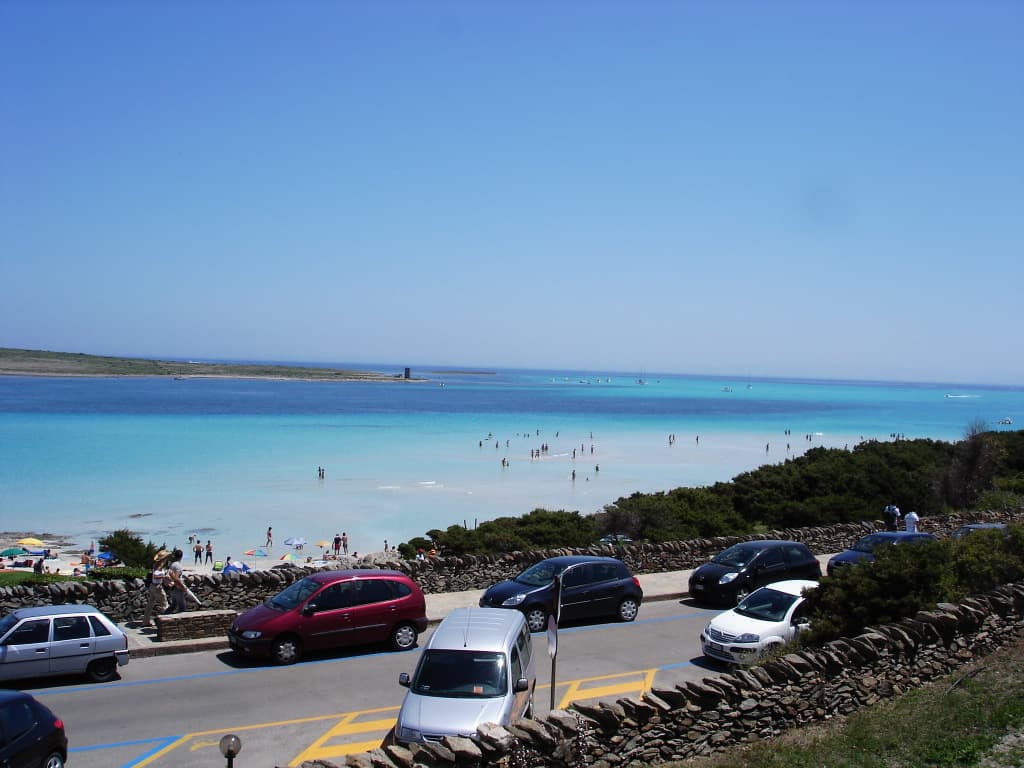
The shallow, sand-white bay facing Asinara at the island’s north-west tip, and the model for Sardinia’s beach rationing: 1,500 people a day from 15 May to 15 October, 3.50 EUR each (under-12s free), 500 places sold any time ahead and 1,000 released two days out at 9am, QR checks 8am to 6pm, max 4 people per booking.
 Norbert Nagel · CC BY-SA 3.0 via Wikimedia Commons
Nora archaeological site
A Phoenician, Punic and then Roman town on a peninsula near Pula, with a Roman theatre, baths and mosaics right at the water’s edge; the destination of the Sant’Efisio procession each May.
 Laurettapossamai · CC BY-SA 4.0 via Wikimedia Commons
Cagliari: Castello and the Bastione di Saint Remy
The walled hilltop quarter of the capital: cathedral, Pisan towers and the white terrace of the Bastione di Saint Remy above the Marina district, with the National Archaeological Museum and its Nuragic bronzes and Mont’e Prama giants a few minutes’ walk away.
 etheriel · CC0 via Wikimedia Commons
Gola Su Gorropu
One of Europe’s deepest gorges, its limestone walls rising several hundred metres above the Flumineddu river between Urzulei and Orgosolo; reached on foot from the Genna Silana pass or the Sa Barva bridge, with a paid entry at the gorge mouth.
 Norbert Nagel / CC BY-SA 3.0 via Wikimedia Commons
 Tobias Helfrich / CC BY-SA 2.5 via Wikimedia Commons
Food & drink
 andria · CC BY-SA 2.0 via Wikimedia Commons
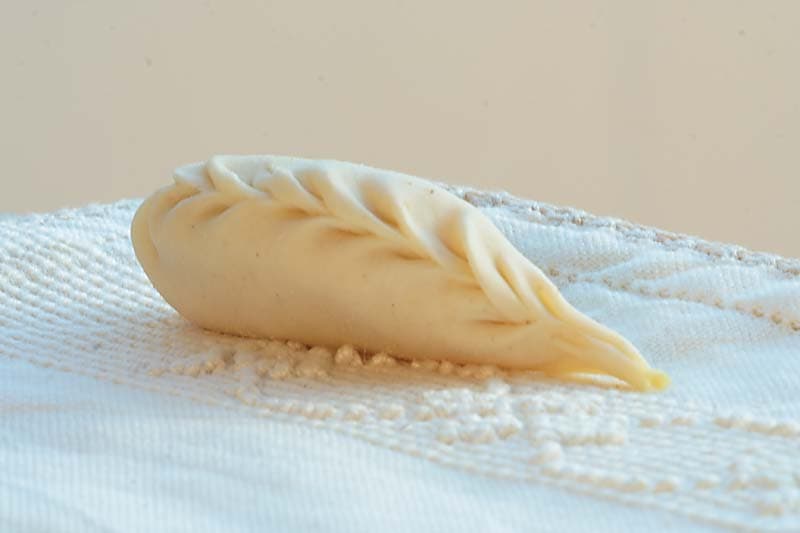
Culurgiones
Pleated pasta parcels of potato, pecorino and mint from Ogliastra, usually in a simple tomato sauce; the island’s signature filled pasta.
 Japs 88 · CC BY-SA 4.0 via Wikimedia Commons
Porceddu
Suckling pig roasted slowly on a spit over aromatic wood, the interior’s celebration dish; best ordered ahead at an agriturismo.
Fregola con arselle
Toasted semolina pearls cooked with clams and tomato, the classic of the Cagliari coast.
 Marica Massaro · CC BY-SA 4.0 via Wikimedia Commons
Malloreddus alla campidanese
Small ridged saffron gnocchi with a sausage and tomato ragù, the Sunday pasta of the south.
 Shardan · CC BY-SA 3.0 via Wikimedia Commons
Pane carasau
The shepherds’ paper-thin crisp bread; brushed with oil, salt and rosemary it becomes pane guttiau, layered with tomato and egg it becomes pane frattau.
 User:Pava · CC BY-SA 3.0 IT via Wikimedia Commons
Bottarga di muggine
Cured grey-mullet roe from the Cabras lagoon, shaved over spaghetti or sliced with celery and oil.
 Terendo · Public domain via Wikimedia Commons
Seadas
A fried pastry filled with fresh cheese and drizzled with bitter honey; the dessert that ends many Sardinian meals.
 La Casa di Sophia · CC BY-SA 4.0 via Wikimedia Commons
Cannonau, Vermentino and mirto
The island’s red and white grapes (Cannonau from the Barbagia and Ogliastra, Vermentino di Gallura DOCG in the north-east) and the myrtle-berry digestivo poured after dinner.
Dinner starts late (usually from 8pm, earlier in resort restaurants) and agriturismo meals are long, fixed-price sequences of antipasti, pasta, roast meat and seadas that need booking a day ahead. Bread and cover charge (coperto) appear on most bills.
Where to eat
Fradis Minoris
fine-diningFrancesco Stara’s restaurant on the Nora lagoon holds a Michelin star in the 2026 Italy guide, one of five starred restaurants on the island alongside Confusion at Porto Cervo, Capogiro at Baja Sardinia, Il Fuoco Sacro at San Pantaleo and Gusto by Sadler at San Teodoro. The kitchen sits on the lagoon it cooks from, so the menu follows the catch.
Last researched 2026-08-19
Agriturismo Sa Mandra
institutionA family farm that grew from a flock of sheep into a restaurant, museum and rooms; fixed menus built on what the farm raises and grows. Book ahead.
Last researched 2026-08-19
Ristorante Su Gologone
institutionThe restaurant the hotel grew out of, open since 1967 beside the Su Gologone spring; the roasts turn on spits in front of the fire and the wine list leans on local Cannonau.
Last researched 2026-08-19
Sunrises
 Chris · CC BY 2.0 via Wikimedia Commons
Poetto beach, Cagliari
The city’s long beach looks out over the Gulf of Cagliari; the sun comes up over the water while the kiosks are still shut, with the Sella del Diavolo headland closing the western end.
Year-round
 trolvag · CC BY-SA 3.0 via Wikimedia Commons
Cala Gonone waterfront
The Cala Gonone waterfront looks broadly east across the Gulf of Orosei: from the little harbour the sun comes up out of the sea before the first boats leave for the calas.
April to October
Sunsets
 No machine-readable author provided. Marco Busdraghi assumed (based on copyright claims). · CC BY 2.5 via Wikimedia Commons
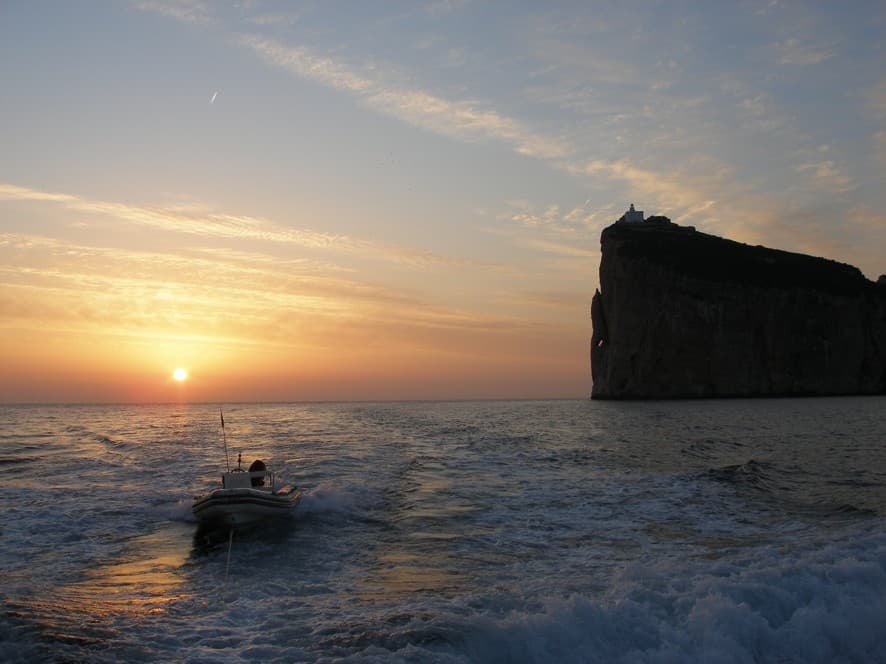
Capo Caccia, Alghero
The 168 m headland west of Alghero faces the open sea; from the belvedere above Neptune’s Grotto the sun drops into the water beyond Isola Foradada.
April to October · About 25 minutes’ drive from Alghero; from June to October park at Casa Gioiosa and take the shuttle if you are combining it with the grotto. · The cliffs light up orange for the last 20 minutes; the grotto itself closes well before sunset.
 Unukorno · CC BY 4.0 via Wikimedia Commons
Torre di Chia
The Spanish watchtower above Chia looks west along the dunes and beaches of the south coast, with the sea on three sides.
April to October · A short climb from the Chia car park; combine with a late swim at Su Giudeu.
 Carlo Pelagalli · CC BY-SA 3.0 via Wikimedia Commons
Bosa riverside
The pastel houses of Bosa climb from the Temo river to the Malaspina castle; the last light hits the coloured facades from across the water.
Year-round · About 45 minutes south of Alghero on a spectacular stretch of coast road.
Day trips
 Kaio Murilo · Pexels
La Maddalena archipelago by boat
A day among the granite islands from Palau or La Maddalena town: swimming stops off Spargi and Santa Maria and a slow pass by Budelli’s pink beach, which nobody may land on.
Palau to La Maddalena by car ferry in about 20 minutes; day cruises leave from Palau, La Maddalena, Cannigione and Santa Teresa · Full day
 Christopher Politano · Pexels
Gulf of Orosei by boat from Cala Gonone
The classic east-coast day: a boat south along the cliffs to Cala Luna, Cala Sisine and Cala Mariolu, with swimming stops and, on some trips, the Bue Marino cave. Cala Goloritzé is seen from the water only.
Boats leave Cala Gonone or Santa Maria Navarrese in the morning and return late afternoon · Full day
 Norbert Nagel · CC BY-SA 3.0 via Wikimedia Commons
Barumini and the Giara plateau
From Cagliari or Chia, an inland day to the Su Nuraxi guided tour, then up onto the basalt Giara di Gesturi where small wild horses graze among cork oaks.
About 1 hour from Cagliari to Barumini · Half to full day
After dark
Alghero bastions at dusk
walkA walk along the sea walls from the Torre di Sulis round to the harbour as the sun goes down, then dinner in the old town’s lanes: lobster alla catalana is the local dish, at a price.
 Chris · CC BY 2.0 via Wikimedia Commons
Cagliari Marina district
foodAperitivo and dinner in the grid of streets between the port and Castello, then up to the Bastione di Saint Remy for the view over the lit-up city.
 Petra Nesti · Pexels
Porto Cervo Piazzetta
walkThe evening ritual of the Costa Smeralda: a slow loop of the marina and the Piazzetta’s cafes when the yachts are back in and the boutiques stay open late.
Daily itinerary
Eight days in Sardinia: Olbia in, Cagliari out
A fast north-to-south open-jaw route over eight days and seven nights: two nights in the north-east for the Costa Smeralda and La Maddalena, two in Alghero for La Pelosa and Capo Caccia, two on the east coast at Cala Gonone or Oliena for the Gulf of Orosei, then a final night in Cagliari. Rent a car at Olbia airport and drop it in Cagliari; book La Pelosa as soon as your dates are fixed, and if you swap the day-6 boat for the Cala Goloritzé hike, be online when its three-day window opens.
- 1
Olbia to the Costa Smeralda
relaxedLand at Olbia, collect the car and drive 30 to 45 minutes north to the Costa Smeralda, or 45 minutes to an hour to Palau, longer in August traffic.Lunch in San Pantaleo, the granite village behind the coast.First swim at Capriccioli or Liscia Ruja, then check in.Porto Cervo marina.Dinner in Porto Cervo or, cheaper, in Palau or Cannigione.The Piazzetta loop.Car from the airport; everything on this coast is a short drive, but beach car parks fill by mid-morning in summer.Estimate: Base in Palau or San Teodoro instead of the Costa Smeralda proper, where rooms of a comparable standard usually cost a good deal less; compare rates for your own dates.
- 2
La Maddalena archipelago
moderateBoat day from Palau or La Maddalena among the islands.On board or on La Maddalena.Swimming stops off Spargi and Santa Maria; Budelli seen from the water.Back on the coast; the west-facing rocks near Palau.A seafood dinner in Palau or La Maddalena town.Early night; tomorrow is a driving day.Leave the car in Palau if you take a cruise from there; the car ferry to La Maddalena is about 20 minutes.Estimate: Drive across to Caprera and swim at Cala Coticcio only if you have booked the guided-access slot; check the Comune di La Maddalena rules.
- 3
Across the north to Alghero
moderateDrive west along the north coast to Castelsardo, then on to Alghero: roughly 3 hours of driving before the stop, so leave early.Castelsardo.Arrive in Alghero and walk the old town.The bastions.Dinner in the old town.A slow walk back along the sea walls.Roughly 170 to 190 km depending on your north-east base, about 3 hours behind the wheel plus the Castelsardo stop and lunch. Leaving around 8am buys a mid-afternoon arrival in Alghero.Estimate: Detour to the beach at Isola Rossa if the sea is calm and you leave early.
- 4
La Pelosa and Capo Caccia
fullYour booked morning at La Pelosa (about 45 minutes north): QR code at the entrance, mat under the towel.Stintino village.Back past Alghero to Capo Caccia for the pre-booked Neptune’s Grotto slot. From June to October the ticket must be bought before you arrive, and you park at Casa Gioiosa and take the shuttle, which means being there an hour before the time on the voucher.Capo Caccia belvedere.Agriturismo Sa Mandra, booked ahead.Free.Two booked time slots in one day, about 45 minutes apart by road. Put La Pelosa in the morning and the grotto in the late afternoon, and count the shuttle and the 654 steps into the grotto slot rather than the drive.Estimate: If La Pelosa slots are gone, swim at Le Saline or Ezzi Mannu nearby and keep the grotto.
- 5
Alghero to the Barbagia and the east coast
moderateDrive south-east across the island to Oliena, about 2 hours 15 minutes via Nuoro.Lunch at Su Gologone by the spring.Continue 30 to 40 minutes to Cala Gonone for a late swim, or stay inland at Su Gologone for the night.From the road down to Cala Gonone.Cala Gonone waterfront or the hotel.Free.This is the day that crosses the island; the mountain section after Nuoro is slow.Estimate: Add the Orgosolo murals, about 30 minutes from Oliena each way, if you have an hour to spare.
- 6
The Gulf of Orosei by boat
moderateBoat from Cala Gonone south along the cliffs. If you slept at Su Gologone, allow 30 to 40 minutes to reach the harbour plus the operator’s check-in.On board or at Cala Luna.Swimming stops at Cala Mariolu and Cala Sisine; Goloritzé from the water.Cala Gonone harbour.Seafood in Cala Gonone.Free.Boats leave in the morning and return late afternoon. Reserve ahead for summer dates, then reconfirm the departure and the sea forecast the day before.Estimate: Swap the boat for the Cala Goloritzé hike (booked, 250 people at a time) if you would rather walk than sail: about 1 hour 15 minutes’ drive to the Golgo trailhead above Baunei, then 1 hour 30 minutes down and 2 hours back up.
- 7
South to Cagliari via Barumini
fullDrive south, about 2 hours 30 minutes to Barumini for the guided Su Nuraxi visit.Barumini.On to Cagliari (about an hour), check in and walk up to Castello.Bastione di Saint Remy.The Marina district.Free.About 3 hours 30 minutes of driving in total, roughly an hour more than the fastest run down to Cagliari. Barumini is a detour off the inland route rather than a shortcut, and Su Nuraxi is what you are buying with the hour.Estimate: Skip Barumini and drop south by the coast via Arbatax and Villasimius: far prettier, but most of a day, so only with an extra night near Villasimius.
- 8
Chia or Poetto, then departure
relaxedA last swim: Poetto in town, or drive about an hour to Chia and Su Giudeu; Tuerredda is another 20 to 30 minutes on and only sensible with a late flight.Fregola con arselle by the sea.Return the car at Cagliari airport.Departure.Chia to Cagliari airport is about an hour; leave a buffer for the car return.Estimate: With a later flight, add the National Archaeological Museum for the Mont’e Prama giants.
Getting around
- Three international airports: Olbia Costa Smeralda (OLB) for the north-east, Alghero (AHO) for the north-west, and Cagliari Elmas (CAG) for the south, the busiest of the three by passengers; open-jaw flights (in one, out another) spare you the drive back up the island, though the flights and the one-way car drop usually cost more.
- Overnight and day ferries run from the mainland: Civitavecchia, Livorno and Genoa to Olbia, Golfo Aranci and Porto Torres, Civitavecchia to Cagliari and Arbatax, and Naples to Cagliari, with Grimaldi, Moby, Tirrenia, GNV and Corsica Sardinia Ferries; the shortest common crossing (Civitavecchia to Olbia) takes about 5 to 7 hours.
- Bringing your own car by ferry makes sense for a two-week trip; for a week or less, fly and rent.
- A rental car is essential outside the towns; there is no motorway across the middle and the SS131 spine road links Cagliari, Oristano, Sassari and Porto Torres.
- ARST regional buses and Trenitalia serve the main towns but not the beaches; the seasonal Trenino Verde tourist railway is a day out rather than transport.
- The east-coast calas are reached by boat from Cala Gonone or Santa Maria Navarrese, or on foot from Baunei; La Maddalena by car ferry from Palau.
Things worth knowing
- · Arriving at La Pelosa, Tuerredda or Cala Goloritzé in summer without a booking; the caps are enforced at the entrance and slots sell out days ahead.
- · Taking sand, shells or pebbles home: fines of 500 to 3,000 EUR under regional law, with checks at airports and ports.
- · Planning Sardinia as one loop in a week: the drives are longer than the map suggests, and the interior roads are slow.
Budget
| Low | Expected | Comfortable | |
|---|---|---|---|
| Accommodation style / per night | €70≈ $78 | €160≈ $179 | €350≈ $392 |
| Food style / per day | €25≈ $28 | €50≈ $56 | €100≈ $112 |
| Local transport / per day | €10≈ $11 | €45≈ $50 | €80≈ $90 |
| Estimate / per day | €4≈ $4 | €15≈ $17 | €35≈ $39 |
Estimate · EUR · 2026-08-19. Accommodation is per room per night (two sharing), shoulder-season; the Costa Smeralda in August sits far above the comfortable band. Everything else is per person per day. Local transport "expected" assumes a rental car split between two, before fuel, parking and the one-way drop fee an open-jaw trip adds; the low band is a car-free day in Cagliari or Alghero. Attractions average out the small beach fees (2 to 7 EUR a head) against the bigger single tickets, so budget above the band on a Su Nuraxi day (16 EUR) or a Neptune’s Grotto day (18 EUR plus the 5 EUR shuttle). Day trips are the boat seat only; lunch and drinks are in the food line. · 1 USD = €1 (14 Oct 2026)
Things worth knowing
Frequently asked questions
How many days do you need in Sardinia?
Eight to twelve. Seven days covers two coasts comfortably (for example the north-east and Alghero, or the east coast and Cagliari); the whole island needs two weeks and still leaves things out.
Where should first-time visitors stay in Sardinia?
Pick two bases: Alghero if you want a walkable town with La Pelosa and Capo Caccia nearby, and either the Costa Smeralda and Palau for the famous coves or Cala Gonone for the wild east coast. Cagliari works best as the last stop before flying out of the south; Chia is an hour further and needs an extra night.
Do you have to book Sardinia’s beaches?
Some of them, yes. In 2026 La Pelosa, Tuerredda, Cala Goloritzé, Cala Brandinchi and Lu Impostu all cap numbers and sell QR-code entry for 2 to 7 EUR a head through their municipal booking systems, each with its own season. Most beaches need no advance booking, though parking fills early in summer.
When is the best time to visit Sardinia?
Late May to June and September to early October: warm sea, most seasonal hotels and boat operators running, and beach bookings that are usually still available. August is beautiful and full.
Is the Costa Smeralda worth it?
For the hotels and the scene, yes; for the water alone, no. The same granite coves continue north to Palau and La Maddalena and south to San Teodoro, where rooms and restaurants generally cost a good deal less.
Do you need a car in Sardinia?
Yes, unless you stay in Alghero or Cagliari and take boat trips and buses; the beaches, the interior and the east-coast calas assume a car.
Sources (9)
- La Pelosa 2026 access rules: 15 May to 15 October, 1,500 daily places, 3.50 EUR, under-12s free · municipal · 2026-08-19
- Cala Goloritzé 2026 access: 250 people at a time, 7 EUR, booking from three days ahead through the Comune di Baunei system · municipal · 2026-08-19
- Tuerredda 2026 access: 2 June to 15 October, 1,100 people a day, 3 EUR, mat required · municipal · 2026-08-19
- Su Nuraxi di Barumini, UNESCO World Heritage since 1997; 2026 single ticket 16 EUR · official · 2026-08-19
- Grotta di Nettuno 2026 visitor information and prices · official · 2026-08-19
- Cheval Blanc (LVMH) to manage Hotel Pitrizza when it is scheduled to reopen in 2027 after a full renovation · independent-travel · 2026-08-19
- Cala Brandinchi and Lu Impostu 2026: controlled access 1 June to 30 September, caps of 1,447 and 3,352 a day, 2 EUR standard fee, free for residents, under-12s and visitors with disabilities · municipal · 2026-08-19
- Festa del Redentore, Nuoro: 126th edition scheduled 22 to 29 August 2026, costume parade on Sunday 23 August · municipal · 2026-08-19
- Sardinia overview and practical travel information · tourism-board · 2026-08-19


