Saint Lucia · Caribbean
St Lucia
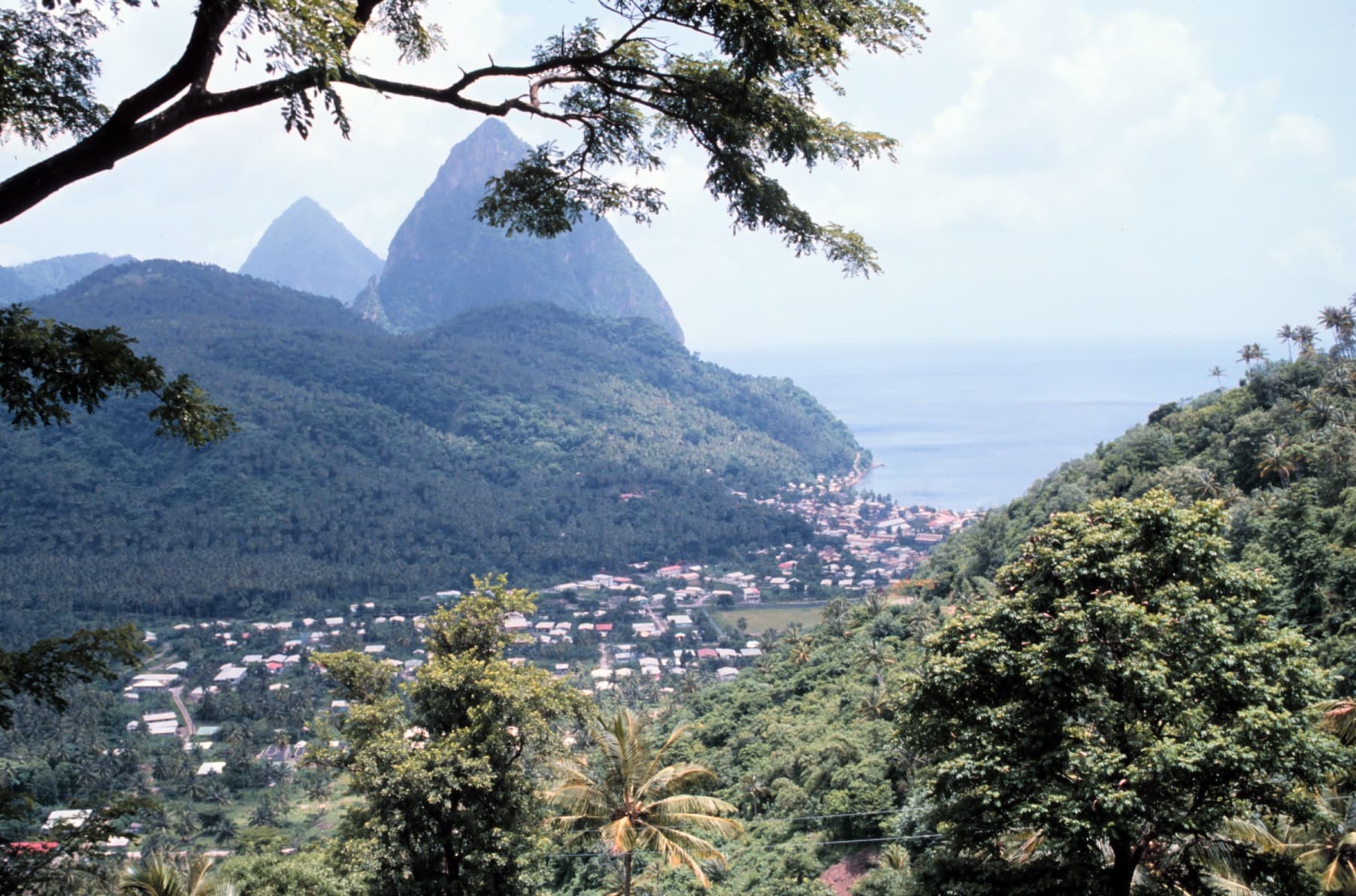
Soufriere and the Piton corridor for the drama: the two peaks, the sulphur springs, the botanical gardens and the island’s most photographed hotels. Rodney Bay and Gros Islet in the north for Reduit Beach, the marina, most of the restaurants and the Friday night jump-up. Marigot Bay as the pretty, sheltered pause between them, Castries for the market, and the windward east coast for turtles and emptiness rather than swimming.
 Wikimedia Commons / Public domain via Wikimedia Commons
Overview
St Lucia is the Caribbean island with a skyline: the twin volcanic Pitons rise straight out of the sea by Soufriere, and half of everything on the island, from resort architecture to the label on the local lager, arranges itself around the view of them. 2026 is the year the world decided to fly here all at once. After a record 2024 (stayover arrivals up 14 percent, the best year the island has counted) the airlines kept adding: Delta doubled Atlanta, United added Chicago Saturdays, American opened a Philadelphia route in August 2026, and from 25 October 2026 British Airways goes daily from London Gatwick, about 51,000 extra winter seats on its own. All of it lands at an airport whose long-promised new terminal has still not been built: the rebuilt control tower is nearly done, but the passenger terminal contract was still unsigned as of August 2026. More people, same small doors: that gap shapes how we would plan a 2026 trip.
Split the stay: three or four nights near Soufriere first, then the north, and make the transfer between them the scenic event of the trip rather than a daily commute. Book the two rationed things before you fly: a Gros Piton guide for an early slot and a table or day pass at the one Piton-view hotel you care about. Do the west coast by boat at least once, keep your swimming on that same leeward coast (the Atlantic side is for walking, and it takes the sargassum in season), and carry small East Caribbean notes for market stalls, minibuses and fish-fry Fridays even though every hotel quotes you US dollars.
Best for
Honeymoons · Couples · Piton views · Rainforest hikers · Snorkellers and divers · Wellness stays
Daily itinerary
6 to 8 days
Unlike the flat sand-and-reef islands, St Lucia is vertical: a rainforested volcanic ridge with black-sand coves at its feet, a drive-in volcano, hot springs and a mountain you can actually summit before lunch. The famous hotels are famous for their architecture as much as their beaches: rooms with the fourth wall missing, so the Pitons are the television. And the island has a working culture alongside the resorts: a Creole-speaking, cocoa-growing, fish-frying island where the best Friday night is a village street party, not a hotel buffet. The trade-off is real distances on slow roads: the postcard corner around Soufriere and the restaurant-and-beach corner around Rodney Bay are over an hour apart on a mountain road, and treating them as one place is the classic first-timer mistake.
Best time to visit
December to April is the dry, breezy high season and the price peak. May, June and November are the value windows: still mostly dry, warm sea, thinner crowds. Hurricane season officially runs June to November, and July to October is its heart: greener, cheaper and hotter, with short heavy downpours and the odd tropical system to watch, while the Atlantic coast carries the tail of the spring-to-summer sargassum season. The leeward west coast, where nearly all the swimming happens, stays calm most of the year.
- December to April: Peak: dry, breezy, 27 to 30C, calm leeward seas, whale-watching season, and peak pricing. The week between Christmas and New Year books out first.
- May to June: The quiet good months: warmer (around 31C), brief showers, festival energy tailing off and rates already softer. Our pick for value with near-peak weather.
- July to August: Carnival season: hot, humid, bursts of rain, and the island’s biggest party in July. Watch forecasts, book flexible, and enjoy mango season.
- September to November: The tail of the August-to-October storm peak and the emptiest hotels; November dries out fast and is the smart pre-peak arrival. Sargassum on the east coast usually eases late in the year.
Things worth knowing
- Saint Lucia Jazz & Arts Festival: late April into early May (30 April to 10 May in 2026), the island’s flagship event, with headline shows at Pigeon Island.
- Carnival: July, building for weeks before the two main parade days in Castries.
- Gros Islet Friday Night Street Party: every Friday year-round except Good Friday, and the Anse La Raye seafood fry the same night on the west coast.
- Jounen Kweyol, the climax of October’s Creole Heritage Month, lands on the last Sunday of October (25 October in 2026): host villages cook, dress and speak Kweyol for the day.
Where to stay
 Simon Hurry · Pexels
Soufriere and the Piton corridor
The old French colonial town under the Pitons, and the few kilometres of coast either side of it, hold nearly everything St Lucia is photographed for: the two peaks, the drive-in volcano, the botanical gardens, the black-sand snorkelling coves and the resorts built into the hillsides. The town itself is a working fishing town, weathered and real rather than polished; the luxury sits above and around it. Base here first: the sights are minutes away instead of a mountain drive.
Best for: First-time visitors · Piton views · Snorkelling · Honeymoons
Restaurant choice outside the hotels is modest and evenings are quiet; the drive to the north’s dining and nightlife is over an hour each way on a hairpin road we would not do daily.
 Vlad Podvorny · CC BY-SA 3.0 via Wikimedia Commons
Rodney Bay and Gros Islet
The island’s holiday capital in the flatter north: Reduit Beach’s long golden sand, the marina, a mall, most of the island’s independent restaurants and bars, and the fishing village of Gros Islet next door, which throws the famous Friday night street party. No Piton views, much easier logistics: this is where the island is at its most walkable and its most social.
Best for: Beach days · Food and nightlife · Families · First-time visitors
It can feel like a generic resort strip until you leave it, and the Pitons are a full-day excursion from here, not a view.
Cap Estate
The manicured northern tip: villas, a golf course and a handful of the island’s most polished small hotels above quiet coves like Smugglers Cove and Cariblue. Ten minutes from Rodney Bay’s restaurants but a world quieter, with the Atlantic kitesurf beach at Cas en Bas over the hill.
Best for: Couples · Wellness stays · A quiet base near the north’s restaurants · Golf
You will taxi or drive to almost everything, and the beaches are small coves rather than long strands.
 P. Hughes · CC BY 4.0 via Wikimedia Commons
Marigot Bay
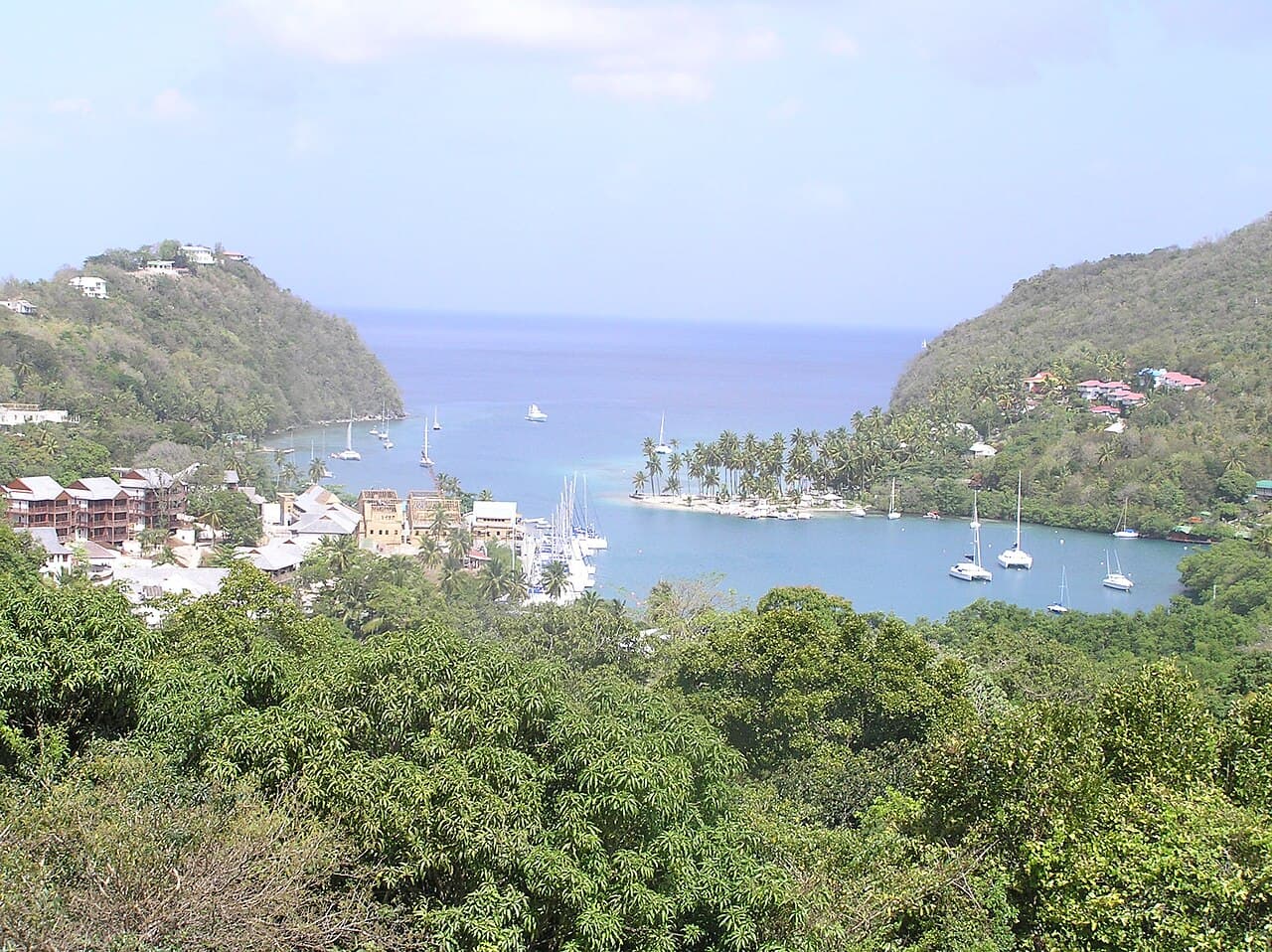
A deep green inlet halfway down the west coast, famous as a hurricane hole for yachts and now anchored by a marina village and the all-inclusive Zoetry resort (the former Capella, rebranded in late 2024). Pretty, sheltered and tiny: a lovely two-night pause or lunch stop rather than a full base.
Best for: Sailors · Couples · A quiet in-between stop · Waterfront dinners
The bay’s small beach is reached by a short ferry and fills quickly; for sightseeing you are still about 40 minutes from Soufriere and 45 from the north.
 P. Hughes · CC BY 4.0 via Wikimedia Commons
Castries and the Morne
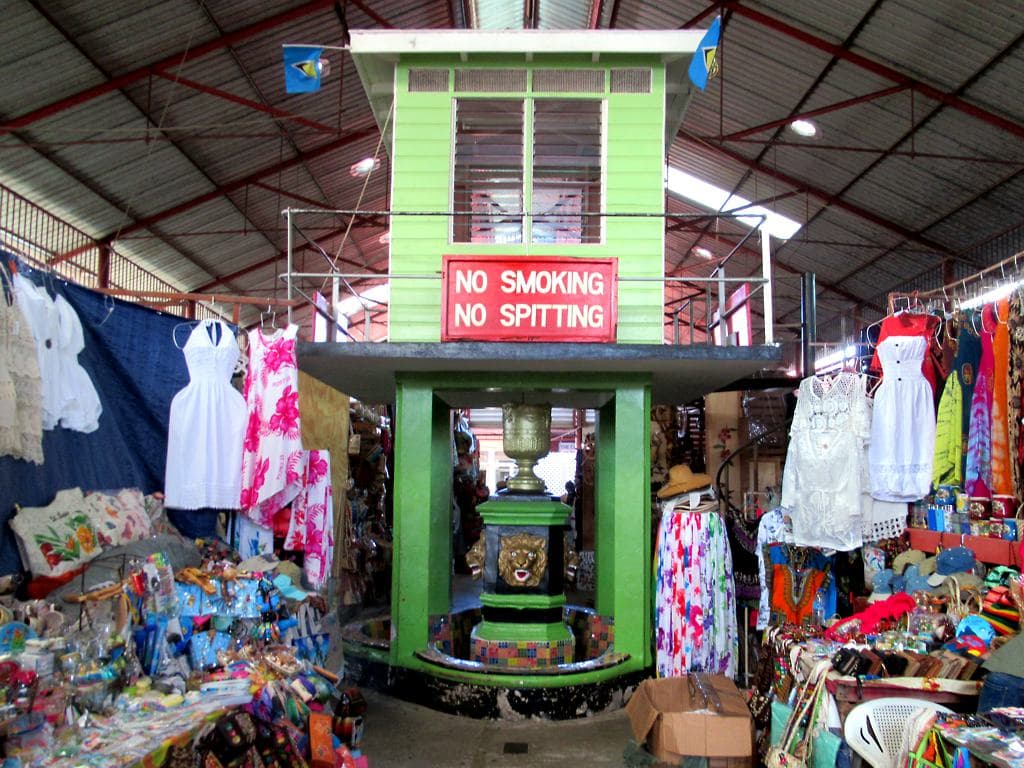
The capital is a working port city that most visitors see from a cruise ship or drive through: the covered Central Market and its spice and craft stalls are the reason to stop, along with panoramic Morne Fortune above town. Few visitors sleep here, and that is the right call.
Best for: Market mornings · A cultural half-day · Ferry departures to Martinique
Busy, hot and short on sights beyond the market and viewpoints; keep valuables low-key, especially on cruise days when the streets fill.
 Enrevseluj · CC BY-SA 4.0 via Wikimedia Commons
Vieux Fort and the south
The island’s second town sits beside Hewanorra airport on the flat, windy southern tip, looking out at the Maria Islands. It is the arrival and departure hinge rather than a holiday base, though kitesurfers rate Sandy Beach’s trade winds, and a first or last night here saves a dawn cross-island transfer.
Best for: First or last night near UVF · Kitesurfing · Budget stopovers
Windward coast: breezy, seaweed-prone in season, and thin on restaurants and evening life.
Where to sleep
Jade Mountain
luxury · Above Anse Chastanet, Soufriere
Best for: Honeymoons · The famous missing fourth wall · A once-in-a-life splurge
- 24 sanctuaries, most with private infinity pools, each open on one side to the Pitons and the sea: the architecture is the argument
- Guests share Anse Chastanet’s two beaches, restaurants and dive shop below
- Consistently ranked among the Caribbean’s most extraordinary hotels, and priced accordingly
- 2026 room-only rates run roughly US$1,575 to US$3,425 a night before tax, service and levy
- The open wall means living with the tropics: no glass between you and warm nights
- Steps and ramps everywhere and no in-room television or air conditioning by design, which is the point, but not for everyone
Sugar Beach, A Viceroy Resort
luxury · Val des Pitons, between the Pitons
Best for: The only resort in the valley between the Pitons · Beachfront villas · Families who want luxury too
- Sits on the white-sand beach of the former Jalousie estate directly between Petit and Gros Piton, the single most dramatic hotel site on the island
- Cottages, villas and bungalows spread through more than 100 acres, with nine bars and restaurants
- The beach and the reef snorkelling at its north end are superb even by Soufriere standards
- Peak-season rates rival anywhere in the Caribbean
- The resort is its own world: leaving for dinner means a drive or boat
- Day visitors arrive by boat for the beach, so the sand is not private in the way the price implies
Ladera Resort
unique · Rabot ridge above Soufriere
Best for: Adults-only romance · Open-wall rooms with plunge pools · Dinner with the famous view
- Perched a thousand feet up on a ridge with the Pitons and the sea framed in every room’s missing west wall
- Adults-only (18 and over), all suites with private plunge pools
- Home to Dasheene, the island’s best-known restaurant view
- No beach: the resort shuttles guests down to the coast
- Open rooms mean birdsong at dawn and no air conditioning
- The ridge-top site involves steps and steep paths throughout
 ROxBo at English Wikipedia · Public domain via Wikimedia Commons
Anse Chastanet
resort · Anse Chastanet, north of Soufriere
Best for: Snorkellers and divers · A softer-priced sister to Jade Mountain · Jungle-and-beach variety
- Rooms scattered from beach level up a rainforest hillside above two soft-sand bays, with the island’s best house snorkelling on the reef right off the beach
- Scuba St Lucia dive centre, jungle-biking trails through an old plantation, and the Emerald Farm chocolate lab on site
- Shares its beaches and much of its DNA with Jade Mountain above, at gentler rates
- The access road from Soufriere is short but famously rough
- Hillside rooms mean real stair climbs in tropical heat
- No pools, no televisions and no air conditioning in many rooms: deliberately analogue
Rabot Hotel by Hotel Chocolat
unique · Rabot Estate, above Soufriere
Best for: Chocolate obsessives · Adults-only quiet · A working-estate stay
- 25 lodges on the 140-acre Rabot cacao estate, run by the Hotel Chocolat brand, with Piton views through the trees
- Project Chocolat next door: tree-to-bar tours and bean-grinding workshops on the estate that grows the beans
- Cacao-themed restaurant and spa, and a shuttle down to the beach at Malgretoute
- Adults-only (18 and over), which is a feature or a bug depending on your party
- Not on a beach: the sea is a shuttle ride below
- The estate setting is tranquil to the point of isolated after dark
Cap Maison
boutique · Smugglers Cove, Cap Estate
Best for: Food-led stays · Couples in the north · Villa suites with private pools
- A Relais & Chateaux villa hotel above Smugglers Cove at the island’s northern tip
- Two of the north’s best tables on site: The Cliff at Cap for fine dining and The Naked Fisherman on the sand below
- Ten minutes from Rodney Bay’s restaurants and marina, but wrapped in Cap Estate quiet
- The cove beach below is small and shared
- Piton country is a 90-minute drive or a boat excursion away
- Villa pricing lands well into luxury territory in season
Bay Gardens Beach Resort & Spa
family · Reduit Beach, Rodney Bay
Best for: Families · A midrange base on the island’s best long beach · Walking to restaurants
- Directly on Reduit Beach with the Splash Island inflatable water park moored offshore
- Walkable to Rodney Bay village’s restaurants, bars and mall: the rare St Lucia base that needs no car
- Locally owned group with fair rates by island standards, often around a fifth of the Soufriere icons
- A friendly beach resort, not an architectural event: no Piton views here
- Reduit Beach is popular and shared with day visitors and vendors
- Rooms are comfortable rather than memorable
Essential experiences
 THARUN GOWDA · Pexels
Gros Piton Nature Trail
The climbable Piton: a guided-only trail from the village of Fond Gens Libre to the 771-metre summit, about two hours up and two down, with St Vincent on the horizon from the top. Guides are mandatory and arranged at the interpretive centre or through your hotel; the going rate is around US$50 per person including the guide, cash or card. Start by 7am: the lower slopes are shaded, the upper half is a stone staircase in the sun. Petit Piton has no sanctioned route and free-climbing it is actively discouraged.
 Sfearion · CC BY 4.0 via Wikimedia Commons
Sulphur Springs Park
Marketed as the world’s only drive-in volcano: a collapsed crater where the road runs right up to bubbling, steaming vents, followed by the warm mud pools downstream where visitors paint themselves grey and rinse off in the stream. Entry with the mud bath runs around US$10 to 15 at the gate, with viewing-only tickets cheaper; it is the island’s busiest sight, so go at opening or late afternoon. Leave jewellery and light swimwear behind: the sulphur stains both.
Tet Paul Nature Trail
A 45-minute guided loop on a farm ridge between the Pitons, ending at the "Stairway to Heaven" platform with both peaks and the sea in one frame, and on clear days St Vincent on the southern horizon and Martinique on the northern. US$10 for adults, US$5 for children, guide included, open daily 8am to 5pm. The single best effort-to-view ratio on the island: this is the Piton photo for everyone not climbing one.
 XeresNelro · CC BY-SA 4.0 via Wikimedia Commons
Diamond Falls Botanical Gardens and Mineral Baths
A six-acre private garden in Soufriere’s old estate valley where a mineral-stained waterfall pours down a painted-looking cliff, with hot mineral baths fed by the same springs Louis XVI’s troops once used. Entry US$7 (children half price), public baths US$6 and private baths US$7 on top, open every day of the year (10am to 4pm Monday to Saturday, to 3pm Sundays and holidays).
 P. Hughes · CC BY-SA 4.0 via Wikimedia Commons
Pigeon Island National Landmark
The 44-acre islet-turned-causeway park at the island’s northern tip, run by the Saint Lucia National Trust: Fort Rodney’s ruins and cannon on one hill, a steeper lookout on the other, two small beaches and the jazz festival’s main stage each spring. Non-resident entry US$10 (children 5 to 12 US$3), open daily 9:30am to 5pm with last entry at 4:15pm; the Trust notes fees are under review, so expect the gate price to move.
 Katie Schankula · Pexels
Anse Chastanet and Anse Mamin reefs
The island’s marquee snorkelling: a protected reef falling away just metres off Anse Chastanet’s dark sand, and the quieter jungle-backed Anse Mamin a short walk north. Both sit inside the Soufriere Marine Management Area, where the daily marine-park fee is EC$3 (about US$1) for snorkellers and EC$13.50 (US$5) per diving day. Beaches below the high-water mark are public in St Lucia, so you can arrive by water taxi even though a resort sits behind the sand.
 en:User:Zerokarma · CC BY-SA 3.0 via Wikimedia Commons
Marigot Bay
A green, steep-sided inlet that yachting guides have called the Caribbean’s prettiest hurricane hole: palms, masts and water so sheltered it barely moves. Come for lunch on the marina boardwalk, ride the tiny ferry across to the palm-spit beach, and carry on; it is a half-day pleasure between Soufriere and the north.
 David Stanley from Nanaimo, Canada · CC BY 2.0 via Wikimedia Commons
Castries Central Market
The capital’s century-old covered market and its surrounding stalls: spices, cocoa sticks for cocoa tea, hot-pepper sauces, straw work and a produce hall that doubles as a crash course in what grows on the island. Liveliest on Saturday mornings; quiet on cruise-free Sundays. Haggle gently on crafts, not on food.
Grande Anse turtle watching
On moonless nights from roughly March to July, leatherback turtles haul out to nest on Grande Anse, a wild Atlantic beach in the island’s northeast reached by rough road. Community groups run guided night watches; going with them, not alone, is both the rule and the point: the guides know the beach, and the fees fund its protection.
 Aneil Lutchman / CC BY-SA 2.0 via Wikimedia Commons
 Pi3.124 / CC BY-SA 4.0 via Wikimedia Commons
Food & drink
Green fig and saltfish
The national dish: boiled green bananas ("figs") with rehydrated salt cod, onions and peppers. Born of plantation-era provisioning, now a proud Sunday and festival breakfast, and everywhere in October’s Creole month.
Bouyon
The one-pot island stew: meat or fish, dumplings, provisions and greens simmered until they agree with each other. Village fish fries and lunch counters do it best.
 GeoTrinity (Wikimedia Commons) · CC BY-SA 4.0 via Wikimedia Commons
Callaloo soup
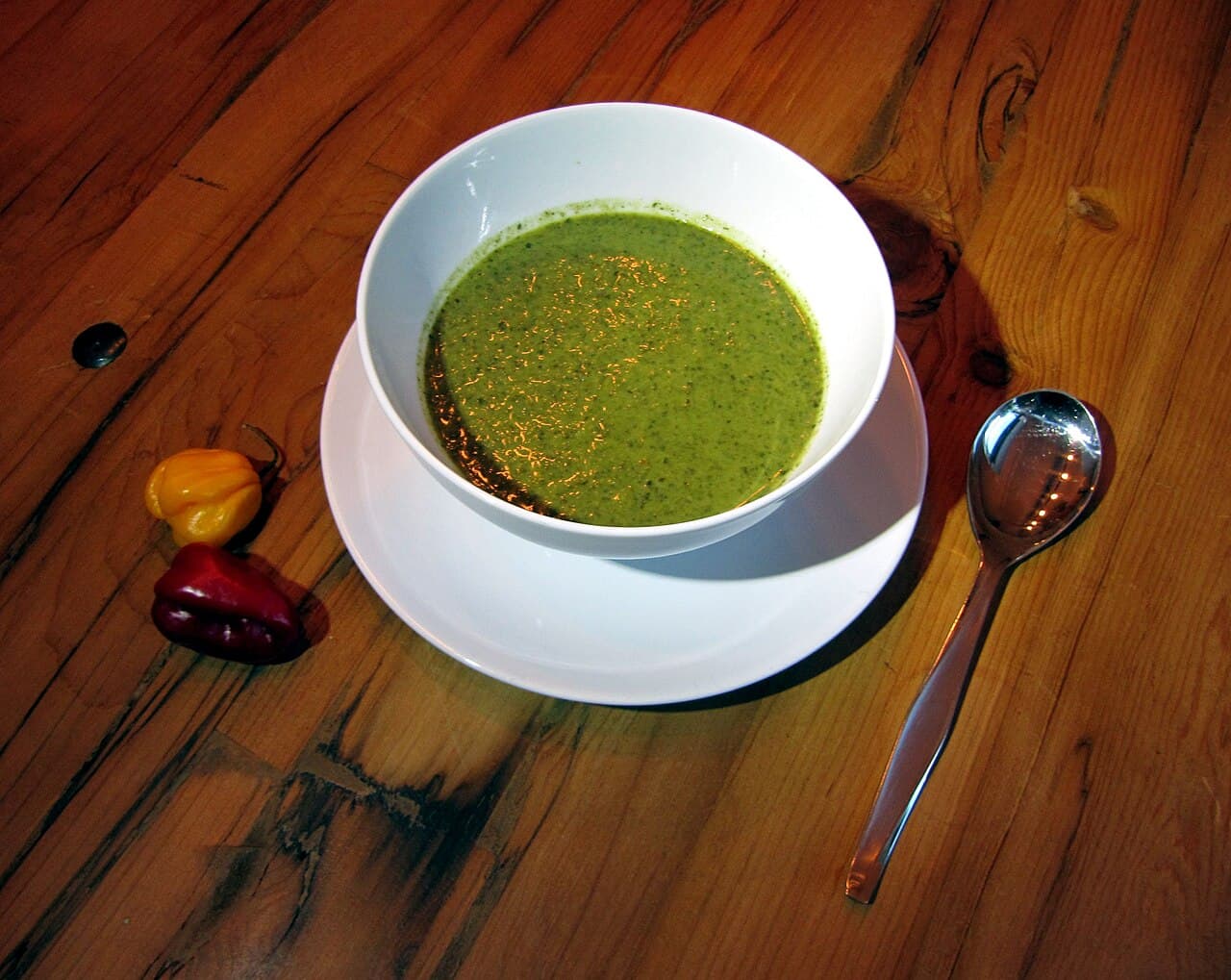
Silky green soup of dasheen leaves, often with coconut milk and crab. The Caribbean’s answer to spinach soup, and better than that sounds.
Lambi
Conch, stewed or curried until tender. A west-coast fish-fry staple; look for it at Anse La Raye on Fridays.
 Fanny Schertzer · CC BY-SA 3.0 via Wikimedia Commons
Accra and bakes
Saltfish fritters and fried dough rounds, the island’s street-corner breakfast pair. Eat them hot from a market stall with hot-pepper sauce.
Cocoa tea
Breakfast chocolate the old way: local cocoa sticks grated into hot milk with cinnamon, bay leaf and nutmeg. St Lucia grows serious cacao, and this is its daily form.
 Derek Key · CC BY 2.0 via Wikimedia Commons
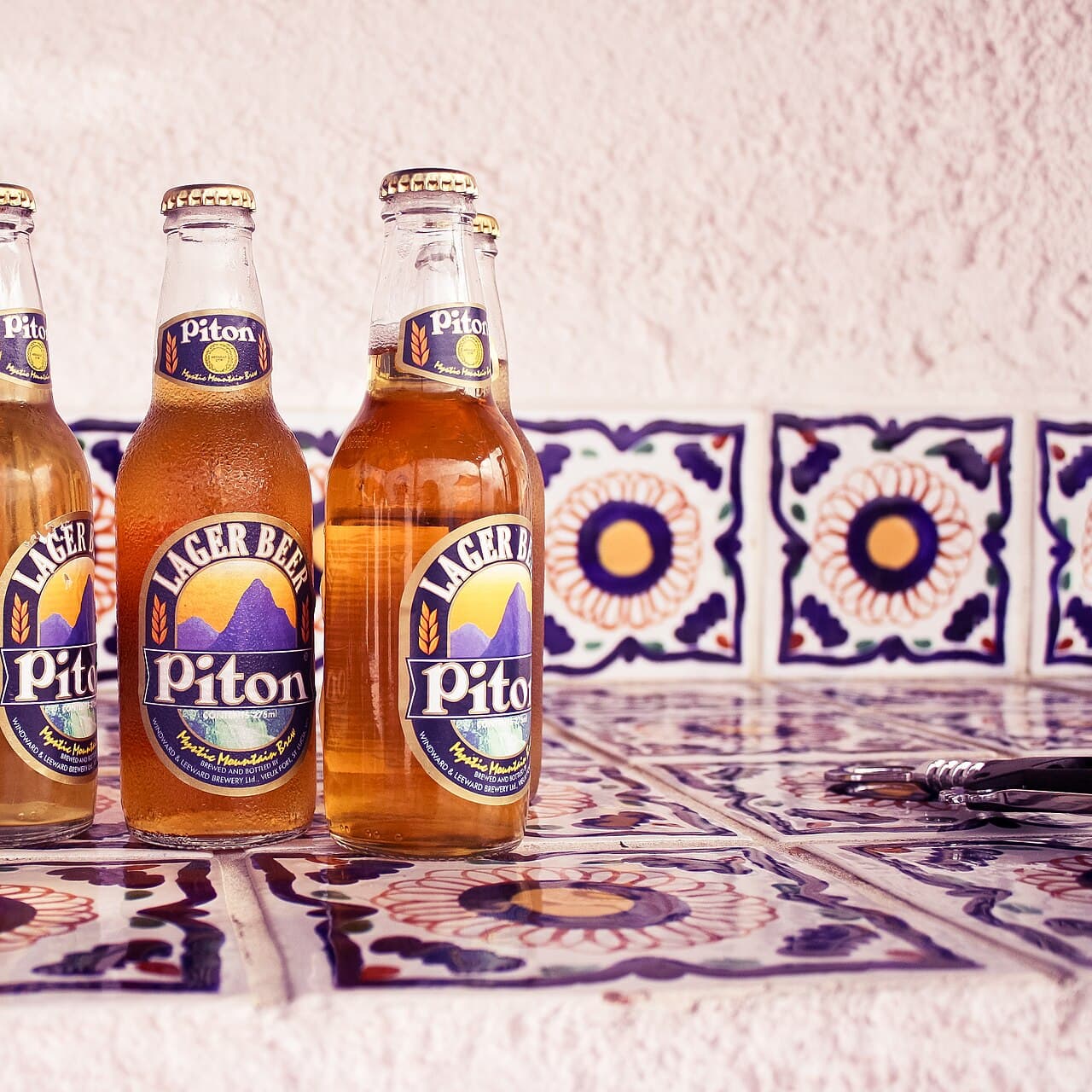
Piton lager and Chairman’s Reserve rum
The local pilsner named for the peaks, and the flagship rum of St Lucia Distillers, the island’s last distillery. The rum punch made with the latter is the island handshake.
Hotel dining dominates around Soufriere, independent restaurants cluster in Rodney Bay, and the best cheap dinner of the week is a Friday village fish fry eaten standing up. Kitchens close earlyish outside the north; a 10 percent service charge often appears on bills, with a small extra tip appreciated rather than expected. Reserve the famous hotel tables (Dasheene, The Cliff at Cap) days ahead in season.
Where to eat
Dasheene at Ladera
fine-diningThe open-sided restaurant a thousand feet above the sea at Ladera, looking straight down the valley between the Pitons. Chef Nigel Mitchel cooks Creole-rooted farm-to-table plates; book a sunset table days ahead and arrive before the light goes.
Last researched 2026-09-02
Orlando’s Restaurant & Bar
modernChef Orlando Satchell’s small Soufriere dining room, the town’s standard-bearer for locally grown Creole cooking (he was awarded a British Empire Medal in 2026 for his community work). Closed Sundays and Mondays; book ahead, the room is small.
Last researched 2026-09-02
The Naked Fisherman
casualCap Maison’s beach grill on the sand at Smugglers Cove, down a long stair from the clifftop: grilled catch, rum cocktails and a swim between courses. Lunch is the move; the stair back up earns dessert.
Last researched 2026-09-02
Flavours of the Grill
casualA local favourite between Rodney Bay and Gros Islet: grilled fish and chicken, provision sides and no view to pay for. The kind of unfussy, generous cooking the north’s resort strip mostly forgot; busy on Fridays before the jump-up.
Last researched 2026-09-02
Sunrises
Cas en Bas and the Atlantic dawn
The island faces its sunrises east into the Atlantic: from Cas en Bas beach over the hill from Cap Estate, first light comes up over the trade-wind surf with kitesurf rigs still furled and horses being led down for the morning rides. The north’s easiest dawn outing.
December to June, before the day’s wind builds
 Wikimedia Commons · CC BY-SA 3.0 via Wikimedia Commons
First light on the Pitons
The Pitons face west, so dawn lights them from behind: from a Soufriere-side balcony or the jetty, the peaks emerge as silhouettes that slowly gain their green while the bay is still glass. The quietest hour in the busiest corner of the island, worth setting an alarm for at least once.
Year-round
Sunsets
 XeresNelro · CC BY-SA 4.0 via Wikimedia Commons
Reduit Beach and Rodney Bay
The north’s long golden beach faces squarely west: the sun drops into open sea, the beach bars fill, and on Fridays the crowd drifts from here toward Gros Islet’s street party as the light goes. The most social sunset on the island.
Year-round · Walk-on from anywhere in Rodney Bay village. · Pigeon Island anchors the right of frame; boats at anchor do the rest.
 XeresNelro · CC BY-SA 4.0 via Wikimedia Commons
Anse Chastanet beach
Dark sand, bright boats and the sun sinking beside the Pitons’ shoulder: the Soufriere corridor’s classic close of day, with the reef snorkellers coming in as the light turns. Non-guests can arrive by water taxi and leave the same way after the show.
Year-round · Water taxi from Soufriere jetty, or the rough short road from town. · Look south along the beach for the Petit Piton profile behind the moored boats.
Smugglers Cove from The Naked Fisherman
The island’s northern tip catches a clean horizon sunset with Martinique’s outline to the right on clear evenings. Time a long late lunch at the beach grill, or take the clifftop rum bar above and watch the cove go gold below.
Year-round · Via Cap Maison’s stair at Smugglers Cove; taxi from Rodney Bay in ten minutes. · November to February puts the sun furthest left over open water.
Day trips
 Shawn from Airdrie, Canada · CC BY-SA 2.0 via Wikimedia Commons
The west-coast day sail to Soufriere
The island’s classic day out, and the smart way to see the Piton corridor if you base in the north: catamarans run down the leeward coast from Rodney Bay, pause at Marigot Bay, drop anchor for the Sulphur Springs mud bath and Toraille or Diamond Falls, serve lunch aboard, and snorkel at Anse Cochon on the way home. Shared boats run roughly US$120 to 150 per person with lunch and entries; it spares you the winding cross-island drive, about 90 minutes each way before any stops.
Full day, roughly 8am to 5pm from Rodney Bay marina · Full day
 ImagePerson · CC BY 4.0 via Wikimedia Commons
Cacao estates: Project Chocolat and Fond Doux
St Lucia grows fine-flavour cacao, and two Soufriere-side estates turn that into the island’s best rainy-day-proof outing: Hotel Chocolat’s Project Chocolat runs tree-to-bar tours and bean-grinding workshops on the Rabot estate (from about US$69), while historic Fond Doux pairs a working-estate walk with lunch under the palms. Do one, not both, and buy bars at the source.
10 to 15 minutes from Soufriere · Half day
 Sapakagadewmoinjadiw · CC BY-SA 4.0 via Wikimedia Commons
Martinique by ferry
A different country for the day: FRS Express des Iles crosses from Castries to Fort-de-France in about 90 minutes, three to seven times a week by season, turning a St Lucia week into a two-island trip. Martinique is France (euros, boulangeries, EU roaming), so bring the passport and check the sailing days against your plans: the schedule thins in maintenance months (June, September, January).
About 1h30 each way from Castries · Full day or overnight
 Shawn from Airdrie, Canada · CC BY-SA 2.0 via Wikimedia Commons
The wild east: Dennery and the Atlantic coast
The windward side is the island most visitors never see: banana valleys, surf-beaten headlands and fishing villages that face Africa. Time it for Saturday evening and end at the Dennery fish fiesta, where the village grills the day’s catch from late afternoon; en route, viewpoints over Praslin Bay and the Fregate Islands break up the drive. In sargassum season expect seaweed on the sand: this coast is for eating and looking, not swimming.
About 45 minutes from Rodney Bay to Dennery · Half day into the evening
After dark
Gros Islet Friday night street party
foodThe island’s institution: every Friday (except Good Friday) the fishing village’s streets close, speakers stack up, and grills load with chicken, ribs and whole fish. Tourists and locals dance in the same street; go for the food around 8pm, stay for the music, taxi home whenever. Keep phones zipped and cash small, as at any packed street event.
 Billwaa · CC BY-SA 3.0 via Wikimedia Commons
Anse La Raye seafood Friday
foodThe west-coast alternative: the little fishing village between Castries and Soufriere fries and grills its catch along the waterfront on Friday evenings, at village prices, with lambi and lobster in season. Quieter and more local than Gros Islet: pick this one if the north’s party sounds like work.
 ImagePerson · CC BY 4.0 via Wikimedia Commons
A sunset sail off the north coast
otherShared catamarans run two-hour rum-punch sunset cruises out of Rodney Bay most evenings, from around US$70 a head: Pigeon Island and the Cap Estate cliffs going gold, Martinique on the horizon, and the lights of Gros Islet coming on as you motor home.
Daily itinerary
Seven days, two bases: the Pitons first, then the north
The shape that fits the island instead of fighting it: land at Hewanorra in the south, spend the first half beside the Pitons while the legs are fresh (volcano, gardens, the Gros Piton climb, the reef), then shift north midweek for beaches, restaurants and the Friday street party, and fly out from a base 90 minutes from the airport with a buffer built in. Book the Gros Piton guide and any Dasheene or day-sail reservations before you fly; both bottleneck in season.
- 1
Arrive south, sleep under the Pitons
relaxedLand at Hewanorra (UVF). Submit the electronic entry form in the three days before arrival; immigration wants the QR code. Taxi or pre-booked transfer up the west coast to a Soufriere-side base, about 70 to 75 minutes of increasingly good views.First lunch at your hotel or in Soufriere town.Settle in, swim, stare at the peaks: the jet lag day earns nothing harder.From your balcony or Anse Chastanet’s dark sand.At the hotel, or Orlando’s in town if it is not Sunday or Monday.Early night: the volcano circuit starts at opening tomorrow.The UVF-to-Soufriere taxi runs about US$70 to 75 for the car; agree the fare before loading bags. Self-drivers collect the rental at the airport and buy the temporary local permit (about US$20 to 22) unless carrying an accepted licence.Estimate: Landing after dark? Sleep in Vieux Fort by the airport and transfer in morning light: the west-coast road is better with a view.
- 2
The volcano circuit
moderateSulphur Springs at opening: crater viewpoints first, then the mud bath before the tour buses.Soufriere town or the Old Mill at Diamond Falls.Diamond Falls Botanical Gardens and a soak in the mineral baths, then the Tet Paul trail’s Stairway to Heaven for the day’s best photo.Down from the ridge in time to clean up: tonight’s table is the one you booked for the view.Dasheene at Ladera, booked ahead, timed for the last light.Free.A taxi hired for the day (or your rental) covers this loop easily: everything sits within 15 minutes of Soufriere. Carry small US or EC notes for entries.Estimate: Swap Tet Paul to tomorrow afternoon if clouds sit on the peaks: the platform is only worth a clear day. · With spare mid-afternoon time, Toraille waterfall’s roadside garden is ten minutes from town.
- 3
Gros Piton at dawn
fullStart from Fond Gens Libre by 7am with your booked guide: about two hours up through shade then sun-struck stone stairs, the summit view to St Vincent, and back down by early afternoon.Late and large, back near Soufriere.Recovery: the hotel pool, or the warm stream below the mud baths doing what it does for climbers’ knees.Horizontal, with a Piton lager.Simple: grilled catch in town.Free.The trailhead is 20 minutes south of Soufriere; arrange the ride the night before. Bring 2 litres of water each, sun cover and shoes with grip: the trail is honest work.Estimate: Not a summit party? The Tet Paul trail plus a morning snorkel delivers the views without the 600-metre climb.
- 4
The reef, then the move north
moderateSnorkel the Anse Chastanet reef early (EC$3 marine-park fee), or a two-tank dive with Scuba St Lucia for certified divers.Beachside at Anse Chastanet or Anse Mamin.The big move: transfer north with a stop at Marigot Bay for the boardwalk and the five-minute ferry to the palm-spit beach. Check into the Rodney Bay or Cap Estate base by evening.First northern sunset from Reduit Beach.Rodney Bay village: the north’s restaurant row is the reward for the move.Free.Soufriere to Rodney Bay is about 90 minutes direct; the Marigot stop makes it a half-day done pleasantly. Some hotels and operators run boat shuttles north: faster, prettier, weather-dependent.Estimate: Divers: keep the order as written. Climbing Gros Piton within about 24 hours after a dive is poor practice, so the climb belongs before the diving day, and day 7 leaves a comfortable gap before flying.
- 5
Pigeon Island and Reduit Beach
relaxedPigeon Island National Landmark early: Fort Rodney’s ruins, the lookout climb, and the causeway beaches before the heat (last entry 4:15pm, so mornings suit it anyway).Back in Rodney Bay.Reduit Beach properly: swim, sunbeds, Splash Island for kids.Beach-bar front row on Reduit.If it is Friday, eat at the Gros Islet street party: grilled fish standing up, music until late. Otherwise Flavours of the Grill.The street party, or an early night.Everything today is within ten minutes of Rodney Bay village by taxi or a walk; no car needed on the northern days.Estimate: History-light travellers can trade Pigeon Island for a morning at Cas en Bas: horses and kitesurf lessons on the Atlantic side.
- 6
Boat day or Martinique
moderatePick the trip: the west-coast day sail to Soufriere (the coast from the water, mud bath included, if you skipped the volcano circuit) or the FRS ferry from Castries to Martinique for a French day out; check the sailing days when you book flights.Aboard, or in Fort-de-France.Snorkel stop at Anse Cochon on the sail, or Fort-de-France’s market and old town.From the boat on the way home.Cap Estate: The Cliff at Cap for the blowout, or the Naked Fisherman if lunch ran long.Free.Day sails leave Rodney Bay marina around 8am; the Martinique ferry leaves Castries early (around 7:30am on sailing days), so pre-book and taxi the 20 minutes south in good time with your passport.Estimate: December to April, swap in a morning whale-watching trip: humpbacks pass the west coast in season.
- 7
Slow morning, long transfer, fly
relaxedA last Reduit swim and a slow breakfast: nothing bookable, on purpose.Early, in Rodney Bay.The 90-minute transfer back to Hewanorra with a generous buffer: the cross-island road is slow and the airport’s current terminal queues badly at peak departure banks.From the plane, with luck.Airborne.Departure.Leave the north at least 4 hours before a long-haul departure: 90 minutes of road plus the small terminal’s check-in and security reality. The 10-to-15-minute helicopter shuttle to UVF exists (about US$222 a head, minimum four passengers) for those who would rather fly over the road.Estimate: Flying out of George F. L. Charles (SLU) on a regional hop instead? That airport is only 25 minutes from Rodney Bay: a far gentler exit.
Getting around
- Almost all long-haul flights land at Hewanorra International (UVF) on the island’s southern tip: American, Delta, JetBlue, United, Air Canada, Virgin Atlantic and British Airways among them, with the 2026 additions of American’s Philadelphia route (August) and BA’s move to daily Gatwick service from 25 October 2026. The airport’s replacement terminal is still unbuilt (only the new control tower neared completion in 2026), so expect a small, busy terminal at peak times.
- George F. L. Charles (SLU), by Castries in the north, handles regional turboprops: interCaribbean, Caribbean Airlines and Winair connect Barbados, Martinique and the islands. If you arrive on a regional hop, SLU is 25 minutes from Rodney Bay instead of 90, which changes the whole first day.
- From UVF, taxis run on broadly standard quoted fares rather than meters: about US$70 to 75 to Soufriere (70 to 75 minutes) and US$85 to 105 to Rodney Bay (about 90 minutes). Agree the fare and currency before loading bags, or pre-book a transfer.
- St Lucia Helicopters flies a 10-to-15-minute shuttle between UVF and the north (about US$222 per adult, minimum four passengers to fly), the scenic shortcut over the mountain road.
- By sea, FRS Express des Iles links Castries with Fort-de-France, Martinique in about 90 minutes, three to seven round trips a week by season, continuing to Dominica and Guadeloupe.
- Taxis are unmetered: fares are quoted per car, not per person, from published-association guideline rates. Confirm the price and whether it is US or EC dollars before setting off; hotels will call trusted drivers, and most visitors end up with one driver’s number saved by day two.
- Minibuses (green M plates) are the local network: cheap (a few EC dollars), frequent on the Castries-Gros Islet corridor, slower and rarer on the Castries-Soufriere mountain route, and mostly done by early evening. Great for the north; not a sightseeing tool for the south.
- Rental cars mean driving on the left on narrow, steep, poorly lit roads; visitors without an accepted licence buy a temporary local permit (about US$20 to 22, arranged by the rental desk). A car earns its keep for east-coast and multi-stop days, much less around walkable Rodney Bay.
- Water taxis work the Soufriere waterfront: licensed boats shuttle between the jetty, Anse Chastanet and the Sugar Beach jetty for a few tens of US dollars round trip, agreed at the dock. On the calm leeward coast they are transport, not a stunt.
Things worth knowing
- · Basing in Rodney Bay and planning to "pop down" to the Pitons repeatedly: it is over an hour each way on a hairpin mountain road. Split the stay instead.
- · Assuming international flights land near the resorts: long-haul lands at UVF in the far south, up to 90 minutes from the northern hotels. Only regional hops use the northern airport.
- · Skipping the electronic entry form: every air arrival needs one submitted in the three days before arrival, and the QR code smooths immigration.
- · Turning up at Pigeon Island for sunset: last entry is 4:15pm and the park closes at 5pm.
- · Carrying only large US notes: change comes back in EC dollars at unfavourable rates. Carry small EC bills for markets, minibuses and fish fries.
- · Booking an east-coast beach day in sargassum season (roughly spring through summer, and heavy in 2026): the Atlantic side takes the seaweed, the west coast stays clear.
- · Climbing without a guide: Gros Piton is guided-only from Fond Gens Libre, and Petit Piton has no sanctioned route at all.
Budget
| Low | Expected | Comfortable | |
|---|---|---|---|
| Accommodation style / per night | $90 | $260 | $700 |
| Food style / per day | $30 | $65 | $130 |
| Local transport / per day | $5 | $35 | $90 |
| Estimate / per day | $5 | $15 | $45 |
Estimate · USD · 2026-09-02. Accommodation is per room per night for two in the December-to-April season outside the Christmas peak; the Soufriere icons (Jade Mountain, Sugar Beach, Ladera) sit far above the comfortable band at US$1,000 to 3,500 plus. Everything else is per person. Prices are quoted in US dollars island-wide, but the local currency is the East Caribbean dollar, pegged at EC$2.70 to US$1: paying small things in EC avoids poor change rates. On top of room rates expect the government Tourism Levy (US$6 per person per night at most tourist hotels, US$3 at cheaper ones, half for ages 12 to 17), plus VAT and a service charge on most bills. Day trips span a shared sunset cruise (about US$70) to the full Soufriere day sail (US$120 to 150).
Things worth knowing
Frequently asked questions
How many days do you need in St Lucia?
Six to eight. That funds the two-base structure the geography wants: three or four nights by the Pitons for the volcano circuit, the climb and the reef, then the north for beaches, restaurants and the Friday street party. A single-base week works only if you accept either no Pitons on your doorstep or a nightly resort bubble.
Which airport should you fly into?
Long-haul lands at Hewanorra (UVF) in the south, full stop: 70 to 75 minutes from Soufriere, about 90 from Rodney Bay. The northern airport, George F. L. Charles (SLU), only takes regional turboprops from nearby islands. If you are connecting through the Caribbean anyway, arriving at SLU puts you 25 minutes from the northern hotels.
Do you need a rental car in St Lucia?
Not necessarily. Taxis cover transfers and day tours at predictable quoted fares, boats do the west coast better than the road does, and Rodney Bay is walkable. Rent (left-hand driving, temporary permit about US$20 to 22 without an accepted licence) if you want the east coast, village fish fries and viewpoints on your own clock; skip it for a two-resort honeymoon.
Is St Lucia safe to visit right now?
The US State Department raised St Lucia to Level 2, "exercise increased caution", in July 2026 after a rise in crime, and the UK advice reads similarly. In practice visitor problems concentrate in isolated spots after dark and around unattended valuables; the standard playbook (registered taxis at night, nothing flashy, hotel safes) covers most of the risk. We would not change a booking over it, but we would follow it.
Can you climb the Pitons?
One of them. Gros Piton, the taller and broader peak, has a guided-only trail from Fond Gens Libre: about four hours round trip, around US$50 per person with the mandatory guide, best started by 7am. Petit Piton’s near-vertical scramble has no sanctioned route and accidents happen on it; take the Tet Paul trail for the close-up view instead.
When is the best time to visit St Lucia?
December to April for the driest, breeziest weather at peak prices, with whales offshore and the jazz festival arriving just as the season ends. May, June and November are the value picks: nearly the same island, noticeably softer rates. July to October sits in the heart of hurricane season (officially June to November), greener and cheapest, with forecasts worth watching and the east coast wearing sargassum.
Soufriere or Rodney Bay: where should you stay?
Both, in that order, if the trip allows. Soufriere-side hotels put the Pitons, the volcano and the best snorkelling at arm’s length and are the reason the island is famous. Rodney Bay has the long beach, the restaurant choice and the easy logistics. Choosing only one means choosing between scenery and convenience: the split stay is the island’s real answer.
Do Israeli passport holders need a visa for St Lucia?
No. Saint Lucia’s official visa table lists Israeli citizens as visa-exempt for visits, and the entry requirements are the same as for other Western visitors: a passport valid for the stay, an onward or return ticket, and the electronic entry form submitted in the three days before arrival. There are no direct flights from Tel Aviv; the usual routings connect through London (BA to UVF, daily from late October 2026) or a US hub.
Sources (14)
- British Airways moves to daily London Gatwick-Saint Lucia flights from 25 October 2026, adding approximately 51,000 seats · tourism-board · 2026-09-02
- US State Department raised Saint Lucia to Level 2 (Exercise Increased Caution) on 10 July 2026, citing increased crime including incidents affecting foreigners · government · 2026-09-02
- Saint Lucia Tourism Levy: US$3.00 per person per night at accommodation with ADR of US$120 or less, US$6.00 at US$121 and above, 50 percent for ages 12 to 17, exempt under 12, in force since 1 December 2020 · government · 2026-09-02
- All travellers arriving by air must complete the electronic entry form at travelslu.govt.lc, submitted up to 3 days before travel, receiving a QR code for immigration · tourism-board · 2026-09-02
- Saint Lucia’s Department of External Affairs visa requirements table lists Israel as not requiring an entry visa to visit Saint Lucia · government · 2026-09-02
- Hewanorra International Airport redevelopment: the rebuilt control tower was about 95 percent complete in August 2026 targeting early-2027 operation, while the new passenger terminal’s construction contract remained unsigned · reputable-local · 2026-09-02
- Saint Lucia recorded its best tourism year on record in 2024 with stayover arrivals up 14 percent to over 435,000 · reputable-local · 2026-09-02
- SMMA/CAMMA marine management areas: daily entrance EC$3.00 or US$1.00 per person, daily dive EC$13.50 or US$5.00, annual dive EC$40.50 or US$15.00 · official · 2026-09-02
- Pigeon Island National Landmark: non-resident adults US$10, children 5 to 12 US$3, open daily 9:30am to 5pm with last entry 4:15pm, fees under revision · official · 2026-09-02
- Diamond Falls Botanical Gardens: entry US$7 adults, children half price, public baths US$6, private baths US$7, open 365 days a year · official · 2026-09-02
- Tet Paul Nature Trail: adults US$10, children US$5 including guide, open daily 8am to 5pm · official · 2026-09-02
- Saint Lucia’s Ministry of Agriculture reported record-heavy sargassum accumulation on the island’s east coast in 2026, affecting Dennery, Micoud, Praslin and Savannes Bay, with the leeward west coast largely spared · government · 2026-09-02
- Saint Lucia Jazz & Arts Festival 2026 ran 30 April to 10 May 2026 · reputable-local · 2026-09-02
- Jade Mountain published 2026 nightly rates from approximately US$1,575 to US$3,425 by sanctuary category and season · official · 2026-09-02


