Turks and Caicos Islands · Caribbean
Turks and Caicos
Grace Bay and the Bight on Providenciales for the beach, the restaurants and nearly all the rooms. Long Bay on the same island for the kitesurfers and a shallow warm lagoon. Chalk Sound, Taylor Bay and Sapodilla Bay on the south-west coast for the island at its prettiest and, in high season, its one easily reached sunset over open water. Blue Hills and Five Cays for conch and the cheap tables. Grand Turk for the old capital, a National Museum that opens only when a cruise ship is in, and an open-ocean sunset the famous beach cannot give you. North and Middle Caicos for caves, a plantation ruin and the best coastline in the country.
 Tim Sackton / CC BY-SA 2.0 via Wikimedia Commons
Overview
Turks and Caicos is sold as one destination and works as several. Eight major islands, six of them inhabited, and almost every international flight lands in the same place: Providenciales, where Grace Bay Beach and most of the hotel rooms in the country sit along one north-facing strip. Everything else, the capital on Grand Turk, the caves and cliffs of Middle Caicos, the salinas of South Caicos, the whale channel at Salt Cay, is reached by a small plane or a ferry that runs on its own logic rather than yours. The right question here is not what to see. It is how many of these trips you are actually buying, because the answer decides your whole week and most of your budget. Our reading is that one week buys Providenciales plus one other island, done properly, and that trying for three leaves you paying for transfers instead of days.
Budget for the tax before you budget for the room. The 12 percent government tax is not a hotel tax: it lands on excursions, watersports, bike hire, spa treatments and museums too. On hotel and restaurant bills a statutory 10 percent service charge comes on top of that, so those numbers need about 22 percent added; on an independent excursion or a bike hire, assume the 12 percent and check whether the operator adds anything else. Then decide your second island early, because the connections are thin and some of them are weekly rather than daily. Keep swimming on the leeward side, hire a car for at least two days, and if a sunset matters to you, do not wait for it on Grace Bay from late July until about the middle of May: drive fifteen minutes to the south coast instead.
Best for
Couples · Beach weeks · Snorkellers and divers · Kitesurfers · Whale watchers in winter · Families who want calm shallow water
Daily itinerary
7 to 9 days
The water is the argument, and it is not marketing. These islands sit on the edge of a shallow bank that runs out for kilometres before it drops off a wall, which gives Grace Bay its long calm shelf and Grand Turk a dive site a few hundred metres offshore. The trade winds blow most of the year, so the heat rarely sits still. But the archipelago is also unusually lopsided: Providenciales is a developed resort island with car-dependent sprawl behind the beach, while its neighbours have a few hundred residents each and a restaurant that opens two nights a week. That gap is the texture of the place. It also means the quiet islands reward planning and punish improvisation, in a way that the Caribbean islands with one road around the edge do not.
Best time to visit
December to April is the dry, breezy, expensive stretch and the reason the hotels exist. May, June and early December are the value windows with nearly the same weather. The hurricane season officially runs 1 June to 30 November, and August to October is its working heart. The temperature range across the year is narrower than almost anywhere people fly this far for: NOAA's daily observations at Providenciales airport over 2006 to 2025 give mean daily highs from about 27.3C in January to about 31.9C in August, so the seasons here are really about wind, rain and risk rather than heat. Rain follows a west-to-east gradient, with about 21 inches a year on Grand Turk and South Caicos rising toward 40 as you move west across the Caicos.
- December to April: Peak. Dry, breezy, mean highs about 27 to 28C, the sea calm on the leeward side. Humpback whales pass Grand Turk and Salt Cay, roughly January to April. Prices peak and the ferry to North Caicos runs its fullest timetable, five crossings a day Monday to Saturday.
- May to June: The quiet good months: mean highs climbing to about 29 to 31C, short showers rather than wet days, thinner crowds and softer rates. Our value pick, and the one window with an open-water sunset from Grace Bay.
- July to August: Hot, humid and windy in July (the year's strongest average wind, about 22 km/h), then stiller in August. Inside the hurricane season and building toward its peak. Cheap, and fine if you watch forecasts and book flexible.
- September to mid-November: The statistical peak of the hurricane season and the emptiest, hottest, stillest weeks. The ferry drops to three crossings a day. Some flagship hotels and restaurants close outright. November dries out and stiffens up again and the second half of it is the smart pre-peak arrival.
Things worth knowing
- Humpback whale season in the Turks Island Passage, off Grand Turk and Salt Cay: broadly January to April, and the reason to put those two islands in a winter trip rather than a summer one.
- The Island Fish Fry, hosted by the Turks and Caicos Tourist Board, every Thursday from 5:30pm to 9:30pm at Stubbs Diamond Plaza in the Bight on Providenciales: vendors, live music and a Junkanoo procession to close. Note the venue: it moved here in April 2022 and is no longer at the Bight Park beach access, where older guides still place it.
- The new Providenciales to South Caicos ferry has run since 27 March 2026, Mondays and Fridays only, which quietly reshapes what an out-island week can look like.
- BermudAir has announced a twice-weekly seasonal nonstop into South Caicos from 20 December 2026 to 25 April 2027, the first scheduled international service that island has had.
Where to stay
Grace Bay
The strip that is the reason most people come: several kilometres of white sand and shallow turquoise water on the north shore of Providenciales, with the majority of the country's hotel rooms, restaurants and shops arranged behind it. It is genuinely beautiful and genuinely easy, and the swimming is about as gentle as the Caribbean gets thanks to the reef sitting offshore. Understand what it is, though: a resort corridor along a main road, walkable in stretches rather than as a whole, with a retail plaza rather than a town at its centre.
Best for: First-time visitors · Beach days · Honeymoons · Families · Restaurant choice
It faces north, so it gives you neither sunrise nor sunset over open water for most of the year, and it is the most expensive square kilometre in the country. Nothing here feels local; for that you drive to Blue Hills or Five Cays.
The Bight
Grace Bay's western continuation and its more relaxed half: the same beach, a shorter row of hotels, the Coral Gardens reef close enough to swim to, and Stubbs Diamond Plaza, where the Thursday Fish Fry happens. Prices soften a little and the walk to sand is usually shorter. If the phrase "Grace Bay" has priced you out, this is the same water.
Best for: Snorkelling from the beach · The Thursday Fish Fry · A slightly cheaper Grace Bay
The reef that makes the snorkelling good also means rock and seagrass underfoot in places, so bring something on your feet.
Long Bay
The south-east coast of Providenciales: a wide, waist-deep, bathwater-warm lagoon that the trade winds cross at a consistent angle, which has made it the kitesurfing beach of the country and one of the better teaching spots in the Caribbean. Villas and a couple of resorts sit along it. It is the only beach on the island where the winter sunrise comes up over open Atlantic, roughly 10 November to the start of February.
Best for: Kitesurfing and lessons · Toddlers in shallow water · Winter sunrises · Villa stays
Breezy by definition, with patchy seagrass and a shallow bottom that suits wading and kites more than swimming laps. It is a drive from the Grace Bay restaurants.
Chalk Sound, Taylor Bay and Sapodilla Bay
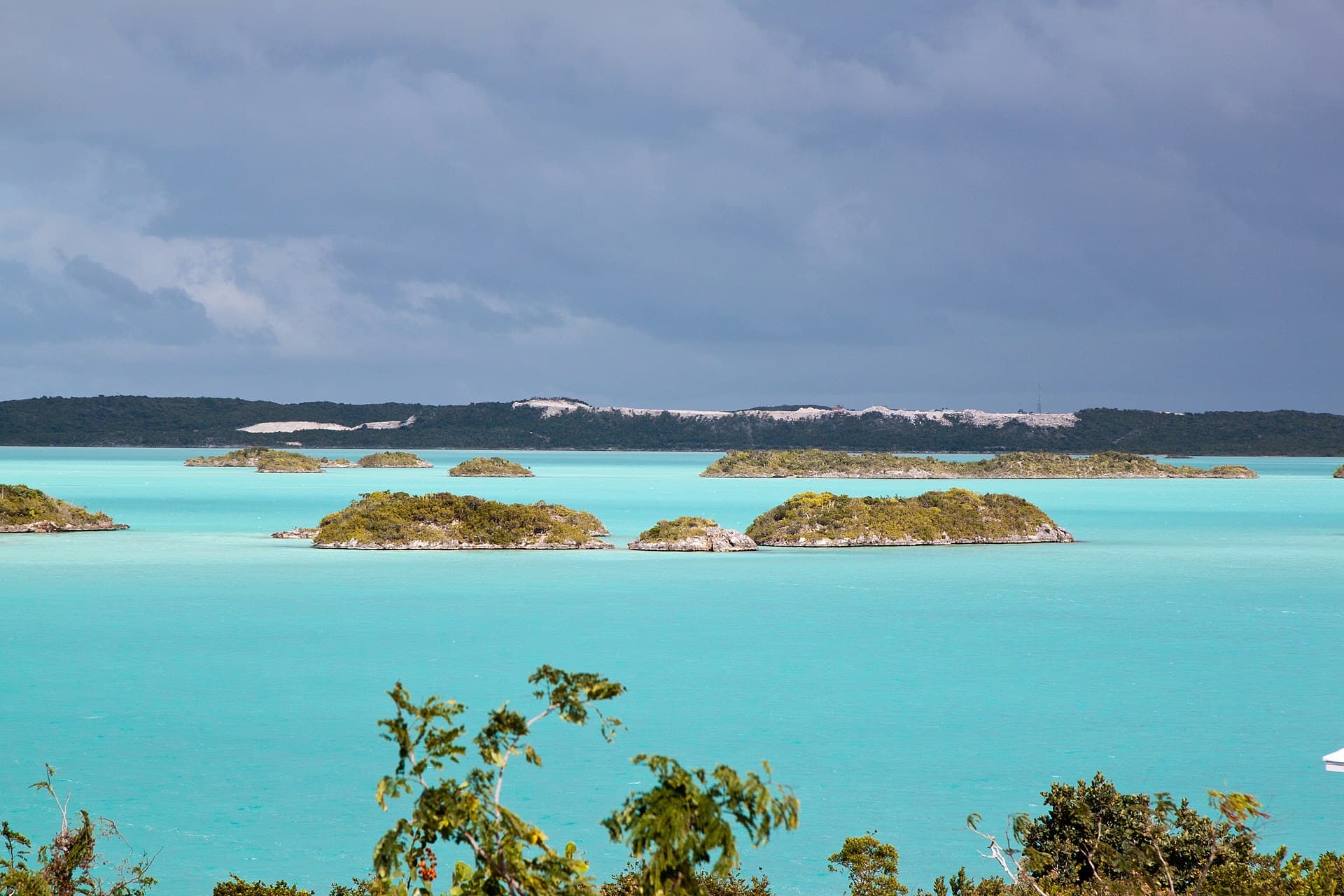
The south-west corner, and the prettiest landscape on Providenciales: Chalk Sound is an enclosed lagoon of impossible turquoise studded with hundreds of small rock islets, with Taylor Bay and Sapodilla Bay on the coast just below it, both shallow, sheltered and almost waveless. There are villas rather than resorts here. It is also, for practical purposes, where the island's high-season sunsets happen, because these bays look out past the sun's winter track while Grace Bay does not.
Best for: High-season sunsets · Villa stays · Shallow calm swimming · Small children · Photography
No restaurant row and no hotel scene: you will drive for dinner. The beaches are small and the access roads to them are easy to miss.
Blue Hills and Five Cays
The two working settlements of Providenciales, on the north-west and south coasts respectively, and where the island eats. Blue Hills is the oldest settlement on the island, a strip of houses and beach shacks along the north shore where conch is pulled out of the water in front of the restaurant. Five Cays sits beside the fishing dock and the fish plant on the south side. Neither is a place to sleep; both are places to drive to.
Best for: Conch · Cheap and genuinely local food · An afternoon away from the resorts
Little to do besides eat and swim, no evening infrastructure, and you need a car or a taxi both ways.
Cockburn Town, Grand Turk
The capital of the country, 122 km east of Providenciales and reached by a short flight: a waterfront of salt-era colonial buildings on Duke Street and Front Street, donkeys on the road, the Turks and Caicos National Museum, a lighthouse on the north bluff, and the cruise centre well to the south. It has perhaps a couple of thousand residents and the atmosphere of somewhere that used to be the centre of things. It also has the one asset Providenciales cannot supply: a west-facing shore with nothing but ocean on the horizon, so the sun sets into water here every day of the year.
Best for: History and the museum · Wall diving · Whale watching in winter · Year-round sunsets · Quiet
Dining is thin and mostly inside the small hotels, several of which publish no hours at all; the island is very quiet when no cruise ship is in and busier than it wants to be when one is. Plan meals rather than assume them.
 Tim Sackton · CC BY-SA 2.0 via Wikimedia Commons
North and Middle Caicos
Joined to each other by a causeway and to Providenciales only by ferry, these two hold the best scenery in the country and almost none of its infrastructure: Wade's Green plantation ruins and Flamingo Pond on North Caicos, the Conch Bar cave system and the cliffs and blowholes of Mudjin Harbour on Middle. A handful of settlements, one properly dramatic coastline, and a road network you need a car for the moment the ferry lands.
Best for: Caves and cliffs · Empty beaches · A two or three night contrast to Provo · Birdwatching
Arrange the car before the ferry, not after. Evening food is close to nonexistent: the main place at Mudjin Harbour serves dinner on Wednesdays and Saturdays only, and otherwise closes mid-afternoon.
South Caicos
The old salt and fishing island, with a ruined salina landscape, the country's best bonefishing flats, and until recently almost no visitor infrastructure at all. A Luxury Collection resort opened on the former East Bay Resort site and has put six restaurants on an island that had barely one, which tells you both how much has changed and how captive you are once you arrive.
Best for: Bonefishing · Diving · Emptiness · Salt-era ruins
The new ferry from Providenciales runs Mondays and Fridays only and leaves at 4pm, so it commits you to a multi-night block rather than a visit. There is essentially no dining outside the resort.
Salt Cay
Fourteen kilometres south of Grand Turk, a few dozen residents, windmills and salt pans, and a winter position right on the humpback migration route that makes it one of the more remarkable places in the Caribbean to be in February. There are a handful of rooms and effectively one or two places to eat, by reservation.
Best for: Humpback whales in winter · Diving · Genuine remoteness
Tiny, thinly served and seasonal. Flights run about eight a week in season, from Providenciales on Caicos Express. There is a ferry, but it is a community supply boat rather than a tourist service: Mondays, Wednesdays and Fridays from Deane's Dock, about an hour, 15 dollars return, and in practice passengers usually travel Wednesday and Friday because the Monday sailing depends on the cargo. Treat every meal and every bed as something to confirm by phone.
Where to sleep
Grace Bay Club
luxury · Grace Bay, Providenciales
Best for: A Grace Bay benchmark · Adults-only or family wings under one roof · Dinner without being a guest
- Three distinct wings including an adults-only side, so couples and families are not sharing the same pool deck
- Direct frontage on the best stretch of Grace Bay
- The restaurants are open to people staying elsewhere, which is unusual here and useful
- Two of its six dining venues are shut as we publish: The Grill closed for the season 7 August to 5 November 2026 and Krave 17 August to 15 November 2026
- No published nightly rate anywhere on its site, which makes comparison shopping guesswork
- The setting is the Regent Village retail plaza rather than a secluded estate
The Palms Turks and Caicos
resort · Grace Bay, Providenciales
Best for: A full-service resort week · Serious dining on site · Spa stays
- Parallel23 is one of the two or three benchmark dining rooms in the country and serves every evening from 6pm to 10pm
- The resort states an 18 million dollar renovation programme
- A complimentary shuttle connects two sister resorts, which widens the week without a car
- The renovation language on its site carries no dates, so you cannot tell whether work will be happening during your stay
- No published nightly rate
- Large-resort scale: this is not an intimate hideaway
Wymara Resort and Villas
design · Grace Bay Beach and Turtle Tail, Providenciales
Best for: Design-led rooms · A villa estate with its own beach club · Couples
- The most design-conscious hotel on Grace Bay, and the resort states it took Conde Nast Traveler's first Triple Crown Award for 2026
- Two genuinely different products under one brand: the beach resort and a separate villa estate with a beach club
- Central Grace Bay position for the resort half
- The villas are on the opposite, southern side of the island from the resort, which is easy to book by mistake
- No published nightly rate
- This was Gansevoort Turks and Caicos and the current site never mentions the old name, so older recommendations under that name are stale
The Shore Club
family · Long Bay Beach, Providenciales
Best for: Families with small children · Kitesurfing on the doorstep · Published restaurant hours you can plan around
- Long Bay's shallow, warm, waist-deep water is the safest swimming for toddlers on the island
- Unusually for here, it publishes real hours for six outlets, so you can plan a week rather than improvise it
- A different coast from the Grace Bay crowd, and the winter sunrise comes up over open ocean
- Almond Tree, its main dinner room, is dark on Mondays and Thursdays
- Long Bay is a kiteboarding beach: breezy, with patchy seagrass, and not the postcard sand of Grace Bay
- No published nightly rate, and the awards displayed on its site date to 2025
Rock House
unique · Blue Mountain, north coast of Providenciales
Best for: Something that looks nothing like the rest of the island · Couples · Cliff and jetty swimming rather than a beach
- Built into a limestone cliff with Mediterranean-style terraces on a 14-acre site, with a jetty running about 100 feet into protected water
- Genuinely unlike anything else in the country, which is rare in a market of similar beachfront blocks
- Quiet, with the north coast to itself
- Stairs and gradient everywhere: the hotel is built into a 25-foot cliff on a site that climbs to about 95 feet above the sea
- The beach is about 350 feet of private sand rather than the kilometres of Grace Bay
- Isolated from restaurants and shops: every dinner out is a drive
The Sands at Grace Bay
value · Grace Bay, Providenciales
Best for: Suites with kitchens · A Grace Bay address well under the luxury rate · Families self-catering
- 114 suites with kitchens, which is the single most effective way to cut a Turks and Caicos food bill
- Directly on Grace Bay at a fraction of what the flagship resorts charge
- Hemingway's on its sand serves 8am to 10pm daily, the most reliable all-day beachfront kitchen we could verify anywhere on the island
- No published nightly rate on the official site
- Low-rise blocks that read dated next to newer neighbours
- Its two most guessable domains are a parking page and a lookalike, so book only through thesandstc.com
Sibonne Beach Hotel
value · Grace Bay, Providenciales
Best for: The cheapest beachfront room on Grace Bay · Couples on a budget · Anyone who wants a published price
- The only Grace Bay hotel we found publishing actual room rates, which in this market is a service in itself: from about 228 dollars for a courtyard value room up to about 523 for a beachfront apartment
- Directly on the beach, small, and quiet
- Bay Bistro sits on its sand and is a long-standing favourite
- Add 22 percent: the published rates exclude 12 percent government tax and a 10 percent service charge, and breakfast is not included
- Hard minimum stays, seven nights from 21 December to 5 January and three nights from 6 January to 14 April
- Under thirty rooms, with only two in the cheapest category, so it goes early; its site also still carries a live COVID-19 protocols page
Ports of Call Resort Turks and Caicos, Tapestry Collection by Hilton
value · Grace Bay Village, Providenciales
Best for: Walking to restaurants and shops · Hilton points · A cheaper Grace Bay-area base
- 103 rooms, brought inside Hilton Honors and Hilton's reservation system by a rebrand announced on 15 September 2026
- Walkable to the Grace Bay Village restaurants and shops, which few properties here can claim
- Among the more affordable options within reach of the Grace Bay strip
- Not beachfront: it sits across the road in the village and the sand is a walk away
- Another renovation is planned over the coming year covering the lobby, fitness centre and shared areas, so expect works while remaining open
- The Hilton site refuses automated readers, so we could verify neither a rate nor a street address on the brand page
Salterra, a Luxury Collection Resort and Spa
resort · South Caicos
Best for: An out-island week with full-service comfort · Bonefishing and diving · Somewhere very few people have been
- Six restaurants and bars on an island that had almost no visitor dining at all, which single-handedly makes a South Caicos stay viable
- Direct seasonal air access announced for 20 December 2026 to 25 April 2027, twice weekly
- Genuine emptiness: the salinas, the flats and the diving are the point
- Every current offer carries a minimum stay, three nights on the autumn and couples deals and four on the winter and wellness ones
- You are captive: there is essentially no dining outside the resort on South Caicos
- Brine, its flagship room, opens only three nights a week, Tuesday, Friday and Sunday, 6pm to 10pm
Dragon Cay Resort at Mudjin Harbour
unique · Mudjin Harbour, Middle Caicos
Best for: The best coastline in the country outside your door · A two or three night contrast to Providenciales · Self-catering with watersports included
- Sits on about 2,200 feet of preserved beachfront at Mudjin Harbour, which is the most dramatic coast in the Turks and Caicos
- Kayaks, paddleboards, snorkel gear and bikes are included in the rate rather than rented back to you
- Five units only, two villas and three cottages, so it never feels like a resort
- No real restaurant on site: the property's own dining page points at other venues and acknowledges that villa guests take food home for evenings when nothing is open
- No published rate at all
- Getting here is a ferry plus a car, and evening food on Middle Caicos is close to nonexistent
Osprey Beach Hotel
boutique · Duke Street, Cockburn Town, Grand Turk
Best for: The Grand Turk base · A published price · Whale season and wall diving
- Publishes real seasonal rates with real dates, which almost nothing else in the country does: a beachfront king room was 200 dollars for the 21 December 2025 to 30 April 2026 season, suites 220 to 255
- Beachfront on Cockburn Town beach in the historic capital, a short walk from the National Museum
- Barbecue nights on Mondays, Wednesdays and Saturdays, plus two newer outlets on site, which on Grand Turk genuinely matters
- Add 22 percent: the quoted rates are subject to 12 percent government tax and 10 percent service charge
- The published rate table stops at April 2026 and nothing beyond it is posted, so forward pricing is unclear
- No restaurant hours published for any of its outlets, and Grand Turk is very quiet when no cruise ship is in
Essential experiences
 VV Nincic from Toronto, Canada · CC BY 2.0 via Wikimedia Commons
Grace Bay Beach
The beach that carries the country: a shelf of pale sand and shallow turquoise water on the north shore of Providenciales, sheltered by a barrier reef about a mile offshore, which is why the water is so consistently calm. It is worth correcting the length, because almost everyone gets it wrong: Grace Bay is a little over three miles, about 4.8 km, not the seven or twelve miles that circulate widely. Free parking at essentially every access, no entry fee, and it sits inside Princess Alexandra National Park. Two real hazards, neither of them the water: there are no lifeguards anywhere in the Turks and Caicos, and boats are the genuine danger here, with visitors killed by boat strike in this bay and the 15 mph limit widely ignored. Swim inside the white buoy lines in front of the resorts and stay out of the marked red and green boat lanes.
Chalk Sound National Park
An enclosed shallow lagoon on the south-west peninsula of Providenciales, studded with hundreds of small rock islets and an almost unnatural shade of turquoise. It is the most distinctive landscape in the country and the one image that could not be anywhere else in the Caribbean. The park covers about 3,444 acres on the Government's own National Parks Order. There is no gate and no fee: you drive Chalk Sound Drive along its edge and stop. Do not try to kitesurf or swim off the ironshore, which is razor sharp, and treat the lagoon as scenery rather than a swimming spot; the beaches are on the coast just below it.
Conch Bar Caves, Middle Caicos
The largest dry cave system in the Bahamas and Turks and Caicos chain, on Middle Caicos, managed by the Turks and Caicos National Trust inside a national park that also covers the Indian, Jacksonville and East Caicos caves. Admission is 30 dollars a person including a guided tour of 20 to 30 minutes, cash on site or pre-booked tickets only. The Trust publishes hours of 9:00am to 3:00pm Monday to Friday and 11:00am to 3:00pm on Saturday, with after-hours visits by appointment. Call the Trust on +1 649-941-5710 before you drive out: the entrance is gated, a guide is required, and one reputable local source states plainly that there are not always regular hours or a guide on site. Two practical consequences for a day trip from Providenciales: the 3pm closing makes this a morning stop, and on a Saturday the 11am opening leaves a long gap after the 8am ferry.
Mudjin Harbour, Middle Caicos
The best piece of coast in the Turks and Caicos and the one that looks least like the brochure: limestone cliffs, a beach under an open-faced cave, the offshore stack of Dragon Cay, a clifftop overlook, a second hidden cave where the path turns into stairs that disappear into the ground, and the old Crossing Place Trail running along the top. The edge of the Caicos plateau, a drop of some 13,000 feet, is directly offshore. The main access runs through Dragon Cay Resort, with free parking and a paved path of about 500 feet down to the sand. Read the warnings, because this is not a swimming beach: waves, rock, sea urchins and a strong current between Dragon Cay and the shore, coral sumac growing along the first stretch of the path, and loose rock and hidden holes along the clifftops.
 Christy Rice · Pexels
Little Water Cay and Half Moon Bay
A protected cay a short boat ride off the Leeward end of Providenciales, with boardwalks through the scrub and a population of wild Turks and Caicos rock iguanas, and beside it Half Moon Bay, a curving sandbar between Water Cay and Little Water Cay with low limestone cliffs behind it. The National Trust charges 20 dollars for the short trail, 25 for the extended one and 10 dollars for Half Moon Bay, free to members, and staffs the site 10:00am to 3:30pm Monday to Saturday. Two things to know. First, charter operators are still quoting the old 10 and 15 dollar trail fees, so budget the Trust's numbers. Second, and this catches people: the reserve closes at 3:30pm, hours before sunset all year, so a boat trip sold as sunset at Iguana Island is arriving long after it shuts. Stay on the boardwalk, carry your rubbish out because there are no bins, and do not feed the iguanas, which is a criminal offence carrying large fines.
 TampAGS, for AGS Media · CC BY-SA 3.0 via Wikimedia Commons
Turks and Caicos National Museum, Grand Turk
In Guinep House on Front Street in Cockburn Town, and the place to understand why these islands look the way they do: the salt trade, the wreck of a very early European ship on the Caicos reef, the Fresnel lens out of the Grand Turk lighthouse, and the John Glenn splashdown story, with the Friendship 7 capsule monument nearby. Entry is 5 dollars, children under 6 free, and free for all Turks and Caicos residents and supporters. Read the hours carefully before you plan a day around it, because this is the trap: the museum opens only on cruise-ship days, on a schedule keyed to the ship's arrival, and its own pages give the usual window as 9am to 1pm in one place and 9am to 2pm in another. Fly over from Providenciales on a day with no ship in port and you will find it locked. Its Providenciales branch at the Village at Grace Bay normally opens Tuesdays and Thursdays 10am to 2pm but is closed from 2 September to 19 October 2026.
 Dwkaminski · CC BY-SA 4.0 via Wikimedia Commons
Cheshire Hall Plantation
The ruins of a late eighteenth-century Loyalist cotton plantation in the middle of modern Providenciales, a short drive from the Grace Bay strip and the easiest piece of real history on the island to reach. Fifteen dollars including a guided tour of 30 to 40 minutes. The National Trust gives hours of 9am to 4pm Monday to Saturday with tours running 9:00 to 11:30 and 14:30 to 16:00; a reputable local source gives the reception and shop as 8:30am to 4:30pm weekdays with tours 8:30 to 11:30 and 14:30 to 16:00. Either way, tours run in two blocks with a gap in the middle of the day, so do not simply turn up at one o'clock.
Wade's Green Plantation, North Caicos
The best-preserved Loyalist plantation ruins in the Turks and Caicos, near Kew on North Caicos: great house, walls, wells and outbuildings in the bush, worked with enslaved labour and abandoned when the cotton failed. Fifteen dollars including a guided tour of 30 to 40 minutes, open 10am to 3pm Monday to Saturday, with after-hours visits by appointment. It pairs naturally with Flamingo Pond and Cottage Pond on a North Caicos day, and its 3pm closing is the second reason, after the caves, that a ferry day runs front-loaded.
Flamingo Pond Overlook, North Caicos
A roadside overlook on North Caicos above a large inland saline pond that holds a resident flock of West Indian flamingos, along with other waders. Free, always open, with National Trust staff on site 11:00am to 3:30pm and binoculars to rent for 2 dollars a person, cash only. The birds are usually distant, so the binoculars are the difference between a stop and a sighting; this is a fifteen-minute pause on the drive between the ferry landing and Kew rather than a destination.
Governor's Beach, Grand Turk
The best beach on Grand Turk, on the west coast beside Waterloo, the Governor's residence, inside Columbus Landfall National Park: bright water, clean parrotfish-made sand, casuarina shade and ample free parking, with vendors appearing on cruise-ship days. It is also the island's honest sunset beach, facing an open western horizon. One thing not to expect: the snorkelling is poor here, with very little coral or fish life, whatever the boat touts say. A taxi from the Cruise Center should be about 4 dollars a person each way, and drivers may try for more.
The wall off Grand Turk
The reason divers come to this country rather than a closer one. Off the sheltered west side of Grand Turk, a sandy plateau at 40 to 50 feet ends in a wall that drops to over 7,000 feet, cut with canyons, arches, sand chutes, overhangs and swim-throughs, and it is close enough inshore that the boat ride out of Cockburn Town is often about five minutes. Over two dozen sites sit inside Columbus Landfall National Park. In winter humpbacks pass through the same water. Two practical notes: rental gear can run short on cruise-ship days, and dive moorings on Grand Turk are sized for vessels under 50 feet and require a National Parks licence from the environment department.
 Serg Alesenko · Pexels
Kitesurfing at Long Bay
Long Bay on the south-east of Providenciales is one of the best places in the Caribbean to learn to kite, and the reason is the geometry: about three miles of waist-deep clear water over a clean sand bottom with the trade winds arriving straight across it from the east-south-east at a typical 15 to 20 knots. November through May is the strongest and most consistent wind season, and it happens to be the same half of the year when the sargassum that reaches this windward coast in late summer is largely absent, so the wind season and the clean-water season are the same season. Lessons ran from about 175 dollars an hour in 2026 with a two-hour minimum, semi-private around 150, multi-day beginner packages roughly 1,000 to 1,800, and gear hire about 200 dollars a day or 800 a week; the 12 percent government tax may or may not be inside a quoted price, so ask. Book direct with a school rather than a reseller, because a school reschedules free when the wind fails.
 Ben Phillips · Pexels
Humpback whales in the Turks Island Passage
The Turks Island Passage, also called the Columbus Passage, is about 6,000 feet deep and separates Grand Turk and Salt Cay from the Caicos, and humpbacks heading for the Silver, Mouchoir and Gentry Banks are funnelled through it. That makes Salt Cay and Grand Turk the two best whale bases in the country, and it is the single strongest argument for putting them in a winter trip. On the season, be careful: the tourist board says December to February on one page and February and March on another, local sources say January to April, and an operator says January to March. January to March is the reliable core. In-water encounters are legal and not prohibited by statute, governed instead by the environment department's whale-watching etiquette code, which is a vessel-conduct document: approach slowly and quietly, never cut across their line or come between a mother and calf, and read three to five changes of direction as the animals telling you to leave. One Salt Cay operator prices a roughly two-and-a-half hour trip at 245 dollars a person prepaid on the island or 265 walk-up. Do not touch, do not dive down at them, and let the animal choose the distance.
Whale watching, Turks and Caicos Tourist Board ↗View on map ↗
Turk's Head Brewery
The only proper brewery in the Turks and Caicos, running formally since 2001 on Providenciales, with five core beers of which the best seller is I-Soon-Reach, plus spirits and canned mixed drinks. The factory tour is reported at 20 dollars for adults including up to four beer samples and 15 for children, run at noon Monday to Saturday, about an hour, finishing in the taproom where the brewpub-only specials live. Treat those figures as indicative rather than quoted: the brewery's own domains do not resolve, so the prices and times come from a local publisher and not the operator. While you are drinking local, one correction worth carrying: Bambarra Rum is blended and bottled by hand on Providenciales under licence, from rums shipped in. There is no distillery in the Turks and Caicos.
 Balou46 / CC BY-SA 4.0 via Wikimedia Commons
 Csouthard / CC BY-SA 3.0 via Wikimedia Commons
Food & drink
Cracked conch
The national plate in practice: conch tenderized, battered and fried. If you order one conch dish in the Turks and Caicos, this is it. Good to know that you can eat conch here all year: the closed season, 15 July to 15 October under Regulation 17A of the Fisheries Protection Ordinance, is an EXPORT closure, not a fishing or eating one. Export reopens on 16 October.
 Hannah On The Go · CC BY 3.0 via Wikimedia Commons
Conch salad
Raw conch diced with lime and vegetables, the acid doing the cooking. Ask for the scorched version at the Thursday Fish Fry. Worth knowing, and rarely said: conch salad and conch fritters are relatively recent inventions rather than hundred-year-old island cooking.
Whole steamed or pan-poached fish with peas and rice
The genuinely traditional plate: fresh grouper or snapper with peas and rice and local greens or coleslaw. A useful test of what you are being served, from local writers rather than us: a locally caught snapper arrives as a whole fish. If it comes as a fillet, it was probably imported.
 Pixabay · Pexels
Spiny lobster, in season
Open roughly August to March or April depending on which source you read; nobody in government publishes the dates online, so assume it is off the menu somewhere between April and July and ask before you order. Taking any of these species out of season is illegal, which is why a restaurant will sometimes simply say no.
Johnny cake, grits and hominy
The old salt-island carbohydrate: a pan-baked, lightly sweetened cornbread, plus grits and hominy from drought-resistant maize, which is what grew here when little else would. These survive best on North Caicos, Middle Caicos, South Caicos and Salt Cay rather than on the Grace Bay strip.
 Snappr · Pexels
Pork griot and jerk
The Haitian and Jamaican layers of the local kitchen: citrus-marinated pork shoulder, and jerk with Scotch bonnet. The Bahamian influence is the largest of the three and shows up in the conch cookery and the stews.
Turk's Head beer and Bambarra Rum
The local beer comes from the country's only brewery, on Providenciales, and the best seller is I-Soon-Reach. Bambarra is the local rum brand, blended and bottled by hand on Providenciales from rums shipped in; there is no distillery in the islands, so do not let anyone sell you a distillery tour.
Two numbers get added to most restaurant bills, and both are statutory rather than optional. The 12 percent government tax comes from the Hotel, Restaurant and Tourism Taxation Ordinance and applies to hotels and to "designated" restaurants and bars, which in practice means the resort and tourist-facing places; anything attached to a hotel is registered automatically. The 10 percent service charge is not a tip at the owner's discretion either: the Hotel and Restaurant (Service Charge) Ordinance requires it at that rate and requires it to be distributed to staff. A menu price is therefore roughly four fifths of what you pay. The smallest local kitchens can be exempt from the tax where they fall under the ordinance's 4,000 dollar monthly threshold, which is a large part of why a plate at a beach shack in Blue Hills or Five Cays costs what it does. On gratuity, the sensible local convention is to top up by about 5 percent where a service charge has already been applied, bringing the total to the 15 percent that people here expect, and to tip properly where it has not. Dinner is early, roughly 6pm to 9:30pm, and a surprising number of good rooms close one or two nights a week or for several weeks in autumn, so book rather than wander.
Where to eat
Coco Bistro
fine-diningThe island's best-known dinner, set in an old palm grove off Grace Bay Road, and the one table people book before they book anything else. Dinner only, 5:00pm to 9:30pm, and reservations are required for parties of every size, not just large ones; the book opens 60 days ahead. Check the closure dates before you plan around it: it is shut 7 to 30 September 2026. Budget for the 12 percent tax and the statutory 10 percent service charge on top of the menu price.
Last researched 2026-09-16
da Conch Shack
institutionThe open-air beach institution in Blue Hills, the oldest settlement on the island, where the conch is pulled from the water in front of the kitchen. It is as much a bar as a restaurant: a We Funk Junkanoo band plays from 8pm on Wednesdays with a DJ from 5pm, a DJ runs 5pm to midnight on Fridays, and there is live music 12:30pm to 3:30pm on Saturdays and 1pm to 4pm on Sundays. The bar opens later on Wednesdays and Fridays. Reservations by phone or WhatsApp on 649-443-5701.
Last researched 2026-09-17
Hemingways on the Beach
casualThe beach club at The Sands, on Grace Bay for more than 26 years, and the useful thing about it is the clock: open daily 8am to 10pm, which on an island where a lot of good rooms close a night or two a week makes it the reliable answer rather than the exciting one. Eggs on the beach in the morning, conch fritters at noon, surf and turf at night.
Last researched 2026-09-17
Turks Kebab
budgetA roadside kitchen doing Turkish grills and jerk a few minutes from the Grace Bay hotels, and the answer to the question every visitor eventually asks about what dinner costs here. Monday to Saturday 11am to 11pm, closed Sundays, with delivery over the same hours. Cash-priced rather than resort-priced, and the ambience is the side of the road.
Last researched 2026-09-17
Turks Head Inne
institutionThe courtyard restaurant of an 1830 house on Duke Street, and on an island with very few kitchens it is close to the default. Note the days rather than just the hours: breakfast 8am to 10am, the beachfront taco bar 11am to 3pm Monday to Thursday and 11am to sunset on Friday and Saturday, dinner 6pm to 9pm, all Monday to Saturday, so a Sunday on Grand Turk needs a plan of its own. Dinner starters run about 17 to 19 dollars, a fish taco 20.
Last researched 2026-09-17
Sunrises
Long Bay Beach, in winter
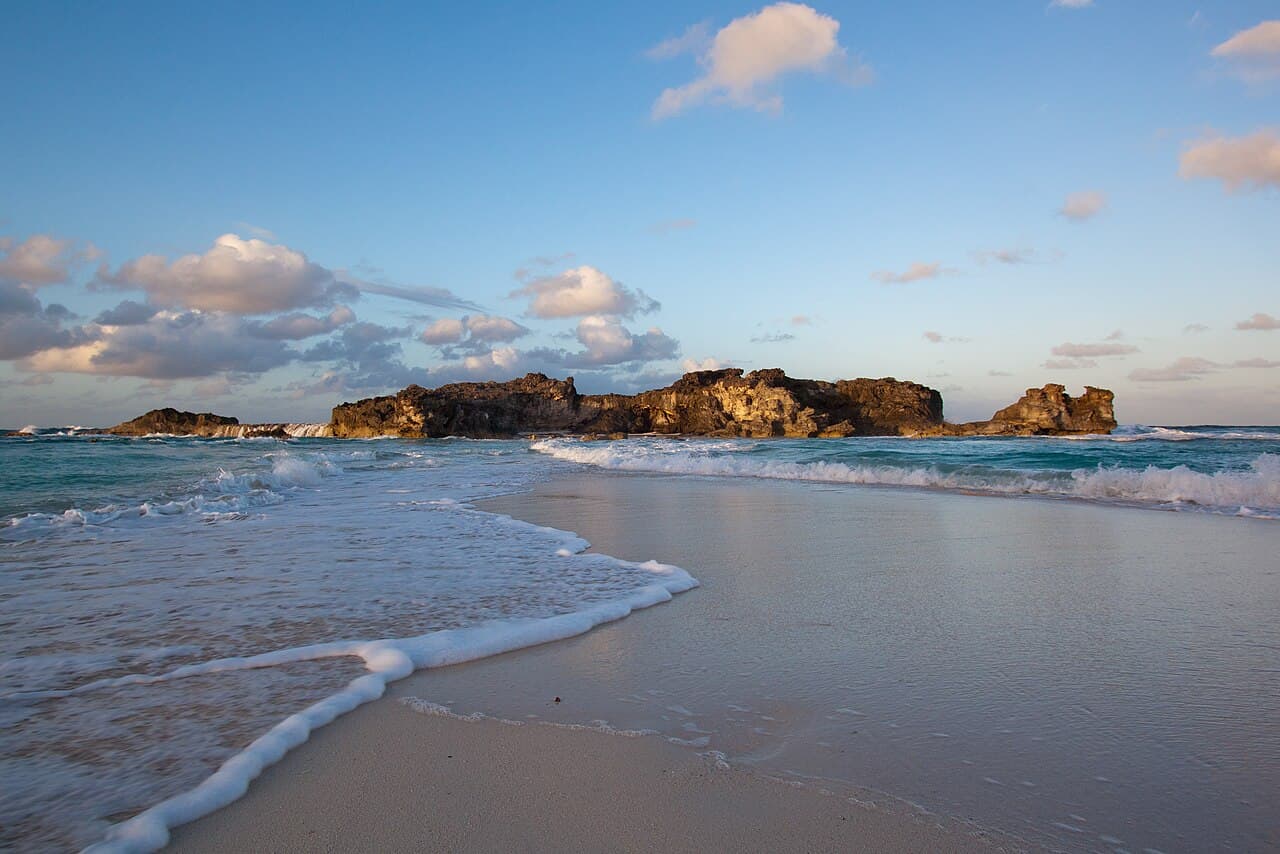
The only beach on Providenciales where the sun comes up out of open Atlantic rather than over a cay or a headland, and only for part of the year. From roughly 10 November to the start of February the sunrise bearing swings far enough south, past 108 degrees, to clear the land and the banks to the east, and the light arrives across the shallow lagoon with the kite rigs still furled on the sand. Outside that window the sun rises behind the low ground and reefs off the eastern end of the island.
10 November to early February · A short drive from the Grace Bay strip, or a walk if you are staying on Long Bay itself. · The lagoon is shallow and glassy at dawn before the trades build, which is when the reflections work. The wind usually arrives with the morning.
 Tim Sackton · CC BY-SA 2.0 via Wikimedia Commons
Mudjin Harbour, Middle Caicos
The most dramatic coast in the country, and it faces the right way for most of the year: from late March to mid-September the sunrise bearing sits north of 87 degrees and comes up over open Atlantic beyond the cliffs and the blowholes. Standing on the bluff above the beach at first light, with the sea working the limestone below, is the single best hour we would plan for on these islands. In winter the sun rises behind the low land to the east instead.
Late March to mid-September · Middle Caicos is reached by the ferry to North Caicos and then the causeway; you need a car on the far side. · The cliffs and the natural arch give the foreground the sea and the sky cannot. Watch your footing on wet limestone in the dark.
Sunsets
Sapodilla Bay and Taylor Bay: the high-season sunset
This is the answer to the question most visitors ask on their first evening. The sun's setting bearing swings from about 245 degrees at the December solstice to about 296 at the June one, and from these two south-west-coast bays everything from 244 to 277 degrees looks out over open water: Providenciales' own western peninsula only gets in the way at the summer end. That puts an open-water sunset here from about 1 January to early April and from early September to the end of December, which covers the whole of the high season. West Caicos sits 19 km out on the December bearing, but its ridges top out around 8 metres where they would need about 12 to break the horizon, so the sun goes down on water rather than on the island.
Early September to early April, which covers the whole high season · A fifteen-minute drive from the Grace Bay strip on the south-west coast; both beach accesses are easy to drive past, so look for them in daylight first. · Both bays are shallow and almost waveless, so the whole sky turns up twice. Sapodilla Hill above them adds elevation and the old sailors' rock carvings.
Malcolm's Road Beach: the one that works all year
On the north-west shore, facing an empty quadrant of ocean, this is the only beach on Providenciales where the sun sets into open water on every day of the year. A terrain ray cast finds nothing above the horizon out to 30 km at any bearing the sun uses. It is also the hardest beach on the island to reach, which is the whole trade: the access track is rough, there are no facilities at all, and there is nobody to help if something goes wrong after dark.
Year-round · A rough unpaved track off the north-west of the island. Check the current state of the road locally on the day, and consider whether your rental agreement covers it. · Nothing but water on the horizon, so this is the one place here where the sun actually touches the sea rather than low scrub.
Cockburn Town waterfront, Grand Turk
The best sunset in the country belongs to the island almost nobody bases themselves on. Grand Turk's western shore, along Duke Street and Front Street and up to Pillory Beach, looks out across the Turks Island Passage with nothing above the horizon out to 45 km at any bearing the sun uses. The nearest land westward is the Caicos at 36 to 53 km, and breaking a 36 km horizon from eye level takes something about 63 metres tall, which the low Caicos are nowhere near. So the sun sets into open ocean here every evening of the year, from a waterfront of salt-era buildings, which is not a combination Providenciales can offer at any price.
Year-round · Walk-on from anywhere in Cockburn Town. Getting to Grand Turk at all is the effort: it is 122 km from Providenciales and a flight rather than a drive. · The colonial facades and the old salt-era jetties give you a foreground; the passage gives you a clean horizon line.
Grace Bay, and what it actually gives you
Worth stating plainly because so much marketing implies otherwise: Grace Bay faces north, and for most of the year the sun does not set into the sea from it. The setting bearing only clears Providenciales' own low western land above about 291 degrees, which happens from roughly 17 May to 27 July, about 72 days. For the other 293, including the whole December-to-April high season, the sun goes down behind low scrub and land 6 to 14 km away. That does not make the evening bad: a north-facing beach gets a wide, open sky, the colour lands on several kilometres of pale sand and shallow water, and the swimming is still perfect at seven in the evening. It means that if the sun meeting the horizon is the thing you came for, you should spend fifteen minutes in a car.
Mid-May to late July for the sun on the water; year-round for the light · Walk-on from anywhere along the Grace Bay strip. · The colour is in the sky and on the water rather than at the horizon. Shoot east along the beach for the pink on the sand rather than west into the low land.
Day trips
 Dirk2112 · CC BY-SA 3.0 via Wikimedia Commons
North and Middle Caicos by ferry and car
The one out-island day trip that genuinely works, and the one the whole guide would build a week around. The ferry crosses from Heaving Down Rock on Providenciales to Bellefield Landing on North Caicos in about half an hour, a rental car and its agent wait at the landing, and the causeway takes you straight on to Middle Caicos. In one day you can see the Conch Bar caves, Mudjin Harbour, Bambarra Beach and either Wade's Green or Flamingo Pond. What makes or breaks it is the timetable, which changes three times a year, and the closing times, which are all early: the caves shut at 3pm and Wade's Green at 3pm, so the sights go in the morning and the beaches in the afternoon. Watch Sundays: outside the 1 September to 15 November window the ferry drops to three crossings on a Sunday against five the rest of the week, and the shops, fuel stations and kitchens on both islands mostly close.
About 30 minutes each way by ferry, then a car · A full day, or better, two or three nights
Grand Turk by air, and why the cruise schedule decides your date
A realistic day trip on paper, about 30 minutes in the air each way with several flights a day and roughly 150 dollars return, plus about 90 dollars for a car. But the date matters more than the timing, and for a reason nobody mentions. The National Museum opens only when a cruise ship is in port, so a flight over on a day with no ship scheduled finds it locked and restaurants hard to find. Meanwhile the cruise calls themselves cluster hard: in the first half of 2026, Monday alone took nearly a fifth of all calls and Monday to Thursday took three quarters of them. So a ship day gets you the museum, an open kitchen and a busier waterfront; a day with no ship gets you the island to yourself and a locked museum. The weekday only shifts the odds, and the statistics authority published the actual distribution for the first half of 2026: of 163 calls, Monday took 32, Thursday 31, Tuesday and Wednesday 30 each, then Friday 18, Sunday 12 and Saturday 10. So a Friday is not hopeless: 18 calls spread across the half's 26 Fridays, against 123 across Monday to Thursday. Check the port calendar and pick deliberately rather than guessing from the day of the week. Our own preference is to sleep here rather than day trip, because the reason to come is a sunset the day trip flies home before.
About 30 minutes each way by air, 122 km · A long day, or two nights to get the evening
 Josh Withers · Pexels
Half Moon Bay and Little Water Cay by boat
The classic half-day off Providenciales: a boat from Leeward, roughly fifteen minutes, to a sandbar between two cays with low limestone cliffs, clear shallow water and wild rock iguanas on the boardwalks next door. Kayaking out is possible from the Emerald Point access on Leeward Beach. Two warnings. The Trust charges 20 or 25 dollars for the Little Water Cay trails and 10 for Half Moon Bay, while some charter pages are still advertising the older 10 and 15 dollar fees, so budget the higher figures. And the reserve is staffed only 10:00am to 3:30pm Monday to Saturday, which means any trip sold to you as sunset at Iguana Island is arriving hours after the gate shuts. Go in the morning, when it is also quietest.
About 15 minutes by boat from Leeward · Half a day, in the morning
South Caicos: fly, do not take the ferry
This is the trip where reading the timetable saves the day. The new ferry from Providenciales, running since March 2026, leaves at 4pm and only on Mondays and Fridays, so it cannot be day-tripped under any arrangement. Flying can: interCaribbean runs a morning and an afternoon service, about 20 minutes each way and roughly 170 dollars return, and that pairing is what makes a day possible. What you come for is the opposite of Providenciales: salt-era ruins around Cockburn Harbour, the Boiling Hole, Admiral Cockburn national park, bonefishing flats among the best in the Caribbean, and a great deal of nothing. Car hire is the weak link, more expensive and in worse condition than on Provo at 100 to 150 dollars a day.
About 20 minutes each way by air; the ferry is under two hours but runs twice a week at 4pm · A day by air, or several nights if you use the ferry
 Reef Runner Charters · Pexels
West Caicos, by charter only
Some of the best wall diving in the country, with drops from around 40 feet to several thousand, inside a marine national park of about 2,769 acres off an uninhabited island. There is no ferry and no scheduled boat of any kind, so this is a dive-operator day or a private charter, and a two-tank trip from central Providenciales runs five to six hours door to door. Winter divers sometimes see humpbacks here. It is a serious day out rather than an excursion, and it is the right call only if diving is the reason you came.
Five to six hours door to door from central Providenciales · A full day
After dark
The Thursday Island Fish Fry
marketThe Tourist Board's own weekly event at Stubbs Diamond Plaza in the Bight, 5:30pm to 9:30pm, with food and craft vendors, live music and a Junkanoo procession to finish. Free to enter, and the one evening of the week where the island gathers in one place. Note that it is no longer at the Bight Park beach access where older guides put it.
Conch and a beer in Blue Hills
local-experienceThe north-west settlement strip at dusk: a beach shack, conch that was in the water an hour ago, and no resort in sight. Earlier than a Grace Bay dinner and a fraction of the price.
Sunset on the south coast
viewpointFrom early September to early April the drive to Sapodilla Bay or Taylor Bay is the evening: two shallow, waveless bays that look straight out at the sun's winter track. Bring something to sit on, because there is nothing there.
Duke Street after the ship leaves, Grand Turk
local-experienceWhen the day's cruise passengers have gone, the old capital empties out and the waterfront becomes one of the quietest places in the Caribbean to watch the sun drop into open ocean.
Daily itinerary
Seven days, landing Saturday: Providenciales and two nights on Middle Caicos
The shape we would book, and the weekdays are load-bearing rather than decorative. Three nights on Providenciales for the beach and the south coast, then the ferry across for two nights at Mudjin Harbour, then back for a last night. Landing on a Saturday makes three separate things line up: your two Middle Caicos nights fall on Tuesday and Wednesday, so the Wednesday dinner service at the only kitchen out there is available and the caves are open on the Wednesday morning; and the ferry back lands you on Providenciales on a Thursday, which is Fish Fry night. Nights: three on Providenciales, two on Middle Caicos, one more on Providenciales, six in total.
- 1
Arrive, and do nothing
relaxedLand at Howard Hamilton (PLS). Immigration wants a passport with at least six months validity if you are not travelling on a US, UK or Canadian one.At the hotel, or Hemingway's on the sand at The Sands, which serves 8am to 10pm daily and is the most reliable all-day kitchen on the beach.Grace Bay, and nothing else. Swim inside the white buoy lines: boats are the real hazard here and there are no lifeguards anywhere in the country.From the beach, understanding what it is: the sky rather than the sun on the water, unless you are here between mid-May and late July.Somewhere walkable. Book it before you fly, because an unusual number of good rooms here close a night or two a week.Early.The statutory taxi fare from the airport is 7 dollars to town and 28 to 33 dollars to the Grace Bay hotels, read as covering two people. Confirm the total for your party before you load bags. Airport taxis are usually shared. Pick up the rental car tomorrow rather than tonight.Estimate: Landing late? The airport closes at 8pm, so a late arrival means a night flight is unlikely; if yours is delayed, pre-book the transfer rather than hoping for a rank.
- 2
Grace Bay and the reef
relaxedThe Bight Reef at Coral Gardens, which you can swim to from the beach: bring something on your feet for the rock and seagrass at the entry.In the Bight or back on Grace Bay.The beach properly. Grace Bay is a little over three miles long, not the seven or twelve that get quoted, so you can walk a good part of it.Beach-bar hour on Grace Bay.Grace Bay or Grace Bay Village.Free.Nothing today needs a car. Everything is walkable from a Grace Bay or Bight base, which is the one day of the week that is true.Estimate: Green turtles graze the seagrass at both Bight Reef and Smith's Reef; Smith's is the better of the two if you only swim one. · Sargassum reaches the south and east coasts in late summer and early autumn rather than these north-shore beaches, so in September this is where the clear water is.
- 3
The south-west corner, by car
moderateCollect the rental and drive Chalk Sound Drive along the lagoon: hundreds of rock islets in improbable turquoise, and the one landscape here that could not be anywhere else. Stop at Sapodilla Hill for the old sailors' carvings.Blue Hills or Five Cays: conch out of the water in front of you, and a bill that is a third of Grace Bay's because the smallest kitchens sit under the tax threshold.Taylor Bay, then Sapodilla Bay. Both are shallow, sheltered and almost waveless, and Taylor Bay is the best beach in the country for small children. Taylor Bay parks about eight cars, so go before the afternoon fills it.Stay put. From September to early April the sun sets over open water from these two bays, which it does not do from Grace Bay.Back on Provo. Nothing out here.Free.Buy the 30 dollar visitor's driving permit at the DMV in Town Centre Mall, bringing your passport with the immigration stamp and your home licence. Driving is on the left. Remember the 12 percent stamp duty on hire, which is charged on the insurance and airport fees as well as the base rate.Estimate: Between mid-May and late July the south-coast sunset is behind land, and those are also the ten weeks when Grace Bay itself delivers, so stay on the north shore. Malcolm's Road Beach is the only all-year option and we would not send anyone there for sunset lightly: three miles of rough unpaved track, no facilities, and a documented risk of armed robbery against beach visitors in that remote corner. The drive out is after dark by definition. · Cheshire Hall Plantation is fifteen minutes from Grace Bay and 15 dollars, if you want history without the ferry. Tours run in two blocks with a gap in the middle of the day.
- 4
The ferry over, and North Caicos
moderateDrive to Heaving Down Rock for the 8am ferry, or the 7:30 in high season. Arrive 20 to 30 minutes early; a confirmed reservation is cancelled fifteen minutes before departure. The crossing is about half an hour and 70 dollars return per adult. Bring a Visa or Mastercard; American Express is refused outright.On North Caicos, after you collect the car waiting at Bellefield Landing.Wade's Green Plantation near Kew, 15 dollars with a guided tour, closing at 3pm, then Flamingo Pond Overlook, free, where the 2 dollar binocular rental is the difference between a stop and a sighting. Then cross the causeway to Middle Caicos.From the cliffs at Mudjin Harbour.Self-catered, and plan it: the only real kitchen at Mudjin Harbour closes at 3pm on a Tuesday. Buy the provisions on Providenciales yesterday, not this morning, because you will be at the dock before the shops are useful; North Caicos this afternoon is the backup, not the plan.Dark, and properly dark.Book the car and the return ferry together, before you sail. There is no rank at the landing, no public transport on either island, and no car ferry, so the vehicle you arrange in advance is the whole trip.Estimate: Cottage Pond on North Caicos is also 15 dollars, though the Trust's own page gives it two different sets of hours, so call first. · Travelling between 1 September and 15 November, as we publish, the ferry runs only three times a day in each direction, at 8:00, 14:00 and 16:00 out and 8:30, 14:30 and 16:30 back. From 16 November it goes back to five crossings Monday to Saturday.
- 5
Middle Caicos: the caves in the morning, the coast all day
moderateConch Bar Caves, the largest dry cave system in the Bahamas and Turks and Caicos chain: 30 dollars a person including a guided tour, cash on site, open 9am to 3pm on a Wednesday. Call the National Trust on +1 649-941-5710 the day before, because the entrance is gated and a guide is not always on site.Bambarra Beach, where the tiki huts do food and cold drinks.Bambarra, then back to Mudjin Harbour for the clifftop overlook, the open-faced cave above the beach and a stretch of the old Crossing Place Trail. Do not swim at Mudjin: there is a strong current between Dragon Cay and the shore, and rock and sea urchins besides. And do not try to wade out to Pelican Cay from Bambarra, which looks close and is half a mile out; people have died attempting it.Mudjin again. It faces north, so this is the light rather than the sun, and the real show here is tomorrow morning.Mudjin Bar and Grill, which serves until 8pm on a Wednesday and closes at 3pm most other days. Call ahead: it has no website, and out here it is close to the only option.Free.Everything today is within twenty minutes of Conch Bar by car. Watch for coral sumac along the first stretch of the Mudjin Harbour beach path, which raises a serious rash, and for loose rock and hidden holes along the clifftops.Estimate: Indian Cave, also on Middle Caicos, is free and always open with Trust staff on site 11am to 3:30pm, if the guided cave tour does not appeal.
- 6
Sunrise on the cliffs, then back for the Fish Fry
moderateSet an alarm. From late March to mid-September the sun comes up out of open Atlantic beyond the Mudjin cliffs, and it is the best hour on these islands. Then the causeway, North Caicos, and the ferry back.On Providenciales after you land.A last swim on Grace Bay, or Long Bay if you want to watch the kites.Grace Bay, without expectations.The Island Fish Fry at Stubbs Diamond Plaza in the Bight, every Thursday from 5:30pm to 9:30pm, hosted by the tourist board: cracked conch, scorched conch salad, live music and a Junkanoo procession to close. Free to enter, about 15 to 20 dollars to park, and it is the one evening a week the island gathers in one place.The Fish Fry until it winds up.Take the 14:30 ferry rather than the 16:30 if you want the Fish Fry unhurried; in high season the 13:00 and 15:00 crossings do the same job. Note the venue: the Fish Fry has been at Stubbs Diamond Plaza since April 2022 and is no longer at the Bight Park beach access, where older guides still put it.Estimate: From mid-September to late March the Mudjin sunrise is behind the low land to the east; sleep in and take the 8:30 ferry instead. · Not a Thursday, or not tempted? Da Conch Shack in Blue Hills has a Junkanoo band on Wednesdays, and Bugaloo's in Five Cays serves until 10pm at weekends.
- 7
Fly out
relaxedSlow breakfast, one more swim, return the car.Early, near Grace Bay.To the airport with a real buffer. The terminal has not been meaningfully enlarged since 2014, the redevelopment was cancelled at the end of 2025, and the authority itself flags weekend check-in queues.From the plane.Airborne.Departure.Your departure taxes, 60 dollars a head from Providenciales, are already inside the airline ticket and collected by the carrier. Do not set aside cash for them.Estimate: A Saturday or Sunday departure is the busiest; if you can choose, fly out midweek.
Nine days, landing Sunday: Providenciales and two nights on Grand Turk
The version for people who want the old capital, the wall and the one sunset in the country that works every day of the year. Five nights on Providenciales, two on Grand Turk, then a night back on Providenciales so the international departure is not riding on a small inter-island flight. Eight nights in total. Landing on a Sunday puts the Fish Fry on your fifth evening and the Grand Turk block on a Friday and Saturday, which is a deliberate trade: cruise calls cluster Monday to Thursday, taking about three quarters of them in the first half of 2026, so a Friday and Saturday give you an island almost to yourself and, unless a ship happens to be scheduled, a closed National Museum, because it opens only when one is in port.
- 1
Arrive Providenciales
relaxedLand at Howard Hamilton (PLS).At the hotel.Grace Bay and nothing more.From the sand.Booked in advance, walkable.Early.Statutory taxi fares run 28 to 33 dollars from the airport to the Grace Bay hotels, understood as covering two people. Confirm the total for the whole party first.Estimate: A Sunday arrival is quieter at the airport than a Saturday one.
- 2
The reef and the beach
relaxedSmith's Reef, the better of the two swimmable reefs, with green turtles on the seagrass.Turtle Cove or the Bight.Grace Bay.Grace Bay.Grace Bay.Free.No car needed.Estimate: Coral Gardens at the Bight Reef is the gentler entry of the two and reachable straight off the sand.
- 3
Chalk Sound, the south bays and conch
moderateCollect the car. Chalk Sound Drive, then Sapodilla Hill and its carvings.Blue Hills, the oldest settlement on the island, or Five Cays beside the fishing dock.Taylor Bay and Sapodilla Bay.From Sapodilla Bay, which from September to early April is the island's reliable open-water sunset.Back towards Grace Bay.Free.30 dollar visitor's driving permit from the DMV, driving on the left, 12 percent stamp duty on the hire including its fees.Estimate: Mid-May to late July the south-coast sunset is behind land, and we would simply take the evening on Grace Bay instead. Malcolm's Road on the north-west shore is the only beach that works all year, but it is not a casual swap: three miles of rough unpaved track, no facilities, a documented risk of armed robbery against beach visitors out there, and a return drive necessarily after dark. Go only with a suitable vehicle, in company, having checked the road and your rental terms locally.
- 4
Half Moon Bay, in the morning
moderateBoat out from Leeward, about fifteen minutes, to the Half Moon Bay sandbar and the boardwalks of Little Water Cay among the wild rock iguanas. National Trust fees are 20 dollars for the short trail, 25 for the extended and 10 for Half Moon Bay; some charter pages still quote the old 10 and 15.Back on Provo.Cheshire Hall Plantation, 15 dollars, on the afternoon tour block between 2:30 and 4pm.Grace Bay.Grace Bay.Free.Go in the morning and mean it: the reserve is staffed only 10:00am to 3:30pm Monday to Saturday, so any trip sold as sunset at Iguana Island arrives hours after the gate shuts. Carry your rubbish out, stay on the boardwalk, and do not feed the iguanas, which is a criminal offence.Estimate: Kayaking to Half Moon Bay from the Emerald Point access on Leeward Beach is possible, but mind the current and the boat traffic in the Leeward Channel.
- 5
Long Bay, the kites, and the Fish Fry
moderateLong Bay Beach on the south-east coast: three miles of waist-deep clear water over clean sand, and one of the best places in the Caribbean to take a first kitesurfing lesson. Lessons ran from about 175 dollars an hour in 2026 with a two-hour minimum.Near Long Bay or back in Grace Bay.Keep it easy: the wind builds through the day here.Grace Bay.The Island Fish Fry at Stubbs Diamond Plaza in the Bight, Thursdays 5:30pm to 9:30pm.The Fish Fry.Parking at Long Bay is the problem rather than access: nearly all the established spaces at the Shore Club access are taken through the day by people working in the area. Book kite lessons direct with a school, not a reseller, because a school reschedules free when the wind fails.Estimate: November to May is the strongest and steadiest wind, and it is also the half of the year when the sargassum that reaches this south coast in late summer is largely gone. In September expect weed here and clear water on the north shore.
- 6
Fly to Grand Turk
moderateA 30 minute hop east, about 150 dollars return, checking in 45 minutes ahead rather than two hours. Collect a car, around 90 dollars a day, and say you are landing at the airport rather than the cruise centre.Cockburn Town.Duke Street and Front Street: salt-era colonial fronts, Her Majesty's Prison, the Friendship 7 monument where John Glenn came down, and donkeys on the road.The reason you came. The waterfront looks across the Turks Island Passage with nothing above the horizon for 45 km, so the sun goes into open ocean here every evening of the year.Plan it rather than assume it. Dining is thin and mostly inside the small hotels, and on a non-ship day it can be hard to find an open kitchen; the Turks Head Inne on Duke Street runs a taco bar from 11am, Monday to Saturday.Quiet, which is the point.Grand Turk airport keeps the same 6am to 8pm hours as Providenciales. The island is small enough that 20 to 30 dollars of fuel covers a couple of days.Estimate: If the National Museum matters to you, check the port calendar first and move this block to a day with a ship in, giving up the Fish Fry: the museum opens only when a ship is in port, and Monday to Thursday took about three quarters of all calls in the first half of 2026, so those days carry the best odds.
- 7
The wall, or the beach
moderateDive the wall. A sandy plateau at 40 to 50 feet drops to over 7,000 feet a few minutes offshore, cut with canyons, arches and swim-throughs, with over two dozen sites inside Columbus Landfall National Park. Gear can run short on cruise-ship days.Cockburn Town.Governor's Beach, the best beach on the island: bright water, clean sand, casuarina shade, free parking. Do not bother snorkelling here, whatever anyone tells you; there is almost no coral or fish life.Governor's Beach or Pillory Beach, both west-facing.Barbecue night if you have timed one: the Osprey does Mondays, Wednesdays and Saturdays.Free.A taxi from the cruise centre to Governor's Beach should be about 4 dollars a person each way and to Pillory about 8; drivers sometimes try for more.Estimate: Between January and March, swap the morning for a whale-watching trip: the Turks Island Passage funnels humpbacks bound for the Silver, Mouchoir and Gentry Banks right past here, and Salt Cay next door is the single best place in the country to be in February. In-water encounters are legal and governed by the environment department's etiquette code rather than a ban; one Salt Cay operator prices a two-and-a-half hour trip at 245 dollars a person prepaid. · The Grand Turk Lighthouse grounds are worth the drive north for the 1852 tower, but you cannot go inside, nobody publishes its hours or fee, and it is not a sunset spot: it is several miles from town and the path runs along the north side.
- 8
Back to Providenciales
relaxedThe morning flight west, deliberately not the last one of the day.Grace Bay.A last long swim.Grace Bay.The table you have been meaning to book all week.Free.This night on Providenciales exists so that a delayed inter-island flight cannot cost you an international one. On an eight-day version of this trip you would fly Grand Turk to Providenciales and out on the same day, and we would not.Estimate: Flights are often full, especially the first and last of the day, so book both legs well ahead.
- 9
Fly out
relaxedSlow, then the airport with a buffer.Early.Departure.From the plane.Airborne.Home.The 60 dollars of departure charges are inside your ticket. The terminal is the same one that opened in 2014, so give the queue more time than the distance suggests.
Getting around
- Almost every international flight lands at Howard Hamilton International (PLS), formerly Providenciales International, on the west of the island about 12 km from the Grace Bay strip. The airport authority lists British Airways, American, United, Air Canada, Delta, JetBlue, WestJet and interCaribbean, with scheduled flights from over two dozen international cities and a single shared ticketing and check-in hall. Two things to plan around: the airport opens 6am to 8pm, and the authority itself advises extra time for check-in on Saturdays and Sundays, when the flight count is highest.
- The terminal is the story here. It was expanded to about 92,000 square feet in December 2014 and nothing major has been built since: the roughly half-billion-dollar public-private redevelopment of the airport was cancelled by Cabinet on 29 December 2025 and announced two days later, with the government pivoting to a phased, self-funded approach starting with a tender for a new arrivals hall. The government procurement pages still show no contract award. So expect a small terminal handling a growing number of flights, and build a buffer into departure day.
- One recent improvement worth knowing: from 1 March 2026 new explosive-trace-detection machines went in across the islands' airports, and passengers at Howard Hamilton and at Norman B. Saunders on South Caicos no longer have to take their shoes off at screening unless the footwear is bulky.
- There is no nonstop from Tel Aviv, and none appears anywhere on the Israel Airports Authority flight board. The practical routing is El Al's nightly Tel Aviv to Miami service, LY017 leaving around 00:15 and LY018 returning around 07:00, then a short hop south: Miami is one of the cities the airport authority lists with scheduled service into Providenciales, and the two are 930 km apart. Note that the Aerolineas Argentinas and Delta numbers alongside it on the board are codeshares on the same aircraft, not extra options.
- Israeli passport holders need no visa: Israel appears on the Turks and Caicos Border Force list of visa-exempt nationalities. Passports must be valid for at least six months, the rule for everyone other than US, UK and Canadian citizens, whose passports need only cover the stay.
- If you route through the United States, the American transit is the gating requirement rather than the Turks and Caicos entry. Israel's Foreign Ministry advice is that biometric passport holders are visa-exempt for the US but must obtain online entry authorisation in advance, and warns against using anything but the official site.
- Five other airports serve the archipelago: JAGS McCartney International on Grand Turk and Norman B. Saunders Sr. International on South Caicos, plus Clifford Gardiner on North Caicos, Henry Leon Wilson on Salt Cay and Eric Arthur on Middle Caicos. Grand Turk keeps the same 6am to 8pm hours as Providenciales; the rest operate sunrise to sunset, which is a real constraint on a late return. Only the two local airlines fly between the islands, interCaribbean and Caicos Express, the latter daily to Grand Turk and about eight times a week to Salt Cay in season on Beech 1900 and Cessna 402C aircraft. Allow 45 minutes for a domestic check-in rather than the two hours an international flight wants.
- Do not assume every inter-island route is running. Government notices announced the temporary discontinuation of commercial air service between Grand Turk and South Caicos twice in 2026, once effective 1 March and again effective 18 June, with negotiations described as continuing and no notice since saying it has resumed. Grand Turk to Salt Cay was explicitly unaffected. If your plan depends on that link, confirm it with the airline rather than with a website.
- Taxi fares are set by law, which almost nobody tells you. Schedule 6 of the Road Traffic (Public Service Vehicles) Regulations, last amended in 2018, lists them route by route: the airport to town is 7 dollars, the airport to The Palms, The Sands or the Village at Grace Bay is 28, the airport to Grace Bay Club, Seven Stars or Ports of Call is 33, the airport to Leeward is 43, and Amanyara to the airport is 86. The rubric reads that the first two passengers pay the full rate and everyone after that pays half. The schedule is genuinely ambiguous about whether the listed fare covers two people or is charged to each of the first two; local guidance reads it as covering two, which fits the commonly quoted 30 dollars for a couple from the airport to Grace Bay. Confirm the total for your whole party before you load bags. The regulations also require every taxi to have a working taximeter, and in practice none of them do.
- Airport taxis are usually shared, so you may ride to two or three resorts before your own. Children under two travel free and anyone two or over pays the full adult fare. Pre-booked taxis fall outside the statutory tariff and are negotiated, and a private car service charges per car rather than per person, which makes it the cheaper option for four to six people.
- There is no public bus network. Informal jitneys operate and were the subject of an enforcement push in early 2026, with the government stating that the only lawful options for now are licensed taxis and Community Cab services and that a proper Bus Transport Policy is being developed. The statutory omnibus fares that do exist are 1.50 dollars between Five Cays, the Bight or Blue Hills and the town area, and 2.00 between settlements or between town and Grace Bay.
- Renting a car is close to essential on Providenciales for anything beyond the Grace Bay strip: the south-coast bays, Blue Hills, Five Cays and Long Bay are all drives. Driving is on the left, as in the UK, and the main roads are fine while the tracks to the best beaches are not. Two costs are easy to miss. A visitor's driving permit costs 30 dollars from the DMV at Town Centre Mall and is valid three months; you need your passport with the immigration stamp and your home licence. And a 12 percent stamp duty applies by law to vehicle hire, calculated not just on the base rate but on insurance surcharges, airport concession fees, environmental fees and additional or underage driver fees, so the total is meaningfully above the advertised daily rate. Bicycle hire and taxis are exempt.
- Israeli readers should look closely at the permit rule, because it is not what the tourist board page says. The Motor Vehicles (Driving Licences) Ordinance allows a visitor's permit to be issued to someone holding a licence issued in the United States or anywhere in the Commonwealth, or holding a valid International Driving Permit. An Israeli domestic licence is neither American nor Commonwealth, so on the wording of the Ordinance the qualifying route is to carry an International Driving Permit and then buy the visitor's permit on arrival. The tourist board site says an international permit is not required, which contradicts the Ordinance for a licence like this. Getting the IDP before you fly costs little and removes the argument at the rental desk.
- One more rule that catches people: e-scooters are classified as motor vehicles under Turks and Caicos law, so riding one on a public road requires a valid driving licence of the correct class.
- The TCI Ferry, run by Caribbean Cruisin, is the only public link to North Caicos, and its timetable changes three times a year. From 16 November to 1 April it runs five crossings each way Monday to Saturday, leaving Providenciales at 7:30, 9:30, 12:30, 2:30 and 4:00 and North Caicos half an hour later each time. From 2 April to 31 August the Monday to Saturday afternoons move back to 1:00, 3:00 and 5:00. Sundays and holidays keep their own reduced timetable in both those seasons, three crossings at 8:00, 2:00 and 4:00. From 1 September to 15 November, which is now, everybody gets that Sunday timetable: three crossings a day, every day of the week. Adult fares are 40 dollars one way and 70 return, children 30 and 50.
- Middle Caicos is joined to North Caicos by a causeway, so it is the same ferry plus a car. Arrange the car before you sail: there is no rank waiting at the dock and no realistic way to see either island on foot.
- The Providenciales to South Caicos ferry is new, running since 27 March 2026, and it runs on Mondays and Fridays only, leaving Providenciales at 4:00pm and South Caicos at 5:15pm. It is not a day trip and it cannot be made into one: by ferry, South Caicos is a multi-night commitment that starts and ends on a Monday or a Friday.
- Bring a Visa or Mastercard for the ferry. American Express is explicitly refused and an Amex booking is refunded and voided, which is an unwelcome discovery at a dock. Note also that the South Caicos fare is unpublished on the operator's page while a local source gives 130 dollars return and 80 one way, under two hours, running most days under a different operator name, so there may be two services: confirm by phone before you build a week around it.
- Grand Turk to Salt Cay has a small community ferry rather than a tourist one, and no operator website: the Brittany Leigh runs between Deane's Dock on Salt Cay and South Dock on Grand Turk, about an hour for the 14 km, leaving Salt Cay at 07:30 and returning from Grand Turk at 14:00 on Mondays, Wednesdays and Fridays, at 15 dollars return for adults and free for children. In practice passengers usually travel Wednesday and Friday, because the Monday sailing depends on the cargo load. Ignore saltcayferry.com, which returns a normal response and is a parked domain with nothing on it.
- Departure taxes are real but you will not pay them at a counter. A passenger leaving Providenciales is charged a 29 dollar departure tax, a 3 dollar airport user fee, an 8 dollar security service charge and a 20 dollar airport development charge, 60 dollars in total, and every one of them is collected by the airline, which means they are already inside your ticket. Children under two are exempt from all four. Do not set aside cash for a departure tax at the airport.
Things worth knowing
- · Treating the archipelago as one island. Grand Turk is 122 km from Providenciales and reached by air, North Caicos only by a ferry whose timetable changes three times a year, and South Caicos by a ferry that runs two days a week. Pick your second island when you book flights, not when you arrive.
- · Budgeting the room and forgetting the rest. The 12 percent government tax is a tourism tax, not a hotel tax: it applies to excursions, watersports, sportfishing, sightseeing, bike hire, spa treatments and museums as well as to accommodation and designated restaurants, and hotel and restaurant bills carry a statutory 10 percent service charge on top of it.
- · Planning a day trip to South Caicos on the ferry. The 4:00pm departure and the Monday and Friday schedule make it structurally impossible.
- · Waiting on Grace Bay for the sun to set into the sea. Outside roughly mid-May to late July it goes down behind the island's own low western land. Drive to the south coast instead.
- · Assuming restaurants are open. An unusual number close one or two nights a week or for weeks at a stretch in autumn: as we publish, Coco Bistro is shut for most of September, two of Grace Bay Club's six venues are closed until November, Almond Tree is dark on Mondays and Thursdays, Turks Kebab closes Sundays and the main place on Middle Caicos serves dinner on Wednesdays and Saturdays only.
- · Booking the hotel you found on the most obvious domain. Several of the guessable addresses here are parking pages, for-sale landers or lookalikes with third-party booking contacts. Reach properties from the tourist board or the operator group rather than a guessed name.
- · Turning up in early autumn expecting the full island. Amanyara is closed until 20 October 2026 and COMO Parrot Cay was shut from 31 August to 14 October: the calendar thins out sharply in September and early October.
- · Chasing a remote beach for sunset without planning the way back. Malcolm's Road has no facilities, three miles of rough unpaved track to reach it and a documented risk of armed robbery against beach visitors in that remote corner of the island. The drive out in the dark is the part nobody thinks about at six in the evening.
- · Booking a boat trip sold as sunset at Iguana Island or Half Moon Bay. The reserve is staffed only 10:00am to 3:30pm Monday to Saturday, hours before the sun goes down.
- · Flying to Grand Turk on the wrong day of the week. The National Museum opens only on cruise-ship days, and cruise calls cluster hard: Monday to Thursday took about three quarters of them in the first half of 2026. A quiet Friday gives you the island to yourself and a locked museum.
- · Treating the water as the only hazard. There are no lifeguards anywhere in the Turks and Caicos, and on Grace Bay the real danger is boats: visitors have been killed by boat strike and the 15 mph limit is widely ignored. Swim inside the white buoy lines and stay clear of the marked boat lanes.
- · Driving on an Israeli or other non-Commonwealth licence without an International Driving Permit. The Ordinance issues the 30 dollar visitor's permit against a US or Commonwealth licence or a valid IDP, even though the tourist board page says an international permit is not needed.
- · Paying a line on your bill called city tax or sales tax. The only mandatory charges are the 12 percent tourism tax, the 10 percent statutory service charge and a facility fee where one is levied. There is no VAT or sales tax here, and some businesses simply mislabel the 12 percent because they run American software.
Budget
| Low | Expected | Comfortable | |
|---|---|---|---|
| Accommodation style / per night | $200 | $450 | $1,100 |
| Food style / per day | $35 | $85 | $170 |
| Local transport / per day | $10 | $55 | $120 |
| Estimate / per day | $5 | $30 | $90 |
Estimate · USD · 2026-09-16. Accommodation is per room per night for two in the December-to-April season outside the Christmas peak, and this is an expensive country: the cheapest published beachfront rate we could find on Grace Bay was about 228 dollars at Sibonne, the mid-market suites run 300 to 600, and the flagship resorts publish nothing at all while sitting far above the comfortable band. Grand Turk is the exception, where a beachfront room was published at 200 dollars for the season that ended in April 2026, with nothing posted beyond it. Everything else is per person. Then add the tax, which is where budgets here go wrong. A 12 percent government tax under the Hotel, Restaurant and Tourism Taxation Ordinance covers accommodation, designated restaurants and bars, tour operators and guides, watersports and beach equipment hire, sportfishing, sightseeing excursions, helicopter tours, bicycle hire, parasailing, horse riding, photography, spa services, museums and even concierge work. On top of that, hotel and restaurant bills carry the 10 percent service charge that the Hotel and Restaurant (Service Charge) Ordinance requires, which takes those bills to about 22 percent over the menu or rack rate, and some properties add a facility fee of commonly around 5 percent, which the law permits without setting a rate. The service charge is a hotel and restaurant obligation, so on an independent excursion, a bike hire or a museum expect the 12 percent alone unless that operator discloses its own charge. Those three are the only mandatory charges: there is no sales tax, VAT or GST here, so a line on your bill called city tax or sales tax is either an error or not a real tax, and the 12 percent is sometimes mislabelled as sales tax simply because the business runs American software. Car hire carries its own 12 percent stamp duty, charged on the insurance surcharges, airport concession and environmental fees as well as the base rate. Departure taxes of 60 dollars a head from Providenciales are already inside your airline ticket. The currency is the US dollar, so there is no exchange rate to lose money on. The single biggest lever on the food line is a suite with a kitchen; the second is eating in Blue Hills and Five Cays, where the smallest kitchens fall under the tax ordinance's monthly threshold and prices show it.
Things worth knowing
Frequently asked questions
How many days do you need in Turks and Caicos?
Seven to nine, and the reason is the connections rather than the sights. A week funds Providenciales properly, four or five nights on the beach with a car for the south coast and the settlements, plus two or three nights on one other island. Trying to fit Grand Turk and North Caicos and South Caicos into the same week means paying for transfers instead of days: the ferry to North Caicos changes timetable three times a year, the one to South Caicos runs twice a week, and Grand Turk is a flight.
Which island should you stay on?
Providenciales, for a first trip, because that is where the beach, the rooms and the restaurants are. Then add one. Grand Turk for history, wall diving, winter whales and the country's one year-round open-ocean sunset from an inhabited waterfront; North and Middle Caicos for caves, cliffs and empty beaches; South Caicos for flats fishing and near-total quiet, if you can live with a resort-only week. Basing outside Providenciales for a whole trip only makes sense if the quiet is the point.
Do you need a rental car in Turks and Caicos?
On Providenciales, for at least a couple of days, yes. The Grace Bay strip is walkable in stretches, but the south-west bays, Chalk Sound, Blue Hills and Five Cays are all drives, taxis are unmetered and often quoted per person, and the best evening on the island is fifteen minutes from the hotels. Driving is on the left. On the out islands a car is not optional at all: arrange it before you get on the ferry.
What does Turks and Caicos actually cost?
More than the headline. Accommodation is the expensive part, with the cheapest published beachfront rate on Grace Bay around 228 dollars and most of the market well above it, and the flagship resorts publishing nothing. Then add the tax. A 12 percent government tax applies to excursions, watersports, bike hire, spa treatments and museums as well as to rooms and designated restaurants, and hotel and restaurant bills carry a statutory 10 percent service charge on top of that, which is what takes those to about 22 percent. The currency is the US dollar, so at least there is no conversion to lose money on. A suite with a kitchen and a few meals in Blue Hills or Five Cays are the two real levers.
When is the best time to visit Turks and Caicos?
December to April for dry, breezy weather, calm leeward water, humpbacks off Grand Turk and the highest prices. May, June and the first half of December for nearly the same island at noticeably lower rates, which is our pick. August to early November is cheapest and inside the hurricane season, and it is also when the place thins out: the ferry drops to three crossings a day and several flagship hotels and restaurants simply close.
Is Grace Bay a good place to watch the sunset?
Not in the way people expect, and it is worth knowing before you plan an evening around it. Grace Bay faces north, and we computed that the sun only clears Providenciales' own low western land from about 17 May to 27 July, roughly 72 days a year. For the rest of the year, including the entire high season, it goes down behind scrub and land 6 to 14 km away. The beach still gives a wide sky and beautiful colour on the sand. For the sun actually meeting the water, drive fifteen minutes to Sapodilla Bay or Taylor Bay in high season, Malcolm's Road for any day of the year, or fly to Grand Turk.
Do Israeli passport holders need a visa for Turks and Caicos?
No. Israel appears on the Turks and Caicos Border Force list of visa-exempt nationalities. Your passport needs at least six months of validity, the rule for everyone except US, UK and Canadian citizens. There is no travel warning for the islands from Israel's National Security Council, which lists by country and does not cover British Overseas Territories, and equally no Israeli consular presence. The harder part is the journey: there is no nonstop from Tel Aviv, the natural route is El Al's nightly Miami service and then a short hop, and if you transit the United States you need American online entry authorisation in advance.
Can you day trip to Grand Turk or the other islands?
Grand Turk, yes, on the daily Providenciales flight, though a 122 km hop each way to see the capital, the museum and the waterfront is a compressed day and you will miss the sunset that is the island's best asset. North Caicos, yes by ferry, and Middle Caicos too if you have a car waiting on the far side. South Caicos, no: the ferry leaves Providenciales at 4pm and runs Mondays and Fridays only, so it is structurally a multi-night trip unless you fly. Salt Cay is a flight from Providenciales, roughly eight a week in season.
Sources (35)
- The Hotel, Restaurant and Tourism Taxation Ordinance imposes tax at a rate of 12 percent on accommodation services, designated restaurants and bars and other tourism-related services including tour operators, guides, watersports, sportfishing, sightseeing excursions, helicopter tours, bicycle rentals, parasailing, horseback riding, photography, museums, spa services, wedding planning and concierge services; independent providers may be exempted below a 4,000 dollar monthly threshold · government · 2026-09-16
- Israel is listed among the nationalities that do not need a visa to enter the Turks and Caicos Islands; all international travellers other than US, UK and Canadian citizens must carry a passport valid for at least six months · government · 2026-09-16
- The Island Fish Fry runs every Thursday from 5:30pm to 9:30pm at PTV Stubbs Diamond Plaza, Providenciales, hosted by the Turks and Caicos Tourist Board, with food and souvenir vendors, live music, cultural performances and a closing Junkanoo procession · tourism-board · 2026-09-16
- The TCI Ferry runs Providenciales to North Caicos on three seasonal timetables, five crossings each way Mon-Sat from 16 Nov to 1 Apr and 2 Apr to 31 Aug with a reduced three-crossing Sunday and holiday timetable in both, and three a day every day from 1 Sep to 15 Nov, at 40 dollars adult one way and 70 return; a new Providenciales to South Caicos service effective 27 March 2026 runs Mondays and Fridays only, leaving Providenciales at 4:00pm and South Caicos at 5:15pm · ferry · 2026-09-16
- Caicos Express Airways operates daily scheduled flights between Providenciales and Grand Turk and eight weekly flights between Providenciales and Salt Cay in season, on Beech 1900 and Cessna 402C aircraft · transport-operator · 2026-09-16
- On 17 September 2026 the National Hurricane Center reported no tropical cyclones in the Atlantic basin, with the only feature a small low a few hundred miles east of Bermuda, designated AL98, given a formation chance of 40 percent through 48 hours and 40 percent through seven days · government · 2026-09-17
- NOAA GSOD station 78118 on Grand Turk, over 2016 to 2025, gives mean daily maxima from about 27.1C in January to about 31.2C in September and mean wind from about 15.6 km/h in September to about 22.0 km/h in July, with a record daily maximum of 38.0C; the station does not record usable precipitation data · government · 2026-09-16
- The Turks and Caicos National Trust manages the territory's heritage sites including Conch Bar Caves, Cheshire Hall Plantation, Wade's Green Plantation, Little Water Cay, Cottage Pond, Flamingo Pond on North Caicos, Indian Cave on Middle Caicos and the Bird Rock Point Trail, and runs rock iguana and seabird monitoring programmes; its site is turksandcaicosnationaltrust.com and the similarly named .org domain is unrelated · official · 2026-09-16
- Sibonne Beach Hotel publishes Grace Bay rates from 228 dollars for a Courtyard Value Room to 523 for a Beach Front Apartment, excluding 12 percent government tax and 10 percent service charge, with minimum stays of seven nights from 21 December to 5 January and three nights from 6 January to 14 April · official · 2026-09-16
- Osprey Beach Hotel on Grand Turk published a beachfront king room at 200 dollars and suites from 220 to 255 for the 21 December 2025 to 30 April 2026 season, subject to 12 percent government tax and 10 percent service charge · official · 2026-09-16
- Amanyara is temporarily closed until 20 October 2026 for a series of enhancements · official · 2026-09-16
- COMO Parrot Cay closed from 31 August to 14 October 2026 and reopens 15 October 2026 · official · 2026-09-16
- Coco Bistro is closed 7 to 30 September 2026, otherwise serves dinner 5:00pm to 9:30pm daily, and requires reservations for parties of all sizes, bookable up to 60 days in advance · restaurant-official · 2026-09-16
- Salterra, a Luxury Collection Resort and Spa on South Caicos runs six restaurants and bars, states minimum stays of three to four nights on current offers, and announces a twice-weekly BermudAir nonstop from 20 December 2026 to 25 April 2027; its flagship restaurant Brine opens Tuesday, Friday and Sunday 6:00pm to 10:00pm · official · 2026-09-16
- The Turks and Caicos Islands is a British Overseas Territory of eight major islands, six of them inhabited; it uses the US dollar, US-style plugs and drives on the left, and Providenciales takes nearly all international flights · reputable-local · 2026-09-16
- The Hotel and Restaurant (Service Charge) Ordinance Cap. 19.10 section 6(1) requires a service charge of 10 percent of the total amount charged to a guest or customer in respect of services provided, substituted by Ordinance 3 of 2019, and section 7(1) permits a facility fee without prescribing a rate · government · 2026-09-16
- A passenger departing Providenciales pays a 29 dollar passenger tax under the Passenger Tax Ordinance Cap. 19.07, plus a 3 dollar airport user fee, an 8 dollar security service charge and a 20 dollar airport development charge on the airport authority's published rates, all collected by the aircraft operator, with children under two exempt · airport · 2026-09-16
- The Motor Vehicles (Driving Licences) Ordinance Cap. 13.02 section 7(1) allows a visitor's driving permit, valid three months, to be issued to a non-resident holding a valid licence issued in the United States of America or any part of the Commonwealth or holding a valid international driving permit; the DMV fee schedule prices the visitor's permit at 30 dollars · government · 2026-09-16
- Stamp duty of 12 percent applies to vehicle hire agreements, calculated on the total rental value including base rental charges, insurance surcharges, airport concession fees, environmental fees and additional or underage driver fees, and excluding bicycle rentals, hire-purchase arrangements and taxi services · government · 2026-09-16
- Schedule 6 of the Road Traffic (Public Service Vehicles) Regulations, as amended by Legal Notice 74 of 2018, sets taxi fares route by route including Providenciales airport to town at 7 dollars, to The Palms, The Sands and the Village at Grace Bay at 28, to Grace Bay Club, Seven Stars and Ports of Call at 33 and to Leeward at 43, under the rubric that the first two persons pay the full rate and others thereafter pay half rate; regulation 25(1) also requires every taxi to be fitted with a taximeter · government · 2026-09-16
- Howard Hamilton International Airport, formerly Providenciales International, opens 6am to 8pm with a single shared check-in hall, a 9,200 by 150 foot runway and a terminal expanded to 92,321 square feet in December 2014; the authority advises additional check-in time on Saturdays and Sundays · airport · 2026-09-16
- The public-private redevelopment of Providenciales airport was cancelled by the Turks and Caicos Government on 29 December 2025 and announced publicly on 31 December, with the government moving to an alternative delivery method and interim works including a tender for a new arrivals hall; no contract award appears on the government's own procurement pages · reputable-local · 2026-09-16
- From 1 March 2026 new explosive trace detection machines were rolled out across Turks and Caicos airports, and passengers at Howard Hamilton International and Norman B. Saunders International no longer need to remove their shoes during screening unless wearing bulky footwear · government · 2026-09-16
- Government notices announced the temporary discontinuation of commercial air service between Grand Turk and South Caicos effective 1 March 2026 and again effective 18 June 2026, stating that negotiations remain underway and that Grand Turk to Salt Cay service continued without disruption; no subsequent notice of resumption has been issued · government · 2026-09-16
- E-scooters are classified as motor vehicles under Turks and Caicos law, so operating them on public roads requires a valid driver's licence of the correct class · government · 2026-09-16
- NOAA Coral Reef Watch has held its Turks and Caicos virtual station at Bleaching Alert Level 1 continuously since 28 August 2026, reaching 7.91 degree heating weeks on 14 September 2026 with sea surface temperature of 29.58 to 30.40C against an averaged maximum monthly mean of 28.68C; the same station peaked at 21.03 degree heating weeks in 2023, 16.98 in 2024 and 10.12 in 2025, in each case in late October or on 1 October · government · 2026-09-16
- As of a September 2026 update the Turks and Caicos is experiencing high levels of sargassum, with the lee-side beaches including Grace Bay, Leeward Beach, Sapodilla Bay, Taylor Bay and the Bight Beach remaining largely free of it while windward coasts such as Long Bay Beach, Cooper Jack Bay Beach and Five Cays Beach carry large accumulations · reputable-local · 2026-09-16
- The Turks and Caicos Islands Statistics Authority gives provisional 2025 indicators of 1,952,994 total visitors, 1,312,246 cruise arrivals, 640,748 stayover arrivals and a population of 52,299 · government · 2026-09-16
- The Half Year Cruise Report January to June 2026 records 163 cruise ship arrivals at the Grand Turk Cruise Center, a decrease of 13.3 percent or 25 calls from 188 in the same period of 2025 though still 3.8 percent above 2024 and 2.4 percent below 2019, and 610,488 passengers, down 15.3 percent from 720,850; Carnival accounted for 74 of the 163 calls, down from 118, a 37.3 percent decline; the United States supplied 87.0 percent of passengers and fell 15.6 percent while the United Kingdom rose 24.8 percent; and of the 163 calls Monday took 32 (19.6 percent), Thursday 31, Tuesday and Wednesday 30 each, Friday 18, Sunday 12 and Saturday 10, so Monday to Thursday accounted for 123 calls or 75.5 percent · government · 2026-09-16
- The Turks and Caicos Meteorological Department was established in 2021 under the Airports Authority with a director and two staff, the Bahamas Department of Meteorology provides aerodrome forecasts and tropical cyclone warning services, and no national ocean or marine meteorological service exists; the authority's alert feed carried a Saharan dust advisory issued 11 September 2026 · government · 2026-09-16
- NOAA daily observations at Providenciales airport, station 78742199999, over 2006 to 2025 give mean daily maxima from 27.3C in January to 31.9C in August and mean daily minima from 22.8C to 27.2C; the airport authority describes one wet season from May to November or December coinciding with the hurricane season and a dry season from December to April, with about 10F between the cool and hot months · government · 2026-09-16
- Regulation 17A of the Fisheries Protection Ordinance, enacted 4 November 2011, provides that no person shall export conch during the period from 15 July to 15 October inclusive; there is no closed season for consuming conch, and departing travellers may carry a maximum of three queen conch shells per person in checked luggage with more requiring a CITES permit · government · 2026-09-16
- The Caicos Conch Farm has been permanently closed since damage from Hurricanes Irma and Maria in 2017, and in May 2026 the Turks and Caicos Government purchased the property for 12 million dollars to develop a public marina for local watersports operators rather than revive the aquaculture operation · reputable-local · 2026-09-16
- Hurricane Melissa brought tropical storm conditions, approximately 1 to 3 inches of rainfall and possible minor coastal flooding to the Turks and Caicos in late October 2025 under a Tropical Storm Warning, with government evacuation advisories for low-lying settlements on Middle Caicos, North Caicos, Providenciales and South Caicos · government · 2026-09-16
- The Turks and Caicos Border Force states a duty-free goods allowance of 1,000 US dollars per person and requires declaration of more than 10,000 US dollars in cash or equivalent carried into or out of the islands, with undeclared cash liable to seizure; the customs department's undated FAQ gives a 400 dollar allowance instead · government · 2026-09-16