Spain · Catalonia
Barcelona
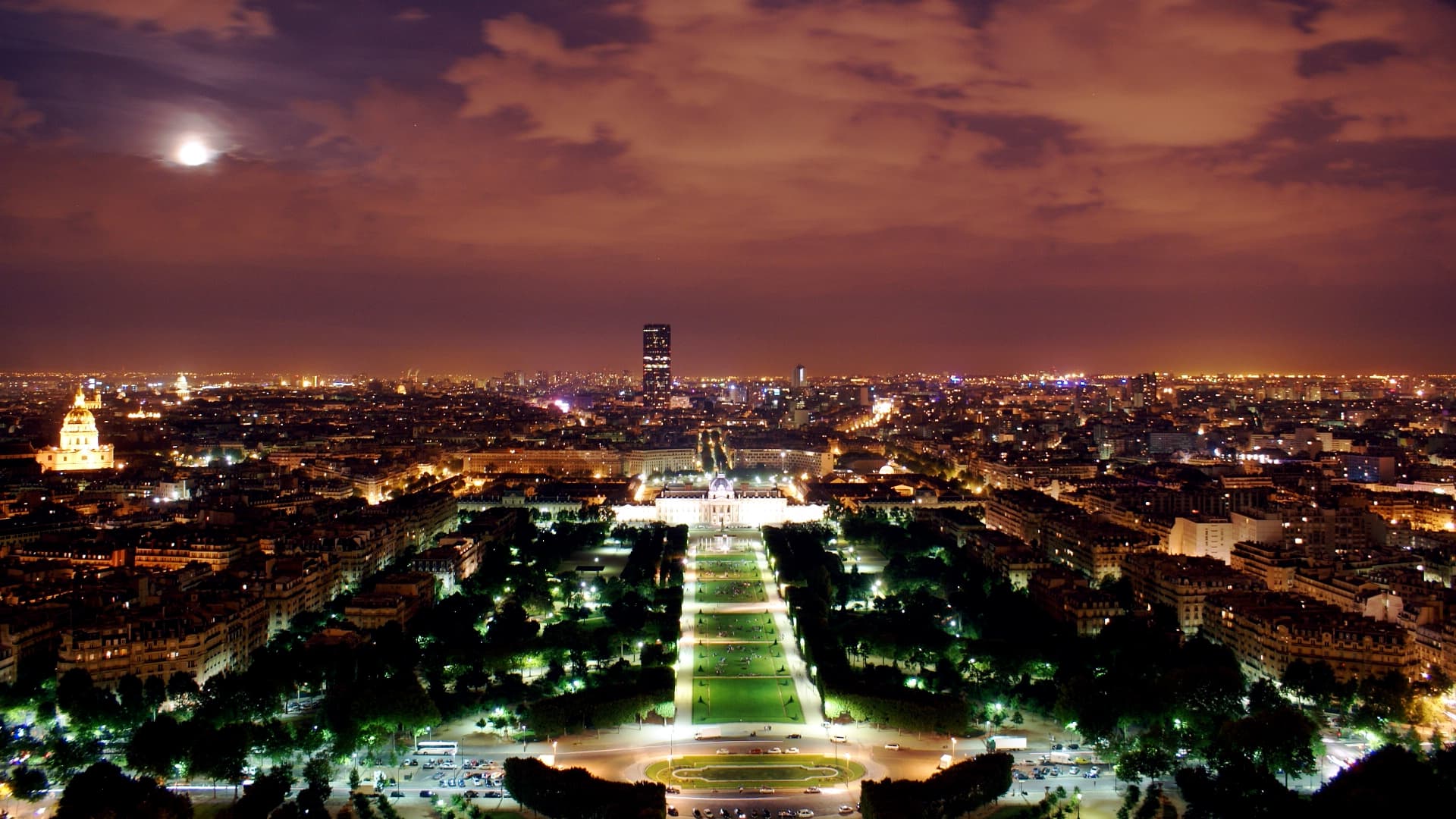
Split your stay between the Eixample (Gaudí’s greatest hits, wide boulevards) and the Gothic Quarter or Gràcia (medieval lanes or a village feel). Add a beach afternoon in Barceloneta and a day trip to Montserrat or Girona.
 Elemaki / CC BY 3.0 via Wikimedia Commons
Overview
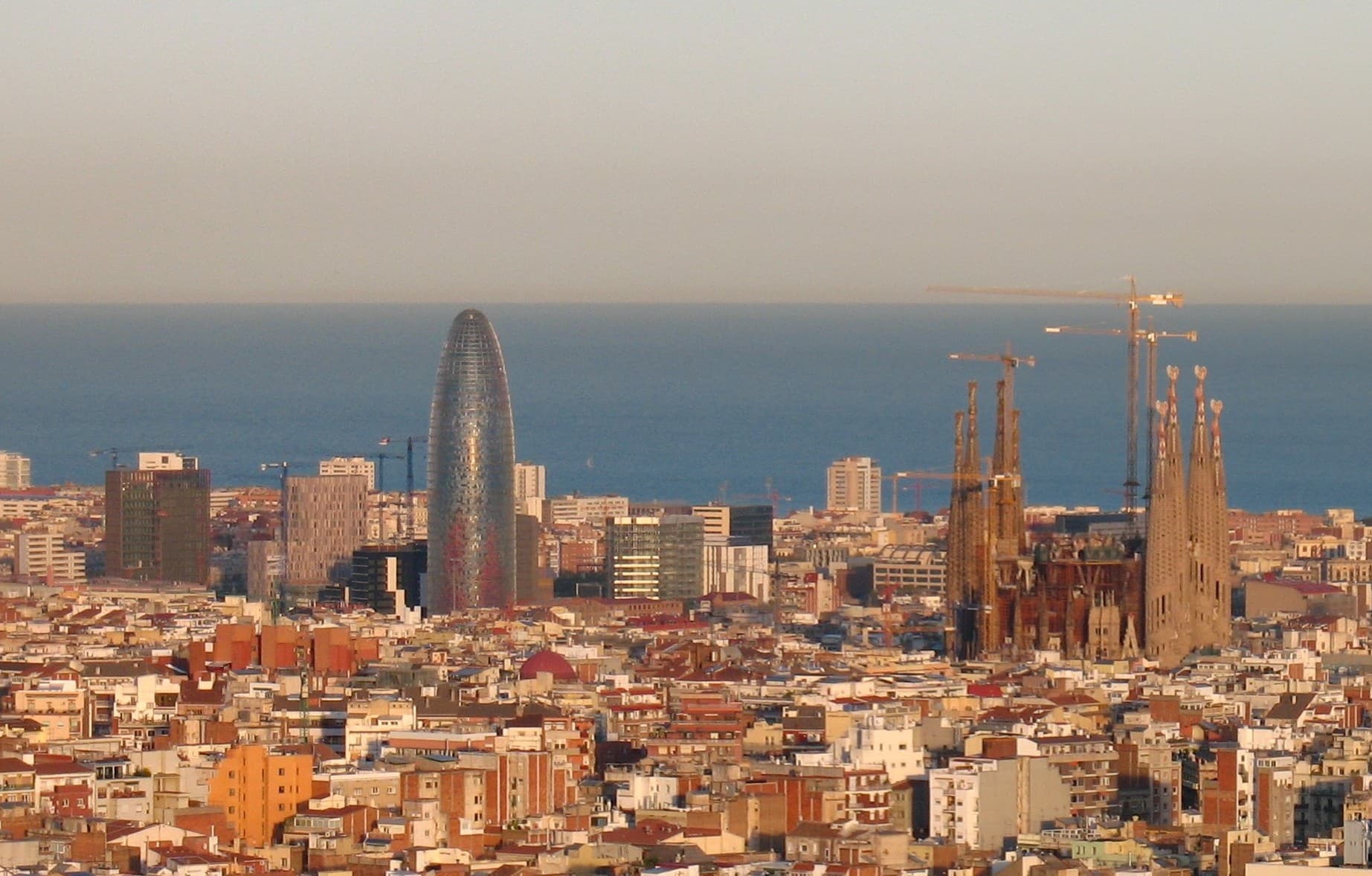
Barcelona pairs a working Mediterranean beach city with a run of architecture few places can match: six of the seven buildings in the UNESCO listing for Antoni Gaudí stand inside the city, and in February 2026 the last of the Sagrada Família’s central towers was topped out, making it the tallest church in the world. It suits travelers who want modernist facades in the morning and a swim in the sea by afternoon.
Book Sagrada Família and Park Güell online weeks ahead rather than on arrival; both sell out daily in high season. The other thing we would plan around is the light: Barcelona’s two famous viewpoints lock their gates before the sun goes down for most of the year, so put them in the late afternoon and keep the actual sunset for the beach.
Best for
First-time visitors · Architecture fans · Food and tapas · Beach plus city · Nightlife
Daily itinerary
4 to 6 days
You can walk out of a medieval lane, past a Gaudí facade and onto a working city beach inside an afternoon, and none of the three feels staged for you. The grid-planned Eixample and the tangled Gothic Quarter sit side by side rather than one having replaced the other.
Best time to visit
May to June and September to early October are the months we would pick: warm enough to swim, without the July to August heat and the cruise-ship crowds that fill the Gothic Quarter and Sagrada Família at midday.
- May: Warm days and a sea still too cool for most people, but the gardens are out and the queues are not yet at their summer length.
- June: The sea has warmed up and the days run long. Sant Joan on the 23rd puts bonfires on the beaches and keeps the city awake most of the night.
- July to August: Peak heat and tourist volume; book Sagrada Família and Park Güell far in advance.
- September: The sea is at its warmest and the crowds thin through the month; if we had one week to spend here, it would be this one.
- October: Mild, good for walking, sea still swimmable early in the month.
Things worth knowing
- Festa de Sant Joan (June 23 to 24): bonfires and fireworks across the city marking the summer solstice.
- La Mercè (late September): Barcelona’s main citywide festival, with human towers (castells) and street parades.
- The Gaudí centenary (2026): Antoni Gaudí died on 10 June 1926, and the centenary year has carried a programme of events around the Sagrada Família, whose central tower was topped out in February. Expect the Gaudí sites to be busier than usual all year.
Where to stay
 Mehmet Turgut Kirkgoz · Pexels
Eixample
The grid-planned 19th-century expansion, home to Gaudí’s Casa Batlló and Casa Milà along Passeig de Gràcia, plus the Sagrada Família a short walk away. Wide boulevards, good shopping, and modernist facades on most blocks.
Best for: First-time visitors · Architecture · Shopping
Passeig de Gràcia and around Sagrada Família get very crowded midday in summer.
 AXP Photography · Pexels
Gothic Quarter (Barri Gòtic)
The medieval core: the Cathedral, Plaça Sant Jaume, and a maze of narrow stone lanes opening onto small squares. Barcelona’s oldest streets, dense with bars, shops and the occasional Roman wall fragment.
Best for: First-time visitors · History · No car
Pickpocketing is a real risk in the busiest lanes and around Las Ramblas; keep bags zipped and to the front.
 Regan Dsouza · Pexels
Gràcia
A former separate village annexed by the city, now a laid-back grid of small squares, independent shops and a strong local, less touristy feel. Casa Vicens, Gaudí’s first major commission, sits at its edge.
Best for: A local feel · Independent shops · Evening plaza life
Fewer major sights on the doorstep; better as a base for atmosphere than for walking to everything.
 Samar L. · Pexels
Barceloneta
The old fishermen’s quarter turned beach neighborhood, with a wide sandy beach, a seafront promenade, and dense grid streets full of seafood restaurants.
Best for: Beach access · Seafood · Waterfront walks
Beach areas get very busy and can feel touristy at peak times; petty theft on the beach itself is a known risk.
Where to sleep
Hotel Neri Relais & Châteaux
luxury · Gothic Quarter
Best for: Couples · A historic setting · A special stay
- A converted 12th-century palace on a quiet Gothic Quarter square
- Rooftop terrace above the medieval rooftops
- Twenty-two rooms, small enough that the staff learn your name
- Small property, books out early
- Old-building quirks: some rooms are compact
- Street noise from the square on weekend nights
Hotel Casa Fuster
luxury · Gràcia / Passeig de Gràcia
Best for: Design lovers · A Gràcia-adjacent base · Rooftop views
- A 1908 modernist building by Lluís Domènech i Montaner
- Rooftop pool and terrace overlooking Passeig de Gràcia
- Historic Café Vienés with live jazz
- Expensive
- Right on a busy avenue, ask for a quieter room
- Formal atmosphere, not for a casual stay
 Ralf Roletschek · GFDL 1.2 via Wikimedia Commons
W Barcelona
resort · Barceloneta beachfront
Best for: Beach access · Design · A resort feel in the city
- Sail-shaped landmark building right on the beach
- Rooftop pool and bar with sea views
- Direct access to the Barceloneta boardwalk
- Removed from the Gothic Quarter and Eixample sights, taxi or long walk needed
- Large, busy property, not intimate
- Beachfront pricing
 Pere prlpz · CC BY-SA 3.0 via Wikimedia Commons
Petit Palace Eixample
boutique · Eixample
Best for: Couples · A central Eixample base · Good value for the location
- Central Gran Via location, walk to Passeig de Gràcia
- Renovated rooms with modern amenities
- Rooftop terrace with a small pool
- Chain-hotel feel rather than boutique character
- Street noise on lower floors
 Pere prlpz · CC BY-SA 3.0 via Wikimedia Commons
Hotel Constanza
value · Eixample
Best for: Budget-conscious travelers · A central base without luxury pricing · Short stays
- Walkable to Casa Batlló, Plaça Catalunya and the Gothic Quarter
- Simple, clean rooms at a fair price for central Barcelona
- Rooftop terrace
- Compact rooms typical of the price tier
- Limited amenities compared with upscale options nearby
Essential experiences
 Alvesgaspar · CC BY-SA 4.0 via Wikimedia Commons
Sagrada Família
Gaudí’s basilica, under construction since 1882 and, in 2026, changed on the skyline: the cross went onto the Tower of Jesus Christ on 20 February, finishing the outside of the central tower at 172.5 metres and making this the tallest church in the world. The six central towers are now externally complete. It is still a building site inside, with work on the structure running through 2027 and 2028 and the Glory façade years off, so come for the towers and the light through the nave, not for a finished building. The Nativity façade and crypt carry UNESCO World Heritage status. Book timed tickets well in advance.
 Bernard Gagnon · CC BY-SA 3.0 via Wikimedia Commons
Park Güell
Gaudí’s public park above the city, with mosaic-covered terraces, the trencadís salamander, and views over Barcelona to the sea. A UNESCO-listed Gaudí work since 1984.
 Bernard Gagnon · CC BY-SA 3.0 via Wikimedia Commons
Casa Batlló
Gaudí’s 1904 to 1906 renovation of an existing building into a curving, bone-like, mosaic-clad facade on Passeig de Gràcia; a UNESCO-listed work.
 Diliff · CC BY 2.5 via Wikimedia Commons
Casa Milà (La Pedrera)
Gaudí’s last civil work (1906 to 1912), an undulating stone facade with a rooftop of sculptural chimneys; UNESCO-listed and open for interior visits.
 Josep Bracons from Barcelona, Catalonia · CC BY-SA 2.0 via Wikimedia Commons
Barcelona Cathedral and Gothic Quarter
The Gothic cathedral at the heart of the medieval quarter, surrounded by narrow lanes, Roman wall fragments and small squares such as Plaça del Rei.
 :Puigalder · Public domain via Wikimedia Commons
Montjuïc Castle
A 17th-century hilltop fortress overlooking the port, reachable by cable car, with panoramic views over the whole city and the Mediterranean.
 AXP Photography · Pexels
La Boqueria market
The city’s best-known covered food market off Las Ramblas, dense with produce, seafood and tapas counters.
 Deosringas / CC BY-SA 3.0 via Wikimedia Commons
 Bernard Gagnon / CC BY-SA 3.0 via Wikimedia Commons
Food & drink
 Rafael Ortega Diaz · CC BY-SA 3.0 via Wikimedia Commons
Pa amb tomàquet
Bread rubbed with ripe tomato, olive oil and salt. It arrives with almost everything, and a good one is the quickest test of a kitchen.
 chenines on Flickr · CC BY 2.0 via Wikimedia Commons
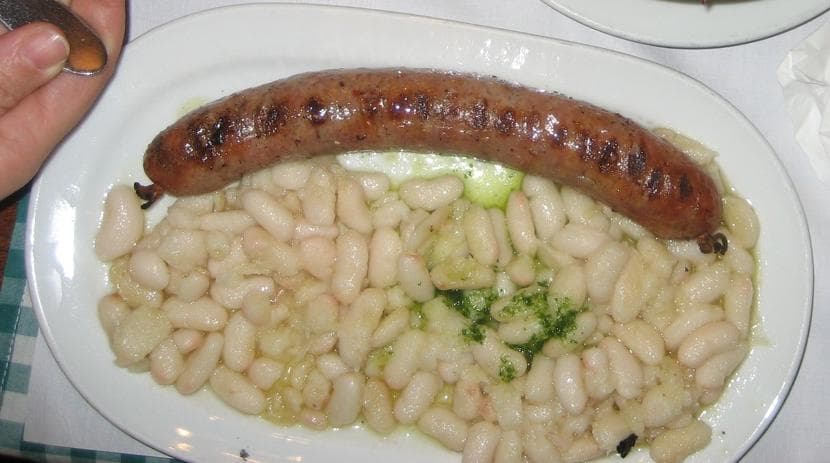
Botifarra amb mongetes
Grilled Catalan sausage with white beans, a hearty traditional main.
 Javier Leiva (www.moverelbigote.com) from Vic, Barcelona · CC BY 2.0 via Wikimedia Commons
Crema catalana
A custard dessert with a caramelized sugar crust, similar to but distinct from crème brûlée.
 Tamorlan · CC BY 3.0 via Wikimedia Commons
Calçots
Charred spring onions dipped in romesco sauce, a seasonal (winter to spring) Catalan specialty.
 Tim Durand · Pexels
Vermut (vermouth hour)
A pre-lunch tradition, house-made vermouth with olives and small tapas, typically around midday on weekends.
Lunch is the main meal, often 1:30 to 3:30pm; dinner rarely starts before 8:30 or 9pm. Many kitchens close entirely between services.
Where to eat
 Dungodung · Public domain via Wikimedia Commons
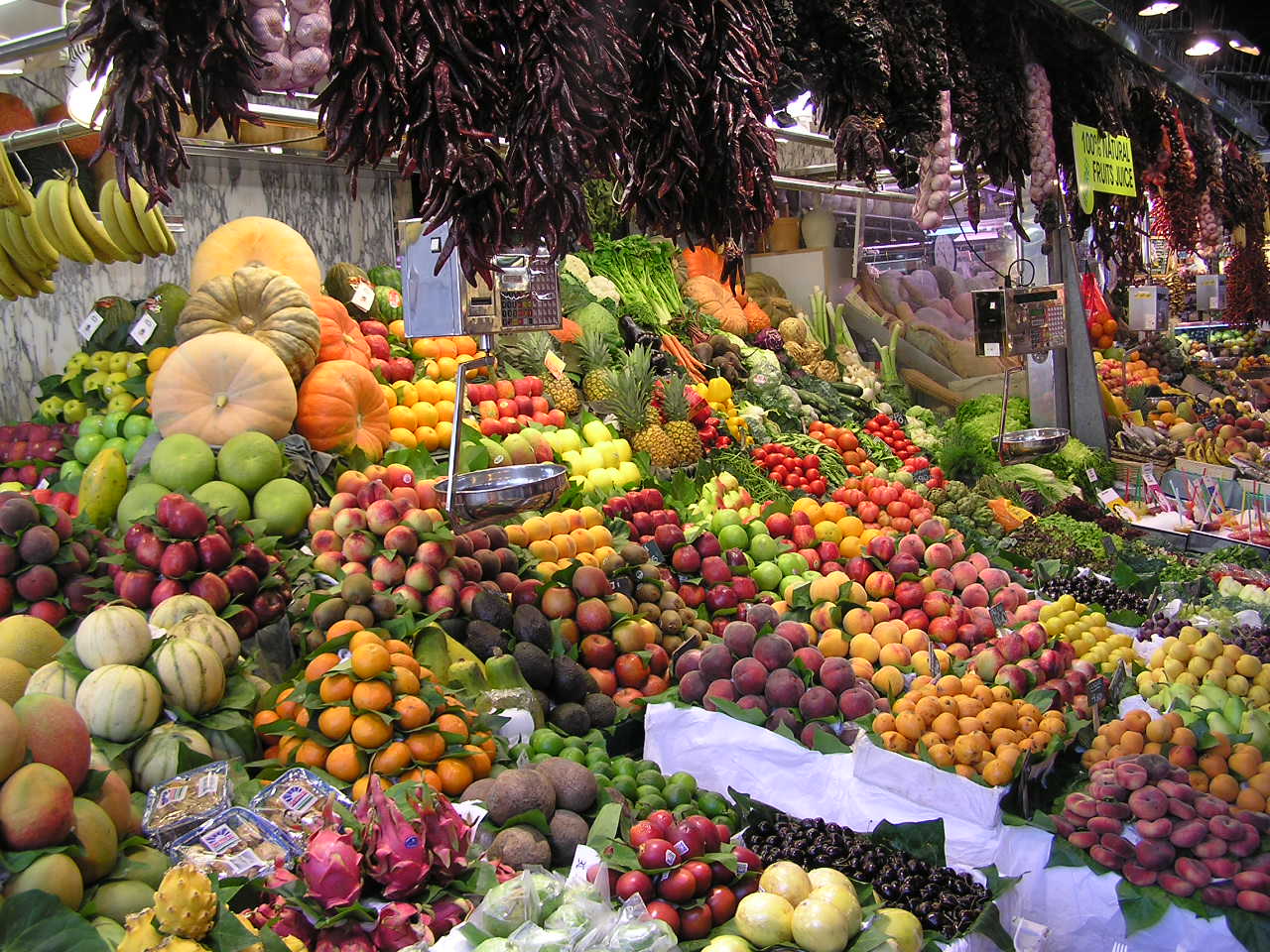
Mercat de la Boqueria
marketThe big covered market off Las Ramblas, with tapas counters behind the produce stalls; arrive before noon, after which the tour groups make the aisles hard work.
Last researched 2026-07-15
 Ralf Roletschek · GFDL 1.2 via Wikimedia Commons
Els Quatre Gats
institutionThe turn-of-the-century café where a young Picasso held his first exhibition; now a traditional restaurant trading on that history.
Last researched 2026-07-15
Vermuteria del Tano
barA small, unpretentious Gràcia vermouth bar, standing room mostly, for the pre-lunch local ritual.
Last researched 2026-07-15
Sunrises
 Enric Fradera · CC BY 3.0 via Wikimedia Commons
Barceloneta beach
The city beach faces southeast across the Mediterranean, making it one of the few spots in Barcelona with an open sea horizon for sunrise.
May to September
Sunsets
 Bj.schoenmakers · CC0 via Wikimedia Commons
Bunkers del Carmel
A former Civil War anti-aircraft position atop Turó de la Rovira, with a 360-degree panorama taking in the Sagrada Família and the sea. Read the hours before you plan a sunset around it: the city has closed the site at night since 2023, and the gates shut at 7:30pm in summer and 5:30pm in winter, which is before sunset from roughly March to late September. In those months this is a golden-hour viewpoint rather than a sunset one, and you will be walked out while the sun is still up. It comes into its own for sunset in late autumn and winter.
Late October to February for an actual sunset; the rest of the year for late-afternoon light · No facilities on site: no toilets, no café. Alcohol and loud music are prohibited by local rules. · 360-degree panorama; wide angle captures the skyline with the Sagrada Família and Mediterranean together.
 Jack Oughton · CC BY-SA 3.0 via Wikimedia Commons
Montjuïc Castle
The hilltop fortress above the port gives a wide panorama over the harbor and the city, reachable by cable car. The same caution applies as at the Bunkers: the castle closes at 8pm in summer with last entry half an hour before, so from late spring to August the sun sets after you have been sent home. Treat it as a late-afternoon viewpoint in those months, and note that the free Montjuïc terraces and the Mirador de l’Alcalde outside the walls stay open when the castle does not.
Autumn and winter for a sunset from inside the walls; year-round for the view · Ticketed entry, 12 euros adult and free on Sundays from 3pm and the first Sunday of the month; last entry is 30 minutes before closing. Two different cable cars get confused here: the port aerial tram lands at Miramar, partway across the hill, while the Telefèric de Montjuïc is the one that actually reaches the castle. Each has its own last-ascent time.
 en:User:Burn the asylum · CC BY-SA 3.0 via Wikimedia Commons
Park Güell terraces
The mosaic-covered main terrace looks south over the city to the sea, with the sun going down to your right behind Tibidabo and the last light landing on the Gaudí structures themselves rather than on the horizon.
Year-round · The monumental zone has fixed timed-entry hours; the wider park stays open later and offers similar views for free.
Day trips
 Brian Ramirez · Pexels
Montserrat
A serrated mountain massif about 50km northwest of Barcelona, with the Santa Maria de Montserrat monastery lodged on a ledge partway up at around 720 metres, home to the Black Madonna and a boys’ choir. The summit proper, Sant Jeroni at 1,236 metres, is a walk or a funicular ride above it.
About 1 hour by train (R5 line) from Plaça Espanya, plus cable car or rack railway up the mountain · Full day
 Adria Gimeno · Pexels
Girona
A compact medieval city 100 km northeast of Barcelona, with a Gothic cathedral, colorful riverside houses over the Onyar, and one of Europe’s best-preserved Jewish quarters.
About 40 minutes by high-speed train from Barcelona Sants · Full day
 Similar Mornings · Pexels
Sitges
A beach town about 40 minutes south of Barcelona, known for its old town, Modernist villas, and a livelier LGBTQ-friendly beach and nightlife scene.
About 40 minutes by regional train (R2) from Barcelona Sants · Half to full day
After dark
 Hert Niks · Pexels
Vermut and tapas crawl in Gràcia
foodMove between small bars for a vermouth and a plate of tapas at each, the Barcelona version of a bar crawl, unhurried and food-forward.
 TBD Traveller · Pexels
Flamenco or Palau de la Música concert
musicA performance in the modernist Palau de la Música Catalana, itself a UNESCO-listed building, or a flamenco show in a Gothic Quarter venue.
Daily itinerary
Five days in Barcelona: Gaudí, the Gothic Quarter, and the coast
Two nights in or near the Eixample for the Gaudí sights, two near the Gothic Quarter or Gràcia, with a day trip to Montserrat. Walk and use the metro.
- 1
Eixample and Sagrada Família
fullTimed-entry visit to the Sagrada Família.Near Passeig de Gràcia.Casa Batlló and Casa Milà along Passeig de Gràcia.Bunkers del Carmel for the panoramic first look at the city, going up in the late afternoon: outside late autumn and winter the gates close before the sun does.A modern Eixample restaurant.Quiet night after a long first day.Very walkable between the three Gaudí buildings.Estimate: Swap one Gaudí interior for the exterior only if tickets are sold out.
- 2
Park Güell and Gràcia
moderateTimed-entry to Park Güell, arriving early to beat the heat and crowds.Walk down into Gràcia.Wander Gràcia’s small squares and shops; Casa Vicens if open.Vermut and tapas crawl in Gràcia.A Gràcia plaza terrace.Bus or a downhill walk from Park Güell into Gràcia.Estimate: Take the metro back up if the downhill walk feels too long in summer heat.
- 3
Gothic Quarter and the beach
moderateBarcelona Cathedral and the Gothic Quarter lanes.Mercat de la Boqueria.Beach time in Barceloneta.Montjuïc, taking the cable car up from the port; the castle closes at 8pm, so in the warm months see it before closing and stay outside the walls at the Mirador de l’Alcalde for the light.Seafood in Barceloneta.A stroll along the beachfront promenade.Metro or a walk down Las Ramblas to the port, then the aerial tram across to Miramar and the Telefèric de Montjuïc up to the castle; the port tram alone does not reach it.Estimate: Swap the beach for the Picasso Museum if the weather turns.
- 4
Montserrat day trip
fullFGC train from Plaça Espanya to Montserrat.At the monastery complex.The Black Madonna, the boys’ choir if the schedule allows, and a short mountain trail.Back in Barcelona, near your hotel.An early night after a full day outdoors.Train plus cable car or rack railway; check the last train back.Estimate: Take a guided coach tour instead of public transport for a more relaxed pace.
- 5
Slow morning and departure
relaxedA last wander through the Gothic Quarter or a final Gaudí site missed earlier.A final vermut and tapas near your hotel.Departure.Leave buffer for the Aerobus or metro to El Prat airport.Estimate: If time allows, add Girona as a half-day trip and shift departure to day 6.
Getting around
- Barcelona-El Prat Airport (BCN) sits about 15km southwest of the center, connected by the Aerobus, metro (L9 Sud) and RENFE trains.
- Barcelona Sants is the main high-speed rail station, with AVE connections to Madrid, Girona and across Spain, and international links to France.
- The Barcelona Metro covers the city well; a T-Casual or Hola BCN travel card covers metro, bus and tram.
- FGC suburban rail runs to Montserrat on the R5 from Plaça Espanya, and to the foot of Tibidabo from Plaça Catalunya; they are different lines from different stations, so check which one your day needs.
- Walking covers the Gothic Quarter, Eixample and Gràcia easily; a car is unnecessary and parking is difficult.
Things worth knowing
- · Not booking Sagrada Família or Park Güell tickets until arrival, then finding both sold out.
- · Leaving bags unwatched in the Gothic Quarter, Las Ramblas or on the metro.
- · Assuming the Bunkers del Carmel or Montjuïc Castle stay open for the sunset; in summer both close well before it.
Budget
| Low | Expected | Comfortable | |
|---|---|---|---|
| Accommodation style / per night | €75≈ $84 | €150≈ $168 | €320≈ $358 |
| Food style / per day | €25≈ $28 | €50≈ $56 | €100≈ $112 |
| Local transport / per day | €6≈ $7 | €12≈ $13 | €35≈ $39 |
| Estimate / per day | €10≈ $11 | €35≈ $39 | €65≈ $73 |
Estimate · EUR · 2026-07-15. Accommodation is per room per night (two sharing). Local transport figures assume metro and FGC rail, not taxis. Shoulder-season figures; July/August runs higher. · 1 USD = €1 (14 Oct 2026)
Things worth knowing
Frequently asked questions
How many days do you need in Barcelona?
Four to six days is comfortable. Four covers the Gaudí sights and one or two neighborhoods; six adds a beach day and a day trip to Montserrat or Girona.
What is the best area to stay in Barcelona for the first time?
The Eixample for walkable access to Casa Batlló, Casa Milà and the Sagrada Família, or the Gothic Quarter for medieval atmosphere and nightlife.
When is the best time to visit Barcelona?
May to June and September to early October: warm enough to swim, without the peak July and August heat and crowds at the major sights.
Do you need to book Sagrada Família in advance?
Yes. Sagrada Família and Park Güell both sell out in high season; book timed tickets online well before your trip.
Where is the best sunset view in Barcelona?
Both of the famous ones close before the sun goes down for much of the year: the Bunkers del Carmel shut at 7:30pm in summer and Montjuïc Castle at 8pm, while Barcelona’s sun sets after 9pm from late April to mid-August and not before 8pm until well into September. In those months go up for the golden hour instead, or watch the sun set from the beach or the free Montjuïc terraces outside the castle walls. From late autumn the Bunkers panorama works for the sunset itself.
Sources (4)
- Works of Antoni Gaudí (seven properties) inscribed on the UNESCO World Heritage List · unesco · 2026-07-15
- Official Barcelona tourism information and attraction listings · tourism-board · 2026-07-15
- Sagrada Família official visitor and ticketing information · official · 2026-07-15
- Montserrat official visitor and transport information · official · 2026-07-15