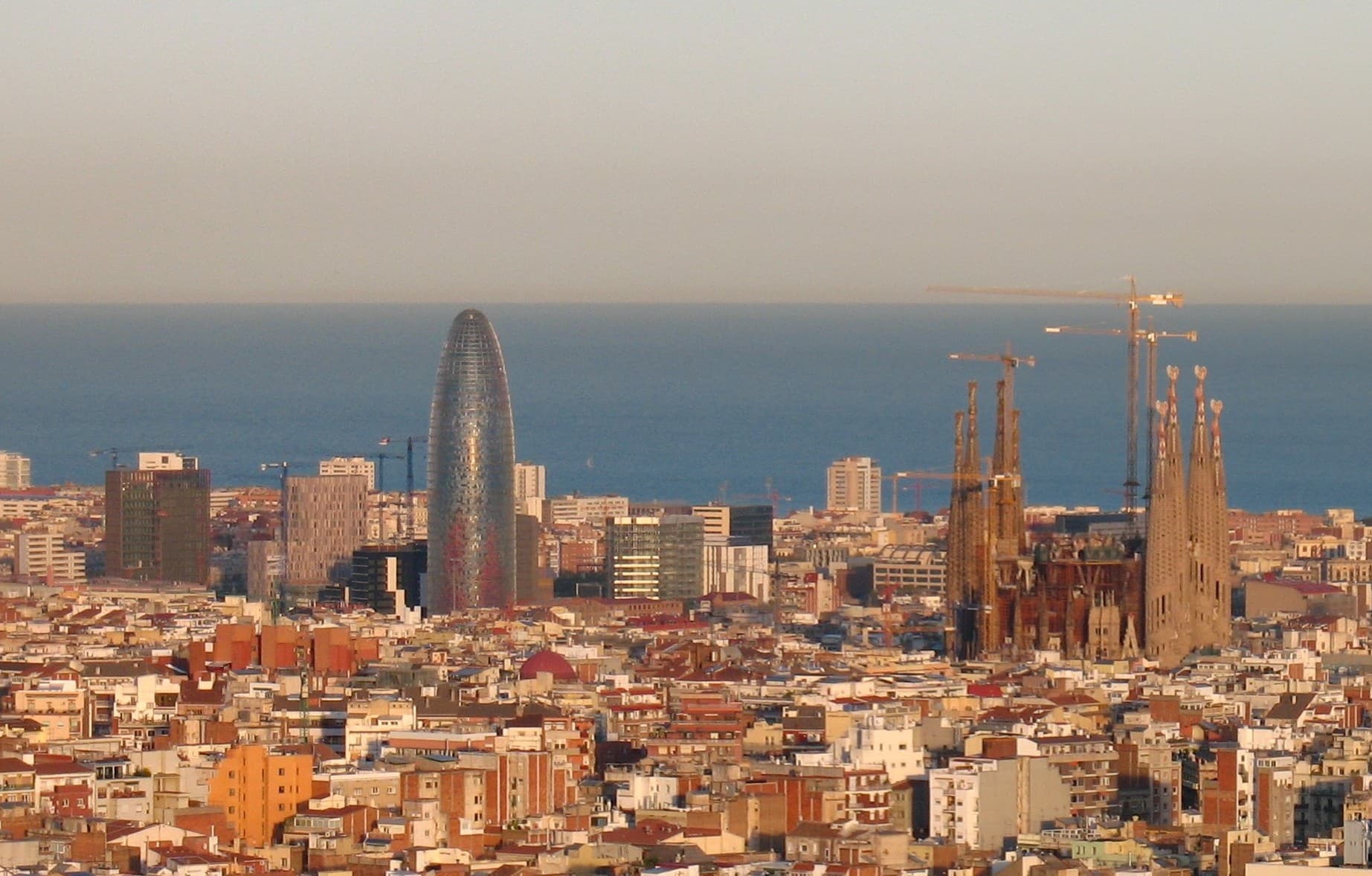
Spain · Balearic Islands
Ibiza
Start with Dalt Vila and the old port, then split your days between coasts: the west for Cala Comte, Cala d’Hort and the Es Vedrà sunset, the north for Benirràs, Portinatx and the villages, the south for Ses Salines and the beach scene. Take the fast ferry to Formentera once, and decide honestly in advance whether clubs are part of your trip or not.
 steve p2008 / CC BY 2.0 via Wikimedia Commons
Overview
Ibiza is two islands wearing one name. The famous one runs on superclubs, beach beds and DJ residencies. The other one is a UNESCO World Heritage site: a walled Renaissance town above the port, the best-preserved Phoenician necropolis in the western Mediterranean, and seagrass meadows that keep the water improbably clear. Between them sit pine hills, red-earth farmland, whitewashed village churches and more than fifty beaches and calas, most of them nowhere near a dance floor.
If you only take one thing from this guide: Ibiza rewards deciding what you came for. Trying to combine club nights until dawn with early calas and village mornings usually delivers neither. Pick the island you want, or split the trip in two halves. And in July and August, treat the car cap and Sant Antoni’s alcohol rules as facts of the season: book the car months out, or build the trip around buses, boats and one good base instead.
Best for
Couples · Beach and cala hoppers · Nightlife · Food travelers · First-time Balearics visitors · Boat day-trippers
Daily itinerary
5 to 7 days
No other Mediterranean island holds both extremes this comfortably. You can spend the morning inside 16th-century walls, swim in a Posidonia-filtered cove at noon, eat a slow farm dinner in the interior, and still be at a club at two in the morning if that is your trip. Skip the clubs entirely and Ibiza is a quieter, more rural island than its reputation admits, especially in the north around Sant Joan, where agroturismo farmhouses outnumber hotels.
Best time to visit
Late May, June, September and early October are the sweet spots: swimmable sea, everything open, and space on the sand. The club season frames the calendar, opening in late April and closing in October, but the island is at its most pleasant either side of the August peak.
- January to February: The quietest weeks; almond blossom whitens the Es Pla de Corona plateau around Santa Agnès and hiking is at its best.
- April to May: The island wakes up: opening parties in late April, warm walking days, and calas to yourself before the sea fully warms.
- June: Swimming season proper, long days, and the summer transport network (shuttle buses, Discobus, extra ferries) comes online.
- July to August: Peak everything. Book cars, tables and club tickets ahead; go early to the small calas and rest at midday.
- September: Warmest sea of the year, softer light, thinner crowds. Often the single best month.
- October: Closing parties early in the month, then a fast wind-down; mild days, quiet roads and shortening beach service.
Things worth knowing
- Club season opening weekend (late April): the big rooms open within days of each other around the International Music Summit; in 2026 the season launched on 24 to 26 April.
- Amnesia’s 50th anniversary season (2026): the San Rafael institution marks half a century, one of the landmark runs of the summer.
- Las Dalias Saturday market, Sant Carles (February to November): the island’s best-known hippy market, 300-plus stalls in a garden setting.
- Sunday sunset drums at Benirràs: drummers line the beach as the sun drops behind the Cap Bernat sea stack, a weekly island ritual all summer.
Where to stay
 Gerda Arendt · CC0 via Wikimedia Commons
Ibiza Town (Eivissa)
The capital and the reason the island is a World Heritage site: the walled upper town of Dalt Vila stacked above the harbor, the fishermen’s quarters of La Marina and Sa Penya below, and the cafe boulevard of Vara de Rey. The best restaurants, the marina, and the ferry port for Formentera are all here.
Best for: First-time visitors · Food · History · Car-free stays
Harbor-front bars charge harbor-front prices, and August nights are loud near the port; sleep a street or two back.
 Florent Pecassou · CC BY-SA 4.0 via Wikimedia Commons
Talamanca
A calm, shallow, family-friendly bay one headland north of Ibiza Town, with a boardwalk of fish restaurants and a 25-minute waterfront walk (or short water taxi) into the capital. City access with a beach at the door.
Best for: Couples · Families · A beach base near town
The bay looks at marina and town rather than open sea; for wild-cove scenery stay west or north instead.
 Dirk Pothen · Pexels
Santa Eulària des Riu
The island’s third town and its most relaxed: a long palm promenade, a marina, the whitewashed hilltop church of Puig de Missa, and a restaurant row locals actually use. The natural base for families and for the east-coast beaches and markets.
Best for: Families · A quieter town base · East-coast beaches
Nightlife is dinner and a stroll; club-goers will spend real money on taxis or the Discobus.
 Eduardo Pitt from Madrid, Spain · CC BY-SA 2.0 via Wikimedia Commons
Sant Antoni de Portmany
The west-coast bay town of two reputations: the West End’s budget party strip, and a sunset shoreline (the Passeig de ses Fonts and the sunset cafes toward Caló des Moro) that draws the whole island at dusk. Good-value beds and the best bus links after Ibiza Town.
Best for: Budget stays · Sunsets · Access to the west-coast calas
Sant Antoni sits inside the Balearic responsible-tourism decree zone: no street drinking, no shop alcohol sales 21:30 to 08:00, and capped all-inclusive drinks. Stay toward Cap Negret or the bay’s north side for quiet.
 Gerda Arendt · CC0 via Wikimedia Commons
Santa Gertrudis and the interior
A tiny whitewashed village at the exact center of the island that became its foodie capital: a church square of tapas terraces, galleries and delis, ringed by farmland, boutique agroturismos and some of Ibiza’s best restaurants. Fifteen minutes from almost everywhere.
Best for: Food travelers · Couples · A rural base with polish
No beach and no bus to speak of; this is a rental-car base by definition.
 Boris Ivas · Pexels
The north: Sant Joan, Portinatx and Benirràs
Ibiza’s slowest quarter: pine ridges, red-dirt lanes, the village of Sant Joan de Labritja, the family coves of Portinatx and the drum-circle beach of Benirràs. Agroturismo farmhouses, yoga retreats and one destination resort (Six Senses) instead of strips and superclubs.
Best for: Peace and nature · Couples · Yoga and wellness · Return visitors
A 30 to 45 minute drive from the airport and the capital; evenings are farmhouse dinners, not options.
Where to sleep
Six Senses Ibiza
luxury · Cala Xarraca, Portinatx (north coast)
Best for: Wellness · A secluded resort stay · Sunset views over the bay
- A 20-acre resort wrapped around the northern tip’s Cala Xarraca, with 137 suites, cave rooms and residences
- A serious wellness and spa program plus its own farm-to-table growing project
- The island’s quietest corner, far from the club circuit
- Remote: 35 to 45 minutes by car from Ibiza Town and the airport
- Top-tier rates by any Mediterranean standard
- The resort beach is a small rocky cove, not long sand
Nobu Hotel Ibiza Bay
resort · Talamanca Bay
Best for: Beachfront polish near town · Food-led stays · Families who want luxury without isolation
- 152 rooms and suites directly on Talamanca’s calm bay, a short hop from Ibiza Town
- Four restaurants including the flagship Nobu, plus serious spa and wellness facilities
- Family-friendly by design while keeping an adult pool scene
- The bay is sheltered and urban-facing rather than wild
- Peak-season rates rival the island’s remotest resorts
- The in-house restaurants book out; reserve when you book the room
Petunia Ibiza, a Beaumier hotel
design · Cala Carbó (southwest)
Best for: Es Vedrà views · Grown-up calm · Design-minded couples
- An adults-oriented hillside hotel (minimum-age policy; check when booking) in the pines above Cala Carbó, facing the Es Vedrà rock
- Two restaurants and a rooftop bar aimed straight at the island’s most famous sunset silhouette
- A short walk down to Cala Carbó cove, a short drive to Cala d’Hort
- A car is essential; the southwest corner has no useful bus service
- No pool-and-beach resort sprawl: this is a small, quiet property by intent
- Books out fast for September sunset season
Montesol Experimental
boutique · Vara de Rey, Ibiza Town
Best for: A city base · Design and history · Car-free trips
- The island’s first hotel, a 1933 neo-colonial landmark on Vara de Rey, reimagined by the Experimental Group
- 33 rooms and suites by designer Dorothée Meilichzon
- A rooftop cocktail bar looking across the marina to Dalt Vila
- No pool, beach or grounds: this is a city hotel
- Rooms facing the boulevard hear the evening paseo
- Small property that sells out around big club weekends
Hostal La Torre
value · Cap Negret, north of Sant Antoni
Best for: Sunsets · Music lovers · Character on a saner budget
- A clifftop hostal above Cap Negret with one of the island’s most famous sunset terraces
- Its own celebrated ambient-music identity (the La Torre Recordings sunset sessions)
- Simple, fairly priced rooms on a coast where those are rare
- Hostal-level comforts, not resort ones
- The terrace fills with non-guests every evening in season
- You will want wheels: it sits outside Sant Antoni proper
Essential experiences
 Xaviduran · CC BY-SA 3.0 es via Wikimedia Commons
Dalt Vila (UNESCO)
Ibiza Town’s fortified upper town, ringed by intact 16th-century Renaissance walls built under Philip II, climbing from the Portal de ses Taules gate through cobbled lanes to the cathedral square. UNESCO listed the walls, the necropolis, the Phoenician site at Sa Caleta and the Posidonia meadows together in 1999 as "Ibiza, Biodiversity and Culture". Walking the ramparts is free and open at all hours.
 Wikimedia Commons · CC BY-SA 3.0 via Wikimedia Commons
Puig des Molins necropolis and museum
The hillside cemetery of Phoenician and Punic Ibiza, in use from the 7th century BC and considered the best-preserved necropolis of its kind in the western Mediterranean, with thousands of rock-cut tombs. The monographic museum displays the finds, including the famous bust of the goddess Tanit. Entry is currently free; closed Mondays.
 LetoIbz · CC BY-SA 4.0 via Wikimedia Commons
Es Vedrà and the Torre des Savinar viewpoint
A near-400-meter limestone rock rising sheer from the sea off the southwest coast, wrapped in more myth than any other Balearic landmark. The classic view is from the 18th-century Torre des Savinar watchtower above Cala d’Hort, reached by a short uphill walk from the road; late afternoon light is the reason photographers come.
 No machine-readable author provided. Mprinke assumed (based on copyright claims). · CC BY-SA 2.5 via Wikimedia Commons
Ses Salines Natural Park
The wetland and salt-flat corner shared with Formentera: working salt pans harvested since Phoenician times, dunes and pine belts behind the Ses Salines and Es Cavallet beaches, flamingos in the lagoons, and the Posidonia seagrass meadows offshore that earned the UNESCO listing and keep the water glass-clear.
 stavros1 · CC BY 3.0 via Wikimedia Commons
Sa Caleta Phoenician settlement
The fenced clifftop remains of the island’s founding settlement, established by Phoenicians around the end of the 8th century BC and abandoned when the community moved to today’s Ibiza Town. Modest walls, big significance: this site is one of the four pillars of the UNESCO listing, and the red-cliff cove below has a summer beach shack.
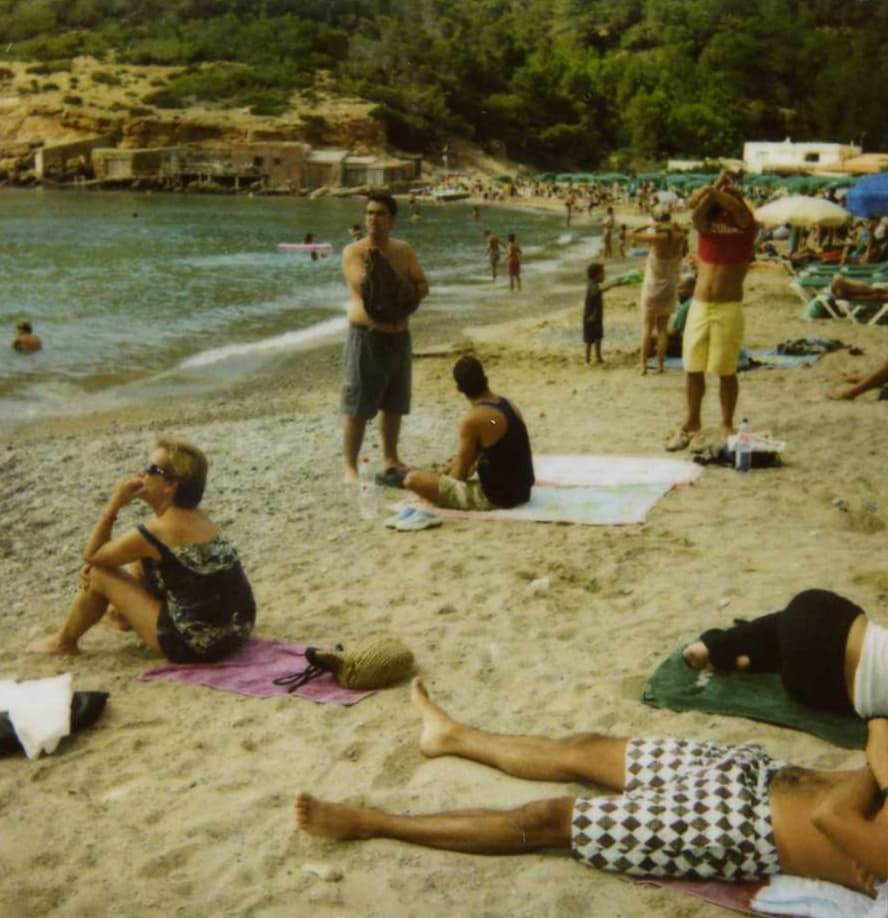 Wessel · CC BY 2.0 via Wikimedia Commons
Benirràs and the Sunday drums
A pebble-and-sand cove on the north coast facing the Cap Bernat sea stack (the "Finger of God"), backed by pine hills and a handful of beach restaurants. Famous for its Sunday evening drum circle, when drummers, dancers and half the island’s bohemian population see the sun down; smaller sessions happen through the week in summer.
Las Dalias hippy market
The island’s defining market, held in the garden of a 1954 roadside bar at Sant Carles: 300-plus stalls of Adlib fashion, jewelry, art and island produce every Saturday from February to late November, with summer night markets added in season. Arrive before noon in summer or embrace the crowd.
 Saaremees · CC BY-SA 4.0 via Wikimedia Commons
Cova de Can Marçà
A former smugglers’ cave in the cliffs above Port de Sant Miquel, toured on guided visits past stalactites, an underground lake and a staged waterfall finale. The approach path along the cliff face, with views over the bay, is half the attraction; an easy pairing with Benirràs one cove east.
 stavros1 / CC BY 3.0 via Wikimedia Commons
 stavros1 / CC BY 3.0 via Wikimedia Commons
Food & drink
 JanManu · CC BY-SA 4.0 via Wikimedia Commons
Bullit de peix
The island’s signature two-act fish stew: rockfish simmered with potatoes and aioli-loosened broth, followed by arròs a banda cooked in the same stock. Order it at a seafront institution and plan nothing after lunch.
Sofrit pagès
The farmhouse feast dish: chicken, lamb and local sausages (sobrassada and botifarra) braised with potatoes and saffron. Winter Sundays and village festivals are its natural habitat.
Peix sec salad (ensalada payesa)
Country salad built on sun-dried, olive-oil-shredded fish, a technique unique to the Pitiusas; look for it done properly with local potatoes and dried skate.
 ToNToNi · CC BY-SA 3.0 via Wikimedia Commons
Flaó
A dense baked cheesecake of fresh cheese, eggs and mint, medieval in origin and originally an Easter dish, now on menus year-round. The mint is non-negotiable.
Greixonera
A humble bread pudding made from leftover ensaïmadas soaked in milk, egg and cinnamon, named for the clay dish it bakes in. The island’s default dessert alongside flaó.
 Francesc Fort · CC BY-SA 4.0 via Wikimedia Commons
Sobrassada and local charcuterie
The Balearic paprika-cured spreadable sausage appears at every farmhouse table, often with honey; the Ibizan butifarra is its darker sibling.
Hierbas ibicencas
The local aniseed liqueur infused with island herbs (thyme, rosemary, juniper and more), poured ice-cold after dinner almost by default. Most restaurants make or buy a house version.
Lunch around 14:00 and dinner from 21:00; big fish dishes like bullit de peix are usually lunch affairs and often need pre-ordering for two. In summer, book dinner everywhere that matters, including the beach restaurants.
Where to eat
Es Torrent
institutionA storied fish restaurant on its own pebble cove near Porroig, cooking boat-fresh seafood since the 1980s; the bullit de peix is the order, ideally reserved when you book the table. Lunch only for most of the season.
Last researched 2026-08-07
La Paloma
cafeA family-run garden restaurant among citrus trees in tiny Sant Llorenç, open since 2004: casual Mediterranean lunches with a Levantine lean, Italian-leaning dinners, and the island’s most loved courtyard. Book ahead in season.
Last researched 2026-08-07
La Gaia
fine-diningÓscar Molina’s dining room at the Ibiza Gran Hotel holds one of the island’s three Michelin stars in the 2026 guide, building tasting menus from Ibizan sea and farm produce. The island’s benchmark for a dressed-up night.
Last researched 2026-08-07
Sunrises
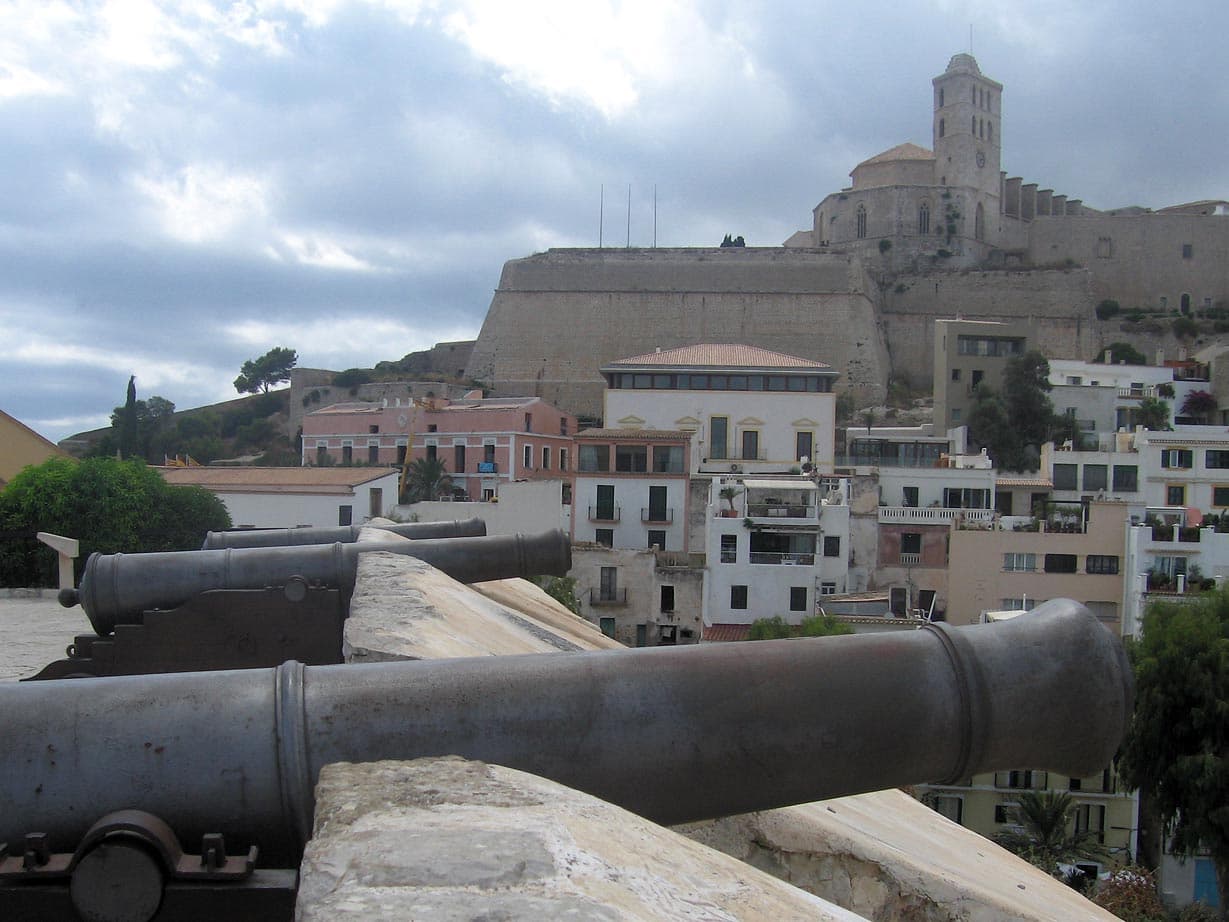 David Sim from London, United Kingdom · CC BY 2.0 via Wikimedia Commons
Dalt Vila ramparts at dawn
The bastions of the upper town face east over the port and the open sea toward Formentera; at first light you share half a kilometer of Renaissance wall with the gulls and nobody else. Enter through the Portal de ses Taules and climb to the cathedral terrace.
Year-round
Dirk Pothen · PexelsSanta Eulària promenade and Puig de Missa
The palm-lined seafront of the island’s calmest town catches the sun rising straight out of the sea; walk it early, then climb the lanes to the fortified white church of Puig de Missa before the day warms.
Year-round
Sunsets
Wessel · CC BY 2.0 via Wikimedia CommonsBenirràs
The north-coast cove aims exactly at the setting sun, which drops beside the Cap Bernat sea stack; on Sundays the drum circle turns it into the island’s biggest free show. Arrive by late afternoon in summer or park far up the hill.
May to October · The small car parks fill hours early on summer Sundays; consider the north-coast road from Sant Miquel and walking down.
LetoIbz · CC BY-SA 4.0 via Wikimedia CommonsTorre des Savinar (Es Vedrà viewpoint)
The old pirate watchtower above Cala d’Hort looks down on Es Vedrà black against the falling sun, the single most photographed frame on the island. A 15 to 20 minute uphill walk from the sandy pull-offs on the tower road.
Year-round · The rock reads best as a silhouette 30 to 60 minutes before sunset; bring a long lens for the tower-and-rock composition from the ridge.
 Eduardo Pitt from Madrid, Spain · CC BY-SA 2.0 via Wikimedia Commons
Sant Antoni sunset strip and Cap Negret
The shoreline from the Passeig de ses Fonts north past the sunset cafes is where Ibiza invented the soundtracked sunset; for the quieter version, the terrace at Hostal La Torre above Cap Negret plays ambient sets to the same horizon.
April to October · Cafe terraces on the strip expect a drink order and fill from two hours before sunset in peak season.
Day trips
 Pedro Slinger · Pexels
Formentera by fast ferry
The smallest inhabited Balearic is a 30-minute crossing away: rent bikes or a scooter at La Savina, ride the flat lanes to Ses Illetes’ Caribbean-clear sandbar, lunch on the water and catch an early-evening boat back. Posidonia meadows keep the shallows unreal shades of turquoise.
About 30 minutes each way by fast ferry from Ibiza Town port · Full day
 Arbustum · CC BY-SA 4.0 via Wikimedia Commons
The north loop: Santa Gertrudis, Sant Joan, Benirràs and Portinatx
A slow inland-and-coast circuit through the island’s rural half: coffee on the Santa Gertrudis church square, the village lanes of Sant Joan, a swim at Portinatx or Cala Xarraca, the Can Marçà cave if the day is hot, and Benirràs for the sunset drums.
A 60 to 90 minute driving loop from Ibiza Town, spread over a day · Full day
 UnFUG-Fabi · CC0 via Wikimedia Commons
Las Dalias Saturday plus the east coast
Do the market early, then spend the afternoon on the east coast: the hilltop church and old town of Santa Eulària, a swim at Cala Llonga or Es Canar, and on Wednesdays the alternative is the sprawling Punta Arabí hippy market instead.
About 25 minutes from Ibiza Town to Sant Carles by car · Half to full day
After dark
 Silvia Bertuglia Martínez · Pexels
Dalt Vila and the harbor after dark
walkThe walls floodlit, the lanes cooling down, dinner in a courtyard inside the old town and a slow descent to the marina cafes: Ibiza Town’s default perfect evening, no ticket required.
 Sebastian Coman Travel · Pexels
The sunset-cafe ritual, Sant Antoni
musicClaim a terrace seat on the strip an hour early, order slowly, and let the resident DJs score the sun into the sea, a ritual the island has run since Café del Mar’s 1980s heyday.
 Aayush · Pexels
One big club night, chosen deliberately
nightlifeIf clubbing is on the list, pick a single night that fits your taste (Pacha in town, Amnesia or the UNVRS hyperclub at San Rafael, Hï and Ushuaïa at Playa d’en Bossa), buy tickets online ahead, and use the Discobus or a booked taxi rather than driving.
Daily itinerary
Seven days in Ibiza: the walls, the calas, the north and Formentera
Three car-free days around Ibiza Town and Formentera, then a rental car for the west-coast coves, the Es Vedrà sunset, the rural north and the market coast, ending with the salt flats.
- 1
Ibiza Town and Dalt Vila
relaxedArrive, drop bags near Vara de Rey and climb into Dalt Vila through the Portal de ses Taules; ramparts, cathedral terrace and lanes.A shaded terrace inside the walls or tapas off Plaça del Parc.The Puig des Molins necropolis museum (closed Mondays), then a first swim at Talamanca.From the Baluard de Santa Llúcia bastion.La Marina or Sa Penya, a street back from the harbor front.Marina stroll past the superyachts.No car: everything today is on foot from the center.Estimate: Rainy day: swap Talamanca for the contemporary art museum (MACE) inside the walls.
- 2
Ses Salines, Es Cavallet and the salt flats
relaxedBus or taxi to Ses Salines beach early; walk the sand to the watchtower end.A chiringuito on Ses Salines or Es Cavallet.Cross the dunes to Es Cavallet, or visit the salt-flat viewpoints and flamingo lagoons on the way back.Back in town on the ramparts.A booked table in Ibiza Town; this is the night for La Gaia if the budget says yes.Cocktails on a Dalt Vila terrace.The L11 bus and taxis cover Ses Salines from town; no car needed.Estimate: Add the Sa Caleta Phoenician site by taxi if archaeology beats a second beach hour.
- 3
Formentera
moderateEarly fast ferry from the port to La Savina; rent bikes or a scooter on arrival.By the water at Ses Illetes or in Es Pujols.The Illetes sandbar, then a quieter swim at Cala Saona or Migjorn.From the ferry deck on the crossing back.Fish on the Talamanca boardwalk.An early night; tomorrow starts the driving half.Ferries run every 30 to 60 minutes in season and take about half an hour; book the return slot in August.Estimate: Non-cyclists: taxis and a small bus network cover the main beaches from La Savina.
- 4
West coast: Cala Comte, Cala Bassa and the sunset strip
moderateCollect the rental car (booked months ahead in summer) and drive to Cala Comte before ten; swim the turquoise channels off the islets.Beach restaurant at Cala Comte or Cala Bassa.A second cove (Cala Salada if the crowds allow) or lazy beach hours.The Sant Antoni strip or the terrace at Hostal La Torre; arrive early for a table.On the sunset coast after the show.Back to base; the West End is skippable unless you want it.About 30 minutes from Ibiza Town to the west beaches; parking at the famous calas fills by mid-morning in season.Estimate: Boat alternative: ferries from Sant Antoni serve Cala Comte and Cala Bassa in season, skipping the parking problem.
- 5
The north: villages, coves and Benirràs
moderateCoffee on the Santa Gertrudis square, then north through Sant Joan de Labritja.A farmhouse or village kitchen inland, or a beach restaurant at Portinatx.Swim at Cala Xarraca or Portinatx; the Can Marçà cave tour if the heat peaks.Benirràs, drums included if it is Sunday.Booked garden table at La Paloma in Sant Llorenç.Slow drive back under the pines.The whole loop is 60 to 90 minutes of driving; Benirràs parking demands a late-afternoon arrival at the latest.Estimate: Wellness swap: a morning yoga session at one of the north’s retreats instead of the cave.
- 6
Market day and the east coast
relaxedSaturday: Las Dalias market at opening. Other days: Santa Eulària’s old town and Puig de Missa first.Santa Eulària’s promenade or a beach bar at Es Canar.An east-coast swim (Cala Llonga or Aigües Blanques), or gallery-and-deli time back in Santa Gertrudis.Quiet, from the east: the light show happens behind you, so make it a beach-walk evening.Santa Eulària’s restaurant row.If a club night is happening, this is the slot: pick one room, buy tickets ahead, leave the car.Sant Carles is 25 minutes from town; the Discobus (June to September) or taxis handle any club plan.Estimate: Wednesday version: Punta Arabí market instead of Las Dalias.
- 7
Es Vedrà farewell and departure
relaxedDrive southwest to Cala d’Hort for a final swim facing Es Vedrà.Seafood above the sand at Cala d’Hort, or the full bullit de peix at Es Torrent if the flight is late.The short climb to Torre des Savinar for the last photograph, then return the car at the airport.Departure.Cala d’Hort to the airport is about 25 minutes; add buffer for the rental return in August.Estimate: Morning flight: swap the southwest for a last rampart walk and airport bus.
Getting around
- Ibiza Airport (IBZ) sits 7 km southwest of Ibiza Town beside the Ses Salines flats, with dense European connections in season; the L10 bus runs to the port in Ibiza Town roughly every 20 to 30 minutes in summer.
- Ferries from Barcelona, Valencia and Dénia (Baleària, Trasmed, GNV) and from Palma de Mallorca dock at Ibiza Town and Sant Antoni; the fast Dénia crossing is the shortest mainland route.
- Bringing or hiring a car needs planning: from 1 June to 30 September 2026 the island caps tourist vehicles at 17,668 per day (14,000 of them rental cars), so summer hire cars sell out and arriving with a vehicle requires authorization tied to the cap.
- Public buses radiate from Ibiza Town to Sant Antoni, Santa Eulària, the airport and Ses Salines frequently in season; rural coves and the interior are thinly served or not at all.
- The Discobus night network (1 June to 30 September) links Ibiza Town, Playa d’en Bossa, Sant Antoni, Santa Eulària and the big clubs every 30 to 60 minutes for a few euros a ride: the sane way home from a club night.
- Boats matter here: in season, ferries connect Ibiza Town, Talamanca, Playa d’en Bossa and Formentera, and Sant Antoni’s cross-bay boats serve the west-coast calas without the parking fight.
Things worth knowing
- · Landing in July without a pre-booked rental car and discovering the vehicle cap has emptied the counters.
- · Driving to Benirràs for the Sunday drums at 19:30 and spending the sunset looking for parking.
- · Booking a West End bed for a quiet beach holiday, or a northern farmhouse for a club marathon: match the base to the trip.
- · Treating Formentera as a maybe: in August the good ferry slots and bike shops sell through by mid-morning.
- · Underestimating taxi scarcity at 04:00; if the night ends at a superclub, know your Discobus line or book the return.
Budget
| Low | Expected | Comfortable | |
|---|---|---|---|
| Accommodation style / per night | €90≈ $101 | €220≈ $246 | €450≈ $504 |
| Food style / per day | €30≈ $34 | €60≈ $67 | €120≈ $134 |
| Local transport / per day | €8≈ $9 | €35≈ $39 | €70≈ $78 |
| Estimate / per day | €0≈ $0 | €15≈ $17 | €60≈ $67 |
Estimate · EUR · 2026-08-07. Accommodation is per room per night (two sharing) in shoulder season; July and August often double it. Club nights are a separate budget line: most big-room tickets run 40 to 100 EUR before drinks. The Formentera ferry is roughly 45 to 55 EUR return. Add the Balearic tourist tax, up to about 4.40 EUR per person per night in high season. · 1 USD = €1 (14 Oct 2026)
Things worth knowing
Frequently asked questions
Is Ibiza only about clubbing?
No. The clubs occupy a handful of locations on the south and west; most of the island is coves, pine hills, farmland and villages, plus a UNESCO-listed old town. Plenty of visitors never enter a club, and the north barely notices the season. That said, if you want total quiet in August, base north or inland.
How many days do you need in Ibiza?
Five to seven. Two for Ibiza Town, Dalt Vila and the southern beaches, one for Formentera, one for the west-coast calas and the Es Vedrà sunset, and one or two for the north and the markets. Weekenders can do the town plus one coast, but the island rewards the full week.
When is the best time to visit Ibiza?
Late May, June, September and early October: swimmable sea, open restaurants and beach services, and room to breathe. September combines the warmest water with closing-season energy. July and August are the full-throttle months, with prices and crowds to match.
Do you need a car in Ibiza?
For the famous calas, the north and the interior, yes, for at least part of the trip. But since the island now caps tourist vehicles from June to September, summer rentals must be booked well ahead. Car-free trips work fine around Ibiza Town, Santa Eulària, Sant Antoni, Ses Salines and Formentera using buses and boats.
Is the Formentera day trip worth it?
Yes, and it is the easiest logistics on the island: fast ferries cross from Ibiza Town in about 30 minutes, bikes and scooters wait at La Savina, and Ses Illetes is one of the Mediterranean’s great beaches. Book the return crossing in August and go early.
Sources (4)
- Ibiza, Biodiversity and Culture is a UNESCO World Heritage site (1999) covering Dalt Vila, Puig des Molins, Sa Caleta and the Posidonia meadows · unesco · 2026-08-07
- Island overview, beaches, markets and practical information from the official Ibiza tourism board · tourism-board · 2026-08-07
- Summer 2026 vehicle entry limitation for Ibiza set at 17,668 vehicles per day including 14,000 rental cars · ferry · 2026-08-07
- Balearic Sustainable Tourism Tax rates and rules administered by the Balearic tax agency · government · 2026-08-07