Malaysia · Kedah
Langkawi
Base at Pantai Cenang or on the north coast, ride the SkyCab to the Sky Bridge early, spend one morning deep in the Kilim mangroves with an operator that refuses eagle feeding, swim the lake at Dayang Bunting, and keep every evening for the west-facing sand. Add the seasonal ferry to Koh Lipe if the calendar cooperates.
 Flickr user "The Dilly Lama" / CC BY 2.0 via Wikimedia Commons
Overview
Langkawi sells itself as a duty-free beach island, and it is one: an archipelago of 99 islands (a few more surface at low tide) off Malaysia's northwest coast, where shop beer can cost less than juice and resorts line the best bays. But the reason to cross the world for it is older. This was Southeast Asia's first UNESCO Global Geopark, a title it has held since 2007 and defended through 2027: half-billion-year-old Cambrian sandstone on Machinchang, a drowned karst labyrinth of mangroves and limestone at Kilim, and a freshwater lake cupped inside a marble island at Dayang Bunting. The beach holiday comes with a geology lesson attached, if you choose the right boat.
If you only take one thing from this guide: book the mangrove morning with one of the operators that does not feed the eagles. The cheap jetty tours chum the water with chicken skin for photos, a practice the geopark authorities themselves discourage, and the difference in what you actually see and learn is enormous. Beyond that, Langkawi rewards low ambition: two or three anchor activities, long afternoons on the sand, and dinner where the locals eat, which here means a rotating night market and a Malay lunch spread eaten with your hands.
Best for
Couples · Families · Beach and resort travelers · Nature and wildlife · Honeymooners · Duty-free bargain hunters
Daily itinerary
4 to 6 days
Most tropical islands offer beach, jungle and a sunset. Langkawi layers a protected geopark over all three, which means mangrove rivers you can spend a morning inside, a cable car that summits a Cambrian ridge, and hornbills over the breakfast table at the quieter resorts. It is also genuinely affordable for what it is: the duty-free status keeps drinks and chocolate cheap, ferries and Grab rides cost little, and the same island that hosts The Datai and Four Seasons has beach motels a family can book without wincing.
Best time to visit
November to March is the dry season and the obvious window: reliable sun, calm seas for island hopping, and the Koh Lipe ferry running. September and October are the wettest months. The sea stays warm all year, and rain outside the monsoon peak tends to arrive as short, hard afternoon storms rather than lost days.
- November to February: The dry heart of the season: island hopping, mangrove mornings and clear SkyBridge views. The Royal Langkawi International Regatta fills the Kuah marina in January.
- March to April: Still mostly dry, hotter, with the first serious afternoon storms returning late April; a good-value window before the midyear school holidays.
- May to June: Hot and greener, showers arriving in short bursts; mornings are the better bet for weather and the island is quiet outside Malaysian school breaks.
- July to August: A wetter, breezier midsummer with regional visitors on weekends; watch for the SkyCab's annual maintenance closure, which fell in mid-July in 2026.
- September to October: The wettest weeks of the year. Rough seas suspend many boat trips and the Koh Lipe ferry waits for mid-October; the payoff is the lowest resort rates.
Things worth knowing
- Visit Malaysia 2026: Langkawi's official calendar for the campaign year lists 151 events across the island, launched at Dataran Lang in January 2026.
- Royal Langkawi International Regatta (January): sailing yachts race out of the Royal Langkawi Yacht Club at Kuah, a January fixture since 2003.
- Koh Lipe ferry season (roughly mid-October to late May): the international crossing from Telaga Harbour runs only outside the monsoon, and its opening effectively starts Langkawi's high season.
- LIMA, the Langkawi International Maritime and Aerospace Exhibition: the biennial airshow next returns in 2027 and fills accommodation island-wide for its week; check dates before planning a trip around it.
Where to stay
 Stacey Koenitz · Pexels
Pantai Cenang
The island's main resort strip: two kilometers of west-facing sand backed by one walkable road of restaurants, duty-free shops, beach bars and hotels at every price. It has the island's biggest concentration of evening life by far, and the sunsets land straight in front of your table.
Best for: First-time visitors · Budget to midrange stays · Sunsets · Car-free trips
Jet skis and parasail boats work the central beach all day, and the strip road crawls with traffic around sunset; the quiet Langkawi of the brochures lives elsewhere.
 jetsun · CC BY-SA 3.0 via Wikimedia Commons
Pantai Tengah
Cenang's calmer sibling immediately south around a small headland: the same sunset angle with fewer jet skis, a shorter row of restaurants and spas, and mostly midrange and upscale hotels. Walkable to the Cenang strip when you want the noise back.
Best for: Couples · A quieter beach base · Spa days
The beach is narrower than Cenang's and all but disappears at the highest tides; check the sand in front of your hotel, not just the pool photos.
 Azreey · CC BY-SA 3.0 via Wikimedia Commons
Kuah
The island's working town and ferry gateway: the Dataran Lang eagle statue over the harbor, the biggest duty-free malls, banks and clinics, and seafood restaurants locals drive to. Almost no one holidays here, but everyone passes through.
Best for: Duty-free shopping · Ferry connections · Local food
No swimmable beach; Kuah is an errands-and-transit town, best visited on market night (Wednesday and Saturday) or on the way to the jetty.
 YFS Visuals · Pexels
Tanjung Rhu and the northeast
A casuarina-backed spit of white sand at the island's northeast tip, facing a bay scattered with limestone islets, with the Kilim mangroves around the corner. Two resorts (Four Seasons among them) and near-total quiet; the sandbars at low tide are the island's best walk.
Best for: Honeymooners · Luxury stays · Peace and scenery
Dinner means the resort, a taxi, or a planned drive; there is no strip and that is the point.
 alhafis · CC BY 3.0 via Wikimedia Commons
Datai Bay and the northwest
The rainforest corner: a road winds over a forested ridge to a bay routinely cited among the region's finest beaches, shared by The Datai and one golf course and nothing else. Hornbills, dusky langurs and flying lemurs are neighbors, not attractions.
Best for: Luxury seclusion · Nature and birdlife · Honeymooners
Practical access to the bay is limited because the approaches run through resort grounds; most non-guests admire it from the Datai lookout on the road above.
 Sergey Nikolaev · Pexels
Pantai Kok and Telaga Harbour
The west-coast marina quarter under Machinchang mountain: a harbor of sailing yachts ringed by restaurants, the SkyCab base station ten minutes away, Telaga Tujuh's waterfalls up the hill, and the international ferry terminal for Koh Lipe. A practical, scenic base for the island's northwest sights.
Best for: Sight-focused stays · Marina evenings · Koh Lipe connections
The harbor is prettier than the swimming; Pantai Kok's beach is modest, so plan sand days at Cenang or Tanjung Rhu.
Where to sleep
The Datai Langkawi
luxury · Datai Bay (northwest)
Best for: Rainforest immersion · Honeymoons · Nature lovers who want it silent
- Rooms, suites and villas dropped into old-growth rainforest above Datai Bay, with resident naturalists and daily nature walks
- One of Southeast Asia's most storied resorts, rebuilt top to bottom in a 2018 renovation
- Datai Bay itself: a near-private crescent of sand that ranks among the region's finest
- A 45 to 60 minute drive from Cenang's restaurants and the airport corridor; you stay for the bay, not the island
- Rates sit at the very top of the Malaysian market
- Wildlife is the amenity: monkeys and insects come with the rainforest
Four Seasons Resort Langkawi
resort · Tanjung Rhu (northeast)
Best for: Beachfront luxury · Couples and families in parallel · Design lovers
- About 90 pavilions and villas along the Tanjung Rhu sand, styled with Moorish and Malay flourishes by designer Bill Bensley
- A broad, white resort beach facing limestone islets, among the island's finest
- Geopark location: the resort runs its own mangrove and nature programs with the Kilim wetlands next door
- Isolated from the island's restaurant life; count on resort dining most nights
- Top-of-market rates, especially over the winter holidays
- Sandflies and strong currents are occasional realities of the wild northeast corner
The St. Regis Langkawi
luxury · Near Kuah (southeast)
Best for: Suite-level polish · Sunset views over the strait · Quick jetty and airport logistics
- An all-suite resort on its own cove southeast of Kuah, with a small set of overwater villas rare for Malaysia
- Butler service and a formal dining room in the St. Regis grand-hotel tradition
- The closest of the luxury set to Kuah jetty and the Dataran Lang waterfront
- The house beach is small and the sea here is calmer and murkier than the north-coast bays
- You are 30 to 40 minutes from Cenang and the western sights
- The formality reads wonderful or stiff depending on your taste
Casa del Mar
boutique · Pantai Cenang (north end)
Best for: Beachfront without a mega-resort · Sunset cocktails on the sand · Couples who want the strip nearby but not outside the window
- A small Mediterranean-styled boutique directly on the quieter north end of Cenang beach
- Sunset-facing pool, beach bar and restaurant with the strip a ten-minute stroll away
- Consistently one of the island's best-reviewed independent hotels
- Small rooms and grounds by resort standards; this is an intimate property
- Cenang's jet-ski soundtrack reaches here on busy afternoons
- Can book out well ahead in the winter season
Temple Tree Langkawi
unique · Between the airport and Pantai Cenang
Best for: Heritage architecture · Slow mornings · Travelers bored of resort sameness
- Eight antique Malaysian houses, Chinese, Malay, Indian and Eurasian, each 60 to 120 years old, dismantled across the country and rebuilt here as suites
- A rescue-cat and community feel run by the long-standing Bon Ton team
- Character per ringgit that no new-build resort can match
- Not on a beach: Cenang's sand is a short drive away
- Old timber houses mean character over soundproofing and glassy polish
- The style is specific; lovers of minimalist hotels should look elsewhere
Essential experiences
 Shakil Ahmed · Pexels
Langkawi SkyCab and Sky Bridge
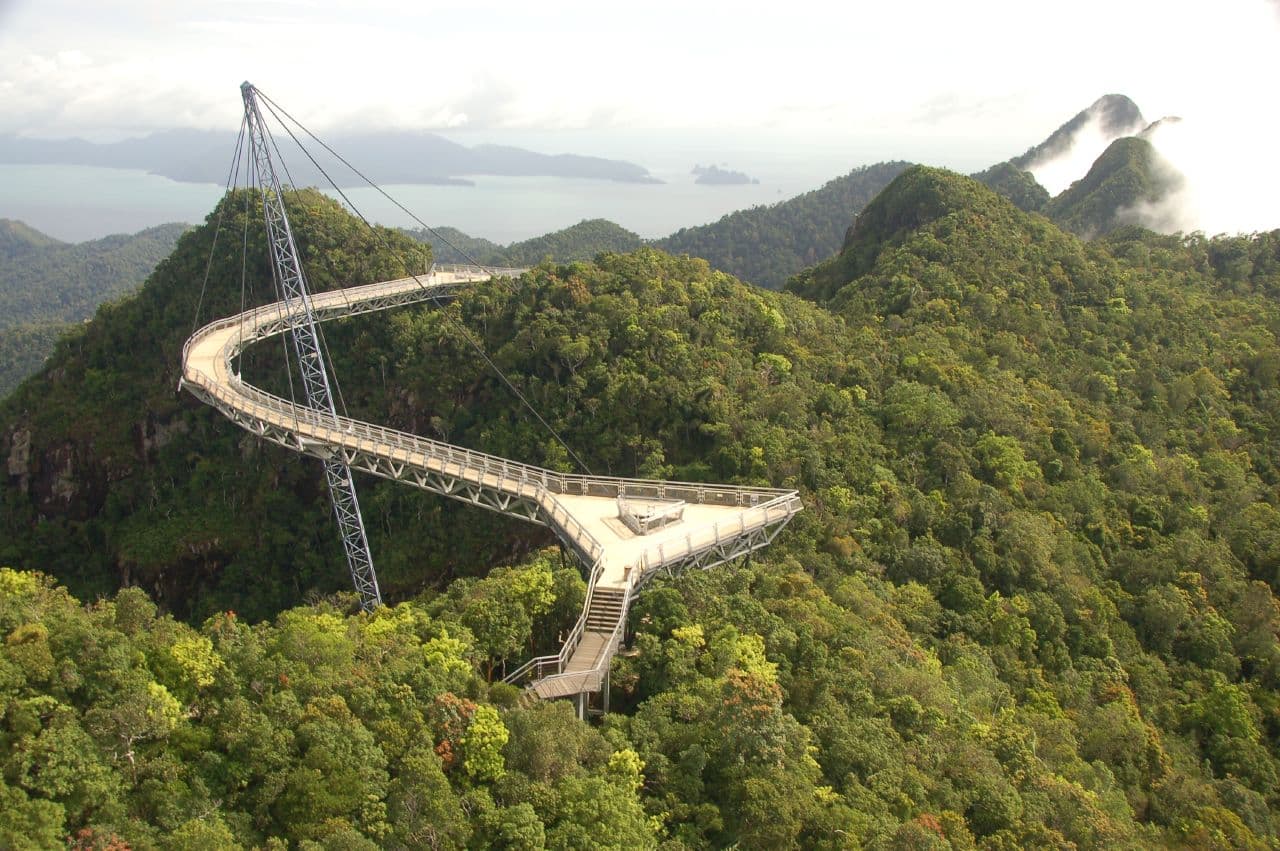
A strikingly steep cable-car ascent (sections reach a gradient of about 42 degrees) climbs from the Oriental Village at Teluk Burau up Machinchang's half-billion-year-old Cambrian ridge, the oldest exposed rock in Malaysia. At the top, a short hill path or the SkyGlide funicular reaches the Sky Bridge, a 125-meter curved pedestrian span hung above the forest. Standard international tickets run about RM80 for adults (less for Malaysians); the Sky Bridge itself is a small separate ticket. Go at the 09:30 opening for the clearest air, note the Wednesday late start (12:00), and check for the annual maintenance closure, held in mid-July in 2026.
 irwan zahuri · Pexels
Kilim Karst Geoforest Park
A drowned limestone labyrinth on the island's northeast corner: boat routes thread mangrove channels between sheer karst walls, past bat caves, mudskippers, macaques, otters if you are lucky, and Brahminy kites and white-bellied sea eagles overhead. This is the geopark's showpiece. Book with an operator that refuses eagle feeding (the chicken-skin shows at the cheap jetty tours distort the birds' behavior and are discouraged by the park authorities); naturalist-led small boats from Tanjung Rhu or Kilim jetty run around three to four hours.
 Sabrinakhanpoly · CC BY-SA 4.0 via Wikimedia Commons
Telaga Tujuh (Seven Wells) waterfalls
A mountain stream steps through seven linked rock pools before pouring 90 meters off a Machinchang cliff. About 200 steps reach the lower falls and its swimming hole; the full staircase of roughly 640 steps climbs to the seven pools themselves, slick natural bathtubs with a view back over the coast. Go early for cooler air, keep bags zipped (the macaques are professionals), and skip it after heavy rain when the rocks turn dangerous.
 Mohd Khairul Hakimi Abdul Wahab · CC BY 3.0 via Wikimedia Commons
Tasik Dayang Bunting (Lake of the Pregnant Maiden)
A freshwater lake filling a collapsed marble basin on the archipelago's second-largest island, separated from the sea by a thin rock wall and wrapped in legend: the silhouette of the ridgeline resembles a reclining pregnant woman, and the water is said to bless fertility. Boats from the southwest jetties drop you at a walkway over the forest to floating platforms where you can swim (life jackets are available). It anchors the classic three-stop island-hopping run with Pulau Singa Besar and Pulau Beras Basah.
 Hzh · CC BY-SA 4.0 via Wikimedia Commons
Dataran Lang (Eagle Square)
The 12-meter rufous eagle poised for flight over Kuah harbor is the island's emblem, a nod to the name Langkawi's popular reading as "reddish-brown eagle". The waterfront square around it, freshly renovated in 2024, gives a broad free view across the ferry channel and the island-dotted strait, and is at its best at first light or after dark when the statue is lit. Pair it with Kuah's duty-free malls or the Wednesday and Saturday night market.
 Tim Parkinson · CC BY 2.0 via Wikimedia Commons
Tanjung Rhu beach
For us, the most beautiful publicly accessible beach on the island: a long hook of pale sand under casuarina trees ("rhu" is Malay for the tree), looking north across turquoise shallows to limestone islets. At low tide sandbars walk you far out into the bay. The public stretch sits before the resort gates, with drink stalls and boat operators offering runs into the Kilim rivers next door. Currents strengthen off the point; swim conservatively.
Gunung Raya
Langkawi's highest mountain at around 880 meters, and unusually for the region you can drive it: a quiet, winding forest road climbs to the summit area for a panorama over the whole archipelago to Thailand on clear days. The forest en route is one of the easiest places on the island to spot great hornbills, especially early and late. Check locally whether the summit tower is open; the drive and the birds are the reliable part.
Makam Mahsuri (Mahsuri's Tomb)
The shrine and cultural complex of Mahsuri, the legendary young woman said to have been executed two centuries ago on a false accusation of adultery, cursing the island with seven generations of misfortune with her dying breath. Locals will tell you the curse expired just as Langkawi's modern boom began. The complex holds her tomb, a reconstructed kampung house and a small museum; it is short, inexpensive and the key to how the island tells its own story.
 jetsun / CC BY-SA 3.0 via Wikimedia Commons
 Tbachner / Public domain via Wikimedia Commons
Food & drink
 Muhayminismail · CC BY-SA 4.0 via Wikimedia Commons
Nasi dagang
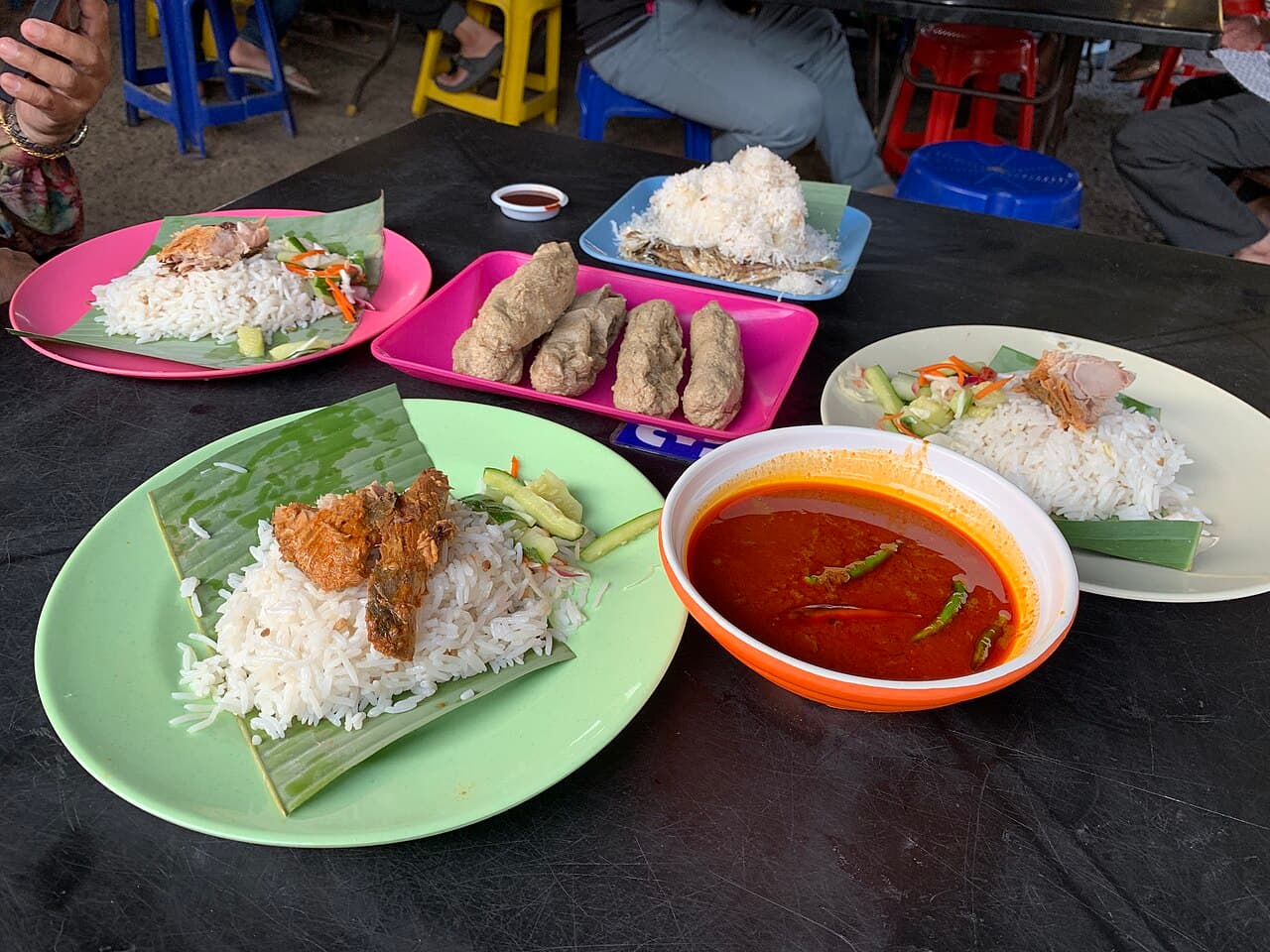
Slightly sweet coconut rice with tuna curry, pickled vegetables and hard-boiled egg, an east-coast Malaysian breakfast that Langkawi has adopted as its own morning institution. Eaten before nine, ideally facing a paddy field.
 brown_colour · CC BY 2.0 via Wikimedia Commons
Laksa Kedah
The northern take on Malaysia's sour fish-noodle soup: thick rice noodles in a dark, tamarind-sharp mackerel gravy, rawer and more rustic than Penang's asam laksa. Night markets and roadside warungs do it best.
 Christian Losari · CC BY 2.0 via Wikimedia Commons
Ikan bakar
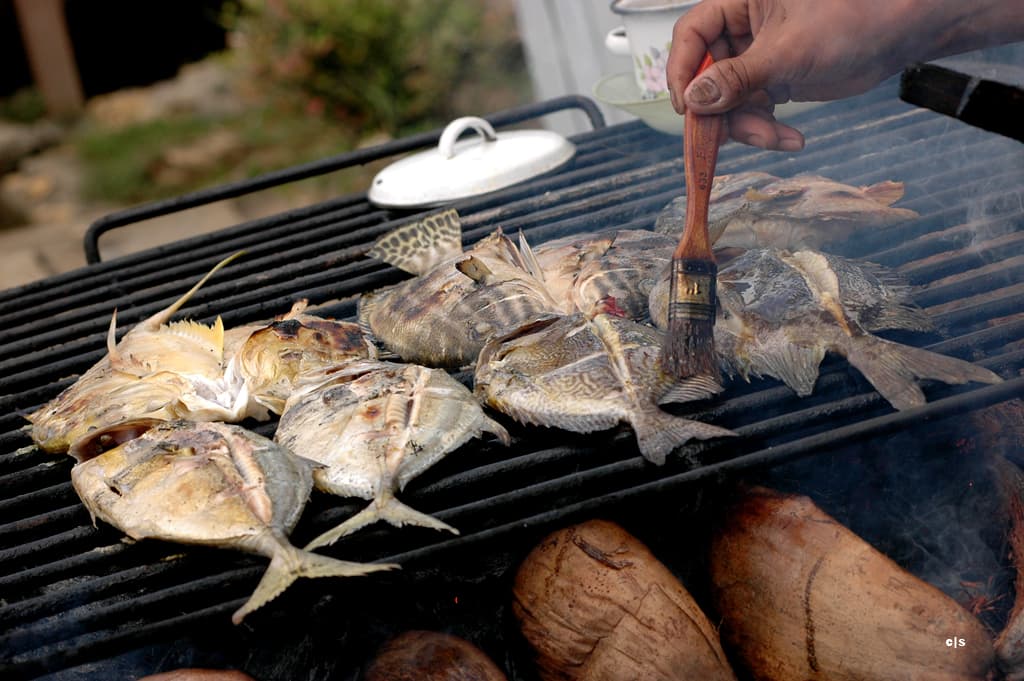
Whole fish or stingray wings rubbed with spice paste, wrapped in banana leaf and grilled over charcoal, sold by weight with sambal and rice. The open-air grill houses around Kuah and Cenang are the evening default.
 rakhmat suwandi · Pexels
Gulai and the Malay lunch spread
Lunch here is a nasi campur ritual: rice plus your pick from trays of gulai (turmeric-coconut curries), fried chicken, sambal prawns and wild-fern kerabu salads. Pay by the plate, eat with your right hand if you like.
 No machine-readable author provided. Jpatokal assumed (based on copyright claims). · CC BY-SA 3.0 via Wikimedia Commons
Roti canai
The flaky griddled flatbread with dhal or curry that anchors every Malaysian morning; mamak shops across the island flip them until midday. A complete breakfast costs pocket change.
 KimonBerlin · CC BY-SA 2.0 via Wikimedia Commons
Cendol
Shaved ice over pandan noodles, coconut milk and dark palm-sugar syrup, the correct answer to a Langkawi afternoon. Roadside stalls sometimes crown it with local durian in season.
Fresh seafood by weight
Tiger prawns, squid, crabs and reef fish priced per hundred grams and cooked to order (butter-garlic, sweet-and-sour, black pepper) at the seafood houses of Kuah and the Cenang strip. Confirm the price before the wok starts.
Langkawi eats early and casually: breakfast places peak before 10:00, the big Malay lunch spreads sell out by early afternoon, and night markets run roughly 18:00 to 22:00. The island is majority Muslim; most local restaurants are halal and serve no alcohol, while beach bars, resorts and Chinese seafood houses pour duty-free drinks freely. During Ramadan many local kitchens close by day and the evening bazaars become the event.
Where to eat
Restoran Siti Fatimah
institutionThe island's most famous nasi campur hall: dozens of trays of Kedah-style curries, sambals, fried fish and kerabu, busiest before 14:00, after which popular trays can run empty. Open from breakfast to late afternoon; come hungry, point at what you want, pay astonishingly little.
Last researched 2026-08-10
Nasi Dagang Pak Malau
institutionA village breakfast spot in a wooden house looking across rice paddies toward Gunung Raya: nasi dagang with tuna curry is the order, and it can sell out by mid-morning. One of those places where the setting does half the cooking; mornings only.
Last researched 2026-08-10
The Gulai House
fine-diningThe Datai's signature restaurant, a timber pavilion in the rainforest where classic Malay and Indian dishes (gulai, tandoor work, whole fish) get resort-level execution. Non-guests should call ahead to reserve and confirm access; the drive from Cenang takes most of an hour, so make an evening of it.
Last researched 2026-08-10
Sunrises
 YFS Visuals · Pexels
Tanjung Rhu sandbars
First light comes up behind the limestone islets and the tide-bared sandbars of the northeast bay, with casuarinas for a foreground and usually nobody else on the kilometer of sand. Our pick for sunrise on the island.
November to March for the clearest skies
 Zaireey · CC BY-SA 4.0 via Wikimedia Commons
Dataran Lang waterfront, Kuah
The eagle statue catches the day's first warm light with the ferry channel and the Andaman behind it, and the square is empty apart from joggers. Worth pairing with a morning ferry departure or an early run to the Kilim jetty.
Year-round
Sunsets
 C980040 · CC BY-SA 4.0 via Wikimedia Commons
Pantai Cenang
The whole two-kilometer strip faces the sunset square-on, and the evening ritual is island-wide: beach bars drag tables onto the sand, parasails come down, and the light show runs long thanks to offshore islands staggering the horizon. The island's easiest great hour.
Year-round; November to March for the most reliable skies · Arrive before 19:00 for a sand-side table at the popular bars; the strip road jams at dusk.
 Wii Love · Pexels
Telaga Harbour and Pantai Kok
Masts, the breakwater lighthouse silhouette and Machinchang's ridge going purple behind the marina: the composed, quieter alternative to Cenang's beach-bar sunset, with harbor-front restaurants for the after-show.
Year-round
 Maris Teteris · CC BY 3.0 via Wikimedia Commons
A sunset cruise off the northwest coast
Catamarans and yachts out of Telaga Harbour and Tanjung Rhu run the coast in the golden hour, the classic Langkawi splurge-that-is-not-really-a-splurge; many include swimming stops and drinks. Book a day or two ahead in high season.
November to March for calm seas · Cruises are weather-dependent in the May to October months; morning bookings get first cancellation warnings.
Day trips
 Emran Kassim · CC BY 2.0 via Wikimedia Commons
Island hopping: Dayang Bunting, Singa Besar and Beras Basah
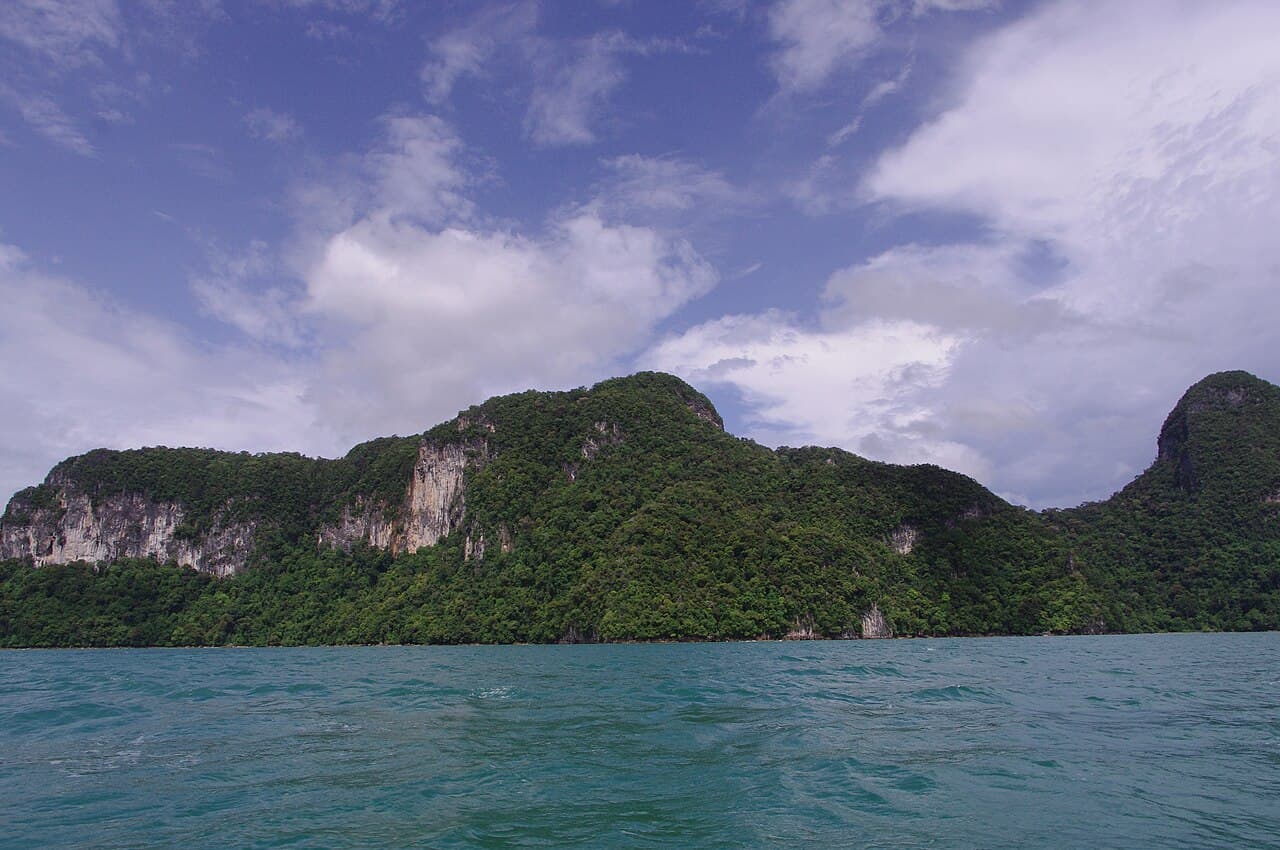
The classic half-day shared-boat run from the southwest jetties: swim the freshwater lake at Dayang Bunting, watch eagles wheel off Pulau Singa Besar (from a respectful distance with a good operator), and finish on the sandbank beach of Pulau Beras Basah. Short hops, big scenery, easy with kids.
Half a day; boats leave from the jetties south of Pantai Cenang · Half day
 Rajat Rashmi Swain · Pexels
Koh Lipe, Thailand (seasonal)
In season, a morning ferry from Telaga Harbour crosses to Thailand's tiny Koh Lipe in about 90 minutes: powder beaches, snorkeling over the Adang archipelago's reefs, and Thai immigration normally processed at the arrival point on Pattaya Beach (confirm procedures when booking). Doable as a long day trip, better as an overnight; the route pauses entirely for the monsoon.
About 1.5 hours each way from Telaga Harbour; the season runs roughly mid-October to the end of May · Full day or overnight
 irwan zahuri · Pexels
The mangrove long-day: Kilim by boat, Tanjung Rhu by afternoon
Book a naturalist-led morning through the Kilim Karst Geoforest Park (bat caves, kites and sea eagles, the fossil-rich limestone), lunch at a floating fish-farm restaurant or back on land, then give the afternoon to Tanjung Rhu's sand and sandbars ten minutes away. The geopark day, done properly.
Boats run 3 to 4 hours from Kilim or Tanjung Rhu jetties; the beach is adjacent · Full day
After dark
 Kogulanath Ayappan · Pexels
The rotating night market (pasar malam)
marketLangkawi's night market moves nightly between villages on a fixed weekly rotation (Kuah takes Wednesday and Saturday, other nights rotate through Cenang-adjacent Temoyong, Padang Matsirat and beyond): smoky satay and ikan bakar, laksa ladled from vats, cendol, and almost no tourist markup. Ask your hotel which village has it tonight.
 David Block (pitti) · CC BY-SA 2.5 via Wikimedia Commons
Sunset into dinner on the Cenang sand
nightlifeThe nightly default done right: a beach-bar table on the sand for the sunset, then a barefoot walk down the strip to a seafood grill or a Malay kitchen. Cheap duty-free drinks make Cenang one of the few Malaysian beach towns with a real bar scene.
A duty-free sweep of Kuah
walkThe island ritual before any flight home: chocolate, spirits and perfume at a fraction of mainland prices in Kuah's duty-free malls, then the lit eagle at Dataran Lang. Remember the rule: you need 48 hours on the island before taking duty-free goods off it.
Daily itinerary
Five days in Langkawi: the geopark, the beaches and one lake
A Cenang or Tengah base for the whole stay: the SkyCab and waterfalls early, the Kilim mangroves and Tanjung Rhu on the best-weather day, island hopping to the lake, and evenings split between beach bars and night markets.
- 1
Arrive, Cenang, first sunset
relaxedLand at Langkawi International (or ferry into Kuah), pick up the rental car or a Grab to the Cenang-Tengah strip.Roti canai and teh tarik at a mamak shop, or the last trays of a nasi campur spread.Settle in, swim in front of the hotel, walk the strip to get your bearings.A beach-bar table on the Cenang sand.Seafood by weight on the strip; confirm prices before ordering.Check which village hosts tonight's pasar malam for later in the week.Airport to Cenang is about 15 minutes; Grab covers the day fine if the car waits until tomorrow.Estimate: North-coast resort stays flip this day: settle at Tanjung Rhu or Datai Bay and take the sunset from the resort sand.
- 2
Machinchang: SkyCab, Sky Bridge and Seven Wells
moderateBe at the Oriental Village before the 09:30 opening (not Wednesday, when it opens at noon) and ride the SkyCab up Machinchang; walk or SkyGlide to the Sky Bridge before the haze builds.Telaga Harbour's marina-front restaurants.The 200 steps to Telaga Tujuh's lower falls, and the full staircase to the seven pools if legs allow; swim where the locals swim.The marina breakwater at Telaga Harbour.Harbour-front, or back on the strip.An early night; tomorrow is the early alarm that matters.Cenang to the Oriental Village is about 20 minutes; all three sights sit within a ten-minute radius.Estimate: Vertigo or long queues: skip the Sky Bridge add-ons and take the ridge viewing decks, or swap the afternoon for Pantai Kok beach time.
- 3
The geopark day: Kilim mangroves and Tanjung Rhu
moderateA booked naturalist-led boat through the Kilim Karst Geoforest Park from Tanjung Rhu or Kilim jetty: karst channels, bat caves, kites and sea eagles unbaited.A floating fish-farm restaurant on the Kilim river, or picnic supplies for the beach.Tanjung Rhu: swim, walk the low-tide sandbars, do nothing under the casuarinas.Book tonight's sunset cruise, or drive back west in time for the Cenang show.Ikan bakar at a grill house on the drive back, or Kuah's seafood row.If it is Wednesday or Saturday, Kuah night market on the way home.Cenang to the northeast corner is 40 to 50 minutes; a car makes this day, otherwise arrange tour pickup plus a Grab for the beach.Estimate: Bird lovers: add a late-afternoon Gunung Raya drive for hornbills instead of the second beach session.
- 4
Island hopping and the pregnant maiden's lake
moderateHalf-day island-hopping boat from the Teluk Baru jetties: Dayang Bunting first, with a swim in the freshwater lake before the platforms crowd.Back on the main island: the Malay spread at Restoran Siti Fatimah before the trays empty.Makam Mahsuri for the island's founding legend, then pool or beach recovery.Pantai Tengah, the calmer angle on the same show.Tonight's pasar malam village, eating stall to stall.Cendol or fruit from the market stalls; pack for tomorrow's early start if the Koh Lipe extension is on.Boats leave from the island's southwest corner, ten minutes from Cenang; the lunch and tomb stops sit on the airport road loop.Estimate: Monsoon-season swell can cancel boats: the fallback is Gunung Raya, the tomb and a long lunch.
- 5
Paddy-field breakfast and departure (or the Koh Lipe extension)
relaxedNasi dagang at Pak Malau facing the paddies and Gunung Raya, before it sells out.Light, near the airport or jetty.A duty-free sweep of Kuah if you have met the 48-hour rule, then fly or ferry out.Departure.Pak Malau sits ten minutes from the airport; Kuah jetty is 30 minutes from Cenang, so time the duty-free stop accordingly.Estimate: In season, swap departure for the morning ferry from Telaga Harbour and give Koh Lipe one night; passports and a 90-minute check-in required.
Getting around
- Langkawi International Airport (LGK) at Padang Matsirat is 15 minutes from Pantai Cenang, with frequent short hops from Kuala Lumpur (about an hour) plus Singapore and regional links; check current schedules, which shift with the Visit Malaysia 2026 season.
- Ferries reach Kuah jetty from Kuala Perlis (about 75 minutes) and Kuala Kedah (about 105 minutes) on the mainland several times daily; non-Malaysian adult fares rose in April 2026 to RM45 and RM55 respectively.
- The Penang ferry is gone: the once-popular direct passenger service has not run since the pandemic, so from Penang you either fly (about 35 minutes) or take the train or bus north to the Kuala Perlis or Kuala Kedah jetties.
- From Thailand, the seasonal Telaga Harbour ferry connects Koh Lipe (roughly mid-October to the end of May), with full exit and entry immigration at both ends.
- Grab works island-wide and cheaply; short hops around the Cenang strip cost a few ringgit and even cross-island rides rarely hurt. Cars can thin out in the far north at night, so book return rides before dinner there.
- Rental cars and scooters are the local default and among Malaysia's cheapest; roads are quiet and well-surfaced, driving is on the left, and the whole island crosses in about an hour.
- There is no public bus network to speak of: plan around Grab, rentals and hotel transfers.
- Taxis at the airport and jetty run on a fixed-fare coupon system from marked counters, a fair fallback where Grab surge appears.
Things worth knowing
- · Planning a Penang-Langkawi ferry: it no longer exists. Fly, or route via Kuala Perlis or Kuala Kedah.
- · Turning up for the SkyCab on a Wednesday morning (it opens at noon for maintenance) or during the annual mid-year maintenance closure without checking.
- · Taking the cheapest mangrove tour and getting an eagle-feeding circus instead of a geopark; the good operators cost a little more and are worth every ringgit.
- · Buying duty-free on a one-night stay: taking goods off the island requires a minimum 48 hours on it.
- · Booking September or October beach weeks without a rain plan, then discovering the boats are not running.
Budget
| Low | Expected | Comfortable | |
|---|---|---|---|
| Accommodation style / per night | MYR 120≈ $29 | MYR 320≈ $78 | MYR 900≈ $220 |
| Food style / per day | MYR 40≈ $10 | MYR 90≈ $22 | MYR 250≈ $61 |
| Local transport / per day | MYR 15≈ $4 | MYR 60≈ $15 | MYR 150≈ $37 |
| Estimate / per day | MYR 0≈ $0 | MYR 60≈ $15 | MYR 160≈ $39 |
Estimate · MYR · 2026-08-10. Accommodation is per room per night (two sharing) outside the December to February peak; the Datai Bay and Tanjung Rhu resorts operate in another universe, commonly RM3,000 and up in season. Food splits sharply: night-market and nasi campur meals cost single-digit-to-teens ringgit, resort dinners resemble city prices. Malaysia's Tourism Tax adds RM10 per room per night for foreign guests. Duty-free status keeps drinks and chocolate unusually cheap for Malaysia. · 1 USD = MYR 4 (14 Oct 2026)
Things worth knowing
Frequently asked questions
Langkawi or Penang?
Different trips. Langkawi is the beach-and-nature island: sand, resorts, the geopark, duty-free drinks, quiet nights. Penang is the culture-and-food city: George Town's heritage streets, hawker food that outclasses almost anywhere, museums and street art, with mediocre beaches. Honest answer: eaters and city walkers choose Penang, beach-and-boat travelers choose Langkawi, and since the direct ferry no longer runs, combining them means a short flight or a half-day overland-plus-ferry hop.
How many days do you need in Langkawi?
Four to six. That covers the SkyCab and waterfalls, a proper Kilim mangrove morning, island hopping to the Dayang Bunting lake, and real beach time, without padding. Add a night or two for a Koh Lipe extension in season, or subtract to three if you only want a beach pause between cities.
When is the best time to visit Langkawi?
November to March: dry, calm seas, every boat running, and the Koh Lipe ferry in season. September and October are the wettest months, when island hopping gets cancelled and the ferry to Thailand stops. The in-between months trade some afternoon rain for lower prices and quieter sand.
Do you need to rent a car in Langkawi?
For at least a day or two, ideally: rentals are cheap, roads are quiet, and the northeast (Kilim, Tanjung Rhu) and the Machinchang corner are far more pleasant with your own wheels. But Grab is reliable and inexpensive enough that a car-free trip based at Cenang works fine, using tours with hotel pickup for the far corners.
Is Langkawi cheap?
By international beach-resort standards, yes. Local meals cost a few ringgit, Grab rides and rentals are cheap, the duty-free status makes drinks some of the cheapest in Malaysia, and solid midrange hotels often undercut their Thai-island equivalents, season for season. The luxury tier (Datai Bay, Tanjung Rhu) is priced globally, but even there the food and transport around it stay gentle.
Is the Sky Bridge worth it?
Yes, with caveats: go early for clear air, expect queues in peak season, and know what you are buying. The international package for the cable car runs about RM80 per adult, with the bridge itself a small extra ticket, and the whole circuit takes two to three hours. Skip it in heavy haze or after a rainstorm closes the ridge; the lower viewing decks are most of the reward if the bridge queue is absurd.
Sources (5)
- Langkawi has been a UNESCO Global Geopark since 2007, the first in Southeast Asia, and retained green-card status at its 2023 revalidation, valid until 2027 · government · 2026-08-10
- Island overview, geoforest parks, beaches and events from Naturally Langkawi, the official destination site of the Langkawi Development Authority · tourism-board · 2026-08-10
- SkyCab operations, gondola types and Telaga Tujuh information from the official Panorama Langkawi site · official · 2026-08-10
- Mainland ferry fares from Kuala Perlis (RM45) and Kuala Kedah (RM55) for non-MyKad adults effective 15 April 2026 · reputable-local · 2026-08-10
- Koh Lipe international ferry season and immigration procedures from the Telaga Terminal operator · ferry · 2026-08-10


