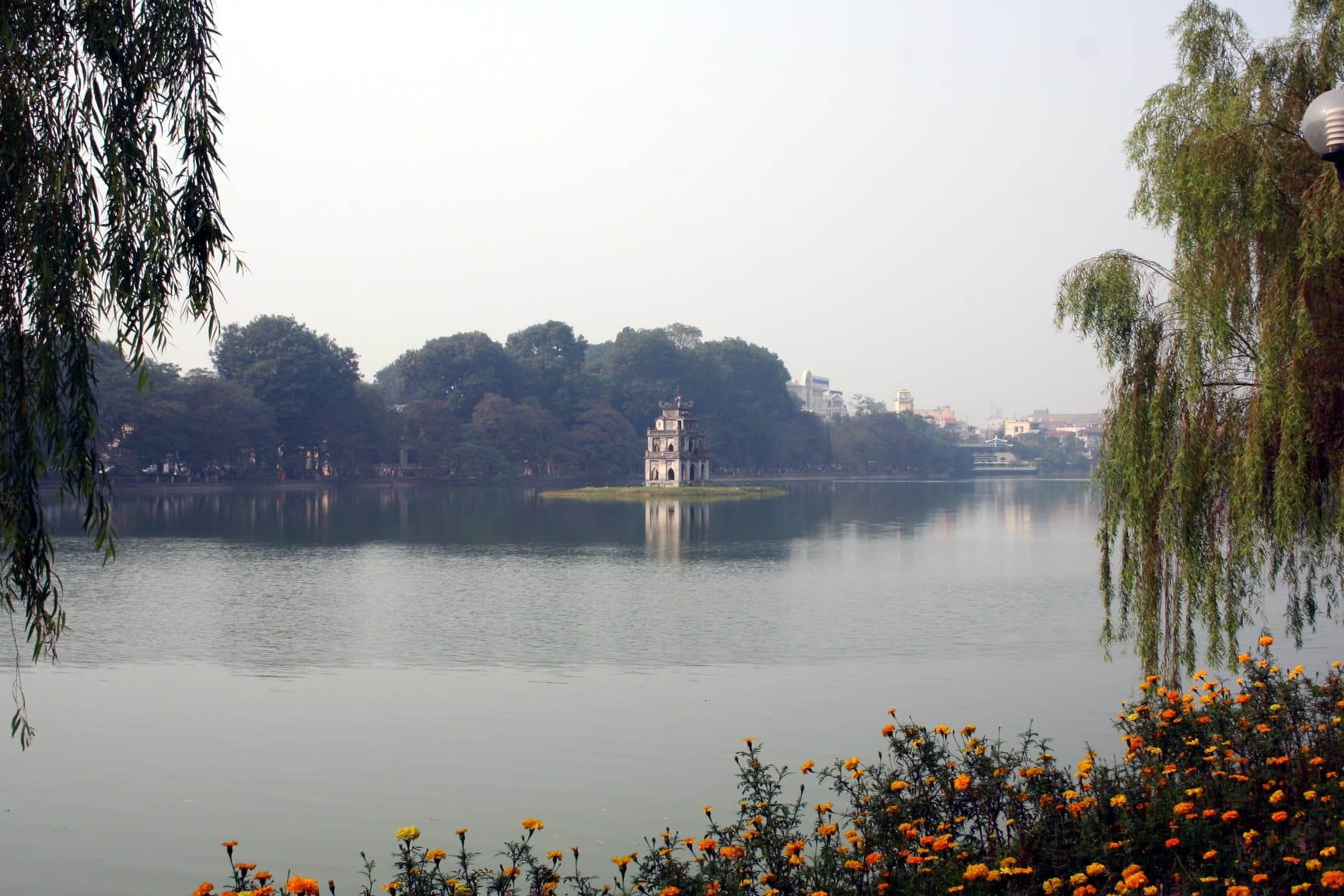
Malaysia · Klang Valley
Kuala Lumpur
Come in the drier May-to-August window, sleep in Bukit Bintang or Chinatown, eat nasi lemak in the morning and banana leaf at lunch and Hokkien mee after dark, book the Petronas Skybridge for the icon and KL Tower for the view of the icon, give a morning to Batu Caves and an evening to Kampung Baru, and take the bus to Malacca if you have a day to spare.
 CEphoto, Uwe Aranas / CC BY-SA 3.0 via Wikimedia Commons
Overview
Kuala Lumpur began in the 1850s as a muddy tin-mining camp at the point where two rivers meet, and the name still says so: kuala lumpur, the muddy confluence. What grew out of that camp is one of the most casually multicultural capitals in Asia, a city where a Malay kampung of wooden stilt houses, a Chinese shophouse quarter and an Indian temple district sit within a few train stops of one another, each with its own food, festivals and languages, all of it framed by some of the tallest towers ever built. It is also one of the great value capitals of the world: the food that defines the city costs pocket change, and five-star rooms go for the price of a mid-range European chain.
Kuala Lumpur is the city we would tell food-first travelers to stop skipping. It has no single sight that justifies the flight, which is exactly why the layover crowd leaves unconvinced, but it has something rarer: three complete food cultures, each cooking for its own community at its own prices, sharing one compact and cheap city. Give it three nights. If your trip is built around Instagram monuments, two will do and Singapore will suit you better. If it is built around eating, this is the best-value great eating city in Asia, and 2026, with the Merdeka precinct opening up and the whole country in festival mode for Visit Malaysia year, is a good year to finally come.
Best for
Food travelers · First-time Southeast Asia visitors · Layovers that deserve to become trips · Couples · Architecture and skyline lovers · Anyone connecting to Langkawi, Penang or Borneo
Daily itinerary
3 nights for the city; 4 to 5 to add Malacca and the fireflies, or to slow the food down to its proper pace
Most people give Kuala Lumpur a night between the airport and somewhere else, photograph the Petronas Towers, and leave reporting that it is a mall with a skyline. That verdict comes from staying inside a two-kilometre bubble. The city is actually three cities in one grid: Malay Kuala Lumpur eats in Kampung Baru, Chinese Kuala Lumpur eats around Petaling Street and Pudu, and Indian Kuala Lumpur eats in Brickfields, and no other capital lets you walk between all three in a morning. This guide is organised around that triangle, around the honest answer to the three-tower question, and around 2026 specifically: Visit Malaysia year, with the Merdeka 118 precinct opening in stages.
Best time to visit
Kuala Lumpur sits three degrees north of the equator, so there is no cold season, no closed season and no month to avoid outright: expect 32-degree days, sticky nights and the chance of a loud afternoon thunderstorm all year. The real variables are rain frequency and haze. May through August is the relatively drier, brighter stretch and our pick. The two monsoon transitions, roughly March to April and October to November, bring the heaviest downpours, with November the wettest month of the year. August to October carries the seasonal risk of transboundary haze from land-clearing fires in Sumatra, which in a bad year greys the skyline for days: worth checking the air-quality index before locking in a tower ticket, though many years pass with barely any.
- December to February: The northeast monsoon soaks the east coast of the peninsula but leaves KL comparatively dry. Chinese New Year (17 February in 2026) fills Petaling Street with lanterns and closes family shops for several days; Thaipusam (22 January in 2027) turns Batu Caves into a pilgrimage of a million people, the single most intense spectacle in the region.
- March and April: The first monsoon transition: hot, humid and prone to the loudest thunderstorms of the year, usually breaking between 4 and 7pm. Mornings are generally clear, so the pattern is sights early, shelter and museums late.
- May to August: The drier southwest-monsoon stretch and the best planning window: more sunshine, fewer downpours, durian stalls everywhere from June, and Merdeka month in August with flags on every building. The caveat is haze risk creeping in from August when Sumatran fires burn; check the AQI in a bad year.
- September to November: The second transition builds to November, the wettest month of the year at well over 300mm. Haze episodes, when they come at all, tend to fall in September and early October before the rains build. Hotel value is at its best; afternoons need a plan B.
Things worth knowing
- Visit Malaysia 2026 (all year): the national tourism campaign runs more than 300 events, festivals and cultural programmes across the country, with Kuala Lumpur hosting the densest calendar. Worth scanning the official programme for your dates.
- Merdeka, National Day (31 August): the anniversary of independence, proclaimed in 1957 at Stadium Merdeka after the flag was first raised at what is now Dataran Merdeka. The 2026 national parade is held at Dataran Putrajaya in the administrative capital, but KL spends all of August wrapped in flags, and the Lake Symphony and towers light up in national colours.
- Thaipusam (22 January in 2027): the Tamil festival of penance and thanksgiving, when devotees carry kavadi up the 272 steps of Batu Caves before dawn and crowds run to a million or more. Extraordinary and overwhelming; go with patience or avoid the caves entirely that week.
- Ramadan and Hari Raya Aidilfitri (Ramadan expected roughly 8 February to 9 March in 2027): the fasting month is a food event for visitors, with Ramadan bazaars selling Malay dishes from late afternoon across the city, Kampung Baru's the most famous. Hari Raya empties KL as the city goes home to the kampung, then fills the mosques and malls with open-house celebration.
- Chinese New Year (17 February in 2026, 6 February in 2027): lion dances in the malls and temples, lanterns down Petaling Street, and several days when the best Chinese kitchens close for family. Thean Hou Temple is at its most spectacular.
- Deepavali (early November): Brickfields turns on its lights, kolam rice-flour art covers the mall floors, and Little India is at its best for a fortnight.
Where to stay
 Khairi Harry · Pexels
Bukit Bintang
The entertainment and shopping heart: mega-malls from Pavilion to Lot 10, the Jalan Alor food street one block back from the neon, rooftop bars, and more hotel rooms than anywhere else in the city. The elevated air-conditioned walkway to KLCC means you can reach the towers on foot without crossing a single junction. As a first-time base it is hard to argue with.
Best for: First-time visitors · Street food at Jalan Alor · Shopping · Nightlife and rooftop bars
It is the tourist quarter, with the touts and inflated first-quote prices that implies. Changkat Bukit Bintang is the bar street and sleeps late; book a few streets away if you want quiet.
 Dadan Fitrayana · Pexels
KLCC
The precinct around the Petronas Towers: Suria mall at their feet, a genuinely excellent 50-acre park with the Lake Symphony fountains, the aquarium and convention centre, and the city's densest cluster of five-star hotels. Polished, green and walkable by KL standards, with the towers lit up as your evening backdrop.
Best for: Skyline views from the room · Luxury hotels · Couples · Travelers who want order and greenery
Corporate and quiet after office hours, and the eating is mall eating unless you cross into Kampung Baru, which happily is one pedestrian bridge away.
 Shesmax · CC BY-SA 4.0 via Wikimedia Commons
Chinatown and Petaling Street
The oldest quarter of the city, and the one that has changed most interestingly: prewar shophouses now hold specialty coffee bars, galleries and small hotels between the wet market stalls, temple incense and hawker institutions that never left. The Merdeka 118 precinct rises directly behind it, so the newest KL literally towers over the oldest. Sri Maha Mariamman Temple, Guan Di Temple and Central Market are all inside a five-minute walk.
Best for: Character and heritage · Hawker food · Cafes and bars in shophouses · Walking to Merdeka 118 and the colonial core
The Petaling Street market itself sells counterfeit goods to tourists; the point of the quarter is everything around it. Rooms in converted shophouses can be small and street-facing ones hear the market pack up late.
 Yun Huang Yong · CC BY 2.0 via Wikimedia Commons
Brickfields (Little India)
The Indian quarter south of the centre, named for the kilns that rebuilt KL in brick after an 1881 fire. Banana-leaf restaurants, garland stalls, sari shops, gold merchants and temple music down Jalan Tun Sambanthan, with the practical bonus that KL Sentral, the city's transit hub, sits on its northern edge: every airport train and most day trips start here.
Best for: Banana leaf and South Indian food · Transit convenience · Value hotels · Deepavali season
Not a sights district beyond the temples and the food, and the blocks between KL Sentral's towers and the old streets are charmless. Come hungry at lunch rather than expecting an evening quarter.
 Elisa.rolle · CC BY-SA 4.0 via Wikimedia Commons
Kampung Baru
A Malay village of timber stilt houses founded in 1899 and still standing, improbably, in the shadow of the Petronas Towers: the most photographed contrast in Malaysia and the best Malay eating in the city. Development pressure has circled it for decades, so the fabric frays at the edges, but the evening food streets and the mosque at its heart carry on. Cross the Saloma Link bridge from KLCC at dusk and eat where the queue is longest.
Best for: Malay food after dark · Photographers · Ramadan bazaars · Seeing the old city inside the new one
A place to eat and walk respectfully rather than to stay: hotel options are few, this is a conservative residential kampung, and no alcohol is served. Dress modestly and photograph houses from the street.
 Melancholia i at en.wikipedia · Public domain via Wikimedia Commons
Bangsar
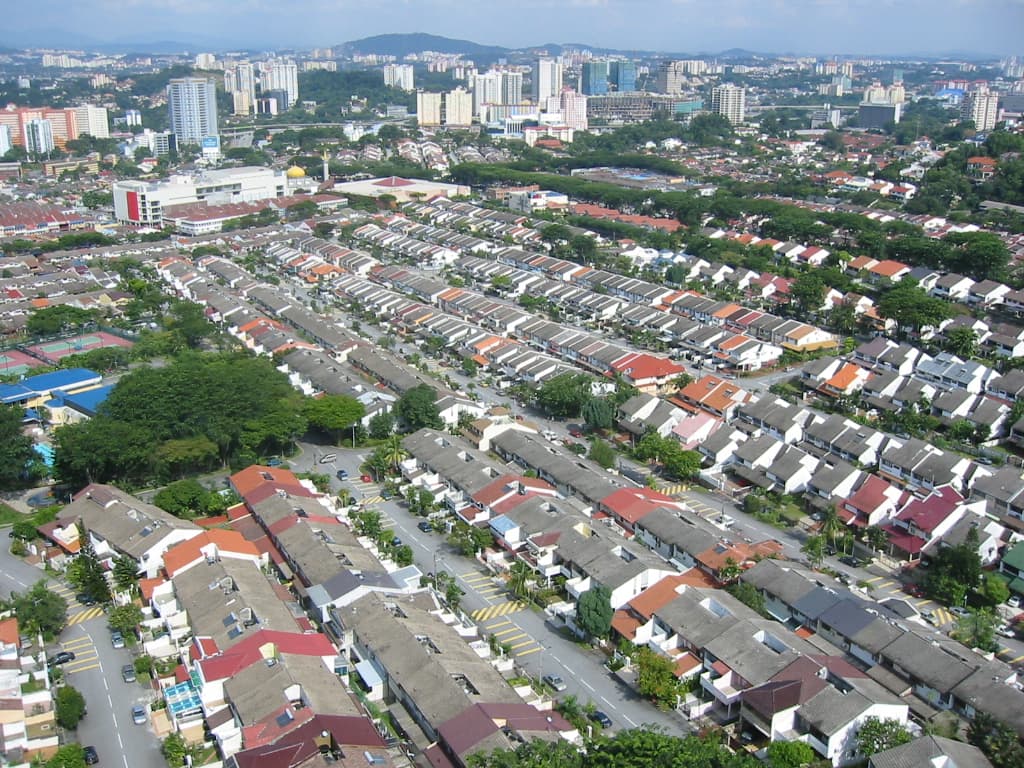
The leafy residential district southwest of the centre where expatriate and professional KL actually lives: the Telawi streets' cafes and independent boutiques, the city's most reliable cocktail bars, banana leaf institutions on Jalan Telawi, and APW, a printing works turned creative campus. A ten-minute Grab from the centre, and a different city when you arrive.
Best for: Longer stays · Brunch and cocktail bars · A local pace away from the towers · Second-time visitors
Nothing here is a sight, and every landmark needs a ride: you trade convenience for character. Friday and Saturday nights around Telawi get loud and parking-choked.
Where to sleep
Park Hyatt Kuala Lumpur
luxury · Merdeka 118 tower, above Chinatown and Stadium Merdeka
Best for: Sleeping inside the city's new icon · The highest views in Southeast Asia · Couples marking an occasion
- Occupies the upper floors of Merdeka 118, the second-tallest building in the world at 678.9 metres, with rooms starting at level 75: on a clear day the view runs from the Klang Valley rim to the Strait of Malacca
- Opened in August 2025, so everything is new: 252 rooms and suites, generous entry-level rooms, and the tallest hotel position the Park Hyatt brand has ever taken
- Directly above the 118 Mall and a ten-minute walk from Petaling Street, which puts the oldest and newest quarters of the city on the same evening stroll
- The precinct around the tower is still finishing: expect construction hoarding, and the observation deck and full mall experience arriving in stages through 2026
- Priced at the very top of the KL market, where the same money buys a suite elsewhere; the surrounding streets, this being real Chinatown, are gritty rather than curated
Four Seasons Hotel Kuala Lumpur
luxury · KLCC, beside the Petronas Towers and KLCC Park
Best for: A Petronas Towers view from bed · Families who want the park below · Polished big-hotel service
- The best position in KLCC: next door to the towers and overlooking KLCC Park, so the classic KL view, towers plus green, is the window view from the upper floors
- 209 rooms and suites in a 65-storey tower shared with private residences, with the Shoppes retail podium below and Suria KLCC a short walk away
- The bar and afternoon-tea lounge floors have become the address for a first-evening skyline orientation even for non-guests
- A tall corporate tower rather than a place with local character; you could be in several cities from the inside
- KLCC empties at night, so every characterful dinner beyond the malls is a Grab or a walk across the Saloma Link away
Mandarin Oriental Kuala Lumpur
luxury · KLCC, adjoining the Petronas Towers
Best for: The established KLCC grande dame at a friendlier price · Park-view rooms and the infinity pool · Business trips that become weekends
- The original tower-side luxury address, open since 1998 and repeatedly refreshed, standing shoulder to shoulder with the Petronas Towers
- The outdoor infinity pool looking into KLCC Park is one of the best-known hotel views in the city
- Rates routinely undercut the newer KLCC five-stars, which makes it the value play among the towers
- A big convention-scale hotel that can feel busy and processional at peak times
- Rooms vary with renovation waves; the park-facing side is the one worth insisting on
Else Kuala Lumpur
design · Chinatown, in the 1930 Lee Rubber Building on Jalan Tun H.S. Lee
Best for: Design lovers · Couples who want the old quarter, done beautifully · A hotel that is part of the neighbourhood story
- A 49-room conversion of the Lee Rubber Building, the 1930 art-deco block that was once the tallest in the city, with the adaptive reuse led by Studio Bikin keeping the concrete bones and cutting light wells through the floors
- Rooftop infinity pool and bar looking straight at Merdeka 118, plus woven headboards commissioned from Sarawak weavers: the design tells Malaysian stories rather than importing them
- Steps from Petaling Street, Sri Maha Mariamman Temple and the best cafe-bar run in the city; a member of Design Hotels
- The immediate blocks are loud, commercial Chinatown, and street-facing rooms hear the market winding down late
- Small property, so the pool, gym and lounge are intimate rather than resort-scaled, and rooms at the entry level are compact
The Chow Kit, an Ormond Hotel
boutique · Chow Kit, on Jalan Tuanku Abdul Rahman
Best for: Best design-per-ringgit in the city · Travelers who like a neighbourhood with edges · Eating at Chow Kit market
- 86 rooms and 27 suites of genuinely good mid-century-inflected design at three-star prices, built by the Malaysian Ormond Group as a bet on an unfashionable district
- Chow Kit market, the city's biggest wet market and one of its great food neighbourhoods, is on the doorstep; the monorail two minutes away puts Bukit Bintang seven stops south
- The house restaurant and bar are destinations in their own right, which matters in a district visitors rarely sleep in
- Chow Kit is a working, rough-edged district with a red-light history, and the walk home at midnight is not for everyone
- Away from the sights: everything on the standard list is a train or Grab ride, and the immediate streets offer market life rather than boutiques
Villa Samadhi Kuala Lumpur
boutique · Taman U-Thant, the embassy quarter east of KLCC
Best for: A resort inside the city · Couples · Recovering from the region between flights
- A 21-room timber-and-bamboo hideaway wrapped around a lagoon pool in the embassy district, styled like a luxe kampung: the anti-tower option in a city of towers
- Guests aged 12 and above only, so the lagoon stays quiet; several room categories step directly into the water
- Ten minutes by car from KLCC yet silent at night, in a leafy diplomatic quarter where the loudest thing is birdsong
- Nothing is walkable: every meal out and every sight starts with a Grab, and the in-house restaurant carries the nights you stay in
- The rustic-luxe timber build is atmospheric rather than slick; travelers wanting marble and glass should look to KLCC
Essential experiences
 Alexey Demidov · Pexels
Petronas Twin Towers
The 452-metre twins that put modern Malaysia on the world's skyline in the late 1990s, completed in 1996 and officially opened in 1999, still the tallest twin towers ever built, clad in stainless steel patterned on Islamic geometry. The visit is a timed, escorted slot crossing the Skybridge at levels 41 and 42 and ending at the level 86 observation deck. Book several days ahead online; the late-afternoon and evening slots sell out first. Closed Mondays. The free version is almost as good: the towers from KLCC Park at night, fountains in front, floodlit steel above.
 Mohammed Alim · Pexels
Merdeka 118 and its precinct
The 678.9-metre spire that made Kuala Lumpur home to the second-tallest building on earth, rising directly over Stadium Merdeka, where independence was declared in 1957. In 2026 it is opening to the public in stages: the Park Hyatt arrived in 2025, the seven-storey 118 Mall is scheduled to open in August 2026, and the View at 118 observation deck near the summit has no confirmed opening date yet. Until the deck opens, the move is to admire it, and the best free vantage is from the old streets of Chinatown, where the spire fills the gaps between shophouses.
 Frostpolar · CC BY-SA 4.0 via Wikimedia Commons
KL Tower and the Forest Eco Park
The 421-metre telecom tower on Bukit Nanas hill, and the honest answer to which deck to buy: this is the one with the Petronas Towers actually in the view. The open-air Sky Terrace at 300 metres, sold as the pricier package, beats the indoor deck for photography; go the hour before sunset and watch the towers light up. At the tower's feet, the KL Forest Eco Park preserves a patch of primary rainforest older than the city itself, with a canopy walkway threading the treetops two minutes from a six-lane road.
 Simon_sees from Australia · CC BY 2.0 via Wikimedia Commons
Batu Caves
A 400-million-year-old limestone massif 13km north of the city, holding one of the most important Murugan shrines outside India in its main chamber, reached by 272 rainbow-painted steps under a 42.7-metre golden statue of Lord Murugan. Free, open from early morning, and mobbed by mid-morning: take the first trains and climb in the cool. Long-tailed macaques work the stairs like pickpockets, because they are. Shoulders and knees covered; sarongs are rented at the bottom if you forget.
 Target360YT · CC BY-SA 4.0 via Wikimedia Commons
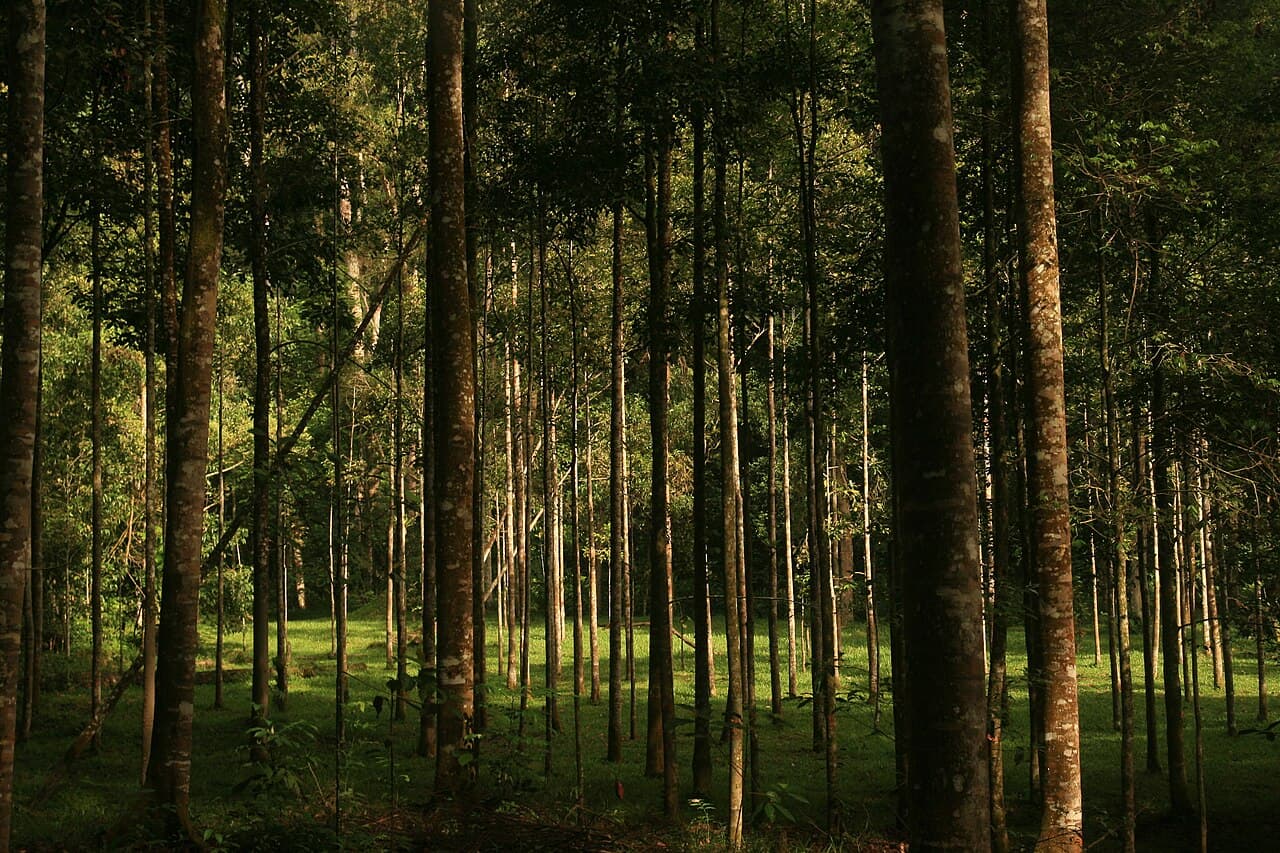
FRIM Selangor Forest Park
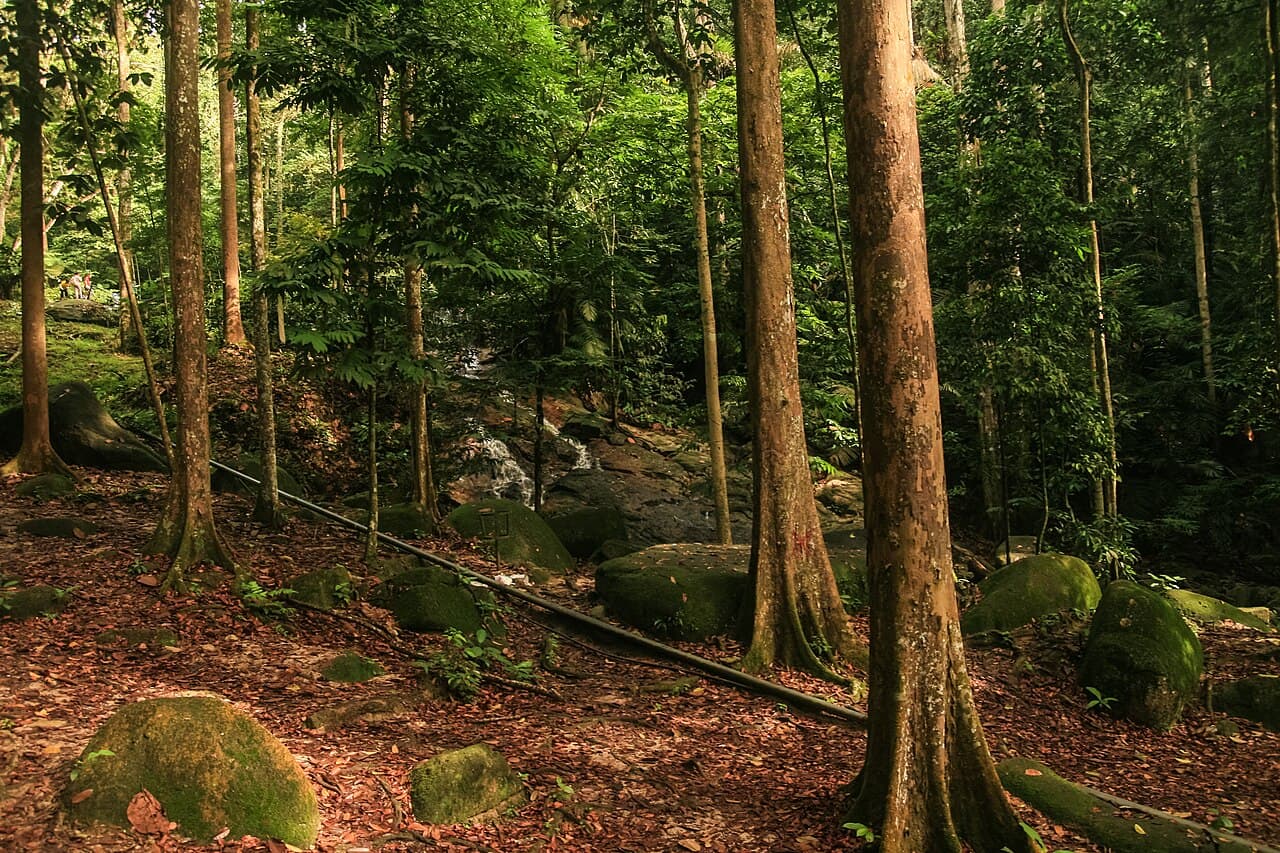
The newest UNESCO World Heritage Site in Malaysia, inscribed in July 2025, and the most remarkable: 545 hectares of mature tropical rainforest raised by human hands, planted from the 1920s onward on land degraded by tin mining and farming. A century later FRIM describes it as the world's oldest and largest reconstructed tropical forest, with a steel canopy skywalk above the treetops, trails under giants, and the famous crown-shyness canopy, where the trees refuse to touch. Book the skywalk ahead; mornings are coolest and clearest.
 CEphoto, Uwe Aranas · CC BY-SA 3.0 via Wikimedia Commons
Islamic Arts Museum Malaysia
Our pick for the best museum in the country, and among the finest of its kind anywhere: twelve galleries of calligraphy, textiles, ceramics, jewellery and arms from across the Islamic world, arranged around a series of luminous domes, with a celebrated scale-model gallery of the great mosques. Cool, uncrowded and superbly lit, it is the ideal afternoon-thunderstorm plan. The building sits in the green Perdana quarter next to the National Mosque, so pair the two.
 Khalzuri · CC BY-SA 3.0 via Wikimedia Commons
Masjid Negara, the National Mosque
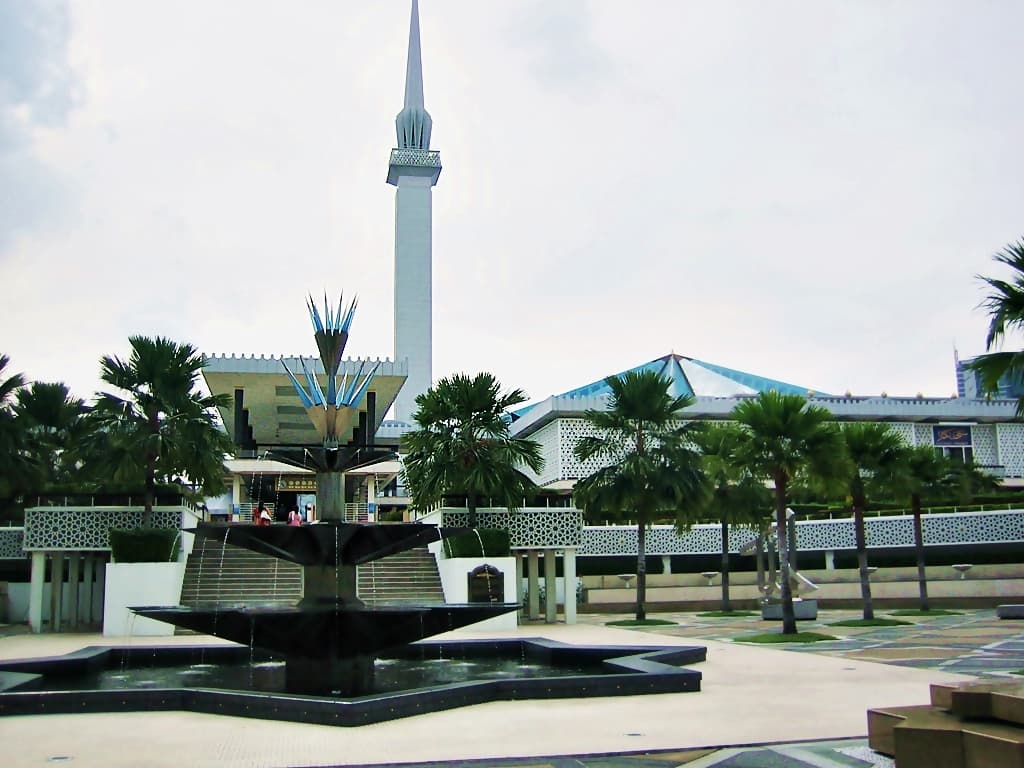
The 1965 national mosque, a masterpiece of tropical modernism: a folded blue 16-point star roof instead of a dome, a 73-metre minaret like a closed umbrella, and marble courtyards threaded with pools and breeze. Built to hold 15,000, it stated in concrete that independent Malaya would be modern on its own terms. Non-Muslim visitors are welcomed outside prayer times, robes provided free at the entrance.
 Ahmad Anafee · Pexels
Dataran Merdeka and the Sultan Abdul Samad Building
The green where the Union Jack came down at midnight on 31 August 1957 and the Malayan flag went up, faced by the 1897 Sultan Abdul Samad Building, a copper-domed Moorish-revival parade of arches built for the colonial administration and now the backdrop of every national celebration. Come at dawn or after dark when the facades are lit and the field is quiet; the 95-metre flagpole marks the spot of the flag-raising.
 Mytho Digital · Pexels
Masjid Jamek and the river confluence
The 1909 onion-domed mosque standing exactly where Kuala Lumpur began: the muddy meeting point of the Gombak and Klang rivers that gave the city its name. The River of Life project cleaned and re-landscaped the banks, and after dark the confluence plaza runs a blue-lit mist show that has become the city's favourite free evening photograph. The mosque welcomes visitors outside prayer times.
 CK Seng · Pexels
Thean Hou Temple
A six-tiered Chinese temple to the sea goddess Mazu, completed in 1989 by the Hainanese community on a hill south of the centre, and for our money the most photogenic temple in the city: hundreds of red lanterns strung across the terraces, dragon-carved columns, and a skyline panorama thrown in free. At Chinese New Year it is the centre of the city's celebrations; at any dusk it is worth the short detour.
 Pak WanJanggut · Pexels
Petaling Street quarter and its temples
The market street is the least of it. Around the green-arched bazaar sit Sri Maha Mariamman, the oldest Hindu temple in the city, founded in 1873, its gopuram tower crowded with painted deities; the incense-dark Guan Di Temple; the wet market of Madras Lane with its morning noodle stalls; and the shophouse blocks where third-wave coffee bars share walls with medicine halls. Walk it early for the market life, again after dark for the bars.
 Theodore Nguyen · Pexels
Kampung Baru and the Saloma Link
Cross the petal-shaped Saloma Link pedestrian bridge from KLCC at dusk, its arch lit in the colours of the flag, and land a century away: a working Malay village of carved timber houses on stilts, chartered in 1899, where the evening streets fill with charcoal smoke and the best nasi lemak, satay and grilled fish in the capital. Eat where the queue is deepest, dress modestly, and look back at the Petronas Towers framed between palm trees and zinc roofs: the defining photograph of Kuala Lumpur.
 EasyKL / CC BY-SA 4.0 via Wikimedia Commons
 Diego Delso / CC BY 3.0 via Wikimedia Commons
Food & drink
 Kent Ng · Pexels
Nasi lemak
The national dish and the correct breakfast: coconut rice with sambal, fried anchovies, peanuts, cucumber and half a boiled egg, at its simplest wrapped in a banana-leaf pyramid for a few ringgit. The benchmark upgrade is ayam goreng berempah, spice-battered fried chicken. Judge any version by its sambal.
 Rich Vijay · Pexels
Banana leaf rice
The South Indian lunch Brickfields and Bangsar do best: rice heaped onto a fresh banana leaf, ringed with vegetable curries, rasam and pickles, refilled until you surrender, with fried chicken or mutton curry alongside if you want it. Eaten with the right hand, and folding the leaf toward you at the end says thank you.
 brown_colour · CC BY 2.0 via Wikimedia Commons
Hokkien mee, KL style
Thick noodles braised black in dark soy with pork, prawns and crisp lard croutons, invented on Petaling Street in the 1920s and still best eaten there over a charcoal wok after dark. Darker, smokier and entirely different from the pale Penang dish of the same name.
 Chensiyuan · CC BY-SA 3.0 via Wikimedia Commons
Bak kut teh
Pork ribs simmered in a dark broth of garlic and Chinese herbs, born among Hokkien port workers in nearby Klang, eaten with rice, fried dough sticks and endless refills of Chinese tea. A morning dish for locals, and the Klang Valley's signature contribution to the Chinese table.
 mailer_diablo · CC BY-SA 3.0 via Wikimedia Commons
Roti canai and teh tarik
The flaky, griddled flatbread flipped paper-thin and folded, served with dhal and curry for a couple of ringgit at any mamak, the Indian-Muslim canteens that function as Malaysia's round-the-clock living rooms. Teh tarik, sweet milk tea aerated by being poured between jugs at arm's length, is the mandatory partner.
 Emrank · CC BY 2.0 via Wikimedia Commons
Satay
Skewers of marinated chicken or beef grilled over charcoal and dipped in peanut sauce, with rice cakes, cucumber and raw onion. The dish belongs to Kajang, a satay town at the end of the MRT line, but Kampung Baru's evening grills mean you rarely need to make the pilgrimage.
 Banej · CC BY-SA 3.0 via Wikimedia Commons
Cendol and ais kacang
The equatorial afternoon's answer: shaved ice over pandan noodles, coconut milk and dark palm-sugar syrup for cendol; a technicolour mound of ice, syrups, jellies, corn and beans for ais kacang. At 3pm in KL these are not desserts, they are infrastructure.
 女子 正真 · Pexels
Durian
The season peaks June to August, when pop-up stalls sell Musang King by the seed on plastic stools. The smell is famous and the taste is a national obsession worth one honest attempt. Every hotel bans it from the room; eat it at the stall, where it belongs.
KL eats constantly and cheaply, and the best of it is in coffee shops, hawker courts and mamaks rather than restaurants. Breakfast is a proper meal (nasi lemak, dim sum, roti canai), lunch peaks early, and the mamaks run more or less around the clock, which is why the city never quite goes to bed. Order at the stall, pay when the food arrives, and share tables at busy hours without ceremony. Tipping is not expected; sit-down restaurants add a service charge and the 8 percent service tax to the bill instead. Halal matters: Malay places are halal by default and serve no alcohol, Chinese coffee shops are generally not halal and pour beer, and the two systems coexist on every block without friction. Cards and QR payments have spread widely, but hawker stalls remain cash-first, so keep small notes.
Where to eat
Village Park Restaurant
institutionThe nasi lemak by which the city measures all others, running since 2002: coconut rice, dark sambal and the famous spice-crusted fried chicken, around RM13 to RM15 a plate. The queue on weekend mornings is part of the experience; go on a weekday before 10am. It is in suburban Petaling Jaya, so make it the breakfast before or after a morning at FRIM.
Last researched 2026-08-09
Jalan Alor
street-foodA whole street that becomes an open-air Chinese grill house every evening: charcoal chicken wings, grilled stingray in sambal, satay, noodles and fresh juice under strings of red lanterns. It is touristy and it is still good, which is rare. Arrive from 6pm as the woks light; the famous wing stalls run out late.
Last researched 2026-08-09
Heun Kee Claypot Chicken Rice
institutionA Michelin Bib Gourmand fixture where claypots of chicken, salted fish, lap cheong sausage and rice are still cooked to order over charcoal, and the point is the wok-scorched crust you scrape from the bottom. Expect a wait at dinner; it moves fast. Pudu's wet-market streets around it are their own reward before seven.
Last researched 2026-08-09
 Bearsmalaysia · CC BY-SA 3.0 via Wikimedia Commons
Kim Lian Kee
institutionThe shop credited with inventing KL Hokkien mee on this street in the 1920s, still frying the black-soy noodles with pork lard over serious fire, upstairs and streetside on Petaling Street. Order the Hokkien mee and the fried lala clams and do not fight the lard. Evenings only feel right here.
Last researched 2026-08-09
Vishal Food and Catering
casualA Brickfields banana-leaf standard where the leaf arrives, the rice lands, and the vegetable curries, rasam and pickles keep coming until you fold the leaf in surrender; add mutton curry or fried chicken if the table insists. Lunch is the meal: come before 1pm or queue with the lawyers and railway workers. A few ringgit buys the full spread.
Last researched 2026-08-09
Dewakan
fine-diningMalaysia's only two-Michelin-star restaurant, and since the 2026 guide also a Michelin Green Star holder: chef Darren Teoh builds tasting menus from indigenous Malaysian ingredients, jungle fruit, fermented preparations and forgotten grains, 48 floors above the city. This is the one meal in KL priced like Europe, and the one that justifies it. Book weeks ahead.
Last researched 2026-08-09
Sunrises
 Yulia · Pexels
KLCC Park before the city wakes
The park gates open early and the first hour belongs to joggers on the rubberised loop, tai chi groups by the lake and the Petronas Towers going from grey to silver as the light arrives. The symmetry shot across the Lake Symphony pool is cleanest now, before the fountain shows and the crowds. Free, and the coolest hour of the KL day.
Year-round; May to August for the clearest skies · Enter from the Suria KLCC side; the classic reflection angle is from the lake's south edge.
 Jess Chen · Pexels
Batu Caves at opening
Be at the foot of the golden Murugan statue when the site opens and climb the 272 painted steps in shade and near-silence: temple bells, incense from the first pujas, macaques still sleepy, and the cathedral-sized main chamber lit by the shaft of morning sky through its open roof. By 10am the tour buses arrive and the staircase becomes a procession.
Year-round; weekday mornings are quietest
 Ceha Rabbani · Pexels
Dataran Merdeka at first light
The colonial core is the one part of KL that is genuinely empty at dawn: the Sultan Abdul Samad Building's copper domes catching the first sun, the flagpole shadow crossing the old cricket green, and the river confluence mist still on Masjid Jamek a street away. Photographers get the arches to themselves for an hour.
Year-round · Masjid Jamek LRT is two minutes away; combine with a kopitiam breakfast in Chinatown as the shutters open.
Sunsets
 NickLubushko · CC BY-SA 4.0 via Wikimedia Commons
KL Tower Sky Terrace at golden hour
The one paid deck where the sunset includes the Petronas Towers: from 300 metres up on the open-air terrace the twins stand in the middle distance, the Klang Valley hills go violet behind them, and the city lights come on below your feet. Book the slot an hour before sundown and stay for blue hour, which is better than the sunset itself.
Year-round; check haze conditions in August to October
 Sheikh Izham from Malaysia · CC BY 2.0 via Wikimedia Commons
The Saloma Link at dusk
Walk the petal-arched pedestrian bridge from KLCC toward Kampung Baru as the lights come up: the arch glows in the colours of the Jalur Gemilang, the Petronas Towers ignite behind you, and the kampung's food smoke starts rising ahead. The bridge itself is the city's best free evening photograph, and dinner is waiting at the far end.
Year-round; the bridge lighting runs nightly · Ten minutes on foot from KLCC Park; descend into Kampung Baru for dinner.
 Zukiman Mohamad at Pexels · CC0 via Wikimedia Commons
A Bukit Bintang rooftop
The high-rise cluster between Bukit Bintang and KLCC carries a run of rooftop bars where the whole vertical city performs at dusk: towers in three directions, the KL Tower needle lit, and the evening thunderheads doing things equatorial skies do. Cocktails are taxed like contraband, so treat it as one drink for the view before descending to Jalan Alor money.
Year-round; terraces close in storms · Face northeast for the Petronas pair; the light show on the towers starts after dark.
 Seng Lam Ho · Pexels
Thean Hou Temple as the lanterns come on
The hilltop temple faces the skyline, and the hour when its hundreds of red lanterns light up against the blue-hour city is the most photogenic moment in southern KL. Around Chinese New Year the lantern canopy multiplies and the terraces glow; on an ordinary Tuesday you may share it with a wedding shoot and almost no one else.
Year-round; spectacular around Chinese New Year
Day trips
 CEphoto, Uwe Aranas · CC BY-SA 3.0 via Wikimedia Commons
Malacca (Melaka)
The port that made Malaysia: a 15th-century sultanate turned Portuguese, Dutch and British colony, UNESCO-listed since 2008, two hours south. The old town packs the red Stadthuys square, St Paul's hill ruins, Peranakan mansions on Heeren Street and the Jonker Street quarter into a walkable riverside grid, with Nyonya laksa and chicken rice balls as the local argument. Weekdays are calm; Friday to Sunday brings the Jonker night market and the crowds.
About 2 hours each way by expressway bus · Full day, or better one night to see Jonker after the day-trippers leave
 Target360YT · CC BY-SA 4.0 via Wikimedia Commons
FRIM and Village Park: the UNESCO forest morning
Pair the newest World Heritage Site in Malaysia with the most famous breakfast in the Klang Valley. Start early at FRIM in Kepong, walking the canopy skywalk over a century-old man-made rainforest, then Grab fifteen minutes south to Village Park in Damansara Uptown for the nasi lemak that defines the dish. Back in the city by early afternoon before the heat peaks.
About 30 to 40 minutes to Kepong by car · Half day, morning
 ZKang123 · CC BY-SA 4.0 via Wikimedia Commons
Kuala Selangor: fireflies and the fishing coast
An evening trip northwest to the Selangor river mouth: eagles over the mangroves and silvered fish villages by late afternoon, then, after dark, rowing boats gliding along Kampung Kuantan's riverbank while thousands of synchronous fireflies pulse in the berembang trees like strings of fairy lights. One of the largest such colonies known, and best on moonless, dry nights.
About 1.5 hours each way by car · Half day, late afternoon into night
 Rajashree Patil Dhaware · Pexels
Genting Highlands and the Chin Swee temple
The hill resort at 1,800 metres that Malaysians treat as a national playground: theme parks, malls and a casino in the clouds, an hour from the city. The honest reasons to go are the Awana SkyWay cable car over unbroken rainforest canopy, the mist-wrapped Chin Swee Caves Temple mid-mountain, and air fifteen degrees cooler than KL. Skip it if kitsch bothers you; embrace it if the idea of a casino in the fog amuses.
About 1 hour each way by car or bus · Half to full day
 Abdulaziz hasan · Pexels
Putrajaya, the planned capital
Malaysia's administrative capital, built from plantation land in the 1990s: monumental boulevards, a pink-domed mosque rising from a lake, a steel mosque beside it, bridges that each audition a different engineering idea, and almost no crowds. It photographs like a rendering and is at its best at golden hour. In 2026 it also hosts the national Merdeka parade on 31 August.
About 30 to 40 minutes by KLIA Transit train or car · Half day, late afternoon
After dark
 IQRemix · CC BY-SA 2.0 via Wikimedia Commons
Jalan Alor after dark
foodThe lantern-lit food street at full tilt: woks flaming, grilled wings by the dozen, stingray in banana leaf, tables spilling across the tarmac and every language in Asia ordering at once. Touristy, loud and genuinely delicious, it is the correct first evening in Kuala Lumpur.
 Sheikh Izham from Malaysia · CC BY 2.0 via Wikimedia Commons
Kampung Baru food walk
foodCross the lit Saloma Link into the stilt-house kampung and follow the charcoal smoke: nasi lemak stalls, satay grills, banana fritters and teh tarik under fluorescent strips, with the Petronas Towers glowing above the rooflines. No alcohol, modest dress, and the most Malaysian evening the capital offers.
 vitalina · Pexels
The Lake Symphony and the towers at night
cultureThe free show: the KLCC fountains run choreographed water-and-light performances in the evening while the floodlit Petronas Towers stand over the park. Arrive for the early show, walk the park loop between performances, and let the skyline do the work. Every first-time itinerary should end one night here.
Chinatown's shophouse bars
barAfter the Petaling Street market packs up, the quarter's second life begins: speakeasies behind kopitiam facades, natural-wine rooms in restored shophouses, cocktail bars where the ice is clearer than the signage. Start on Jalan Petaling south of the market and drift; the good doors are the unmarked ones.
Daily itinerary
Three days in Kuala Lumpur: the triangle, the towers and the caves
The city's three food cultures, the honest tower strategy, and the two half-days out that earn their slot. Built for first-timers who want to leave convinced.
- 1
Chinatown to the colonial core
fullKopitiam breakfast in Chinatown, then Sri Maha Mariamman and Guan Di temples as the incense gets going, Central Market for the air-conditioned pause, and the Merdeka 118 spire framed from the shophouse streets.Madras Lane hawker stalls in the wet market, or curry mee in a kopitiam.Walk the colonial core: Masjid Jamek at the river confluence, Dataran Merdeka and the Sultan Abdul Samad arches, then Grab to the Islamic Arts Museum and the National Mosque for the cool hours.KL Tower Sky Terrace, booked for the hour before sundown, with the Petronas Towers in the frame.Kim Lian Kee on Petaling Street for Hokkien mee at its birthplace.Chinatown's shophouse bars, or the River of Life lights at Masjid Jamek.Everything until the museum is walkable; the museum pair and the tower are short Grab hops. Total transport spend under RM40.Estimate: If a storm takes the afternoon, the Islamic Arts Museum absorbs three hours without effort.
- 2
Caves in the morning, KLCC at night
fullFirst KTM Komuter train to Batu Caves, climb the 272 steps before the heat and the buses, and be back at KL Sentral by late morning.Banana leaf at Vishal in Brickfields, ten minutes from the station.Brickfields' temple streets and a slow recovery, then KLCC: the park loop, Suria if the rain comes, and the Petronas Skybridge and deck slot booked days ago for late afternoon.From the park lawn below the towers; the escorted deck slot is timed, so treat any golden-hour view from level 86 as a bonus rather than a plan.Cross the Saloma Link into Kampung Baru and eat where the queues are: nasi lemak, satay, grilled fish.The Lake Symphony fountain show back at KLCC, towers floodlit above.Komuter out and back from KL Sentral (about 30 minutes each way), LRT from Brickfields to KLCC, and everything from KLCC onward on foot via the bridge.Estimate: Petronas closed on your Monday? Swap the deck for the Four Seasons bar floor and keep the evening unchanged.
- 3
The forest, the breakfast, the send-off
moderateEarly Grab to FRIM in Kepong for the canopy skywalk over the man-made rainforest, then Village Park in Damansara Uptown for the definitive nasi lemak on the way back.You already ate it; a cendol somewhere is the correction.Choose your KL: Bangsar's Telawi streets and APW for cafes and shops, or Thean Hou Temple and the Perdana gardens for one more dose of the classic city.Thean Hou's lanterns against the blue hour, or a Bukit Bintang rooftop for the vertical goodbye.Heun Kee's charcoal claypot rice in Pudu, or Dewakan if the trip deserves a finale.Jalan Alor for the last grazing lap.The FRIM-Village Park loop is Grab territory (RM60 to RM80 total); the rest of the day is single hops. Book FRIM's skywalk ahead; it caps daily numbers.Estimate: Swap the whole day for Malacca if colonial history outranks forest and food.
Five days: Kuala Lumpur, Malacca and the fireflies
The three-day city at a saner pace, plus the UNESCO port town and an evening among synchronous fireflies. The version of this trip that converts skeptics.
- 1
Arrive and calibrate
relaxedLand at KLIA, KLIA Ekspres to KL Sentral in half an hour, check in and shower off the flight.First mamak: roti canai, dhal and teh tarik near the hotel.KLCC Park loop and Suria orientation, staying low-effort in the heat.The Saloma Link at dusk as the arch lights up.Kampung Baru's evening stalls, the ideal jet-lag meal: fast, cheap, unforgettable.Lake Symphony show and the floodlit towers, then early sleep.Airport train plus one LRT hop; the evening is entirely on foot from KLCC.Estimate: Landing at midnight? Push this day's evening to day 5 and start slow.
- 2
Chinatown, the colonial core and the tower
fullChinatown temples and market streets with kopitiam stops, Merdeka 118 rising over everything.Madras Lane noodles or banana leaf brought forward from day 3.Masjid Jamek, Dataran Merdeka, then the Islamic Arts Museum through the storm hours.KL Tower Sky Terrace with the twins in view.Kim Lian Kee Hokkien mee.Shophouse bars off Petaling Street.On foot plus two short Grab hops; book the tower slot in the morning.Estimate: Design lovers: detour into Else's rooftop for a drink facing Merdeka 118.
- 3
Batu Caves and the Petronas evening
fullFirst Komuter train to Batu Caves; climb before the crowds.Vishal's banana leaf in Brickfields.Brickfields and Thean Hou Temple, then rest: tonight is the big ticket.A late-afternoon Petronas Skybridge and deck slot, booked well ahead; the visit is timed, so the light is a bonus.Jalan Alor at full evening tilt.A Bukit Bintang rooftop nightcap.Komuter, LRT and short Grabs; nothing today needs a car.Estimate: Thaipusam week? Go with the pilgrims at dawn instead and give the evening to recovery.
- 4
Malacca
fullEarly bus from TBS, into the old town by mid-morning: Stadthuys square, St Paul's hill, the Heeren Street mansions.Nyonya laksa and chicken rice balls in the old town.Baba and Nyonya Heritage Museum, the river loop, temple-mosque-church street: the oldest of each in the country stand a few doors apart on Harmony Street.The river mouth or St Paul's ruins as the light goes amber.Jonker Street night market if it is a weekend; Peranakan restaurant otherwise.Bus back, in by late evening.TBS is linked by walkway to Bandar Tasik Selatan station (LRT, KTM and KLIA Transit). Departures are roughly hourly; if you plan an evening return, prebook the actual last bus, especially Friday to Sunday, and leave traffic buffers.Estimate: Stay the night in a Heeren Street boutique and return at leisure tomorrow; Malacca after the day-trippers leave is a different town.
- 5
Forest morning, firefly night
moderateFRIM's canopy skywalk in the early cool, then Village Park nasi lemak.Already handled; iced cendol as punctuation.Bangsar's cafes and shops, or a hotel-pool surrender before the evening pickup.On the road northwest, eagles over the Selangor estuary.Chinese seafood in Pasir Penambang fishing village.The rowed boats at Kampung Kuantan among thousands of pulsing fireflies, back in KL by midnight.FRIM by Grab, the firefly run by organised tour or hired car (about 1.5 hours each way). Check the lunar calendar: dark, dry nights are best.Estimate: Flying out tonight? Swap the fireflies for a Putrajaya golden hour, which sits beside the airport line.
Getting around
- Kuala Lumpur International Airport (KUL) is 55km south of the city in two terminals, T1 and T2, with the Aerotrain shuttle inside T1 running again since July 2025 after its long rebuild. The KLIA Ekspres train reaches KL Sentral non-stop in about 28 minutes; the standard fare is RM55 one way, with a promotional RM40 fare extended through 31 December 2026. Grab to the centre runs roughly RM65 to RM100 and takes about an hour, more in rush hour; airport buses to KL Sentral or TBS cost around RM12 to RM15.
- KL Sentral in Brickfields is the national rail hub: KLIA trains, KTM Komuter (including the Batu Caves line), the ETS intercity electric trains north to Ipoh and Butterworth for Penang, LRT, MRT, monorail and the airport coaches all meet here. It is a mall with trains in it; allow time to navigate the first time.
- Long-distance buses use Terminal Bersepadu Selatan (TBS), a well-run airport-style terminal on the Bandar Tasik Selatan interchange south of the centre, with LRT, KTM and KLIA Transit connections. Buses to Malacca, Penang, Ipoh, Singapore and everywhere else book online or at the counters; hourly Malacca departures make it effectively turn-up-and-go on weekdays.
- Singapore is reachable by a five-to-six-hour coach, a one-hour flight, or the scenic slow train via JB; Penang by ETS train to Butterworth (about four hours) plus the ferry, which beats the bus for comfort. KL is the natural hub of any peninsula itinerary.
- The rail network does most of what a visitor needs: LRT Kelana Jaya line for KLCC and KL Sentral, MRT Kajang line for Bukit Bintang, Merdeka and Pasar Seni (Chinatown), the monorail for Chow Kit and Bukit Bintang, and KTM Komuter for Batu Caves. Fares run roughly RM1.30 to RM6 per ride. Buy a Touch 'n Go card at a convenience store or a participating station counter (stock varies): it works across the urban rail lines, most buses and highway tolls, and skips the token queues.
- Grab is the default for everything the trains miss: most central rides cost RM8 to RM25, cars arrive in minutes, and prices are fixed in the app. Late-night surge after the bars close is real but modest. AirAsia Ride and inDrive are the alternates locals price-check against.
- Avoid street-hailed taxis that refuse the meter, which around tourist sites is most of them; the first-quote price is a test. If a taxi is unavoidable, insist on the meter or walk away and open Grab.
- The GoKL city buses run several free-to-ride loops through the tourist core, KLCC to Bukit Bintang to Chinatown among them: slow in traffic but genuinely free and air-conditioned. Useful when the heat argues against a fifteen-minute walk.
- Walking works in pockets: Chinatown to Dataran Merdeka, the KLCC park loop, Bukit Bintang's mall spine with its elevated air-conditioned walkway to KLCC. Between pockets, pavements crack, vanish or bake; take the train or a Grab and nobody will judge you, least of all the locals doing the same.
- Driving in the city is for the committed: traffic is heavy, parking towers are cheap but labyrinthine, and the highway interchanges assume local knowledge. Rent a car for a countryside loop when leaving KL, not for the city itself.
Things worth knowing
- · Giving the city 24 hours between flights, seeing only the airport line, a mall and the towers, and concluding that was Kuala Lumpur. The city's case is the food triangle, and the triangle needs three days.
- · Turning up at Petronas on a Monday, when the towers are closed to visitors, or expecting same-day sunset Skybridge slots. Book online days ahead.
- · Waiting for the View at 118 to be bookable because a video said it was open. As of mid-2026 the Merdeka 118 deck had no confirmed public opening date; KL Tower is the view that includes the Petronas Towers anyway.
- · Walking between districts at 1pm because the map said 25 minutes. The map does not measure the heat index; islands on foot, trains in between.
- · Getting into a street taxi that "has no meter today". That is a negotiation you lose by starting it; Grab exists.
- · Budgeting Southeast Asian prices for alcohol. Malaysia's excise duties are among the highest in the world and a cocktail routinely costs more than the dinner before it. Drink where the view earns the markup, or embrace teh tarik.
- · Skipping the MDAC. Most foreign visitors must file the free Malaysia Digital Arrival Card online within three days before arrival; the immigration queue is where you discover you forgot.
Budget
| Low | Expected | Comfortable | |
|---|---|---|---|
| Accommodation style / per night | MYR 150≈ $37 | MYR 450≈ $110 | MYR 1,400≈ $343 |
| Food style / per day | MYR 40≈ $10 | MYR 120≈ $29 | MYR 450≈ $110 |
| Local transport / per day | MYR 10≈ $2 | MYR 40≈ $10 | MYR 150≈ $37 |
| Estimate / per day | MYR 10≈ $2 | MYR 90≈ $22 | MYR 300≈ $73 |
Estimate · MYR · 2026-08-09. Accommodation is per room per night for two sharing. Kuala Lumpur is arguably the best hotel-value capital in Asia: RM450 buys a genuinely good four-star room and RM1,400 reaches the five-star towers that would cost triple in Singapore. Food is the bargain of the trip at street level, where RM40 a day eats magnificently across all three cuisines, and even the two-Michelin-star splurge undercuts its European peers. The line items that inflate a real budget are alcohol, taxed among the highest rates in the world, tower tickets for two, and organised evening tours like the fireflies. School-holiday weeks and the festival peaks lift hotel rates noticeably; Ramadan lifts evening demand around the bazaars while discounting business hotels. · 1 USD = MYR 4 (14 Oct 2026)
Things worth knowing
Frequently asked questions
How many days do you need in Kuala Lumpur?
Three nights covers the city properly: one day for Chinatown and the colonial core, one for Batu Caves and the KLCC evening, one for the forest, the neighbourhoods and the food you missed. Add a fourth for Malacca and a fifth for the fireflies and you have the full peninsula-hub trip. The 24-hour layover version works only as a trailer: towers at night, Jalan Alor, one breakfast, out.
When is the best time to visit Kuala Lumpur?
May through August: the relatively drier southwest-monsoon window, with durian season and Merdeka month as bonuses. December to February is the other decent stretch, with Chinese New Year as a spectacular, disruptive highlight. March-April and October-November are the thunderstorm transitions, still workable with flexible afternoons, and November is the wettest month. August to October carries some haze risk in bad fire years; check the AQI when booking tower tickets.
Is the Merdeka 118 observation deck open?
Not as of this guide's research date. The tower is complete and the Park Hyatt has operated since August 2025, the 118 Mall was scheduled to open in August 2026, but the View at 118 observation deck near the summit had no confirmed public opening date. Check the official Merdeka 118 site before your trip rather than third-party ticket pages, several of which sell as if it were open. Meanwhile KL Tower gives you the skyline with the Petronas Towers in it.
Which is better, the Petronas Towers or KL Tower?
Different products. Petronas is the icon experience: you cross the Skybridge between the towers and stand on the level 86 deck inside the world's tallest twins, RM127 to RM137 for international adults, closed Mondays, book days ahead. KL Tower is the better view, because the Petronas Towers are in it, and its open-air Sky Terrace at sunset is our pick of the paid vantages. Photographers choose KL Tower; first-timers with one evening usually want Petronas plus the free show from KLCC Park.
Where should you stay in Kuala Lumpur for the first time?
Bukit Bintang for energy, food and connections; KLCC for the towers, the park and the five-stars; Chinatown for heritage character and the best small hotels. All three work without a car. Brickfields suits transit-heavy plans on a budget, Bangsar suits second visits and longer stays, and Kampung Baru is for eating rather than sleeping.
Is Kuala Lumpur expensive?
It is one of the cheapest great-eating capitals on earth with two exceptions. Street and coffee-shop food runs RM6 to RM20 a meal, trains cost pennies, Grab is cheap, and five-star rooms price like European four-stars. The exceptions: alcohol, taxed to double or triple regional prices, and the marquee tower tickets, which for a couple approach the cost of a very good dinner. Budget RM250 to RM400 a day per couple excluding hotels and you will live well.
Is Kuala Lumpur safe?
For visitors it is one of the region's safer big cities: violent crime against tourists is rare and the main risks are opportunistic. Bag-snatching from motorbikes is the classic KL crime, so carry bags on the building side of the pavement and keep phones off cafe tables. Use Grab instead of meter-refusing taxis, watch drinks in the bar districts, and treat the usual big-city late-night rules as applying in Chow Kit and parts of Chinatown. Traffic is the most statistically real danger; cross with the locals.
Do you need a visa for Malaysia?
Probably not for a holiday: many nationalities, including much of Europe, the US, UK, Japan and South Korea, enter visa-free for up to 90 days, and over 130 nationalities get 14 to 90 days visa-free depending on the passport; check the official list for yours. What most short-term visitors do need is the Malaysia Digital Arrival Card (MDAC), a free online form filed within three days before arrival, with a short list of exemptions. File it when you check in for your flight and screenshot the confirmation.
Can you do Batu Caves and the city in one day?
Easily. The caves are 30 minutes from KL Sentral on the KTM Komuter for a couple of ringgit, and the visit itself, climb, main chamber, descent, takes about 90 minutes. Go at opening, be back in Brickfields for banana leaf by noon, and the whole afternoon and evening remain for the city. The mistake is going at midday, when the staircase is a griddle and the tour buses have landed.
Is the food really that good, and where do you start?
It is the best answer the city has, because three complete cuisines compete on every block at hawker prices. Start with the canon: nasi lemak for breakfast (Village Park if you make the pilgrimage), banana leaf in Brickfields for lunch, Hokkien mee or claypot rice after dark, roti canai whenever, cendol at 3pm, durian in season if you dare. Then follow queues, not review scores: in KL the queue is the most reliable food guide there is.
Sources (13)
- Visit Malaysia 2026 campaign launch, scale and events programme · tourism-board · 2026-08-09
- Petronas Twin Towers admission rates, opening days and visit structure · official · 2026-08-09
- 118 Mall August 2026 opening timeline and Merdeka 118 precinct components · reputable-local · 2026-08-09
- Park Hyatt Kuala Lumpur opening date, position in Merdeka 118 and room count · official · 2026-08-09
- FRIM Forest Park Selangor UNESCO World Heritage inscription of 11 July 2025 · government · 2026-08-09
- Michelin Guide Kuala Lumpur and Penang 2026 stars and Bib Gourmand selections · reputable-local · 2026-08-09
- KLIA Ekspres journey time, standard and promotional fares · transport-operator · 2026-08-09
- KLIA Aerotrain return to service on 1 July 2025 · reputable-local · 2026-08-09
- Malaysia Digital Arrival Card requirement and visa-free entry tiers · government · 2026-08-09
- Batu Caves entry, dress code, 272 steps and Thaipusam 2027 date of 22 January · independent-travel · 2026-08-09
- Melaka and George Town UNESCO World Heritage inscription · unesco · 2026-08-09
- National Day 2026 parade at Dataran Putrajaya on 31 August · independent-travel · 2026-08-09
- KL to Malacca bus frequency, journey time and fares from TBS · transport-operator · 2026-08-09