Italy · Veneto
Venice
Stay in Dorsoduro, Cannaregio or Castello rather than on Piazza San Marco. Book St Mark Basilica and the Doge Palace online in advance, eat standing at bacari for lunch and sit down away from the main corridor at night, and give a full day to Torcello and Burano rather than a rushed three-island tour.
 This Photo was taken by Wolfgang Moroder / CC BY-SA 3.0 via Wikimedia Commons
Overview
Venice is the only major European city where the ground floor of daily life is water. There are no cars, no bicycles and no direct routes, and the whole place is a UNESCO World Heritage site inscribed in 1987, lagoon included. That combination produces something no restored old town can imitate: a city whose shape was decided by tides and trade rather than by streets. It is also, honestly, the European city most easily ruined by a bad plan, which is most of what this guide is about.
The Venice most people complain about is a two-hour corridor between the train station and Piazza San Marco between 10am and 4pm. Sleep in the city, be out early, cross the Grand Canal on the traghetto instead of queueing for a gondola photo, and the same place is close to empty at 8am and again after 8pm. Four nights is the honest minimum; a day trip from a cruise ship or from Padua is how a great city gets a bad reputation.
Best for
Couples · Art and architecture · Food travelers · Photography · First-time Italy visitors with a plan · Slow walkers
Daily itinerary
4 nights for the city and one lagoon day; 6 to 7 to add the islands and a mainland day trip
Most Venice guides are a list of the same six sights between Piazza San Marco and the Rialto Bridge, which is exactly the corridor that makes people say Venice is overrated. This one is organised around the decisions that actually change the trip: which sestiere you sleep in, when you are in the crowded quarter and when you are out of it, how the bacaro counter works, and which lagoon islands are worth a full day rather than a photo stop.
Best time to visit
Late April to early June and late September to October are the best weeks: mild, long-lit days and a city that is busy without being unbearable. July and August are hot, humid and expensive. November to February is cold, damp, atmospheric and cheap, and it is also acqua alta season, which is manageable rather than dramatic since the MOSE barriers came into use.
- January and February: Cold, foggy and empty, then transformed by Carnival for about two weeks. Carnevale 2027 runs 23 January to 9 February.
- March and April: Warming up and lengthening out. Easter is a spike in both crowds and prices; the weeks either side of it are excellent.
- May and June: The best all-round months. In Biennale years the art crowd fills the city from May, which lifts hotel rates but also opens dozens of palazzi that are usually shut.
- July and August: Hot, humid and busiest. Redentore, on the third weekend of July, brings a pontoon bridge to the Giudecca and fireworks over the basin, and fills every room in the city.
- September: Still warm, with the Film Festival on the Lido in the first half of the month and the Regata Storica on the Grand Canal in early September.
- October and November: Soft light, thin crowds and the start of the high-tide season. Festa della Salute on 21 November is a genuinely local day, with a votive bridge across the Grand Canal.
- December: Quiet and cold until Christmas week. Good value, short days, and the fewest day-trippers of the year.
Things worth knowing
- Carnevale di Venezia (late winter): masks, costume parades and packed piazzas. The 2027 edition runs 23 January to 9 February.
- La Biennale di Venezia (May to November): art in even years, architecture in odd. The 2026 art edition runs 9 May to 22 November across the Giardini, the Arsenale and venues around the city.
- Festa del Redentore (third weekend of July): a temporary pontoon bridge to the Giudecca and a fireworks night over St Mark Basin.
- Venice Film Festival (early September, Lido): the 83rd edition runs 2 to 12 September 2026.
- Regata Storica (first Sunday of September): costumed procession and rowing races down the Grand Canal.
- Festa della Madonna della Salute (21 November): a votive bridge across the Grand Canal to the Salute church, more Venetian than touristic.
Where to stay
 Canaletto · Public domain via Wikimedia Commons
San Marco
The monumental core: the basilica, the Doge Palace, the Fenice opera house and the grand shopping streets, wrapped around the only square in Venice that is called a piazza. Everything you have seen in photographs is within ten minutes of here, and so is everybody else.
Best for: First-time visitors · Being steps from the landmarks · Grand-hotel stays
The most crowded and most expensive sestiere, with the highest concentration of poor-value restaurants. Very few Venetians still live here, so evenings can feel oddly hollow.
 Didier Descouens. · CC BY-SA 4.0 via Wikimedia Commons
Dorsoduro
The art and student quarter on the south side of the Grand Canal: the Accademia, the Peggy Guggenheim Collection, the Salute church at the point, and the long sunlit Zattere promenade facing the Giudecca. Campo Santa Margherita gives it a real evening life that San Marco lost decades ago.
Best for: Couples · Museums and galleries · Sunset walks · A quieter base ten minutes from everything
A 15 to 20 minute walk from Santa Lucia station over two bridges with luggage, and fewer direct vaporetto lines than the north side.
 Didier Descouens · CC BY-SA 4.0 via Wikimedia Commons
Cannaregio
The most lived-in sestiere, running north from the station along the Strada Nova to the Fondamente Nove. It holds the old Jewish Ghetto, the quietest canal-side fondamente in the city and the bars where people who work in Venice actually drink.
Best for: Value · Walking to the station · Evening canal-side drinks · Feeling like the city is inhabited
The Lista di Spagna stretch nearest the station is as touristy as anywhere in Venice, and the far north is a 30-minute walk from San Marco.
 Didier Descouens · CC BY-SA 4.0 via Wikimedia Commons
Castello
The largest sestiere, running east from the Riva degli Schiavoni past the Arsenale to the Biennale gardens. Its western edge is two minutes from the Doge Palace; its eastern half, around the Via Garibaldi market street, is one of the few genuinely residential corners left.
Best for: A residential base still walkable to San Marco · Biennale visitors · Quiet mornings
The eastern end is a real walk from the main sights and thins out for dinner options in winter.
 Helena Jankovičová Kováčová · Pexels
San Polo
Compact, dense and the historic commercial heart, wrapped around the Rialto market and the Frari church. It has the highest concentration of classic bacari in Venice, which makes it the best sestiere in the city for a cicheti crawl.
Best for: Food travelers · Bacaro crawls · A central base without San Marco prices
The lanes around the Rialto Bridge are jammed all day, and the low-lying campi near the market are among the first to flood.
 HAMZA YAICH · Pexels
Santa Croce
The smallest sestiere and the only part of Venice a road reaches, at Piazzale Roma. Behind that functional edge it is one of the calmest corners of the city, a few minutes from the Rialto market on foot.
Best for: Arriving by bus or car · Luggage logistics · A quiet base near San Polo
Piazzale Roma itself is a bus terminal and multi-storey car park, and the least Venetian view in Venice.
 Dominik Gryzbon · Pexels
Giudecca
A separate island across the Giudecca canal, historically working and industrial, now a mix of ordinary housing, converted warehouses and two of the best hotels in Italy. The view back across the water to the Zattere and San Marco is the reason to stay.
Best for: Views · Quiet · Hotels with gardens and pools
No bridge: every trip into the city is a vaporetto or a hotel launch, and while night services run, they thin out, so check the last departure if you eat late.
Where to sleep
 Frank Kovalchek from Anchorage, Alaska, USA · CC BY 2.0 via Wikimedia Commons
Aman Venice
luxury · Palazzo Papadopoli, San Polo, on the Grand Canal
Best for: A landmark palazzo stay · Couples · Grand Canal arrivals by boat
- Occupies Palazzo Papadopoli, a 16th-century palace on the Grand Canal with Tiepolo ceiling paintings in the piano nobile rooms
- Two private gardens, which is close to unheard of in central Venice
- Arva restaurant, a bar and a private boat service on site
- 24 rooms and suites, so dates are effectively fixed a season ahead
- Arrival is by boat or a walk through San Polo lanes rather than a taxi to the door, and San Marco is a 15-minute walk away
 Necrothesp at English Wikipedia · CC BY-SA 3.0 via Wikimedia Commons
Hotel Cipriani, A Belmond Hotel
luxury · Giudecca
Best for: A resort stay inside a city · Swimming in Venice · Couples who want the water between them and the crowds
- An Olympic-length outdoor pool and private gardens, both extraordinary on this lagoon
- A private launch runs to and from San Marco around the clock, included for guests
- Set on the Giudecca, so the noise of the historic centre never reaches it
- Every trip into the city is a boat ride, which sounds romantic and is occasionally just slow
- Among the most expensive rooms in Italy in high season
 Abxbay · CC BY-SA 3.0 via Wikimedia Commons
Ca Maria Adele
boutique · Dorsoduro, beside Santa Maria della Salute
Best for: Couples · A small palazzo rather than a hotel · Waking up next to the Salute
- A 16th-century palazzo on a canal beside the Salute church, with a handful of themed rooms
- Small enough (around 14 rooms and suites) that the service is genuinely personal
- Two minutes from the Salute vaporetto stop and the Punta della Dogana point
- A historic palazzo with stairs between floors, so confirm lift access and room layout when booking
- The themed rooms are a strong look that will not suit everyone, and the price sits at boutique-luxury level rather than midrange
Il Palazzo Experimental
design · Zattere, Dorsoduro
Best for: Design lovers · A cocktail bar downstairs · A base on the sunny side of the city
- 32 rooms and suites in a palazzo on the Zattere, with interiors by Dorothee Meilichzon
- A private garden opening onto a canal and a pontoon for arriving by boat
- Ristorante Adriatica and an Experimental Cocktail Club bar on site, so the evening does not require a plan
- The smallest rooms start around 12 square metres, which is tight by any standard
- Well off the San Marco axis: excellent for quiet, a 20-minute walk for the headline sights
Hotel Al Ponte Mocenigo
value · Santa Croce, near San Stae
Best for: Travelers who want a real Venetian palazzo on a normal budget · Couples · A quiet canal-side courtyard
- A family-run three-star in a 16th-century palazzo with its own walled courtyard on a side canal
- A few minutes from the Rialto market and around 15 on foot to San Marco
- Venetian decor with Murano glass fittings at a fraction of the price the same look costs in San Marco
- No lift, and roughly ten rooms, so it books out months ahead in season
- Breakfast runs to a fixed morning window rather than all morning
Generator Venice
value · Fondamenta Zitelle, Giudecca
Best for: Solo travelers · Small groups · A lagoon view on a hostel budget
- Dorm beds and private rooms in a converted warehouse facing San Marco across the water
- A waterfront terrace and a bar with one of the best free views in Venice
- Step-free access, which is rare in a city of stepped bridges
- Giudecca means the vaporetto for every trip, and the late-night timetable thins out
- Dorm format at the cheap end: privacy and quiet are the trade-off
Essential experiences
 K · Pexels
Venice and its Lagoon (UNESCO)
The whole city and the lagoon around it were inscribed on the World Heritage List in 1987 under all six cultural criteria, one of very few sites to meet every one of them. It is worth knowing that the listing covers the water, the islands and the fish farms as well as the palaces.
 Patricia Kitzmann · Pexels
Basilica di San Marco
The Byzantine state church of the Venetian Republic, its interior lined with roughly 8,000 square metres of gold mosaic laid over eight centuries. Tickets are sold online only, and the Pala d’Oro altarpiece and the Loggia dei Cavalli terrace are separate add-ons worth taking.
 János Csatlós · Pexels
Palazzo Ducale (Doge Palace)
The Gothic seat of the Republic: council chambers the size of churches, the Bridge of Sighs and the prisons behind it. The ticket is a combined St Mark Square museums pass that also covers the Correr Museum and the Marciana Library rooms, so budget half a day.
 Didier Descouens · CC BY-SA 4.0 via Wikimedia Commons
Gallerie dell’Accademia
The definitive collection of Venetian painting from the 14th to the 18th century: Bellini, Giorgione, Titian, Tintoretto, Veronese and Tiepolo in the rooms where the school makes sense as a whole. Leonardo Vitruvian Man is held here and shown only occasionally.
 Wikimedia Commons · CC BY-SA 3.0 via Wikimedia Commons
Peggy Guggenheim Collection
Modern art in Peggy Guggenheim’s own unfinished palazzo on the Grand Canal, with Pollock, Ernst, Picasso and Calder in domestic-sized rooms and a sculpture garden. Closed on Tuesdays, which catches people out.
 Didier Descouens · CC BY-SA 4.0 via Wikimedia Commons
Scuola Grande di San Rocco
A confraternity hall whose walls and ceilings carry more than sixty Tintoretto canvases, painted in place over some twenty years from 1564 and essentially unchanged since. Mirrors are provided for the ceilings, and the room is usually quiet.
 Didier Descouens · CC BY-SA 4.0 via Wikimedia Commons
Basilica di Santa Maria Gloriosa dei Frari
The great Gothic Franciscan church of San Polo, holding Titian’s Assumption over the high altar, his tomb, and a Bellini triptych in the sacristy. It runs its own ticketing and is not covered by the Chorus or city passes.
 Giovanni Dall'Orto · Attribution via Wikimedia Commons
Rialto Bridge and the Rialto market
The oldest crossing of the Grand Canal, beside the market that made Venice rich. The Pescheria fish hall and the produce stalls trade in the morning, Tuesday to Saturday for fish, and the surrounding lanes hold the best bacari in the city.
 Publisher: Pieter Mortier · Public domain via Wikimedia Commons
Murano, Burano and Torcello
The three lagoon islands worth the boat: Murano for glass furnaces and the glass museum, Burano for painted fishermen’s houses and lace, and Torcello for the 11th-century mosaics in Santa Maria Assunta, on the island where the lagoon settlement began.
 Dimitris Kamaras from Athens, Greece · CC BY 2.0 via Wikimedia Commons
Libreria Acqua Alta
A bookshop in Castello that stores its stock in bathtubs, plastic bins and a full-size gondola so that the flooding does not destroy it, with a staircase built out of ruined books in the back courtyard. Deeply photographed and still genuinely charming early in the day.
 Rambling Traveler / CC BY-SA 3.0 via Wikimedia Commons
 Marco Ober / CC BY-SA 4.0 via Wikimedia Commons
Food & drink
 Daniel Zemans [1] · CC BY 2.0 via Wikimedia Commons
Cicheti
Small counter snacks eaten standing at a bacaro: crostini, fried seafood, meatballs, half a boiled egg with an anchovy. A couple of euros each, and the whole point of lunch in Venice.
 Rosali Iraheta · Pexels
Baccala mantecato
Salt cod soaked, poached and whipped with olive oil into a pale cream, served on grilled polenta. The single most Venetian thing on any bacaro counter.
 Diana ✨ · Pexels
Sarde in saor
Fried sardines marinated with sweet-and-sour onions, vinegar, pine nuts and raisins, a preserving technique that came off the ships and stayed.
 Helena Lopes · Pexels
Bigoli in salsa
Thick wholewheat pasta in a sauce of slow-melted onions and anchovies. A fasting-day dish that outlived the fasting.
 Adriano Bragi · Pexels
Risotto al nero di seppia
Black risotto cooked with cuttlefish and its ink, soft and loose in the Veneto style rather than firm.
 Israel Torres · Pexels
Moeche
Soft-shell lagoon crabs, floured and fried whole, available only in the short spring and autumn moulting windows. If you see them, order them.
A bacaro is a small wine bar and an ombra is the small glass of house wine you drink at it, and moving from one to the next is called a giro d’ombre. It works around midday and again from about six, and many of the classic bacari close in the mid-afternoon and do not serve dinner at all. Sit-down dinner starts around 7.30pm and kitchens often stop by 10.30, earlier than Rome. A coperto is normal and legal, but it must be printed on the menu: check it before sitting, because the inflated cover charge is the standard Venetian tourist trap. The other warning signs are easy to spot: a photo menu, a fixed menu turistico, and anyone standing outside inviting you in.
Where to eat
Cantina Do Mori
institutionOne of the oldest surviving bacari in the city, a narrow room with copper pans hanging from the ceiling, no tables and no seats. Lunch and early evening only, and it closes in the mid-afternoon.
Last researched 2026-07-20
All’Arco
casualA tiny family-run counter that has been making cicheti to order from the Rialto market since the 1990s. Lunchtime only, no dinner, and not open every day, so check before you build a plan around it. The queue outside is the sign you are in the right place.
Last researched 2026-07-20
Antiche Carampane
institutionA family trattoria hidden in the lanes behind the Rialto, famous for a sign refusing pizza, lasagne and ketchup. Closed Sundays and Mondays and for a stretch in high summer; reserve well ahead.
Last researched 2026-07-20
Osteria alle Testiere
modernAround twenty seats, two dinner sittings and a menu that changes with the market. Reservations are effectively mandatory and open a set period ahead; closed Sundays and Mondays and for part of August.
Last researched 2026-07-20
 Abxbay · CC BY-SA 4.0 via Wikimedia Commons
Venissa
fine-diningA Michelin-starred restaurant inside a walled vineyard on Mazzorbo, working with lagoon fish, garden vegetables and the rare Dorona grape grown on site. Book ahead and build the boat times around it rather than the other way round.
Last researched 2026-07-20
Sunrises
 Stavros Argiropoulos from Greece · CC BY-SA 2.0 via Wikimedia Commons
Piazza San Marco at first light
The only realistic way to see the square without a crowd in it. Before about 7am there are pigeons, delivery trolleys and almost nobody, and the basilica facade takes low light beautifully.
Year-round
 Marcello Rocchesso · Pexels
Punta della Dogana
The stone point where the Grand Canal meets the Giudecca canal, facing east across the basin to San Giorgio and the Lido. Sunrise comes up over the water with the Salute dome behind you.
Year-round · Open public quay, always accessible, with no railing at the tip.
 Helena Jankovičová Kováčová · Pexels
Rialto Bridge at dawn
The Grand Canal view everyone photographs, minus the several hundred people who are on the bridge by mid-morning. The market boats unloading below are the better subject.
Year-round
Sunsets
 Efrem Efre · Pexels
Fondamenta delle Zattere
The long south-facing promenade in Dorsoduro looking across to the Giudecca. Late light along the whole quay, a gelato in hand and no ticket, which makes it the best free sunset in Venice.
Year-round · Flat, wide and largely step-free, unusually for Venice. · Shoot west toward the Stucky mill and east toward the Salute; the water carries the colour both ways.
 Bernard Gagnon · CC BY-SA 3.0 via Wikimedia Commons
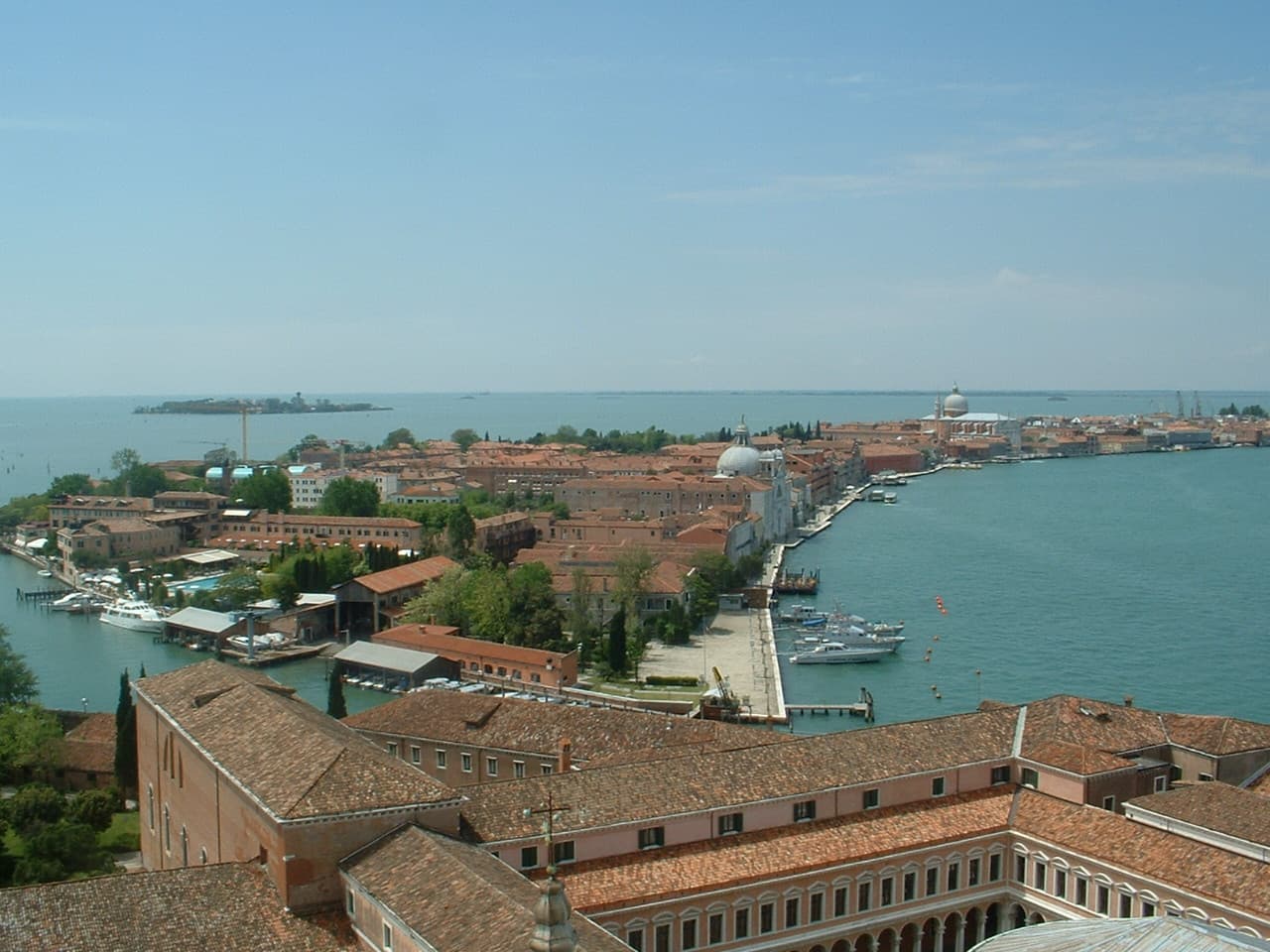
San Giorgio Maggiore campanile
A lift up the bell tower of the Palladio church on its own island, giving the finest panorama of Venice there is, including the one view that contains Piazza San Marco itself.
Year-round · Lift access to the top, unlike the stairs at most Venetian towers. · A short zoom is more useful than a wide lens up here.
 Dominic Sherony · CC BY-SA 2.0 via Wikimedia Commons
Fondamente Nove, looking north
The northern quay facing the open lagoon, the cemetery island of San Michele and Murano beyond. Working boats, ambulance launches and far fewer people than the southern quays.
Year-round
 nanosmile (Reinhard Jahn, Mannheim.) (please use this discussion page) · CC BY 2.0 de via Wikimedia Commons
Accademia bridge
The wooden bridge over the Grand Canal framing the Salute dome as the light drops, the classic Venice postcard at the classic Venice hour.
Year-round
Day trips
 giovanni · Pexels
Torcello, Burano and Murano
The lagoon day. Torcello for the 11th-century mosaics in Santa Maria Assunta, Burano for the painted houses and lace, Murano for the glass furnaces and the glass museum, in that order so the quietest island comes first.
Vaporetto line 12 from Fondamente Nove: about 40 minutes to Burano, then a short shuttle to Torcello · Full day
 C1 Superstar · Pexels
Padua
Half an hour by train: Giotto Scrovegni Chapel frescoes, the vast Prato della Valle square, one of the oldest botanical gardens in the world and a university city that actually lives its own life.
About 25 to 30 minutes by regional train from Venezia Santa Lucia · Full day
 Helena Jankovičová Kováčová · Pexels
Verona
A Roman arena still used for summer opera, a compact pink-stone centre and Veneto wine country on the doorstep. Long enough to be a full day out rather than an afternoon.
About 1 hour 10 by regional train, or around an hour on a fast service · Full day
 Vito Giaccari · Pexels
Brenta Riviera Palladian villas
The canal between Venice and Padua is lined with the summer villas the Venetian nobility built along it, including Villa Pisani and Palladio Villa Foscari. The Burchiello boat runs the route as a full-day cruise from spring to autumn.
Full day by boat, or about 40 minutes by bus to the nearer villas · Full day
After dark
 Tatiana Godovalnikova · CC BY-SA 4.0 via Wikimedia Commons
A giro d’ombre in San Polo
foodThree or four bacari between the Rialto market and Campo San Polo, one glass and two cicheti in each. The most Venetian evening available and the cheapest.
 Gildo Cancelli · Pexels
The Zattere passeggiata
walkThe evening walk along the Dorsoduro waterfront as the light goes, ending with a gelato and the Giudecca lit up across the water.
 Photo: Andreas Praefcke · CC BY 3.0 via Wikimedia Commons
Teatro La Fenice
cultureOpera and concerts in the rebuilt 18th-century house that burned down twice and came back both times. Even a cheap upper box is a proper Venetian evening.
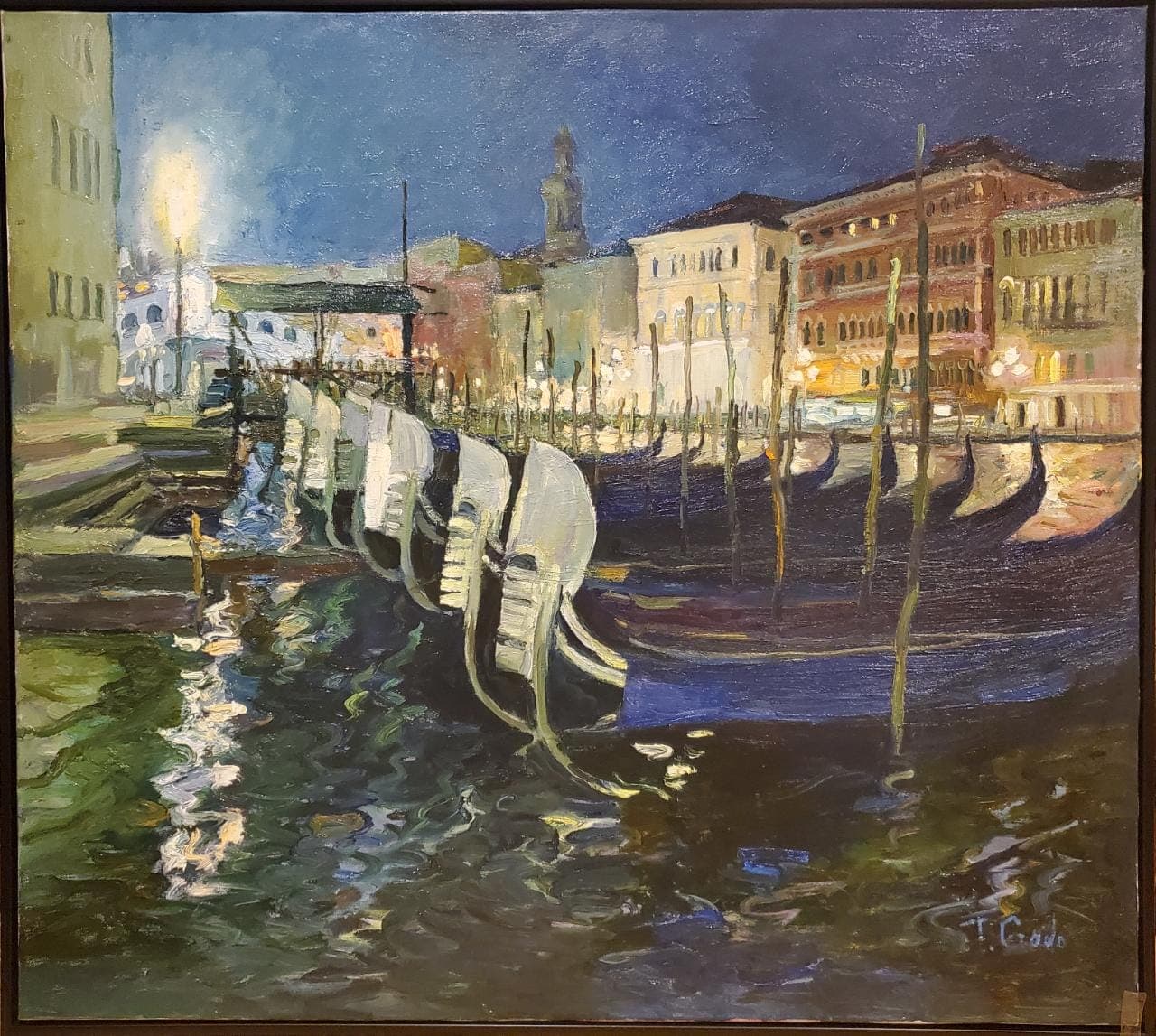
Tatiana Godovalnikova · CC BY-SA 4.0 via Wikimedia CommonsPiazza San Marco after the day-trippers
barThe square after about 9pm, when the cafe orchestras play to a half-empty piazza. A coffee at a table costs several times the counter price, and once it is worth it.
Daily itinerary
Four days in Venice: the city and one lagoon day
The honest minimum. One day for the San Marco monuments booked ahead, one for the western sestieri and the art, one full day in the lagoon, and one for the parts of the city nobody photographs.
- 1
San Marco, booked ahead
fullPiazza San Marco before 8am while it is empty, then the timed entry to St Mark Basilica, with the Pala d’Oro and the loggia terrace added on.Cicheti standing up in Castello rather than anything on the square.The Doge Palace on the combined museums ticket; allow three hours and do not add another museum after it.The Accademia bridge, or the San Giorgio Maggiore campanile if it is still open.Osteria alle Testiere in Castello, booked weeks earlier.Back through the square after 9pm to see it half empty.Everything on this day is walkable. Both tickets are online-only and timed, so fix them before you fly.Estimate: Swap the loggia add-on for the Correr Museum, which is already on the same combined ticket.
- 2
Dorsoduro and the art
moderateGallerie dell’Accademia at opening for the Venetian painters in one building.A canal-side table in Dorsoduro or a bacaro near Campo Santa Margherita.The Peggy Guggenheim Collection, then the walk out to the Salute and Punta della Dogana.The Zattere, the full length of it.Dorsoduro, where the newer kitchens are.Campo Santa Margherita, the one square with a student crowd.A single walking loop; the traghetto gondola ferry across the Grand Canal saves the walk back to the Accademia bridge.Estimate: The Guggenheim is closed on Tuesdays; use the day for Ca’ Rezzonico instead.
- 3
The lagoon
moderateEarly vaporetto from Fondamente Nove to Torcello for the Santa Maria Assunta mosaics before anyone else lands.Burano, or Venissa on Mazzorbo if you booked it.Burano lanes and the lace museum, then the boat to Murano for a furnace and the glass museum.From the boat back across the lagoon, which is the best seat of the day.Cannaregio, close to where the boat lands.The Fondamenta della Misericordia canal bars.A day travel card pays for itself on this day alone. Go Torcello first and Murano last: everyone else does the reverse.Estimate: Skip Murano entirely if glass shopping does not interest you and spend the time on Burano.
- 4
The other Venice
relaxedThe Rialto market at 7.30am, then the Frari and the Scuola Grande di San Rocco for the Tintoretto cycle.All’Arco or Cantina Do Mori, standing at the counter.Cannaregio: the Jewish Ghetto, the Strada Nova and the quiet northern fondamente.Fondamente Nove looking north over the lagoon.A giro d’ombre through San Polo instead of a sit-down meal.A last walk with no destination, which is the correct way to end a Venice trip.All on foot. Allow more time than the map suggests: nothing here goes in a straight line.Estimate: Add Libreria Acqua Alta and Campo Santa Maria Formosa if the morning runs short.
Seven days: Venice, the lagoon and the Veneto
The version with room in it. The four-day core, spread out, plus an unplanned arrival day, a mainland day trip and a last day in eastern Castello and the Arsenale.
- 1
Arrival and orientation
relaxedLand at Marco Polo and take the Alilaguna water bus or the bus to Piazzale Roma, then walk or take a vaporetto to your sestiere.Near the hotel, without ambition.Walk your own sestiere with no plan and no map.The Zattere or the Accademia bridge, whichever is closer.A neighbourhood trattoria away from the main corridor.An early night; arriving in Venice with luggage over bridges is more tiring than it sounds.Fix which vaporetto stop is nearest your hotel before you arrive; the last few hundred metres with a suitcase are the hard part.Estimate: A water taxi from the airport is expensive but drops you at the door, which on arrival day can be worth it.
- 2
San Marco, booked ahead
fullThe empty square before 8am, then the basilica on a timed ticket with the Pala d’Oro and the loggia.Cicheti in Castello.The Doge Palace, unhurried, on the combined museums ticket.The San Giorgio Maggiore campanile.Castello.Piazza San Marco with the orchestras after the day-trippers leave.Walkable throughout; line 2 to San Giorgio takes two minutes.Estimate: The Secret Itineraries guided route inside the palace is worth the upgrade if you book early.
- 3
Dorsoduro and the art
moderateGallerie dell’Accademia at opening.Dorsoduro.Peggy Guggenheim, the Salute and Punta della Dogana.The Zattere.Dorsoduro or the Giudecca, taking the boat across.Campo Santa Margherita.One walking loop plus one traghetto crossing.Estimate: Ca’ Rezzonico for 18th-century Venice if the modern collection does not appeal.
- 4
The lagoon
moderateTorcello first, on the early boat.Venissa on Mazzorbo, booked, or a Burano trattoria.Burano and then Murano.From the deck on the way back.Cannaregio.The Misericordia canal bars.Use a day travel card. Torcello first, Murano last.Estimate: Add Sant’Erasmo, the lagoon market garden island, if you want an island with no tourism on it at all.
- 5
San Polo, the Frari and the market
relaxedRialto market early, then the Frari and the Scuola Grande di San Rocco.All’Arco at the counter.Cannaregio and the Jewish Ghetto, slowly.Fondamente Nove.A giro d’ombre through San Polo.Walk back the long way.On foot all day.Estimate: Swap San Rocco for the Scuola Grande di San Giorgio degli Schiavoni and its Carpaccio cycle.
- 6
Out of the city
moderateTrain to Padua for the Scrovegni Chapel, booked ahead, or the Burchiello boat along the Brenta villas.Padua, at mainland prices, which will be a pleasant shock.Prato della Valle and the botanical garden, or the second half of the villa cruise.Back in Venice.Your own sestiere.Quiet.Regional trains to Padua run several times an hour and take under half an hour. Verona works too, at roughly double the travel time.Estimate: In Biennale season, give this day to the Arsenale and Giardini instead and skip the mainland.
- 7
Castello, the Arsenale and departure
relaxedEastern Castello: Via Garibaldi, the Arsenale gates and the Biennale gardens.Via Garibaldi, where Venetians eat.A last unplanned wander, then collect the bags.From the boat out, if the timing works.Departure.Leave a full two hours to get from a central hotel to Marco Polo, more if you are relying on the water bus.Estimate: Store luggage at Santa Lucia or Piazzale Roma and keep the whole last day.
Getting around
- Marco Polo Airport (VCE) sits on the lagoon edge, about 8km from the historic centre. The Alilaguna water bus runs from the airport dock to Murano, Fondamente Nove, San Marco, the Zattere and the train station, taking roughly an hour to an hour and a quarter depending on the line, at around 18 euro one way.
- The airport buses (ATVO express and ACTV line 5) reach Piazzale Roma in about 20 to 30 minutes for roughly 10 euro, and are much faster than the boat. From Piazzale Roma you walk or take a vaporetto.
- A private water taxi from the airport to a hotel dock runs somewhere in the region of 110 to 160 euro for the boat rather than per person, and is the only door-to-door option. Shared water taxis cost a fraction of that per head.
- Treviso Airport (TSF) is used by low-cost carriers and is about an hour away by ATVO coach to Piazzale Roma, priced around 12 euro one way.
- Trains arrive at Venezia Santa Lucia, which is inside the city on the Grand Canal, roughly 2 hours from Milan, 2 to 2.5 from Florence and 3.5 to 4 from Rome. Venezia Mestre, on the mainland, is a different station: cheaper hotels, and a bridge between you and Venice.
- The ACTV vaporetto network is the public transport system. A single ticket is around 9.50 euro and is valid 75 minutes with transfers, which makes the day and multi-day travel cards (roughly 25, 35, 45 and 65 euro for 1, 2, 3 and 7 days) worth it from about three journeys a day.
- Line 1 runs the whole Grand Canal slowly and stops everywhere, which makes it the cheapest sightseeing boat in the city. Line 2 is the faster limited-stop service, and its route changes with the season. Lines 4.1, 4.2, 12 and 14 handle the lagoon and the islands.
- The traghetto is the local secret: a stripped-down gondola that ferries people straight across the Grand Canal at several points for a couple of euro, standing up, in about a minute.
- Gondola rides are priced by the city, not the gondolier: around 90 euro for 30 minutes in the daytime and 110 euro for 35 minutes in the evening, per gondola for up to five people, not per person.
- Everything else is walking. There are no cars, no scooters and no bicycles in the historic centre, and the bridges are stepped.
Things worth knowing
- · Turning up at St Mark Basilica without a ticket. Admission has been online-only since 2025 and there is no walk-up window.
- · Sleeping in Mestre to save money. It saves less than people expect and costs you the early mornings and late evenings, which are the two best times to be in Venice.
- · Doing Venice as a day trip from Padua or a cruise call, arriving at 10am and leaving at 5pm, which is precisely the window everyone else is there.
- · Booking a restaurant on a main square or accepting an invitation from someone standing outside one. Check the coperto and the menu before you sit.
- · Bringing a heavy wheeled suitcase. Every bridge is steps, and there is no taxi to the door unless you pay for a boat.
- · Underestimating the walk to the vaporetto stop with luggage, then missing an airport connection by ten minutes.
Budget
| Low | Expected | Comfortable | |
|---|---|---|---|
| Accommodation style / per night | €110≈ $127 | €240≈ $276 | €600≈ $690 |
| Food style / per day | €35≈ $40 | €65≈ $75 | €140≈ $161 |
| Local transport / per day | €5≈ $6 | €25≈ $29 | €60≈ $69 |
| Estimate / per day | €15≈ $17 | €40≈ $46 | €75≈ $86 |
Estimate · EUR · 2026-07-20. Accommodation is per room per night for two sharing inside the historic centre; Mestre is roughly half and costs you the mornings and evenings. Attractions run high because St Mark Basilica, the Doge Palace museums pass, the Accademia and the Guggenheim are all ticketed separately. Local transport assumes a day travel card on the days you use the boats. A gondola (about 90 euro for 30 minutes, per boat) and the day-visitor access fee (5 or 10 euro, day-trippers only) are extra. Shoulder-season figures; July, August and Carnival run well above them. · 1 USD = €1 (17 Sep 2026)
Things worth knowing
Frequently asked questions
How many days do you need in Venice?
Four nights is the honest minimum: one day for the San Marco monuments, one for the art in Dorsoduro, one full day in the lagoon and one for the sestieri nobody photographs. Six or seven adds a mainland day trip and enough slack to walk without a plan, which is when the city is at its best.
Where should you stay in Venice for the first time?
Dorsoduro if you want art, sunsets and a quiet base ten minutes from everything; Cannaregio for value and a city that feels inhabited; Castello for a residential feel still walkable to San Marco. Staying on Piazza San Marco itself buys convenience at the highest price and the emptiest evenings.
Is it worth staying in Venice or is Mestre cheaper?
Stay in Venice. Mestre is cheaper per night but the saving is smaller than it looks once you add transfers, and it costs you the two windows that make the trip, before 9am and after 8pm, when the historic centre belongs to the people sleeping in it.
Do you have to pay the Venice access fee?
Only if you are a day visitor on one of the fee days, which in 2026 ran on 60 selected days between April and late July, from 08:30 to 16:00. It costs 5 euro booked in advance or 10 euro at the last minute. Overnight guests, residents, workers and Veneto residents are exempt, though some exemptions still require registering for a QR code.
How much does a gondola ride cost in Venice?
The city sets the tariff: around 90 euro for 30 minutes in the daytime and 110 euro for 35 minutes after 7pm, per gondola for up to five people rather than per person. Anything quoted per person, or well above that, is not the official rate. The traghetto crossing of the Grand Canal costs a couple of euro if you just want to stand in one.
What is the best way to get from Marco Polo Airport to Venice?
The Alilaguna water bus if your hotel is near a stop and you want the arrival to feel like Venice, at around 18 euro and an hour or more. The airport bus to Piazzale Roma if you want speed, at roughly 10 euro and 20 to 30 minutes. A private water taxi if you have luggage, mobility needs or a hotel with its own dock, at roughly 110 to 160 euro for the boat.
When is the best time to visit Venice?
Late April to early June, or late September into October: mild, long days without the summer heat and humidity. November to February is cheap, atmospheric and cold, with high-water mornings; July, August and Carnival are the most crowded and most expensive weeks of the year.
Sources (9)
- Venice and its Lagoon inscribed on the UNESCO World Heritage List in 1987 · unesco · 2026-07-20
- Venice day-visitor access fee rules, dates and pricing · municipal · 2026-07-20
- Official Comune di Venezia gondola service tariffs · municipal · 2026-07-20
- St Mark Basilica ticket prices and online-only booking policy · official · 2026-07-20
- Palazzo Ducale and St Mark Square museums combined ticket · museum · 2026-07-20
- Venice public transport tickets and travel cards · transport-operator · 2026-07-20
- Alilaguna airport water bus lines and fares · transport-operator · 2026-07-20
- La Biennale di Venezia 2026 art exhibition dates and venues · event-organizer · 2026-07-20
- Gallerie dell’Accademia collection and admission · museum · 2026-07-20


