Mexico · Valley of Mexico
Mexico City
Come between late September and early May, sleep in Roma Norte or Condesa, book the Casa Azul and Pujol or Quintonil weeks ahead, walk the Centro from the Zocalo to Bellas Artes early, give the Anthropology Museum a half day, ride out to Teotihuacan at opening, spend a slow Saturday in Coyoacan and San Angel, and eat everything: the tacos are as much the point as the museums.
 Jeses / CC BY-SA 2.5 via Wikimedia Commons
Overview
Mexico City is one of the largest Spanish-speaking metropolitan areas on earth and one of the oldest capitals in the Americas: an Aztec island city the Spanish tore down and rebuilt in stone, sitting 2,240 metres up in a mountain valley, still sinking slowly into the lakebed it was built on. The excavated Templo Mayor sits a block off the main square, Diego Rivera and Frida Kahlo painted their century here, and the food runs in an unbroken line from 20-peso street tacos to two tasting-menu restaurants holding two Michelin stars each, alongside nine more with one. In June 2026 its Azteca became the first stadium to host three World Cup opening matches; by autumn it is back to being what it quietly always was, a great cultural capital priced below its peers.
Mexico City is, for our money, the best food-and-culture value among the world's great capitals right now, even with a strong peso. The 2026 pattern is simple: a handful of things now behave like hard-ticket events, and everything else is gloriously walk-in. So book exactly four things before you fly, the Casa Azul, Casa Barragan if architecture matters to you, one two-star table, and a Teotihuacan sunrise balloon if the budget stretches, then stop planning. Base in Roma or Condesa rather than the Centro: the historic core is magnificent by day and empties at night, while the parks-and-cafes belt keeps its evenings. Respect the altitude on day one, take the rainy-season afternoons as a feature that clears the light, and give the last morning to a market instead of a museum.
Best for
Food travelers at every budget · Museum and history lovers · Art and architecture pilgrims · Couples · Long-weekend escapes from North America · City walkers who like a neighborhood pace
Daily itinerary
4 full days for the classic city; 6 to add a second neighborhood day and a proper day trip beyond Teotihuacan
Scale plus depth. Other capitals have one old town; Mexico City has a UNESCO-listed historic centre over an Aztec ceremonial precinct, a UNESCO modernist university campus, a UNESCO house by Luis Barragan and UNESCO canals at Xochimilco, all inside one transit network. But the city is experienced small: it lives in village-sized neighborhoods, Roma and Condesa with their cafe-lined parks, Coyoacan with its plazas, Polanco with its polish, and the trick is to stop commuting between sights and start living in one or two colonias at a time. 2026 gave the visit a new arithmetic: since 1 January foreigners pay about double at the big federal sites, around 210 pesos at the Anthropology Museum, Templo Mayor and Teotihuacan, and the handful of bookable icons, the Casa Azul above all, now sell out weeks ahead while everything else takes walk-ins.
Best time to visit
The altitude does the air conditioning: days sit between 21 and 27 degrees most of the year and nights are always cool. The real seasons are wet and dry. November to April is dry, bright and cloudless, the classic window. May is the hottest month, and June to October brings the rains, which have their own rhythm: mornings are usually clear, storms land in the late afternoon and evening, hard and briefly, and the city rinses clean. September and October are underrated for exactly that reason, and they carry the calendar: Independence Day in mid-September, then the Day of the Dead season building through late October into the parade and the ofrendas. December to February brings chilly mornings, typically around 6 to 8 degrees at dawn in the central city and colder on the fringes, and perfect walking days.
- November to February: Dry season proper: brilliant blue days, cold dawns (often 6 to 8 degrees in December and January), 22-degree afternoons. The Day of the Dead observance culminates on 1 and 2 November, the Zocalo has hosted a seasonal festival village in recent Decembers (programming varies by year), and January is typically the quietest dry-season month with softer hotel prices.
- March to May: The jacarandas turn the avenues purple in March, a genuine spectacle on Reforma and in Roma and Condesa. April warms and May is the hottest, haziest month of the year, still cool by lowland standards. Semana Santa half-empties the city: quiet streets, easy tables, normal museum crowds.
- June to September: Rainy season: clear mornings, an afternoon or evening downpour on many days, most often between about 4 and 8pm, fresh evenings. Plan sights before lunch and long meals or museums after. Mid-September is Fiestas Patrias: the Grito fills the Zocalo on the night of the 15th and the military parade takes the centre on the 16th.
- October: The sleeper month: rains fading, the city washed green, and the Day of the Dead machinery assembling from mid-month, ofrendas in the plazas, pan de muerto in every bakery, the big parade on a Saturday near the end of the month. In 2026 the F1 grand prix runs 30 October to 1 November, so that weekend books out months ahead.
Things worth knowing
- Fiestas Patrias (15 to 16 September): the President gives the Grito from the National Palace balcony at 11pm on the 15th to a packed Zocalo, and the military parade rolls down the centre on the 16th. Electric if you want it, easy to sidestep if you do not; either way book the Centro early or sleep elsewhere that week.
- Day of the Dead season (mid-October to 2 November): the great parade down Reforma to the Zocalo on a Saturday announced weeks ahead, monumental ofrendas in the Zocalo and the plazas, Coyoacan and the canals at Xochimilco in full flower. The observance itself is 1 and 2 November, and the cemeteries at night belong to families first: visit invited experiences like Mixquic respectfully or watch the public-facing city version instead.
- Formula 1 Mexico City Grand Prix (30 October to 1 November 2026): the Autodromo Hermanos Rodriguez fills its slot right on top of Day of the Dead weekend. Hotels spike city-wide; race fans should book months out, everyone else should know why prices doubled.
- Zona Maco (early February): routinely described as Latin America's leading art fair, it anchors an art week that takes over the galleries of Roma, Juarez and San Miguel Chapultepec. The city's design and collector crowd at full wattage.
- Vive Latino (mid-March): two festival days of the Spanish-speaking rock and pop world at the Estadio GNP Seguros (the former Foro Sol). The city absorbs it easily, but flights and central hotels feel it.
- Christmas to Reyes (mid-December to 6 January): the Zocalo's seasonal verbena (a giant tree and rink in recent editions; contents vary by year), piñatas in every market, and the city at its most familial. The week between Christmas and New Year is quiet and lovely; 6 January closes the season with rosca de reyes in every bakery window.
Where to stay
 Israyosoy S. · Pexels
Centro Historico
A capital's core since Aztec times and a UNESCO site since 1987: the vast Zocalo with the Metropolitan Cathedral and National Palace, the excavated Templo Mayor a block away, Bellas Artes and the Torre Latinoamericana at the western gate, and between them fifty blocks of colonial palaces, department-store murals, cantinas and street commerce. As a place to spend days it is unmissable; as a place to sleep it is a specialist choice, magnificent at 8am, echoing by 10pm.
Best for: First-time sightseeing · History at maximum density · Rooftop views of the cathedral · Cantinas and old-school dining rooms
The core empties after dark and the blocks change character fast at the edges; keep evening walks to the lit spine between the Zocalo and Bellas Artes. Sundays are free-for-residents at federal museums and feel like it.
 Fernando Paleta · Pexels
Roma Norte
The 1900s boulevard quarter that became the city's creative engine: Art Nouveau facades and leafy medians, the cafe-and-bakery density of a small Paris, natural wine bars, galleries, and a restaurant bench that runs from street stands to Michelin stars within three blocks. Plaza Rio de Janeiro and Alvaro Obregon are the spine. For a first visit it is the easiest good decision in the city: central, walkable, alive at night without being a party district.
Best for: First-time visitors · Food and coffee at every price · Design hotels and guest houses · Evenings that end at a mezcaleria
Weekend nights hum along Alvaro Obregon; ask for a room off the avenue. Prices have gentrified: this is no longer the cheap quarter, just the well-priced one.
 ProtoplasmaKid · CC BY-SA 4.0 via Wikimedia Commons
Condesa and Hipodromo
Roma's greener sibling around two of the loveliest parks in the city, Parque Mexico and Parque Espana: Art Deco apartment blocks on oval avenues traced over a former racetrack, dog schools on the running paths, terraces under the trees. Slightly quieter and slightly more residential than Roma, with the same eating-and-walking logic. Couples and returning visitors tend to drift here.
Best for: Couples · Park mornings and terrace evenings · Runners · A calmer base with Roma next door
Fewer big sights within walking distance: you will ride to the Centro and Chapultepec. The bar strip along Tamaulipas is livelier than the rest; choose your block.
 randreu · CC BY 3.0 via Wikimedia Commons
Polanco
The polished quarter north of Chapultepec park: embassy streets named for writers and scientists, the luxury spine of Presidente Masaryk, Parque Lincoln's clipped gardens, the Soumaya's silver swirl in Nuevo Polanco, and the city's most concentrated fine-dining bench, Pujol and Quintonil three blocks apart. Sleeping here buys quiet, greenery and proximity to Chapultepec's museums at a price.
Best for: Luxury and boutique hotels · The Anthropology Museum on foot · Fine dining without a late-night taxi · Shoppers
The least Mexican-feeling of the central options: comfortable to the point of interchangeable in places. Evenings are restaurant-led rather than street-led.
 David Gracia · Pexels
Coyoacan
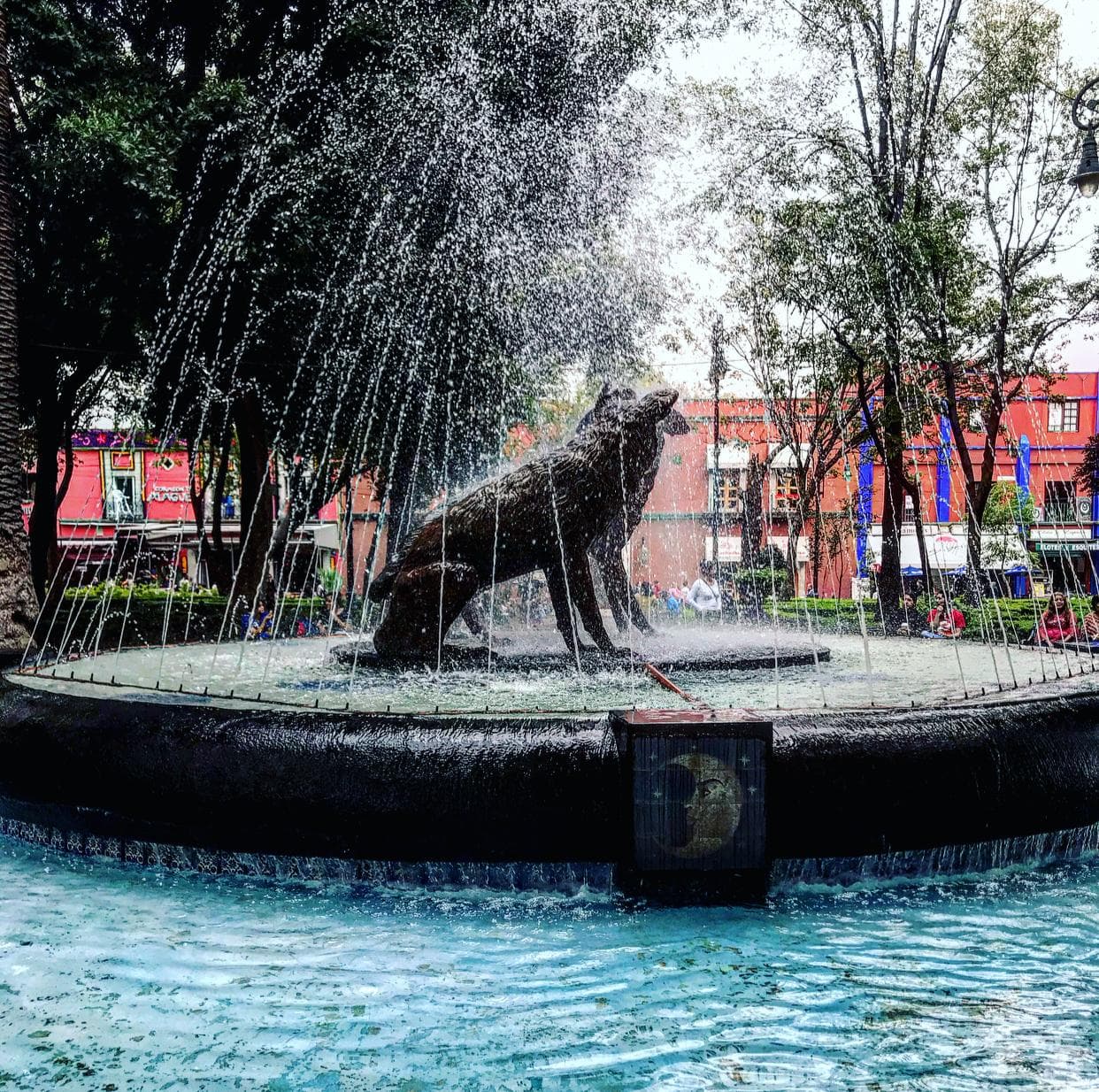
The village Cortes used as his first capital, swallowed whole by the city and still behaving like a town: twin plazas under the trees, the Jardin Centenario fountain with its two coyotes, a market hall full of tostadas, and the Casa Azul pulling its pilgrimage a few quiet blocks north. Forty minutes south of the centre, and best treated as a full unhurried day, ideally paired with San Angel on a Saturday.
Best for: The Frida Kahlo pilgrimage · Slow plaza afternoons · Families · A Saturday paired with the San Angel art bazaar
A long ride from everything else: staying here means commuting to the rest of the trip. Weekends are wonderful and busy; the Casa Azul must be booked long before you decide any of this.
 photos_clinker (Flickr) · CC BY-SA 2.0 via Wikimedia Commons
Juarez and Reforma
The belt along the great avenue: Paseo de la Reforma's towers and monuments, the Angel de la Independencia on its roundabout, and behind it Colonia Juarez, once the Porfirian mansion district, now the city's fastest-evolving corner of wine bars, bakeries and restaurants around Calle Havre and Plaza Washington, with the Zona Rosa's nightlife on its flank. Business-hotel convenience on the avenue, neighborhood texture one street behind.
Best for: Big-view hotel rooms on Reforma · Walking to both Chapultepec and the Centro · A newer food scene without Roma's crowds · Sunday mornings when Reforma closes to cars
Reforma itself is a corridor, not a neighborhood: charmless at street level between the monuments. The Zona Rosa blocks are loud and uneven; the good texture is on the Juarez side.
Where to sleep
 José Luiz · CC BY-SA 4.0 via Wikimedia Commons
Circulo Mexicano
design · Centro Historico, on Republica de Guatemala directly behind the Metropolitan Cathedral
Best for: Sleeping inside the historic centre done properly · A rooftop over the cathedral domes · Design lovers
- A 19th-century merchant building turned 25-room hotel by Grupo Habita, with Ambrosi Etchegaray's Shaker-inspired rooms wrapped around a light-well courtyard: the most convincing argument for basing in the Centro
- The rooftop terrace, with its small pool and the Comedor restaurant, looks straight onto the cathedral's bell towers and the Templo Mayor a block away
- Guests wake inside the historic core with the cathedral quarter nearly to themselves; the whole Centro is at the door before the crowds arrive
- The Centro empties at night: dinner options within a short walk thin out after 9pm and the good evening neighborhoods are a ride away
- Minimal-by-design rooms (some with interior light-well views) are not for travelers who want grand-hotel amenities
Casa Polanco
luxury · Polanco, on Luis G. Urbina facing Parque Lincoln
Best for: A residential luxury stay · Couples who want quiet and gardens · The Polanco dining bench on foot
- A 1940s neocolonial mansion facing Parque Lincoln, restored into a 19-room boutique with a modernist wing: marble bathrooms, a filled library, and the feel of staying in a collector's house rather than a hotel
- A member of The Leading Hotels of the World, with service scaled to 19 rooms and breakfast in the garden room
- Parque Lincoln across the street, Masaryk two blocks away, and Pujol and Quintonil within a ten-minute walk
- Among the most expensive addresses in the city, and its manicured corner of Polanco is the least street-food-flavored base in this guide
- Small property: books out around the F1 and Day of the Dead weeks well ahead
 Nan Palmero · CC BY 2.0 via Wikimedia Commons
Four Seasons Hotel Mexico City
luxury · On Paseo de la Reforma at the edge of Chapultepec park
Best for: Classic five-star comfort · A courtyard oasis off the avenue · Walking to Chapultepec's museums
- Built hacienda-style around a planted central courtyard, so the whole hotel turns its back on eight lanes of Reforma and faces its own garden: breakfast outside faces planting instead of traffic
- The location works hard: Chapultepec park and the Anthropology Museum one way, Roma and Condesa a short ride the other, the Angel within a stroll
- Full grand-hotel apparatus, pool, spa, serious concierge desk, that the design boutiques cannot match
- International-luxury character rather than a Mexico City one: the courtyard could be in several countries
- Reforma-facing rooms carry avenue noise; ask for courtyard-side
 Nan Palmero · CC BY 2.0 via Wikimedia Commons
Condesa DF
design · Condesa, on Avenida Veracruz facing Parque Espana
Best for: The Condesa park life from a balcony · A rooftop evening scene · Design with a sense of humor
- The 1928 triangular apartment building on Parque Espana that launched the neighborhood's hotel scene, with India Mahdavi interiors: wraparound balconies over the trees are the rooms to ask for
- The roof terrace, with its sushi bar and view into the canopy, remains one of Condesa's standing evening plans for guests and locals alike
- Parque Espana and Parque Mexico at the door: the neighborhood's whole walking-and-terraces argument, distilled
- Rooms are compact and the scene cuts both ways: the roof and patio carry sound into nearby floors on weekend nights
- A ride from every major sight; this is a base for living in Condesa, not for museum logistics
Ignacia Guest House
boutique · Roma Norte, on Calle Jalapa
Best for: A small-house stay in the middle of Roma · Couples · Breakfast-included calm
- A restored circa-1913 Roma mansion with a handful of color-themed rooms arranged around a courtyard garden, named for the housekeeper who kept the house for decades and run more like a private house than a hotel
- The garden pavilion breakfast and evening wine hour make it as much a retreat as a base
- Roma Norte's cafes, galleries and dining spine start at the front door
- Very few rooms, so dates sell out far ahead and pricing sits above what the word guesthouse suggests
- No restaurant, gym or full hotel services; this is deliberately a house
Hotel San Fernando
boutique · Condesa, on Calle Iztaccihuatl by Parque Mexico
Best for: Condesa charm at a fair price · First-timers who want the parks at the door · Long stays
- A 1940s apartment building by Parque Mexico converted by Texas's Bunkhouse group into 19 warm, unfussy rooms: the rare stylish option that undercuts the design-hotel tier
- The ground-floor bar and lobby cafe work as a neighborhood living room, and the location puts both parks and the Condesa terrace circuit within three blocks
- Suites with kitchenettes suit week-long stays better than most hotels in the belt
- No rooftop, pool or spa: the pitch is location and warmth, not amenities
- Rooms facing the street hear Condesa's evening hum; light sleepers should ask for the back
Essential experiences
 Jimmy Elizarraras · Pexels
The Zocalo and the Metropolitan Cathedral
One of the largest city squares in the world, laid directly over the ceremonial heart of Aztec Tenochtitlan: the Metropolitan Cathedral, built over three centuries from 1573 and visibly sinking into the lakebed, fills the north side, the National Palace with its Diego Rivera stair murals the east. Come before 9am when the flag ceremony and the empty scale belong to you, and again after dark when the buildings are floodlit. The Palace murals are free to visit with ID when open, but access has closed at short notice in recent years; if Rivera is the goal, the Bellas Artes and Museo Mural versions are the dependable alternatives.
 Juan Carlos Fonseca Mata · CC BY-SA 4.0 via Wikimedia Commons
Templo Mayor
The main temple of Tenochtitlan, found again in 1978 when electrical workers hit the great disc of the moon goddess Coyolxauhqui, and now an open excavation one block from the cathedral: seven building stages peeled apart like tree rings, a wall of stone skulls, and a modern museum holding the disc and the monumental Tlaltecuhtli relief. Do it straight after an early Zocalo: the two together are the shortest history lesson in the Americas, the city before and after 1521 in a hundred metres. Closed Mondays; foreigners pay the 2026 federal rate of about 210 pesos.
 Mike Peel · CC BY-SA 4.0 via Wikimedia Commons
Museo Nacional de Antropologia
Routinely ranked among the great museums of the world: the Aztec Sun Stone, the colossal Olmec heads, Pakal's jade funerary mask setting, and the giant umbrella fountain of Pedro Ramirez Vazquez's 1964 building, itself worth the ticket. Twenty-two halls ring the courtyard; racing them all flattens everything, so give it a half day and pick the Mexica, Maya and Teotihuacan halls plus one wildcard. Closed Mondays. Since 1 January 2026 foreigners pay about 210 pesos while nationals and residents pay half and enter free on Sundays, which makes Sundays the busiest day by some margin.
 ProtoplasmaKid · CC BY-SA 4.0 via Wikimedia Commons
Chapultepec Castle and the Bosque
Widely described as the only castle in North America to have housed reigning sovereigns, crowning Chapultepec hill: Maximilian and Carlota's 1860s apartments and carriage, the Niños Heroes memorial below, and a terrace view straight down Paseo de la Reforma that explains the city's plan in one look. Around it spreads the Bosque de Chapultepec, one of the largest city parks in the Americas, holding the Anthropology Museum, the Tamayo and the Modern Art Museum within one green walk. Castle closed Mondays, about 210 pesos for foreigners in 2026; go at opening and walk down into the museums as the day warms.
 Rod Waddington from Kergunyah, Australia · CC BY-SA 2.0 via Wikimedia Commons
Museo Frida Kahlo (Casa Azul)
The cobalt-blue Coyoacan house where Frida Kahlo was born, worked and died, kept close to how she and Diego Rivera left it: the studio with her wheelchair at the easel, the mirrored four-poster, the kitchen spelled out in tiny clay cups, the garden pyramid for their idols. The practical fact that governs everything: tickets are sold online only, no box office, and popular dates sell out several weeks ahead, and more around holidays, so book before you book flights-adjacent plans. Entry runs 320 pesos for foreign visitors and includes a courtesy visit to Rivera's volcanic-stone Anahuacalli museum nearby. Closed Mondays.
 Jorge Láscar from Australia · CC BY 2.0 via Wikimedia Commons
Palacio de Bellas Artes and the Rivera murals
The marble opera house that took thirty years and two revolutions to finish, Art Nouveau outside, Art Deco inside, with a Tiffany glass stage curtain of the two volcanoes. The upper floors hold the heavyweight murals: Rivera's Man, Controller of the Universe, repainted here after Rockefeller Center destroyed the original, alongside Orozco and Siqueiros. Two blocks west, the small Museo Mural Diego Rivera holds his Dream of a Sunday Afternoon in the Alameda. The building is best photographed from the Sears cafe terrace opposite at golden hour; the Ballet Folklorico dances under the Tiffany curtain most weeks.
 Ymblanter · CC BY-SA 3.0 via Wikimedia Commons
Casa Luis Barragan
The architect's own 1948 house and studio, a UNESCO site and the pilgrimage that organizes every architecture trip to Mexico: pink and gold planes of light, the famous cross-window, the roof terrace walled against everything but sky. Visits are small guided groups and tickets are currently released in batches, often around two months ahead on the official site, and sell out fast, so check the calendar there; if you miss it, his Casa Gilardi and Cuadra San Cristobal are separately visitable and the Camino Real hotel lobby is a free Barragan-adjacent fix by his collaborator. Book this and the Casa Azul the same week you commit to dates.
 Carloospadilla7 · CC BY-SA 4.0 via Wikimedia Commons
Coyoacan and its market
The old town around the twin plazas, Jardin Centenario with its coyote fountain and Plaza Hidalgo with its bandstand: churro stands, balloon sellers, the 16th-century San Juan Bautista church, and streets of low painted houses that explain why Kahlo, Trotsky and half the city's artists lived here. The Mercado de Coyoacan two blocks north is the lunch: tostada counters stacked with shrimp, tinga and octopus. Come on a weekend for the full theatre or a weekday for the village quiet, and pair it with the Casa Azul and Trotsky's fortified house nearby.
 Bgabel · CC BY-SA 3.0 via Wikimedia Commons
Xochimilco trajineras
The last working remnant of the lake system the city was built on, UNESCO-listed with the Centro: painted flat-bottomed trajineras poled along canals between chinampas, the pre-Hispanic island fields still growing the city's flowers and vegetables. The official 2026 rate is 750 pesos per boat per hour, per boat not per person, posted at the embarcaderos; two hours is right. Saturday afternoons are a floating party with mariachi and michelada boats pulling alongside; weekday mornings are quiet and green. The quieter move is Cuemanco embarcadero for the ecological reserve side.
Alcaldia Xochimilco: official trajinera tariff ↗View on map ↗
 Jose Francisco Del Valle Mojica · CC BY 2.0 via Wikimedia Commons
Torre Latinoamericana mirador
The 1956 tower that taught skyscrapers to survive earthquakes, with an open-air 44th-floor deck at about 180 metres: the one place where the scale of the valley makes sense, the Centro's domes below, the volcanoes on clear days, the city running unbroken to every horizon. Tickets around 220 pesos, open 9am to 10pm daily. Time it for late afternoon into dusk: day view, sunset and the lights switching on for one ticket, with Bellas Artes' orange dome in the foreground. Clearest air comes right after rainy-season storms and on winter mornings.
 Deror avi · CC BY-SA 3.0 via Wikimedia Commons
Basilica de Guadalupe
One of the most visited Catholic shrines in the world: the tilted 1709 old basilica, the vast 1976 round one holding Juan Diego's tilma with the image of the Virgin of Guadalupe, and the hill of Tepeyac rising behind with chapels and the city spread below. Millions arrive around 12 December; any other morning the plaza is a calm, moving cross-section of Mexico. A moving walkway carries visitors under the tilma. Free, open daily; it pairs naturally with Teotihuacan, which lies further up the same highway out of the city.
 Fernando Paleta · Pexels
Ciudad Universitaria and the Central Library
UNAM's 1950s campus, a UNESCO site since 2007 and a landmark of Mexican modernism: Juan O'Gorman's Central Library wearing four thousand square metres of stone mosaic telling the history of Mexico, Rivera's relief on the stadium, lava-field gardens in the Espacio Escultorico. It is a working university, free to wander respectfully on weekdays, and on the way back from (or to) San Angel's Saturday bazaar. Architecture travelers should stack it with Casa Barragan for a modernism day the equal of any city's.
 Sergio Estrada Flores / CC BY-SA 4.0 via Wikimedia Commons
 Diego Delso / CC BY-SA 3.0 via Wikimedia Commons
Food & drink
 Javier Lastras · CC BY 2.0 via Wikimedia Commons
Tacos al pastor
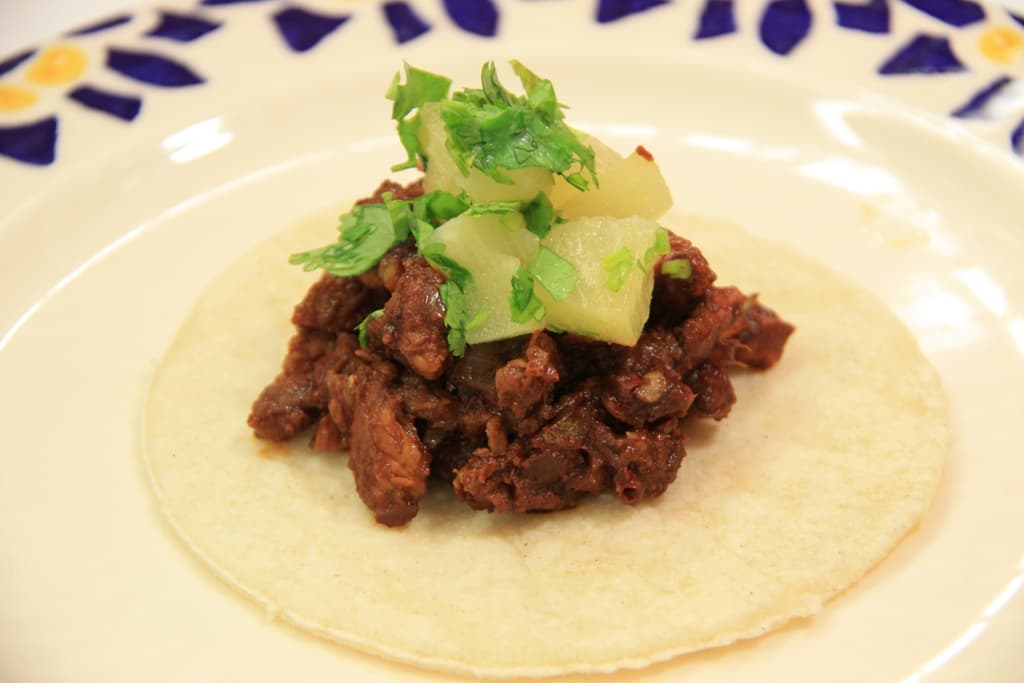
The city's taco: pork stacked on a vertical spit Lebanese-shawarma style, shaved into small corn tortillas with pineapple, onion and cilantro. The benchmark is a busy trompo late in the evening, and the correct order starts at three and repeats. Judge a taqueria by the crowd and the knife work; 20 to 30 pesos each at street level.
 Esparta Palma from Distrito Federal, Mexico · CC BY 2.0 via Wikimedia Commons
Mole
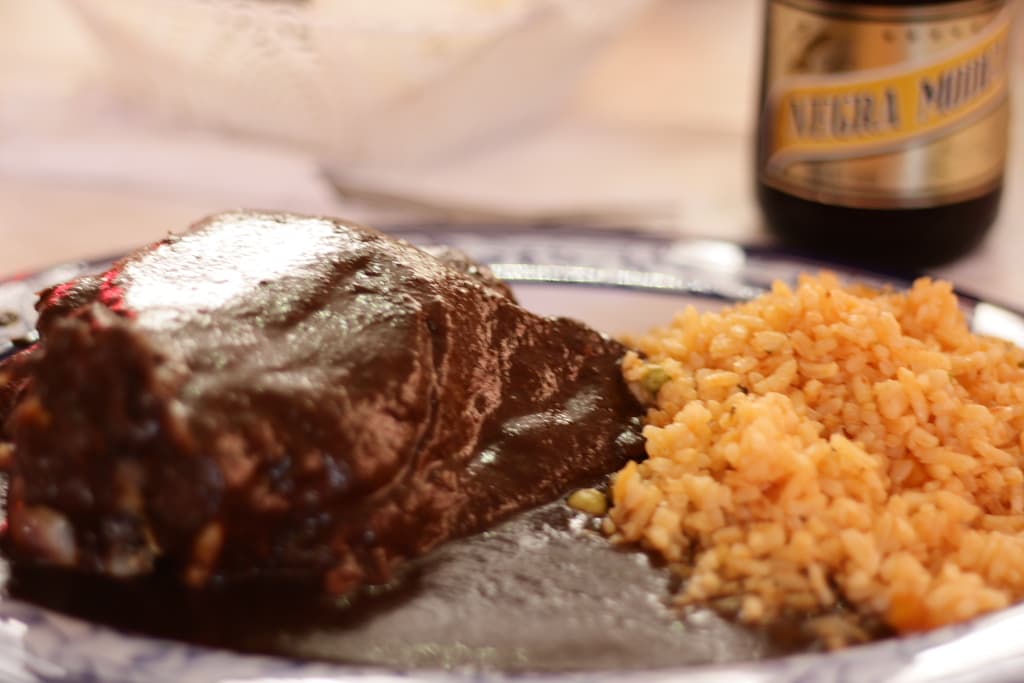
The great sauce family, dozens of ingredients ground and simmered into something between history and dessert: poblano dark with chocolate, verde bright with pumpkin seed. Restaurants like Pujol built the modern case around it, but a Sunday mole over rice in a market fonda is the original argument. Order it over turkey or enchiladas and stop planning the rest of lunch.
 Victorsmb · CC BY-SA 4.0 via Wikimedia Commons
Chilaquiles
Breakfast as national institution: tortilla chips drowned in green or red salsa until just softening, crema, cheese, onion, a fried egg or shredded chicken on top. Every fonda and cafe does them; the salsa choice is a personality test. The cure for a mezcal evening and the reason hotel breakfast is optional.
 Vidal Balielo Jr. · Pexels
Tamales and the guajolota
Steamed corn masa in husks or banana leaves, sold from bicycle-cart steamers at dawn with atole to drink. The city's own move is the guajolota, a tamal stuffed into a bolillo roll: carbohydrate on carbohydrate, beloved, absurd, correct on a cold morning. Follow the steam whistle before 9am.
 Julissa Suarez · Pexels
Esquites and elotes
Street corn two ways: elote on the cob, esquites off it in a cup, both dressed with mayo, cheese, chile and lime. The esquites cart at dusk is a neighborhood institution everywhere from Condesa to Coyoacan, and the cup version eats far more gracefully while walking. A 25-to-40-peso first course before tacos.
 Jorge Acre · Pexels
Tlacoyos
Blue-corn ovals patted by hand, stuffed with beans, requeson or fava paste, griddled and topped with nopales and salsa: pre-Hispanic fast food still made exactly the old way, usually by a señora with a comal and a queue. One of the best cheap bites in the city and the dish to seek at markets rather than restaurants.
 Blue Arauz · Pexels
Pan dulce and the concha
Mexico City takes its bakeries seriously, from neighborhood panaderias with tongs-and-tray self-service to the new wave (Rosetta's guava roll is the modern classic). The concha, a shell-scored sweet bun, is the standard-bearer, dunked in cafe con leche or hot chocolate. Bakery hour is early morning and again around 6pm when fresh trays land.
 Noemí Jiménez · Pexels
Mezcal and pulque
The two agave poles: mezcal sipped neat with orange and worm salt in the mezcalerias of Roma and Juarez, and pulque, the fermented pre-Hispanic drink, ladled thick and lightly sour in old pulquerias, often flavored as curados. Drink mezcal slowly, treat pulque as a living thing that does not travel, and remember the altitude counts your drinks with you.
The city eats late by northern standards: comida, the main meal, runs 2 to 5pm, and dinner crowds arrive from 8:30pm. Fondas and markets serve a fixed-price comida corrida at midday, soup, rice, a main and agua fresca for 90 to 150 pesos, which is the single best value in the city. Tip 10 to 15 percent in restaurants (service is not normally included, but check the bill); round up at street stands. Cards are accepted widely in sit-down places but street food, markets and some fondas are cash-only, so carry a few hundred pesos in small notes. Reservations matter only at the top: the two-star rooms book weeks to months out, the neighborhood bench takes walk-ins or same-day apps. Agua de horchata or jamaica belongs with tacos; ask for salsas on the side only if you mean it.
Where to eat
 Nan Palmero · CC BY 2.0 via Wikimedia Commons
Pujol
fine-diningEnrique Olvera's flagship, two Michelin stars in the 2026 guide and the room that taught the world to take Mexican fine dining seriously. The tasting menu, built around the mole madre, the ancient mole kept alive and re-fed for years, runs around 3,500 pesos before drinks; the taco omakase bar is the other way in. Book roughly a month or more ahead on the official site; lunch dates release the same way and go slower.
Last researched 2026-08-20
 Tbhotch · CC BY-SA 4.0 via Wikimedia Commons
Contramar
institutionGabriela Camara's seafood dining room has been the city's standing lunch party since 1998: waiters running raised trays of tuna tostadas, the pescado a la talla split red chile and green parsley down the middle, and a room that treats 4pm as the height of the day. It seats lunch through the afternoon; book ahead online or arrive at the 12:30 opening and take the first wave. The fig tart ends it correctly.
Last researched 2026-08-20
 maelvillafranco (Flickr) · CC BY-SA 2.0 via Wikimedia Commons
El Cardenal
institutionThe Centro's great traditional dining room, family-run since 1969: breakfast here is the event, natas (fresh clotted cream) with sweet rolls, eggs in every regional style, hot chocolate whisked at the table, then mole and escamoles at comida. It opens early, fills with chilango families by 9:30am, and is the correct first morning of the whole trip before the Zocalo crowds arrive. Several branches; La Palma is the one.
Last researched 2026-08-20
Rosetta
fine-diningElena Reygadas' restaurant in a Porfirian townhouse, one Michelin star in 2026: handmade pastas and Mexican ingredients folded together, a plant-filled room that makes the case for Roma in one glance, and an a la carte format that lets dinner stay a dinner. Her Panaderia Rosetta nearby causes its own queues, the guava-and-ricotta roll is the city's pastry, and solves two breakfasts. Book dinner a week or two out.
Last researched 2026-08-20
 City Foodsters · CC BY 2.0 via Wikimedia Commons
Taqueria Los Cocuyos
street-foodA hole-in-the-wall on Bolivar with a cauldron of slow-simmering suadero, longaniza and the full anatomy lesson beyond, running late into the night: the campechano mixto is the order, doubled tortillas, salsa verde, standing on the pavement with the after-cantina crowd. A handful of tacos and a bottled agua costs pocket change. It anchors the classic Centro taco crawl with Los Paisas and the tortas nearby.
Last researched 2026-08-20
 City Foodsters · CC BY 2.0 via Wikimedia Commons
El Vilsito
street-foodBy day a car workshop, by night one of the most famous al pastor operations in the city: the garage doors roll up, the trompos start spinning, and the taqueros carve pastor with pineapple caught mid-air. Featured on Netflix's Taco Chronicles and busier for it, but the queue moves and the taco justifies Narvarte's distance. Evening into the small hours; go after 8pm when the spits have developed their crust.
Last researched 2026-08-20
Sunrises
 Globos aerostaticos (Wikimedia Commons) · CC BY-SA 3.0 via Wikimedia Commons
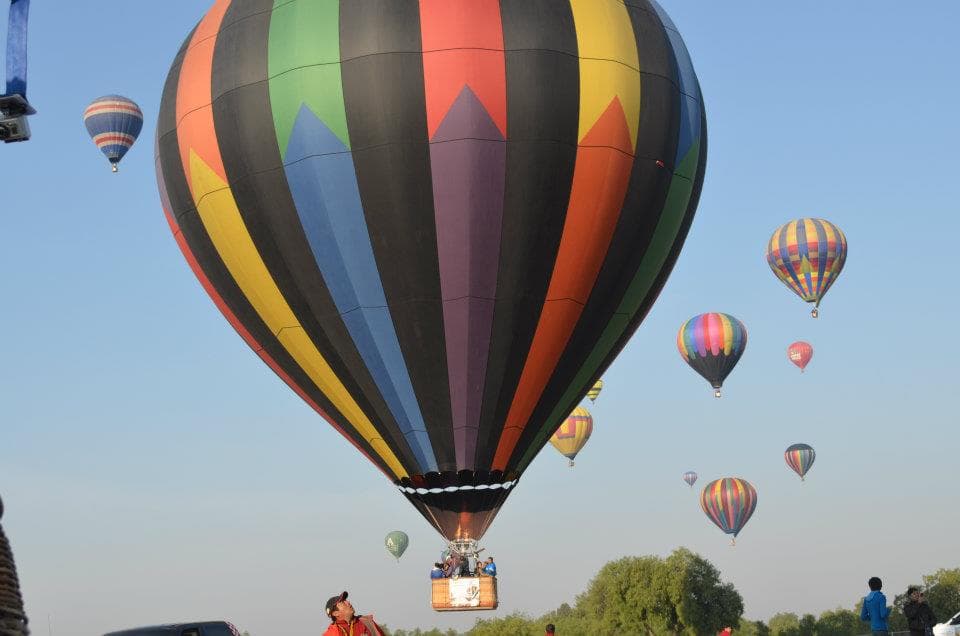
Hot-air balloon over Teotihuacan
The one alarm worth 5am in this city's orbit: balloons lift off beside the archaeological zone at first light and drift over the Pyramids of the Sun and Moon as the valley mist burns off, the Avenue of the Dead drawn below like a plan. Flights run about 45 minutes and land in the fields; operators bundle breakfast and site transfer, and the move is to fly at dawn and walk in when the gates open at 8am, ahead of the buses. Book direct with an established operator for roughly 2,500 to 4,000 pesos rather than the cheapest reseller: this is a category where the median is safe and the bargain is not.
Year-round; dry-season mornings (November to April) are clearest and calmest · Operators collect from San Juan Teotihuacan hotels or sell packages with CDMX pickup; independent visitors drive or take the first Autobuses Teotihuacan departure from Terminal Norte.
 Chivista · Public domain via Wikimedia Commons
Chapultepec first section with the runners
The Bosque opens early and its first hours belong to the city: runners circling the lake, rowers setting out, the castle catching first sun above the trees before the museums or crowds exist. Walk the Gran Avenida from the Metro Chapultepec gate as the light comes through the ahuehuetes, and be at the castle gate when it opens with the park already in your legs. The most pleasant free morning in the city, and the correct warm-up for an Anthropology Museum day.
Year-round; rainy-season mornings are reliably clear · First section gates open early (the park is free); Metro Chapultepec or Auditorio.
 Magaly Taboada · Pexels
The Zocalo before the city wakes
At 7am the largest square in the hemisphere is nearly empty: the cathedral doors opening for first mass, the flag ceremony crossing the stones, the Templo Mayor's ruins in shadow a block away and the whole Centro still belonging to the people who work it. Photographers get raking light down Madero to the Torre Latinoamericana; everyone else gets the only hour the historic centre feels its actual age. Have breakfast at El Cardenal when it opens and start the Centro day two hours ahead of everyone.
Year-round · Metro Zocalo, or a short ride from Roma and Condesa before traffic builds.
Sunsets
 Juan Carlos Fonseca Mata · CC BY-SA 4.0 via Wikimedia Commons
Torre Latinoamericana at dusk
Time the 44th-floor deck for 45 minutes before sundown and take all three acts: the valley in daylight, the sun dropping behind the Chapultepec ridge, and twenty million lights switching on to every horizon while the Bellas Artes dome glows orange directly below. Open until 10pm, around 220 pesos, and the rare big-city observation deck where the view is genuinely open-air. Post-storm evenings in the rainy season give the clearest air and the volcano silhouettes.
Year-round; June to October evenings after rain are clearest · Metro Bellas Artes; buy the mirador ticket at the base and ride to 44.
 Rafael Aparicio · CC BY-SA 3.0 via Wikimedia Commons
Circulo Mexicano's rooftop over the cathedral
The Grupo Habita rooftop behind the cathedral serves its evening drinks to non-guests too, and the view is point-blank: the bell towers and dome at arm's length, the Zocalo's flag beyond, the Templo Mayor excavation below turning gold. This is the civilized way to be in the Centro at dusk, exactly when the streets below start emptying, with dinner at the Comedor or a reserved table downtown after. Arrive before golden hour for the rail seats.
Year-round · Republica de Guatemala 20, behind the cathedral; roof access via the hotel.
 Antonio Ochoa · Pexels
Monumento a la Revolucion's copper dome
The 1938 monument, the largest triumphal-arch-scaled dome in the hemisphere and a Deco masterpiece, runs a glass elevator up its leg to a lookout under the copper cupola: 360 degrees over Reforma's towers with the evening rush drawing light-lines down the avenues. Less famous and less crowded than the Torre Latino, open into the evening, and the plaza below with its fountains is the after-show. Pair it with dinner back in Juarez or Roma, both a short ride.
Year-round · Plaza de la Republica; the mirador elevator ticket is sold on site and evening hours vary by day.
 Diego Delso · CC BY-SA 4.0 via Wikimedia Commons
The Angel and Reforma at golden hour
Paseo de la Reforma runs close enough to east-west that the low sun fires straight down it, and the Angel de la Independencia catches the last light gold on her wings above the roundabout. Walk the avenue from the Diana fountain as the towers light up, or claim a west-facing rooftop bar along the corridor. On Sunday mornings the same avenue closes to cars and fills with bicycles, the city's best free urban ritual, so the Angel bookends both ends of a day well.
Year-round · Street level is free; the monument mirador itself opens only limited hours.
Day trips
 Ralf Roletschek · GFDL 1.2 via Wikimedia Commons
Teotihuacan
One of the largest cities of the ancient Americas, its name given later by the Aztecs who found it already ancient: the Pyramids of the Sun and Moon on the Avenue of the Dead, the feathered-serpent facade of the Ciudadela, murals still holding their reds at Tepantitla. The Pyramid of the Sun is closed to climbers, but since May 2025 visitors may again climb the Pyramid of the Moon as far as its first platform, which is where the Avenue of the Dead composes itself best; the rest of the experience is walking the avenue and reading the city from ground level, with the dawn balloons as the other high vantage. Gates open at 8am and the tour waves land by 10:30: be first through, walk the site north to south, and be eating barbacoa in San Juan by 1pm. Foreigners pay the 2026 federal rate of about 210 pesos.
About 1 hour northeast by bus or car · Half to full day; at the site itself 3 to 4 hours
 Diego Delso · CC BY-SA 3.0 via Wikimedia Commons
Puebla and Cholula
Two hours southeast: Puebla's UNESCO centre of Talavera-tiled facades, gilded chapels (the Rosary Chapel is the high-water mark of Mexican baroque) and the kitchens that claim mole poblano's invention, paired with Cholula next door, where the largest pyramid by volume ever built hides under a grass hill with a church on top and the volcano Popocatepetl smoking behind. Doable as a long day by frequent first-class bus; food travelers should weight the day to Puebla's fondas and the mole, architecture people to a morning in Cholula for the volcano light.
About 2 to 2.5 hours each way by first-class bus from TAPO · Full day, or overnight to do both towns justice
 Thelmadatter · Public domain via Wikimedia Commons
Tepoztlan
The mountain pueblo magico an hour and a half south, wedged under cliffs the Tepozteco pyramid crowns: a steep 2-kilometre pilgrimage trail to the tiny temple and its valley view, a weekend market of cecina, itacates and exotic ice creams under the convent walls, and a reputation for mystics that the town wears with commercial good humor. The classic decompression day: hike early, market lunch, hammock energy after. Weekends are the full spectacle and the full crowd; Fridays get the market at three-quarter strength and half the queue on the trail.
About 1.5 hours south by bus or car · Full day
 AlejandroLinaresGarcia · CC BY-SA 4.0 via Wikimedia Commons
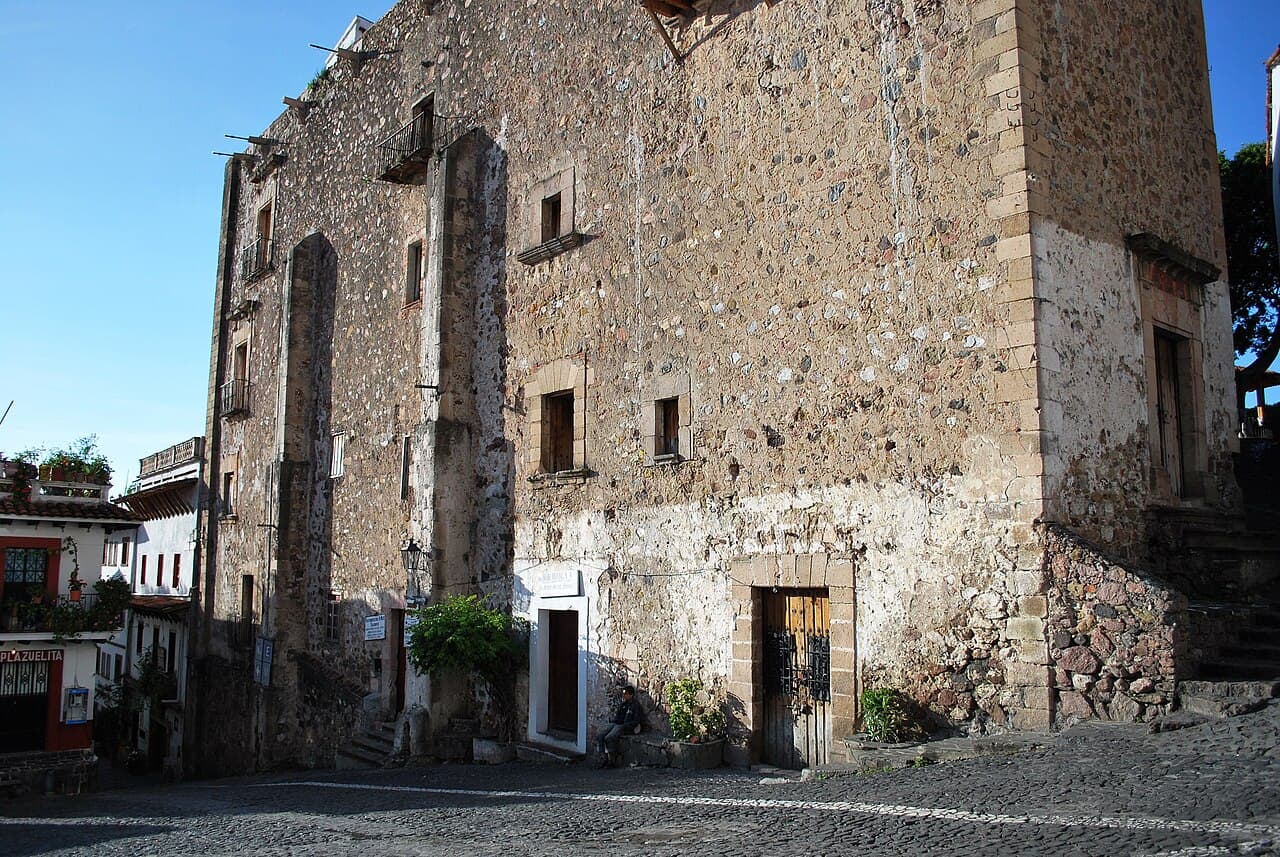
Taxco
The silver town spilling down a mountainside two and a half hours southwest: white houses, red roofs and bougainvillea stacked over vertiginous cobbled lanes, the pink stone towers of Santa Prisca, built on one silver baron's bottomless account, rising from the middle, and workshops still selling the metal that built it all. It is the longest of these day trips and the most cinematic; leave early, let the white VW-beetle taxis do the climbing, and buy silver in the assayed shops rather than the plaza hustle. Overnighting turns it from a lovely rush into a lovely visit.
About 2.5 to 3 hours each way by bus or car · Long full day, better as an overnight
After dark
 Juan TM · Pexels
Lucha libre at Arena Mexico
cultureThe cathedral of Mexican wrestling holds court in the Doctores district with CMLL fight nights, classically Tuesdays, Fridays (the big Viernes Espectacular card) and Sunday family sessions: masked tecnicos and rudos, dynasties, cape reveals, grandmothers screaming happily in the ringside rows. Buy official tickets (Ticketmaster or the box office), take ringside or first balcony, and go in on the bit completely: it is theatre, sport and neighborhood ritual at once. Ride there and back by app at night; the surrounding blocks are workaday.
 Ludan68 · CC BY-SA 3.0 via Wikimedia Commons
Ballet Folklorico under the Tiffany curtain
cultureAmalia Hernandez's company has danced the regional canon, Jalisco skirts, deer dances, Veracruz whites, at the Palacio de Bellas Artes for decades, typically Wednesday evenings and Sunday performances: the one night the marble palace, the Tiffany glass curtain and a stage full of color line up in a single ticket. It is unabashedly a spectacle for visitors and none the worse for it; the building alone justifies the evening. Book on the official calendar and dress a notch up.
 JonathanPerz · CC BY-SA 4.0 via Wikimedia Commons
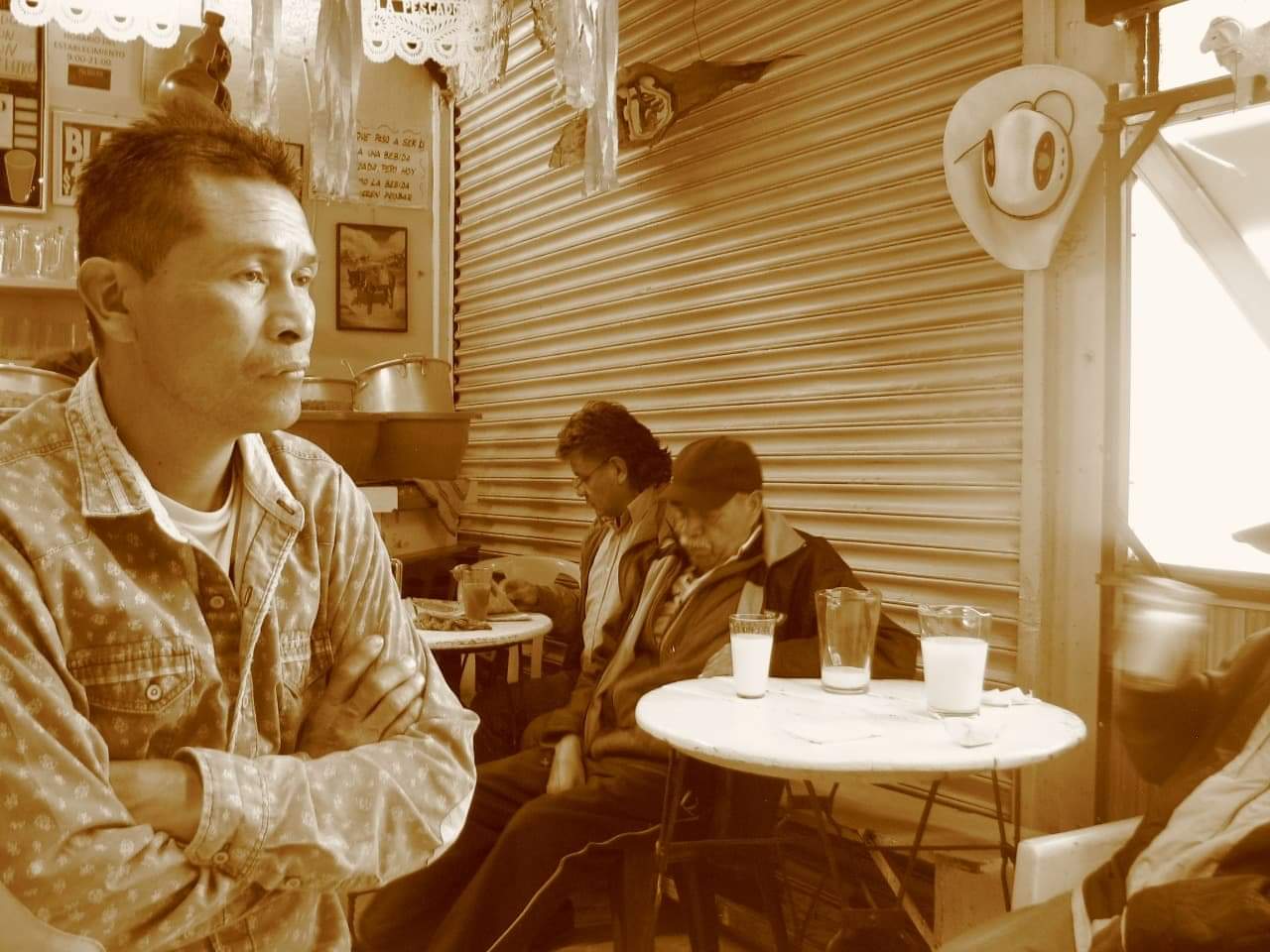
A mezcaleria crawl through Roma and Juarez
barThe city drinks agave seriously and the best classroom is a slow crawl: a traditional mezcaleria pour with orange and sal de gusano, a natural-wine or cocktail room after, a pulqueria curado if the night calls for the old drink. Roma Norte and the Havre corner of Juarez hold the densest circuit, all walkable. Altitude applies its own arithmetic, and a drink can land harder than it would at sea level while you are still acclimatising, and the taco stands between stops are structural, not optional.
 José Luiz · CC BY-SA 4.0 via Wikimedia Commons
Plaza Garibaldi, eyes open
cultureThe mariachi plaza works like this: bands in full traje wait for hire, you pay by the song (agree the price first, expect roughly 150 to 250 pesos a song), and the Museo del Tequila y el Mezcal on the square offers a tasting with a terrace over the show. Go earlyish in the evening, keep valuables boring, use a taxi app both ways and treat the neighboring blocks as off-route: managed that way it is a genuinely great Mexico City night, the songbook of the country performed to order.
Daily itinerary
Four days in Mexico City: the core in full
The classic first visit: the Centro at full depth, Chapultepec's museums, the Frida-and-Coyoacan south, and Teotihuacan at dawn, based in Roma or Condesa throughout.
- 1
The Centro from first light
fullThe Zocalo early, breakfast at El Cardenal, then Templo Mayor when it opens and the cathedral after: the whole history of the city in three adjacent stops.A cantina or fonda comida in the Centro, or tacos de canasta on the move.Walk Madero west past the Casa de los Azulejos to Bellas Artes for the Rivera and Orozco murals, with the Museo Mural Diego Rivera two blocks on if the appetite holds.The Torre Latinoamericana deck for daylight, sundown and the lights.Back in Roma: Contramar if booked (it serves into the evening), or the neighborhood bench.A first mezcaleria stop, early: day one at altitude ends politely.Metro or a short ride to the Zocalo at opening, then the whole day is on foot down one axis; one app ride home from Bellas Artes.Estimate: Monday: Templo Mayor and most museums close, so swap in the Centro's streets, markets and rooftops and move museums to day 2.
- 2
Chapultepec: castle, Anthropology, park
moderateChapultepec park with the runners, then the castle at opening for Maximilian's terrace view down Reforma.Casual near the park or in Polanco.The Anthropology Museum for three unhurried hours: Mexica, Maya, Teotihuacan halls and one wildcard, in that order.Golden hour along Reforma to the Angel, or early rail seats at a rooftop.The trip's big table if booked, Pujol or Quintonil in Polanco, walking distance from the museum end of the park.A quiet digestif in Polanco or an early night before the dawn start.Metro Chapultepec in, on foot within the park all day, short ride or walk into Polanco for dinner.Estimate: Not a museum person? Swap the Anthropology afternoon for the Tamayo and Modern Art museums' shorter rooms, or the Barragan house if your ticket batch aligned.
- 3
Teotihuacan at dawn, Juarez by dusk
fullThe balloon flight at first light if booked, then through the gates at 8am; otherwise the first bus from Terminal Norte and the Avenue of the Dead before the tour waves.Barbacoa in San Juan Teotihuacan, or back in the city mid-afternoon.Return, rest, and a slow wander of Juarez's Havre corner or Roma's galleries as legs allow.The Monumento a la Revolucion mirador under the copper dome.Juarez's newer rooms or Roma classics; book two days out and this slot solves itself.Lucha libre if it is a Tuesday or Friday: Arena Mexico is fifteen minutes from Roma by app.Bus from Terminal Norte or a hired driver for the dawn start; everything after is short central hops.Estimate: Storms forecast? Rainy-season downpours land in the late afternoon, so a morning Teotihuacan run usually stays dry and the museum hours fit under the rain.
- 4
Coyoacan and the south
moderateThe Casa Azul at your booked slot (this ticket chose the day, not you), then Trotsky's house or the Coyoacan lanes.Tostadas at the Mercado de Coyoacan.The plazas, a churro, and either the UNAM Central Library mosaic on the way back or the Anahuacalli your Frida ticket includes.Back north: Circulo Mexicano's rooftop behind the cathedral for a closing drink over the domes.The best taqueria of the trip repeated, or El Vilsito's al pastor as a finale.Pack with the window open: the city at night from any roof is the correct last image.App rides south and back (40 minutes each way); everything within Coyoacan is on foot.Estimate: Casa Azul sold out entirely? The Anahuacalli, the Dolores Olmedo collection's Kahlo holdings (check current venue and status), and Coyoacan itself still make the day; book the next trip's ticket on the spot.
Six days: the city at its own pace, plus one town away
The four-day core stretched to breathe, a full neighborhood day for Roma, Condesa and the markets, Xochimilco and San Angel folded in, and a proper day trip south or east.
- 1
Arrive and calibrate in Roma
relaxedLand, taxi in from the official sitio rank, drop bags in Roma or Condesa.First comida corrida or Panaderia Rosetta standing up.A flat, gentle first walk: Plaza Rio de Janeiro, Alvaro Obregon, Parque Mexico's ovals, letting the altitude introduce itself.Terrace hour in Condesa.The neighborhood bench, nothing booked, early by local standards.Sleep: day one at 2,240 metres is a rest day wearing a vacation costume.One airport transfer, then everything on foot inside the Roma-Condesa belt.Estimate: Evening arrival? Move this day's walk to day 2's morning and push the Centro to day 3.
- 2
The Centro from first light
fullZocalo, El Cardenal breakfast, Templo Mayor, cathedral.Cantina comida downtown.Madero, Bellas Artes murals, the Museo Mural, and the Centro's palace courtyards.Torre Latinoamericana for the three-act view.Contramar's evening seating or Roma's walk-ins.Mezcaleria, one stop, two pours.Ride in early, walk one axis all day, ride home.Estimate: Monday closures: swap with day 3.
- 3
Chapultepec and Polanco
moderatePark first, castle at opening.Polanco casual or the park kiosks.The Anthropology Museum, unhurried.Reforma to the Angel at golden hour.Pujol or Quintonil if this trip booked one; Polanco's second row otherwise.Quiet: tomorrow is the dawn day.Metro in, on foot through the park, short hops to Polanco.Estimate: Architecture travelers: trade the castle for a booked Casa Barragan slot and the Camino Real lobby.
- 4
Teotihuacan at dawn
fullBalloon at first light or first bus from Terminal Norte; the Avenue of the Dead before 10:30.Barbacoa in San Juan.Back to the city, rest, gallery hour in Roma.Monumento a la Revolucion's dome.Juarez's Havre corner.Lucha libre if the calendar cooperates (Tuesday or Friday nights).Terminal Norte buses every 20 to 30 minutes; app rides for the evening.Estimate: Skip the pyramids only if you have seen them before; in that case this is the Barragan-UNAM modernism day.
- 5
The south: Coyoacan, San Angel, Xochimilco
fullCasa Azul at the booked hour, then Coyoacan's plazas and market lunch early.Mercado de Coyoacan tostadas.Saturday: San Angel's Bazaar Sabado and its plazas. Any other day: two hours on a trajinera from Nativitas or quieter Cuemanco (750 pesos per boat per hour, official rate).On the water if the timing lands, or back among Coyoacan's trees.Coyoacan casual or back in Condesa.The gentle night: pulqueria or an early close.This is the app-ride day: budget 40-minute hops and treat the south as one arc, north to south and back.Estimate: With children: weight the whole day to Xochimilco and Coyoacan's plazas and drop San Angel.
- 6
One town away, then the send-off
fullThe day trip your appetite chose: Puebla-Cholula for mole and the volcano, or Tepoztlan for the climb and the market.In the town: mole poblano or market cecina.Back by early evening.Circulo Mexicano's rooftop over the cathedral for the closing drink.The best thing you ate this week, repeated, which is usually tacos.The last esquites cup on a plaza; admit six days was the minimum.First-class buses from TAPO (Puebla) or Taxquena (Tepoztlan) run all morning; book the return leg on arrival at the station.Estimate: Flying out late on this day instead? Compress to a Coyoacan morning and airport by mid-afternoon; MEX security and traffic both deserve margin.
Getting around
- Mexico City International Airport (MEX, Benito Juarez) sits inside the city, 30 to 60 minutes east of the Roma-Polanco belt by traffic. Two arrival options now work. The authorized taxi system is the simplest: buy a fixed-price zone ticket at the official booths inside the terminal (roughly 250 to 400 pesos to the central neighborhoods, and the airport cut those fares in mid-2026) and ignore every freelance offer on the way out. Ride-hail was fought over at MEX through the first half of 2026, but the airport has since designated pickup zones for Uber and DiDi at both Terminal 1 and Terminal 2, so requesting a car in the app now works on arrival; the zones move with demand, so follow the app pin and the signage rather than an old blog post.
- Felipe Angeles (AIFA/NLU), the newer airport 45 kilometres north, hosts a growing share of domestic and some international flights: fares there are often cheaper, but budget a solid hour or more by car into the centre and check which airport your ticket actually uses before celebrating the price.
- The Metrobus Line 4 links both MEX terminals to the Centro for 30 pesos on the airport branch, workable with light luggage in daylight; the Metro's Terminal Aerea station on Line 5 is the rock-bottom option, a walk from Terminal 1 and no place for a first-night arrival with bags.
- Long-distance buses arrive at four compass terminals, all on the Metro: TAPO (east, for Puebla), Terminal Norte (for Teotihuacan and the north), Taxquena (south, for Tepoztlan, Cuernavaca and Taxco) and Observatorio (west). First-class Mexican buses (ADO and peers) are genuinely comfortable and the correct tool for every day trip in this guide.
- The Metro is vast, fast, and 5 pesos flat, one of the world's great transit bargains, with the renovated Line 1 rolling new trains under the tourist axis. It is also crowded to folkloric levels at rush hours (roughly 7 to 10am and 6 to 9pm), when the women-and-children cars at the front exist for good reason. Ride it midday and off-peak with valuables in front pockets and it is the fastest thing in the city; skip it with luggage or late at night.
- One rechargeable card covers the integrated network: the Tarjeta de Movilidad Integrada (15 pesos for the card at machines, plus whatever you load onto it) works on the Metro, Metrobus (6 pesos, 30 for the airport branch), Trolebus, the Xochimilco light rail and the Cablebus gondola lines. One card can pay for a group on the Metro; on the Metrobus practice varies by line, so a card each is the safe assumption.
- Ride-hail apps (Uber, DiDi) are the visitor default and the correct night-time tool: cheap by international standards (most central hops run 60 to 150 pesos), cashless, and traceable. Traffic is the tax: the same 5 kilometres can be 12 minutes at 11am and 45 at 7pm, so plan around the rush hours rather than through them.
- Street taxis exist in fleets (pink-and-white CDMX cabs) and are fine from official sitio ranks, but the app is the simpler safety and pricing answer for visitors; do not hail unmarked cars at night.
- Ecobici, the public bike share, blankets Roma, Condesa, Juarez and the Centro with app-based day access, and the city is startlingly bikeable inside the central belt, flat, gridded, with protected lanes on the big avenues. On Sunday mornings Paseo de la Reforma and a long circuit close to cars entirely for the Muevete en Bici ride, the best free thing the city does weekly.
- Walking is the correct default inside any one neighborhood, Roma to Condesa, the Centro end to end, Polanco's grid, and the wrong tool between them: distances deceive, and the city rewards treating each colonia as its own small town reached by a ride.
Things worth knowing
- · Assuming the old MEX ride-hail ban still applies, or assuming nothing changed. The airport spent early 2026 blocking Uber and DiDi and then added designated pickup zones at both terminals, so check the app on landing; if the pin looks confused, the authorized taxi booths inside the terminal are fixed-price, licensed and stress-free.
- · Planning museum days on a Monday. The Casa Azul, Anthropology, Templo Mayor, the castle and most of the majors close Mondays; Monday is for neighborhoods, markets, parks and food.
- · Not booking the Casa Azul before the flight. It sells online only, has no box office, and popular dates go several weeks out. Same logic, softer deadline, for Casa Barragan and the two-star dining rooms.
- · Treating Sunday as museum day. Federal sites are free for nationals and residents on Sundays and gloriously packed; take the Reforma bike ride and the parks instead, and museum on a weekday.
- · Scheduling like the city is small. Coyoacan, Chapultepec and the Centro are three different expeditions, not one day's stroll: anchor each day in one zone and let traffic arithmetic alone justify it.
- · Ignoring the altitude and the sun. 2,240 metres means breathlessness on stairs, faster dehydration, stronger UV and harder-landing cocktails for the first day or two: water bottle, hat, and a gentle first evening.
- · Drinking tap water. Locals overwhelmingly do not; bottled and filtered water (every hotel and restaurant serves purified) is universal, cheap and the whole stomach strategy along with busy-stall street food.
- · Fighting the rainy-season afternoons instead of planning around them. June to October rains land mostly between about 4 and 8pm, hard and short: front-load the outdoor hours, book the long comida or a museum for the storm slot, and enjoy the rinsed evening air.
Budget
| Low | Expected | Comfortable | |
|---|---|---|---|
| Accommodation style / per night | MX$1,200≈ $65 | MX$3,500≈ $191 | MX$12,000≈ $654 |
| Food style / per day | MX$350≈ $19 | MX$900≈ $49 | MX$4,000≈ $218 |
| Local transport / per day | MX$30≈ $2 | MX$150≈ $8 | MX$600≈ $33 |
| Estimate / per day | MX$100≈ $5 | MX$420≈ $23 | MX$1,200≈ $65 |
Estimate · MXN · 2026-08-20. Accommodation is per room per night for two sharing. The city splits into two economies: the peso one, where the Metro is 5 pesos, a comida corrida 90 to 150 and street tacos 20 to 30 each, and the dollar one, where design hotels, the two-star tasting menus (around 3,500 pesos before drinks) and dawn balloons price internationally. A couple living in the peso economy eats magnificently on 700 pesos a day combined; each dollar-economy event is a deliberate splurge on top. The 2026 lines that move a real budget: the INAH two-tier entries (about 210 pesos per person per flagship site), the Casa Azul at 320, and app rides multiplying with cross-town ambition. With the peso around 17 to the US dollar in mid-2026, Mexico City is no longer cheap by instinct, just excellent value by measurement. The F1-plus-Day-of-the-Dead window (30 October to 2 November 2026) is the single most expensive hotel week of the year; January and the June-to-August rains are the softest. · 1 USD = MX$18 (14 Oct 2026)
Things worth knowing
Frequently asked questions
How many days do you need in Mexico City?
Four full days covers the core well: one for the Centro, one for Chapultepec's castle and the Anthropology Museum, one for Teotihuacan, one for Coyoacan and the Casa Azul. Six days adds Xochimilco or San Angel, a real neighborhood day in Roma and Condesa, and one town away like Puebla or Tepoztlan. A long weekend works only if you accept doing the Centro, Chapultepec and one southern morning and leaving the rest for next time, which there should be.
When is the best time to visit Mexico City?
Late September to early May is the broad window, with two sweet spots: October into early November for the Day of the Dead season (booking early; F1 shares the 2026 weekend), and March for jacaranda bloom. November to April is reliably dry and bright. The June-to-September rains are a rhythm, not a ruin: clear mornings, a hard late-afternoon storm, lovely evenings, and softer hotel prices.
Is Mexico City safe for tourists?
In the visitor belt, yes, with city sense: Roma, Condesa, Polanco, Coyoacan and the daytime Centro are busy, policed and calmer than the city's reputation suggests. The working risks are pickpockets in Metro crush and markets, phones snatched from cafe tables, and walking emptied streets late; the fixes are front pockets, phones off table edges, and app rides at night. Skip hailing unmarked street cabs, keep card payments in view, and Garibaldi and Doctores are ride-in ride-out zones after dark.
Do you need to worry about the altitude?
Plan for it rather than worry about it: at 2,240 metres most people feel stairs, sun and cocktails more than usual for a day or two, and heavy hikers notice it on the Tepozteco climb. Drink more water than feels necessary, keep the first day flat and gentle, and let the coffee-and-tacos pace do the acclimatizing. Travelers with cardiac or respiratory conditions should get personal medical advice before the trip.
Can you drink the water in Mexico City?
Drink bottled or filtered, as locals do: the issue is the distribution network, not barbarism. Hotels and restaurants serve purified water and ice made from it, so restaurant ice and aguas frescas in proper places are normal to enjoy. Street-food strategy is the same logic: busy stands with high turnover, food cooked hot in front of you, and salsas from containers that empty daily. A gentle first day gives your stomach the same acclimatization your lungs get.
Where should you stay in Mexico City for a first visit?
Roma Norte or Condesa: central, walkable, cafe-and-restaurant dense, alive but not rowdy at night, and a short ride from everything in this guide. Polanco buys polish, park adjacency and the fine-dining bench at a price; the Centro is a specialist base, unbeatable at 7am and echoing at 11pm, best via a design hotel like Circulo Mexicano; Juarez splits the difference on a budget. Coyoacan is lovely and far: a second-visit base.
How do you get tickets for the Frida Kahlo Museum?
Online only, at the official site (boletos.museofridakahlo.org.mx), for a timed slot: there is no box office, and popular weeks sell out several weeks ahead, more around holidays. General admission is 320 pesos for foreign visitors and includes a courtesy visit to the Anahuacalli museum. Closed Mondays. If your dates are gone, check the calendar for released returns, or accept the miss and build the Coyoacan day around the plazas, the market and Trotsky's house instead.
Is Teotihuacan worth it, and how do you do it right?
It is, for us, the essential day trip: one of the largest cities of the ancient Americas, an hour away. Do it right by arriving at the 8am opening, ahead of the tour waves, via the Autobuses Teotihuacan service from Terminal Norte or a hired driver, and walking the Avenue of the Dead end to end; the Pyramid of the Sun is closed to climbers and the Pyramid of the Moon is climbable only to its first platform, so the dawn hot-air balloon (roughly 2,500 to 4,000 pesos booked direct) is now the way to see the plan from above. Foreigners pay about 210 pesos entry under the 2026 federal tariff. Hat, water and sunscreen: there is very little shade on the avenue.
How do you get from the airport to the city?
From MEX, buy a fixed-price authorized taxi at the official booths inside the terminal (roughly 250 to 400 pesos to Roma, Condesa or Polanco) and ignore freelance offers; the airport now has designated Uber and DiDi pickup zones at both terminals after restricting them earlier in 2026, though apps work fine for the return trip. With light bags and daylight, Metrobus Line 4 runs to the Centro for 30 pesos. If you land at AIFA, the newer northern airport, budget an hour or more by car and check which airport your ticket uses before booking anything tight.
Is Mexico City expensive?
It is two price lists in one city. Transit at 5 to 6 pesos, tacos at 20 to 30, comida corrida under 150 and 210-peso museums make the everyday astonishing value even with the peso strong around 17 to the dollar. The international layer, design hotels at 3,500-plus pesos a night, tasting menus around 3,500 before drinks, dawn balloons, prices like any global capital. A couple sleeping midrange and eating like locals with one daily sight lives well on roughly 6,000 to 7,000 pesos a day all-in; each splurge stacks on top by choice.
Can you visit the Estadio Azteca after the World Cup?
The rebuilt stadium, renamed Estadio Banorte in the renovation financing deal though everyone still says Azteca, returned to club life after hosting the 2026 opener, its third World Cup opening match, a record. The honest visit is a Liga MX match day (Club America fixtures, tickets via official channels), which delivers the full-stadium experience the tour cannot; stadium tours have run in various formats over the years, so check current offerings rather than assuming. It sits far south, off the Xochimilco light-rail line: combine with a southern day, not a whim.
Sources (16)
- INAH raised category 1 site entry to about 209 pesos for foreign visitors from 1 January 2026, covering the Museo Nacional de Antropologia, Templo Mayor and Teotihuacan, with nationals and residents at half price · reputable-local · 2026-08-20
- Museo Frida Kahlo admission is 320 pesos general (160 for national residents), sold online only with no box office, closed Mondays, including courtesy entry to the Anahuacalli · museum · 2026-08-20
- Casa Luis Barragan is visitable by small-group guided tour only, with official tickets released in batches about two months ahead · official · 2026-08-20
- The Michelin Guide Mexico 2026, revealed 20 May 2026, lists Pujol and Quintonil at two stars with nine one-star restaurants in Mexico City including Rosetta, Maximo and new entries Gaba and La Once Mil · official · 2026-08-20
- Taqueria El Califa de Leon lost its Michelin star in the 2026 selection while remaining a guide recommendation · reputable-local · 2026-08-20
- The Estadio Azteca hosted the opening match of the 2026 World Cup on 11 June 2026, becoming the first stadium to host three World Cup opening matches · event-organizer · 2026-08-20
- The Estadio Azteca was renamed Estadio Banorte under a 2.1 billion peso renovation financing agreement, with FIFA using the name Estadio Ciudad de Mexico during the tournament · reputable-local · 2026-08-20
- CANACO Mexico City estimated the 2026 World Cup generated over 22 billion pesos in economic impact in the capital, with visitor estimates varying widely between sources · reputable-local · 2026-08-20
- The official Xochimilco trajinera tariff for 2026 is 750 pesos per boat per hour · municipal · 2026-08-20
- Mexico City Metro fare is 5 pesos flat and Metrobus 6 pesos (30 on the airport line), on the Tarjeta de Movilidad Integrada (15 pesos) · transport-operator · 2026-08-20
- The Torre Latinoamericana mirador is open daily 9:00 to 22:00 with adult entry around 220 pesos · reputable-local · 2026-08-20
- The 2026 Formula 1 Mexico City Grand Prix runs 30 October to 1 November at the Autodromo Hermanos Rodriguez · event-organizer · 2026-08-20
- CMLL lucha libre runs at Arena Mexico on Tuesday, Friday and Sunday schedules with tickets via Ticketmaster Mexico · event-organizer · 2026-08-20
- The Ballet Folklorico de Mexico de Amalia Hernandez performs regularly at the Palacio de Bellas Artes · official · 2026-08-20
- The historic centre of Mexico City and Xochimilco (1987), Casa Luis Barragan (2004) and the UNAM Central University City Campus (2007) are UNESCO World Heritage sites · unesco · 2026-08-20
- Teotihuacan archaeological zone operates its habitual hours of 8:00 to 17:00 with last access at 16:30, and ascent of the Pyramid of the Moon is permitted as far as the first platform while the Pyramid of the Sun stays closed to climbers · official · 2026-08-20