USA · Florida
Miami
Split your attention across four areas: South Beach for the Art Deco district and the sand, Wynwood for murals and brunch, Little Havana for Cuban food and music, downtown for the museums. Add a day trip to the Everglades or Key Biscayne.
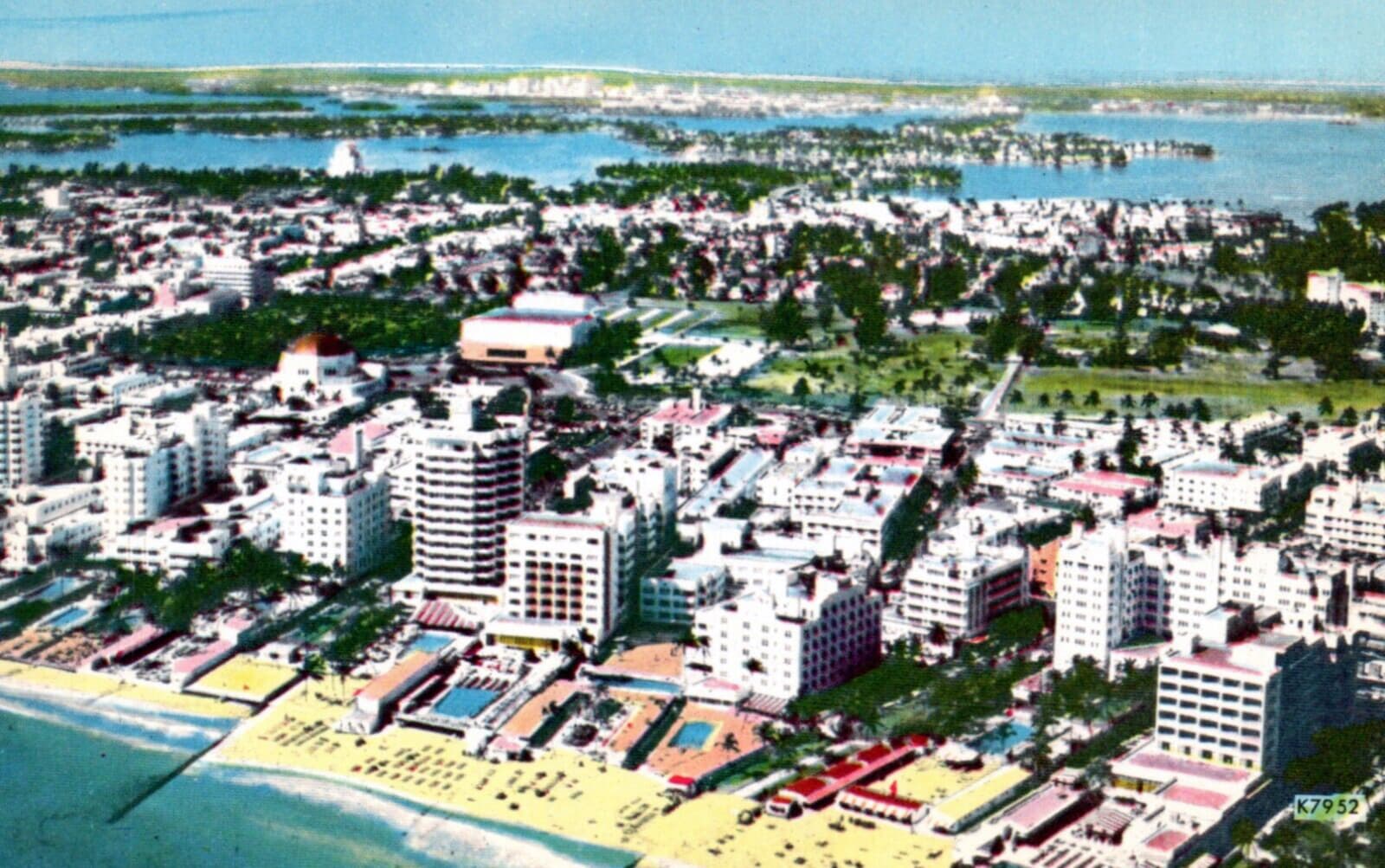 Colourpicture Publishers, Inc. / Public domain via Wikimedia Commons
Overview
Miami is where the United States meets Latin America and the Caribbean. On the sand there is a pastel Art Deco district; inland, a Cuban neighborhood where coffee comes through a walk-up window and a downtown built around contemporary art. The coastline runs from party beaches to quiet mangrove keys, and culture, food and a warm-water beach fit into the same day.
Miami is not one beach town. A stay that never leaves South Beach gets you the sand and the Art Deco, and misses the Cuban food, the Wynwood murals and the Everglades. Plan the causeway crossings and a day out of the city from the start.
Best for
Couples · First-time visitors · Beach plus culture · Food-driven travel · Art and design lovers
Daily itinerary
4 to 5 days
Miami is bilingual by default and tropical by climate, which is unusual for a US city. Miami and Miami Beach are two separate places on either side of the bay, and the trip works better once you know that the beach, the Cuban heart and the art downtown each sit in a different part of the metro.
Best time to visit
The sweet spot is March to May: warm, dry and sunny before the summer humidity, with crowds and prices below the December-to-February peak. Hurricane season officially runs June through November, with the highest risk from mid-August into October.
- December to February: Peak dry season: warm days, cool evenings, highest prices and crowds.
- March to May: Warm, dry and less crowded than winter.
- June to August: Hot, humid, daily afternoon thunderstorms; lowest room rates but early hurricane season.
- September to October: Peak hurricane risk; September is historically the most active month.
- November: Humidity eases and the dry season returns toward month end.
Things worth knowing
- Art Basel Miami Beach (early December): the flagship contemporary art fair anchoring Miami Art Week at the Miami Beach Convention Center.
- Miami Music Week and Ultra Music Festival (late March): hundreds of dance-music events across the city, centered on Bayfront Park downtown.
Where to stay
South Beach and the Art Deco Historic District
The pastel heart of Miami Beach: roughly 800 Art Deco, Mediterranean Revival and MiMo buildings in a National Register district, a wide sandy beach, and the walkable Lincoln Road and Ocean Drive strips. The city tourism board calls it the largest concentration of this architecture in the country.
Best for: First-time visitors · Beach · Nightlife · Photography
Ocean Drive itself is touristy and loud at night, with aggressive touts and inflated menu prices; the architecture is best seen on a guided walk.
Wynwood
A former warehouse district turned street-art and gallery hub, anchored by the Wynwood Walls murals. Now a dense strip of breweries, brunch spots and boutiques a short drive from downtown.
Best for: Art lovers · Brunch and breweries · Design
A commercialized arts district now; the walkable core is small and gets very crowded on weekends, with high parking and food prices.
Little Havana
Miami’s center of Cuban culture along Calle Ocho (SW 8th Street): cafeterias, walk-up coffee windows, cigar shops, domino players and live music.
Best for: Food · Culture · Live music
Off the Calle Ocho tourist corridor it is a real residential neighborhood; stick to well-lit main streets at night and expect tourist pricing on the main strip.
Downtown and Brickell
The high-rise core, home to the Pérez Art Museum Miami and the Frost Science Museum on Biscayne Bay, plus Brickell’s dense dining strip. Connected by the free Metromover loop.
Best for: Museums · Skyline views · Car-free base
Quiet on weekends outside the Brickell restaurant strip; the beach is a 20 to 30 minute drive across the bay, not walkable from here.
Coconut Grove and Coral Gables
The leafy, older side of Miami: bayside Coconut Grove with Vizcaya and a bohemian, laid-back feel, and the planned 1920s Mediterranean city of Coral Gables with the Biltmore, the Venetian Pool and Miracle Mile.
Best for: Couples · Architecture · A quieter stay
Spread out and car-dependent; sights and restaurants are not walkable together and both areas are quiet at night.
Where to sleep
Fontainebleau Miami Beach
resort · Mid-Beach
Best for: Couples · Pool and beach days · Nightlife on site
- 1954 Morris Lapidus architecture
- Huge oceanfront pool complex and private beach
- Multiple restaurants and the LIV nightclub on site
- Enormous scale means it can feel impersonal and crowded
- Steep resort fees on top of the room rate
- Nightclub crowds and noise spill into public areas on weekends
The Biltmore Hotel Miami – Coral Gables
luxury · Coral Gables
Best for: Couples · Architecture lovers · Golf and spa
- A 1926 National Historic Landmark with grand old-Florida architecture
- One of the largest hotel pools in the continental US
- On-site golf course and spa
- Far from the beach, needing a 20 to 30 minute drive to South Beach
- Very quiet at night, not for nightlife seekers
- Some rooms and corridors feel dated versus newer luxury builds
Kimpton Angler’s Hotel South Beach
boutique · South Beach
Best for: Couples · Staying in the Art Deco district · Walkable base
- Boutique Art Deco property with a courtyard pool
- About a five minute walk to Ocean Drive and the beach
- Kimpton perks such as an evening wine hour
- Small footprint with limited amenities versus the big resorts
- No large pool deck or full gym
- Washington Avenue location can be noisy at night from nearby bars
Freehand Miami
design · Mid-Beach
Best for: Solo travelers · Social stays · Design on a budget
- Design-forward property with the Broken Shaker courtyard bar
- Pool terrace and social common areas
- Good value for the design quality
- Mixes hostel-style dorms with private rooms, so common areas can be noisy and party-oriented
- About a mile from the main South Beach strip
- Not for guests wanting a quiet stay
Hampton Inn & Suites Miami/Brickell-Downtown
value · Brickell / Downtown
Best for: Budget travelers · Car-free base · Museum-focused trips
- Reliable midrange standard close to Metromover and Metrorail
- Walk to Brickell dining
- Good value versus beach hotels
- No beach nearby, with Miami Beach a 20 minute drive away
- Standard chain experience with none of the character of the beach properties
- Brickell is quiet on weekend nights
Essential experiences
Art Deco Historic District, South Beach
Roughly 800 Art Deco, Mediterranean Revival and MiMo buildings in a National Register district; guided walking tours run from the Art Deco Welcome Center on Ocean Drive.
Vizcaya Museum and Gardens
The 1914 to 1922 Mediterranean Revival winter villa of industrialist James Deering, with a 34-room house and Italian-style gardens on Biscayne Bay; a National Historic Landmark.
Pérez Art Museum Miami (PAMM)
A contemporary art museum in a Herzog & de Meuron building on Biscayne Bay, focused on art of Latin America, the Caribbean and the African diaspora. Closed Tuesdays and Wednesdays.
Phillip and Patricia Frost Museum of Science
A 250,000 square foot science museum opened in 2017 with a spherical planetarium and a 500,000-gallon aquarium, next to PAMM in Museum Park.
Wynwood Walls
An outdoor street-art gallery founded in 2009, with more than 80,000 square feet of murals from artists across dozens of countries set across six former warehouses.
Bill Baggs Cape Florida State Park and Lighthouse
A state park on the southern tip of Key Biscayne with a beach and the 1825 Cape Florida Light, the oldest standing structure in Miami-Dade County; climb the tower for skyline and Stiltsville views.
Zoo Miami
The only subtropical zoo in the continental US, with more than 500 species across four miles of walkways in the south of the metro. Open daily with last entry at 4pm.
 Ken Lund from Reno, Nevada, USA / CC BY-SA 2.0 via Wikimedia Commons
 Daderot / Public domain via Wikimedia Commons
Food & drink
Cuban sandwich
Pressed Cuban bread with roast pork, ham, Swiss, pickles and mustard; Miami’s signature creation.
Stone crab claws
A Florida specialty harvested October to May, served chilled with mustard sauce; the dish Joe’s Stone Crab built its name on.
Key lime pie
Florida’s state pie: a tart lime custard in a graham crust, best with real Key limes.
Ceviche
Citrus-cured fish, reflecting Miami’s large Peruvian and Latin American communities.
Ropa vieja and lechón asado
Cuban comfort staples, shredded braised beef and roast pork, central to Little Havana cafeterias.
Cuban coffee is taken standing at a ventanita, a walk-up window, often shared as a small cortadito; dinner runs late, especially on the beach.
Where to eat
Versailles Restaurant
institutionFounded in 1971 on Calle Ocho and a gathering place for the Cuban exile community. It bills itself as the world’s most famous Cuban restaurant.
Last researched 2026-07-15
Joe’s Stone Crab
institutionA Miami Beach institution since 1913 and still family-run; the restaurant most associated with Florida stone crab. Expect a wait in season.
Last researched 2026-07-15
Ball & Chain
barA restored live-music bar on Calle Ocho whose original 1935 venue hosted Billie Holiday and Count Basie; reopened in 2014 with nightly music.
Last researched 2026-07-15
Sunrises
South Pointe Park and Pier
The southern tip of Miami Beach faces east over the Atlantic, with a 450-foot pier and lawns that stay quiet at first light.
Year-round · Panoramic views toward Fisher Island and the skyline; it can be windy.
Bill Baggs Cape Florida beach, Key Biscayne
The east-facing beach below the lighthouse looks out over open water, well away from the South Beach crowds.
Year-round
Sunsets
Bill Baggs Cape Florida State Park
One of the few Miami-area spots where the sun sets into open ocean water from the beach, with the historic lighthouse as a backdrop.
Year-round · The park is on Key Biscayne, reached by the Rickenbacker Causeway; check the park’s closing time before you go.
Bayfront Park, Downtown
Facing west over Biscayne Bay, the sun drops behind the downtown high-rises and reflects on the water before the city lights come up.
Year-round
Crandon Park Beach, Key Biscayne
A wide, bay-curving shoreline with open sunset views and far fewer crowds than the beaches of South Beach.
Year-round
Day trips
Everglades National Park
The vast subtropical wetland west of the city: sawgrass prairies, airboat and walking trails, and the only place where alligators and crocodiles coexist. A UNESCO World Heritage Site.
About 1 hour to the main entrance near Homestead · Half to full day
Key West and the Overseas Highway
The drive down US-1 through the Florida Keys, crossing 42 bridges including the Seven Mile Bridge, to the southernmost city with its old town and sunset celebration.
About 4 hours each way, or 6 to 8 with stops · Full day or overnight
Key Biscayne: Bill Baggs and Crandon Park
A half day across the Rickenbacker Causeway to the beaches, lighthouse and mangroves of Key Biscayne, with no highway driving.
About 30 to 40 minutes from downtown · Half day
After dark
Mojitos and live music on Calle Ocho
musicAn evening at Ball & Chain or another Little Havana venue for son and salsa over a cocktail.
Sunset then late dinner on the beach
foodTime a west-side sunset at Bayfront Park or the bay, then cross to South Beach for a late seafood or Cuban dinner.
Daily itinerary
Four days in Miami: beach, art, Cuban food and a wild day out
Base yourself near the beach or in a walkable core, rideshare across the causeways, and keep one day for nature. The route moves neighborhood by neighborhood instead of staying on one strip.
- 1
South Beach and the Art Deco district
relaxedSettle in, then a guided Art Deco walk from the Ocean Drive welcome center.Casual lunch on Lincoln Road.Beach time on the South Beach sand.South Pointe Park for the light over the water.Stone crab at Joe’s in season, or a Lincoln Road dinner.A stroll along a quieter stretch of Ocean Drive.No car needed today; South Beach is walkable.Estimate: Swap the walk for a bike ride up the beach boardwalk.
- 2
Wynwood and downtown art
moderateRideshare to Wynwood for the Walls and the mural streets.Brunch or a brewery lunch in Wynwood.Downtown to PAMM or the Frost Science Museum on the bay.Bayfront Park as the sun drops behind the skyline.Dinner in Brickell.A drink on a Brickell rooftop.Rideshare between areas; the Metromover links downtown and Brickell for free.Estimate: Trade one museum for the shops and galleries of the Design District.
- 3
Little Havana and Coconut Grove
moderateCalle Ocho: a ventanita coffee, cigar shops and the domino park.Cuban classics at Versailles.Vizcaya Museum and Gardens in Coconut Grove.Back toward the bay or an early rest.Dinner in the Grove.Live music at Ball & Chain on Calle Ocho.Rideshare; both areas are pocket-walkable but not connected on foot.Estimate: Swap Vizcaya for Coral Gables and the Venetian Pool.
- 4
A day in nature
fullDrive to the Everglades for an early airboat or the Anhinga Trail, or head to Key Biscayne.Lunch near Homestead or on the key.More trails, or the Cape Florida lighthouse and beach on Key Biscayne.Cape Florida for the sunset if you chose the key.Last dinner back in the city.Departure or a final beach walk.A car is easiest for the Everglades; rideshare works for Key Biscayne.Estimate: If you fly early, do Key Biscayne instead of the Everglades to stay close to the airport.
Getting around
- Miami International Airport (MIA) links to transit by the free MIA Mover people-mover to the Miami Intermodal Center, where Metrorail, Metrobus and Tri-Rail meet.
- Fort Lauderdale-Hollywood (FLL) is about 45 minutes north and sometimes cheaper to fly into.
- Metrorail runs from the airport into downtown and Brickell; the free Metromover loop covers downtown and Brickell.
- Neither Metrorail nor Metromover reaches the beach; use rideshare, bus or a car across the causeways.
- A rental car helps for the Everglades, the keys and Coral Gables, but is a liability for parking in South Beach.
Things worth knowing
- · Assuming Miami and Miami Beach are the same place; they are a causeway apart, both physically and in traffic.
- · Relying on Metrorail or Metromover to reach the beach; they do not go there.
- · Underestimating causeway traffic between the mainland and the beach at rush hour.
Budget
| Low | Expected | Comfortable | |
|---|---|---|---|
| Accommodation style / per night | $120 | $280 | $600 |
| Food style / per day | $35 | $85 | $200 |
| Local transport / per day | $10 | $35 | $70 |
| Estimate / per day | $15 | $40 | $90 |
Estimate · USD · 2026-07-15. Accommodation is per room per night (two sharing). Watch for mandatory resort fees on beach properties (often around 40 dollars a night on top of the rate). Local transport assumes rideshare across the causeways.
Things worth knowing
Frequently asked questions
How many days do you need in Miami?
Four to five days lets you cover South Beach and the Art Deco district, Wynwood and downtown art, Little Havana’s food, and one day trip to the Everglades or the keys without rushing.
What is the best area to stay in Miami for the first time?
South Beach for the Art Deco district, beach and walkability, or Brickell and downtown for a car-free, museum-focused base with free Metromover access. The two sides sit a causeway apart.
When is the best time to visit Miami?
March to May: warm, dry and sunny before the summer humidity, with lighter crowds and lower prices than the December to February peak. Hurricane season runs June through November.
Do you need a car in Miami?
Not for a beach-and-neighborhoods trip; rideshare covers the causeways and the Metromover is free downtown. A car helps for the Everglades, the keys and Coral Gables.
Where is the best sunset in Miami?
Bill Baggs Cape Florida State Park on Key Biscayne sets into open ocean with the lighthouse behind it; Bayfront Park downtown puts the sun behind the skyline over the bay.
Sources (4)
- Miami neighborhoods, Art Deco district and attractions overview · tourism-board · 2026-07-15
- Everglades National Park is a UNESCO World Heritage Site managed by the National Park Service · national-park · 2026-07-15
- Vizcaya Museum and Gardens is a National Historic Landmark · museum · 2026-07-15
- Airport transit via the MIA Mover and Metrorail · airport · 2026-07-15