USA · California
San Francisco and Napa Valley
Three or four nights in San Francisco for the city and its day trips, then two or three in Napa Valley for the wine country, linked by a 1.5-hour drive rather than a flight.
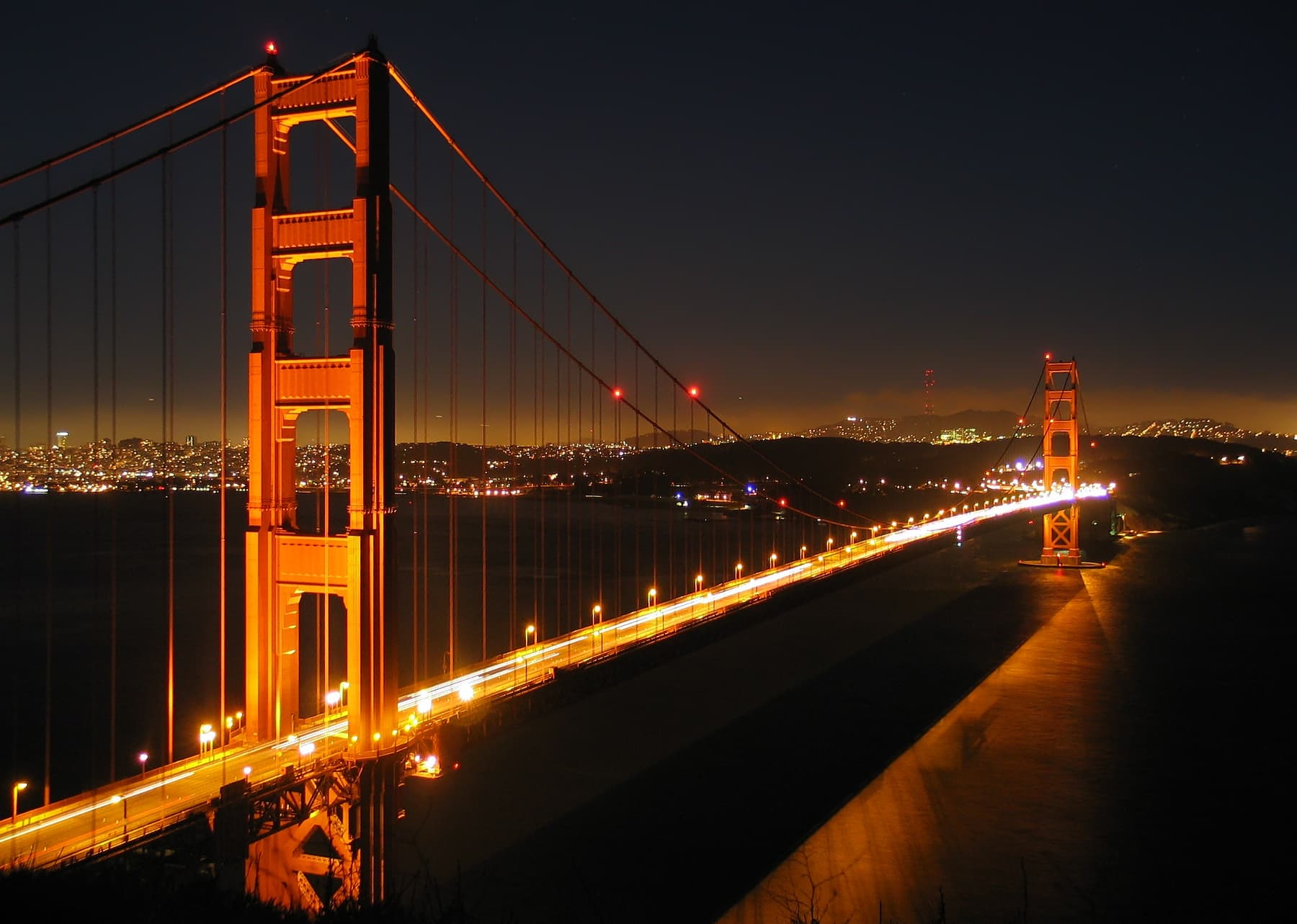 Image taken by Daniel Schwen / CC BY-SA 3.0 via Wikimedia Commons
Overview
Pairing San Francisco with Napa Valley gives you two of California’s defining experiences in one trip: a compact, hilly city of fog, cable cars and world-class food, an hour and a half from the country’s most famous wine region. It rewards travelers who want a city and a countryside escape without a long transfer between them.
If you only take one thing from this guide: keep the two halves separate and travel them differently. San Francisco is best without a car; Napa is unworkable without one. Rent the car only when you leave the city, and never plan to hop between wineries by rideshare, which barely exists outside the town centers.
Best for
Couples · Food and wine lovers · First-time California visitors · City plus countryside · Special occasions
Daily itinerary
5 to 7 days
Unlike a single-city break, this trip deliberately swaps register halfway through: the cool, foggy, walkable density of San Francisco for the warm, spread-out, car-dependent calm of the vineyards. The contrast is the point, and it works because the two are so close.
Best time to visit
September and October are the sweet spot: San Francisco is at its clearest and warmest just as Napa’s harvest ("crush") is in full swing. Late spring (April to May) trades the harvest energy for lower prices and fewer crowds with still-good weather.
- April to May: Spring: drier and sunnier in the city, green and calm in the valley before harvest.
- June to August: Peak San Francisco fog ("Fogust") keeps the city cool while inland Napa runs hot and dry.
- September to October: The single best window: clear warm city, full Napa harvest; peak demand.
- November to March: Cool and wet, fewest crowds, lowest wine-country prices.
Things worth knowing
- Napa harvest, or "crush" (roughly August to October): grape picking and stomping events across the valley.
- San Francisco Pride (late June) and Bay to Breakers (May): two of the city’s signature street events.
Where to stay
Union Square and Downtown (San Francisco)
The city’s shopping and hotel core: a landmark plaza ringed by department stores and hotels, next to the Theater District, and central to BART and Muni. The easy first-timer base for walkability and transit.
Best for: First-time visitors · Shopping · Transit access
Touristy and pricier, and the Tenderloin blocks a few streets west have visible street issues after dark.
North Beach (San Francisco)
The old Italian quarter layered with Beat Generation history: cafes, century-old restaurants, City Lights bookstore and Washington Square. A slower, less corporate side of the city.
Best for: Food · History · Cafe culture
A steep uphill walk from downtown with brutal parking, and the Broadway nightlife strip feels seedy at its edges.
Mission District (San Francisco)
The city’s oldest and sunniest neighborhood: a Latino-rooted food scene of Mission burritos, Valencia Street boutiques, an outdoor mural gallery around Balmy Alley, and Dolores Park as the social hub.
Best for: Food · Street art · Younger travelers
Real income disparity and some rough blocks near 16th and Mission; it is a bus or BART ride, not a walk, from Union Square.
Downtown Napa (Napa Valley)
A revitalized river town with more than 45 walkable tasting rooms, the Oxbow Public Market, a jazz club and First Street shopping. The wine-country base where you can taste in the evening without a car.
Best for: Wine tasting on foot · Food markets · A car-light base
The least vineyard-scenic of the valley towns; it feels more like a small city than wine country.
Yountville and St. Helena (Napa Valley)
The valley’s culinary and luxury heart: tiny, walkable Yountville with The French Laundry and boutiques, and St. Helena’s Main Street shops alongside landmark wineries and the CIA cooking school at Greystone.
Best for: Fine dining · Wine estates · A luxury day
The French Laundry needs reservations months ahead, and St. Helena’s Main Street gets traffic-choked on weekends.
Where to sleep
Fairmont San Francisco
luxury · Nob Hill, San Francisco
Best for: Couples · Grand hotels · A central splurge
- A 1907 Beaux-Arts landmark with grand public spaces
- Central Nob Hill location by the cable car lines
- Reliable full-service luxury
- On a steep hill, a real climb on foot
- Pricey, often over 700 dollars a night with fees
- A destination fee on top of the room rate
Hotel Zeppelin
boutique · Union Square, San Francisco
Best for: Couples · Design lovers · A walkable base
- Playful, design-forward rooms two blocks from Union Square
- A walkable, central location
- Good value for a boutique downtown
- Small rooms typical of pre-war San Francisco buildings
- A busy Post Street location
- No on-site parking to speak of
Napa River Inn
boutique · Downtown Napa
Best for: Couples · Walkable wine tasting · A riverfront base
- Rooms in historic riverfront mill buildings
- No resort fees and daily pastries
- Walk to downtown Napa tasting rooms and the Wine Train
- Room character varies a lot across three separate buildings
- You can hear the river-district nightlife
- Not a resort with pool and grounds
Andaz Napa
design · Downtown Napa (West End)
Best for: Couples · A modern base · Tasting rooms on foot
- Steps from 20-plus tasting rooms and the Wine Train
- Contemporary rooms and suites
- Central downtown Napa location
- The concept-boutique feel can read corporate rather than wine-country
- Downtown Napa is not vineyard-scenic
- City-hotel rather than resort amenities
Auberge du Soleil
luxury · Rutherford, Napa Valley
Best for: Couples · A splurge · Vineyard views
- A 33-acre hillside estate with panoramic vineyard views
- A Michelin-recognized restaurant on site
- Among the most polished stays in the valley
- Requires a car for everything
- Among the priciest stays in the whole valley
- Removed from any walkable town
Essential experiences
Golden Gate Bridge
The 1.7-mile suspension bridge opened in 1937, painted "International Orange" for visibility in the fog; a free welcome center and a walkable sidewalk make it the city’s signature sight.
Alcatraz Island
The former federal penitentiary in San Francisco Bay, closed in 1963 and now a National Park Service site; reached by ferry with advance reservations that sell out.
Fisherman’s Wharf and PIER 39
The northern waterfront tourist hub with sea lions, an aquarium, boat tours and historic ships; touristy but the launching point for bay cruises and Alcatraz ferries.
de Young Museum
The fine-arts museum in Golden Gate Park, with American, textile and global collections and a free observation tower over the park and city.
Oxbow Public Market
A 40,000-square-foot riverside food market in downtown Napa with artisan vendors, an oyster bar and local produce; the easy, walkable food stop in wine country.
Napa Valley Wine Train
Restored antique rail cars offering multi-course dining, tasting and winery tours through the valley, departing from downtown Napa.
Robert Mondavi Winery
A historic estate in Oakville central to the modern Napa Cabernet story, offering seated tastings and vineyard tours by reservation.
 Pierre André / CC BY-SA 4.0 via Wikimedia Commons
 Wmpearl / Public domain via Wikimedia Commons
Food & drink
Mission-style burrito
The foil-wrapped, over-stuffed burrito perfected in San Francisco’s Mission District; La Taqueria is the classic.
San Francisco sourdough
A tangy loaf that thrives in the city’s fog-cooled climate; Boudin has used the same starter since 1849.
Dungeness crab
In season roughly mid-November to May; a raw-bar classic at old counters like Swan Oyster Depot.
Napa Valley Cabernet Sauvignon
The valley’s signature red, tasted at estates like Robert Mondavi in Oakville.
Wine-country tasting menu
The multi-course fine-dining experience epitomized by Yountville’s French Laundry.
In San Francisco, food is casual and neighborhood-driven; in Napa, top restaurants and the French Laundry book out months ahead, and most wineries now require reservations for seated tastings.
Where to eat
The French Laundry
fine-diningThomas Keller’s multi-Michelin-star restaurant serving nine-course tasting menus; reservations open months ahead and go fast.
Last researched 2026-07-15
La Taqueria
institutionA James Beard "America’s Classic" taqueria on Mission Street, widely cited among the best burritos in the country.
Last researched 2026-07-15
Swan Oyster Depot
institutionA tiny counter-only raw bar and seafood institution; cash-friendly, no reservations, expect a line. It has no official website.
Last researched 2026-07-15
Sunrises
Baker Beach
A mile-long Presidio beach with the Golden Gate Bridge and Marin Headlands in view; catches soft early light with far fewer people than midday.
Year-round · Frames the bridge from the south; clearest on non-foggy mornings.
A Napa hillside vineyard morning
The hillside terraces above Rutherford, such as at Auberge du Soleil, catch first light over the valley’s vineyards.
Year-round
Sunsets
Twin Peaks
The near-central hills of San Francisco at about 925 feet give a panorama from Ocean Beach to the bridge and the Mission; the city’s classic sunset viewpoint.
Year-round · Reachable by car or bus; fog can roll in at altitude even on a clear day below. · Bring layers; the wind and fog are real up here.
Baker Beach
A strong sunset spot as well, with the Golden Gate Bridge in silhouette as the light drops behind the headlands.
Year-round
Auberge du Soleil terrace, Rutherford
A hillside restaurant terrace positioned for valley-wide sunset views over the vineyards; the wine-country counterpart to the city’s hills.
Year-round
Day trips
Muir Woods National Monument
A grove of old-growth coast redwoods just north of the city, with mostly flat, paved trails; parking reservations are mandatory year-round and pets are not allowed.
About 30 to 45 minutes by car from San Francisco · Half day
Sausalito by ferry
A short ferry across the bay to a waterfront town of galleries and restaurants, with skyline views on the ride back.
About 30 minutes by ferry from the Ferry Building · Half day
Sonoma Plaza and Sonoma Valley
A mellower, more rural wine country than Napa, centered on California’s largest town square with historic sites and dozens of tasting rooms nearby.
About 45 to 60 minutes by car from San Francisco · Full day
After dark
North Beach dinner and a nightcap
foodA classic Italian dinner in North Beach followed by a drink at a historic bar or an espresso at a Beat-era cafe.
Downtown Napa tasting-room evening
wineWalk between downtown Napa’s tasting rooms after dinner, or catch live jazz, all without needing to drive.
Daily itinerary
Five days: San Francisco and Napa Valley
Three nights in the city car-free, then two in wine country with a rental car. City first, vineyards second.
- 1
San Francisco arrival and the waterfront
relaxedArrive by BART from SFO and settle downtown.Lunch at the Ferry Building marketplace.Fisherman’s Wharf and the northern waterfront.Baker Beach with the Golden Gate Bridge in view.Dinner in North Beach.A drink at a historic North Beach bar.No car; BART and Muni cover the city.Estimate: Swap the Wharf for a cable car ride up Nob Hill.
- 2
Alcatraz and the Golden Gate
moderateA reserved Alcatraz ferry and tour.Lunch back on the waterfront.Cross to the Golden Gate Bridge welcome center and viewpoints.Twin Peaks for the citywide panorama.Dinner near Union Square.An early night or a show in the Theater District.Book the Alcatraz ferry well ahead; it sells out.Estimate: Skip Alcatraz for a Sausalito ferry day trip.
- 3
Golden Gate Park and the Mission
moderateGolden Gate Park: the de Young or the Japanese Tea Garden.A Mission burrito at La Taqueria.The Mission murals and Valencia Street.Dolores Park.Dinner in the Mission.Last night in the city.Muni and walking; the Mission is the sunny side of town.Estimate: Trade the museum for a Muir Woods morning if you booked parking.
- 4
Drive to Napa Valley
moderateCollect the rental car and drive to Napa (about 1.5 hours).Lunch at the Oxbow Public Market in downtown Napa.A reserved tasting at a valley winery such as Robert Mondavi.A hillside vineyard viewpoint or the Auberge terrace.Dinner in Yountville or downtown Napa.A downtown Napa tasting-room stroll.Car from here on; never plan to winery-hop by rideshare.Estimate: Ride the Napa Valley Wine Train instead of self-driving between wineries.
- 5
Wine country and onward
relaxedA morning winery visit or the St. Helena Main Street shops.A wine-country lunch in Yountville or St. Helena.A last tasting, then drive back toward the city or the airport.Departure or a final valley viewpoint.Dinner en route or near the airport.Onward travel.Leave a buffer for the drive back to SFO; it is about 1.5 hours.Estimate: Add a Sonoma Valley day for a quieter wine-country alternative.
Getting around
- San Francisco International Airport (SFO) connects to the city by BART in about 30 minutes from a station inside the International Terminal.
- Napa Valley has no direct train or BART link; the drive from San Francisco is about 1.5 hours depending on bridge traffic.
- In the city, BART and Muni (buses, metro, streetcars and cable cars) cover the trip and both accept tap-to-pay cards.
- For Napa, rent a car when you leave the city, or book a private wine-tour driver; do not rely on rideshare between wineries.
- The Napa Valley Wine Train is a scenic experience rather than practical point-to-point transport.
Things worth knowing
- · Trying to winery-hop by rideshare in Napa, where it barely exists outside the town centers.
- · Underestimating San Francisco’s hill grades when choosing a hotel or walking route.
- · Expecting Napa to feel cool like San Francisco in summer; the inland valley runs much hotter and drier.
- · Not booking Alcatraz or the French Laundry far enough ahead.
Budget
| Low | Expected | Comfortable | |
|---|---|---|---|
| Accommodation style / per night | $120 | $320 | $750 |
| Food style / per day | $45 | $110 | $300 |
| Local transport / per day | $12 | $35 | $80 |
| Estimate / per day | $20 | $55 | $150 |
Estimate · USD · 2026-07-15. Accommodation is per room per night (two sharing); Napa runs higher than San Francisco for comparable quality, especially in harvest season. Napa wine tastings typically add 25 to 75 dollars per person, more for reserve or food-paired experiences.
Things worth knowing
Frequently asked questions
How many days do you need for San Francisco and Napa Valley?
Five to seven days: three or four in the city for the sights and a day trip, then two or three in Napa for the wine country, linked by a 1.5-hour drive.
What is the best area to stay in San Francisco for the first time?
Union Square or downtown for walkability and transit, with North Beach or the Mission as more characterful, food-driven alternatives a short ride away.
When is the best time to visit San Francisco and Napa together?
September and October: the city is at its clearest and warmest just as Napa’s harvest is in full swing. April to May is quieter and cheaper with still-good weather.
Do you need a car for San Francisco and Napa Valley?
Not in the city, where BART and Muni cover everything and parking is costly. For Napa you do need a car or a private driver, so rent one only when you leave San Francisco.
How do you get from San Francisco to Napa Valley?
By car in about 1.5 hours; there is no direct train. The Napa Valley Wine Train is a scenic dining experience rather than a way to get there.
Sources (4)
- San Francisco neighborhoods, transport and attractions overview · tourism-board · 2026-07-15
- Napa Valley towns, wineries and harvest information · tourism-board · 2026-07-15
- Golden Gate Bridge visitor information · official · 2026-07-15
- Alcatraz Island is managed by the National Park Service · national-park · 2026-07-15