Cyprus · Pafos District
Paphos, Cyprus
Two or three days for the town: the archaeological park at opening, the Tombs of the Kings, the harbour fort, Ktima’s market lanes and Geroskipou for loukoumi. Then a car: the Akamas by boat from Latchi, Aphrodite’s Rock and the sanctuary at Kouklia to the east, and a slow afternoon in the Laona wine villages above Coral Bay.
 Fry72, Karel Frydrýšek / CC BY-SA 4.0 via Wikimedia Commons
Overview
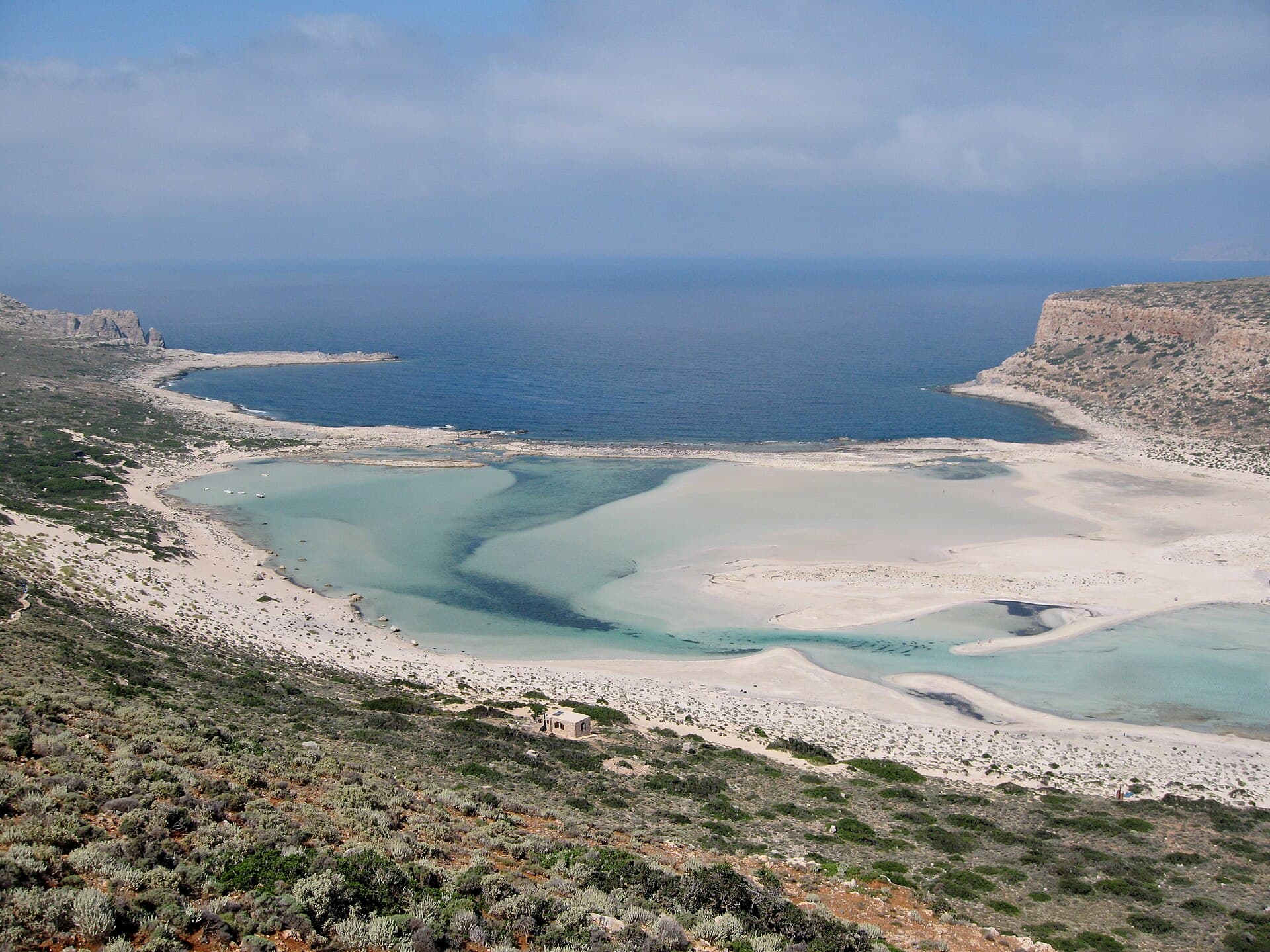
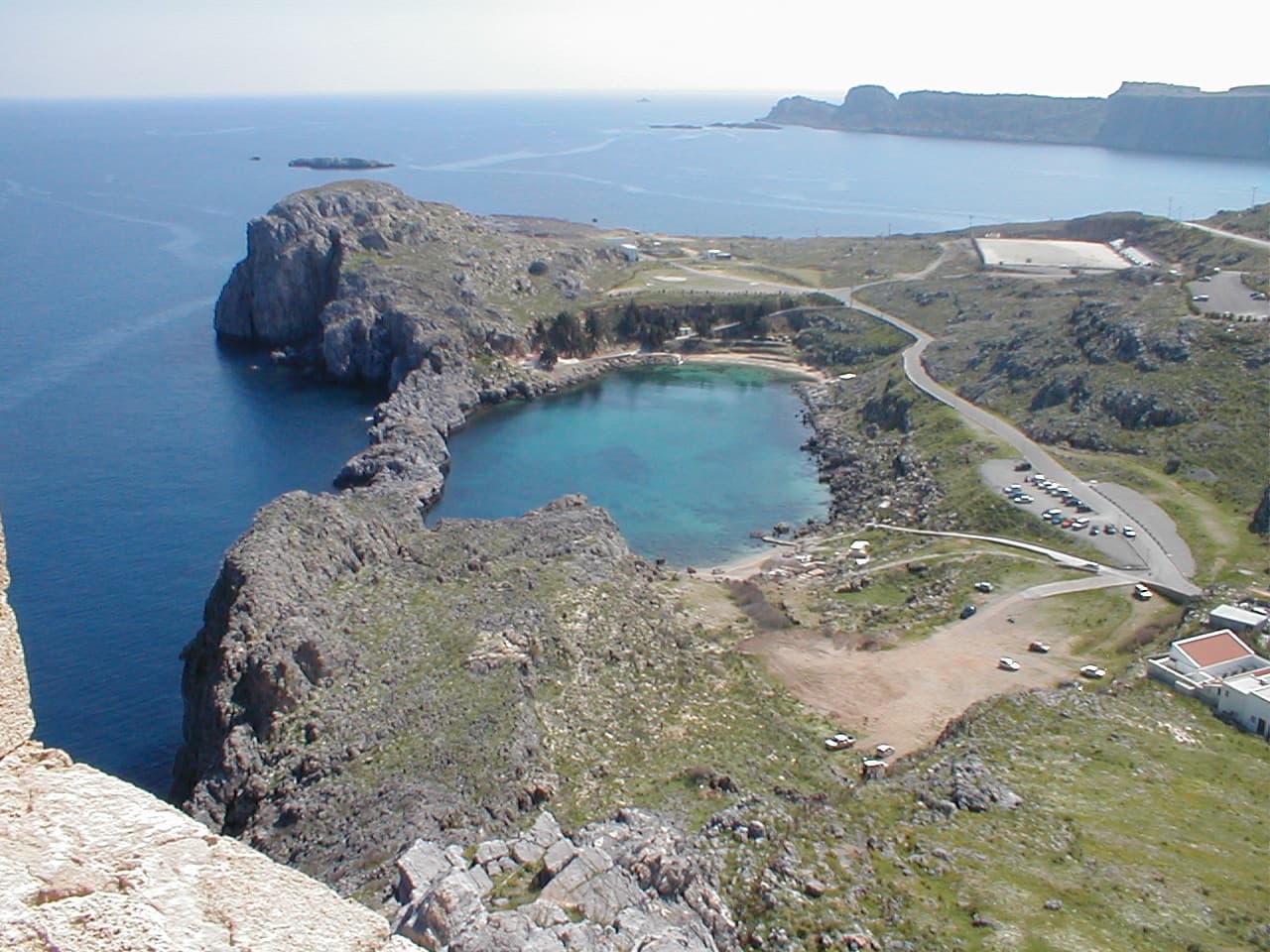
Paphos is two places sharing one name, and the gap between them is the whole point. At the harbour end there is a small seaside town built around an archaeological park where Roman floor mosaics of Dionysos and Theseus lie a five-minute walk from a hotel breakfast, a working fishing quay and a Lusignan-era fort. At the other end of the district, an hour north, the Akamas peninsula runs out into cliffs, juniper scrub, a turtle beach and a lagoon with no road worth the name. The whole of ancient Paphos, both the Roman capital by the sea and the far older sanctuary of Aphrodite inland at Kouklia, went onto the UNESCO World Heritage List in 1980, the first Cypriot entry. Add a winter mild enough to keep the sites open and the hills green, and tickets that still cost 4.50 EUR, and Paphos becomes the rare place where the culture and the coast are both cheap and both real.
If you take one thing from this guide: do not plan the wild half around a 4x4. The Akamas is a genuine protected wilderness and also, in 2026, a genuine argument. The Avakas Gorge trail has been chained shut since December 2025 with no reopening announced, the forest roads toward the Blue Lagoon are still an unfinished and contested works programme, and most rental agreements ban unsealed tracks anyway. The version that works is a boat out of Latchi harbour for the lagoon and the sea caves, then your own feet on the Aphrodite and Adonis trails from the Baths of Aphrodite. It is a better day than bouncing along a construction road, and it is the only one you can book with confidence. The other thing worth reordering: eat one long, no-menu meze dinner early in the trip rather than on the last night, because it will change what you order for the rest of the week.
Best for
Ancient history without the queues · Winter and shoulder-season sun · Couples · Families · Walkers and wild coastline · Wine villages
Daily itinerary
5 to 7 days
Most Mediterranean beach towns keep their ruins behind a fence at the edge of town. In Paphos the UNESCO site is the town: the archaeological park runs right down to the harbour, excavation is still going on inside it, and the mosaic houses are the floors of wealthy Roman residences rather than temple fragments, one of them read as the Roman governor’s own house. The second difference is the season. Cyprus sits far enough south and east that Paphos swims into November, keeps its sites open all winter, and turns green rather than brown from December to March, which is when the almond blossom and the hill walking are at their best.
Best time to visit
April to early June and mid-September to early November are the sweet spots: hot enough for the sea, cool enough to walk a coastal trail or an archaeological park at midday, and half the price of August. Paphos also works as a winter destination in a way that Greek island resorts do not, with 17 to 19C days in January, the major sites open on winter hours, and the hills at their greenest.
- January to February: Green hills, almond and later citrus blossom, 17 to 19C days and occasional rain. Snow sits on Troodos two hours away, which makes a ski morning and a coastal lunch a genuine same-day pairing.
- March to April: Wildflowers across the Akamas, orchids in the scrub, and the best hiking weather of the year. The sea is still cold in March and turns swimmable for most people in late April.
- May to June: The classic window: warm sea, long light, sites still comfortable in the morning. Kataklysmos, the water festival after Orthodox Pentecost, fills the seafront in June.
- July to August: Hottest, busiest and priciest. Start the archaeological park at 08:30 opening, surrender the middle of the day to the sea, and keep the inland driving for the early evening.
- September to October: The other classic window. The sea holds its summer warmth into late October, the wine villages are picking, and the Pafos Aphrodite Festival takes the harbour castle square on 4 and 5 September 2026.
- November to December: Swimming tails off in the first half of November. Quiet, mild and cheap after that, with the archaeological sites almost to yourself and winter opening hours of 08:30 to 17:00.
Things worth knowing
- Pafos Aphrodite Festival, Medieval Castle square (4 and 5 September 2026): the 24th edition stages Donizetti’s L’Elisir d’Amore with the Armenian National Opera and the Cyprus Symphony Orchestra, curtain 19:30, tickets 35 to 150 EUR.
- Kataklysmos, the Festival of the Flood (Whit Monday, 21 June in 2027): the Cypriot water festival, celebrated hardest in the coastal towns with fairs, folk verse duels and a lot of water thrown at strangers.
- Orthodox Easter (movable, spring): candlelit processions in the hill villages, bonfires on Holy Saturday and lamb on the spit on Easter Sunday.
- Grape harvest, Paphos wine villages (late August to September): Kathikas, Panagia and the Laona plateau bring the fruit in, and the small wineries open for tastings around it.
Where to stay
 Atlantic Ambience · Pexels
Kato Paphos and the harbour
The lower town on the sea: the archaeological park, the fishing harbour and its fort, the coastal broadwalk, and the tourist strip of Poseidonos Avenue behind them. This is where the hotels, the beach and the mosaics all sit within a walk of each other, which is exactly why most first-time visitors should sleep here despite the strip being what it is.
Best for: First-time visitors · Walking to the ruins · Beach and town in one base · Families
Poseidonos Avenue is a purpose-built resort strip with the food and the bar signage to match. Book a street back from it or at the quieter western end near the Tombs of the Kings, and eat up in Ktima or out in the villages.
 Michal Klajban · CC BY-SA 4.0 via Wikimedia Commons
Ktima, the upper town
Paphos as a working Cypriot town, on the hill two kilometres above the sea: the covered municipal market, Kennedy Square, an Ottoman hamam, colonial-era arcades, the district museum and the restaurants where local families actually eat. Almost nobody stays here, which is the argument for doing it.
Best for: Eating where locals eat · A town rather than a resort · Budget stays · Slow mornings
No beach and a steep two-kilometre descent to the harbour; you will use the 610 bus, a taxi or a car most days. Much of Ktima closes early and stays closed on Sundays.
 Radovan Zierik · Pexels
Coral Bay and Peyia
Fifteen minutes north of town, the district’s best easy sand: a sheltered horseshoe of it between two headlands, with the Maa-Palaeokastro excavation on the promontory above. Peyia village climbs the hill behind, and the Sea Caves coast beyond it is the sunset run. A young, loud, family-heavy strip in August and near-empty in February.
Best for: Families · Reliable sand · A base for the Akamas · Self-catering
The bay itself is small and fills fast by 11:00 in high season. Accommodation skews to apartments and villas rather than hotels, so you will want a car.
 sk12 · CC BY 2.0 via Wikimedia Commons
Latchi and Polis
An hour north on the Chrysochou bay coast, and a different island: a small working harbour at Latchi with the boat trips to the Blue Lagoon, the low-key town of Polis behind it, a long pebble-and-sand shoreline and the Akamas rising to the west. This is where Cyprus keeps the quiet version of itself.
Best for: Quiet weeks · Walkers · Boat days · Couples
An hour of driving from Paphos town and its airport, thin on nightlife, and genuinely sleepy from November to March when much of the harbour front shuts.
 Jules Verne Times Two · CC BY-SA 4.0 via Wikimedia Commons
Kouklia and Aphrodite Hills
Fifteen kilometres east, where the Aphrodite story actually starts: the Bronze Age sanctuary at Palaipaphos under the village of Kouklia, and the golf-and-villa resort estate on the ridge above it, looking down the coast toward the sea stack at Petra tou Romiou. Handy for the airport, remote from everything else.
Best for: Golf · Villa stays · Airport proximity · Sea views without a strip
A resort estate rather than a place: you drive for everything, including dinner, and the beach below is a shuttle ride down the hill.
 Chris06 · CC BY-SA 4.0 via Wikimedia Commons
Kathikas and the Laona villages
The plateau above Coral Bay at 600 metres: Kathikas, Arodes, Ineia and Drouseia, stone villages of vines and carob with the Akamas dropping away to the west. Two small wineries in Kathikas alone, a handful of good tavernas, and 10C less than the coast in August.
Best for: Wine tasting · Cooler summer nights · Village stays · Walkers
Nothing here is walkable to anything else and the roads are narrow and unlit at night. Winters are properly cold at this altitude and several places close.
Where to sleep
Anassa
luxury · Neo Chorio, near Latchi
Best for: A special occasion · Couples · The quiet north coast · Families who want space
- A Cypriot-village-styled hillside above its own beach on Chrysochou bay, with the Akamas as the view
- Thalassa spa and a level of service that has kept it at the top of the island for two decades
- The closest luxury base to the Akamas, Latchi harbour boats and the Baths of Aphrodite
- About an hour from Paphos town, its sites and its airport
- The steepest rates on the island in July and August
- Very little outside the resort within walking distance
Almyra
design · Kato Paphos seafront
Best for: Families with design taste · Walking to the archaeological park · Sea-view rooms · A town base
- Gardens on the seafront a short walk from the harbour, the fort and the mosaics
- Rooftop Kyma suites with private terraces, plus a kids club that lets parents use the spa
- One of the few genuinely modern hotels on a strip dominated by conventional resorts
- The beach in front is a small municipal one rather than a resort sand bay
- Poseidonos Avenue traffic and signage right behind the gardens
- Upscale pricing for a town-centre location rather than a private setting
Elysium
resort · Beside the Tombs of the Kings
Best for: Walking to the Tombs of the Kings · Big-resort facilities · Sunset terraces · Weddings
- A five-star beachfront resort with the UNESCO necropolis as its immediate neighbour, roughly 500 metres away
- Several restaurants, pools and a spa on a large landscaped site at the quiet western end of town
- West-facing terraces looking straight into the sunset over the sea
- Byzantine-revival decor that will not suit everyone
- Large enough that the pool areas fill in high season
- The coast here is rocky, so the swimming is pools and platforms rather than a sand beach
Athena Royal Beach Hotel
value · Geroskipou seafront, Paphos
Best for: Adults-only on a budget · Half board · Long shoulder-season stays · Sea-view rooms without luxury pricing
- A four-star deluxe adult-focused hotel on the seafront, part of the family-run Constantinou Bros group
- Half-board rates that hold up well outside July and August
- On the coastal path, so the harbour and the archaeological park are a 30-minute walk or a short bus ride
- Adults-only, so it is out for family trips
- A conventional package-resort feel rather than a design stay
- The shoreline here is mixed sand and rock with a shallow shelf
Aphrodite Hills Resort
villa · Kouklia, on the ridge above Petra tou Romiou
Best for: Golf · Villa and apartment stays · Groups and multi-generation trips · Airport-side arrival nights
- A hotel plus a whole estate of villas and apartments on a ridge with long views down the coast
- An 18-hole championship course, a tennis academy and a large spa on site
- Fifteen minutes from Paphos airport and five from Aphrodite’s Rock, which makes it a good first or last night
- A self-contained resort estate rather than anywhere with local life
- The beach is a shuttle ride down the hill
- You are driving to everything else in the district
Essential experiences
 Vasyl D · Pexels
Kato Paphos Archaeological Park (UNESCO)
The Roman capital of Cyprus, still being dug: the mosaic floors of the Houses of Dionysos, Theseus, Aion and Orpheus, a second-century Odeon that still hosts summer performances, the Saranta Kolones crusader castle and an Asklepieion, all spread over a headland that ends at the lighthouse. Entry 4.50 EUR. Open daily 08:30 to 19:30 from 16 April to 15 September and 08:30 to 17:00 the rest of the year. Go at opening: there is almost no shade on the site.
 Mgiganteus1 at en.wikipedia · CC BY-SA 3.0 via Wikimedia Commons
Tombs of the Kings (UNESCO)
Not tombs of kings at all, but the rock-cut burial chambers of Ptolemaic and Roman officials, sunk into the coastal limestone and built around Doric peristyle courtyards as though they were houses. Eight excavated complexes over a wide seaside field, entry 2.50 EUR. The atrium tombs closest to the sea are the ones to walk down into; late afternoon light gets into the courtyards.
 Bob Jenkin · Pexels
Pafos Medieval Castle
The squat fort at the end of the harbour quay: a Lusignan tower rebuilt by the Ottomans in 1592 after the Venetians dismantled it, used as a salt store under the British and now a single hall, a roof terrace and a view back over the fishing boats. Entry about 2.50 EUR, ten minutes inside, and the square in front of it is the open-air stage for the Pafos Aphrodite Festival, whose 24th edition runs on 4 and 5 September 2026.
 Carole Raddato · CC BY-SA 2.0 via Wikimedia Commons
Sanctuary of Aphrodite at Palaipaphos, Kouklia
The older Paphos, 14 km east: the Mycenaean-era sanctuary where Aphrodite was worshipped from the twelfth century BC through the Roman period, plus a small museum in a Lusignan manor house holding the conical black stone the goddess was worshipped as. Entry 4.50 EUR including the museum. It is ruins rather than monuments, and it is the reason the whole listing exists.
 Viaggiamocela · CC BY-SA 4.0 via Wikimedia Commons
Agia Kyriaki Chrysopolitissa and St Paul’s Pillar
A layered site in the middle of Kato Paphos and free to walk: the mosaic floors of a vast fourth-century basilica, a Gothic-era church still in use, and the column where tradition says Paul was flogged before converting the Roman governor. Raised walkways cross the excavation, and the Anglican and Catholic congregations share the church, which is an unusual thing to find on the island.
 Rüdiger Stehn from Kiel, Deutschland · CC BY-SA 2.0 via Wikimedia Commons
Monastery of Agios Neophytos
Nine kilometres north of town in a wooded valley: the Enkleistra, a hermitage that the twelfth-century recluse Neophytos carved into the cliff himself, with frescoes painted onto the rock walls of his cell and burial chamber by Theodore Apsevdis in 1183, and a later monastery and church below it. The cave complex is the reason to come; the frescoes in it are among the best Byzantine work on the island.
 McGregger · CC BY-SA 3.0 via Wikimedia Commons
Baths of Aphrodite and the Akamas trails
The end of the paved road west of Latchi, and the trailhead for the Akamas on foot: a shaded grotto pool where the goddess was said to bathe, then the Aphrodite and Adonis loops climbing through juniper and pine to Pyrgos tis Rigainas and views over Chrysochou bay. Reckon on three to four hours for the Aphrodite loop, with no water and little shade on the upper sections.
 Gerda Arendt · CC0 via Wikimedia Commons
Avakas Gorge (closed since December 2025)
The slot canyon that cuts back into the Akamas above Agios Georgios, where the walls close to a few metres apart under a wedged boulder. The forestry department closed the trail on 6 December 2025 after flooding, rockfall and landslides, and as of the most recent official statement it remains shut, with signs and a chain across the entrance and no reopening date announced. Check before you drive out, and do not be one of the people who steps over the chain.
Cyprus Mail: forestry department on the closure ↗View on map ↗
 Anastasia Haritonov · Pexels
Petra tou Romiou (Aphrodite’s Rock)
The sea stacks on the Limassol road where the myth puts Aphrodite’s emergence from the foam, best seen from the layby on the cliff above rather than from the pebble beach itself. Free, floodlit at night, and busy with coaches from mid-morning. The current between the rocks is strong and the seabed is uneven boulders, so treat the swim with respect or skip it and come at first light instead.
 No machine-readable author provided. Mgi / CC BY 2.5 via Wikimedia CommonsMgiganteus1 at en.wikipedia / CC BY-SA 3.0 via Wikimedia Commons
Food & drink
Tavas
The Paphos clay pot: lamb or goat layered with rice, onion, tomato and potato, heavy on cumin and cinnamon, and baked slowly with the lid sealed. Village tavernas often make it on a fixed day of the week, so ask which one.
Afelia
Pork shoulder marinated overnight in red wine and crushed coriander seed, then braised until it falls apart. Served with bulgur or roast potatoes and, in the villages, more wine.
 Cyprus Tourism CH · CC BY 2.0 via Wikimedia Commons
Koupepia
The Cypriot vine leaves: minced pork and beef with rice, mint and parsley, simmered in a tomato sauce that carries a distinct hit of cinnamon. Ordering them next to Greek dolmades makes the difference obvious.
 Josh Kobayashi · Pexels
Kleftiko
Lamb sealed into a domed clay village oven and left for hours until it needs no knife. Almost every village taverna has one out the back; the good ones only fire it on certain days.
 Chris Olszewski · CC BY-SA 4.0 via Wikimedia Commons
Halloumi
Registered as a Cypriot PDO by the European Commission in April 2021, so only cheese made on the island to the traditional recipe can carry the name in the EU. Eat it village-fresh and unfried first, then grilled, then in a shepherd’s pittas with mint.
Loukoumi Geroskipou
The rose and citrus jellies made in Geroskipou since 1895 and, in 2007, the first Cypriot product to win a Protected Geographical Indication. Buy them from a shop in the village rather than a harbour kiosk.
 Ovipix · CC BY-SA 4.0 via Wikimedia Commons
Xynisteri and Maratheftiko
The indigenous grapes the Paphos hills are built on: crisp Xynisteri whites from the Laona plateau, and the difficult, deeply coloured Maratheftiko red. Add zivania, the grape spirit poured as a welcome, and Commandaria, the sweet dessert wine from the Troodos foothills.
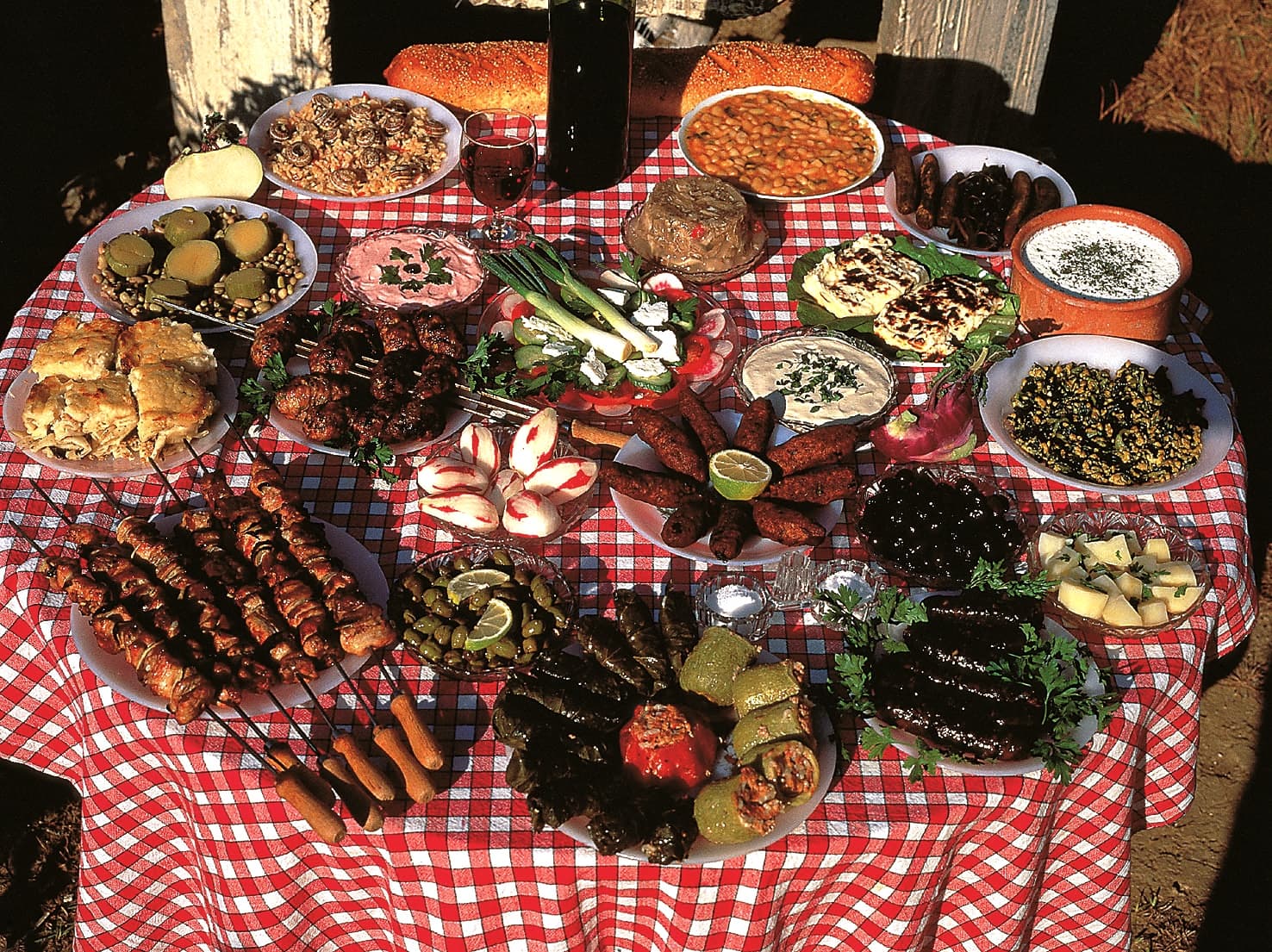
Meze is the local form and it is not a starter: a full meze runs to twenty or more small plates over two hours, arrives without a menu, and stops when you say so. Order it for the table and skip lunch. Dinner starts late, around 20:30 or later in summer, and most tavernas send fruit, loukoumi or zivania with the bill. Tipping around 10 percent is normal where service is not already added.
Where to eat
7 St. Georges Tavern
institutionA stone and wood house in Geroskipou hung with rural Cypriot antiques, where there is no menu at all: plates keep arriving until you stop them, built around seasonal produce and wild greens the family forages themselves. Reckon on about twenty dishes and two hours. Book ahead; this is the meal to eat early in the trip so it recalibrates everything after it.
Last researched 2026-08-08
Laona Restaurant
casualA small family place on a sloping lane in Ktima that cooks about ten dishes fresh each day: rabbit stew, meatballs, bean and vegetable pots. Turn up late and the list will be shorter. Primarily a lunch kitchen, which suits a morning in the market and the district museum.
Last researched 2026-08-08
Imogen’s Inn Taverna
institutionIn the middle of Kathikas at 600 metres, open since 1996 and run by the same family, with rooms full of ancestral photographs and a meze that leans Cypriot with Middle Eastern edges. The obvious dinner after an afternoon at the Kathikas wineries, and 10C cooler than the coast in August.
Last researched 2026-08-08
Sunrises
 Rob Mowe · Pexels
Petra tou Romiou
The one Paphos coast that faces the sunrise: the sea stacks stand out from a shore that runs east toward Limassol, so first light arrives from behind them, over open water in the winter months and further up the coast in high summer. Come at first light rather than a fixed hour, before the coaches: the floodlights are off and the pebbles are the colour of the rock.
Year-round · Park in the cliff-top layby on the B6 and use the underpass to reach the beach; the roadside view is the better composition. · Shoot from the cliff layby, not the beach: from below the stacks flatten into one shape.
The Kouklia ridge above the coast
From the ridge at Aphrodite Hills the land drops through carob and olive to a long open stretch of coast, and first light runs up it from the direction of Limassol before it reaches the sea below. A quiet alternative if you are already staying out this way.
April to October · Public roads cross the estate; pull in where there is a shoulder rather than blocking the golf access.
Sunsets
 Anastasiia Voskova · Pexels
The Sea Caves at Cape Drepano
North of Coral Bay the coast breaks into a shelf of undercut limestone with the sun going down straight ahead and Agios Georgios chapel on the headland behind. Nothing is fenced, the rock is sharp and the drops are real, so stay back from the edges and bring shoes.
Year-round · Paved road all the way to Sea Caves Avenue in Peyia; park on the road and walk out over the rock. · The undercut arches only work in the last twenty minutes, when the light comes in sideways underneath them.
 Captain Galaxy · CC BY 4.0 via Wikimedia Commons
Paphos harbour and the castle
The easiest one, and better than it has any right to be: the fort sits on the quay with the fishing boats in front of it, the sun drops over the breakwater, and the floodlights come up on the stone a few minutes later. Walk it rather than sit in one of the harbour-front chairs.
Year-round
 Michal Klajban · CC BY-SA 4.0 via Wikimedia Commons
The Akamas coast above the Baths of Aphrodite
The last kilometre of paved road past Latchi looks west along the whole peninsula, so the sun sets down the length of the Akamas with Chrysochou bay behind you. The car park at the Baths thins out by late afternoon and few people stay for this.
April to October · Paved to the Baths of Aphrodite car park; the tracks beyond are the contested forest roads and are not a sunset drive.
Day trips
 Viaggiamocela · CC BY-SA 4.0 via Wikimedia Commons
The Akamas by boat from Latchi
The honest way to see the wild half. Boats leave Latchi harbour for the Blue Lagoon and Fontana Amorosa along a coast with no road: turquoise water over white rock, sea caves, and swimming stops where the only other traffic is other boats. Combine it with the Baths of Aphrodite and an hour or two of the Aphrodite trail before or after.
About an hour by car from Paphos to Latchi, then 20 to 45 minutes by boat depending on the operator · Full day
 Dickelbers · CC BY-SA 3.0 via Wikimedia Commons
Troodos: Kykkos and the painted churches
Up into the mountains for the other Cypriot UNESCO site: ten small Byzantine churches, nine inscribed in 1985 and a tenth added in 2001, barn-roofed and plain outside, covered wall to wall in eleventh to sixteenth-century frescoes inside. Pair two or three of them with the gilded wealth of Kykkos monastery and lunch in a mountain village. In winter there is snow up here and you can be back on the coast for dinner.
About 90 minutes each way from Paphos to Kykkos on mountain roads · Full day
 Bob Jenkin · Pexels
Kourion and the road east
The other great Cypriot classical site, an hour east on the cliff above Episkopi bay: a Greco-Roman theatre still used for performances, the mosaic floors of the House of Eustolios, and a view straight down to the sea. Add the crusader sugar estate at Kolossi and, if you have the appetite, the wine village of Omodos on the way back through the hills.
About an hour each way to Kourion via the B6 coast road · Full day
The Laona plateau and the Paphos wine villages
A half day of switchbacks above Coral Bay: Kathikas with two estate wineries in the village itself, then Arodes, Ineia and Drouseia along the plateau with the Akamas dropping away to the sea. Xynisteri and Maratheftiko are the grapes to ask about. Book tastings ahead; these are small family operations, not visitor centres.
About 30 minutes up from Paphos or 20 from Coral Bay · Half to full day
After dark
 Fry72, Karel Frydrýšek · CC BY-SA 4.0 via Wikimedia Commons
The harbour broadwalk after the boats
walkFrom about 19:00 the day-trip boats are tied up, the coaches have gone and the coastal broadwalk between the fort and the archaeological park belongs to people walking. Floodlights on the castle, the lighthouse turning above the ruins, and the whole thing free.
Ktima on a weekday night
foodThe upper town after dark is a different trip: the arcades around Kennedy Square, the lanes by the covered market, a handful of small bars and restaurants full of Cypriots rather than visitors. Ten minutes and a few euros by taxi from the seafront.
Daily itinerary
Seven days in Paphos: mosaics, the Akamas and the wine plateau
Two days on foot in the town for the UNESCO sites and the two halves of Paphos, then a car: the Akamas by boat, the wine plateau, the Aphrodite coast east to Kouklia and Petra tou Romiou, and one long day up into Troodos.
- 1
The archaeological park and the harbour
moderateKato Paphos Archaeological Park at 08:30 opening: the House of Dionysos first, then Theseus, Aion and Orpheus, the Odeon and Saranta Kolones, finishing at the lighthouse.A quiet table off the harbour front rather than on it.The medieval castle, then Agia Kyriaki Chrysopolitissa and St Paul’s Pillar on the walkways over the basilica floor.The harbour and the fort from the broadwalk.Book 7 St. Georges in Geroskipou for the no-menu meze and go early in the trip.Walk the broadwalk back once the floodlights are on.No car needed: everything today is inside Kato Paphos, and Geroskipou is a short taxi ride.Estimate: If the park is baking, do the Tombs of the Kings at opening instead and save the park for a cooler morning.
- 2
Tombs of the Kings and the upper town
relaxedThe Tombs of the Kings at opening: the seaside atrium complexes are the ones to climb down into.Laona in Ktima, while the daily list is still long.Ktima on foot: the covered market, Kennedy Square, the hamam and the district archaeological museum.Municipal beach or the coastal path back down to Kato Paphos.A fish taverna near the harbour, priced by the kilo, weight agreed first.Early night; the car and the long days start tomorrow.Bus 610 or a taxi links the seafront and Ktima; the walk down is easy and the walk up is not.Estimate: Swap the museum for Geroskipou village and the loukoumi workshops if you would rather buy than read.
- 3
North to the Akamas by boat
fullCollect the car and drive up to Latchi, roughly an hour; board the boat for the Blue Lagoon and Fontana Amorosa.On the boat or a late one back at Latchi harbour.The Baths of Aphrodite grotto, then as much of the Aphrodite trail as the heat allows.From the coast road above the Baths, looking west down the peninsula.Latchi harbour or Polis town square.Back to Paphos, or stay north if you booked up here.Car to Latchi, boat for the coast. Do not attempt the forest tracks in a rental; most agreements ban unsealed roads.Estimate: Rough sea cancels the boat: do the Adonis trail and Polis instead, and try the boat again later in the week.
- 4
Coral Bay, the Sea Caves and the wine plateau
moderateSwim at Coral Bay early, before the sand fills, and walk up to the Maa-Palaeokastro excavation on the headland.Somewhere in Peyia rather than on the beach strip.Up to Kathikas for a tasting at one of the village wineries, then the plateau road through Arodes and Ineia to Drouseia.Back down to the Sea Caves at Cape Drepano.Imogen’s Inn in Kathikas if you stayed up on the plateau, otherwise Peyia.Quiet.Book the tasting ahead. If you are tasting, decide the driver before you leave the coast.Estimate: Avakas Gorge sits right here and has been closed since December 2025; check the forestry department before you plan around it, and do not step over the chain.
- 5
East to Kouklia and Aphrodite’s Rock
relaxedDrive out at first light to Petra tou Romiou for sunrise from the cliff layby, then breakfast on the way back.A village taverna in Kouklia.The Sanctuary of Aphrodite at Palaipaphos and the Lusignan manor museum, then the beach below Aphrodite Hills.Back at Petra tou Romiou if you skipped the sunrise, when it floodlights.Kouklia village, or back in Paphos.A drink on the harbour broadwalk.The B6 coast road is 20 to 25 minutes from Paphos to Kouklia; the layby at the rock is signposted and has an underpass to the beach.Estimate: Skip the swim at the rock. The currents there are strong and the seabed is loose boulders; swim at the Aphrodite Hills beach instead.
- 6
Troodos and the painted churches
fullThe mountain road toward Kykkos, stopping at Panagia and its winery country on the way up.A mountain village kitchen; ask for whatever came out of the oven this morning.Kykkos monastery, then one or two of the painted churches on the way back down.On the road, or from the plateau above Paphos.Simple and near the hotel.Rest; today is the longest drive of the week.Ninety minutes each way on winding roads, so start early and do not stack more than three stops.Estimate: In winter, swap a church for the snow line above Troodos square and be back at sea level for dinner.
- 7
Kourion or the sea, then departure
moderateEither the theatre and mosaics at Kourion above Episkopi bay, or a final slow morning on the beach.Light, near the coast road.Loukoumi and halloumi in Geroskipou to take home, then return the car at Paphos airport.Departure.Paphos airport is 15 minutes east of town; Kourion adds about two hours round trip if the flight is late enough.Estimate: Early flight? Skip Kourion and do the coastal path from the hotel instead.
Getting around
- Paphos International Airport (PFO) sits about 15 km east of the town near Timi and handled more than 3.8 million passengers in 2025, its busiest year on record; it is served mostly by seasonal European low-cost and charter flights.
- Larnaca Airport (LCA) is the island’s main gateway and has far wider year-round connections, but it is roughly two hours away by road, so check both before booking.
- Flying is the practical year-round arrival, but the seasonal Limassol to Piraeus passenger ferry is running again: the 2026 season is scheduled from 29 May to 1 September aboard the AF Marina, 22 round trips in all. It docks at Limassol, an hour east of Paphos.
- Cyprus drives on the LEFT, a British legacy, and most rental cars are right-hand drive. Roads are good, signage is bilingual, and the motorway east toward Limassol is fast and free.
- Bus 612 runs between Paphos airport and the Tombs of the Kings bus station via Poseidonos Avenue and the harbour for 2 EUR, taking about 30 minutes; it runs more frequently from April to November than in winter.
- OSYPA (Pafos Buses) covers the town and the district: the 610 links Kato Paphos and Ktima, the 615 runs on to Coral Bay, and intercity coaches go to Limassol, Nicosia and Polis. Buy on board and expect thin evening and Sunday service.
- A rental car is close to essential for the Akamas approach, the wine plateau, Kouklia and Troodos. Almost every agreement bans driving on unsealed roads, which rules out the Akamas forest tracks whatever the vehicle.
Things worth knowing
- · Planning the Akamas around a hire car. The forest tracks are rough, contested and generally excluded by the rental agreement; the boat from Latchi is the version that works.
- · Arriving at the archaeological park at 11:00 in July. There is almost no shade between the mosaic houses. Be there at 08:30 opening or leave it for a cooler month.
- · Assuming Avakas Gorge is walkable. It has been closed since December 2025 with no reopening announced; check the forestry department rather than a two-year-old blog post.
- · Treating Paphos as walkable to its own sights. Kouklia, the Akamas, the plateau and Troodos are 20 minutes to 90 minutes of driving apart, and the bus network thins out fast past the coast.
- · Forgetting the left-hand drive until you are at the rental desk at midnight, then taking a roundabout the wrong way at 06:00 the next morning.
Budget
| Low | Expected | Comfortable | |
|---|---|---|---|
| Accommodation style / per night | €55≈ $62 | €120≈ $134 | €280≈ $313 |
| Food style / per day | €22≈ $25 | €40≈ $45 | €80≈ $90 |
| Local transport / per day | €4≈ $4 | €32≈ $36 | €60≈ $67 |
| Estimate / per day | €3≈ $3 | €10≈ $11 | €25≈ $28 |
Estimate · EUR · 2026-08-08. Accommodation is per room per night for two sharing, in shoulder season; July and August run far higher and December to March far lower. Attractions are genuinely cheap here: the flagship archaeological park is 4.50 EUR and the Tombs of the Kings 2.50 EUR, so a culture-heavy day still costs less than one museum ticket in Greece or Italy. Local transport is buses at 2 EUR a ride, or 6.50 EUR for a day ticket, if you stay in town, or roughly 30 to 45 EUR a day once you add a rental car and fuel. · 1 USD = €1 (14 Oct 2026)
Things worth knowing
Frequently asked questions
How many days do you need in Paphos?
Five to seven. Two days on foot in the town cover the archaeological park, the Tombs of the Kings, the harbour fort and Ktima. Days three to five want a car for the Akamas by boat, the wine plateau and the Aphrodite coast east to Kouklia. A full week adds Troodos and Kourion without a rushed day in it.
Where should first-time visitors stay in Paphos?
Kato Paphos, near the harbour or at the quieter western end by the Tombs of the Kings: you can walk to the UNESCO sites, the beach and the buses. Families who want reliable sand should look at Coral Bay instead, and anyone whose trip is really about the Akamas should base at Latchi or Polis and accept the hour of driving to the town.
When is the best time to visit Paphos?
April to early June and mid-September to early November. The sea is warm at both ends, the archaeological sites are walkable at midday, and prices sit well below August. Winter is a genuine option too: 17 to 19C days, the major sites open on winter hours, green hills and the cheapest rooms of the year, in exchange for a cold sea.
Do you need a car in Paphos?
Not for the town. Kato Paphos is flat and walkable, and buses cover Ktima, Coral Bay and the airport for 2 EUR a ride, or 6.50 EUR for a day ticket. For Kouklia, the Laona wine villages, Latchi and Troodos, yes. Renting for the middle days of the trip rather than the whole stay usually costs less and saves you parking in the resort strip.
Can you visit the Akamas without a 4x4?
Yes, and it is the better plan. Take a boat from Latchi harbour for the Blue Lagoon and Fontana Amorosa, and walk the Aphrodite and Adonis trails from the Baths of Aphrodite, which is the end of the paved road. The forest tracks beyond are rough, contested and excluded from most rental agreements, and the Avakas gorge trail on the other side of the peninsula has been closed since December 2025.
Is Paphos better than Limassol or Ayia Napa?
For ancient sites, wild coastline and a quiet shoulder season, yes: Paphos has the UNESCO listing, the Akamas and the mountain villages within an hour. Limassol is the bigger, more urban night out with the marina and the wine country on its doorstep; Ayia Napa is the beach-party end of the island. Paphos is the one to pick if the ruins and the walking matter as much as the sea.
Sources (10)
- Paphos was inscribed on the UNESCO World Heritage List in 1980 under criteria (iii) and (vi), covering both Nea Paphos and the sanctuary at Palaipaphos · unesco · 2026-08-08
- Kato Pafos Archaeological Park entry 4.50 EUR with summer hours 08:30 to 19:30 and winter hours 08:30 to 17:00 · tourism-board · 2026-08-08
- The Avakas gorge trail has been closed since 6 December 2025 and remains closed with no reopening date announced · reputable-local · 2026-08-08
- Environmental organisations and the audit office challenged further Akamas road works in 2026 over breaches of binding environmental conditions · reputable-local · 2026-08-08
- The 24th Pafos Aphrodite Festival stages L’Elisir d’Amore at the Medieval Castle square on 4 and 5 September 2026 at 19:30, tickets 35 to 150 EUR · event-organizer · 2026-08-08
- Loukoumi Geroskipou was registered as a Protected Geographical Indication in the EU quality register · government · 2026-08-08
- Halloumi was registered as a Cypriot Protected Designation of Origin by the European Commission in April 2021 · government · 2026-08-08
- The Painted Churches in the Troodos Region were inscribed on the UNESCO World Heritage List in 1985 · unesco · 2026-08-08
- OSYPA Pafos Buses single fare 2 EUR daytime, 3 EUR after 21:00, day ticket 6.50 EUR · transport-operator · 2026-08-08
- The seasonal Limassol to Piraeus passenger ferry returns for 2026 on the AF Marina, 29 May to 1 September, 22 round trips · reputable-local · 2026-08-08