Greece · Dodecanese
Rhodes
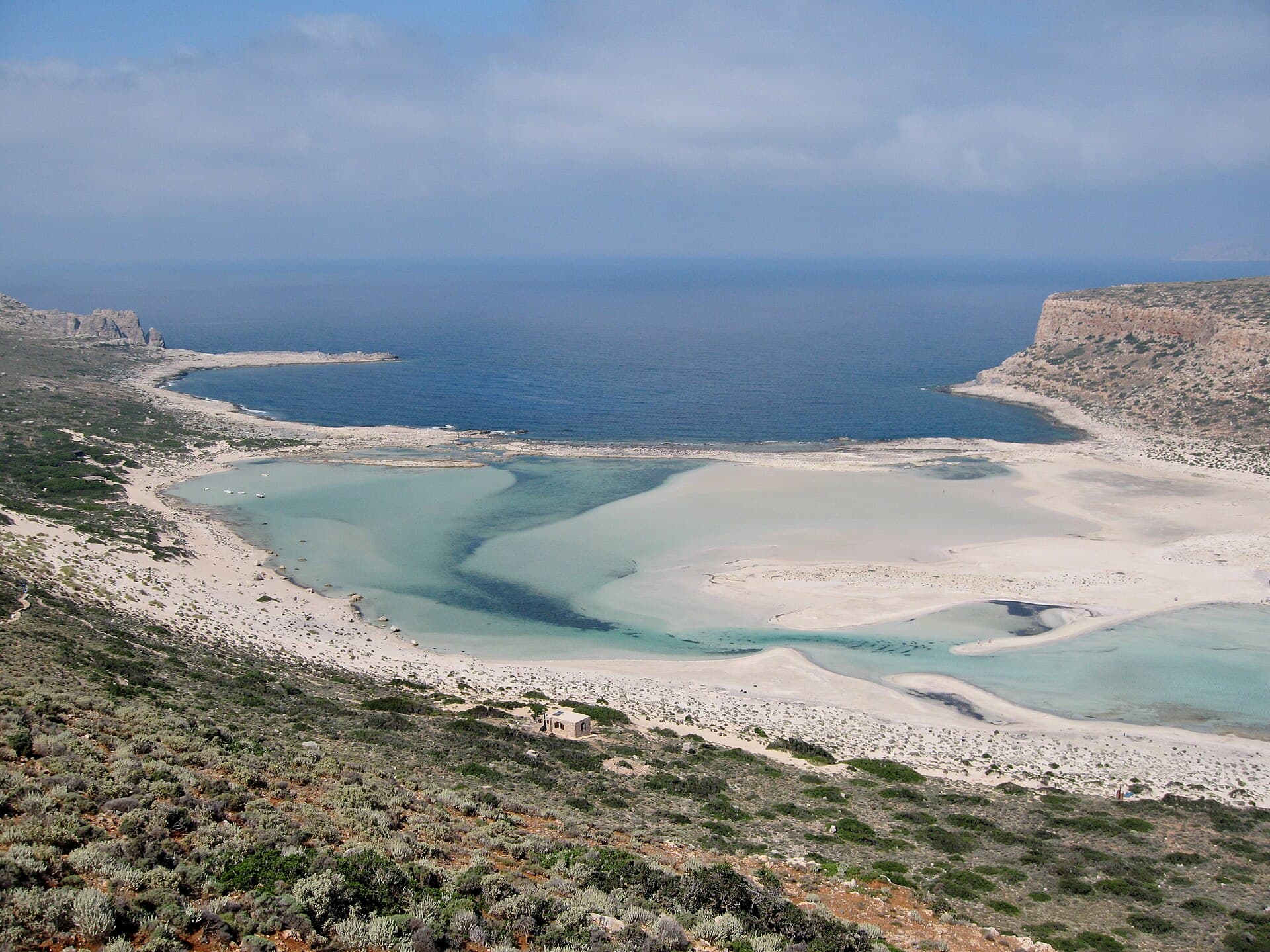
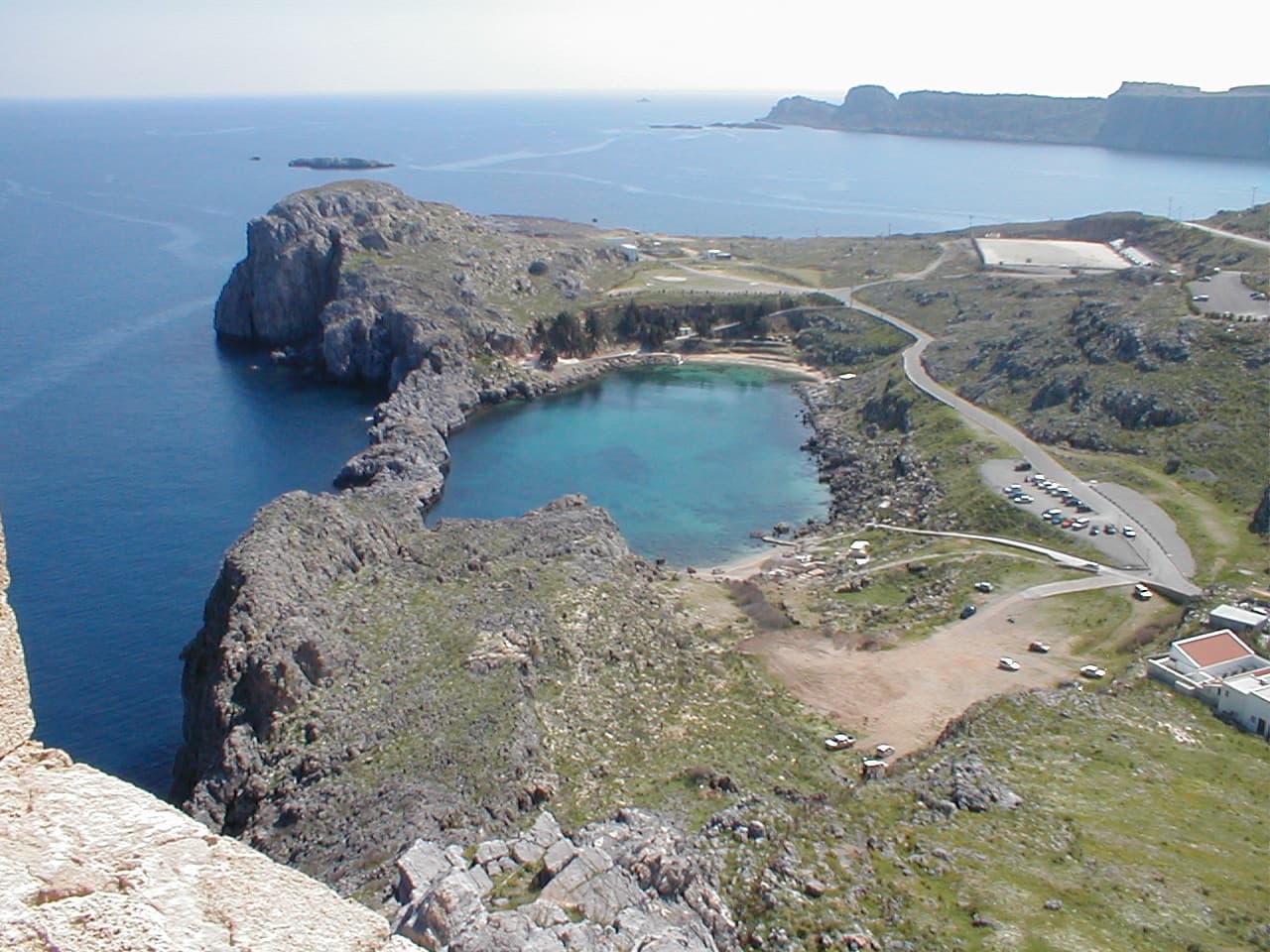
Split the trip: two or three days for Rhodes Town (the walled city, Mandraki harbor, Kallithea and a Symi day trip), then the rest around Lindos and the south: the acropolis at opening time, St Paul’s Bay, Tsambika, and a road day through Embonas wine country to Monolithos and the windsurfing cape at Prasonisi.
 .M. Kuchling https://www.flickr.com/phot / CC BY 2.0 via Wikimedia Commons
Overview
Rhodes is the island where a complete medieval walled city is still lived in: the Knights of St John built their palace, hospital and inns here in the 14th and 15th centuries, and about 6,000 people still live inside the walls today. Around that UNESCO core stretches one of the biggest and most varied Greek islands: the white village and clifftop acropolis of Lindos, long east-coast sands, a windsurfing cape at the southern tip, a wine village on the slopes of the highest mountain, and Symi an hour away by catamaran. It also runs one of the longest seasons in Greece, with swimming from May often into early November.
If you only take one thing from this guide: give the Old Town its evenings. Cruise groups and day-trippers fill the Street of the Knights by mid-morning and are gone by dinner, when the lanes go quiet, the stone glows under the lamps and the medieval city belongs to the people staying inside it. Plan flagship sites for 8:00 sharp, swim in the afternoon, and walk the walls’ moat at dusk. And do not write off the south: the 2023 fire zone has greened over, the resorts around Kiotari and Gennadi repaired and reopened, and the last hour of road to Prasonisi is the emptiest, wildest stretch of the island.
Best for
First-time Greek islands visitors · History lovers · Families · Beach hoppers · Couples · Windsurfers and kitesurfers
Daily itinerary
5 to 7 days
Most Greek islands trade on whitewash and sea. Rhodes adds a layer nowhere else has: a Gothic-and-Ottoman walled city of lanes, gates and inns that never became a museum, plus classical sites (Lindos, Kamiros, Ialysos) from its era as an ancient maritime power. The island is big enough that the package strips never define it; ten minutes past them are chapel-topped capes, vineyards and villages where the taverna grills for locals.
Best time to visit
May, June, September and October are the sweet spots: reliable sun, a swimmable sea, and the medieval lanes and Lindos acropolis without the July and August crush. September combines the warmest sea of the year with thinning crowds; early October still swims and ends with the Medieval Rose Festival in the Old Town.
- April to May: Wildflowers on the ancient sites, hiking weather, Orthodox Easter in the villages; the sea warms enough to swim by mid-May.
- June: Proper beach season before the peak heat; long days and the Old Town still breathable at midday.
- July to August: Hottest and busiest; start Lindos and the Palace at 8:00, keep afternoons for the sea, and expect the meltemi to whip the west coast.
- September: Warmest sea of the year and the crowds thin week by week. Often the single best month.
- October: Mild and quieter; swimming holds into mid-month, and the Medieval Rose Festival fills the Old Town on 10 to 12 October in 2026.
- November to March: Quiet, green and mild; the walled city, museums and winter-hours sites without queues, though many coastal resorts shut.
Things worth knowing
- Medieval Rose Festival, Rhodes Old Town (10 to 12 October 2026): parades, sword fights, workshops and concerts return the walled city to the era of the Knights.
- Feast of Panagia Tsambika (8 September): the Dodecanese’s great pilgrimage, when the faithful climb to the clifftop monastery above Tsambika beach.
- Feast of the Archangel Michael Panormitis, Symi (8 November): the monastery at Panormitis draws pilgrims from across the Dodecanese; boats run from Rhodes.
- Orthodox Easter (movable, spring): candlelit processions in the Old Town and village squares, and lamb on the spit on Easter Sunday.
Where to stay
 Wikimedia Commons · Public domain via Wikimedia Commons
Rhodes Old Town (Medieval City)
The walled city of the Knights: the Palace of the Grand Master, the Street of the Knights, eleven gates, Ottoman mosques and a hammam, and a knot of pebble-paved lanes where people still live, cook and hang laundry. Staying inside the walls means cobbles and carried luggage, and it is the single best decision a first-time visitor can make.
Best for: First-time visitors · History lovers · Couples · Atmospheric stays
Cars cannot reach most lanes; pack luggage you can roll or carry over cobbles, and expect cruise-group congestion from mid-morning to late afternoon in season.
 Roma Dik · Pexels
New Town, Mandraki and Elli
The 20th-century city north of the walls: the deer-topped columns at Mandraki harbor where legend puts the Colossus, Italian-era public buildings, the Nea Agora market rotunda, and Elli, the city beach with mountain views across to Turkey. Hotels here trade medieval atmosphere for elevators, parking and the beach.
Best for: City-and-beach stays · Families · Evening promenades · Practical bases
The casino-and-bar strip near Elli gets loud in peak season; pick a street back from the seafront for sleep.
 Elif Kuş · Pexels
Lindos and Vlycha
The island’s postcard: a white sugar-cube village stacked beneath a clifftop acropolis, with two sandy bays below and the enclosed turquoise horseshoe of St Paul’s Bay behind the rock. Vlycha, one bay north, holds the larger resort hotels. Gorgeous, and in July and August very aware of it.
Best for: Couples · The acropolis at dawn · Photogenic stays · Beach days
Day-trip buses and boats fill the village from late morning; cars stay in paid lots above the village, and everything moves on foot up and down steps.
 Erik Karits · Pexels
Ixia and Ialysos
The west-coast strip ten minutes from town: big-hotel seafronts facing the sunset and the Turkish coast, and the meltemi wind that makes this shore a northern-hemisphere windsurfing standby. The pebbly sea is livelier than the east coast; the compensation is the afternoon breeze and the evening light.
Best for: Windsurfers · Resort amenities near town · Sunset seafronts
Wind and shingle, not calm sand: swimmers who want flat water should sleep on the east coast instead.
 dronepicr · CC BY 2.0 via Wikimedia Commons
Kolymbia and the Tsambika coast
The mid-east coast between Faliraki and Lindos: the eucalyptus avenue of Italian-planned Kolymbia, the monastery-topped cliff of Tsambika with the island’s best golden sand below it, and Anthony Quinn Bay’s emerald coves ten minutes north. A calm, central base for families and for reaching both ends of the island.
Best for: Families · Sandy beaches · A central base with a car
Kolymbia itself is a purpose-built resort village: pleasant, quiet at night, and thin on non-hotel life outside high season.
 ElenaDAF · CC BY-SA 4.0 via Wikimedia Commons
Gennadi and the deep south
Below Lindos the island empties: long shingle-and-sand beaches with room to breathe, the low-key farming village of Gennadi with a growing cluster of good tavernas and one serious eco-resort, and the road on to Prasonisi, the sandspit cape where windsurfers and kitesurfers get waves on the windward side and flatter water in the lee.
Best for: Quiet beach weeks · Surfers · Escaping the crowds · Long walks
You will want a car for everything; nightlife is a taverna and the stars. The hills behind carried the 2023 fire and the regrowth is still young.
Where to sleep
Lindos Blu Luxury Hotel & Suites
luxury · Vlycha, near Lindos
Best for: Couples · A special occasion · Pool-and-sea views
- Adults-only terraces stepped into the hillside above Vlycha Bay
- Most rooms and suites with private or shared pools facing the sea
- Small Luxury Hotels member with two restaurants and direct beach access
- Adults-only excludes family trips
- Lindos village is a short drive or a hot 25-minute walk away
- Top-tier rates in July and August
Gennadi Grand Resort
resort · Gennadi, south coast
Best for: Quiet luxury · Families · The uncrowded south
- A five-star spread of pools and gardens behind a long, uncrowded south-coast beach
- Sustainability-led design and operations, unusual for the island at this scale
- A practical luxury base for Prasonisi, Lindos and the southern villages
- Remote from Rhodes Town: about an hour’s drive to the Old Town
- The village of Gennadi is pleasant but small
- A car is effectively required
Kokkini Porta Rossa
unique · Rhodes Old Town
Best for: Couples · History immersion · A stay inside the walls
- Six suites in a restored medieval house at the Red Gate of the walled city
- Deeply personal hosting and breakfasts built on local producers
- The Old Town’s lanes, inns and ramparts start at the front door
- Only six suites, so it books out far ahead
- Luggage arrives over cobbles; cars stop outside the gate
- No pool, spa or resort facilities
Casa Cook Rhodes
boutique · Kolymbia
Best for: Adults-only design stays · Slow mornings · A central east-coast base
- Bohemian low-rise design with swim-up rooms and shared or private pools
- Adults-only calm between the mountains and the Kolymbia coast
- Central for Tsambika, Anthony Quinn Bay, Lindos and Rhodes Town alike
- The beach is a walk or shuttle away rather than on site
- Adults-only excludes families
- Kolymbia village nightlife is minimal
Cava d’Oro
value · Rhodes Old Town
Best for: Sleeping inside the walls on a budget · First-time visitors · No car
- A small family-run hotel in a centuries-old stone building by the eastern walls
- Steps from the commercial harbor, so Symi catamarans are a short walk
- Rare midrange pricing for a bed inside the medieval city
- Simple rooms with the quirks of a very old building
- No pool or parking; luggage comes over cobbles
- Light sleepers should ask about street-side rooms in season
Essential experiences
 Mark Thomas · Pexels
Medieval City of Rhodes (UNESCO)
The city the Knights of St John rebuilt and fortified between 1309 and 1523, a UNESCO World Heritage site since 1988: 4 km of ramparts, eleven gates, the Street of the Knights and a living Gothic-and-Ottoman town inside. Walk the dry moat park below the walls for the scale of it; entry to the lanes and moat is free.
 Go-2-nice-places · CC BY-SA 3.0 via Wikimedia Commons
Palace of the Grand Master
The Knights’ 14th-century fortress-palace at the top of the Street of the Knights, rebuilt by the Italians in the 1930s as a holiday residence for the king and Mussolini, with mosaic floors lifted from Kos and grand halls above the walled city. Open daily in summer 8:00 to 20:00, last entry 19:30; adult entry 20 EUR, free for EU citizens up to 25.
 Wknight94 talk · CC BY-SA 3.0 via Wikimedia Commons
Street of the Knights and the Archaeological Museum
The Gothic thoroughfare where each “tongue” of the multinational order kept its inn, ending at the 15th-century Hospital of the Knights, now the Archaeological Museum: grave finds from ancient Kamiros and Ialysos and the marble Aphrodite of Rhodes. Museum entry 10 EUR; winter hours shrink and the museum closes Tuesdays off-season.
 Jebulon · CC0 via Wikimedia Commons
Acropolis of Lindos
A Doric temple of Athena Lindia, a Hellenistic stoa and a Knights’ castle stacked on a 116-meter rock above the white village, with St Paul’s Bay a turquoise horseshoe below. Adult entry 20 EUR, free for EU citizens up to 25. Go at 8:00 or in the last hours: the midday queue climbs in full sun, and restoration scaffolding shares the summit with the view.
 hofman01 · CC BY-SA 2.0 via Wikimedia Commons
Kallithea Springs
The 1929 Italian-built spa rotunda at Kallithea bay, restored as a monument of arches, pebble mosaics and pines around a swimmable cove. Entry 5 EUR in season (8:00 to 20:00, May to October), 3 EUR in winter; come early for the architecture and stay for a snorkel off the rock platforms.
 Carlos Delgado · CC BY-SA 3.0 via Wikimedia Commons
Valley of the Butterflies (Petaloudes)
A shaded stream gorge where Jersey tiger moths mass on the storax trees from roughly late May to September, resting in their thousands on trunks and rock. Entry 6 EUR in the peak moth season (mid-June to end of September), 3 EUR in the shoulder weeks; keep silent and never clap for a photo, forced flight burns the energy reserves the moths need to survive the summer.
 Bernard Gagnon · CC BY-SA 3.0 via Wikimedia Commons
Ancient Kamiros
The quietest of Rhodes’ three ancient cities, abandoned and never built over: a whole Hellenistic town plan of houses, temples and a hilltop reservoir sloping toward the sea on the west coast. Entry 10 EUR; summer hours run to 20:00, winter closes early and on Mondays. Combine with Embonas or Monolithos on a west-coast day.
 Ovedc · CC BY-SA 3.0 via Wikimedia Commons
Filerimos and the Cross
The acropolis hill of ancient Ialysos above the west coast: ruins of the temple of Athena, a Knights-era monastery rebuilt by the Italians, peacocks in the cypresses, and the stone Golgotha path leading to a 17.8-meter concrete cross with views over both coasts. The hilltop paths are free; the monastery and archaeological site are ticketed.
 Jebulon / CC0 via Wikimedia Commons
 Julian Lupyan / CC0 via Wikimedia Commons
Food & drink
 latinsoapsfever · CC BY-SA 3.0 via Wikimedia Commons
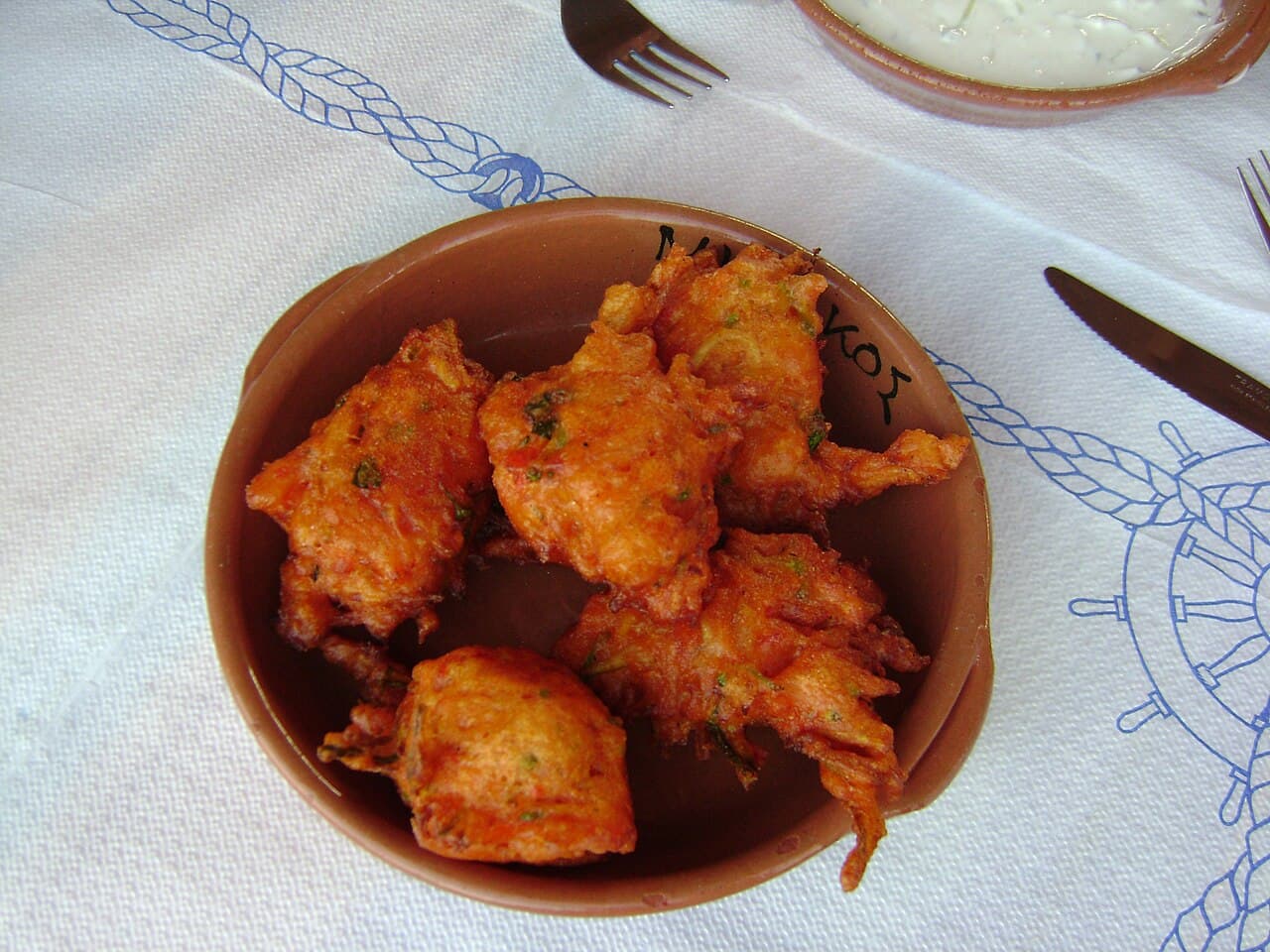
Pitaroudia
Chickpea fritters with onion, tomato and plenty of mint, crisp outside and creamy in; the island’s definitive meze and a vegetarian staple on every taverna menu.
 AnthiA · CC BY-SA 4.0 via Wikimedia Commons
Melekouni
The Rhodian celebration sweet: a chewy bar of roasted sesame and local thyme honey scented with orange and spices, handed out at weddings and baptisms and sold at bakeries to take home.
Kamilakia
Rhodes’ rarest dolmades: tiny parcels rolled in cyclamen leaves rather than vine leaves, simmered and finished with egg-lemon sauce; a village dish worth ordering wherever it appears.
Karavoli
Land snails, a Rhodian countryside tradition, stewed with bulgur or cumin; look for them at inland village tavernas rather than the tourist strips.
Chicken with loukoumia
Slow-cooked chicken over loukoumia, the island’s handmade pasta; Sunday-table food from the farming villages of the interior.
Moschopougia
Sweet fried or baked pastry purses filled with nuts and honey; the Old Town’s bakeries and festival tables keep the tradition alive.
Souma and Embonas wine
Souma is the island’s clear grape-pomace spirit, poured as a welcome in the villages; Embonas, on the slopes of Mount Attavyros, grows the Athiri whites and Amorgiano reds that fill local carafes.
Lunch runs late and dinner rarely starts before 21:00 in summer; tavernas often send a complimentary fruit plate or souma with the bill. In Rhodes Town, locals eat in the New Town and the villages; the Old Town’s best tables are worth seeking out among the tourist menus.
Where to eat
Mavrikos
institutionOn Lindos’ main square since 1933 and in the family since 1912: slow-cooked Rhodian and Mediterranean cooking that has earned decades of awards, from chickpea puree with orange to lamb with kumquat. Book dinner in season.
Last researched 2026-08-05
 thor hestnes · CC BY-SA 2.0 via Wikimedia Commons
Nea Agora (New Market)
marketThe Italian-built heptagonal market hall at Mandraki harbor, closed since November 2025 for a full restoration: the shops and food counters are due back around the 2027 season, with handover planned for April 2027. Worth a look at the facade from the harbor; check locally whether the courtyard has reopened.
Last researched 2026-08-05
Marco Polo Café
fine-diningThe garden restaurant of a restored Ottoman mansion deep in the Old Town lanes: candlelit tables under bougainvillea and a daily menu of creative Greek and Mediterranean cooking. One of the island’s most atmospheric dinners; reserve in season.
Last researched 2026-08-05
Sunrises
 George Alex · Pexels
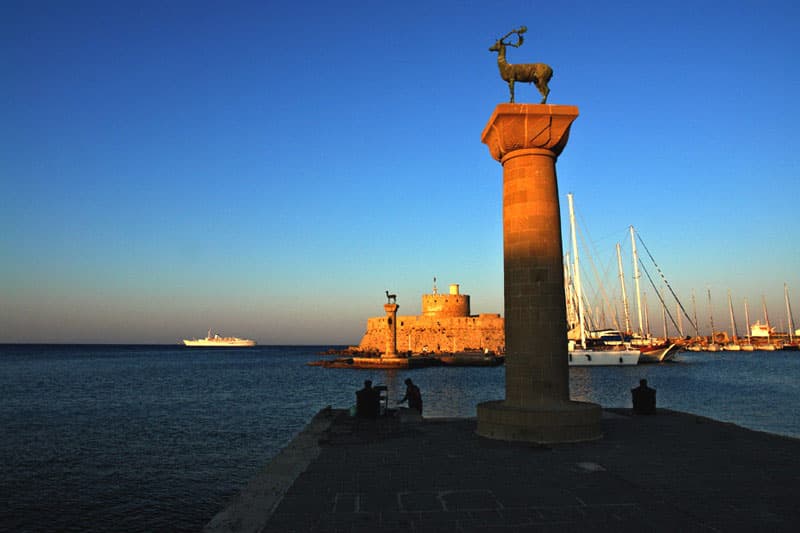
Mandraki harbor and the deer columns
First light comes up over the harbor mouth where the bronze deer Elafos and Elafina top the columns legend assigns to the Colossus, with the three windmills and the fort of St Nicholas behind; the Old Town walls glow minutes later.
Year-round
 dronepicr · CC BY 2.0 via Wikimedia Commons
Tsambika beach
The east-facing sweep of golden sand catches the sun rising straight out of the Aegean, with the monastery cliff in silhouette above; in summer you will share it only with the first swimmers.
May to October · The beach road drops steeply from the main road; the sand is empty before the sunbed crews arrive.
Sunsets
 Sanshiro KUBOTA from London, UK · CC BY 2.0 via Wikimedia Commons
Monolithos Castle
The Knights’ eyrie on a 236-meter crag above the southwest coast: a short pine-shaded climb to broken walls and a chapel, with the sun dropping into the sea beyond the islets. The west coast’s definitive sunset, and rarely crowded.
Year-round · Free entry via a stone path from the roadside; sturdy shoes help on the polished rock.
 Magdalena Siudy (Freta) · CC BY-SA 3.0 via Wikimedia Commons
Filerimos Cross
The Golgotha path ends at the great cross with the whole northern island below: Ialysos, the airport coast and the sun sinking toward the Turkish mountains. Peacocks call from the cypresses as the light goes.
Year-round · Time the visit for the site’s last open hour and check closing time on the day; the drive up is 15 minutes from Ialysos. · The cross reads best in silhouette from the path’s final bend.
 Plamen Matanski, Flikr · CC BY 3.0 via Wikimedia Commons
Ixia seafront
The west-facing hotel strip is the easy sunset near town: the sun sets over the strait toward Turkey while windsurfers carve the last of the meltemi. Any seafront bar stool works.
April to October
Day trips
 Tomasz · Pexels
Symi
The Dodecanese’s prettiest harbor, an amphitheater of ochre and terracotta neoclassical mansions an hour from Rhodes by catamaran. Climb the Kali Strata steps, swim at Nos or Agios Nikolaos, eat the tiny Symi shrimp, and be back on deck by late afternoon; some boats add the Panormitis monastery.
About 50 to 75 minutes each way by catamaran from Rhodes commercial harbor · Full day
 Vvlasenko · CC BY-SA 3.0 via Wikimedia Commons
The wild south loop: Prasonisi, Monolithos and Embonas
A full driving day around the island’s empty half: the kite-and-windsurf sandspit at Prasonisi, lunch in Gennadi or Kattavia, the castle crag of Monolithos for the late afternoon, and a tasting stop in Embonas wine village under Mount Attavyros on the way back.
About 90 minutes from Rhodes Town to Prasonisi; a 4 to 5 hour loop of driving in total · Full day
 Ivan Dražić · Pexels
West coast antiquity: Filerimos, the Butterflies and Kamiros
The compact western triangle: the monastery hill and cross of Filerimos, the shaded gorge of the Valley of the Butterflies in moth season, and the excavated Hellenistic town of Ancient Kamiros above the sea, all within 40 minutes of Rhodes Town.
About 20 to 40 minutes between stops by car from Rhodes Town · Half to full day
After dark
The Old Town after the ships leave
walkFrom about 19:00 the lanes empty of day groups: walk the Street of the Knights in the low light, circle the floodlit palace, and drift the Jewish Quarter’s quiet squares before a courtyard dinner.
 Anderson · Pexels
Lindos rooftops at dusk
foodThe village’s restaurants set tables on flat roofs beneath the floodlit acropolis; arrive for the last light on the bay, stay for grilled fish as the cliff turns gold then white.
Daily itinerary
Seven days in Rhodes: the walled city, Symi and the south
Three nights beside the medieval city for the Knights’ town, Kallithea and a Symi day, then a rental car south: Lindos and its acropolis, the quiet deep south, and a west-coast loop of monasteries, moths and ancient streets.
- 1
The medieval city
moderatePalace of the Grand Master at opening (8:00), then down the Street of the Knights before the groups arrive.A courtyard taverna in the Old Town lanes.The Archaeological Museum in the Knights’ hospital, then the Ottoman quarter: Suleiman mosque and the clock tower.The dry moat walk below the ramparts.Marco Polo Café’s garden if you booked, or the Jewish Quarter squares.The floodlit lanes, nightcap near Hippocrates square.No car: everything is inside or beside the walls.Estimate: If a cruise crowd swamps the palace, flip the day: museum first, palace after 17:00.
- 2
Mandraki, Elli and Kallithea
relaxedMandraki harbor, the deer columns and the windmill mole; coffee at a waterfront cafe facing the boats (the Nea Agora market hall behind is closed for restoration until 2027).Souvlaki or a fish taverna in the New Town streets behind the harbor.Taxi or bus to Kallithea Springs for the Italian rotunda and a swim off the rocks, or a lazy beach afternoon at Elli.The seafront toward the aquarium point.New Town neighborhood taverna where the locals eat.A promenade lap of the harbor forts.City buses and taxis; Kallithea is 15 minutes south.Estimate: Anthony Quinn Bay instead of Kallithea if you want a cove swim and do not mind the crowds.
- 3
Symi by catamaran
moderateEarly catamaran from the commercial harbor; coffee on deck as Gialos’ amphitheater of mansions opens up.Symi shrimp at the waterfront.The Kali Strata climb to Chorio, then a swim at Nos or a taxi-boat cove.Sail back with the light behind you.Simple and early near your hotel.Rest; tomorrow the road trip begins.Book the catamaran a day or two ahead in July and August; the crossing runs about an hour each way.Estimate: Boats via Panormitis monastery add the Dodecanese’s great pilgrimage church to the day.
- 4
South to Lindos
moderateCollect the rental car, drive the east coast: Seven Springs’ plane-tree shade, then Tsambika beach for the first swim.Beach taverna at Tsambika or Stegna.Check in near Lindos; St Paul’s Bay for the protected-horseshoe swim.The Krana viewpoint over the village and acropolis.A Lindos rooftop under the floodlit rock.The village lanes once the day-trippers are gone.About 55 minutes of driving Rhodes Town to Lindos on the east coast road, plus stops.Estimate: Climb the 300 steps to Tsambika monastery for the coast panorama if legs allow.
- 5
The acropolis and the bays
relaxedAcropolis of Lindos at 8:00 sharp: the stoa, the temple of Athena and St Paul’s Bay from the walls, before the heat and the queue.Long Mavrikos lunch on the square.Beach hours at Vlycha or Lindos main beach; siesta like everyone else.Swim-up-bar hour or the rooftop again.Grilled fish in the village.Slow. This is the holiday day.Cars stay in the lots above the village; everything else is on foot and steps.Estimate: Skip the donkey rides up the acropolis path; the walk is 10 minutes and kinder.
- 6
The wild south
fullDrive south past Gennadi’s long beach to Prasonisi: watch the kites work two seas off one sandspit, or book a lesson.Kattavia or Gennadi village taverna.Cross to the west coast: the castle crag of Monolithos and its chapel.From Monolithos’ walls into the open sea.Back near Lindos, or early in Gennadi on the way.Stars; the south has no light pollution to speak of.A 4 to 5 hour driving loop in total; fuel up in Gennadi, stations thin out south of it.Estimate: Windless day? Swap Prasonisi for more Monolithos-area coves and the Embonas wineries earlier.
- 7
West coast antiquity and departure
moderateDrive the spine road north via Embonas for a quick tasting stop, then Ancient Kamiros’ silent Hellenistic streets.Light lunch near Kamiros or the airport coast.Filerimos hill and the cross if time allows, then return the car at Diagoras airport.Departure.Lindos to the airport via the west coast is about 1.5 to 2 hours with stops; the direct east road takes under an hour if the flight is early.Estimate: Moth season (June to September): squeeze the Valley of the Butterflies between Kamiros and the airport.
Getting around
- Rhodes Diagoras Airport (RHO), about 14 km southwest of Rhodes Town near Paradisi, is one of Greece’s busiest holiday gateways with dense seasonal European connections; the public bus into town takes about 30 to 40 minutes.
- Ferries link Rhodes’ commercial harbor with Piraeus (overnight, via Blue Star Ferries) and the Dodecanese chain; Dodekanisos Seaways catamarans connect Symi, Kos, Patmos and the smaller islands.
- Day-excursion boats to Symi and along the east coast leave from the harbors below the Old Town walls.
- Two bus networks share the Nea Agora terminal area on Averof street: KTEL Rodou runs the east side (Faliraki, Tsambika, Lindos, Gennadi, Prasonisi), the RODA city network runs town routes and the west coast including the airport.
- Rhodes Town to Lindos costs 5.50 EUR by KTEL bus and takes about 1.5 hours; the airport bus into town is about 3 EUR. Buy tickets at the kiosk or on board and expect standing room in August.
- A rental car unlocks the south and west; roads are good, but allow real time on the mountain crossings and fuel up before the deep south.
Things worth knowing
- · Arriving at the Lindos acropolis at 11:00 in August: the queue climbs in full sun and cruise groups own the summit. Go at 8:00 or after 16:00.
- · Booking a west-coast beach hotel expecting calm water: the meltemi makes Ixia and Ialysos wind-and-waves coasts; flat-water swimmers belong on the east side.
- · Rolling hard-shell luggage into the Old Town lanes at midnight and discovering cars stop at the gates; pack to carry the last 300 meters.
- · Treating the island as small: Prasonisi is a genuine 90-minute drive from Rhodes Town, not a quick hop.
Budget
| Low | Expected | Comfortable | |
|---|---|---|---|
| Accommodation style / per night | €60≈ $69 | €140≈ $161 | €320≈ $367 |
| Food style / per day | €25≈ $29 | €45≈ $52 | €85≈ $98 |
| Local transport / per day | €6≈ $7 | €30≈ $34 | €60≈ $69 |
| Estimate / per day | €5≈ $6 | €18≈ $21 | €35≈ $40 |
Estimate · EUR · 2026-08-05. Accommodation is per room per night (two sharing), shoulder-season; July and August run sharply higher. Flagship sites now cost 20 EUR each since Greece’s 2025 ticket reform, so budget attractions honestly. Add the climate resilience fee, charged per room per night at up to 15 EUR for five-star hotels in high season, far less in lower categories and winter. · 1 USD = €1 (20 Sep 2026)
Things worth knowing
Frequently asked questions
How many days do you need in Rhodes?
Five to seven. Two or three for Rhodes Town, Kallithea and a Symi day trip, then two or three around Lindos and the south. A full week adds the west-coast sites and a proper beach-only day without rushing.
Where should first-time visitors stay in Rhodes?
Split the stay: first inside or beside the medieval Old Town for the Knights’ city and Symi, then near Lindos or on the Kolymbia-Tsambika coast for beaches and the acropolis. Families favor the calm east-coast sands; windsurfers head west to Ixia or south to Prasonisi.
When is the best time to visit Rhodes?
May, June, September and October. September has the warmest sea; early October still swims and ends with the Medieval Rose Festival in the Old Town. July and August work if you start sightseeing at 8:00 and surrender the middays to the beach.
Do you need a car in Rhodes?
Not for Rhodes Town, Symi or the bus-served Lindos run. For the south (Prasonisi, Monolithos), Embonas wine country and the west-coast sites, yes; rent for the second half of the trip rather than the whole stay if you base in town first.
Is Rhodes still affected by the 2023 wildfires?
Not in any practical sense. The fire ran from the inland Laerma area down to the coast around Lardos, Kiotari and Gennadi; the affected hotels repaired and reopened, the hills are greening, and Rhodes Town, the north and Lindos were never in it. You will only notice young vegetation on the southern drives.
Sources (6)
- Medieval City of Rhodes is a UNESCO World Heritage site (1988) · unesco · 2026-08-05
- Official e-tickets and 2026 pricing for the Palace of the Grand Master, Lindos acropolis and Kamiros · official · 2026-08-05
- Archaeological Museum of Rhodes visiting information from the Ministry of Culture museums directorate · official · 2026-08-05
- KTEL Rodou east-coast bus routes, fares and timetables · transport-operator · 2026-08-05
- Medieval Rose Festival of Rhodes 2026 program, 10 to 12 October in the Old Town · official · 2026-08-05
- Municipality of Rhodes visitor information for town sites and Filerimos · government · 2026-08-05