Greece · Crete
Crete
Base a few nights in or near Chania Old Town for the Venetian harbour and access to Samaria Gorge, move to Rethymno or Heraklion for Knossos and the Archaeological Museum, then finish in the Agios Nikolaos or Elounda area for Spinalonga and a slower pace.
 Olaf Tausch / CC BY-SA 3.0 via Wikimedia Commons
Overview
Crete is Greece’s largest island, big enough to feel like several places: Minoan palaces older than classical Athens, a mountainous spine cut by one of Europe’s longest gorges, Venetian and Ottoman old towns along the north coast, and a quieter south facing the Libyan Sea. It suits travelers happy to drive, who can fit Minoan sites, a gorge hike and beach afternoons into one trip.
If you only take one thing from this guide: do not treat Crete like a small island. It is about 260km from end to end and the interior is mountainous, so picking two or three bases and moving between them beats a single hotel and long round-trip drives every day.
Best for
History and archaeology · Hikers · Road-trippers · Food-focused travelers · Families wanting variety
Daily itinerary
7 to 10 days
Unlike the smaller Cycladic or Ionian islands, Crete is large enough, about 260km from its western to eastern tip, to have distinct regions: Venetian Chania and Rethymno in the west, the Minoan-heavy Heraklion area in the center, and a calmer east around Agios Nikolaos and Elounda. No single base covers it, and the south coast (Sfakia, Plakias, the Libyan Sea beaches) is a different island again.
Best time to visit
May to mid-June and September to early October are the sweet spots: long light, a sea that is still cool in May but warm from June, and thinner crowds at Knossos, Samaria Gorge and the Balos boats than in July and August, when inland temperatures and the south coast get very hot.
- May: Samaria Gorge opens on a date the park authority sets each year once path repairs are done (the rules allow 10 April at the earliest); wildflowers and green hills, sea still cool for swimming.
- June: Excellent all round: warm sea, long days, before the peak-season price and crowd jump.
- July to August: Peak heat, especially inland and on the south coast; start Samaria Gorge when the gates open at 07:00 or save it for a cooler month.
- September: Warmest sea of the year, softening crowds. Often the single best month.
- October: Mild and quiet; Samaria Gorge and most boat trips close toward the end of the month.
Things worth knowing
- Orthodox Easter (spring): island-wide processions and church services, especially atmospheric in Chania and Rethymno old towns.
- The Drosoulites phenomenon at Frangokastello (late May to early June): a rare atmospheric mirage, locally tied to an 1828 battle, visible at dawn under specific weather conditions.
Where to stay
 Kimmo Vainio · Pexels
Chania Old Town and the Venetian Harbour
A Venetian-and-Ottoman old town wrapped around a curved harbour with a working lighthouse and old arsenali (shipyards). The best base for west Crete: walkable lanes, the island’s deepest concentration of good restaurants, and the closest old-town base to Samaria Gorge and the Balos boats.
Best for: First-time visitors · Food · Samaria Gorge access · No car for a night or two
Harbour-front tables are pricier and touristier than lanes two or three streets back; limited and expensive parking.
 Niall Dennehy · Pexels
Rethymno Old Town
A smaller, quieter Venetian old town than Chania’s, with a well-preserved Venetian fortress (Fortezza) on the headland above it and a long sandy town beach right beside the historic center, which neither Chania nor Heraklion has.
Best for: Couples · A calmer old-town base · Beach plus old town in one
Smaller nightlife and restaurant scene than Chania; some streets are narrow enough that cars struggle.
 Gintare K. · Pexels
Heraklion
Crete’s working capital and largest city: less picturesque than the western old towns, but home to the Archaeological Museum and the closest sizeable base to the Palace of Knossos. Best treated as a one-to-two-night culture stop rather than a full-trip base.
Best for: Knossos and the Archaeological Museum · Convenience near the main airport · Fine dining
The city itself is busy and traffic-heavy; the historic core is smaller than Chania’s or Rethymno’s.
 Deror_avi · CC BY-SA 3.0 via Wikimedia Commons
Agios Nikolaos and Elounda
The east’s resort coast around Mirabello Bay: Agios Nikolaos is a pretty harbour town built around the small Lake Voulismeni, while Elounda just north is where Crete’s biggest luxury resorts sit, looking out toward Spinalonga island.
Best for: Luxury resort stays · Spinalonga day trip · A quieter, greener coastline
A long drive from western Crete (over two hours from Chania); this coast is really its own base, not a day trip from the west.
 Bert Christiaens · Pexels
The south coast (Sfakia, Plakias, Agia Galini)
The wilder, less-developed Libyan Sea coast: the mountain villages of the Sfakia region, the exit point for the Samaria Gorge hike at Agia Roumeli, and lower-key beach towns such as Plakias and Agia Galini with none of the north coast’s crowds.
Best for: Value · Escaping the crowds · Samaria Gorge logistics · A slower pace
Reached by narrow mountain roads; many tavernas and small hotels only run roughly April to October.
Where to sleep
Domus Renier
boutique · Chania Old Town, on the Venetian Harbour
Best for: Couples · A historic stay on the harbour · No car
- A restored Venetian noble residence directly on the Old Harbour
- Ten individually designed rooms and suites with high, Cretan-Renaissance-inspired ceilings
- Recognized as a Historic Hotels Worldwide property
- No pool
- Historic building means stairs rather than an elevator in most room categories
- Small property, books out early in shoulder season
Veneto Boutique Hotel
boutique · Rethymno Old Town
Best for: Couples · Old-town base · A destination restaurant on site
- A 15th-century former monastery building in the heart of the Old Town
- Twelve suites rather than standard rooms
- Veneto Restaurant on site, certified for Cretan cuisine
- No pool
- On-site restaurant runs seasonally (roughly May to October) rather than year-round
- Old-town streets mean no direct vehicle access to the door
Lato Boutique Hotel
boutique · Heraklion, on the Venetian port
Best for: Knossos and the Archaeological Museum · A city base near the main airport · Rooftop views
- Fifty-four rooms, most looking over the Venetian port and the Koules fortress
- Central location within walking distance of the historic center
- A well-regarded Cretan buffet breakfast
- No beach access; this is a city hotel, not a resort
- Urban location means some street noise
- Fewer resort-style amenities (no pool at the property) than the Elounda or Rethymno options
Phāea Blue
luxury · Plaka, Elounda (Agios Nikolaos area)
Best for: Honeymooners · A beachfront base for Spinalonga · A resort base for the east
- On the former Blue Palace site: 47 bungalows and suites looking out toward Spinalonga island, many with private heated pools
- Directly on the beach, with a beach bar and a Greek taverna among its places to eat
- A member of Small Luxury Hotels of the World
- Among the most expensive properties on the island
- The successor to the Blue Palace, and a smaller property than the old resort, so older reviews and maps under that name describe something different
- Over two hours’ drive from Chania and western Crete
Galini Tropika
family · Agia Galini (south coast)
Best for: Value · A quiet south-coast base · Families
- Family-run, seventeen suites directly on the beach beside a small river
- A guests-only pool plus a beach bar and on-site taverna
- Far cheaper than any north-coast resort
- Simple, low-key suites for two or three people, so larger families need two
- A seven-minute flat coastal walk from Agia Galini village rather than in the center
- A car is needed to reach Knossos, Chania or the Samaria Gorge trailheads
Essential experiences
 Marc Ryckaert (MJJR) · CC BY 3.0 via Wikimedia Commons
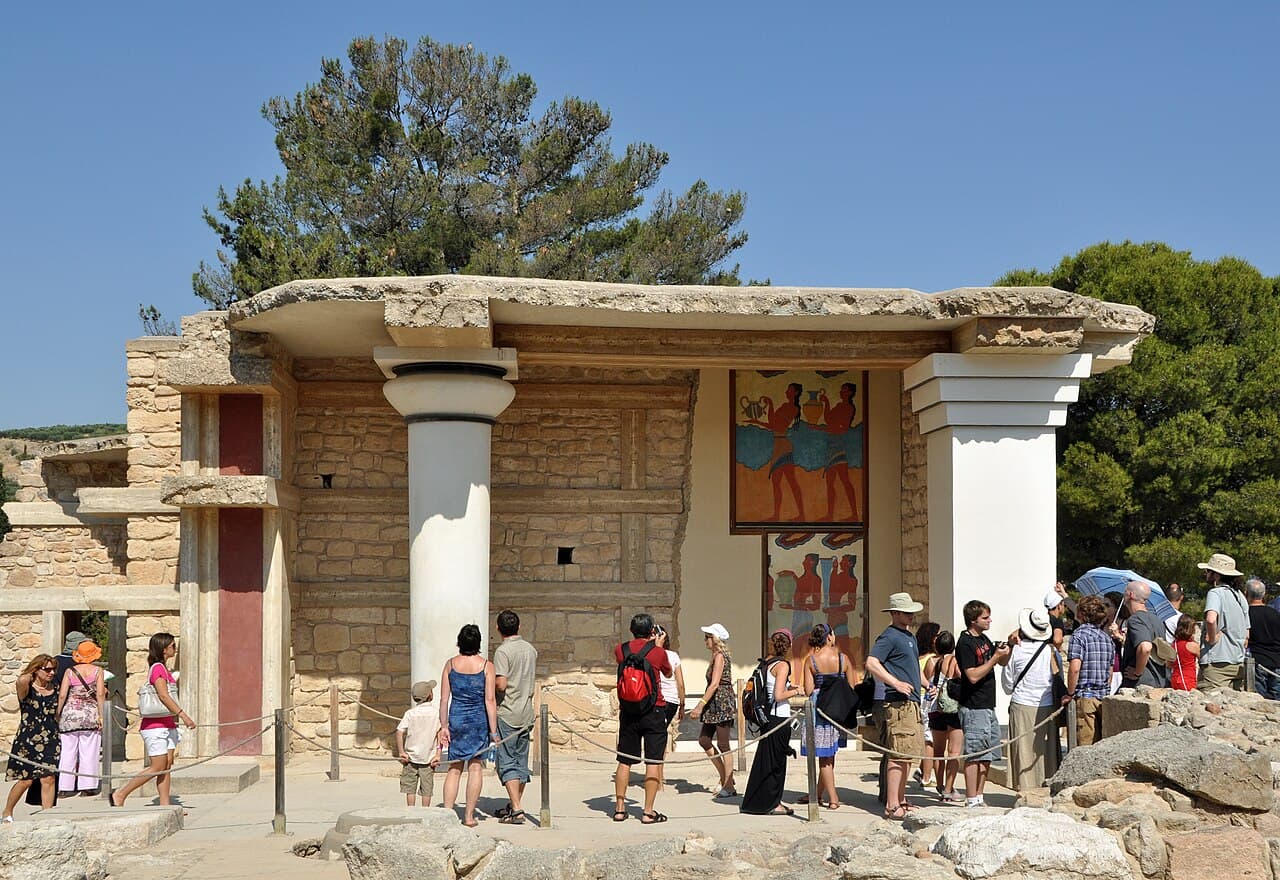
Palace of Knossos
The largest and best known Minoan palatial complex, excavated and partly reconstructed by Arthur Evans; inscribed by UNESCO in 2025 as part of the serial "Minoan Palatial Centres" World Heritage site. Open daily from 08:00, until 20:00 from April to August and closing earlier through the autumn (19:00 in late September); full ticket 20 euros.
 Lapplaender · CC BY-SA 3.0 de via Wikimedia Commons
Samaria Gorge National Park
A roughly 15km hike through one of Europe’s longest gorges, from Xyloskalo on the Omalos plateau down to the coastal village of Agia Roumeli; a UNESCO Man and the Biosphere reserve, open only in season. Walkers doing the full route must enter between 07:00 and 13:00, and an individual ticket costs 10 euros online or at the entrance.
Samaria National Park tickets and rules (NECCA, official) ↗View on map ↗
 Ввласенко · CC BY-SA 3.0 via Wikimedia Commons
Chania Old Town and Venetian Harbour
A layered Venetian-and-Ottoman port town: the curved harbour, the Egyptian lighthouse, the domed Yali Tzamisi mosque, and lanes of restored merchant houses now holding restaurants and shops.
 Jebulon · CC0 via Wikimedia Commons
Heraklion Archaeological Museum
One of Greece’s most important museums, holding the world’s foremost collection of Minoan art and artefacts, including finds from Knossos, Phaistos and the other Minoan palatial sites. From April to October it opens 08:00 to 20:00, except Wednesdays, when it opens at 13:00; full ticket 20 euros.
 Claudia Schmalz · Pexels
Elafonisi Beach
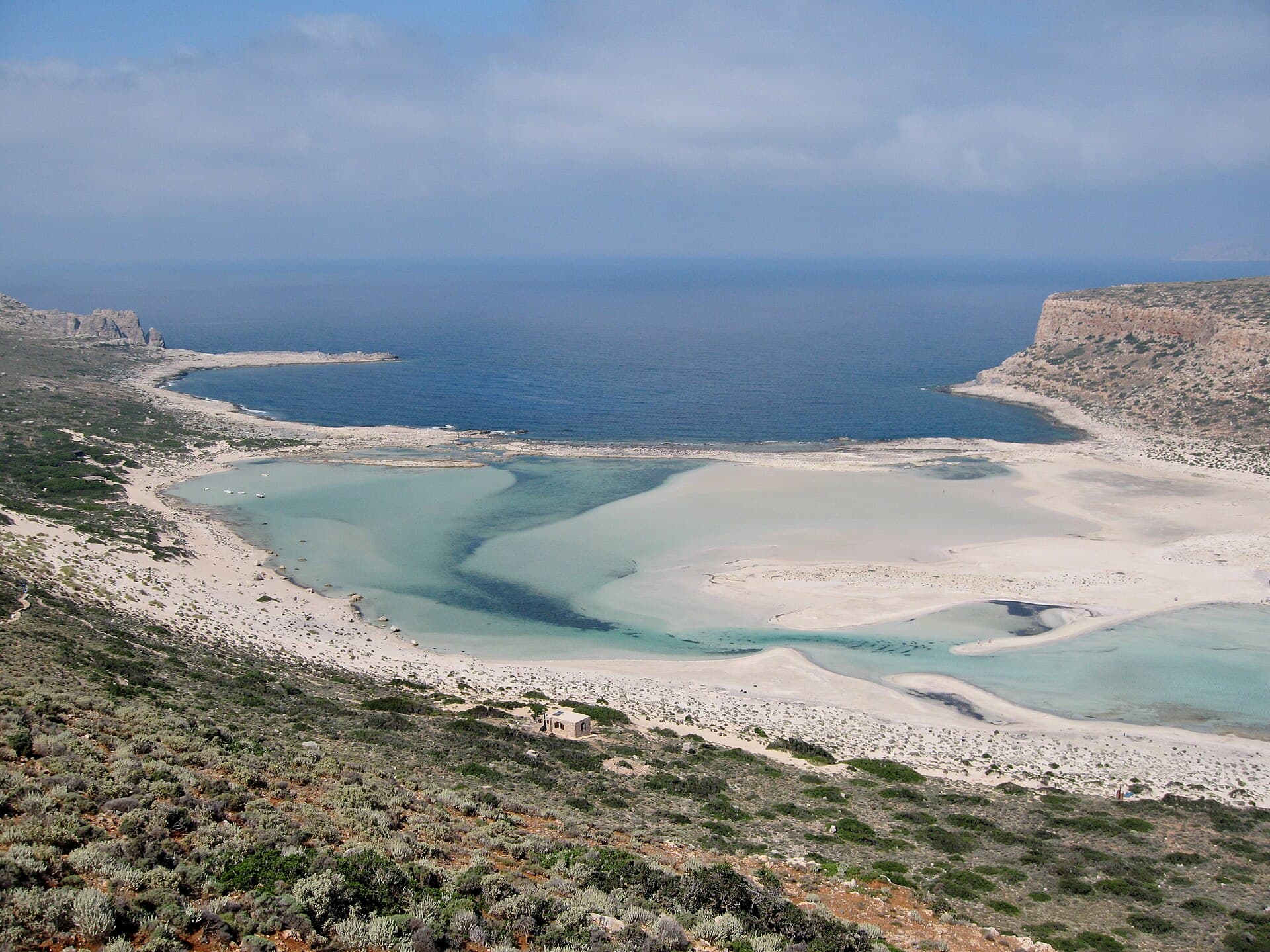
A shallow lagoon and pink-tinged sand beach on a small islet connected to the mainland by a sandbar, at Crete’s southwest tip; a protected Natura 2000 habitat and nesting site for loggerhead sea turtles.
 Fia Marv · Pexels
Balos Lagoon and Gramvousa Island
A turquoise lagoon on the Gramvousa peninsula facing a small island with a 16th-century Venetian fortress; reached by boat from Kissamos, by 4x4 track, or on foot.
 Bruna Santos · Pexels
Spinalonga Island
A small fortified island off Elounda: a Venetian sea fortress later used as a leprosy colony from 1903 to 1957, one of the last in Europe, now a protected archaeological site reached by boat. Open 08:00 to 20:00 daily from April to October; full ticket 20 euros.
 Niall Dennehy · Pexels
Rethymno Old Town and the Fortezza
A well-preserved Venetian old town beside a long town beach, overlooked by the 16th-century Fortezza fortress on the headland above the harbour.
 HG32 / CC BY-SA 3.0 via Wikimedia Commons
 Lapplaender / CC BY-SA 3.0 de via Wikimedia Commons
Food & drink
 Daniela Elena Tentis · Pexels
Dakos
A barley rusk topped with grated ripe tomato, mizithra or feta cheese, olive oil and oregano; the island’s signature meze.
 ULTRA_ IMAGE · Pexels
Kalitsounia
Small pies, savory versions filled with mizithra cheese or wild greens, sweet versions with honey; found in bakeries and village kitchens island-wide.
 Sercan Kaval · Pexels
Tsikoudia (raki)
A grape-pomace spirit distilled locally each autumn; traditionally offered as a welcome and served after meals rather than during them.
 Kemal Can · Pexels
Gamopilafo
A rich pilaf cooked in goat, lamb or poultry broth with local butter and lemon; historically the centerpiece dish of Cretan weddings, especially in the Chania and Rethymno areas.
 Hani Salama · Pexels
Cretan olive oil
Central to the traditional "Cretan diet" studied in the mid-20th-century Seven Countries Study, which linked the island’s high olive-oil intake to unusually low rates of heart disease.
Cretan hospitality often means a complimentary raki and a small sweet arrive unasked at the end of a meal; mezedes are shared family style and dinner tends to run late in summer.
Where to eat
Tamam
institutionHoused in a building by the old harbour that the restaurant says the Venetians built as a public bath around 1400 and the Ottomans later ran as a hammam; open since 1982; Cretan dishes alongside Ottoman-influenced sharing plates.
Last researched 2026-09-14
Peskesi
fine-diningSet in a restored historic mansion in central Heraklion, sourcing much of its produce from its own organic farm; built around forgotten Cretan recipes and ingredients.
Last researched 2026-09-14
Veneto Restaurant
fine-diningThe on-site restaurant of the Veneto Boutique Hotel, in a former 15th-century monastery building; runs seasonally, roughly May to October.
Last researched 2026-09-14
Nikos Fish Tavern
institutionA family fish taverna on Elounda’s village square, running since 1972, sourcing daily catch from local boats.
Last researched 2026-07-15
Sunrises
 Marc Ryckaert (MJJR) · CC BY 3.0 via Wikimedia Commons
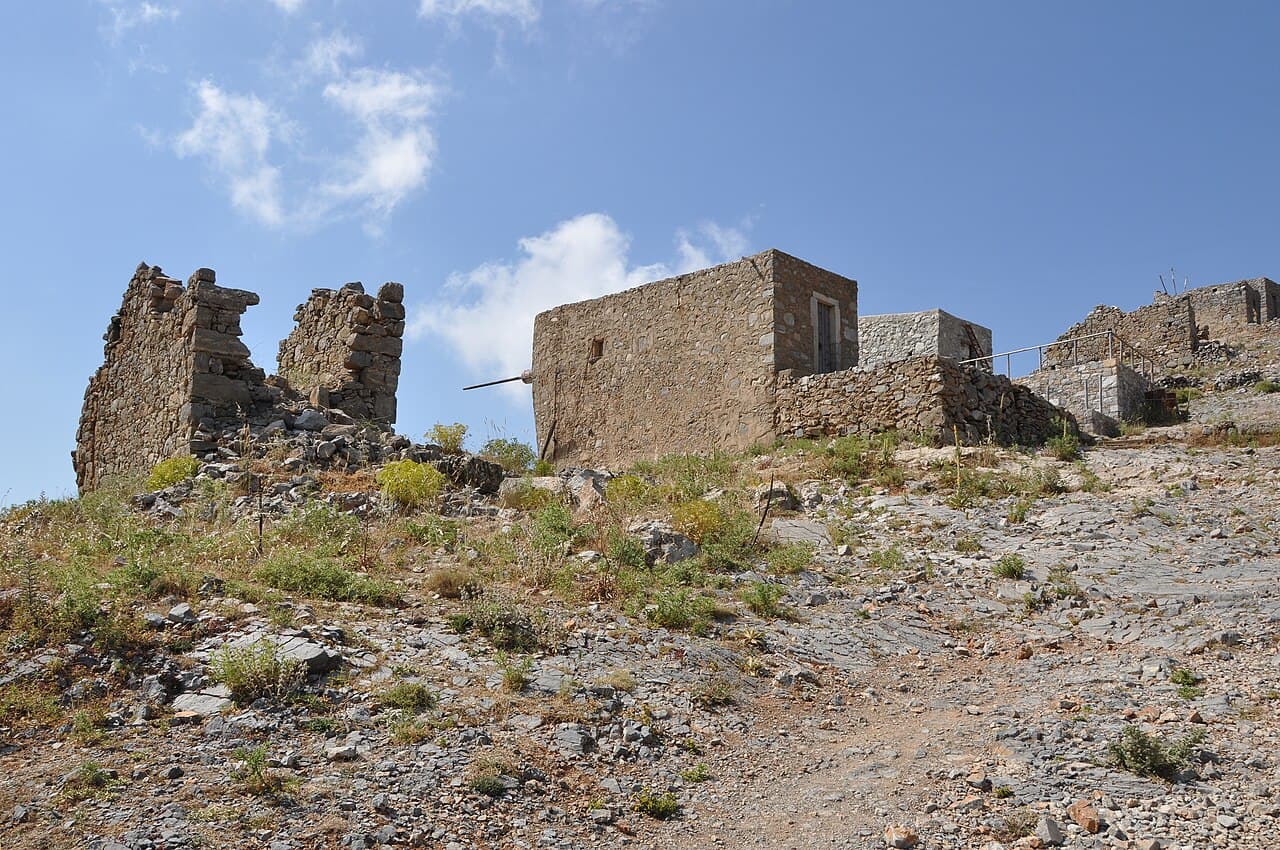
Lasithi Plateau windmills
A high mountain plateau in the east dotted with the remains of thousands of white-sailed irrigation windmills, quiet and cool at first light before the day’s heat and traffic arrive.
April to October
 Lourakis · CC BY-SA 3.0 via Wikimedia Commons
Frangokastello plain, south coast
The flat coastal plain below the Venetian fort at Frangokastello looks south over the Libyan Sea. Roughly between the autumn and spring equinoxes the sun rises south of east, toward the sea, though the local headlands decide exactly when it clears the water; the rest of the year it comes up further north, over the coast. Locally known, under rare atmospheric conditions in late May, for the "Drosoulites" mirage at dawn.
Year-round for the sunrise itself; the mirage is reported only in specific weather, typically late May to early June
Sunsets
 Pavel Špindler · CC BY 3.0 via Wikimedia Commons
Falassarna Beach
A wide west-facing sand beach on Crete’s far western coast with an open sea horizon; the sun sets around 20:40 in late June and about 19:35 in mid-September.
April to October · About an hour’s drive from Chania; several beach bars close by early October.
 Francesco Ungaro · Pexels
Gramvousa and Balos at dusk
The Balos and Gramvousa day cruise heads back to Kissamos in the late afternoon, and for most of the season that is well before sunset. Only in the last week of October, once the clocks go back and the sun sets around 17:30, does the return crossing meet the golden light.
Late October (cruises run daily from April to October) · The full cruise lasts about seven hours from a morning departure; in mid-September the sun sets around 19:35, long after the boat is back, so treat dusk here as a late-season bonus rather than a plan.
 C messier · CC BY-SA 4.0 via Wikimedia Commons
The Fortezza, Rethymno
The walls of the 16th-century Venetian fortress above Rethymno’s old town look west over the sea and the rooftops below, a short walk from the harbour.
Year-round, when the site is still open at sunset · The Fortezza is a ticketed site with set hours, reported to close around 19:15 in the warmer months, while the sun sets after 20:30 in June and July and around 19:30 in mid-September; check the closing time on the day before planning a sunset here.
Day trips
 Katsaridaki · CC BY-SA 4.0 via Wikimedia Commons
Samaria Gorge hike
A full-day, roughly 15km downhill hike through one of Europe’s longest gorges, from Xyloskalo on the Omalos plateau to the coastal village of Agia Roumeli, followed by a boat to Chora Sfakion and a bus back. Entry for the full route closes at 13:00.
About 1 hour by bus or car to the Omalos trailhead from Chania · Full day (about 6 to 7 hours of walking)
Samaria National Park tickets and rules (NECCA, official) ↗View on map ↗
 Piotr Baranowski · Pexels
Balos Lagoon and Gramvousa boat trip
A boat excursion from the port of Kissamos to Gramvousa island and its Venetian fortress, then on to swim in the shallow, turquoise Balos lagoon.
About 1 hour by boat from Kissamos to Gramvousa · Full day (the cruise lasts about 7 hours)
 GEORGE DESIPRIS · Pexels
Spinalonga Island boat trip
A short boat crossing from Elounda, Plaka or Agios Nikolaos to the fortified island of Spinalonga, a former Venetian sea fortress and, until 1957, a leprosy colony.
About 5 minutes by boat from Plaka, 10 from Elounda or 35 from Agios Nikolaos · Half day
After dark
 Tango7174 · CC BY-SA 4.0 via Wikimedia Commons
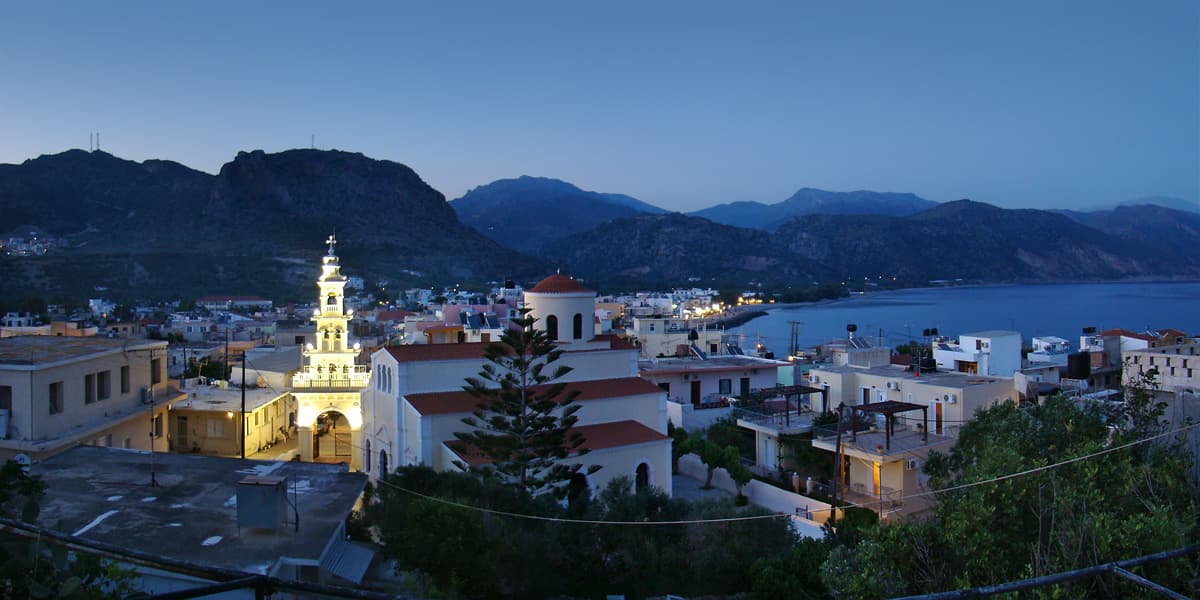
Evening promenade around Chania’s Venetian Harbour
walkOnce the day-trip crowds thin out, walk the curve of the harbour to the lit lighthouse; it costs nothing.
 Petro Stelte · CC BY-SA 4.0 via Wikimedia Commons
Sunset dinner at the Fortezza or on Elounda’s waterfront
foodWalk the Fortezza in the late afternoon while it is open, then watch the sun go down from the seafront below its western walls, or take the evening light over Elounda’s bay, and go on to dinner.
Daily itinerary
Seven days in Crete: Minoan history, the gorge, and two coasts
Three nights based in or near Chania for the old town and Samaria Gorge, a night in Rethymno, a night in Heraklion for Knossos and the museum, and a final night toward Agios Nikolaos or Elounda.
- 1
Arrive in Chania
relaxedArrive at Chania Airport or by ferry into Souda; settle into the Old Town.A meze lunch near the harbour, a street or two back from the water.Wander the Venetian Harbour, the lighthouse and the old Ottoman quarter.The harbour lighthouse walk as the lamps come on.Cretan and Ottoman-influenced dishes at Tamam.An easy first night after travel.No car needed yet; the Old Town is walkable from most central hotels.Estimate: If arriving late, rest instead and save the harbour walk for the evening of day 3, back in Chania after the Balos boat.
- 2
Samaria Gorge
fullVery early KTEL bus or transfer to Xyloskalo on the Omalos plateau; the gates open at 07:00 and entry for the full route closes at 13:00.A packed lunch eaten on the trail, or a simple meal in Agia Roumeli after finishing.Finish the descent into Agia Roumeli; boat to Chora Sfakion.From the bus back to Chania; the return bus is timed to meet the boat, so there is no stop in Chora Sfakion unless you stay the night there.A quiet dinner back in Chania; an early night after a long hike.Rest; this is the trip’s most physically demanding day.No car needed; the gorge transfer, boat and return bus are all organized separately or as a package.Estimate: Skip the full 15km hike and walk in from the Agia Roumeli end instead if mobility or time is limited; the first 2km from that entrance also stay open to walkers from 13:00 to 16:00.
- 3
Balos Lagoon and Gramvousa
moderateCollect the rental car; drive to Kissamos for the Balos Lagoon and Gramvousa boat trip.Breakfast in Chania before the drive; lunch on the boat or in the lagoon, and a taverna in Kissamos after the cruise.Swim at Balos lagoon; explore the Gramvousa fortress ruins.The boat is back in Kissamos well before sunset for most of the season; Falassarna, on the west coast near Kissamos, is the nearest open-sea sunset.Dinner back in Chania.Pack for the move east tomorrow.Rental car from today for the rest of the trip; the boat itself is organized separately.Estimate: Swap Balos for Elafonisi Beach if a swim matters more than the boat and fortress.
- 4
Move to Rethymno
relaxedDrive from Chania to Rethymno (about an hour); check in and settle into the Old Town.A taverna near the old harbour.Walk the Fortezza fortress and the Venetian old town lanes.From the seafront below the Fortezza’s western walls; the fortress itself is reported to close before sunset for most of the season, so walk it in the afternoon.Dinner at Veneto Restaurant or a nearby old-town taverna.A stroll along the town beach promenade.Short, easy drive; park once and walk the old town.Estimate: Add a stop at the Arkadi Monastery en route if history is a priority.
- 5
Move to Heraklion via Knossos
moderateDrive to Heraklion (about an hour); stop at the Palace of Knossos on the way in.A taverna near Knossos or in central Heraklion.The Heraklion Archaeological Museum, ideally right after Knossos while the site is fresh.The Venetian harbour and the Koules fortress.Cretan fine dining at Peskesi.A walk along the harbourfront.Knossos lies just south of Heraklion, a short detour off the coast road and about 15 minutes by car from the centre; allow time for parking before the city.Estimate: Swap the museum to the morning and Knossos to the afternoon if the site is less crowded then, but not on a Wednesday, when the museum opens only at 13:00.
- 6
East to Agios Nikolaos and Elounda
fullDrive east to Agios Nikolaos (about an hour); walk around Lake Voulismeni and the harbour.A lakeside taverna in Agios Nikolaos.Continue to Elounda; boat trip to Spinalonga island.Evening light over the bay from Elounda’s waterfront, looking toward Spinalonga; the sun itself sets behind the hills to the west.Fresh fish at Nikos Fish Tavern in Elounda.A quiet resort evening.Car for the drive east; the Spinalonga crossing itself is a short organized boat trip.Estimate: Skip Agios Nikolaos town and go straight to Elounda if time is short; Spinalonga is the priority stop.
- 7
Lasithi Plateau and departure
moderateDrive up from Elounda to the Lasithi Plateau for the windmills (a little over an hour), if the flight out of Heraklion leaves in the evening, around 19:00 or later.A mountain-village taverna on the plateau.Drive down to Heraklion Airport, about an hour from the plateau, and fly out from there rather than Chania.Departure.Around two to two and a half hours of driving in all; build in extra time for the mountain roads and airport traffic, and return the rental car at Heraklion.Estimate: Skip the plateau and use the morning for a last swim near Elounda if the flight leaves early; Heraklion Airport is about an hour’s drive from Elounda.
Getting around
- Chania International Airport (CHQ), near Souda Bay, about 14km from Chania Old Town, mainly serves the west of the island. In mid-September 2026 Blue Bird was flying it direct from Tel Aviv.
- Heraklion International Airport (HER), near the north coast, is Crete’s busiest airport and the closest to Knossos and the center of the island. In mid-September 2026 the Israel Airports Authority board listed direct Tel Aviv flights to Heraklion under Arkia, Israir, El Al, Blue Bird and Aegean flight numbers; check each airline’s season before booking.
- ANEK Lines ferries connect Piraeus (Athens) with Souda, the port of Chania, usually overnight, in around 9 hours.
- Minoan Lines ferries connect Piraeus with Heraklion, also usually overnight, and the company also runs a Heraklion to Milos route.
- KTEL green buses connect the main towns and run the seasonal Samaria Gorge transfers.
- A rental car is close to essential for a multi-region trip; Crete is around 260km east to west and the interior is mountainous.
- Taxis and app-based rides operate in and around Chania, Rethymno and Heraklion.
Things worth knowing
- · Underestimating Crete’s size and trying to see the whole island from one base in under a week.
- · Starting the Samaria Gorge hike too late in the day, especially in July and August heat.
- · Not booking the Balos boat or Samaria Gorge tickets and transfers ahead in peak season.
- · Flying into Chania but building an itinerary centered on Agios Nikolaos or Elounda, a two-plus-hour drive away.
Budget
| Low | Expected | Comfortable | |
|---|---|---|---|
| Accommodation style / per night | €55≈ $62 | €130≈ $146 | €320≈ $358 |
| Food style / per day | €25≈ $28 | €45≈ $50 | €90≈ $101 |
| Local transport / per day | €12≈ $13 | €40≈ $45 | €70≈ $78 |
| Estimate / per day | €5≈ $6 | €18≈ $20 | €40≈ $45 |
Estimate · EUR · 2026-07-15. Accommodation is per room per night (two sharing); Elounda-area luxury resorts routinely exceed the "comfortable" figure in July and August. Local transport "expected" assumes a rental car for most of the trip, reflecting Crete’s size. Shoulder-season figures overall. Knossos, the Heraklion Archaeological Museum and Spinalonga each cost 20 euros at full price in 2026, and the Samaria Gorge ticket is 10. · 1 USD = €1 (14 Oct 2026)
Things worth knowing
Frequently asked questions
How many days do you need in Crete?
Seven to ten days is realistic given the island’s size. Seven covers Chania, the Samaria Gorge, Knossos and one east-coast stop without excessive driving; ten adds more beach time or a second south-coast stay.
What is the best area to stay in Crete for the first time?
Split the trip: Chania Old Town for the west and Samaria Gorge access, then Heraklion or Rethymno for Knossos and the Archaeological Museum, then Agios Nikolaos or Elounda if time allows for the east.
When is the best time to visit Crete?
May to mid-June and September to early October: long light and noticeably thinner crowds than July and August, when inland and south-coast heat is intense. The sea is still cool for swimming in May and warm from June.
Do you need a car in Crete?
Effectively yes for anywhere beyond a single old town. Crete is around 260km long, and Knossos, Samaria Gorge, Balos, Elafonisi and Spinalonga are all reached by road or organized transfer rather than on foot from a single base.
Is the Palace of Knossos worth visiting?
Yes: it is the largest and best known Minoan palatial site, inscribed by UNESCO in 2025 alongside five other Cretan palaces, and pairs directly with the Heraklion Archaeological Museum, which holds the finds from the site.
Sources (9)
- Crete overview, regions, attractions and practical information · tourism-board · 2026-07-15
- Knossos and five other Cretan palatial sites inscribed on the UNESCO World Heritage List in 2025 as "Minoan Palatial Centres" · unesco · 2026-07-15
- Samaria National Park rules from NECCA, the current park authority (samaria.gr is the former body’s archived site): season, entry hours, route length and ticket prices · national-park · 2026-09-14
- Heraklion Archaeological Museum hours (Wednesday opening at 13:00 from April to October) and ticket prices · government · 2026-09-14
- Knossos opening hours by season (08:00 to 20:00 from April to August, closing earlier from September) and full ticket 20 euros · government · 2026-09-14
- Spinalonga: open 08:00 to 20:00 daily from April to October, full ticket 20 euros; boat about 5 minutes from Plaka, 10 from Elounda, 35 from Agios Nikolaos · government · 2026-09-14
- Balos and Gramvousa cruise from Kissamos: daily from April to October, about 7 hours, 40 to 45 euros for adults in 2026 plus a 1 euro municipal fee · transport-operator · 2026-09-14
- Israeli government travel-warnings dataset, National Security Council record for Greece: escalating hostility toward Israelis and Jews, including harassment, threats, incitement, vandalism and sometimes physical attacks; occasional threat level 2, heightened precautions recommended · government · 2026-09-14
- Israel Airports Authority flight board, 13 to 17 September 2026: Tel Aviv to Heraklion on Arkia, Israir, El Al, Blue Bird and Aegean; Tel Aviv to Chania on Blue Bird · airport · 2026-09-14