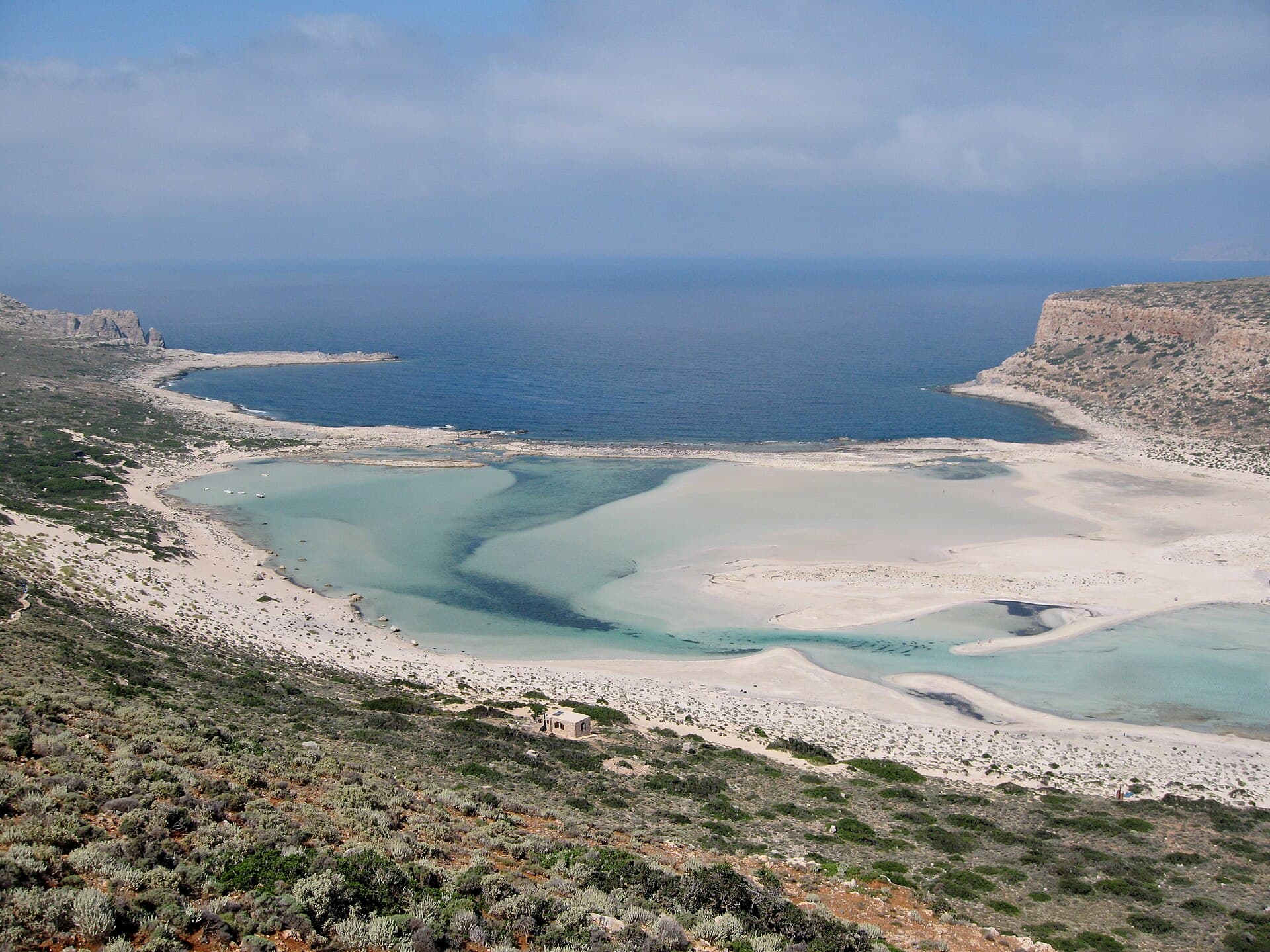
Malta · Malta, Gozo and Comino
Malta
Book the Hypogeum first, as early as you can, because only ten people go down at a time. Spend two days in Valletta: St John’s Co-Cathedral for the Caravaggios, the Grand Master’s Palace, the Upper Barrakka Gardens for the noon gun and the harbour view, and the ferry across to Birgu and the Three Cities. Give a day to Mdina and Rabat, with the catacombs where Jewish tombs carry menorahs, and end it on the high edge of the Dingli Cliffs, where the sun sets into open sea from March to early October. Give a day to the south: the Marsaxlokk fishing harbour, the temples of Hagar Qim and Mnajdra, and a swim at St Peter’s Pool. Then take the ferry to Gozo for the Citadel, the Ggantija temples and the sunset at Dwejra. Book the free Blue Lagoon pass before any Comino boat.
 MrPanyGoff / CC BY-SA 3.0 via Wikimedia Commons
Overview
Malta is three small islands in the middle of the Mediterranean, about 80 kilometres south of Sicily, and more history per square kilometre than anywhere else we have planned. The megalithic temples of Ggantija, Hagar Qim and Mnajdra were built before Stonehenge and the pyramids of Giza; the Hal Saflieni Hypogeum is a three-level underground burial complex cut into the rock between about 4000 and 1500 BC and now open to ten people at a time. Valletta, the capital, is a fortress city of 1566 laid out by the Knights of St John after the Great Siege, with two Caravaggios in its cathedral and a harbour that took more bombs in the Second World War than almost any place on earth. English is an official language, the currency is the euro, and the islands are small enough to cross in an hour. They are also busy: 4,022,310 tourists came in 2025, 12.9 percent more than the year before, on an archipelago of about 316 square kilometres. For an Israeli reader Malta has a Jewish story too, from menorahs carved in the Roman catacombs of Rabat to the Kabbalist Abraham Abulafia writing on Comino in the 1280s and the slave prisons where the Knights held Jewish captives for ransom.
Pick Malta for the history and plan the sea around it, not the other way round. Treat the sunsets with the same care. We computed them from terrain data against NOAA sun positions for every day of 2026, and the islands’ best-known waterfronts mostly face the wrong way. Sliema, St Julian’s and Valletta’s Upper Barrakka are sunrise balconies: from the Upper Barrakka the sun comes up out of open sea beyond the harbour mouth from 10 February to 1 November, and from Tigne Point in Sliema on every day of the year. For the sunset go west. Dwejra on Gozo has open sea under the sun all year round. The high edge of the Dingli Cliffs, about 250 metres up and a couple of hundred metres north-west of the Magdalene chapel, has it from 7 March to 6 October, about three minutes after the almanac time because the sea horizon drops away at that height; stand by the chapel instead and the cliff top takes it up to 26 minutes early in June. Ghajn Tuffieha has a sea sunset from 21 February to 20 October, while Golden Bay next door loses the summer sunset behind its northern headland, up to 13 minutes early in June. And several famous bays are sunset traps: Xlendi on Gozo loses the sun 61 to 97 minutes before the almanac every day, the Blue Grotto 14 minutes to more than two hours, Spinola Bay about 15 to 20. These figures are good to about a minute and depend on where you stand, which is exactly why they are worth knowing.
Best for
History and archaeology · Couples · Families with older children · Divers and swimmers · A first Mediterranean trip in English · Food travellers on a budget
Daily itinerary
6 to 9 days
Most Mediterranean islands sell a beach and a sunset. Malta sells seven thousand years of building, and its beaches are mostly rock ledges and a handful of sandy bays. The second difference is the geometry, which the brochures get wrong. Malta faces east: Valletta, Sliema and St Julian’s look out over the eastern sea, which makes them sunrise coasts, not sunset ones, and we computed the sun against the terrain for every day of 2026 to find where the sunset really goes into the water. The answer is the west and the cliffs: Dwejra on Gozo gets an open-sea sunset on every day of the year, the high edge of the Dingli Cliffs from early March to early October, and Ghajn Tuffieha beach from late February to late October. Several famous names do not: Xlendi Bay loses the sun an hour or more early all year, and the Blue Grotto anywhere from a quarter of an hour to more than two hours.
Best time to visit
Malta is hot and dry in summer and mild and wet in winter. The Luqa airport averages for 1991 to 2020 give a daily high of 28.7C in June, 31.7C in July, 32.0C in August and 28.6C in September, and almost no rain from May to August: 0.2 mm in July. The rain comes back with the autumn storms, 60.7 mm in September and around 80 mm or more a month from October to January, but even December has about five hours of sun a day. The sea follows the air with a lag: about 21C in June, 25.8C in August, 25.2C in September and 23.2C in October, and under 16C from February to April. For swimming, late August to mid-October is the best window. For the temples, the cities and walking the cliffs, April, May and October to early November are better, because there is little shade and summer afternoons are fierce.
- January to February: The quietest and wettest weeks, highs near 16C and a sea at 15C. From 1 to 18 January the sun sets into open sea from the Magdalene chapel on the Dingli Cliffs; from the high edge it grazes the cliff top, within half a minute of the almanac. Carnival in Valletta and Nadur on Gozo, 5 to 9 February 2027, and the St Paul’s Shipwreck holiday on 10 February.
- March to April: Spring flowers on the cliffs and the best walking. The equinox is when the rising sun is aligned with the doorway of the South temple at Mnajdra; by our terrain model the direct sun reaches the site about 20 minutes after the almanac sunrise. The Malta International Fireworks Festival ran on 18, 20, 25 and 30 April in 2026 over the Grand Harbour; the 2027 dates were not out when we checked.
- May to June: Warm and dry, sea around 17C to 21C. Mnarja, the old harvest feast, on 29 June, with the traditional rabbit feasts around Buskett. From 12 April to 30 August the headland at Anchor Bay takes the sunset, up to 38 minutes early in June, while Ghajn Tuffieha and Dwejra keep an open-sea horizon.
- July to August: Hot, very dry and full. Festa weekends in the villages, Santa Marija on 15 August, the lampuki season opening on the same day. Go out early and swim in the afternoon, and book the Blue Lagoon slot before the boat.
- September to October: Our pick. The sea is at its warmest after August, Victory Day on 8 September and Independence Day on 21 September are public holidays, and Notte Bianca lights Valletta on 3 October 2026. From 7 March to 6 October the sun sets into open sea from the high edge of the Dingli Cliffs, about 18:55 on 27 September. Clocks go back on 25 October.
- November to December: The rains arrive, around 90 mm a month, and the sea cools to about 17C by December. From 23 November the sun sets into open sea from the Magdalene chapel on Dingli, while from the high edge it grazes the cliff top, still within half a minute of the almanac. Republic Day on 13 December; Christmas cribs in the village churches.
Things worth knowing
- Notte Bianca, Valletta (Saturday 3 October 2026): the capital’s free night of culture on the first Saturday of October, with palaces, museums and squares open late and performances in the streets.
- Birgufest, Birgu by candlelight (October): the waterfront town lit by candles for a weekend. The official pages still showed the 2024 dates when we checked, so we print no 2026 date: check before planning around it.
- Malta Carnival (5 to 9 February 2027): floats and costumes in Valletta and Floriana, and the wilder, unofficial carnival of Nadur on Gozo.
- Malta International Fireworks Festival (late April): the 2026 edition, the 25th, ran on 18, 20, 25 and 30 April over the Grand Harbour and at Nadur. The 2027 dates had not been announced.
- Mnarja (29 June): the feast of Saints Peter and Paul, a public holiday, centred on the Buskett woods below Rabat and Mdina, where the fenkata, the communal rabbit meal, is the tradition.
- Village festas (roughly June to September): each parish celebrates its patron saint with street decorations, brass bands, fireworks and a procession, with Santa Marija on 15 August the biggest day across the islands and on Gozo.
- Malta Marathon (Sunday 28 February 2027).
Where to stay
 Wikimedia Commons · Copyrighted free use via Wikimedia Commons
Valletta
The fortress capital on its peninsula between the Grand Harbour and Marsamxett, built by the Knights after the Great Siege of 1565 and a UNESCO World Heritage site. The main streets run along the ridge, Republic Street and Merchants Street, with the Co-Cathedral, the Grand Master’s Palace and the Upper Barrakka Gardens a few minutes apart, and the side streets drop in steps to the harbours on either side. The boutique hotels are in its palazzi, and the evenings are in Strait Street, the old sailors’ lane now lined with wine bars. From here the ferries cross to Sliema and to the Three Cities, and the fast ferry leaves for Gozo.
Best for: History on foot · Couples · Boutique palazzo hotels · A first stay without a car
Steep, stepped side streets, crowded with cruise passengers on port days, and no beach. Driving in is charged by camera and parking is scarce: do not bring a car. Valletta faces the harbours, not the sunset: from the Upper Barrakka the sun sets behind the land 3 to 19 minutes early, but it rises out of open sea from 10 February to 1 November.
 Frank Vincentz · CC BY-SA 3.0 via Wikimedia Commons
The Three Cities: Birgu, Senglea and Cospicua
Across the Grand Harbour from Valletta, the older fortified towns where the Knights first settled in 1530 and held out through the Great Siege. Birgu, also called Vittoriosa, has Fort St Angelo at its tip, the Inquisitor’s Palace, a marina of yachts and quiet lanes; Senglea has the Gardjola lookout and a bastion hotel. They are ten minutes from Valletta by the harbour ferry, which lands you at the foot of the Barrakka Lift on the Valletta side.
Best for: Quiet evenings on the water · Couples · History without the crowds · The harbour ferry
Fewer restaurants and shops than Valletta, and the bus connections are slower; the ferry is the way to move. Birgu’s Malta Maritime Museum was temporarily closed in summer 2026.
 Txllxt TxllxT · CC BY-SA 4.0 via Wikimedia Commons
Sliema and Gzira
The modern seafront opposite Valletta: a promenade of hotels, apartments and cafes, rocky swimming platforms along Tower Road, shopping streets behind, and the Sliema ferry across Marsamxett to Valletta every half hour in daytime. It is the practical base for many visitors: flat, well served by buses, and close to St Julian’s restaurants. Tigne Point, at its tip, looks straight out over open sea to the east.
Best for: A practical base with a seafront · Families · Apartments and self-catering · Rock swimming
Built up and noisy with traffic, and the swimming is from rocks and ladders, not sand. Its sunsets are behind the land: from Tigne Point the sun goes 5 to 18 minutes early every day of the year. The sunrise is the other way round: open sea from Tigne Point on all 365 days.
 Matthew Padilla · Pexels
St Julian’s and Paceville
North of Sliema, the restaurant and nightlife district: Spinola Bay with its fishing boats and waterfront terraces, Balluta Bay, the big hotels at St George’s Bay, and Paceville, the clubbing street, behind them. Three of Malta’s Michelin-starred kitchens and many of its mid-range restaurants are here or in Sliema.
Best for: Nightlife · Restaurants · Groups of friends · Big-hotel pools
Paceville is loud until late; sleep in Spinola or Balluta, not on the club street. Spinola Bay faces east: the sun sets behind the hill 15 to 20 minutes early all year, but rises out of open sea from 15 February to 27 October.
 Tom Fisk · Pexels
Mdina and Rabat
The walled medieval capital on its hill in the middle of the island, about 185 metres up, quiet enough to be called the Silent City, and Rabat, the busy town outside its gate with St Paul’s Catacombs, the Domvs Romana and the pastizzi bar the whole island knows. Mdina is free to walk, closed to most cars, and best early or at dusk; the Xara Palace is the only hotel inside the walls.
Best for: Romantic nights inside the walls · History · A central base with a car · Dingli Cliffs at sunset
Inland, with no sea, and packed with tour groups by midday. From the bastions the sunset goes behind the Dingli ridge up to 6 minutes early; for the sea, drive ten minutes to the cliffs. Sunrise from Bastion Square comes out of open sea beyond the east coast from 16 February to 26 October.
 Polina ⠀ · Pexels
Mellieha and the north-west bays
The resort end of the island: Mellieha village on its ridge above Ghadira, Malta’s longest sandy beach, and on the west coast the three sandy bays of Golden Bay, Ghajn Tuffieha and Gnejna under the cliffs of the Majjistral park. The Gozo ferry leaves from Cirkewwa at the northern tip, and Popeye Village sits in Anchor Bay.
Best for: Sandy beaches · Families · West-facing sunsets · A short hop to Gozo
Far from Valletta, an hour or more by bus, and big-resort territory. Mellieha Bay itself faces north-east: the Marfa ridge takes the sunset 3 to 30 minutes early all year, so walk or drive over to Ghajn Tuffieha for the evening.
 Dániel Csík · Pexels
Marsaxlokk and the south
The fishing harbour of painted luzzu boats and a Sunday fish market, with seafood restaurants along the quay, and around it the south of the island: St Peter’s Pool for rock swimming on the Delimara peninsula, the temples of Hagar Qim and Mnajdra on the cliffs above Wied iz-Zurrieq, and the Blue Grotto boats. Most people visit on a day trip; the south has few hotels.
Best for: Seafood · Sunday market · Temples · Sunrise swims
Marsaxlokk is not a sunrise harbour, whatever the photographs imply: the Delimara peninsula takes the rising sun 10 to 17 minutes late all year. St Peter’s Pool, over the hill, has open sea under the sunrise every day of the year. The Sunday market is also the Sunday coach-tour stop.
 Petar Avramoski · Pexels
Gozo: Victoria and the villages
The second island, 25 minutes by car ferry from Cirkewwa or about 45 minutes by fast ferry from Valletta: greener, hillier, more rural, with its capital Victoria, also called Rabat, crowned by the Cittadella, and villages of farmhouses, domed churches and stone walls around it. The Ggantija temples are at Xaghra, the Dwejra coast and the site of the collapsed Azure Window at San Lawrenz, the red sand of Ramla Bay on the north coast and the fishing bays of Xlendi and Marsalforn. In 2025, 57.3 percent of Malta’s visitors went to Gozo and Comino, which is why a night or two here, after the day visitors leave, feels so different.
Best for: Slow travel · Farmhouse stays · Diving · The best sunset in the islands
You need a car or a driver to see it properly, the buses are infrequent, and the fast ferry is the first thing a gregale cancels in winter. Xlendi, the prettiest bay, loses the sunset an hour or more early every day of the year.
Where to sleep
The Phoenicia Malta
luxury · Floriana, outside Valletta’s City Gate
Best for: The grand hotel experience · A pool in the capital · Families who want gardens
- Malta’s first five-star hotel, with 132 rooms and suites, seven acres of private gardens and a bastion pool, a few minutes’ walk from City Gate
- A spa built around a sixteenth-century fortification wall
- Holds a Michelin Key and a Forbes four-star rating by its own account
- It is in Floriana, not inside Valletta: every evening starts with a walk through the gate
- At 132 rooms it is a big hotel, not an intimate one
- Priced at the top of the market
Iniala Valletta
luxury · St Barbara Bastion, Valletta
Best for: A special-occasion stay · Food lovers · Grand Harbour views
- A collection of restored buildings along St Barbara Bastion above the Grand Harbour, with a rooftop pool and panoramic dining
- Home to ION Harbour by Simon Rogan, the only restaurant in Malta with two Michelin stars
- A Thai rooftop restaurant, Anaala, as the lighter option
- Formerly Iniala Harbour House, and some maps and booking pages still use the old name
- Room count and rates are not published on its pages
- Spread across several buildings, and the lanes around it are stepped
Rosselli AX Privilege
boutique · Merchants Street, Valletta
Best for: Couples · Adults only · Eating in without going out
- An adults-only five-star hotel in a historic palazzo on Merchants Street, with an Art Deco lobby
- Under Grain, with one Michelin star, and Grain Street, a Bib Gourmand, in the building
- A rooftop plunge pool and terrace over the city
- Adults only, so no families
- A plunge pool, not a swimming pool
- Its old domain is dead: the working page is on axhotelsmalta.com, and the total room count is not published
Casa Ellul
romantic · Old Theatre Street, Valletta
Best for: Couples · A small hotel with character · Walking everywhere in Valletta
- Only nine suites in a Victorian-period palazzo, with restored patterned tiles and Maltese wooden balconies
- Some suites have private terraces
- Its own restaurant, Risette, and the Co-Cathedral a few minutes away on foot
- No pool that we could find on its site
- Nine suites sell out early in summer
- Valletta’s side streets around it are stepped, so check the access with luggage
The Xara Palace Relais & Chateaux
unique · Inside the walls of Mdina
Best for: A night in the Silent City · Couples · Fine dining
- The only hotel inside the walls of Mdina, in a converted seventeenth-century palazzo with seventeen individually designed rooms and suites
- De Mondion, its rooftop restaurant, holds one Michelin star
- Mdina after the day visitors leave, which is the best of it
- Seventeen rooms book out quickly
- Inland, with no beach, and Mdina is closed to most cars
- Its homepage badge says Michelin star, but the hotel holds a Michelin Key; the star belongs to its restaurant
Cugó Gran Macina Malta
boutique · Senglea, the Three Cities
Best for: Harbour views from the other side · Couples · Space
- Only 21 suites, up to 130 square metres, inside a sixteenth-century harbour fortification built by the Knights
- A rooftop pool looking across the Grand Harbour to Valletta
- The Little Bastion restaurant and bar on site
- Across the harbour from Valletta, so evenings in the capital mean the ferry or a taxi
- Fewer restaurants around it than in Valletta
- Use the address without www: the www version showed a challenge page when we checked
Hotel Juliani
boutique · Spinola Bay, St Julian’s
Best for: Restaurants on the doorstep · Couples · A sunrise over the bay
- A family-run hotel in a renovated townhouse on Spinola Bay
- A rooftop pool and terrace, the Zest restaurant and a cafe on the waterfront
- St Julian’s and Sliema restaurants on foot, and about 14 kilometres from the airport
- St Julian’s is the traffic and nightlife hub, so expect noise
- A small-hotel rooftop pool, not a resort one
- No beach at the door, and the room count is not published
Palazzo Violetta
family · Tonna Street, Sliema
Best for: Families of four to six · Self-catering · The Sliema ferry to Valletta
- Twenty-nine suites, including duplex suites for four to six people, with kitchenettes
- A pool area and a sister house, Casa Violetta, for more space
- Walking distance to the Sliema seafront and the Valletta ferry
- Apartment-style, with less hotel service than a full hotel
- Two buildings and two street numbers, so check which one you are in
- The ratings on its homepage are its own display, not an independent source
Radisson Blu Resort & Spa, Malta Golden Sands
resort · Golden Bay, the north-west
Best for: Families · A sandy beach below the hotel · West-coast sunsets
- A 338-unit resort above Golden Bay with a private beach, a kids’ club, a pool area and several restaurants and bars
- A wellness centre with an Ayurvedic centre and a hammam
- A short walk to Ghajn Tuffieha, which has an open-sea sunset from 21 February to 20 October
- A big resort, about 25 kilometres from Valletta
- Golden Bay is crowded in summer, and from the middle of the beach its northern headland takes the June sunset up to 13 minutes early
- The brand site blocks automated reading; we used the owner’s page for the facts
Kempinski Hotel San Lawrenz
resort · San Lawrenz, western Gozo
Best for: A spa stay on Gozo · Families · Dwejra at sunset, five minutes away
- Rooms, suites and residences around an outdoor pool in a quiet village near the Dwejra coast
- An Ayurveda centre and a traditional hammam
- Four restaurants and a pool bar, so evenings without a drive
- San Lawrenz is a small inland village and a car is close to essential
- No beach on site
- Room count and rates are not published on its pages
Hotel Ta’ Cenc & Spa
romantic · Sannat, southern Gozo
Best for: Couples · Cliff walks · A low-rise hotel in open country
- A 74-room five-star hotel in low stone buildings near the Ta’ Cenc cliffs
- A spa, and the cliff path on the doorstep
- From the cliffs the sun sets into open sea from 13 September to 29 March
- Remote: a car is needed for almost everything
- Booking sites give 83 rooms against its own 74, so check what you are booking
- A clone booking site copies its name on a longer domain: book through vjborg.com or tacenc.com
Cornucopia Hotel
unique · Xaghra, Gozo
Best for: A farmhouse stay · Families · Walking to the Ggantija temples
- Converted from a Gozitan farmhouse more than 300 years old
- Its own restaurant, in a village on the Xaghra plateau near Ggantija and the road down to Ramla Bay
- Mid-range prices for character
- Its old domain, cornucopiahotel.com, is a broken placeholder: use the operator’s page
- Inland: a car or the bus to reach the sea
- Pools and room count are not stated on the page we read
Quaint Hotel Xewkija
value · Xewkija village square, Gozo
Best for: A small hotel on a village square · Couples on a budget · Central Gozo by car
- Ten rooms and suites on the square below the great rotunda church of Xewkija
- A heated indoor-outdoor pool and a small spa
- Two restaurants in the building, and pets accepted on request
- The group renamed itself The Quaint Collection, and its secure pages were intermittent when we checked
- Village-square bells and festa noise in summer
- A car is needed for the coast
Marco Polo Malta
value · St Julian’s
Best for: The cheapest bed near the nightlife · Solo travellers · Groups of friends
- Dorms of six and twelve beds, female-only dorms and private rooms, some en suite
- A rooftop, a bar and a shared kitchen
- Walking distance to St Julian’s and the Sliema buses
- It calls itself a party hostel, and means it
- Its page still quoted the old 50-cent eco-tax; the rate has been 1.50 euros a night since July 2026
- Twelve-bed dorms and a 20-euro key deposit
Essential experiences
 Simon Burchell · CC BY-SA 4.0 via Wikimedia Commons
St John’s Co-Cathedral
The Knights’ conventual church, plain outside and gilded inside, with a floor of inlaid marble tombstones of the Knights and two paintings by Caravaggio, among them The Beheading of St John the Baptist, the only work he ever signed. Entry was 15 euros for adults in 2026 with an audio guide included, shoulders must be covered, and it is closed on Sundays and public holidays. The cathedral’s own site blocked our reading, and the two current guides we found disagree on the exact weekday hours, 09:00 to 16:45 in one and 09:30 to 16:30 in the other, so arrive by 10:00 and check on the day. The museum wing with the Flemish tapestries was reported closed for an extension project in September 2026.
 Wikimedia Commons · CC BY-SA 3.0 via Wikimedia Commons
The Hal Saflieni Hypogeum
An underground complex of halls, chambers and passages cut into the rock on three levels, the deepest room 10.6 metres below today’s road, used as a sanctuary and burial place from about 4000 to 1500 BC, found in 1902 and on the UNESCO World Heritage List. Only ten people are allowed in at a time because of the effect of breath and body heat on the rock. Adults pay 35 euros, youths and over-60s 20, children 6 to 11 pay 15, and children under six are not admitted. No photography. Book online as early as you can. A small number of last-minute tickets at 50 euros go on sale the day before, first come first served, at Fort St Elmo and other Heritage Malta sites. The Sleeping Lady found here is in the National Museum of Archaeology in Valletta.
 Diego Delso · CC BY-SA 4.0 via Wikimedia Commons
Hagar Qim and Mnajdra
Two megalithic temple complexes on the cliffs of the south coast, 500 metres apart and under protective shelters since 2008, part of the UNESCO listing of the Megalithic Temples of Malta. One ticket covers both: 10 euros for adults, 7.50 for seniors, youths and students, 5.50 for children. Heritage Malta says the doorway of Mnajdra’s South temple is aligned with the sunrise at the spring and autumn equinoxes, and that at the solstices the first rays fall along the sides of the doorway onto decorated slabs in the first chamber. Our terrain model adds the timing: from Mnajdra the ground rises towards Hagar Qim, and at the equinox the direct sun reaches the temple about 20 minutes after the almanac sunrise; at the June solstice about half an hour after it. The site is not open at dawn to ordinary visitors. Heritage Malta has run small ticketed equinox dawn tours in past years, but we found no 2026 date. The visitor centre and Hagar Qim are accessible; Mnajdra, down a steep path, is not.
 Diego Delso · CC BY-SA 4.0 via Wikimedia Commons
Mdina, the Silent City
The walled hilltop capital of medieval Malta, about 185 metres up in the middle of the island: free to walk, closed to most traffic, with baroque palaces, the cathedral of St Paul and bastions that look out across the whole island to Valletta and the sea. The cathedral and its museum share a ticket, 15 euros for adults and 10 for over-60s and students, Monday to Saturday 09:30 to 16:30, last ticket 16:15; on Sundays the cathedral can be seen from behind a rope between 15:00 and 17:00. Come early or late: by midday it is full of coaches. In medieval Mdina there was a Jewish quarter, the Giudecca, until the expulsion of 1492.
 Kritzolina · CC BY-SA 4.0 via Wikimedia Commons
St Paul’s Catacombs and the Jewish tombs of Rabat
A warren of Punic, Roman and Byzantine underground burials just outside Mdina, used until the seventh century AD, with rock-cut round tables where families ate memorial meals: 6 euros for adults. Among the hypogea of Rabat are tombs carved with the seven-branched menorah, evidence of a Jewish community that lived beside Christians and pagans in the fourth and fifth centuries. Which of the Jewish hypogea are open on the day varies, so ask at the desk. It is the first place in Malta to carry the European Heritage Label.
 Pham Ngoc Anh · Pexels
The Upper Barrakka Gardens and the Saluting Battery
The arcaded garden on top of Valletta’s bastions, free, with the best view of the Grand Harbour and the Three Cities opposite. Below it the Saluting Battery fires its cannon at 12:00 and 16:00, Monday to Saturday; the battery itself costs 3 euros for adults and 1 for children and is open 09:30 to 17:30. The Barrakka Lift runs down to the ferry landing for 1 euro. This is a sunrise balcony, not a sunset one: by our terrain model the sun comes up out of open sea beyond the harbour mouth from 10 February to 1 November, and over the low land of Kalkara in winter, almost on the almanac time.
 Continentaleurope · CC BY-SA 4.0 via Wikimedia Commons
The Grand Master’s Palace
The palace of the Grand Masters of the Order and later of the British governors, restored and reopened with more than 85 percent of its footprint on show: the Piano Nobile corridors, the State Rooms with Matteo Perez d’Aleccio’s cycle of the Great Siege, and the Armoury back in its original hall. Adults 12 euros, children 6 to 11 pay 8. Check before you go: the Throne Room was closed until further notice in September 2026, the State Rooms close until 13:30 on listed mornings through June 2027, and all day on Budget Day, 26 October 2026.
 Txllxt TxllxT · CC BY-SA 4.0 via Wikimedia Commons
Fort St Elmo and the National War Museum
The star fort at the tip of Valletta, built in 1552, which held for a month against the Ottoman army before it fell on 23 June 1565, and was hit in the first air raid on Malta on 11 June 1940. The museum inside runs from prehistory to the Second World War, with the Gladiator biplane Faith and the George Cross awarded to the island in 1942. Adults 10 euros. On In Guardia Sundays, when a re-enactment is staged from 11:00 to 12:00, regular visitors are admitted only from noon, and the First World War section was closed in September 2026.
 Alyona Nagel · Pexels
Birgu and Fort St Angelo
The Knights’ first home in Malta, across the harbour by ferry. Fort St Angelo, a castle by 1274 and the Order’s headquarters from 1530, was the heart of the defence in 1565 and took 69 direct hits in the Second World War; adults 10 euros, or 13 with the Inquisitor’s Palace on the Harbour Combo. Birgu was also a town of the Knights’ slave prisons, where Jewish captives taken at sea were held until Jewish ransom societies in Livorno and elsewhere paid for their release.
 Diego Delso · CC BY-SA 4.0 via Wikimedia Commons
The Ggantija temples
Two temples on the Xaghra plateau on Gozo, built in the fourth millennium BC and among the oldest free-standing monuments in the world; the name comes from the later islanders’ belief that only giants could have moved their stones. Entry through an interpretation centre of Gozo’s Neolithic finds: 10 euros for adults with the Ta’ Kola windmill, or 13 on the Discover Gozo combo with the Citadel sites. The whole site is accessible.
 id23 · Pexels
The Cittadella, Victoria
The fortified hilltop of Gozo’s capital, about 125 metres up, with the cathedral, the old prison and the Gran Castello historic house inside its walls, and a walk round the ramparts that takes in the whole island. The Cittadella combo ticket is 5 euros for adults. The Gozo Museum of Archaeology inside has been closed since 13 April 2026 while it becomes the new Gozo Museum. From the ramparts the sun sets behind the hills of western Gozo up to 8 minutes early, almost on time in June.
 Frank Vincentz · CC BY-SA 3.0 via Wikimedia Commons
The Blue Lagoon, Comino
The shallow, glass-clear channel between Comino and Cominotto, the most photographed water in Malta, with peaks of 12,000 visitors at a time in 2024. Since 1 May 2025 you need a free timed pass to set foot there, booked at bluelagooncomino.mt or at tourist information booths: three slots a day, 08:00 to 13:00, 13:30 to 17:30 and 18:00 to 22:00, and a cap of 4,000 people per slot; the pass is exchanged for a wristband at the landing points. The system was back in force for summer 2026; whether it runs through October we could not confirm, so book anyway. Boats leave from Cirkewwa, Marfa, Sliema and Mgarr on Gozo. Go for the first slot or the evening one, and bring shade: there is almost none. On 27 June 2026 a rock arch off Comino collapsed onto a passing jet ski and killed a tourist, so keep boats and swimmers away from undercut cliffs.
 Nadiia Astakhova · Pexels
Dwejra, where the Azure Window stood
The west coast of Gozo at its most dramatic: the Inland Sea, a lagoon joined to the open water by a tunnel in the cliff, Fungus Rock offshore, and the place where the Azure Window, the limestone arch on every old postcard, collapsed in a storm on 8 March 2017, leaving nothing above the water. It is also, by our terrain model, the best sunset in the islands: from the rocks by the old arch site the sun sets into open sea on every day of the year, about half a minute after the almanac time.
 ERWEH · CC BY-SA 3.0 via Wikimedia Commons
The Dingli Cliffs
The south-west coast of Malta drops about 250 metres into the sea here, the highest ground on the island, with the small chapel of St Mary Magdalene on the edge and the islet of Filfla offshore. Free, open at all hours, and the island’s sunset of choice, with one condition we found by computing it: stand on the high edge a couple of hundred metres north-west of the chapel, where the sun sets into open sea from 7 March to 6 October, about three minutes after the almanac time because the sea horizon drops away at that height. Next to the chapel itself the cliff top in front of you takes it early for most of the year, up to 26 minutes in June. In winter both spots are fine. Keep well back from the edge, which is unfenced in places.
 Kritzolina · CC BY-SA 4.0 via Wikimedia Commons
Marsaxlokk and St Peter’s Pool
The fishing harbour of the south, full of painted luzzu boats with the eye of Osiris on the bow, and its Sunday fish market along the quay. Walk or drive over the Delimara peninsula to St Peter’s Pool, a natural rock pool with flat ledges and deep clear water for jumping, free and without facilities. Rock-swimming spots on this coast have been closed at times for rockfall checks: obey any closure sign, and do not swim alone at dawn. It is also the island’s best sunrise: by our terrain model the sun comes out of open sea there on every day of the year, while Marsaxlokk harbour itself gets it 10 to 17 minutes late behind the peninsula.
 Chris Brown · CC BY 2.0 via Wikimedia Commons
The Blue Grotto
A group of sea caves under the cliffs at Wied iz-Zurrieq, visited by small boats from the little harbour for about 10 euros in cash, only when the sea is calm, and best in the morning, when the sun lights the water in the caves. Do not plan a sunset here: the cliffs around the harbour take the sun anywhere from 14 minutes to more than two hours before the almanac time, depending on the season. Combine it with Hagar Qim and Mnajdra, a few minutes up the road.
 Diego Delso / CC BY-SA 4.0 via Wikimedia Commons
 JosephAmodio / CC BY-SA 4.0 via Wikimedia Commons
Food & drink
 Kritzolina · CC BY-SA 4.0 via Wikimedia Commons
Pastizzi
The island’s street snack, a flaky diamond of pastry filled with ricotta or with curried mushy peas, eaten hot at any hour, most famously at the Crystal Palace bar outside Mdina’s gate. Cheap enough that nobody counts.
 Kritzolina · CC BY-SA 4.0 via Wikimedia Commons
Ftira
Malta’s ring-shaped sourdough bread, inscribed by UNESCO in 2020 on its list of the intangible heritage of humanity, split and filled with tomato, tuna, capers, olives and oil. On Gozo, ftira means something else: a topped bread closer to a pizza, with potatoes, local cheese and anchovies.
 Benreis · CC BY 3.0 via Wikimedia Commons
Stuffat tal-fenek
Rabbit stewed in wine and garlic, often called the national dish. A fenkata is the communal rabbit dinner, traditionally eaten on the night of Mnarja at the end of June. Rubino in Valletta serves its fried rabbit at 24.50 euros.
 Simon Cutajar · CC BY-SA 4.0 via Wikimedia Commons
Gbejniet
Small round cheeses of sheep’s milk from Gozo, eaten fresh and soft, dried, or cured in pepper, and the backbone of a Gozitan platter with bigilla, a dip of mashed beans, and galletti crackers.
Lampuki
The dorado, fished from 15 August to the end of December under palm-frond rafts that shade the fish, and baked into a pie in autumn. If you are here in September or October, order it.
 Inkwina · CC BY-SA 3.0 via Wikimedia Commons
Timpana, imqaret and Kinnie
Timpana is baked macaroni in pastry; imqaret are deep-fried date pastries sold hot at markets and festas; Kinnie, the bittersweet orange soft drink, has been made here since 1952. Cisk is the local lager.
Sunday lunch is the family meal. Many restaurants close one day a week, often Monday, and some close on Sunday evening, so check before you drive. Menus are almost always in English. Tipping is not compulsory; 5 to 10 percent is usual for good service, and some tourist restaurants add a service charge to the bill. Only wines labelled DOK guarantee Maltese grapes, such as the local Gellewza and Girgentina, because some local wineries use imported grapes.
Where to eat
ION Harbour by Simon Rogan
fine-diningThe only restaurant in Malta with two Michelin stars, on the top of Iniala Valletta above the Grand Harbour, cooking in Simon Rogan’s farm-led style with Maltese produce. Book well ahead through Iniala.
Last researched 2026-09-27
Rubino
institutionOpened as a confectionery in 1906, now a Bib Gourmand for the seventh year running, cooking Maltese classics: fried rabbit at 24.50 euros, sea bass involtini at 31.50. By its own site it opens for lunch and dinner Monday to Friday and dinner only on Saturday, and is closed on Sunday; the Michelin page gives different hours, so book and confirm.
Last researched 2026-09-27
Grain Street
modernThe Bib Gourmand kitchen of the Rosselli hotel, with Under Grain, its one-star sibling, downstairs in the same building for a special night.
Last researched 2026-09-27
Trabuxu Wine Bar
barA wine bar in a 400-year-old stone cellar at the top of Strait Street, open for more than twenty years, Tuesday to Saturday from 19:00 to midnight. Ask for DOK wines from Maltese grapes.
Last researched 2026-09-27
Crystal Palace Bar (Is-Serkin)
street-foodThe pastizzi bar outside Mdina that everyone on the island knows by its nickname, Is-Serkin. It has no website; its map listing, surveyed in March 2026, gives it as open around the clock. Order a ricotta and a pea one, and a tea in a glass.
Last researched 2026-09-27
Tartarun
institutionA seafood restaurant on the Marsaxlokk waterfront. Lunch 12:00 to 15:00 and dinner 19:30 to 22:00, closed on Monday and Thursday, and lunch only on Sunday, so it fits the Sunday market day. Book at weekends.
Last researched 2026-09-27
Commando
casualA Bib Gourmand on the square in Mellieha, open for dinner Tuesday to Sunday, 18:30 to 22:30, closed on Mondays. The right dinner after a sunset at Ghajn Tuffieha.
Last researched 2026-09-27
Diar il-Bniet
casualA farm kitchen in Dingli village that cooks and sells produce from its own fields, with a farm shop of preserves and sauces. It publishes no fixed hours, so ring (+356 2762 0727) before you go, and then walk to the cliffs.
Last researched 2026-09-27
Ta’ Rikardu
institutionA family place inside the Cittadella known for its Gozitan platter of its own cheeses, sun-dried tomatoes, capers and bread, and its own wine. It has no working website and we could only confirm it from map and directory listings, so ring +356 2155 5953 before you climb up for it.
Last researched 2026-09-27
Cafe del Mar Malta
sunset-venueA beach club on the rocks at Qawra Point, open every day from 10:00 to midnight, with sunset beds and DJ sets and events listed into October 2026. Day bed prices are not published. By our terrain model the sun sets behind the Mellieha ridges, 2 to 8 minutes early all year, so this is a place for the evening light rather than an open-sea sunset.
Last researched 2026-09-27
Sunrises
 Polina ⠀ · Pexels
St Peter’s Pool
The sunrise of the islands. The rock pool on the Delimara peninsula faces open sea to the east, and by our terrain model the sun comes out of the water there on every day of 2026, on bearings from about 60 degrees in June to 119 in December: 05:45 on 21 June, 06:53 on 27 September. A swim before the day-trippers arrive is the reward.
All year; June to September for the swim · The luzzu boats in Marsaxlokk harbour make the second picture of the morning, but not the sunrise itself: the peninsula takes it there 10 to 17 minutes late.
 Pham Ngoc Anh · Pexels
The Upper Barrakka Gardens
Valletta’s balcony faces the harbour mouth, and from 10 February to 1 November the sun rises out of open sea beyond it, about a minute before the almanac time because of the height of the bastion. In winter it comes up over the low land of Kalkara on the far side of the harbour, still on time. First light on the Three Cities and the fortifications of Fort St Angelo is the photograph.
10 February to 1 November · Face south-east for the sun, then turn to the Three Cities as they take the first light.
 H. H. · Pexels
Tigne Point, Sliema
The tip of Sliema faces open sea to the east with nothing in the way, and our model has the sun coming out of the water on every day of the year, less than a minute before the almanac time. It is the easy sunrise for anyone sleeping in Sliema or St Julian’s.
All year · Turn round afterwards: Valletta’s walls across Marsamxett take the low morning light.
 Docrgd · CC BY 4.0 via Wikimedia Commons
Mnajdra at the equinox
Heritage Malta says the doorway of Mnajdra’s South temple is aligned with the sunrise at the spring and autumn equinoxes, and at the solstices the first rays pass along the sides of the doorway to light decorated slabs inside. Our terrain model puts the first direct sun on the temple about 20 minutes after the almanac sunrise at the equinoxes, because the ground rises towards Hagar Qim, and about half an hour after it in June. The park is not open at dawn: this is for Heritage Malta’s occasional ticketed equinox tours, which we did not find announced for 2026.
Around 20 March and 22 September · Heritage Malta describes the first rays entering the centre of the doorway at the spring equinox and lighting the central passage and the niche of the South temple.
Sunsets
 Claudia Sciberras · CC BY-SA 4.0 via Wikimedia Commons
Dwejra, Gozo
The only sunset we computed in the islands that goes into open sea on every day of the year. From the rocks at the site of the old Azure Window, about eight metres above the water, nothing stands between you and the western horizon from the winter bearing of 241 degrees to the summer one of 300, and the sun sets about half a minute after the almanac time: 20:24 on 21 June, 18:53 on 27 September, 16:53 on 21 December.
All year · Fungus Rock stands to the south, not in the sunset, so frame the empty sea where the arch used to be.
 Maltaphotographer · CC BY-SA 4.0 via Wikimedia Commons
The Dingli Cliffs
Malta’s own great sunset, with a condition. From the high edge of the cliffs, about 250 metres up and a couple of hundred metres north-west of the Magdalene chapel, the sun sets into open sea from 7 March to 6 October, 2.6 to 3.3 minutes after the almanac time, because at that height the sea horizon sits almost half a degree below the horizontal: 20:25 on 21 June, 18:55 on 27 September. For the rest of the year the sun grazes the cliff top just west of the edge rather than the sea, still within half a minute of the almanac. By the chapel itself the higher ground just in front takes the sun early from late January to late November, 8 to 10 minutes at the equinoxes and 26 minutes in June; only from late November to mid-January is the chapel the better spot.
March to early October from the high edge; all year with the right standing spot · Filfla, the islet off the south coast, lies well to your left, to the south-south-east; the sunset is to the west. The light on the cliff face below is best in the last half hour.
 DELAHJ · CC BY-SA 4.0 via Wikimedia Commons
Ghajn Tuffieha and Golden Bay
Two sandy bays side by side on the north-west coast with different sunsets. From Ghajn Tuffieha beach the sun sets into open sea from 21 February to 20 October, on the almanac time, and behind the low headland to the south-west in winter, up to 9 minutes early. From the middle of Golden Bay it is the other way round in summer: from 2 May to 10 August the northern headland takes it, 13 minutes early on 21 June, while from late January to late April and from mid-August to mid-November it goes into open sea.
Ghajn Tuffieha from late February to late October; Golden Bay in spring and autumn · The Ghajn Tuffieha tower above the steps gives a high frame over both bays.
 Paul Stephenson from London · CC BY 2.0 via Wikimedia Commons
The Ta’ Cenc cliffs, Gozo
The high south coast of Gozo, about 80 metres up at the path we modelled, faces open sea to the south-west. From 13 September to 29 March the sun sets into the water, about a minute and a half after the almanac time; in summer the sun moves round behind the plateau and goes early, by up to an hour and a half in June, so this is an autumn and winter sunset.
13 September to 29 March · Look for the cart ruts cut in the rock on the plateau on the way.
 Wittylama · CC BY-SA 4.0 via Wikimedia Commons
Xlendi and the other bays that lose the sun
A warning card. Xlendi is the prettiest bay on Gozo, and from its promenade the steep sides of the bay take the sun 61 to 97 minutes before the almanac time every day of the year. The Blue Grotto harbour loses it 14 minutes to more than two hours early, Spinola Bay in St Julian’s 15 to 20 minutes, Ramla Bay on Gozo 22 to 75, Wied il-Ghasri 16 to 33, and Mellieha Bay 3 to 30. At Anchor Bay, by Popeye Village, the headland takes it from 12 April to 30 August, up to 38 minutes early in June, but from September to early April the sun sets into open sea. Enjoy these places in the afternoon light and go west for the sunset.
Afternoons
Day trips
 Damir K · Pexels
Gozo for the day
If you cannot sleep on Gozo, go for a long day. The Gozo Channel car ferry runs around the clock from Cirkewwa to Mgarr, about 25 minutes, 4.05 euros for a foot passenger and 15.70 for a car and driver, paid on the way back from Gozo; the Gozo Highspeed fast ferry from Valletta takes about 45 minutes and costs 7.50 each way. On the island: the Cittadella, the Ggantija temples, the red sand of Ramla Bay and Dwejra for the sunset if you are on the car ferry, which runs late.
25 minutes by car ferry from Cirkewwa, about 45 by fast ferry from Valletta · Full day, better two nights
 Sleeka at English Wikipedia · CC BY-SA 3.0 via Wikimedia Commons
Comino and the Blue Lagoon
Boats leave from Cirkewwa, Marfa, Sliema and Mgarr for the Blue Lagoon, but first book the free landing pass at bluelagooncomino.mt for one of the three slots, 08:00 to 13:00, 13:30 to 17:30 or 18:00 to 22:00, because landing without one is not allowed and the cap is 4,000 people. Go early or late, and walk away from the crowd to Santa Marija Bay or along the island’s trails. The Santa Marija Tower was scaffolded for restoration in summer 2026.
15 to 25 minutes by boat from the north of Malta or Gozo · Half day
 Sionk · CC BY-SA 4.0 via Wikimedia Commons
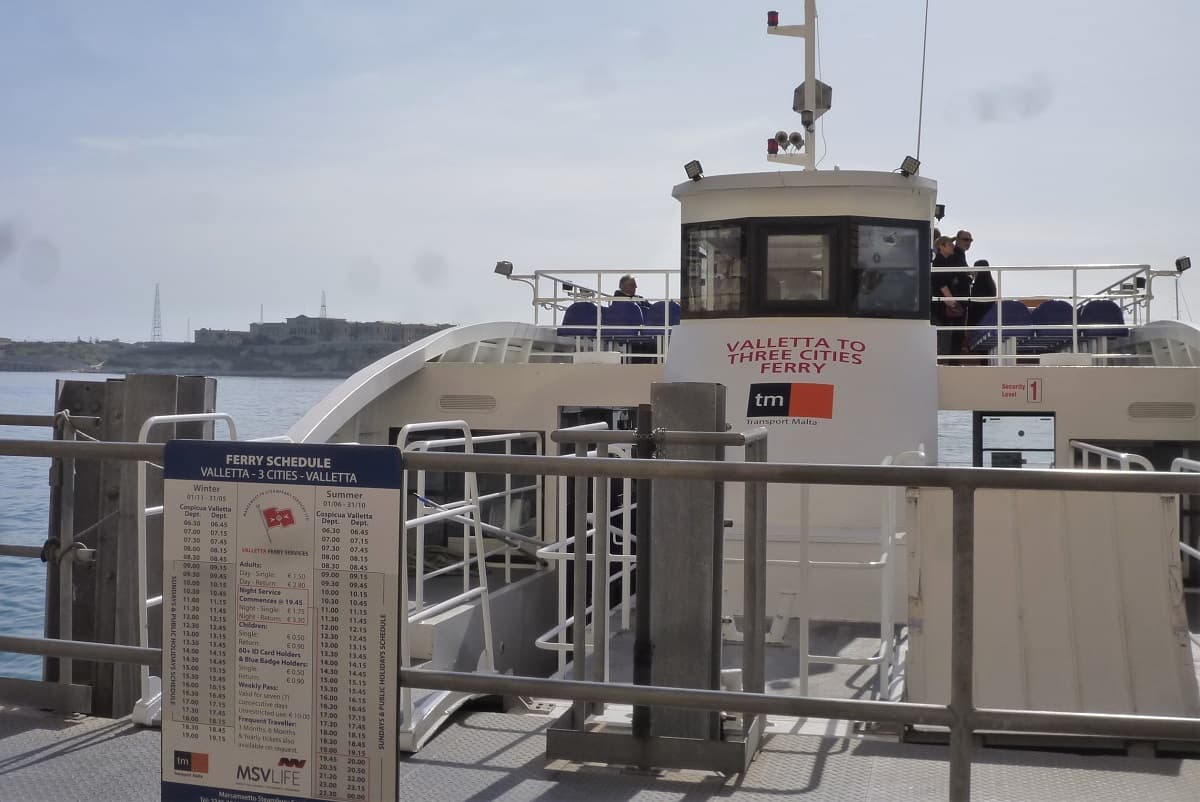
The Three Cities by ferry
Take the Barrakka Lift down from the Upper Barrakka Gardens, 1 euro, and the harbour ferry across to Cospicua, whose ticket includes the lift. Walk Birgu’s lanes, Fort St Angelo and the Inquisitor’s Palace on the Harbour Combo ticket, and the Gardjola lookout in Senglea, then come back across the water in the evening.
About 10 minutes by ferry · Half day to a full day
 Dániel Csík · Pexels
The south: Marsaxlokk, the temples and the Blue Grotto
Start at St Peter’s Pool for the sunrise and a swim, walk the Marsaxlokk quay and its Sunday market, lunch on fish at Tartarun, then drive round to Hagar Qim and Mnajdra. The Blue Grotto boats run only in calm sea and are best in the morning light, so on a day without the market, do them first. Add the Hypogeum at Paola on the way back if you have a booked slot.
20 to 30 minutes by car from Valletta · Full day
After dark
 Frank Vincentz · CC BY-SA 3.0 via Wikimedia Commons
Strait Street after dark
diningThe narrow lane that was the sailors’ quarter of Valletta, once called the Gut, is now a string of wine bars and small restaurants. Start at Trabuxu, in its stone cellar, and walk the length of it.
 Jonathan borg zigli · CC BY-SA 4.0 via Wikimedia Commons
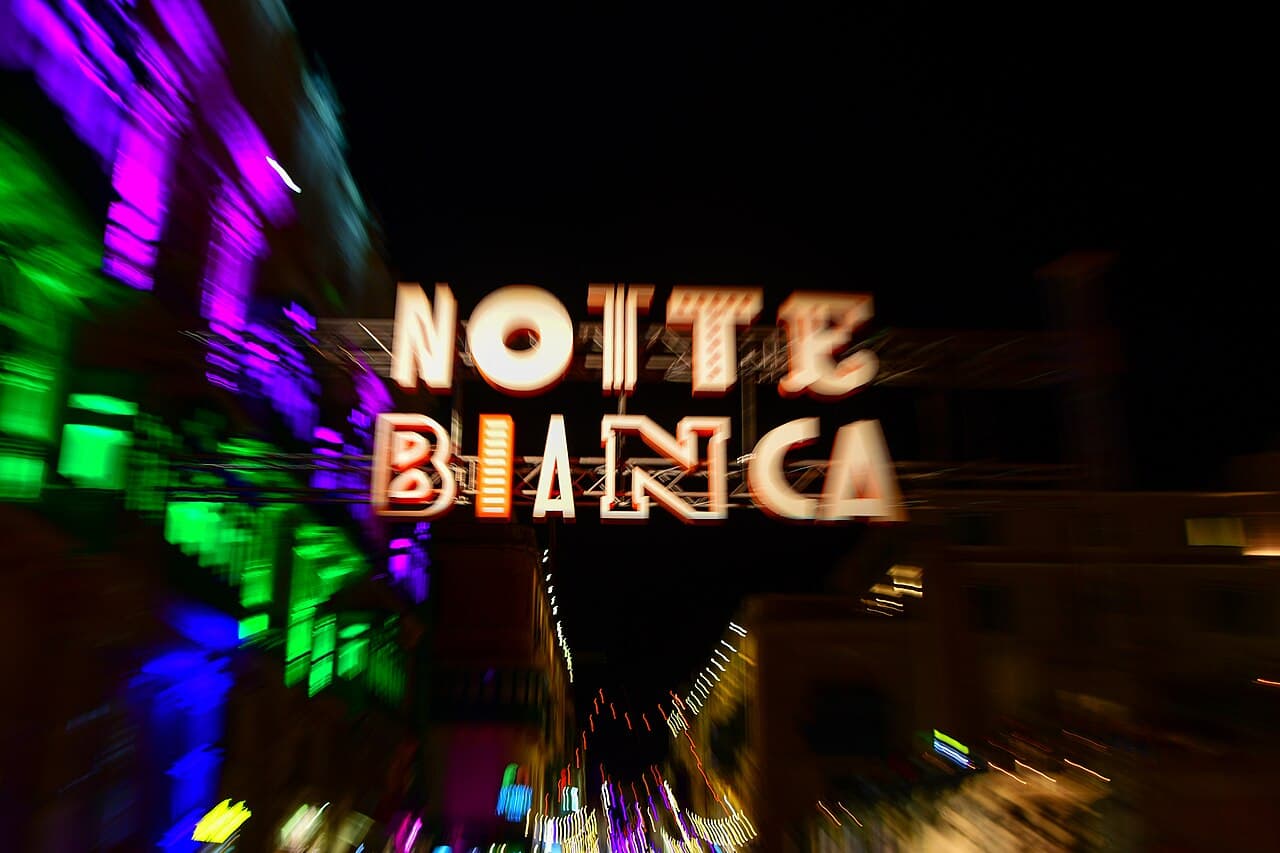
Notte Bianca
festivalOn the first Saturday of October, 3 October in 2026, Valletta stays open all night: palaces, museums and churches open late and free, with music and theatre in the squares.
 Alison3789 · CC BY-SA 4.0 via Wikimedia Commons
A village festa
festivalFrom June to September a different parish celebrates its saint almost every weekend: brass bands, decorated streets, a procession and fireworks, with imqaret and nougat stalls. Ask at your hotel which one is on.
 MoselcountyBürgermeister1 · CC BY-SA 4.0 via Wikimedia Commons
The harbour by ferry at dusk
walkCross from Valletta to the Three Cities as the lights come on along the bastions, eat in Birgu, and come back on the ferry. The night fare is 3.50 euros each way.
Daily itinerary
Seven days: Valletta, the south, Mdina and Gozo
The plan we recommend: five nights in Valletta or the Three Cities and one on Gozo, or add an eighth day for a second Gozo night; buses and ferries on Malta and a car on Gozo. It is written for a Wednesday arrival, which puts the Valletta museums on weekdays, when St John’s and the Saluting Battery are open, and the south on its Sunday market day. Book the Hypogeum before anything else and move the day it falls on if you must: the slot is the hardest thing on the trip to change.
- 1
Arrive and walk into Valletta
relaxedFly through Rome, Athens or another hub: there is no direct flight from Tel Aviv in 2026. At your first Schengen border you will be registered in the Entry/Exit System with fingerprints and a photograph if you have not been already, so allow extra time there.From the airport the TD4 Tallinja Direct bus runs to Valletta for 3 euros, or a fixed-fare taxi from the desk in the arrivals hall. Walk Republic Street to the Upper Barrakka.The Upper Barrakka looks the wrong way for the sunset, but the evening light on the Three Cities is the reason to be there.Strait Street, starting at Trabuxu from 19:00.Buy an Explore card, 25 euros for 7 days of unlimited buses including the airport lines, if you will use the bus more than a few times.Estimate: Stay in Senglea at Cugó Gran Macina and take the ferry across
- 2
Valletta: the Knights’ city
fullSt John’s Co-Cathedral when it opens, shoulders covered, then the Grand Master’s Palace, checking the State Rooms’ morning closures.Rubino on Old Bakery Street, booked.Fort St Elmo and the National War Museum, then the Saluting Battery for the 16:00 gun.A glass on a bastion; the sun sets behind the land from here.Grain Street, or ION Harbour if this is the night.All on foot, with steps.Estimate: The Lascaris War Rooms, 20 euros, instead of Fort St Elmo
- 3
The Three Cities and the Hypogeum
fullThe Barrakka Lift and the ferry across to Birgu. Fort St Angelo and the Inquisitor’s Palace on the Harbour Combo.In Birgu by the marina.Your booked Hypogeum slot at Paola, a short bus or taxi ride away, then Tarxien at half price with the Hypogeum ticket.Back across the harbour on the ferry.Valletta or Birgu.Ferries and one bus or taxi to Paola. The Hypogeum does not admit children under six.Estimate: If no Hypogeum slot is left, the National Museum of Archaeology in Valletta, 5 euros, has the Sleeping Lady found there
- 4
Mdina, Rabat and the Dingli Cliffs
moderateMdina before the coaches: the bastions, the cathedral and its museum from 09:30.Pastizzi at the Crystal Palace bar, or a longer lunch at Diar il-Bniet in Dingli.St Paul’s Catacombs in Rabat, asking which of the Jewish hypogea with their menorahs are open.The high edge of the Dingli Cliffs, a couple of hundred metres north-west of the Magdalene chapel: open sea from 7 March to 6 October, about three minutes after the almanac time.Back in Mdina, or de Mondion for a starred dinner.Buses from Valletta to Rabat take about half an hour; the cliffs are a short ride or a taxi on. Plan the ride back after dark.Estimate: Sleep a night at the Xara Palace and have Mdina after dark
- 5
Sunday in the south
fullSt Peter’s Pool at sunrise, open sea every day of the year, and a swim; then the Sunday fish market in Marsaxlokk.Tartarun on the quay, which opens for Sunday lunch.Hagar Qim and Mnajdra. The Blue Grotto caves light up best in the morning, so if they matter more to you than the market, go there before lunch instead, sea permitting.Not at the Blue Grotto, where the cliffs take the sun early; head back north.Sliema or St Julian’s.A taxi or Bolt for the dawn start, then buses; or rent a car for this day and take it over on the car ferry next morning, 15.70 euros with the driver, or drop it and pick up another on Gozo.Estimate: On a weekday the market is smaller and Tartarun is closed Monday and Thursday
- 6
Over to Gozo
moderateBus or drive to Cirkewwa and take the car ferry to Mgarr, about 25 minutes, or the fast ferry from Valletta. Pick up a car on Gozo.Ta’ Rikardu in the Cittadella, after ringing ahead.The Cittadella ramparts and the Ggantija temples on the Discover Gozo combo.Dwejra: open sea every day of the year.Near your hotel, in San Lawrenz or Xaghra.The Gozo Channel fare is paid on the way back from Gozo; the fast ferry is paid each way. Book the Blue Lagoon slot now for tomorrow if you want it.Estimate: Ramla Bay for a swim instead of the Cittadella
- 7
Gozo, Comino or home
relaxedA boat from Mgarr to the Blue Lagoon for the first slot at 08:00, if the booking system is still running, or Ramla Bay and the Ta’ Cenc cliffs.On Gozo.The ferry back to Malta and on to the airport, about an hour from Cirkewwa by car.Home through your connecting hub.Leave a margin: in winter a gregale can stop the fast ferry, though the car ferry nearly always runs.Estimate: An extra night on Gozo and the Ta’ Cenc cliffs at sunset from mid-September
Four days: Valletta and one long day on Gozo
A short break: two days on Malta, one on Gozo and a morning to leave. Base in Valletta or Sliema; no car needed except on Gozo.
- 1
Valletta
moderateSt John’s Co-Cathedral, on any day but Sunday, when it is closed.The Grand Master’s Palace and the Upper Barrakka for the 16:00 gun, which is not fired on Sundays.The ferry across to the Three Cities and back.Strait Street.Estimate: The Hypogeum, if you found a slot
- 2
Mdina and the cliffs
moderateMdina and the cathedral.Pastizzi in Rabat.St Paul’s Catacombs.The high edge of the Dingli Cliffs.Back in Valletta.Estimate: Marsaxlokk and the temples instead, if it is a Sunday
- 3
Gozo
fullThe car ferry from Cirkewwa, and a car or a driver on Gozo.The Cittadella and Ggantija.Dwejra.On Gozo, then the late ferry back.The car ferry runs through the night; the fast ferry to Valletta does not.Estimate: The Blue Lagoon with a booked slot
- 4
Sunrise and leave
relaxedSunrise at Tigne Point or the Upper Barrakka, then the airport bus.Fly home.Estimate: St Peter’s Pool for the sunrise, by taxi
Getting around
- There is no direct flight from Israel to Malta in 2026. KM Malta Airlines, which replaced Air Malta on 31 March 2024, announced a twice-weekly Tel Aviv route from 27 May 2026 and then postponed it on 28 March, citing the instability in the Middle East. The Israel Airports Authority flight board for 26 to 30 September 2026 carried no Malta rows at all. Beware a search trap: Wizz Air Malta does fly from Tel Aviv, but only to other European cities, not to Malta. Fly to Rome, Athens or another hub and connect to Malta International Airport at Luqa, about eight kilometres from Valletta.
- Since 10 April 2026 the EU Entry/Exit System has been fully operational: Israelis are registered with a facial image and fingerprints at their first Schengen entry. ETIAS is still not in operation, in the European Commission’s words, and no applications are being taken; the fee will be 20 euros when it starts. Israeli passport holders can stay 90 days in any 180 without a visa.
- From the airport, the Tallinja Direct buses run to the main areas: TD4 to Valletta and the Gozo fast ferry, TD3 to Gzira, Sliema and St Julian’s, TD2 to St Julian’s and Pembroke, TD1 to Rabat, Bugibba and Cirkewwa. They cost 3 euros, 3.50 on TD1, and are included in the unlimited Explore card. Taxis at a fixed fare are sold at the desk in the arrivals hall, about 15 to 20 euros to Valletta; Bolt, eCabs and Uber also work, typically about 8 to 16 euros to Valletta.
- Malta Public Transport runs the buses on both islands. A single ticket, valid two hours, is 2.50 euros in summer and 2 in winter, 3 on night routes, by card or cash on board. The Explore card gives seven days of unlimited day and night buses for 25 euros, 7 for children aged 4 to 10, and the 12-journey card costs 19 euros and can be shared. Buses are frequent on the main corridors and slow in traffic.
- Harbour ferries are the best transport in Valletta: from Sliema to Valletta every half hour in the daytime, and from Valletta to Cospicua for the Three Cities, 3 euros by day and 3.50 at night one way. The Barrakka Lift links the Upper Barrakka Gardens to the ferry landing for 1 euro, free with a Three Cities ferry ticket.
- To Gozo: the Gozo Channel car ferry runs around the clock between Cirkewwa and Mgarr, about 25 minutes, 4.05 euros for a foot passenger and 15.70 for a car and driver, paid only on the way back from Gozo. The Gozo Highspeed fast ferry from Valletta costs 7.50 euros one way, children 4 to 10 pay 3. In a strong winter gregale the fast boats are the first to stop.
- Driving is on the left, and the roads are busy and narrow. A licence from outside the EU is valid in Malta for twelve months from arrival, according to Transport Malta, but rental companies may still ask for an international permit, so check with yours. Driving into Valletta is charged by camera, and rental companies pass the charge on: park in Floriana and walk in. Fuel is cheap by European standards and has not changed in a year: 1.34 euros a litre for petrol and 1.21 for diesel in September 2026.
Things worth knowing
- · Looking for a direct flight from Tel Aviv. There is none in 2026; KM Malta Airlines postponed its route. Wizz Air Malta is not a flight to Malta.
- · Not booking the Hypogeum well ahead. Ten people at a time means it sells out; the 50-euro last-minute tickets are few.
- · Going to the Blue Lagoon without the free landing pass from bluelagooncomino.mt.
- · Planning the sunset from Sliema, St Julian’s or Valletta. They face east: go to Dwejra, the Dingli Cliffs or Ghajn Tuffieha.
- · Waiting for the sunset in Xlendi, where the bay walls take it an hour or more early every day.
- · Standing next to the Magdalene chapel on Dingli in summer. Walk a couple of hundred metres north-west to the high edge and the sun goes into the sea.
- · Visiting St John’s on a Sunday, when it is closed, or in a sleeveless top.
- · Driving into Valletta. Park outside and walk in.
- · Budgeting on the old 50-cent eco-contribution. Since 1 July 2026 it is 1.50 euros a night for every adult.
Budget
| Low | Expected | Comfortable | |
|---|---|---|---|
| Accommodation style / per night | €60≈ $67 | €170≈ $190 | €450≈ $504 |
| Food style / per day | €25≈ $28 | €55≈ $62 | €130≈ $146 |
| Local transport / per day | €4≈ $4 | €12≈ $13 | €60≈ $67 |
| Estimate / per day | €0≈ $0 | €15≈ $17 | €40≈ $45 |
Estimate · EUR · 2026-09-27. Quoted in euros per person per day, except accommodation, which is per room per night on a double-occupancy basis; these are our estimates, not published rates, because few of the hotels print one. The low accommodation band is a guesthouse or a small Gozo hotel out of season, the comfortable band a palazzo suite in Valletta or Mdina. On top of every night comes the eco-contribution: since 1 July 2026 it is 1.50 euros per night for every guest aged 18 or over, capped at 22.50 euros a person per visit. Local transport runs from an Explore bus card, 25 euros for a week, to a rental car and taxis. Attractions are the real cost here: the Hypogeum is 35 euros, St John’s 15, the Grand Master’s Palace 12 and most temples and forts 10, while Mdina, the cliffs and the harbour views are free. The day-trip figure covers a Gozo day with the ferry and a car, or a Comino boat. The Bank of Israel representative rate on 25 September 2026 was 3.4546 shekels to the euro and 3.033 to the dollar, so an expected spend of about 80 euros a head before the room is roughly 280 shekels. · 1 USD = €1 (14 Oct 2026)
Things worth knowing
Frequently asked questions
Can I fly directly from Tel Aviv to Malta?
Not in 2026. KM Malta Airlines planned a twice-weekly route from 27 May 2026 but postponed it in March because of the situation in the Middle East, and the Israel Airports Authority board shows no Malta flights. Fly to Rome, Athens or another European hub and connect. Wizz Air Malta’s flights from Tel Aviv go to other European cities, not to Malta.
Where is the best sunset in Malta?
We computed every sunset of 2026 against the terrain. Dwejra on Gozo is the only spot we found with open sea under the sun on every day of the year. On Malta, the high edge of the Dingli Cliffs, a couple of hundred metres north-west of the Magdalene chapel, has an open-sea sunset from 7 March to 6 October, about three minutes after the almanac time; Ghajn Tuffieha beach has one from 21 February to 20 October. Sliema, St Julian’s and Valletta face east and lose the sun behind the land; Xlendi loses it an hour or more early.
Do I need to book the Hypogeum in advance?
Yes, as early as you can, above all in summer. Only ten people go down at a time, adults pay 35 euros, and children under six are not admitted. A few last-minute tickets at 50 euros are sold the day before, first come first served, at Heritage Malta sites such as Fort St Elmo.
Do I need a ticket for the Blue Lagoon?
You need a free timed landing pass, booked at bluelagooncomino.mt or at a tourist information booth, for one of three slots: 08:00 to 13:00, 13:30 to 17:30 or 18:00 to 22:00. Each slot is capped at 4,000 people. The system has run since 1 May 2025 and was back for summer 2026. The boat ticket is separate.
Malta or Gozo: where should I stay?
Both, if you have a week: four or five nights on Malta, in Valletta, the Three Cities or Sliema, for the history, and two or three on Gozo for the countryside, the Ggantija temples and the Dwejra sunset. With only three or four days, stay in Valletta and visit Gozo for a long day on the car ferry, which runs around the clock.
Do I need a car in Malta?
Not on Malta itself if you base in Valletta or Sliema: buses, harbour ferries and the occasional Bolt cover it, and a car is a burden in Valletta. On Gozo, yes, or a driver for the day. Remember that Malta drives on the left.
Is there kosher food in Malta?
There is no kosher restaurant open in 2026: Chabad’s restaurant is closed until its new centre in Sliema is completed. Chabad of Malta sells kosher products, imports orders and arranges Shabbat and holiday meals if you register ahead, and the synagogue in Ta’ Xbiex has a morning minyan on Shabbat and holidays at 10:00.
Is Malta safe for Israelis?
The National Security Council carries no travel warning for Malta; the Foreign Ministry advises staying alert and following the media. Malta recognised Palestine in September 2025 while affirming Israel’s right to exist, and we found no reported incident against Israeli visitors. The usual discretion in crowds and near demonstrations applies.
When is the best time to visit Malta?
Late September and October, when the sea is still around 23C to 25C, the heat has broken and the crowds thin, with Notte Bianca in Valletta on the first Saturday of October. April, May and October are the best months for walking and the temples. July and August are the hottest and busiest.
How many days do I need in Malta?
Six to nine. Seven lets you give two days to Valletta, one to the Three Cities and the Hypogeum, one to Mdina and the Dingli Cliffs, one to the south and two to Gozo. Four days work for Valletta, Mdina and one long day on Gozo.
Sources (23)
- Heritage Malta sells Hal Saflieni Hypogeum tickets at EUR 35 for adults, with only 10 persons allowed at any one time, no photography, infants 1 to 5 not admitted and last-minute tickets at EUR 50 the day before · museum · 2026-09-27
- Heritage Malta Multisite Pass 2026: adult EUR 60, senior and student EUR 45, children EUR 30, family EUR 130, valid 30 days, not valid for the Hal Saflieni Hypogeum · museum · 2026-09-27
- Heritage Malta opening-hours notices: all sites closed 1 January, Good Friday, 24, 25 and 31 December; Gozo Museum of Archaeology closed since 13 April; Grand Master’s Palace Throne Room closed; Fortress Builders closed from 15 September · museum · 2026-09-27
- From 1 July 2026 the eco-contribution is EUR 1.50 per night per person aged eighteen or over, subject to a maximum of EUR 22.50 per person per visit · tourism-board · 2026-09-27
- The Malta Tourism Authority introduced free pre-booking for the Blue Lagoon, Comino, from 1 May 2025, with three daily time slots and a maximum of 4,000 visitors at any one time · tourism-board · 2026-09-27
- The Blue Lagoon booking system reopened for summer 2026 with 4,000 visitors per time slot · reputable-local · 2026-09-27
- A natural rock arch off Comino collapsed onto a passing jet ski on 27 June 2026, killing one tourist and injuring two others · reputable-local · 2026-09-27
- The NSO recorded 4,022,310 inbound tourists in 2025, up 12.9 percent on 2024, spending EUR 3,904.4 million; Gozo and Comino were visited by 2,305,968 of them · government · 2026-09-27
- UNESCO inscribed Il-Ftira, culinary art and culture of flattened sourdough bread in Malta, on the Representative List of the Intangible Cultural Heritage of Humanity in 2020 · unesco · 2026-09-27
- The Michelin Guide Malta one-star selection lists De Mondion, Rosamì, Under Grain, Fernandõ Gastrotheque, Le GV and Noni · reputable-local · 2026-09-27
- The Michelin Guide Malta Bib Gourmand selection lists Commando, Verbena, Grain Street, AYU and Rubino · reputable-local · 2026-09-27
- The Israeli National Security Council dataset carries no travel warning for Malta; the Foreign Ministry row reads "stay alert, follow the media"; the resource was last modified on 14 September 2026 · government · 2026-09-27
- Malta officially recognised the State of Palestine on 22 September 2025; Prime Minister Robert Abela said Malta was equally unequivocal in its support for the right of Israel to exist alongside a democratic Palestinian state · reputable-local · 2026-09-27
- The Entry/Exit System has been fully operational across all Schengen countries since 10 April 2026 · government · 2026-09-27
- ETIAS is currently not in operation and no applications for travel authorisations are collected; the fee has been set at EUR 20 · government · 2026-09-27
- Bank of Israel representative rates of 25 September 2026: EUR 3.4546 and USD 3.033 shekels · government · 2026-09-27
- Chabad Jewish Center of Malta states that its kosher restaurant is closed until the completion of the new center · reputable-local · 2026-09-27
- Chabad of Malta lists its synagogue in a residential building at Ta’ Xbiex with a Sabbath and holiday morning minyan at 10:00 · reputable-local · 2026-09-27
- Jews lived in Malta in late antiquity (menorah-carved tombs in the Rabat catacombs), Abraham Abulafia lived on Comino from 1285, the community was expelled in 1492, and under the Knights Jewish captives were held in the bagnos until ransomed by Jewish societies including Livorno · independent-travel · 2026-09-27
- Luqa airport climate normals 1991 to 2020: mean daily maximum 28.7C in June, 31.7C in July, 32.0C in August, 28.6C in September; rainfall 0.2 mm in July and 60.7 mm in September; sea temperature about 25.8C in August and 25.2C in September · independent-travel · 2026-09-27
- Notte Bianca in Valletta is held on Saturday 3 October 2026, and Malta Carnival 2027 runs from 5 to 9 February · event-organizer · 2026-09-27
- AWS Terrain Tiles (terrarium format, zoom 12, SRTM-derived elevation) support the horizon profiles cast every 0.25 degrees from every Malta viewpoint in this guide out to 100 km · independent-travel · 2026-09-27
- Solar positions and almanac sunrise and sunset times follow the NOAA solar calculator equations, giving sunrise 06:53 and sunset 18:51 in Valletta on 27 September 2026 (CEST) · government · 2026-09-27