South Korea · Seoul
Seoul
Stay in or near Myeongdong or Jongno for the palaces and easy transit, spend a morning in Bukchon Hanok Village, an afternoon in Hongdae or Seongsu for contemporary Seoul, and a full day on a DMZ tour if history interests you.
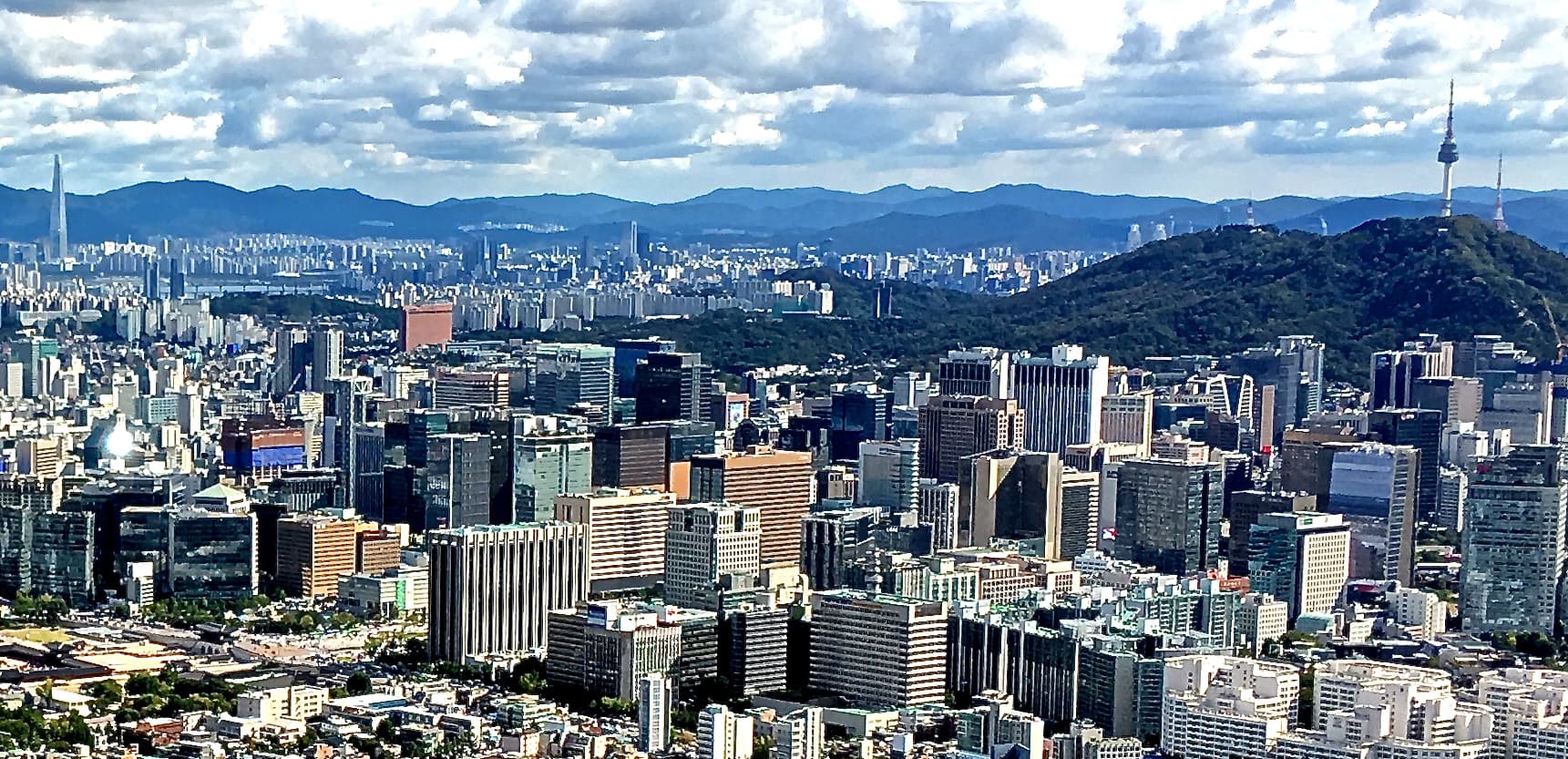 Arturbraun / CC BY-SA 4.0 via Wikimedia Commons
Overview
Seoul packs five centuries of Joseon-dynasty palaces, a fast, spotless subway, and one of Asia’s most dynamic food and design scenes into one city. It rewards travelers who want history and contemporary culture in the same afternoon, from a tiled palace roofline to a rooftop cafe in Seongsu.
If you only take one thing from this guide: buy a T-money transit card on arrival and use the subway for almost everything. Seoul’s traffic makes taxis slow at peak hours, and the metro is fast, cheap and clearly signed in English.
Best for
First-time Korea visitors · Food travelers · Design and shopping · Couples · K-culture fans
Daily itinerary
4 to 6 days
Unlike Tokyo’s scale or Kyoto’s single-era focus, Seoul compresses palace-era history, a divided-peninsula present (the DMZ is a day trip away), and a globally influential pop-culture industry into a single, easy-to-navigate city.
Best time to visit
Spring (April to May) and autumn (late September to November) are the clear best windows: mild temperatures, cherry blossoms or fall color in the palace grounds, and comfortable walking weather. Summer is hot and humid with a monsoon season; winter is cold but dry and quiet.
- March to April: Cherry blossoms, especially along Yeouido’s riverside paths; can still be chilly in early March.
- May to June: Comfortable and green, before the July monsoon arrives.
- July to August: Hot, humid and rainy; palace visits are less pleasant, indoor and evening plans work better.
- September to October: The best window overall: clear skies, comfortable heat, autumn color arriving by late October.
- November to February: Cold and dry; good for markets and indoor culture, less so for long palace walks.
Things worth knowing
- Cherry blossom season along the Han River and at Yeouido, typically late March to early April, dates shift yearly.
- Seoul Lantern Festival along Cheonggyecheon stream, typically November.
Where to stay
Myeongdong
Seoul’s most central tourist and shopping district: cosmetics stores, street food stalls, and easy transit to the palaces and Namsan cable car.
Best for: First-time visitors · Shopping · Street food
Extremely crowded in the evenings and on weekends; a hub for tour groups.
Bukchon Hanok Village and Jongno
A hillside neighborhood of traditional hanok houses between Gyeongbokgung and Changdeokgung palaces, one of Seoul’s most photographed residential areas.
Best for: Culture · Photography · Palace access
A tourist curfew restricts visiting some residential lanes before 10am or after 5pm; stick to the marked public routes.
Hongdae
A youthful, energetic district around Hongik University: street performances, indie music venues, and Seoul’s densest concentration of late-night cafes and bars.
Best for: Nightlife · Street art · Younger travelers
Loud and crowded on weekend nights; not the quiet-sleep choice if you are noise-sensitive.
Seongsu-dong
A former industrial district turned into Seoul’s design and cafe hub, sometimes called the city’s "Brooklyn," with converted warehouses and boutique shops.
Best for: Cafes · Design · A local, less touristy afternoon
Spread out; comfortable shoes help more here than in the denser old-town districts.
Itaewon
Seoul’s most international district, with a dense mix of foreign restaurants, embassies nearby, and a longstanding nightlife and expat scene.
Best for: International food · Nightlife · A break from Korean-only menus
Busier and pricier on weekend nights; some streets can feel touristy rather than local.
Where to sleep
Four Seasons Hotel Seoul
luxury · Gwanghwamun / Jongno
Best for: Couples · Central palace access · A design-forward stay
- A 29-story tower designed with references to Korean palace architecture
- Steps from Gyeonghuigung and a short ride to Gyeongbokgung
- Strong spa and pool facilities
- Expensive relative to Seoul’s midrange hotels
- Insadong and Bukchon are a walk or short taxi rather than immediate
- Formal atmosphere, less suited to a casual trip
Lotte Hotel Seoul
luxury · Myeongdong
Best for: Shopping access · Families · First-time visitors
- Directly connected to Lotte Department Store and Myeongdong’s shopping streets
- Very large property with extensive dining options
- Reliable, well-known international standard
- Myeongdong’s crowds start right outside the door
- Scale means a more corporate than boutique feel
- Traffic around the hotel can be heavy at peak hours
Rakkojae Seoul
boutique · Bukchon Hanok Village
Best for: Couples · A traditional hanok stay · Culture
- A genuine hanok stay with heated ondol floors and a courtyard setting
- Only a handful of rooms, all facing the inner courtyard
- Walking distance to Bukchon’s lanes and both nearby palaces
- No elevator and traditional low doorways, harder for limited mobility
- Few rooms means it books out quickly
- Thinner walls than a modern hotel; can hear the courtyard
Shilla Stay Gwanghwamun
value · Gwanghwamun / Jongno
Best for: First-time visitors · Value near the palaces · Business travelers
- Reliable mid-range chain within walking distance of Gyeongbokgung
- Simple, efficient rooms at a lower price than the nearby luxury hotels
- Well connected to Gwanghwamun subway station
- Compact rooms and limited views
- Fewer amenities than a full-service hotel
- Basic breakfast offering
Essential experiences
Gyeongbokgung Palace
The largest of Seoul’s Five Grand Palaces, the main Joseon-dynasty royal palace, with a free twice-daily Royal Guard Changing Ceremony in front of Gwanghwamun Gate.
Bukchon Hanok Village
A hillside district of over 900 traditional hanok houses between Gyeongbokgung, Changdeokgung and Jongmyo, still partly residential.
Changdeokgung Palace and Huwon (Secret Garden)
A UNESCO World Heritage palace known for its rear garden, Huwon, laid out to follow the natural contours of the land rather than a strict grid.
Bukchon and Insadong walking area
A traditional arts and antiques street between Jongno and Bukchon, good for tea houses, calligraphy shops and hanbok rental.
N Seoul Tower, Namsan
A hilltop communications tower with an observation deck over the whole city, reached by cable car or a walking trail through Namsan Park.
Gwangjang Market
One of Seoul’s oldest traditional markets, known for bindaetteok (mung bean pancakes), knife-cut noodles and a dense street-food alley.
Han River parks (Hangang)
Eleven riverside parks along the Han River, used for picnics, cycling and river cruises, each with its own facilities and character.
 Frank Schulenburg / CC BY-SA 4.0 via Wikimedia Commons
 Stevenliuyi / CC BY-SA 4.0 via Wikimedia Commons
Food & drink
Korean barbecue (gogigui)
Grilled meat cooked tableside, usually with lettuce wraps, garlic and ssamjang; a Seoul dinner staple.
Bibimbap
Rice topped with seasoned vegetables, meat and gochujang chili paste, mixed at the table.
Tteokbokki
Chewy rice cakes in a spicy-sweet gochujang sauce, a street-food classic found across the city.
Bindaetteok
Savory mung bean pancakes, a Gwangjang Market specialty best eaten fresh off the griddle.
Korean fried chicken (chikin)
Twice-fried, often glazed in soy-garlic or spicy sauce, traditionally paired with beer ("chimaek").
Meals are often shared and ordered for the table; pouring drinks for others rather than yourself is a small but noticed courtesy.
Where to eat
Gwangjang Market food stalls
marketA dense alley of stalls inside one of Seoul’s oldest markets; go hungry and share several small plates.
Last researched 2026-07-15
Myeongdong street food stalls
street-foodA dense strip of food carts through the main Myeongdong shopping streets, busiest in the evening.
Last researched 2026-07-15
Tosokchon Samgyetang
institutionA long-running samgyetang (ginseng chicken soup) restaurant in a traditional hanok building close to the palace area.
Last researched 2026-07-15
Sunrises
Han River at Banpo Bridge
Quiet early light over the river before the Banpo Bridge fountain and evening crowds arrive, with the city skyline behind.
April to October
Sunsets
N Seoul Tower observation deck
A 360-degree view over Seoul as the city lights come on, reached by cable car up Namsan.
Year-round
Banpo Bridge Rainbow Fountain, Han River
The bridge’s illuminated fountain show starts around sunset in warmer months, best watched from the riverside park below.
April to October · Fountain shows run on a seasonal schedule and pause in cold months; check current times before going.
Day trips
DMZ (Demilitarized Zone) tour
A guided day trip to the buffer zone between North and South Korea, typically including the Third Infiltration Tunnel, Dora Observatory and the Unification Village.
About 1 hour each way from central Seoul · Full day
Suwon Hwaseong Fortress
A UNESCO-listed late-18th-century fortress wall encircling the old town of Suwon, walkable in a loop with several gates and pavilions.
About 1 hour by subway or train from central Seoul · Half to full day
Nami Island and Petite France
A half-moon river island known for its tree-lined avenues, paired with a small French-village-themed park nearby; a popular combined day tour from Seoul.
About 1.5 to 2 hours by tour bus or train and ferry · Full day
After dark
Hongdae street performances
nightlifeWeekend evenings bring buskers, dance crews and pop-up performances to the streets around Hongik University.
Han River picnic with delivered chicken and beer
foodA very Seoul evening: pick a riverside park, order fried chicken for delivery, and watch the bridges light up.
Daily itinerary
Five days in Seoul: palaces, markets and a DMZ day
A city-based itinerary using the subway throughout, with one full day set aside for the DMZ.
- 1
Arrive and Myeongdong
relaxedArrive, settle in near Myeongdong or Jongno.Street food stalls in Myeongdong.Explore Myeongdong’s shopping streets and Myeongdong Cathedral.Korean barbecue dinner.Free evening, rest from travel.Airport Railroad Express (AREX) from Incheon to Seoul Station, then subway or taxi to your hotel.Estimate: If arriving early enough, add N Seoul Tower for sunset.
- 2
Palaces and Bukchon
fullGyeongbokgung Palace, timed around the Royal Guard Changing Ceremony.Lunch in Insadong.Bukchon Hanok Village and Changdeokgung’s Huwon secret garden.N Seoul Tower via the Namsan cable car.Traditional Korean dinner near Bukchon.Free evening.All reachable by subway (Lines 3 and 1) plus walking in Bukchon.Estimate: Skip the Huwon garden (separate timed ticket) if it is sold out and add Jogyesa Temple instead.
- 3
Markets and Han River
moderateGwangjang Market for bindaetteok and street food.Continue eating your way through Gwangjang Market.Walk or cycle a stretch of the Han River parks.Banpo Bridge Rainbow Fountain (seasonal).Riverside picnic dinner or a restaurant in Itaewon.Itaewon for a change of pace from Korean-only menus.Subway to Jongno for the market, then to a Han River park station.Estimate: If the fountain show is off-season, swap for another N Seoul Tower or rooftop sunset.
- 4
DMZ day trip
fullDepart early on a guided DMZ tour.Included or arranged as part of the tour.Third Infiltration Tunnel and Dora Observatory.Dinner back in Seoul after the tour returns.Quiet evening after a long day.Official tour bus; independent access to the DMZ is not permitted.Estimate: Swap for the Suwon Hwaseong Fortress day trip if the DMZ is fully booked.
- 5
Seongsu-dong and departure
relaxedCafes and design shops in Seongsu-dong.Lunch in Seongsu-dong.Last-minute shopping in Hongdae or Myeongdong.Departure via AREX to Incheon.Subway Line 2 covers Seongsu and Hongdae; leave buffer time for the airport train.Estimate: If your flight is late, add Nami Island as a half-day before departure.
Getting around
- Incheon International Airport (ICN) is Seoul’s main gateway, connected to the city by the AREX express train (about 45 minutes to Seoul Station) or airport buses.
- Gimpo Airport (GMP), closer to central Seoul, mainly serves domestic and some regional international flights.
- The Seoul subway is extensive, cheap and clearly signed in English; a T-money card covers subway, bus and even some taxis.
- Taxis are affordable but slow in central traffic at peak hours; the subway is usually faster for cross-city trips.
- Kakao T (a ride-hailing app) is widely used and easier for non-Korean speakers than hailing a taxi on the street.
Things worth knowing
- · Trying to book independent DMZ access; it is guided-tour only.
- · Not buying a T-money card on arrival and overpaying with single tickets.
- · Underestimating how early to arrive for the free Gyeongbokgung Royal Guard Changing Ceremony.
Budget
| Low | Expected | Comfortable | |
|---|---|---|---|
| Accommodation style / per night | ₩60,000≈ $45 | ₩180,000≈ $134 | ₩500,000≈ $373 |
| Food style / per day | ₩20,000≈ $15 | ₩50,000≈ $37 | ₩120,000≈ $89 |
| Local transport / per day | ₩3,000≈ $2 | ₩8,000≈ $6 | ₩25,000≈ $19 |
| Estimate / per day | ₩0≈ $0 | ₩10,000≈ $7 | ₩30,000≈ $22 |
Estimate · KRW · 2026-07-15. Accommodation is per room per night (two sharing). Palace entry fees are low individually; the DMZ day-trip figure reflects a standard guided-tour price rather than independent transport. · 1 USD = ₩1,341 (14 Oct 2026)
Things worth knowing
Frequently asked questions
How many days do you need in Seoul?
Four to six days works well: enough for the main palaces, a market and Han River day, contemporary neighborhoods like Seongsu or Hongdae, and a full day for the DMZ.
What is the best area to stay in Seoul for first-time visitors?
Myeongdong or Jongno (near Gwanghwamun/Bukchon) both put you within walking or short subway distance of the main palaces, markets and transit lines.
When is the best time to visit Seoul?
Spring (April to May) for cherry blossoms and autumn (late September to November) for mild weather and fall color are the strongest windows; summer is hot and humid with a monsoon season.
Can you visit the DMZ independently?
No, access is restricted to official guided tours booked in advance; you cannot arrange your own transport to the DMZ area.
Do you need a car in Seoul?
No. The subway network covers the entire city efficiently and is generally faster than driving in central traffic.
Sources (4)
- Changdeokgung Palace Complex is a UNESCO World Heritage Site · unesco · 2026-07-15
- Hwaseong Fortress (Suwon) is a UNESCO World Heritage Site · unesco · 2026-07-15
- Seoul overview, palaces, neighborhoods and attractions · tourism-board · 2026-07-15
- Gyeongbokgung Palace Royal Guard Changing Ceremony schedule · tourism-board · 2026-07-15