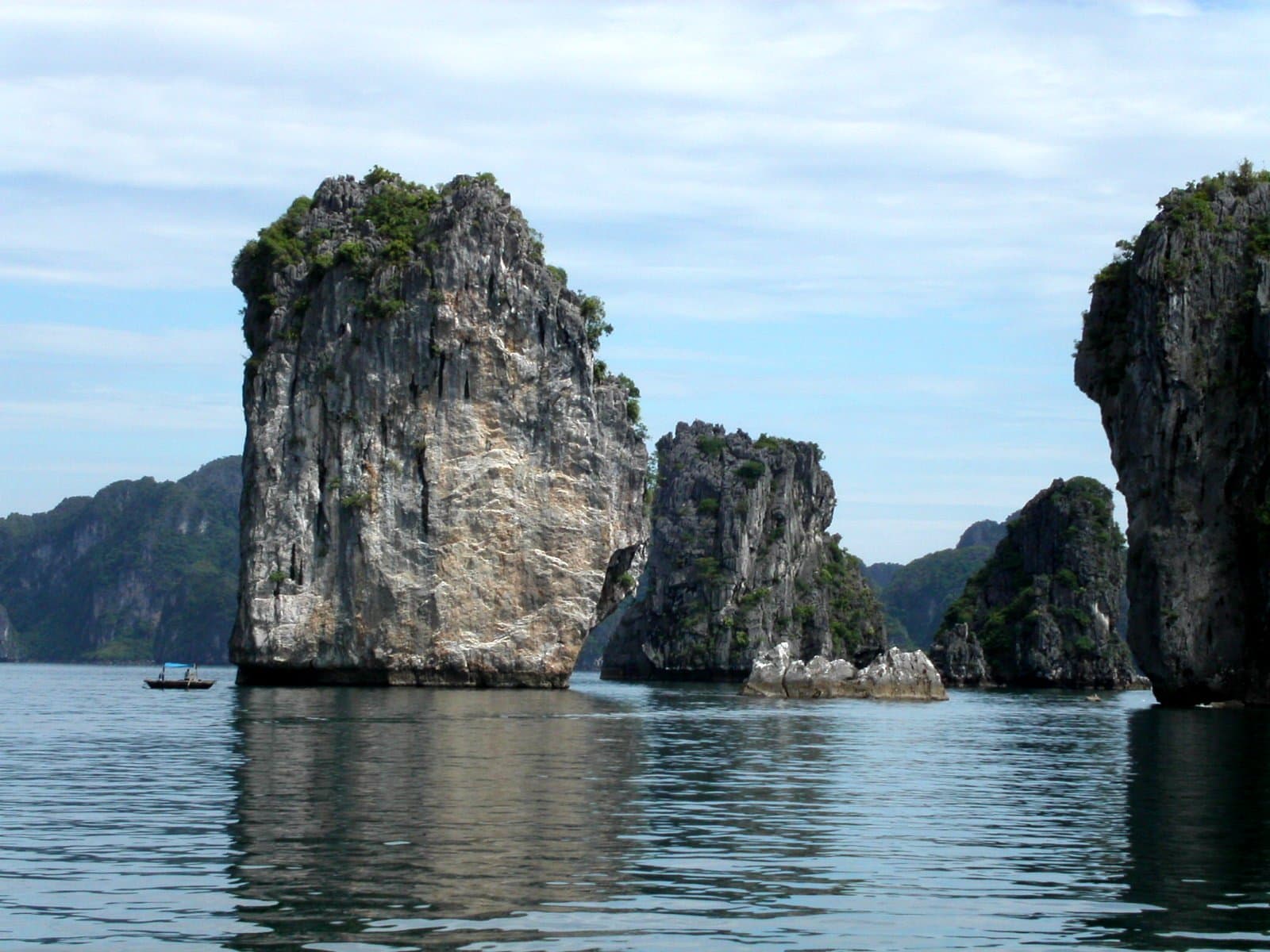
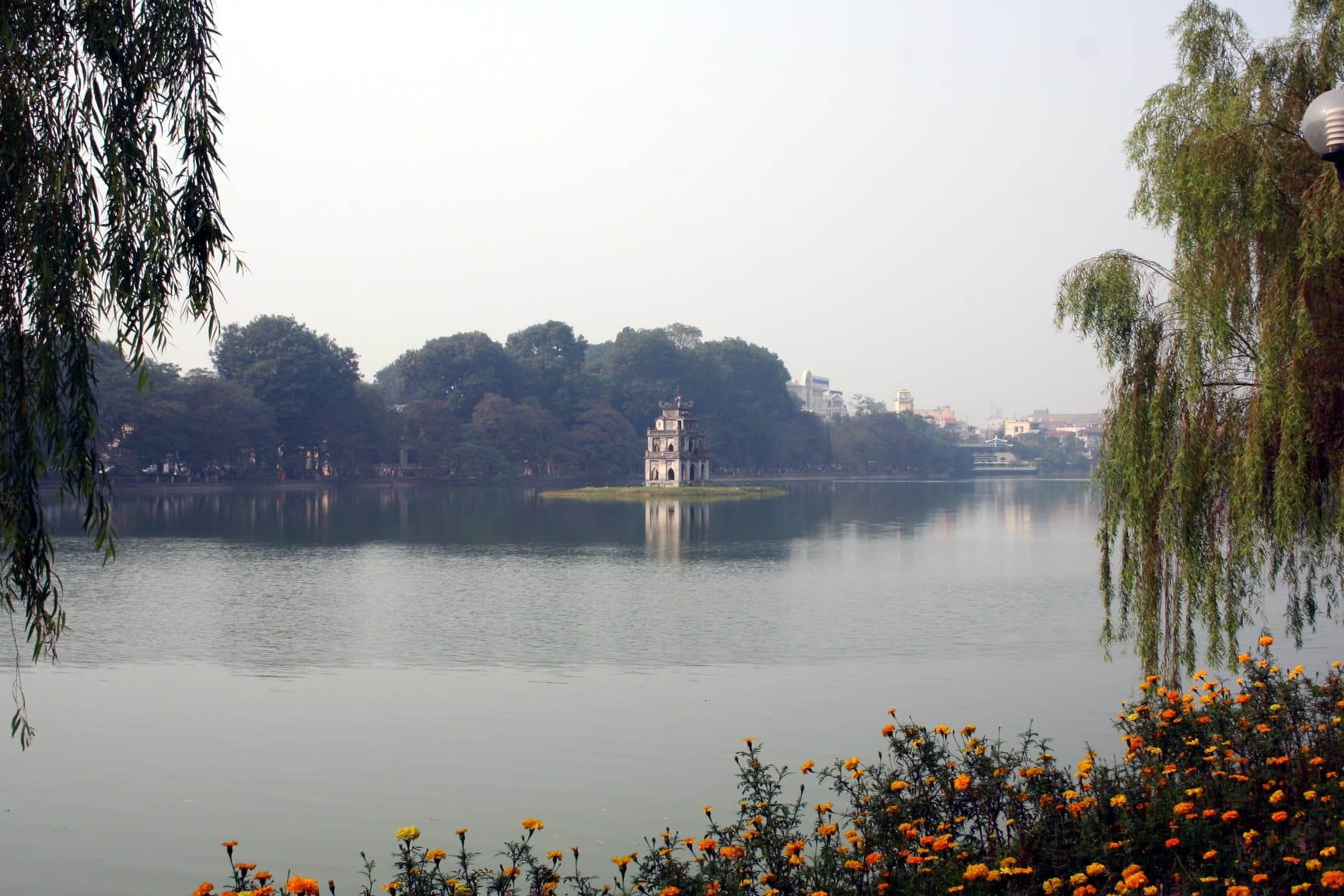
Vietnam · Da Nang
Hoi An
Give the Ancient Town its heritage ticket and a full evening for the lanterns, split your days between the old streets and An Bang beach, and add the My Son Sanctuary and a river or Cham Islands trip if you have four days.
 Steffen Schmitz (more photos) / CC BY-SA 4.0 via Wikimedia Commons
Overview
Hoi An is a Southeast Asian trading port that kept much of its 15th to 19th century fabric, now a UNESCO World Heritage site of tiled merchant houses, Chinese assembly halls and a Japanese covered bridge. Add a beach a short ride away, two dishes, cao lau and white rose, that are traditionally made only here, and a lantern-lit full moon every month, and it is easy to see why so many travellers slow down here. It is also a town on a river delta that floods, and since July 2025 it has been part of Da Nang city rather than Quang Nam province, which is why addresses and maps may disagree.
If you only take one thing from this guide: stay for the full moon if you can time it, and spend at least one night walking the Ancient Town after the lanterns come on. Day-trippers from Da Nang miss the town’s best hour entirely.
Best for
Couples · First-time Vietnam visitors · Food · Slow days and cycling · Tailoring and shopping
Daily itinerary
2 to 4 days
Unlike Hanoi or Ho Chi Minh City, Hoi An is small, walkable and low-rise: the Ancient Town core is largely traffic-free, lantern-lit after dark, and best explored on foot or by bicycle. It is a town to slow down in, not to power through.
Best time to visit
February to July is the dry, comfortable window, with February to April the pick for lower humidity and warm-not-scorching days. Central Vietnam’s heavy rain and typhoon risk lands roughly September to December, when the Ancient Town can flood; at the end of October 2025 the Thu Bon at Hoi An rose to 5.62 m, 0.14 m above the record of 1964.
- February to April: Driest and mildest of the year; the most comfortable window to walk the town.
- May to July: Warm to hot, still largely dry; good beach weather.
- August to September: Hot and increasingly wet; typhoon season begins in the central coast.
- October to November: Wettest of the year. At the end of October 2025 the Thu Bon rose to 5.62 m at Hoi An, above the 1964 record, and parts of the Ancient Town stood under two metres of water; three flood waves came between late October and 22 November. Book refundable and check the forecast the day before.
- December to January: Cooler and can be grey with lingering rain; quieter streets.
Things worth knowing
- Hoi An Lantern Festival: on the 14th day of every lunar month the Ancient Town dims its electric lighting and lights silk and floated paper lanterns from roughly 6pm. The remaining dates in 2026 are 24 September, 23 October, 22 November and 22 December; the October and November nights can be cut short or cancelled when the river is high.
- Lunar New Year (Tet, late January or February): festive but many businesses close for several days.
Where to stay
 Võ Văn Tiến · Pexels
Ancient Town (Old Town core)
The UNESCO-listed heart: tiled merchant houses, the Japanese Covered Bridge, Chinese assembly halls and the lantern-lit riverfront. Largely traffic-free and walkable, but busy midday and heavily commercial.
Best for: First-time visitors · Culture · Evening lanterns · No car
Crowds and shopping pressure peak in the middle of the day; low-lying and flood-prone in October and November.
 Flickr · Pexels
An Bang Beach
The town’s main beach, a short ride northeast: a long stretch of sand with beach bars and seafood shacks, a relaxed counterpoint to the Ancient Town and a good sunrise spot.
Best for: Couples · Beach days · Sunrise · Seafood
The storms of late 2025 badly eroded the coast between Cua Dai and An Bang and took some beach bars with them; a breakwater and sand project is due to finish in 2026, so how much sand you find depends on the section and the season. A taxi or bicycle is needed from the Ancient Town.
Cam Thanh (coconut village)
A green fringe of water-coconut palms and canals east of town, known for round basket-boat rides and a rural, low-rise feel; several resorts sit along the river here.
Best for: Couples · A quieter riverside base · Basket boats
The basket-boat tourism can be loud and gimmicky at the busiest spots; you will want transport into town.
 Nhà văn · Pexels
Tra Que vegetable village
A working herb and vegetable village between the town and the beach, where visitors join planting and watering and take cooking classes using the produce grown on the beds.
Best for: Cooking classes · A rural half-day · Families
It is a small agricultural village, not a sight in itself; best combined with a class or bike ride.
 Sirikul R · Pexels
Thu Bon riverside (Cam Chau and Cam Nam)
The banks of the Thu Bon just outside the Ancient Town, with garden resorts and homestays a short walk or cycle from the old streets and calmer than staying in the core.
Best for: Couples · Quiet but close · Value resorts
Also low-lying and can flood in the wet season; check ground-floor rooms.
Where to sleep
Four Seasons Resort The Nam Hai, Hoi An
luxury · Ha My Beach, Dien Ban Dong ward (north of Hoi An)
Best for: Couples · Honeymoons · Beachfront villas
- All-villa beachfront resort with three-tier infinity pools
- 100 villas spread over large gardens on Ha My Beach
- Positioned for the region’s UNESCO sites
- Among the most expensive stays in the region
- A drive from the Ancient Town, so you commit to shuttling in
- Beach here has seen erosion in places
Anantara Hoi An Resort
resort · Thu Bon riverside
Best for: Couples · Walking distance to the Ancient Town · River views
- Riverfront on the Thu Bon under a kilometre from the Ancient Town
- Colonial-style grounds and river cruises
- Close enough to walk in for the lanterns
- Riverside setting is low-lying and exposed in the wet season
- Not a beachfront property
- Standard rooms are older than the renovated River Suites, so check which category you book
La Siesta Hoi An Resort & Spa
boutique · Hung Vuong street, west of the Ancient Town
Best for: Couples · Spa · Pools and quiet
- Set among rice fields a few minutes from the old streets
- Four pools, including an infinity pool facing the rice fields
- A spa on site
- About a kilometre from the old streets, so a walk, a bicycle or the shuttle
- Now marketed as La Siesta Hoi An Resort & Retreat, so search both names
Hoi An Ancient House Resort & Spa
value · Cua Dai road, Hoi An Dong ward
Best for: Value seekers · Couples · A base near the old streets
- Traditional Hoi An style architecture
- About 10 minutes by bicycle to the Ancient Town, with free bicycles and a shuttle
- Free shuttle to Cua Dai beach
- Simpler than the luxury resorts
- Its rooms share one main pool area
Essential experiences
 Tuan Vy · Pexels
Hoi An Ancient Town (UNESCO)
An exceptionally preserved Southeast Asian trading port of the 15th to 19th centuries, inscribed on the UNESCO World Heritage List in 1999; the original street plan and hundreds of heritage buildings survive.
 Võ Văn Tiến · Pexels
Japanese Covered Bridge
The 400-year-old covered bridge with a small temple built into it, the emblem of Hoi An. It reopened on 3 August 2024 after 19 months of restoration, and it is one of the two headline sites on the Ancient Town ticket, the other being the Quan Cong Temple. In the October 2025 flood it stood in nearly half a metre of water.
 Jeffry Surianto · Pexels
Tan Ky Ancient House
A two-century-old merchant house blending Vietnamese, Chinese and Japanese influences, still owned by descendants and open as one of the ticketed heritage buildings.
 Phương Huy at Vietnamese Wikipedia · Public domain via Wikimedia Commons
An Bang Beach
Hoi An’s main beach, with beach bars and seafood shacks a short ride from the Ancient Town and a good sunrise spot. Storms in late 2025 eroded nearly 8 km of coast between Cua Dai and An Bang and toppled some of the bars; a breakwater and sand project is due to finish in 2026.
Tra Que vegetable village
A working herb village where visitors plant and water the beds and join cooking classes using the produce, between the town and the beach.
Cham Islands (Cu Lao Cham)
A cluster of eight islets 15 to 18km offshore, a UNESCO Man and the Biosphere reserve with coral reefs, reached by boat for snorkelling and diving day trips. Tourist boats run mainly from March to August; from September most trips stop for rough seas.
 Võ Văn Tiến · Pexels
My Son Sanctuary (UNESCO)
The ruined tower-temples of the Champa Kingdom, built between the 4th and 13th centuries, inscribed on the UNESCO World Heritage List and about an hour from Hoi An. Entry is 150,000 VND for foreign visitors, including the site shuttle.
 Vincent Liew · Pexels
Marble Mountains
Five marble and limestone hills between Hoi An and Da Nang, riddled with caves and Buddhist shrines and topped with panoramic viewpoints.
 Steffen Schmitz (more photos) / CC BY-SA 4.0 via Wikimedia Commons
 rapidacid / CC BY 2.0 via Wikimedia Commons
Food & drink
 Baoothersks · CC BY-SA 4.0 via Wikimedia Commons
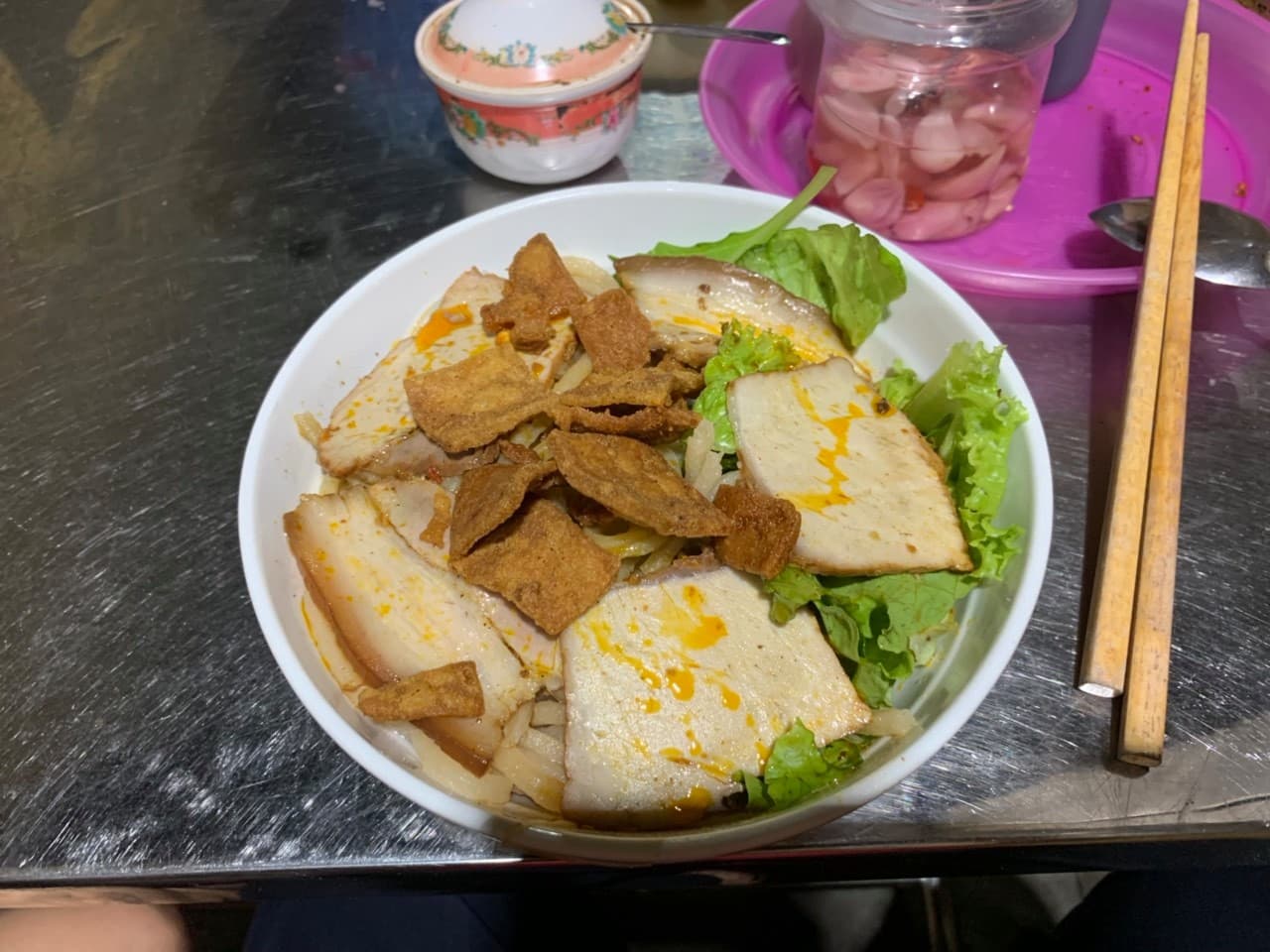
Cao lau
Hoi An’s signature dish: thick noodles with pork, greens and crisp croutons, traditionally made with local well water and only in Hoi An.
 Chainwit. · CC BY 4.0 via Wikimedia Commons
White rose dumplings (banh bao vac)
Delicate translucent shrimp dumplings shaped like roses, a Hoi An speciality.
 David · Public domain via Wikimedia Commons
Com ga (chicken rice)
Shredded chicken over turmeric-tinted rice with herbs; a Hoi An staple.
 Hậu Mai · Pexels
Banh mi
The French-Vietnamese baguette sandwich; Hoi An is famous for some of the country’s best.
 Pragyan Bezbaruah · Pexels
Banh xeo
A crisp turmeric rice-flour pancake filled with pork and shrimp, wrapped in herbs and rice paper.
Street stalls and market kitchens serve the classic dishes cheaply and well; the Ancient Town restaurants trade partly on setting. Cao lau and white rose are the two dishes to seek out.
Where to eat
Banh Mi Phuong
institutionThe banh mi shop made internationally famous after Anthony Bourdain featured it; expect a queue at peak times. It was suspended for three months after a food-poisoning case in September 2023 and reopened on 3 January 2024.
Last researched 2026-09-22
Hoi An Central Market food stalls
marketThe market kitchens are where locals eat the Hoi An classics for a fraction of restaurant prices.
Last researched 2026-07-15
Morning Glory
modernA well-known Ancient Town restaurant serving refined versions of the local street dishes, with an associated cooking school. The same owner runs two branches, Morning Glory Original and Morning Glory Signature; check which one you are booking.
Last researched 2026-07-15
Sunrises
 Võ Văn Tiến · Pexels
An Bang Beach
The beach faces east, so the sun rises straight out of the sea; fishing boats work the shallows and the beach bars are still shuttered and quiet.
Year-round
Sunsets
 VANNGO Ng · Pexels
Thu Bon riverfront, Ancient Town
As the light drops, the lanterns come on along the Hoai river, the Thu Bon’s branch through the old town, and boats sell floating paper candles; the classic Hoi An evening rather than a big open sunset.
Year-round · Blue hour just after sunset gives the best balance of sky and lantern light.
An Bang Beach bars
The beach faces east so it does not catch the sunset over the sea, but the beach bars are a relaxed place for the light to fade with a drink.
Year-round
 Quang Nguyen Vinh · Pexels
Cam Nam island riverbank
A quieter bank just across the river from the Ancient Town, looking back at the old town’s roofs and lantern light as it comes on.
Year-round
Day trips
 [Tycho] talk , http://shansov.net · CC BY-SA 3.0 via Wikimedia Commons
My Son Sanctuary
The UNESCO-listed Cham tower-temples in a jungle valley, best visited early before the heat and the tour buses; often combined with a river-boat return.
About 1 hour each way · Half day
 Kok Leng Yeo · CC BY 2.0 via Wikimedia Commons
Cham Islands (Cu Lao Cham)
A boat trip to the offshore biosphere reserve for snorkelling over coral reefs, a fishing village and quiet beaches. Boats run mainly from March to August; outside those months most trips stop for rough seas. The speedboat from Cua Dai costs about 350,000 VND in total with the sightseeing and environment fees.
About 15 to 20 minutes each way by speedboat from Cua Dai · Full day
 Angcr (Ang Cheng Rui). · CC BY 3.0 via Wikimedia Commons
Marble Mountains and Da Nang
The cave-riddled Marble Mountains and the beaches and bridges of Da Nang, an easy half-day between Hoi An and the airport.
About 30 to 45 minutes each way · Half day
After dark
 VANNGO Ng · Pexels
Lantern walk along the Thu Bon
walkWalk the riverfront after dark as the silk lanterns light up and floating candles drift downriver; strongest on the monthly full moon.
Cooking class then dinner
foodA late-afternoon cooking class in Tra Que or the Ancient Town, ending in dinner of the dishes you have made.
Daily itinerary
Three days in Hoi An: Ancient Town, beach and My Son
One base in or near the Ancient Town, walking and cycling by day, with one half-day trip to My Son. Time the full moon if you can.
- 1
The Ancient Town
relaxedBuy the heritage ticket and walk the Ancient Town: the Japanese Covered Bridge, an assembly hall and a merchant house.Cao lau and white rose at a market kitchen.Rest through the midday heat; browse the tailors and lantern shops later.The Thu Bon riverfront as the lanterns come on.Dinner in the Ancient Town or across on Cam Nam.A lantern walk and a boat with floating candles.No car needed; the Ancient Town is walkable.Estimate: Swap a merchant house for a cooking class if it is raining.
- 2
Beach and villages
moderateCycle out to An Bang beach for a swim before it heats up.Seafood at an An Bang beach shack.Stop at Tra Que herb village on the ride back.A drink at an An Bang beach bar or back at the river.Banh mi and street food, or Morning Glory for a sit-down version.A quiet night; early start tomorrow.Bicycle or taxi to the beach; no car needed.Estimate: From March to August, swap the beach for a Cham Islands boat day if the sea is calm.
- 3
My Son and departure
moderateEarly trip to the My Son Sanctuary before the heat and crowds.Lunch back in Hoi An.Last walk through the Ancient Town or a final swim.A last riverfront hour if your flight is late.Early dinner before a transfer to Da Nang.Departure via Da Nang airport.Leave buffer for the 45-minute drive to Da Nang airport.Estimate: Swap My Son for the Marble Mountains on the way to the airport.
Getting around
- Da Nang International Airport (DAD) is the gateway, about 45 to 50 minutes by car or private transfer to Hoi An.
- Hoi An itself has no train or airport; arrivals come via Da Nang by taxi, Grab, shuttle or private car.
- From Israel there is no flight to Da Nang. The Israel Airports Authority board for 21 to 25 September 2026 shows one Vietnam service, Arkia to Hanoi (IZ595 out on 21 September, IZ596 back on 23 September), with no Da Nang or Ho Chi Minh City rows, so plan Hanoi plus a domestic flight, or a one-stop routing through Dubai, Doha or Bangkok.
- Israelis need a visa: Israel is not on Vietnam's 45-day exemption list. Apply for the e-visa, valid up to 90 days, on the government portal at evisa.gov.vn and nowhere else.
- The Ancient Town is largely traffic-free and best explored on foot; many hotels lend bicycles.
- Taxis and the Grab app cover the beach, the villages and Da Nang.
- Resorts outside town usually run a free shuttle into the Ancient Town and to the beach.
Things worth knowing
- · Visiting only as a day trip from Da Nang and missing the lantern-lit evening.
- · Travelling in October or November without allowing for flood disruption.
- · Ordering a tailored suit on the last day with no time for fittings.
Budget
| Low | Expected | Comfortable | |
|---|---|---|---|
| Accommodation style / per night | ₫500,000≈ $19 | ₫1,500,000≈ $58 | ₫4,000,000≈ $154 |
| Food style / per day | ₫200,000≈ $8 | ₫500,000≈ $19 | ₫1,200,000≈ $46 |
| Local transport / per day | ₫50,000≈ $2 | ₫200,000≈ $8 | ₫500,000≈ $19 |
| Estimate / per day | ₫120,000≈ $5 | ₫300,000≈ $12 | ₫700,000≈ $27 |
Estimate · VND · 2026-07-15. Figures in Vietnamese Dong, per room per night for accommodation (two sharing). Estimates drawn from widely consistent 2025 to 2026 travel cost guides rather than a single official source; peak season and the top resorts run higher. · 1 USD = ₫25,897 (14 Oct 2026)
Things worth knowing
Frequently asked questions
How many days do you need in Hoi An?
Two to four days. Two covers the Ancient Town and the beach; three or four adds My Son, the Cham Islands or a cooking class without rushing.
What is the best area to stay in Hoi An?
In or near the Ancient Town for the evenings and walkability, or a riverside or beach resort a short shuttle away for quiet and a pool. Cam Thanh and the Thu Bon riverside sit between the two.
When is the best time to visit Hoi An?
February to July is the dry, comfortable window, with February to April the mildest. October and November are the flood months: at the end of October 2025 the river reached a record 5.62 m and much of the Ancient Town went under water. If you travel then, book refundable and keep a spare day.
How do we get to Hoi An from Israel?
With one stop at least. The only direct flights from Israel to Vietnam go to Hanoi, on Arkia, and in the week we checked there was one round trip; from Hanoi a domestic flight to Da Nang takes you within about 45 minutes of Hoi An. Otherwise route through Dubai, Doha or Bangkok. Israelis are not on Vietnam's visa-exemption list, so apply for the e-visa at evisa.gov.vn.
Do you need to stay overnight in Hoi An?
Yes if you can. The Ancient Town is at its best in the evening when the lanterns are lit; day-trippers from Da Nang miss that hour entirely.
Is Hoi An worth it for the food?
Very much so. Cao lau, white rose dumplings and com ga are Hoi An specialities, and the market kitchens and street stalls serve them cheaply and well.
Sources (8)
- Hoi An Ancient Town is a UNESCO World Heritage site · unesco · 2026-07-15
- My Son Sanctuary is a UNESCO World Heritage site near Hoi An · unesco · 2026-07-15
- Cu Lao Cham Hoi An is a UNESCO biosphere reserve · unesco · 2026-07-15
- Hoi An overview and practical travel information · tourism-board · 2026-09-22
- At the end of October 2025 the Thu Bon River at Hoi An rose to 5.62 metres, 0.14 metres above the historic flood level of 1964, and the water receded from the ancient town on 31 October · reputable-local · 2026-09-22
- Under the 2025 administrative reorganisation Hoi An was reorganised into three wards, Hoi An, Hoi An Dong and Hoi An Tay, and one commune, Tan Hiep (the Cham Islands), within Da Nang city from 1 July 2025 · reputable-local · 2026-09-22
- The Israel National Security Council travel-warnings dataset on data.gov.il lists Vietnam with the recommendation to take ordinary precautions and no travel warning (level 1), and the Foreign Ministry advice to stay alert and follow the media · government · 2026-09-22
- My Son Sanctuary charges foreign visitors 150,000 VND including the sightseeing fee and services · official · 2026-09-22