Egypt · Cairo and the Nile Valley
Egypt: Cairo, Luxor & the Nile
Cairo first: Giza and the Grand Egyptian Museum on one day, Saqqara and Coptic Cairo on another, Islamic Cairo and the bazaar on a third. Then fly to Luxor for Karnak, the Valley of the Kings and a dawn balloon, board a Luxor-to-Aswan cruise calling at Edfu and Kom Ombo, and finish in Aswan with Philae, a felucca at sunset and the early run to Abu Simbel.
 Nomo michael hoefner / http://www.zwo5.d / CC BY-SA 2.5 via Wikimedia Commons
Overview
No trip stacks this much human history into ten days: the pyramids at Giza, a museum that finally shows Tutankhamun whole, and a slow boat between the temples of Luxor and Aswan. 2026 is the first full year of the Grand Egyptian Museum, open since November 2025 after two decades of construction, and the year the rest of the classic route got reshuffled around it: monument ticket windows went card-only, the sleeper train got a new operator and refurbished carriages, and both of the Nile’s legendary hotels passed from Sofitel to Mandarin Oriental, with Luxor’s Winter Palace closed for restoration until 2027. The old itinerary still works, and works better than it has in years, but the details a 2024 guidebook gives you are wrong in a dozen places. This guide is the 2026 version.
Book the GEM time slot before you book anything else: entry is online-only with timed slots, and the museum is the reason 2026 is the year to go. Take the cruise south from Luxor rather than north, four nights not three, and pick the boat by cabin position rather than chandeliers: boats dock stacked side by side with engines running, so a midship cabin on an upper deck matters more than the brochure. Fly Cairo to Luxor and Aswan to Cairo, and spend the saved night in Aswan rather than on a bus. Bring two cards and a stack of small dollar or euro notes: the ticket windows now refuse cash, and everyone else prefers it.
Best for
History lovers · Couples · First-time Egypt · Museum obsessives · Winter-sun travellers · Photographers
Daily itinerary
9 to 12 days
Unlike a city break, this is a route: Cairo for the pyramids and the museums, a flight south, then the Nile itself as your hotel for three or four nights while the temples come to you. Unlike most famous journeys, the sights genuinely outrank the logistics: Karnak, the Valley of the Kings and Abu Simbel are as overwhelming as their reputations. And unlike almost anywhere else, the country repriced itself for 2026: tickets are dearer in pounds but the pound is around 50 to the dollar, so in hard currency the repriced tickets sting far less than the numbers suggest, provided you know the current rules: timed online-only entry at the GEM, cards at the ticket window, cash for everything else.
Best time to visit
October to April is the season: Luxor and Aswan sit in the Sahara, and winter means 22 to 28C days, cold desert evenings and full boats. May and September are the gambles that mostly pay off, hot but workable if you tour at dawn. June to August is for the brave only: Luxor and Aswan average highs above 40C, and afternoon sightseeing stops being fun and starts being a medical question. Cairo runs several degrees cooler than Luxor, most noticeably in summer.
- October to November: The sweet spot: summer heat breaking, 30 to 35C in Luxor, boats back to full schedules, and the 22 October sun alignment at Abu Simbel. Book cruises a couple of months out.
- December to February: Peak: 22 to 26C days in Upper Egypt, cold nights (Cairo can drop under 10C), everything open and everything busy. The GEM, the balloon and the top boats need booking well ahead.
- March to April: Warming fast, 28 to 35C, occasional khamsin dust winds. The 22 February Abu Simbel alignment falls just before; Ramadan lands here or nearby in coming years, worth checking against your dates.
- May to September: The furnace: 38 to 42C average highs in Luxor and Aswan, hotter in the tomb valleys. Prices are lowest, mornings are empty, afternoons are a pool. Only for travellers who genuinely tolerate heat.
Things worth knowing
- Abu Simbel Sun Festival, 22 February and 22 October: the dawn sun reaches the sanctuary statues of Ramses II. The official portal sells a dearer alignment-day ticket and the site is at its fullest.
- Ramadan (expected 8 February to 9 March 2027): sites stay open with shortened hours, evenings turn festive, daytime dining thins outside hotels and cruise boats.
Where to stay
 Dimitra M.K · Pexels
Zamalek and Garden City (Cairo)
The two leafy, embassy-lined quarters either side of downtown, and the natural first-timer base. Zamalek fills its Nile island with galleries, bookshops and most of the restaurants worth crossing town for; Garden City, on the east bank, holds the grand Nile-front hotels within a short ride of Tahrir Square and the Egyptian Museum. Both put the river at the end of the street and a felucca dock nearby.
Best for: First-time visitors · Food and cafes · Nile views · Couples
Cairo traffic makes even short hops slow at rush hour; count the pyramids as a 45-to-60-minute ride from here, more in traffic.
 Marius Mann · Pexels
Downtown and Tahrir (Cairo)
The belle-epoque grid around Tahrir Square: faded 1900s facades, koshary institutions, and the Egyptian Museum on the square itself. The value base, with real city energy and the metro under your feet, at the price of noise and scruff. From here you walk to the museum and ride everywhere else.
Best for: Budget and midrange stays · Museum access · Street food · Urban energy
Loud, chaotic and unpolished; light sleepers should ask for a courtyard-facing room. Solo women report more hassle here than in Zamalek.
 Michael Tyler · CC BY-SA 2.0 via Wikimedia Commons
Giza and the pyramid fringe
The blocks and garden hotels under the plateau, where a room with the right aspect frames the pyramids at breakfast. Base here for one or two nights around the Giza-plus-GEM day: the museum is minutes away and the plateau opens before the tour buses arrive from downtown. The neighbourhood itself is a workaday sprawl; you stay for the view, not the streets.
Best for: Pyramid views · One-night splurge · Early plateau starts · Photographers
Beyond the hotel walls this is ordinary outer Cairo: dinner options are mostly in-house, and central Cairo is 45 minutes away on a good day.
 Vyacheslav Argenberg · CC BY 4.0 via Wikimedia Commons
Luxor east bank
The living city between Karnak and Luxor Temple, strung along a Nile corniche where cruise boats moor three deep. Hotels here put Karnak within minutes, the temple-lit evenings on foot, and the ferry or a motorboat to the west bank across the river. The practical Luxor base for most trips.
Best for: First-time visitors · Temple evenings · Cruise embarkation · Convenience
Caleche drivers and boat touts work the corniche hard; a polite, moving no thank you is the whole technique.
 Vyacheslav Argenberg · CC BY 4.0 via Wikimedia Commons
Luxor west bank
Villages, sugarcane and the Theban necropolis: the quiet, rural alternative for travellers who want the tombs at their doorstep and dinner under palms. A handful of characterful small hotels sit within minutes of the Valley of the Kings and Medinet Habu, and the balloons launch from this side at dawn.
Best for: Second-time visitors · Slow travel · Dawn starts at the tombs · Peace and quiet
Restaurants and evening life are thin; you cross the river (or drive the long bridge loop) for the east-bank temples and most dinners.
 Omar · Pexels
Aswan corniche and the islands
Egypt at its most relaxed: a wide, island-studded stretch of river where feluccas tack between granite boulders and Nubian villages paint themselves ochre and blue. Stay on the corniche for the views and the ferry docks, or on Elephantine Island itself for gardens and quiet. After Cairo, Aswan reads like an exhale.
Best for: Winding down · Felucca sunsets · Nubian culture · Couples
Sights are spread out and boat-dependent; budget for a string of small motorboat fares and agree each price before you board.
Where to sleep
Four Seasons Hotel Cairo at Nile Plaza
luxury · Garden City, Cairo
Best for: Nile views over the city · Polished first landing in Egypt · Business-grade everything
- 364 rooms up a 30-floor tower on the Garden City corniche, most with full-frontal Nile views
- A pool deck and spa that make Cairo’s noise feel far away
- Walkable to the Egyptian Museum on a cool morning, and staff who fix logistics fast
- A big-city tower rather than a characterful address
- Restaurant prices in another economy from the street outside
- Traffic to Giza is the same 45-plus minutes as everywhere central
 Gerhard Haubold · CC BY-SA 3.0 via Wikimedia Commons
Marriott Mena House, Cairo
unique · Giza, at the pyramid gates
Best for: Pyramid views from bed · The Giza-plus-GEM day · A once-per-trip splurge
- The 1869 hunting-lodge original in 40 acres of gardens, with the Great Pyramid filling the right rooms’ windows
- Minutes from both the plateau entrance and the Grand Egyptian Museum, so you beat the buses twice
- The garden restaurants at dusk, pyramids floodlit behind the palms
- Pyramid-view rooms carry a serious premium and sell out first
- Far from central Cairo: plan your Giza days here and your city days elsewhere, or accept the commute
- Wedding and event traffic on weekends
Steigenberger Hotel El Tahrir
value · Downtown Cairo, on Tahrir Square
Best for: Midrange comfort downtown · Museum-first mornings · Solo travellers and short stays
- 295 modern rooms directly on Tahrir Square, overlooking the Egyptian Museum
- The rooftop pool is a genuine asset in this price band
- Metro, museum and koshary institutions all on foot
- Downtown noise is part of the deal; ask high and away from the square
- Compact rooms by resort standards
- No Nile view at this address
Hilton Luxor Resort & Spa
resort · Luxor east bank, beside Karnak
Best for: A pool between temple days · Karnak at opening time · Couples
- Nile-edge infinity pools looking across to the Theban hills
- A couple of minutes from Karnak, so you can be first through the gate
- One of the strongest spas in Upper Egypt, useful after tomb-valley days
- A 10-to-15-minute ride from Luxor Temple and the town evening
- Resort-priced food and drink
- Books out around peak weeks and balloon-season weekends
Al Moudira Hotel
boutique · Luxor west bank
Best for: Character over chain polish · Tomb-valley mornings · Long dinners under arches
- A 54-suite hand-built palace of domes, courtyards and antiques amid west-bank fields
- The Valley of the Kings and Medinet Habu are minutes away, so you start before the boats’ buses arrive
- Evenings are candlelit and genuinely quiet
- You are 25 to 40 minutes from the east-bank temples and restaurants
- The pool and gardens invite a rest day your itinerary may not have
- No Nile frontage; the setting is countryside, not corniche
 Warren LeMay from Cullowhee, NC, United States · CC0 via Wikimedia Commons
Mandarin Oriental, Old Cataract Aswan
luxury · Aswan, above the first cataract
Best for: The legendary address · Terrace sunsets over Elephantine · Agatha Christie romantics
- The 1899 pink-granite grande dame that appears in Agatha Christie’s Death on the Nile, now under Mandarin Oriental (rebranded from Sofitel Legend on 1 May 2026)
- The heritage Palace building trades on 35 rooms and suites while works run, so it is the most intimate the hotel has ever been
- The terrace at sunset, looking over the cataract boulders, is Aswan’s single best seat
- The Nile Wing is under comprehensive renovation until around July 2027, with the construction presence that implies
- Peak-season rates match the legend
- Non-guests may face minimum-spend rules for the famous terrace; check before building an evening around it
The Oberoi Philae, Nile cruiser
unique · The Nile, sailing Luxor to Aswan
Best for: The floating-hotel version of this trip · Couples · Small-ship calm
- 22 cabins and suites where the mass boats carry 50-plus, with the service ratio that implies
- The 2026 schedule runs short 2- and 3-night itineraries departing Tuesdays and Saturdays from either end, easy to slot into a bigger trip
- Sister ship Zahra (28 cabins) adds a spa-led alternative
- Several times the per-night price of a good standard boat
- Short itineraries mean temple stops at pace
- Docking is communal: even luxury boats raft up alongside others in Edfu and Kom Ombo
Essential experiences
 Dimitra M.K · Pexels
Pyramids of Giza and the Sphinx
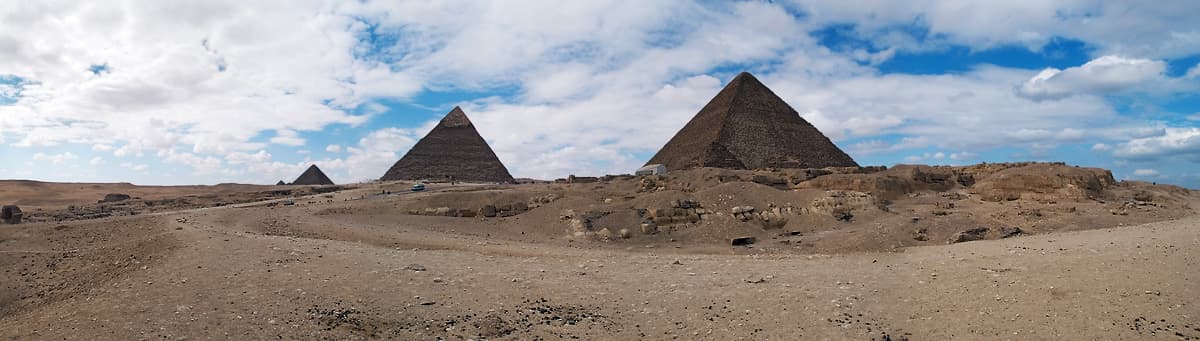
The last ancient wonder standing, and it still wins: three pyramids on a desert shelf above the city, the Sphinx below, and 4,500 years of scale that photographs never quite carry. General plateau entry ran EGP 700 for foreigners in 2026, with the Great Pyramid’s interior a steep extra (about EGP 1,500) that we would skip in favour of Khafre’s cheaper, near-identical passage. Go at opening, do the panoramic viewpoint first, and expect the camel men: a firm no thank you, repeated while walking, is the whole art.
 Amr F.Nagy · Public domain via Wikimedia Commons
Grand Egyptian Museum (GEM)
Two decades in the building and open at last: the full Tutankhamun collection shown together for the first time, some 5,000 objects including the mask and chariots, in a vast tilted-glass complex facing the pyramids. Entry is timed and online-only via the official platform (foreigner tickets around EGP 1,700, and the museum has announced a price rise from 1 November 2026), galleries open 9am to 6pm with late nights to 9pm on Wednesdays and Saturdays, and phone photography is fine throughout while dedicated cameras stay out of the Tutankhamun galleries. Give it a half day minimum.
 Jorge Láscar from Melbourne, Australia · CC BY 2.0 via Wikimedia Commons
Egyptian Museum, Tahrir
The 1902 original on Tahrir Square, and still worth a morning even after the GEM: the Narmer Palette, the Tanis silver treasures, Khafre in diorite, and halls whose crowded, wooden-case charm is itself a period piece. Tutankhamun’s treasures have moved to the GEM and the royal mummies to the NMEC, but around 170,000 objects remain and the museum is being re-curated rather than retired. Foreigner entry about EGP 550.
 Roland Unger · CC BY-SA 4.0 via Wikimedia Commons
NMEC and the Royal Mummies
The National Museum of Egyptian Civilization in Fustat holds what the GEM does not: the royal mummies themselves, Ramses II and Hatshepsut among more than 20, moved here in 2021’s Pharaohs’ Golden Parade and displayed in a hushed, dark crypt-like hall that earns its solemnity. The mummies hall is included in the main ticket. Pairs naturally with Coptic Cairo, ten minutes away.
 Tamer Soliman · Pexels
Saqqara and the Step Pyramid
Where the pyramid was invented: Djoser’s stepped tomb of about 2650 BC rising over a desert necropolis that keeps yielding new finds, with painted tomb chapels far quieter than anything at Giza. Half a day here with Dahshur’s Bent and Red Pyramids shows you the whole learning curve that ends at Giza, and in blissfully fewer crowds. Foreigner entry about EGP 600, interiors extra.
 Jorge Láscar from Melbourne, Australia · CC BY 2.0 via Wikimedia Commons
Islamic Cairo: the Citadel and al-Muizz Street
A thousand years of the medieval city in one afternoon: Saladin’s hilltop Citadel with the alabaster Muhammad Ali Mosque and the finest skyline view in Cairo, then down into al-Muizz Street, a walking museum of Mamluk facades, minarets and workshops that runs to the gates of Khan el-Khalili. The street itself is free; the Citadel charged foreigners about EGP 550 in 2026.
 Ahmed Al.Badawy from Cairo, Egypt · CC BY-SA 2.0 via Wikimedia Commons
Khan el-Khalili
The 600-year-old bazaar, equal parts souvenir gauntlet and genuine city institution. Skip the front alleys’ pyramids-on-papyrus, drift into the metalworkers’ and spice lanes, and finish with mint tea at a centuries-old cafe: the classic order is a late-afternoon wander that slides into the evening bustle. Haggling is expected, good-natured and starts at roughly half the first price.
 Frans van Heerden · Pexels
Karnak
Not a temple but a temple city, built over 1,500 years: the Great Hypostyle Hall’s 134 papyrus columns are the single most overwhelming built space in Egypt, and the complex behind them repays a slow half morning. Arrive at the 6am opening for an hour of low light and near-solitude before the boats’ buses land. Foreigner entry EGP 600 on the official portal in 2026.
 Sandy Gamal · CC BY-SA 4.0 via Wikimedia Commons
Luxor Temple after dark
The city-centre temple keeps evening hours, and floodlit is how to see it: golden stone against a black sky, the mosque of Abu Haggag glowing inside the courtyard, and the excavated Avenue of Sphinxes stretching toward Karnak from the front gate. Foreigner entry EGP 500. Come around sunset and let the light change do the work.
 Vyacheslav Argenberg · CC BY 4.0 via Wikimedia Commons
Valley of the Kings
The royal necropolis where the standard EGP 750 ticket admits you to three tombs from the open rotation, with the heavyweights priced separately: Tutankhamun about EGP 700, Ramses V/VI about EGP 220, and Seti I, the finest tomb in Egypt, about EGP 2,000. New for this era: Amenhotep III’s vast WV22 opened to the public in October 2025 after a 20-year restoration. Ticket windows are card-only. Go at the 6am opening (a balloon morning lands you here later, still ahead of the worst heat), tour tombs before the sun peaks, and know that Nefertari’s tomb in the nearby Valley of the Queens has been closed since March 2024 with no announced reopening.
 M abnodey · Pexels
Temple of Hatshepsut
The terraced mortuary temple of Egypt’s great female pharaoh, ramped into the amphitheatre of cliffs at Deir el-Bahari as if designed by a modernist three millennia early. Best in the first hour of light, before the cliff face turns into a reflector oven; pairs with Medinet Habu and the Colossi of Memnon on a west-bank morning. Foreigner entry EGP 440.
 AXP Photography · Pexels
Philae
The island temple of Isis, moved stone by stone above the rising lake in the 1970s and reached only by motorboat from the Aswan marina: the approach across the water is half the magic. Entry EGP 550 plus the boat (around EGP 700 per boat for up to eight, agreed before boarding). The evening sound-and-light version, lit and theatrical, is the best of its genre in Egypt.
 Walter Galvis · Pexels
Abu Simbel
Ramses II’s four colossi carved into a Nubian cliff, 280 km south of Aswan and worth every pre-dawn kilometre: the whole temple was sawn apart and lifted 65 metres when Lake Nasser rose, a relocation so careful most visitors never spot a seam. Foreigner entry EGP 822 (EGP 1,272 on the 22 February and 22 October alignment days, when dawn sun reaches the inner sanctuary). Go by road with the early departures, or fly from Aswan and buy back your morning.
 Jorge Láscar from Melbourne, Australia / CC BY 2.0 via Wikimedia Commons
 Amr F.Nagy / Public domain via Wikimedia Commons
Food & drink
 Morios · CC BY-SA 3.0 via Wikimedia Commons
Koshary
Rice, lentils, pasta and chickpeas under spiced tomato sauce and a snow of fried onions: Egypt’s national carbohydrate, eaten fast, cheap and everywhere.
 Hosary · CC BY-SA 4.0 via Wikimedia Commons
Ful and taameya
Slow-stewed fava beans and the fava-based Egyptian falafel, greener and softer than the chickpea kind: the breakfast the whole country runs on.
 Habib M'henni · CC BY-SA 3.0 via Wikimedia Commons
Molokheya
Glossy jute-leaf soup finished with a garlic-and-coriander sizzle, ladled over rice, usually with chicken or rabbit. Comfort food with an ancient pedigree.
 medea_material · CC BY 2.0 via Wikimedia Commons
Hamam mahshi
Pigeon stuffed with green wheat or spiced rice, roasted until the skin crackles: the festive Cairo order, best in the old downtown institutions.
 Zak Chapman · Pexels
Grilled Nile perch and Nubian tagines
The south’s table: whole fish from the lake, and clay-pot stews in the Nubian villages around Aswan, milder and sweeter-spiced than Cairo cooking.
 Fred Cherrygarden · CC BY-SA 4.0 via Wikimedia Commons
Om Ali
Egypt’s bread-and-butter pudding: layered pastry baked with milk, nuts and raisins under a browned cream crust. Order it wherever you see it made to order.
 Mohamed Ouda · CC BY-SA 4.0 via Wikimedia Commons
Feteer meshaltet
A hundred buttery layers folded into a flaky disc, eaten with honey and cream or stuffed savoury: the countryside’s pastry, increasingly back on smart menus.
Lunch runs late (2 to 4pm) and dinner later: Cairo restaurants fill from 9pm and nobody hurries you out. Alcohol is served in hotels, on cruise boats and in a minority of licensed restaurants, not by default. A 12 percent service charge usually appears on the bill and a little extra cash on top is customary. During Ramadan, daytime dining outside hotels thins and the city eats spectacularly after sunset.
Where to eat
Abou El Sid, Zamalek
institutionCairo’s salon of Egyptian cooking: molokheya, stuffed pigeon and om ali in a lamplit, antique-filled room on 26th of July Street. Book ahead on weekends; portions assume sharing.
Last researched 2026-08-28
Zooba
street-foodEgyptian street classics, taameya, ful, hawawshi, koshary, done fast, bright and reliably, which matters on day one of a sensitive stomach. The Zamalek flagship is the handy one.
Last researched 2026-08-28
Sofra
institutionA 1930s Luxor house turned restaurant: duck with molokheya, stuffed pigeon and a rooftop of cushioned alcoves. Unlicensed, beloved and busy: reserve for dinner in season.
Last researched 2026-08-28
Solaih Nubian Restaurant
casualIn the painted Nubian village across the river: clay-pot stews, grilled fish and hibiscus juice on terraces over the Nile. Combine with the village wander and a felucca or motorboat back.
Last researched 2026-08-28
Sunrises
 Balloon_over_Luxor_-_Egypt.jpg: Marcosleal derivative work: Pro2 (talk) · CC BY-SA 3.0 via Wikimedia Commons
Ballooning over the Theban necropolis
Luxor’s dawn balloon flight is the classic for a reason: lift-off in the dark from the west bank, then first light hitting Hatshepsut’s terraces and the tomb valleys beneath a sky full of other balloons. Flights are sunrise-only, weather-cancelled without drama when the wind is up, and cost roughly EGP 2,900 to 3,800 per person with hotel pickup around 4am.
October to April
 AXP Photography · Pexels
Abu Simbel in the morning light
The road departures from Aswan leave around 4am so you walk up while the sun is still low on the four colossi face-on: the temple faces east, and morning is its hour. On 22 February and 22 October the dawn beam reaches the sanctuary itself and the crowds triple.
Year-round; alignment days 22 Feb and 22 Oct
Sunsets
 Diego Delso · CC BY-SA 4.0 via Wikimedia Commons
A felucca off Aswan
The single best hour in Egypt for the money: a lateen-sailed felucca tacking between Elephantine’s granite boulders as the desert on the west bank goes orange. Hire at the corniche, agree the price first (around EGP 200 to 300 for the boat per hour), and let the wind do the rest.
Year-round · Boats gather along the Aswan corniche; an hour is enough, ninety minutes is better.
 Jorge Láscar from Melbourne, Australia · CC BY 2.0 via Wikimedia Commons
Luxor Temple at dusk
Time your visit so daylight fades while you are inside: the floodlights come up, the stone goes gold, and the colonnade of Amenhotep III turns into the best-lit photograph you will take all trip. The rare major site you can do this at, thanks to evening hours.
Year-round · In the city centre; walk in from the corniche. · Blue hour, roughly 20 to 40 minutes after sunset, is the shot.
 David Berkowitz from New York, NY, USA · CC BY 2.0 via Wikimedia Commons
The sundeck leaving Esna
On the cruise’s first sailing evening the boat clears the Esna lock and the Nile finally looks like the postcard: palms, minarets, water buffalo, and the sun dropping into the west-bank fields. Claim a deck chair with tea and do nothing at all.
October to April · Aboard; southbound boats typically sail this stretch late on the first day.
Day trips
 Alexandra Bakhareva · Pexels
Saqqara, Dahshur and Memphis
The pyramid backstory in half a day: Djoser’s Step Pyramid and the painted tombs at Saqqara, the Bent and Red Pyramids standing alone in the desert at Dahshur (the Red’s interior is the best value climb in Egypt), and the fallen colossus of Ramses II at Memphis. Far fewer people than Giza and, for many travellers, the better morning.
40 to 60 minutes from central Cairo to Saqqara; the three sites loop comfortably · Half day, morning
 Alberto Capparelli · Pexels
Abu Simbel from Aswan
The pre-dawn run south to Ramses II’s rescued colossi: 3.5 hours each way by road with the organized early departures, or a 45-minute flight that turns it into a civilized half day. Either way you get about two hours at the temples, which is enough; the second temple, Nefertari’s, is the sleeper hit.
About 3.5 hours each way by road, or 45 minutes by air · Half to full day, starting around 4am by road
 AXP Photography · Pexels
Gharb Soheil Nubian village
Across the river from Aswan, a village of hand-painted ochre-and-indigo houses, spice stalls and hibiscus tea on Nile-front terraces. Touristed but genuinely Nubian, and the motorboat ride weaving through the cataract boulders to reach it is its own small cruise. Combine with Philae for a full Aswan day.
20 to 30 minutes by motorboat from the Aswan corniche · Half day
 ianpudsey · CC BY 3.0 via Wikimedia Commons
The Luxor-Aswan cruise itself
Treat the boat as the day trip that lasts three or four days: southbound boats typically leave Luxor on Mondays (four nights) and northbound leave Aswan on Fridays (three nights), passing the Esna lock and calling at Edfu’s Temple of Horus (EGP 550), the best-preserved in Egypt, and double-sided Kom Ombo (EGP 450) at dusk. Dahabiyas, the sailing alternative with 6 to 12 guests (no engine of their own; a tug assists when the wind fails), run Esna to Aswan and cost roughly USD 250 to 350 per person per night.
3 or 4 nights between Luxor and Aswan · 4 nights southbound
After dark
 Wael Ghabara · CC BY-SA 3.0 via Wikimedia Commons
Khan el-Khalili after dark
walkThe bazaar at its best hours: lanterns lit, locals out, mint tea and shisha at the old cafes around al-Hussein. Go for the wander rather than the shopping and stay for a late Egyptian dinner nearby.
 Dennis G. Jarvis · CC BY-SA 2.0 via Wikimedia Commons
Sound and light at Karnak or Philae
showUnapologetically theatrical: floodlit ruins, booming narration, and in Philae’s case a night boat ride to an illuminated island. Kitsch, and somehow it works. About USD 20 a head, booked via the official show operator.
 Faiz Majid · Pexels
The cruise deck at night
aboardAfter Kom Ombo the boats sail or moor mid-river, and the deck becomes the evening: dark banks, bright stars, tea or a beer, and the next temple already scheduled for dawn. The galabeya party is optional; the stillness is not.
Daily itinerary
Ten days: Cairo, Luxor and the river to Aswan
Three Cairo nights, a flight south, two Luxor nights for the balloon and both banks, then the four-night Monday cruise to Aswan and a flight back. The fixed points to book first: the GEM time slot, the cruise (southbound boats typically depart Luxor on Mondays; count backwards from that), the balloon, and Abu Simbel. October to April; reverse the whole thing with a Friday three-night northbound cruise if your dates fit that grid better.
- 1
Arrive Cairo, find the river
relaxedLand at Cairo International (or Sphinx airport if you flew a low-cost carrier), clear the visa formalities (e-visa printed or on your phone), and transfer in: 45 to 75 minutes to Zamalek or Garden City depending on traffic.First koshary, done gently: Zooba in Zamalek.Sleep off the flight, then walk the Zamalek riverfront as the heat breaks.From the hotel bar or a Nile-front terrace.Abou El Sid: molokheya and stuffed pigeon as the opening statement.Early night; tomorrow is the biggest day of the trip.Use Uber or Careem in Cairo rather than street taxis: fixed prices, no meter debate. Airport pickup arranged by the hotel is worth it on arrival day.Estimate: Landing early? Slot the Egyptian Museum on Tahrir in this afternoon and free up day 3.
- 2
Giza: the pyramids and the GEM
fullBe at the plateau for the 8am opening: panoramic viewpoint first for the nine-pyramid photo, then the Sphinx, then Khafre’s interior if you want a passage without the Great Pyramid’s price.By the plateau exit or at Mena House, pyramids over the palms.The Grand Egyptian Museum on your pre-booked slot: the grand staircase, then the Tutankhamun galleries, then whatever your feet have left. Phone photos fine; cameras stay out of the Tut rooms.From the GEM’s upper terraces, pyramids in the frame.Back in Zamalek, something light.Free.Plateau and museum are minutes apart; one driver for the day removes all friction. Both venues: tickets by card, not cash.Estimate: On a grid that lands this day on a Wednesday or Saturday, flip: plateau at dawn, rest at midday, GEM on the late session to 9pm.
- 3
Saqqara morning, older Cairo afternoon
moderateSaqqara, Dahshur and Memphis with a driver: the Step Pyramid, the Red Pyramid’s passage, and painted tombs without the crowds.On the road back, or late and light in town.Coptic Cairo first: the Hanging Church, Abu Serga and Ben Ezra synagogue in one compact quarter, then the NMEC for the Royal Mummies Hall (open daily 9am to 5pm, with an extra 6 to 9pm session on Fridays if the afternoon runs long).Crossing back over the Nile.Koshary Abou Tarek if you want the institution; otherwise your Zamalek shortlist.Pack for the south; confirm the balloon pickup.One hired driver covers Saqqara-Dahshur-Memphis-Fustat naturally; the NMEC and Coptic quarter sit on the way back into town.Estimate: Museum fatigue? Swap the NMEC for an unhurried Coptic quarter and an early dinner, and catch the mummies another day.
- 4
Islamic Cairo, then fly south
moderateThe Citadel early for the skyline and the alabaster mosque, then down to Bab Zuweila and into al-Muizz Street: Mamluk facades, minarets you can climb, workshops in the side lanes.In the bazaar quarter, near al-Hussein.Khan el-Khalili properly: metal lanes, spice lanes, a haggle or two, mint tea at an old cafe.From the airport road, regrettably: the evening EgyptAir hop to Luxor is about an hour.Late and easy on the Luxor corniche.Sleep: the balloon pickup is around 4am.CAI-LXR flights take about an hour and run several times daily; the sleeper train (from about USD 125 per person in a twin) is the romantic alternative but costs this evening. Book a Luxor east-bank hotel for two nights.Estimate: Sleeper-train romantics: Abela’s Elite cars leave Cairo around 7:45pm and reach Luxor near dawn; take it tonight and gain a Cairo afternoon.
- 5
Dawn balloon and the west bank
fullThe balloon at sunrise over the necropolis, then straight into the Valley of the Kings while the day is still cool: three rotation tombs plus Seti I if you will pay for one splurge, Tutankhamun if you must.Near Medinet Habu, in the village shade.Hatshepsut’s terraces, Medinet Habu (the underrated one), and the Colossi of Memnon on the way back to the river.Luxor Temple at dusk, floodlights coming up.Sofra, booked ahead.Free.One west-bank driver for the morning circuit; the valleys’ ticket windows are card-only, so carry the cards and small cash only for tips.Estimate: Balloon cancelled for wind? It rebooks for tomorrow before boarding day, and the tombs forgive a later start in winter.
- 6
Karnak, then board the boat
relaxedKarnak at the 6am opening: an hour in the Hypostyle Hall before the crowds, then the rest of the complex at leisure.Aboard: southbound cruises typically board around midday.Settle in, sail or complete boarding formalities; many boats pass the Esna lock this evening.From the sundeck, the postcard Nile finally in motion.Aboard.Deck, tea, stars.Confirm your boat’s exact boarding time and dock position the day before: Luxor’s moorings stretch along the corniche and boats raft side by side, so you may cross through two other lobbies to reach yours.Estimate: On a three-night Friday northbound grid instead? Run this trip mirrored: fly to Aswan first and finish in Luxor.
- 7
Edfu and Kom Ombo
moderateEdfu: the Temple of Horus, the most complete in Egypt, reached from the dock by caleche or minibus. Go with the boat’s first group to beat the fleet.Aboard, sailing.The best hours of the cruise: reading on deck as the banks slide by.Kom Ombo, ideally: the double temple to Sobek and Horus sits right on the riverbank and many boats call at golden hour.Aboard.The crocodile mummies in Kom Ombo’s small museum, if the call is an evening one.Temple calls are short (60 to 90 minutes) and scheduled by the fleet’s queue at the docks: be on time or the boat’s schedule slips.Estimate: Skip one temple without guilt if you are templed out: the deck is also the point.
- 8
Arrive Aswan: Philae and a felucca
moderateDock in Aswan; out to the High Dam briefly (the view explains all of modern Egypt’s water politics) and the granite quarries’ Unfinished Obelisk.Aboard or in town.Philae by motorboat: the island approach, the Isis colonnades, the Trajan kiosk.A felucca through the cataract boulders: the trip’s gentlest hour.Aboard, or a splurge on the Old Cataract terrace if reservations allow.Rest; tomorrow starts before 4am.Agree every boat price in Aswan before boarding: Philae’s motorboat runs about EGP 700 per boatload, feluccas EGP 200 to 300 an hour.Estimate: Second-time visitors: swap the High Dam for the Nubia Museum, the best-curated small museum in the country. · Prefer spectacle to rest? Philae’s sound and light show replaces the felucca rather than following it: the show needs a second marina run after dark.
- 9
Abu Simbel
fullThe 4am road run (or the short flight) to Abu Simbel: two hours with the colossi, the sanctuary and Nefertari’s smaller temple before the heat.Back in Aswan, late.Recover: pool, or the motorboat to Gharb Soheil’s painted Nubian village for tea on a terrace.The Old Cataract terrace or one more felucca.Solaih in the village, or Nubian grills in town.Free; disembarkation paperwork if your cruise ends tomorrow.Most cruises count this as the disembarkation-adjacent day and sell Abu Simbel as their excursion; booking it independently is fine and often cheaper, just fix the pickup time the night before.Estimate: Skip Abu Simbel only if you must: it is the single most common trip regret. The flight option removes the road hours.
- 10
Aswan morning, home via Cairo
relaxedElephantine Island’s ruins and gardens, or the Nubia Museum if you saved it, at unhurried pace.Light, near the corniche.Fly Aswan to Cairo (about 1h25) and connect onward, or add a Cairo airport-hotel night for an early intercontinental departure.In transit.Book Aswan-Cairo and the international leg on one ticket where possible; if not, leave three hours between them. There is no need to re-enter central Cairo.Estimate: Have two more days? The Sinai add-on (Sharm or Dahab) works as a beach coda via a CAI connection, with its own security realities worth reading up on first.
Getting around
- Cairo International (CAI) is the main gateway, with EgyptAir and Star Alliance partners at Terminal 3; Terminal 1 has been closed for renovation with its flights consolidated into T3. Sphinx International (SPX), on the Giza side, has grown into the low-cost gateway: Wizz Air, easyJet, flydubai, Air Arabia and others use it, and for a Giza-first itinerary it is genuinely closer.
- Visas: most nationalities buy the USD 30 single-entry e-visa in advance at visa2egypt.gov.eg, or a USD 30 visa on arrival (cash) at the bank counters; since 1 August 2026 Cairo airport also sells a USD 36 digital visa via self-service machines. Israeli passport holders are not on the e-visa list and need a consulate visa in advance for mainland Egypt (Tel Aviv or Eilat); the Taba border’s 15-day stamp covers Sinai’s east coast only, never Cairo or the Nile, and its border tax runs USD 20 for Taba itself or USD 120 per person for the rest of Sinai since March 2026.
- From Israel: EgyptAir is the only nonstop Tel Aviv-Cairo carrier, about 1h25 in the air, a few frequencies a week that fluctuate; the overland Taba route leads to Sinai, not to the Nile Valley.
- Cairo to Luxor: fly (about an hour, EgyptAir several times daily, typically USD 80 to 150 one-way) or take the Abela sleeper train from Ramses station, departing around 7:45pm and arriving near dawn: from about USD 125 per person in a shared twin, USD 170 sole occupancy in the refurbished Elite cars, payable in foreign currency or by card.
- Aswan back to Cairo: fly (about 1h25). The day trains between Luxor and Aswan are cheap and scenic; foreigners book via agencies or the dedicated counters since the national railway site needs an Egyptian payment method.
- In Cairo, ride-hailing (Uber, Careem) is the default: cheap, metered and negotiation-free. The metro is faster than any car at rush hour and costs pennies, with women-only carriages available; Line 4 to Giza and the GEM is under construction but not open, so the museum remains a drive.
- In Luxor and Aswan, hotels and boats arrange drivers; otherwise agree taxi fares before boarding. Luxor’s west bank works as a hired-driver morning (expect roughly EGP 1,000 to 1,500 for the circuit); the public ferry crosses the Nile for a few pounds if you like doing things the local way.
- On the water: Philae requires a motorboat (about EGP 700 per boat, up to eight people), feluccas run EGP 200 to 300 an hour for the boat, and every price is agreed before departure, cheerfully and firmly.
Things worth knowing
- · Arriving without a GEM slot: entry is online-only with timed slots, and peak-season dates sell out. Book it before your flights.
- · Turning up at ticket windows with cash: major sites went card-only in the 2025-26 rollout. Bring two cards (windows sometimes reject one network) and keep cash for tips and boats.
- · Booking a Luxor room around the Winter Palace: it closed in May 2026 for restoration and is slated to reopen as a Mandarin Oriental in 2027. The 1886 restaurant went with it.
- · Promising yourself Nefertari’s tomb: it has been closed since March 2024 with no announced reopening. Seti I is the open-splurge alternative.
- · Treating the Sinai stamp as an Egypt visa: the 15-day Taba entry covers the Sinai east coast only; Cairo and the Nile need a full visa, and Israelis need it from a consulate.
- · Underestimating summer: a July tomb valley at 45C is not a sightseeing environment. If you must come June to August, tour at 6am and surrender the afternoons.
Budget
| Low | Expected | Comfortable | |
|---|---|---|---|
| Accommodation style / per night | EGP 2,000≈ $38 | EGP 6,000≈ $114 | EGP 20,000≈ $379 |
| Food style / per day | EGP 400≈ $8 | EGP 1,000≈ $19 | EGP 2,500≈ $47 |
| Local transport / per day | EGP 200≈ $4 | EGP 600≈ $11 | EGP 1,500≈ $28 |
| Estimate / per day | EGP 600≈ $11 | EGP 1,500≈ $28 | EGP 3,500≈ $66 |
Estimate · EGP · 2026-08-28. Egypt runs about 50 pounds to the US dollar (August 2026), which is why the numbers look big and the trip is not. Accommodation is per double room per night: the low band is a clean downtown three-star, the comfortable band a Nile-view five-star; the legend hotels and Giza pyramid-view rooms sit above it. Attractions assume the 2026 official tariffs (Valley of the Kings 750 plus premium tombs, Karnak 600, GEM about 1,700 as a one-off) averaged over the trip; ticket windows are card-only. Day trips cover a west-bank driver circuit or the Abu Simbel road run at the low end and the balloon or an Abu Simbel flight at the top. The cruise is the separate line: figure roughly USD 550 to 1,200 per person for a good 3-to-4-night boat, several times that on the luxury fleet, tips of USD 30 to 50 per person included in etiquette but not in fares. · 1 USD = EGP 53 (14 Oct 2026)
Things worth knowing
Frequently asked questions
How many days do you need for Cairo, Luxor and a Nile cruise?
Nine to twelve. Three or four full days for Cairo and Giza, one or two in Luxor before boarding, three or four nights on the water, and a final Aswan day for Abu Simbel. A week is possible with one Cairo day fewer and the three-night cruise; less than that means cutting one of the three legs entirely.
Nile cruise or fly between Luxor and Aswan?
The cruise, once: it is the easiest way to fold Edfu and Kom Ombo into the trip without arranging separate transfers, and sailing the Nile is half the reason to come. Choose four nights southbound from Luxor over three northbound if you can, for one more sailing day. If boats genuinely do not appeal, fly or drive and base in each city: the temples do not require a cruise.
When is the best time to go?
October to April. December to February has the finest weather and the fullest boats; October-November and March are the value-with-good-weather windows. June to August is brutally hot in Upper Egypt (41C average highs) and only for heat-tolerant travellers on dawn schedules.
Is Egypt safe for tourists right now?
The classic tourist route, Cairo, Giza, Luxor, Aswan and the cruise corridor, sits outside the areas the UK FCDO advises against (check your own government’s guidance too), and tourist police are visible everywhere on it. The formal warnings concern North Sinai, the Libyan border and deep desert areas that this itinerary never approaches. Usual big-city sense in Cairo, sun discipline everywhere.
Can Israelis visit Egypt, and how?
Yes, with planning: mainland Egypt requires a visa arranged in advance through the Egyptian embassy in Tel Aviv or consulate in Eilat (Israeli passports cannot use the e-visa or airport visa), and EgyptAir flies Tel Aviv-Cairo nonstop in about an hour and a half. The Taba land crossing only issues a 15-day Sinai-coast permit, now with a USD 120 Egyptian-side border tax beyond Taba town, and Israel’s NSC holds Sinai at its highest warning level, so the sensible Nile route is by air via Cairo.
Is the old Egyptian Museum still worth visiting after the GEM?
Yes, differently: the GEM has Tutankhamun and the spectacle, Tahrir keeps the Narmer Palette, the Tanis treasures and its time-capsule atmosphere, and the NMEC holds the royal mummies themselves. Museum lovers should do all three; on a tight schedule do the GEM plus the NMEC’s mummies hall.
Sleeper train or flight to Luxor?
The flight, for most: an hour against ten, at a comparable price to a sleeper berth (from about USD 125 per person). The Abela sleeper is the choice if the train itself is the point: the refurbished Elite cars are comfortable, you leave Cairo at dinner time and wake at dawn in Upper Egypt, and it saves a hotel night. Light sleepers should know the track is not smooth.
How much cash should we carry?
Less than you think for tickets (the windows are card-only now) and more than you think for everything else: tips, boats, bazaars and small restaurants run on cash. A daily float of EGP 1,000 to 2,000 in small notes per couple covers tips and the rest of the small-cash economy, plus some US dollars or euros as the reserve currency for bigger private payments.
Sources (13)
- GEM galleries open 9am-6pm (to 9pm Wed/Sat); all tickets online-only with timed slots since 1 December 2025 · official · 2026-08-28
- The Grand Egyptian Museum held its grand opening on 1 November 2025, displaying the full Tutankhamun collection together for the first time · reputable-local · 2026-08-28
- GEM foreigner admission about EGP 1,700 adult / EGP 850 student at opening, with a price increase (about USD 5 for international visitors) announced for 1 November 2026 · reputable-local · 2026-08-28
- Egypt e-visa: USD 30 single / USD 65 multiple entry; Israel not on the eligible-nationalities list · government · 2026-08-28
- Visa on arrival USD 30 cash; Cairo airport digital visa USD 36 from 1 August 2026; FCDO advises against travel to North Sinai but places no restriction on Cairo, Luxor, Aswan or the Nile Valley tourist areas · government · 2026-08-28
- Official 2026 foreigner tariffs on the e-ticket portal: Valley of the Kings EGP 750, Karnak EGP 600, Luxor Temple EGP 500, Philae EGP 550, Edfu EGP 550, Kom Ombo EGP 450, Abu Simbel EGP 822 (EGP 1,272 on alignment days) · official · 2026-08-28
- Sofitel Winter Palace Luxor and Sofitel Legend Old Cataract Aswan reflagged to Mandarin Oriental on 1 May 2026; the Winter Palace closed for complete restoration, reopening July 2027 as Mandarin Oriental Winter Palace, Luxor · independent-travel · 2026-08-28
- Mandarin Oriental, Old Cataract Aswan operates 35 rooms and suites in the Palace during the Nile Wing renovation, completion scheduled July 2027 · official · 2026-08-28
- The tomb of Nefertari (QV66) closed to visitors in March 2024 and remains closed with no announced reopening · independent-travel · 2026-08-28
- The tomb of Amenhotep III (WV22) in the West Valley opened to the public on 4 October 2025 after a two-decade restoration · reputable-local · 2026-08-28
- Abela sleeper trains (former Watania) Cairo-Luxor/Aswan: Elite USD 125 shared / USD 170 sole occupancy, standard USD 110/150; Egypt page updated 26 August 2026 · independent-travel · 2026-08-28
- The Oberoi Philae (22 cabins) and Oberoi Zahra (28 cabins) both operate Luxor-Aswan itineraries in 2026, departing Tuesdays and Saturdays · official · 2026-08-28
- Luxor climate normals: January high/low 22.8/7.1C, July 41.4/25.7C (WMO 1991-2020) · independent-travel · 2026-08-28