Morocco · Morocco
Morocco: Marrakech, Sahara & Chefchaouen
Apply for the Moroccan e-visa online first, since Israeli passports are not visa-exempt. Then two nights in Marrakech, a two-day loop through Ait Benhaddou and the Dades or Todra area to a desert camp near Merzouga for one night in the dunes, then a long transfer north (usually via Fes) to two or three nights in Chefchaouen before flying home from Fes or Tangier, or looping back to Marrakech.
 Sergey Pesterev / CC BY-SA 4.0 via Wikimedia Commons
Overview
This route strings together three versions of Morocco that do not resemble each other at all: the ochre medina and souks of Marrakech, a night under stars at the edge of the Erg Chebbi dunes, and the indigo-washed mountain town of Chefchaouen in the Rif. Together they cover desert, medina and mountain in one trip, which is why this combination shows up on so many itineraries, but the driving distances between them are real and deserve respect. For an Israeli reader Morocco is close and complicated at once: Arkia flies Tel Aviv to Marrakech again since August 2026 and two more Israeli carriers start in November, an e-visa is needed, and Israel’s National Security Council puts the south of the country at level 3 while the two governments agreed in September 2026 to raise their liaison offices to embassies, a step that brought anti-normalisation protests to 45 cities.
The one thing people underestimate is the map: Marrakech to Merzouga is about 550 kilometres and 10 hours by road, usually split over two days with a stop, and Merzouga to Chefchaouen is a further 640 kilometres and 11 to 12 hours, always broken with a night in Fes. If your trip is under 9 days, cut Chefchaouen and do Marrakech plus the desert properly rather than rushing all three.
Best for
First-time Morocco visitors · Photographers · Couples · Desert and stargazing fans · Culture and souk shopping
Daily itinerary
9 to 12 days
Most Morocco trips pick either the desert loop out of Marrakech or the northern blue-city detour, rarely both, because they sit on opposite ends of the country. Doing all three properly means accepting long driving days as part of the experience rather than an inconvenience between the good parts.
Best time to visit
Spring (March to May) and autumn (September to November) are the sweet spots: warm enough for the desert without the brutal summer heat, and Chefchaouen and the Atlas passes are clear rather than cold and wet. Summer in the Sahara is extreme; winter nights in the desert and the Rif mountains can be cold.
- March to April: Comfortable daytime heat everywhere, cool desert nights; a strong all-round choice.
- May: Warm and dry; the last easy month before summer heat sets in.
- June to August: Marrakech and the desert are very hot by day; the Sahara is only bearable early morning and evening.
- September to October: Heat eases, light softens; one of the best windows for the whole circuit.
- November: Mild and clear; Chefchaouen and the Rif can start getting wet late in the month.
- December to February: Cold nights in the desert and the Rif, occasional Atlas pass disruption from snow; Marrakech itself stays mild by day.
Things worth knowing
- Jemaa el-Fna comes alive nightly with food stalls, storytellers and musicians year-round; this is not a seasonal event but a daily rhythm worth building an evening around.
- During Ramadan, opening hours shift and some daytime restaurants close; travel is still straightforward but plan meals around iftar in the evening.
Where to stay
 Moussa Idrissi · Pexels
Marrakech Medina
The walled old city: souks, Jemaa el-Fna square, riads behind unmarked doors, and the bulk of the must-see sights within walking distance of each other.
Best for: First-time visitors · Culture · Souk shopping · No car
Narrow medina lanes mean cars cannot reach most riad doors; expect a porter to walk your bags in.
 mwanasimba from La Réunion · CC BY-SA 2.0 via Wikimedia Commons
Gueliz and Hivernage (Ville Nouvelle)
Marrakech’s modern district: wider streets, contemporary restaurants, Majorelle Garden, and easier car access than the medina.
Best for: Modern comfort · Dining variety · Easy taxi access
Less atmospheric than the medina; a short taxi ride from the main sights.
 Joadl (all honors to DOSTA) · CC BY-SA 3.0 at via Wikimedia Commons
Erg Chebbi dunes, near Merzouga
The Sahara stop: a small town (Merzouga) at the edge of Morocco’s tallest dune field, with desert camps reached by 4x4 or camel for the night.
Best for: Stargazing · Camel trekking · A genuine desert night
Remote; a long drive from anywhere else on this itinerary, and camps have basic facilities compared to a city hotel.
 محمد بوعلام عصامي · CC BY-SA 4.0 via Wikimedia Commons
Chefchaouen old medina
The blue-washed hill town in the Rif mountains: steep, photogenic lanes, a relaxed pace after the desert and Marrakech, and access to nearby hiking in Talassemtane National Park.
Best for: Photography · Slow walking · Hiking day trips
Steep, stepped streets; luggage has to be carried the last stretch to most riads.
Where to sleep
El Fenn
luxury · Marrakech Medina (Bab El Ksour)
Best for: Design lovers · Couples · A base with three pools
- 41 individually styled rooms around an extensive contemporary African art collection
- Three pools and a large roof terrace
- Two restaurants and cocktail bars on site
- Among the most expensive riads in the medina
- Books out early in high season
- Medina location means no direct vehicle drop-off at the door
Riad Yasmine
boutique · Marrakech Medina
Best for: Couples · A quieter medina base · A rooftop terrace
- Eight bedrooms around a courtyard, with rooms listed at 150 to 200 euros a night on its own site
- A rooftop terrace over the medina
- Personal, small-scale feel
- Small property with limited room types
- No pool is confirmed on its own site
- A short walk from a taxi drop-off point through medina lanes
Luxury Camp Merzouga
unique · Erg Chebbi dunes, near Merzouga
Best for: A comfortable Sahara night · Stargazing · Camel trekking
- Deluxe tents with en-suite toilet and shower, unusual for a desert camp
- Camel trekking and sandboarding arranged on site
- Genuine dune-field setting at the edge of Erg Chebbi
- Remote: a long drive from Marrakech even with a stop en route
- Facilities are simpler than a city hotel despite the "luxury" label
- Access to camp is by 4x4 or camel, not a paved road to the door
Casa Hassan
boutique · Chefchaouen old medina
Best for: Budget-conscious couples · Traditional atmosphere · A hammam on site
- A long-established riad guesthouse in the medina
- Individually decorated rooms across two historic houses, Casa Hassan and Dar Baibou
- A hammam at Dar Baibou and the Tissemlal restaurant on site
- No pool
- Simple, dated fittings compared to newer boutique riads
- Steep medina lane access, not vehicle-friendly
Dar Chefchaouen
boutique · Chefchaouen old medina (near Bab Souk)
Best for: A historic building · Budget travelers · Central medina access
- A preserved building over 250 years old in the heart of the medina
- On-site restaurant
- Simple, affordable room rates
- Website does not confirm a pool or spa
- Basic amenity list compared to larger riads
- No elevator, as with nearly all medina riads
Essential experiences
 Henrique Matos · Public domain via Wikimedia Commons
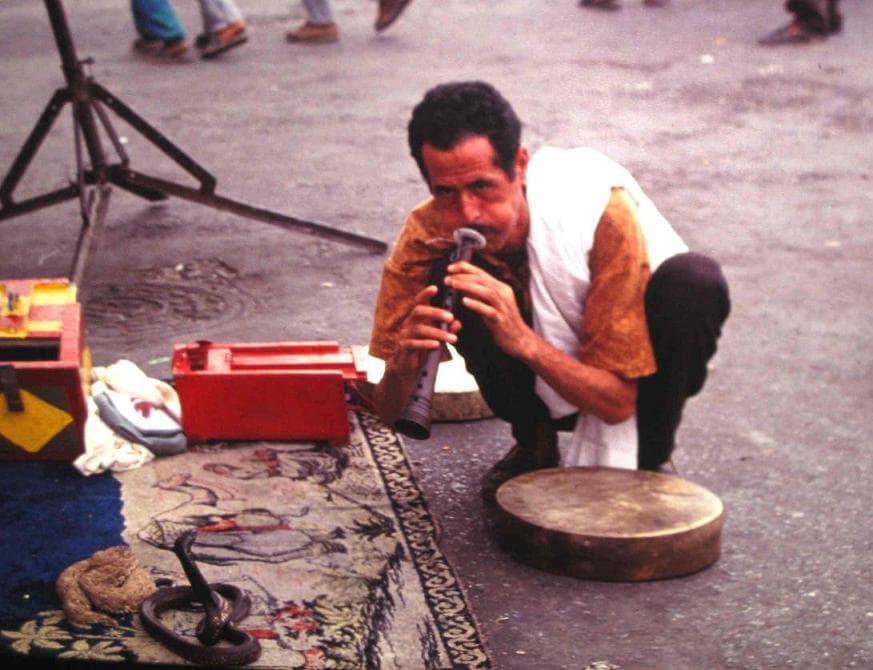
Jemaa el-Fna
Marrakech’s central square: food stalls, storytellers and musicians take over at nightfall, with the souks opening directly off it by day.
 Jorge Láscar from Australia · CC BY 2.0 via Wikimedia Commons
Bahia Palace
A late 19th-century palace of courtyards, carved cedar ceilings and tiled rooms, within walking distance of Jemaa el-Fna.
 Kafka1 · Public domain via Wikimedia Commons
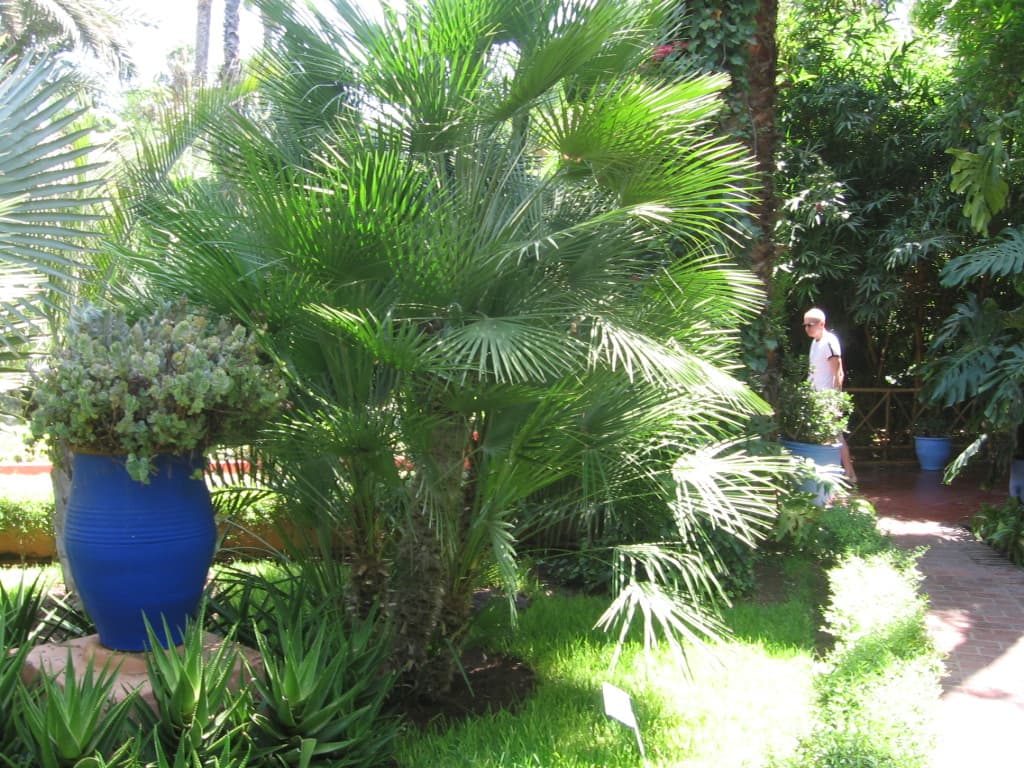
Jardin Majorelle
The cobalt-blue garden created by painter Jacques Majorelle and later restored by Yves Saint Laurent; a shaded escape from the medina heat. Tickets are sold only online with a timed slot: 170 dirhams for the garden and 170 for the Musée Yves Saint Laurent next door in 2026, open daily 08:00 to 18:30 with last entry at 18:00. Book the first slot of the day.
 Marcia Salido · Pexels
Ksar of Ait-Ben-Haddou
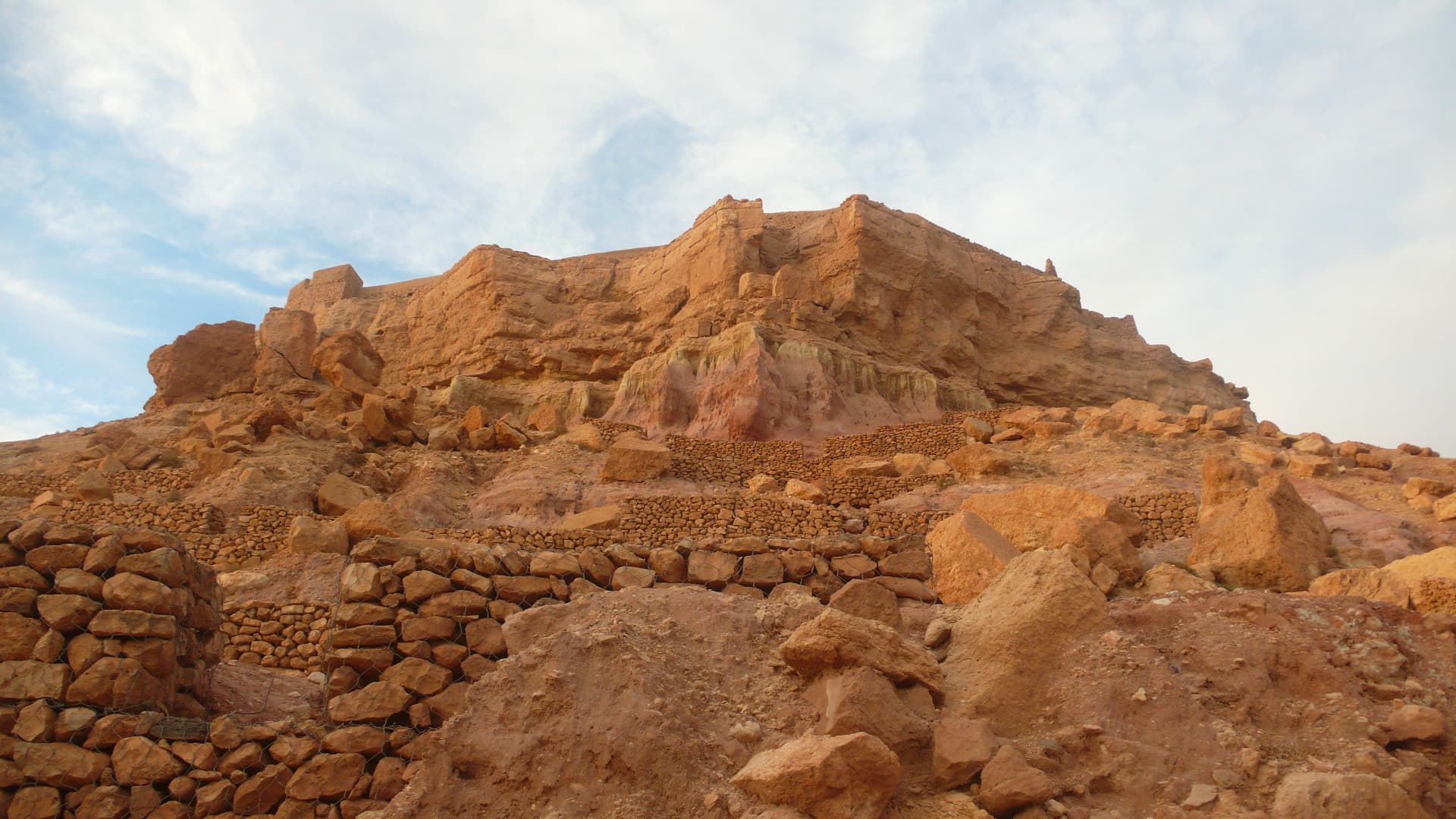
A fortified earthen ksar on the former caravan route between the Sahara and Marrakesh, a UNESCO World Heritage Site since 1987 and a common stop en route to the desert.
 Zakaria HANIF · Pexels
Erg Chebbi dunes and camel trek
Morocco’s tallest dune field, up to around 150 meters; the classic experience is a camel trek at sunset into a desert camp for the night.
 Bjørn Christian Tørrissen · CC BY-SA 3.0 via Wikimedia Commons
Todra Gorge
A dramatic limestone canyon with walls rising up to 300 meters, narrowing to about 10 meters at its tightest point; a common stop between Ait Benhaddou and Merzouga.
 Ricky Esquivel · Pexels
Chefchaouen blue medina
The blue-and-white washed old town, built into the Rif mountainside; wandering the lanes without a fixed plan is the main activity.
 Itachoo1 · CC BY-SA 4.0 via Wikimedia Commons
Akchour waterfalls and God’s Bridge
A day-hike from Chefchaouen into Talassemtane National Park to a natural limestone arch and waterfalls in a narrow gorge.
 Kafka1 / Public domain via Wikimedia Commons
 Alraiti / CC BY-SA 4.0 via Wikimedia Commons
Food & drink
 Zak Chapman · Pexels
Tagine
Slow-cooked stew in a conical clay pot; lamb with prunes and almonds or chicken with preserved lemon are classic versions.
 Laurhim · CC BY-SA 4.0 via Wikimedia Commons
Couscous
Traditionally served Friday, steamed semolina with vegetables and meat or fish, and often the best value dish on a menu.
 Weetjesman · CC BY-SA 4.0 via Wikimedia Commons
Pastilla
A savory-sweet pie of shredded pigeon or chicken, almonds and cinnamon in crisp pastry, historically a Fes specialty found across the country.
 AxlsPacific · CC BY-SA 4.0 via Wikimedia Commons
Harira
A tomato-lentil-chickpea soup, especially common at sunset during Ramadan but served year-round.
 Sarkar Sayantan · CC BY-SA 4.0 via Wikimedia Commons
Mint tea
Poured from height as a matter of hospitality; expect it offered before, during and after almost any transaction.
Lunch is often the larger meal in Morocco; in Chefchaouen and smaller towns, many restaurants close mid-afternoon and reopen for dinner from around 7pm.
Where to eat
Nomad
modernA rooftop restaurant above the spice square reworking Moroccan dishes with a lighter, contemporary style; popular, so book ahead for sunset seating.
Last researched 2026-09-30
Restaurant Tissemlal (Casa Hassan)
institutionThe in-house restaurant of one of Chefchaouen’s long-running riads; straightforward tagines and local dishes.
Last researched 2026-09-30
Jemaa el-Fna food stalls
street-foodNumbered stalls set up nightly serving grilled meats, snails, soups and orange juice; pick a busy stall and confirm prices before ordering.
Last researched 2026-07-15
Sunrises
 Emre Koşak · Pexels
Erg Chebbi dunes at sunrise
Climb a dune near camp before the heat rises; the low light on the sand is the single most photographed moment of this trip.
Year-round, best March to May and September to November
Sunsets
 Mike Prince from Bangalore, India · CC BY 2.0 via Wikimedia Commons
Erg Chebbi dunes at sunset
The classic arrival moment: camel trek into the dunes as the light turns the sand orange and pink before the desert camp dinner.
Year-round, best March to May and September to November · Go with the camp’s organized camel trek; do not attempt to walk into the dunes independently after dark.
 Badr Rachadi · CC BY-SA 4.0 via Wikimedia Commons
Spanish Mosque hill, Chefchaouen
A short uphill walk from the medina to a hilltop mosque with a panorama over Chefchaouen’s blue rooftops; a popular and easy sunset spot.
Year-round
 procsilas · CC BY 2.0 via Wikimedia Commons
A rooftop café over Jemaa el-Fna
The café terraces on the edge of the square look down on Jemaa el-Fna as the food stalls light up and the Koutoubia minaret catches the last sun; order a mint tea for the seat and watch the square fill. The palaces and gardens of the medina close around 17:00, so this is the one sunset in Marrakech that needs no ticket.
Year-round
Day trips
 said bendlala · CC BY-SA 4.0 via Wikimedia Commons
Ait Benhaddou and Ouarzazate
The UNESCO ksar and the nearby "Hollywood of Morocco" film studios, usually done as a stop on the way to or from the desert rather than a return trip from Marrakech.
About 3.5 to 4 hours each way from Marrakech · Half day, combined with onward travel
 Marcia Salido · Pexels
Dades and Todra Gorges
A scenic detour between Ouarzazate and Merzouga through the Dades Valley’s rose-colored rock formations and the narrow limestone walls of Todra Gorge.
About 1.5 to 2 hours added to the Ouarzazate to Merzouga leg · Half day, en route
 Hassan OUAJBIR · Pexels
Akchour waterfalls hike
A half-day hike from Chefchaouen into Talassemtane National Park to reach God’s Bridge and a series of waterfalls.
About 30 km and 40 to 45 minutes each way by shared taxi to the trailhead · Half day (2 to 5 hours of walking depending on how far you go)
After dark
 Andrzej Kosiński · CC BY-SA 3.0 via Wikimedia Commons
Jemaa el-Fna after dark
foodWalk the square as the food stalls set up and the storytellers and musicians gather; eat at one of the numbered stalls.
 Stewart Cameron · Pexels
Desert camp dinner and stargazing
natureDinner under canvas after the camel trek in, followed by music around the fire and, away from any light pollution, exceptional stargazing.
Daily itinerary
Ten days: Marrakech, the Sahara and Chefchaouen
Two nights in Marrakech, a night in Ouarzazate and a night in a desert camp, a night in Fes as a staging point, three nights in Chefchaouen, then a night near your departure airport and a buffer day.
- 1
Arrive Marrakech
relaxedArrive, transfer into the medina and settle in.A simple tagine near your riad.Easy first walk toward Jemaa el-Fna to get oriented.A rooftop café terrace over Jemaa el-Fna as the stalls set up.Jemaa el-Fna food stalls.The square after dark.No car needed; medina is walkable.Estimate: If you land late, keep today to just the square and dinner.
- 2
Marrakech sights
moderateBahia Palace, then into the souks.A souk-side cafe.Jardin Majorelle in Gueliz on the first online slot of the day; tickets are timed and sold online only.A modern Moroccan restaurant such as Nomad.Quiet night before the early desert departure.Taxi to Gueliz for the garden; walk the medina sights.Estimate: Swap Jardin Majorelle for the Saadian Tombs if gardens are not a priority.
- 3
Toward the desert via Ait Benhaddou
fullEarly departure with a private driver; cross the Tizi n’Tichka pass.Lunch in Ait Benhaddou village.Walk the ksar, then continue to Ouarzazate for the night.Ouarzazate hotel restaurant.Early night; long drive continues tomorrow.Private driver for the whole leg; do not attempt this drive fresh off a flight.Estimate: Add the Atlas Film Studios if traveling with film buffs.
- 4
Gorges to the dunes
fullDrive through the Dades Valley.A gorge-side cafe in Todra.Walk into Todra Gorge, then continue to Merzouga.Camel trek into the dunes at Erg Chebbi.Desert camp dinner.Music and stargazing at camp.Full driving day; 4x4 or camel for the final stretch into camp.Estimate: Shorten the gorge stop if the drive is running long.
- 5
Sunrise in the dunes, drive to Fes
fullSunrise climb on a nearby dune with camp staff, then camel or 4x4 back to the road.En route toward Fes.Long drive north to Fes.Fes medina restaurant.Rest after two long driving days.Long single driving day; consider splitting if traveling with children or anyone prone to car fatigue.Estimate: Break the drive with an overnight in Midelt if the full push feels too long.
- 6
Fes to Chefchaouen
moderateA short walk in the Fes medina if time allows.Fes or en route.Drive to Chefchaouen (about 3.5 to 4 hours).Spanish Mosque hill over the blue medina.Restaurant Tissemlal at Casa Hassan or a nearby medina restaurant.Slow first evening in Chefchaouen.Shorter drive than the previous two days; a welcome change of pace.Estimate: Skip the Fes morning walk if you would rather arrive in Chefchaouen with more daylight.
- 7
Chefchaouen medina
relaxedWander the blue lanes without a fixed plan.A medina rooftop cafe.The Kasbah and its small museum, more medina wandering.Spanish Mosque hill again, or a rooftop.A medina restaurant.Early night before the hiking day.Fully walkable; no car needed today.Estimate: Shop for the wool and weaving Chefchaouen is known for if souvenirs matter to you.
- 8
Akchour waterfalls
moderateShared taxi to the Akchour trailhead.Packed lunch or a trailside cafe.Hike to God’s Bridge and the waterfalls; return by taxi.Back in Chefchaouen.Rest after the hike.Shared grand taxi both ways; agree the return time with your driver before setting off.Estimate: Shorten the hike to the first waterfall if a shorter walk is preferred.
- 9
Return south or fly out
moderateDepart Chefchaouen for Fes or Tangier depending on your flight.En route.Arrive at your departure city with buffer time.Departure or overnight before an early flight.Tangier is closer to Chefchaouen than Fes if your flight allows; check both airports before booking.Estimate: If flying from Marrakech, this becomes a second long drive day; consider flying domestically instead.
- 10
Departure
relaxedFinal departure.Buffer for delays.Build in slack; Morocco road transfers routinely run longer than planned.Estimate: Use this as a spare day earlier in the trip if everything else runs on schedule.
Getting around
- Marrakech Menara Airport (RAK) is the main gateway for this circuit, about 15 to 20 minutes from the medina.
- Fes-Sais Airport (FEZ) and Tangier Ibn Battouta Airport (TNG) are the practical options for flying out after Chefchaouen, avoiding a second long backtrack to Marrakech.
- From Israel: Arkia flies Tel Aviv to Marrakech non-stop twice a week since August 2026, the first direct service since October 2023; Israir plans two weekly Marrakech flights from early November to early January, and El Al’s Sun d’Or restarts twice weekly on 16 November 2026. Royal Air Maroc has not resumed Tel Aviv. The Ben Gurion flight board for 29 September to 3 October 2026 showed Arkia and Israir rows to Marrakech and none to Casablanca.
- Israeli passport holders are not visa-exempt: apply for the Moroccan e-visa online at acces-maroc.ma before you fly, and allow a couple of weeks. Only diplomatic and service passports are exempt.
- A private driver-guide is the realistic way to cover Marrakech to the desert to the north; distances and mountain passes make this the most comfortable option for most travelers.
- CTM and Supratours run intercity buses between major towns for a cheaper, slower alternative to a private driver.
- Grand taxis (shared or chartered) cover shorter routes such as Chefchaouen to the Akchour trailhead.
- Within Marrakech and Chefchaouen medinas, everything is on foot; cars cannot reach most riad doors.
Things worth knowing
- · Underestimating the Marrakech to Merzouga and Merzouga to Chefchaouen drive times, about 10 hours and 11 to 12 hours of driving.
- · Trying to self-drive the Tizi n’Tichka pass and the northern mountain roads without experience on similar roads.
- · Booking a desert camp last-minute in high season instead of reserving ahead.
- · Wandering into the dunes alone at night instead of staying with camp staff and marked areas.
Budget
| Low | Expected | Comfortable | |
|---|---|---|---|
| Accommodation style / per night | MAD 400≈ $41 | MAD 900≈ $92 | MAD 2,500≈ $256 |
| Food style / per day | MAD 150≈ $15 | MAD 300≈ $31 | MAD 600≈ $61 |
| Local transport / per day | MAD 100≈ $10 | MAD 500≈ $51 | MAD 900≈ $92 |
| Estimate / per day | MAD 50≈ $5 | MAD 250≈ $26 | MAD 400≈ $41 |
Estimate · MAD · 2026-07-15. On 30 September 2026 one shekel bought about 3.15 dirhams and one US dollar about 9.66. Accommodation is per room per night (two sharing); the desert camp night runs upscale relative to city riads. Local transport "expected" assumes a private driver for the long inter-city legs, which dominates this trip’s transport cost. Shoulder-season figures. · 1 USD = MAD 10 (14 Oct 2026)
Things worth knowing
Frequently asked questions
How many days do you need for Marrakech, the Sahara and Chefchaouen?
Nine to twelve days is realistic. Ten lets you give Marrakech, the desert crossing and Chefchaouen each proper time without back-to-back long driving days; under nine days, consider dropping Chefchaouen.
Do I need a private driver for this route?
It is the most comfortable option. The distances (Marrakech to Merzouga is about 10 hours by road and Merzouga to Chefchaouen 11 to 12, via Fes) and mountain passes make a private driver-guide far less demanding than self-driving or stringing together buses.
When is the best time to visit for all three stops?
March to May and September to November. Summer is extreme in the desert, and winter brings cold desert nights and possible snow disruption on the Atlas passes.
Is a desert camp night comfortable?
A camp such as Luxury Camp Merzouga offers en-suite tents with toilet and shower, which is more comfortable than a basic camp, but facilities are still simpler than a city hotel. Book an established operator and stay with camp staff after dark.
Do Israelis need a visa for Morocco?
Yes. Israeli passport holders apply for an e-visa online at acces-maroc.ma before travel; only diplomatic and service passports are exempt. Arkia flies Tel Aviv to Marrakech direct, with Israir and Sun d’Or joining from November 2026.
Is Morocco safe for Israelis in 2026?
Israel’s National Security Council rates north and central Morocco, where Marrakech, Fes and Chefchaouen are, at level 2, occasional threat, and southern Morocco at level 3, avoid non-essential travel, with the emphasis on the south-east near the Mauritanian border. The Merzouga desert leg is in the south-east, so read the council’s page before you book it. Keep a low profile and avoid demonstrations, which followed the September 2026 embassy announcement.
Can this be done as a loop back to Marrakech instead of flying out of Fes or Tangier?
Yes, but it adds another full long-driving day back south. Flying out of Fes or Tangier after Chefchaouen is usually the more comfortable choice if your flights allow it.
Sources (16)
- Ksar of Ait-Ben-Haddou inscribed on the UNESCO World Heritage List in 1987 · unesco · 2026-07-15
- Marrakech overview, attractions and practical information · tourism-board · 2026-07-15
- Chefchaouen overview and Talassemtane National Park nature information · tourism-board · 2026-07-15
- Israel National Security Council travel warning for Morocco: combined level, north and central Morocco occasional threat (level 2) with heightened precautions, southern Morocco medium threat (level 3) with a recommendation to avoid non-essential travel; Foreign Ministry: stay alert and follow the media (dataset pulled 30 September 2026) · government · 2026-09-30
- The National Security Council’s Morocco page (served 11 August 2026) recommends avoiding non-essential travel to southern Morocco with emphasis on the south-east near the Mauritanian border, notes the presence of the Polisario Front, and lists precautions including no Israeli symbols, no Hebrew in public, avoiding demonstrations and not posting travel details in real time · government · 2026-09-30
- Wikipedia’s visa policy of Morocco article lists Israel among countries whose nationals need an e-visa, with diplomatic and service passports exempt · independent-travel · 2026-09-30
- JNS reported that three Israeli carriers will fly to Morocco this autumn, with Arkia already flying Tel Aviv to Marrakech and Royal Air Maroc not having resumed Tel Aviv · reputable-local · 2026-09-30
- The Jerusalem Post reported on 27 September 2026 that Israir plans two weekly Marrakech flights from early November to early January, with a weekly Casablanca request pending approval · reputable-local · 2026-09-30
- Aeroroutes: El Al’s Sun d’Or resumes Tel Aviv to Marrakech from 16 November 2026, twice weekly, flights LY5453/5454 on a 737-800 · reputable-local · 2026-09-30
- The Jerusalem Post reported that Israel and Morocco agreed on 16 September 2026 in New York to upgrade their liaison offices to embassies and appoint ambassadors, followed by three days of anti-normalisation protests in 45 Moroccan cities · reputable-local · 2026-09-30
- Chabad Marrakech, Rue Ibn Qodama, offers Shabbat and holiday meals on request and lists the kosher grocery Chez Michel Super Kosher at 20 Rue Loubnane · official · 2026-09-30
- Jardin Majorelle: timed tickets sold online only, 170 MAD garden, 170 MAD Musée Yves Saint Laurent, open daily 8:00 to 18:30, last entry 18:00 · official · 2026-09-30
- El Fenn’s site: 41 rooms and suites, three pools, two restaurants, bars and a rooftop at Bab El Ksour, Marrakech medina · official · 2026-09-30
- Dar Chefchaouen’s site: a house of over 250 years at 124 Bab Souk, Chefchaouen medina · official · 2026-09-30
- Luxury Camp Merzouga’s site describes luxury private tents with en-suite toilets and showers at Erg Chebbi, with a Marrakech office address · official · 2026-09-30
- Open Exchange Rates API on 30 September 2026: 9.66 MAD and 3.07 ILS to one US dollar, about 3.15 MAD to the shekel · independent-travel · 2026-09-30