UAE · Abu Dhabi Emirate
Abu Dhabi
Come between November and March, sleep on Saadiyat if the museums are the point or on Yas if the parks are, give the Sheikh Zayed Grand Mosque the late-afternoon slot so you walk out at dusk, spend a full day in the Saadiyat Cultural District, eat Emirati properly at least twice, and finish with a night among the dunes on the edge of the Empty Quarter.
 PotatoWitch / CC BY-SA 4.0 via Wikimedia Commons
Overview
Abu Dhabi is the capital of the UAE, the quieter, richer, more deliberate sibling of Dubai, and it has spent two decades building something Dubai never tried: a museum district of genuine world rank. The Louvre Abu Dhabi has sat under its perforated dome since 2017, and within thirteen months from late 2025 the rest of the plan landed around it, with the Natural History Museum, the Zayed National Museum and teamLab Phenomena all open on Saadiyat Island and Frank Gehry's Guggenheim Abu Dhabi scheduled to join them on 11 December 2026. Add the Sheikh Zayed Grand Mosque, one of the most beautiful modern religious buildings anywhere, a Formula 1 circuit, and a city built along water on an archipelago of islands, and the old advice to see it in a day from Dubai reads backwards.
Abu Dhabi rewards the traveler who stops treating it as an excursion. On a day trip you see the mosque and the Louvre and spend three hours of it on a highway; with three nights the city rearranges itself into something calmer and stranger than Dubai, a capital of waterfronts, falcon hospitals and hand-knotted carpets where the evening Corniche fills with families until midnight. We would plan it for the winter, book the museums for the hot hours and the outdoors for the golden ones, and take the fifth night in the desert, which is the part of the trip people come home talking about. If your dates fall in July or August, be honest with yourself: this is a 42-degree city where the day moves indoors, and the trip should be built accordingly or moved.
Best for
Museum and architecture travelers · Couples · Families mixing culture with theme parks · Winter-sun travelers · First-time Gulf visitors · Anyone pairing a city with a night in the dunes
Daily itinerary
3 nights for the city; 5 to add a desert night and a day in Dubai or Al Ain
Most Gulf-city guides are shopping-and-brunch guides. Abu Dhabi's claim is different: it is the only city in the region where the cultural infrastructure is the headline rather than the garnish, and the museums are the real thing rather than franchise wallpaper, with collections, buildings and curation that stand comparison with Europe. It is also more restrained than Dubai in a way that is easy to like: lower towers, longer waterfronts, fewer crowds at almost everything, and an Emirati identity that is visible rather than themed. This guide is organised around the museum district, around the mosque, and around the one variable that decides the whole trip, which is the month you come.
Best time to visit
November to March is the season and it is not close: days of 22 to 28 degrees, cool evenings, almost no rain and the whole city living outdoors. April and October are the warm shoulders, entirely usable with a midday plan. May to September is real Gulf summer, 38 to 45 degrees with punishing humidity along the water in July and August; the city functions, because everything from the museums to the malls is built for it, but beach and desert plans compress into dawn and dusk. December is the crescendo month: the Formula 1 season finale, National Day on 2 December, the Guggenheim opening date this year, and peak hotel prices to match.
- November: The season opens: high twenties, dry air, warm sea, and the city's outdoor life switching back on. The sweet spot before December prices, and our pick alongside February.
- December: The biggest month in the calendar: the Grand Prix at Yas Marina (4 to 6 December in 2026), National Day on the 2nd, the Guggenheim scheduled to open on the 11th, and New Year fireworks. Book everything early and expect peak rates.
- January: Coolest month, around 18 to 24 by day and occasionally jacket weather after dark. The one month with a real chance of a rain shower. Museums, desert and mosque are all at their most comfortable.
- February: Arguably the best all-round month: warm days, mild evenings, everything open. Note that Ramadan is expected to begin around 8 February in 2027, subject to moon sighting, which reshapes eating and hours for the following month.
- March: Last full month of prime season, mid to high twenties. In 2027 Ramadan runs into the first week and a bit of March, with Eid Al Fitr expected around 9 March; a fascinating stretch to visit if you plan around daytime restaurant closures outside hotels and malls.
- April: Warm shoulder: mid-thirties by late month but the evenings still work outdoors. Beach mornings, museum afternoons. Prices ease noticeably after the spring holidays.
- May and June: Summer arrives properly: 38 to 42 by day. The city shifts to its indoor rhythm and hotel prices drop hard. Fine for a museums-and-pools trip, wrong for an outdoors one.
- July and August: The hardest stretch: mid-forties possible and coastal humidity that makes evenings sticky too. Everything air-conditioned runs at full tilt and rates are at rock bottom. Desert trips run at dawn and after sunset only.
- September and October: The slow exhale. September is still hot; by mid-October the evenings turn pleasant, the sea is at its warmest, and the winter calendar begins.
Things worth knowing
- Formula 1 Abu Dhabi Grand Prix (Yas Marina Circuit, season finale, 4 to 6 December in 2026): the biggest weekend of the year, a twilight race with headline concerts after each day. Yas hotels sell out months ahead and the whole island becomes the paddock.
- UAE National Day (2 December): flags, flyovers, fireworks and a proud, family-centred holiday mood across the Corniche.
- Ramadan (expected around 8 February to 8 March in 2027, confirmed by moon sighting): daytime eating moves into hotels and screened mall food courts, hours shift, and the city after sunset, with iftar tents and full restaurants until late, is at its most atmospheric.
- Eid Al Fitr (expected around 9 March 2027): a multi-day public holiday of packed malls, parks and hotel brunches; a joyful time with regional crowds and higher room rates.
- Abu Dhabi Art (usually November, Manarat Al Saadiyat): the region's serious art fair, timed to the cultural season on Saadiyat.
Where to stay
 Kevin Villaruz · Pexels
Corniche and Downtown (Al Danah)
The original city: an eight-kilometre landscaped waterfront with a swimmable public beach on one side and the mid-rise grid of the 1970s capital behind it, where the shawarma counters, karak cafes and older souks live. Central to everything by taxi, walkable along the water for hours in winter, and the best base for seeing how the city actually lives.
Best for: First-time visitors · Waterfront walking and cycling · Value near the centre · Street-level eating
The blocks behind the Corniche are functional rather than pretty, and almost nothing here is walkable in summer. Sights are spread out: every island attraction is a 15-to-30-minute taxi away.
 Diego F. Parra · Pexels
Saadiyat Island
The culture island, ten minutes from downtown: the Louvre, the Zayed National Museum, the Natural History Museum, teamLab and the Guggenheim site share one district at its northern end, backed by nine kilometres of genuinely beautiful white-sand beach where hawksbill turtles still nest. The Mamsha Al Saadiyat beachfront strip supplies the restaurants. This is where we would sleep on a museums-first trip.
Best for: Museum days on repeat · Beach resorts · Couples · A calm, polished base
Resort prices in winter are serious, and outside the cultural district and Mamsha strip there is little urban texture; evenings are hotel-shaped. You will taxi to the mosque and downtown.
 Jaguar MENA · CC BY 2.0 via Wikimedia Commons
Yas Island
The entertainment island, twenty-five minutes east of downtown and ten from the airport: Ferrari World, Warner Bros. World, Yas Waterworld, SeaWorld, the Yas Marina F1 circuit, a big mall and a strip of mid-priced hotels linked by free shuttles. Engineered fun, done to a high standard, and the obvious base for families who came for the parks.
Best for: Families · Theme-park trips · F1 weekend · Airport-convenient first or last nights
It is a resort island, not a city: character comes from the parks, not the streets. During the December Grand Prix, prices multiply and rooms vanish. Museums and mosque are 20 to 35 minutes away.
 MAVARIZ · CC BY-SA 4.0 via Wikimedia Commons
Al Maryah Island
The financial district done as a compact luxury quarter: glass towers, the Galleria mall with the city's densest concentration of serious restaurants, a waterfront promenade facing the mangrove-green Reem channel, and two of the best city hotels. The polished business base that happens to work well for food-focused travelers.
Best for: Restaurant-led stays · Business travelers · Luxury without resort sprawl
No beach of its own and no sights on the island itself; everything is a taxi ride. Weekday lunchtimes feel corporate.
 Akbar Tarakai · Pexels
Khalidiya and Al Bateen
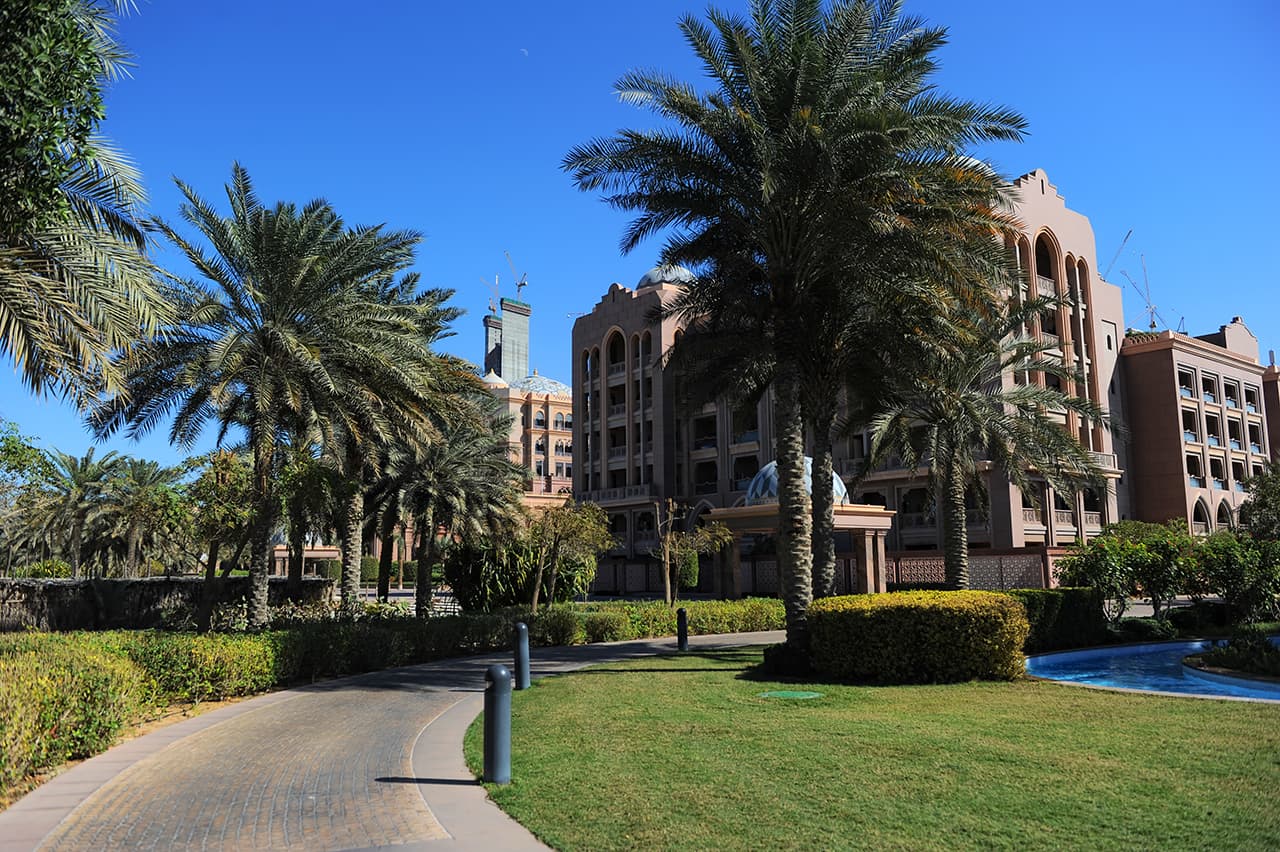
The green, settled west end where embassy villas meet the marinas: the Corniche's quieter stretch, Emirates Palace and Qasr Al Watan at the tip, the Etihad Towers cluster, and a neighbourhood eating scene of decades-old Lebanese and Emirati places priced for residents. The most local-feeling base in this guide.
Best for: Second visits · Long stays · Eating like a resident · Sunset walks near the palaces
Thin on hotels between the palace-priced and the plain. Nightlife is hotel bars or nothing; this end of town goes quiet by eleven.
 Eslam Mohammed Abdelmaksoud · Pexels
Eastern Mangroves and Al Reem
The unexpected Abu Dhabi: a national-park belt of mangrove channels wrapping the city's eastern shore, with a promenade, kayak launches and one hotel sitting directly on the water, plus the newer residential towers of Reem Island behind. Herons at breakfast, ten minutes from downtown.
Best for: Nature within the city · Kayakers · Value apartments on longer stays
A one-hotel, apartment-led district with few restaurants; you will use taxis for every sight and most dinners.
Where to sleep
 Davide Mauro · CC BY-SA 4.0 via Wikimedia Commons
Emirates Palace Mandarin Oriental
luxury · Al Ras Al Akhdar, west end of the Corniche
Best for: The full Gulf-palace experience · Couples · Travelers who want the hotel to be a sight
- A genuine landmark: 394 rooms and suites under gold-leafed domes in gardens running down to a 1.3-kilometre private beach, next door to Qasr Al Watan
- Two of the city's three Michelin-starred restaurants, Talea by Antonio Guida and Hakkasan, are inside the hotel, which makes it the best-fed address in the capital
- Mandarin Oriental service since the 2020s refit, camel-milk cappuccinos with gold flakes and all: the theatre is knowing rather than accidental
- The scale is palatial rather than intimate: corridors run to hundreds of metres and the walk to breakfast is real
- Winter rates are among the highest in the city, and day visitors touring the public halls keep the lobby busy
Park Hyatt Abu Dhabi Hotel and Villas
resort · Saadiyat Beach, ten minutes from the museums
Best for: Museum trips with beach afternoons · Couples · Families who want space and sand
- Directly on the nine-kilometre Saadiyat beach, the best natural sand in the emirate, with dune boardwalks and hawksbill turtle nesting season signposted in spring
- Low-rise and garden-spread rather than towered, with a calm that suits the museum-day rhythm; the cultural district is a ten-minute taxi
- Rooms are among the largest entry-level rooms in the city, and the villa tier adds private pools
- Isolated by design: dinner outside the hotel means the Mamsha strip or a taxi to town
- Beach clubs and non-resident day rates keep weekend pool traffic high in peak winter
Qasr Al Sarab Desert Resort by Anantara
resort · Liwa desert, edge of the Empty Quarter, about 2 hours from the city
Best for: The desert night that makes the trip · Couples · Photographers
- A fort-styled resort standing alone among some of the tallest dunes on earth, on the rim of the Rub al Khali, the largest sand desert in the world: the setting is the product and nothing in the region matches it
- Dune walks at dawn, camel treks, sandboarding and archery are run in-house, and the terrace at sunset faces a sea of apricot-coloured sand with no other building in sight
- Works cleanly as a one-night add-on to a city stay: leave after breakfast, arrive for lunch, dune drive at golden hour, back in the city by the next afternoon
- The 200-kilometre transfer is real money in a taxi or a rental commitment, and a single night means about four hours of driving for eighteen hours of desert
- Dinner and drinks are captive-audience priced; the room rate is only the start
Rosewood Abu Dhabi
design · Al Maryah Island
Best for: Food-led city stays · Design lovers · Business trips that end well
- A glass tower with genuinely good contemporary interiors on the Al Maryah waterfront, connected to the Galleria, which holds the city's deepest restaurant bench
- Rooftop pool deck facing the Reem channel and the mangrove line, one of the better urban pool views in the Gulf
- Winter rates routinely undercut the beach resorts by a wide margin for a higher room standard
- No beach: the trade of a city hotel, softened but not solved by shuttle arrangements in season
- The financial-district setting is quiet at street level on weekends
Andaz Capital Gate
unique · Capital Gate tower, near ADNEC, between downtown and the mosque
Best for: Architecture lovers · A story to bring home · Mosque-first itineraries
- Occupies the top floors of Capital Gate, certified by Guinness World Records as the world's furthest-leaning man-made tower at eighteen degrees, four times the lean of Pisa: the splayed-glass window geometry inside is unlike any other hotel room in the city
- Closest good hotel to the Sheikh Zayed Grand Mosque, which rewards both a sunrise and a sunset visit
- Andaz-standard rooms at prices well under the island resorts
- The location is convention-centre land: nothing walkable, everything by taxi
- Views split between skyline and highway; ask for the mosque side
Centro Yas Island
value · Yas Island, on the hotel strip near Yas Mall
Best for: Families doing the parks on a budget · F1 weekend on a relative budget · Airport-adjacent first and last nights
- Rotana's select-service brand done properly: compact modern rooms, a pool, and a location on the Yas hotel strip with the free Yas Express shuttle to the theme parks and beach
- Ten minutes from Zayed International Airport, which makes it the practical bookend for awkward flight times
- Routinely half the price of the full-service Yas hotels for the same access to everything on the island
- Rooms are small and the breakfast operation gets slammed in park season: eat early
- It is a base, not a destination; nobody lingers here by choice on a sunny afternoon
Essential experiences
 Daniel Dang · Pexels
Sheikh Zayed Grand Mosque
One of the largest mosques in the world and, more to the point, one of the most beautiful modern buildings of any kind: 82 white marble domes, courtyards inlaid with floral marble across a scale that holds more than 40,000 worshippers, one of the world's largest hand-knotted carpets, and chandeliers of Swarovski crystal. Entry is free with an online pass; arrive dressed to code, since the shops at the visitor centre sell cover-ups but free abaya loans should not be counted on. Go for the last daylight slot: the transition from white marble afternoon to floodlit reflection-pool evening is the single best hour in Abu Dhabi.
 Ghawady Ehmaid · CC BY-SA 4.0 via Wikimedia Commons
Louvre Abu Dhabi
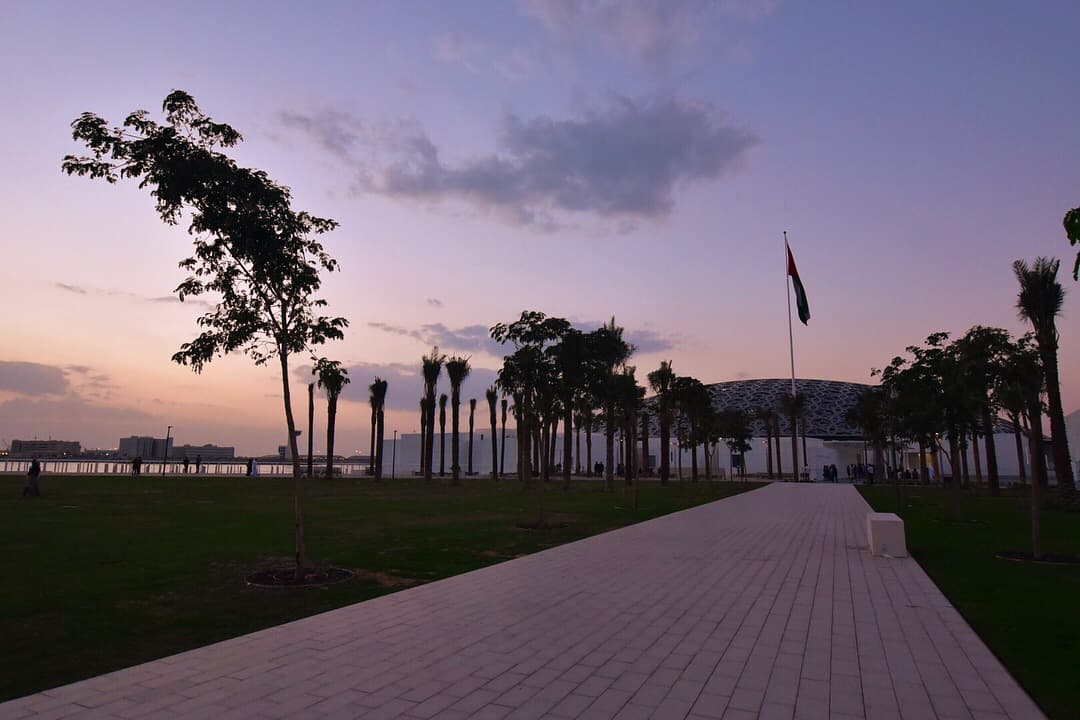
Jean Nouvel's museum-city under a 180-metre floating dome whose layered geometry throws a perpetual "rain of light" onto the plaza and water below. The collection runs from prehistory to the present, hung thematically across civilisations rather than by empire, which remains its quiet radical idea. Galleries close by early evening but the dome plaza stays open until midnight, and walking beneath it after dark, with the sea between the buildings, is the quiet way to end a Saadiyat day.
 DBdO · CC BY-SA 4.0 via Wikimedia Commons
Zayed National Museum
The national museum of the UAE, open since 3 December 2025 under five steel wing-towers by Foster + Partners that read as falcon feathers against the sky. Inside is the story the region rarely gets to tell about itself: pearling, the falaj irrigation world, the Bedouin economy, and the founding of the federation around Sheikh Zayed. Pair it with the Louvre for the full arc, universal civilisations in one building and this specific one next door.
 merna rakha · Pexels
Natural History Museum Abu Dhabi
Open since 22 November 2025 and instantly the largest natural history museum in the Middle East at 35,000 square metres: 13.8 billion years told through genuinely first-rank objects, including Stan, one of the most complete Tyrannosaurus rex skeletons ever found, and a piece of the Murchison meteorite, older than the sun. Built for families without being dumbed down; give it a half day, ideally the hottest one.
 PedroEsparza · Pexels
teamLab Phenomena
The Japanese collective's largest venue anywhere: 17,000 square metres of immersive installations inside a cloud-shaped building, where light, water, mist and sound respond to the people moving through them. It photographs absurdly well, which is both the appeal and the crowd warning: book a morning slot on a weekday and wear shoes you can wade in. Children treat it as the best playground ever built; they are not wrong.
 Renek78 · CC BY-SA 4.0 via Wikimedia Commons
Qasr Al Watan
The working Presidential Palace, opened to visitors in 2019: a white-and-gold complex of domed halls built as a statement of Arab craftsmanship, with a central Great Hall whose dome is among the largest in the world and a House of Knowledge gallery of manuscripts and gifts of state. Come late afternoon and pair it with the separately ticketed Palace in Motion light show projected onto the facade after dark, and you get two palaces in one evening.
 Myself · Public domain via Wikimedia Commons
Qasr Al Hosn
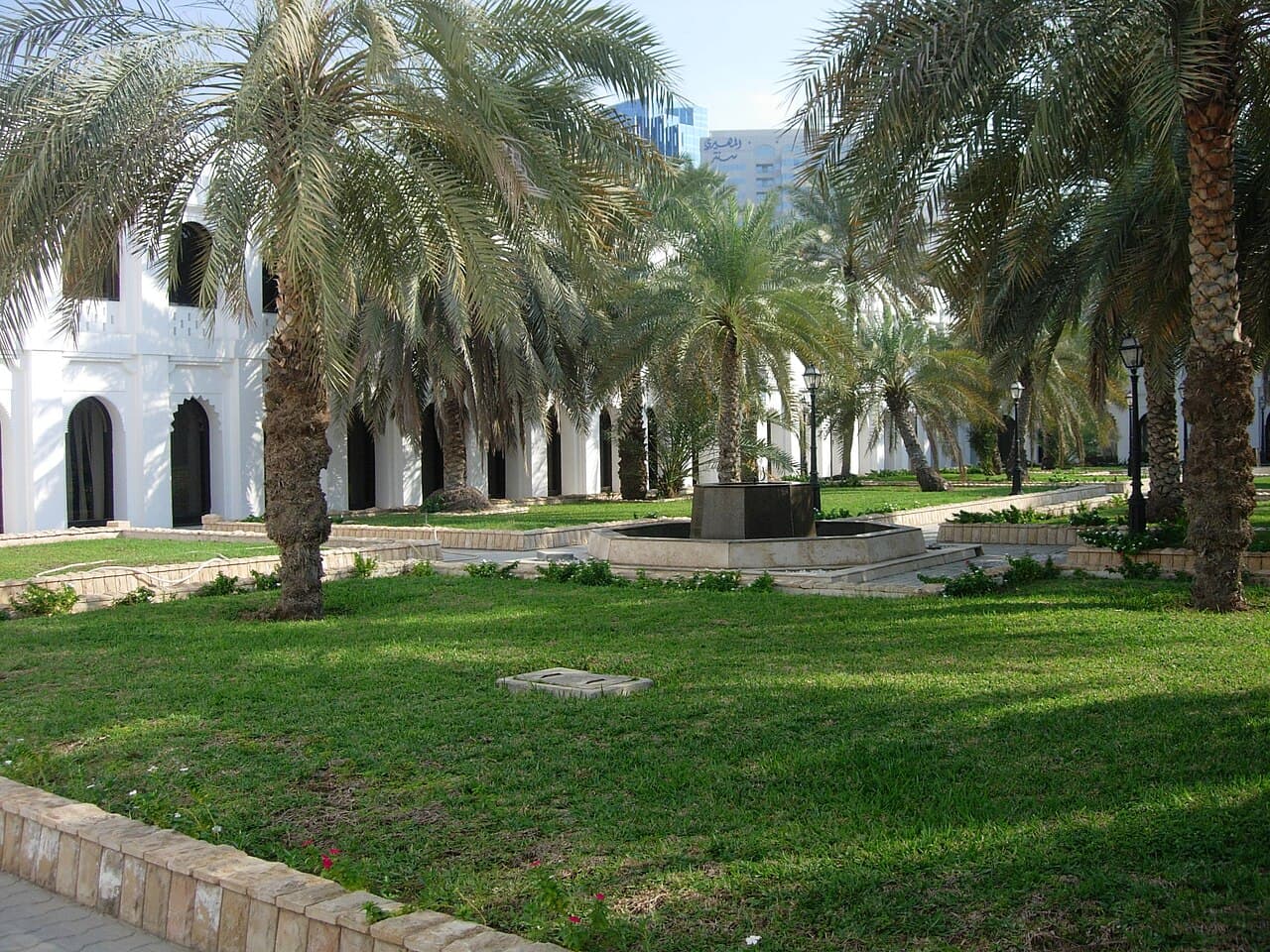
The oldest building in the city and the seed it grew from: an eighteenth-century coral-and-sea-stone watchtower that became the fort, the ruler's home and the seat of government, restored and opened as a museum in 2018. The contrast is the exhibit: a low white fort with the glass towers of the modern capital rising directly behind it, telling honestly how fast all of this happened. An hour or two, cheap, and best combined with the House of Artisans in the same compound.
 Atoosa Ryanne Arfa · Pexels
The Corniche
Eight kilometres of landscaped waterfront running the length of the original city, with a protected cycle track, a swimmable Blue Flag public beach and, on winter evenings, half of Abu Dhabi out walking until midnight. Rent a bike at one of the stations and ride the whole arc from Emirates Palace to the port end at golden hour: it is the cheapest first-class experience in the capital.
 Dietmar Rabich · CC BY-SA 4.0 via Wikimedia Commons
Observation Deck at 300
The 74th-floor deck of the Conrad at Etihad Towers, 300 metres up and the highest public viewpoint in the city: the whole geography resolves at once, Corniche arcing east, Emirates Palace's gardens directly below, Qasr Al Watan on its headland, islands scattered to the horizon. The modest entry fee converts into a credit at the cafe, so take the afternoon-tea slot and watch the light change.
 Akbar Tarakai · Pexels
Jubail Mangrove Park
A two-kilometre boardwalk looping through a living mangrove forest between Saadiyat and Yas: herons stalking the shallows, rays and small sharks in the clear channels at high tide, and a self-guided calm that feels a hemisphere away from the highway five minutes back. Kayak tours thread the channels at dawn and sunset. Check the tide before going; high water is a different, better park.
 Miguel Cuenca · Pexels
Yas Island theme parks
Four major parks on one island: Ferrari World, home of Formula Rossa, the 240 km/h coaster that held the world speed record for fifteen years until Saudi Arabia's Falcons Flight took it in late 2025; Warner Bros. World, a vast fully indoor park that rescues summer trips; Yas Waterworld; and SeaWorld Yas Island, built around one of the largest indoor marine habitats anywhere. Multi-park tickets beat single gates decisively if you want more than one. Two parks a day is possible; one done properly is better.
 U.S. Embassy Jerusalem · CC BY 2.0 via Wikimedia Commons
Abrahamic Family House
Three houses of worship, a mosque, a church and a synagogue, identical in volume and set around one garden on Saadiyat, designed by David Adjaye and open since 2023. Whatever you make of the diplomacy, the architecture is serious: three cubes taking light in three different ways, five minutes from the Louvre. Free with online registration; modest dress applies across the complex.
 Davide Mauro / CC BY-SA 4.0 via Wikimedia Commons
 Валерий Дед / CC BY 3.0 via Wikimedia Commons
Food & drink
 Kaji Rimon · Pexels
Machboos
The Emirati rice dish: chicken, lamb or prawns cooked down with loomi (dried black lime), turmeric and whole spices until the rice takes all of it. The benchmark plate at any proper local restaurant, and the dish to order first.
 BINYOUSSIF · Pexels
Harees
Wheat and meat slow-cooked and beaten into a savoury porridge, somewhere between comfort and ceremony. A Ramadan and wedding staple that the good Emirati kitchens serve year-round. Order it once and understand the culture better.
 Flickr.com user "avlxyz" · CC BY-SA 2.0 via Wikimedia Commons
Luqaimat
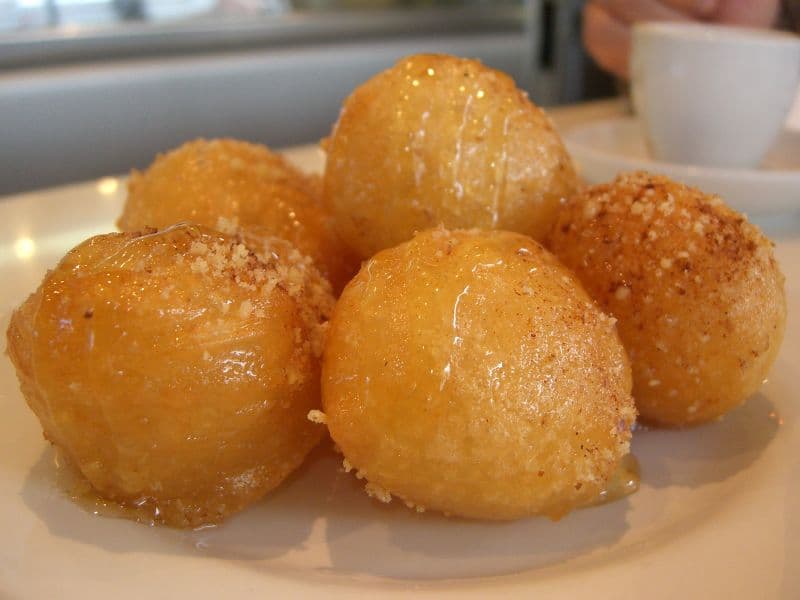
Crisp-shelled, molten-centred dumplings drenched in date syrup and sesame. The Emirati dessert, full stop. Eaten by the dozen at iftar tents and by the plate everywhere else.
 Droodkin · CC BY-SA 4.0 via Wikimedia Commons
Balaleet
Sweet saffron vermicelli under a plain omelette: the great Emirati breakfast contradiction, and better than it sounds by a distance. Find it at traditional breakfast spots with karak on the side.
 Vlada Karpovich · Pexels
Regag
Paper-thin crepes cooked on a flat iron and layered with egg, cheese, fish sauce (mehyawa) or honey. The roadside and corniche-kiosk snack of the emirate, made to order in seconds.
 Radwan Menzer · Pexels
Gahwa and dates
Cardamom-pale Arabic coffee poured from a dallah into thimble cups, always with dates, offered as welcome almost everywhere from hotel lobbies to the palace. Accept with the right hand; jiggle the cup to decline a refill.
 Agga Phyo · Pexels
Karak chai
Strong tea boiled with evaporated milk, cardamom and sugar, sold through cafeteria hatches for a few dirhams. The true national drink by volume, drunk in parked cars along the Corniche at midnight.
Abu Dhabi eats late and eats out: dinner at nine is normal, and winter terraces stay full toward midnight. The city runs from AED-15 cafeteria counters to Michelin rooms, often on the same block, and the cheap end is where the character lives. Friday brunch survives as an institution, now spread across Saturday too since the weekend moved. Alcohol is served in licensed venues, which in practice means hotels and a growing number of standalone restaurants; nobody bats an eye, but there is no drinking in public spaces. During Ramadan, daytime eating happens in hotels and screened food courts, and the city compensates with iftar spreads that are worth planning a trip around. Tipping around ten percent is appreciated, not enforced.
Where to eat
 Geof Sheppard · CC BY-SA 4.0 via Wikimedia Commons
Erth
fine-diningOne Michelin star in the 2026 Michelin Guide Abu Dhabi and the only starred restaurant serving Emirati food anywhere: camel, local fish and date-sweetened classics rebuilt with technique and served in a serene garden pavilion. Book several days ahead; ask for the tasting menu the first time.
Last researched 2026-08-04
Al Mrzab
casualThe city's standing answer to "where do we actually eat Emirati food": a bright, unfussy restaurant with a Michelin Bib Gourmand, majlis-style floor seating if you want it, and machboos, harees and luqaimat done the way homes do them. Portions are built for sharing; come hungry and under-order anyway.
Last researched 2026-08-04
Beirut Sur Mer
modernBib Gourmand Lebanese on the Saadiyat beachfront strip, ten minutes from the Louvre, which makes it the natural landing after a museum morning: proper mezze, charcoal grills and a terrace facing the water. Book ahead for winter sunset tables.
Last researched 2026-08-04
 Jaga1971 · CC BY-SA 4.0 via Wikimedia Commons
Mina Fish Market
marketThe revamped fish market at the old port: buy hammour, sheri or local prawns off the ice at market stalls, carry them to a grill house in the same hall, and pay by weight to have them spiced and cooked to order. Loud, bright, cheap for what it is, and the most fun dinner format in the city. Evenings are the show.
Last researched 2026-08-04
Talea by Antonio Guida
fine-diningOne Michelin star in the 2026 guide, inside Emirates Palace: refined Italian from the Seta (Milan) lineage under gilded ceilings. Dinner here doubles as the cheapest legitimate way to spend an evening inside the palace. Jackets not required, shorts a mistake.
Last researched 2026-08-04
The Hamdan Street cafeterias
street-foodAbu Dhabi's street food lives in its cafeterias: hatch-service counters along Hamdan Street and the parallel Electra (Zayed the First) strip turning out shawarma, chapati rolls, fresh juices and karak until the small hours for a few dirhams each. No reservations, no menus in some, no wrong choices. Follow the taxi drivers.
Last researched 2026-08-04
Sunrises
 Nuno Magalhães · Pexels
The Corniche breakwater at dawn
The Corniche before seven belongs to the runners and the fishermen: flat pink water, the towers catching first light, and the heat, in winter, entirely absent. Start at the public beach end and walk west with the sun behind you lighting the skyline face-on.
November to March; summer dawns are the only walkable outdoor hour · Any point along the Corniche path; the beach gates open early and the path itself never closes.
 Tuấn Vũ · Pexels
Jubail boardwalk on a high morning tide
When high tide falls near dawn, the mangrove channels fill glass-still, the herons and egrets hunt the shallows in first light, and the boardwalk is essentially yours. Cooler, quieter and more alive than any other early option in the city.
Year-round; check the tide table and pick a high-water morning
 Mahmoud Alaydi · Pexels
The dunes of the Empty Quarter
From Qasr Al Sarab or any overnight desert camp, dawn is the desert's entire argument: apricot dunes turning gold ridge by ridge, cold air, absolute silence. Climb a ridge line east of camp in the dark and wait. This is the photograph the whole trip was for.
October to April; summer desert mornings are brief but still the coolest hour
Sunsets
 Sebastian Luna · Pexels
Observation Deck at 300
The city's highest room faces exactly the right way: the sun drops over the Gulf beyond Emirates Palace while the Corniche lights come on 300 metres below. Book the late-afternoon tea sitting and hold the window table through blue hour.
Year-round; winter for clear horizons
 PotatoWitch · CC BY-SA 4.0 via Wikimedia Commons
The mosque courtyards at dusk
The Sheikh Zayed Grand Mosque was built for this hour: white marble going honey-coloured, then the floodlights lifting the domes out of the blue, reflected in the courtyard pools. Book the last daylight entry slot and let the transition happen around you. The most beautiful free sunset in the Gulf.
Year-round; Fridays only after the afternoon reopening · Tripods are restricted; the reflection pools by the north arcade do the work for you.
 Francisco Anzola · CC BY 3.0 via Wikimedia Commons
Louvre dome after the galleries close
The plaza under the Louvre's dome stays open long after the art shuts, and at sunset the rain of light turns horizontal, the sea between the pavilions goes copper, and the crowds thin to almost nothing. Bring nothing but a phone and stay for the first stars through the lattice.
Year-round; the dome is open until midnight · The dome stays open until midnight, well past the galleries; evenings are the quiet window.
 Bingqian Li · Pexels
Kayaking the Eastern Mangroves at golden hour
Guided sunset paddles thread the national-park channels as the light goes long and the towers glow across the water: skyline one way, pure mangrove the other. Flat, calm, beginner-friendly water; the winter departures around five are the ones to book.
October to April for comfortable paddling
Day trips
 Rockwell branding agency · Pexels
Dubai
The inversion this guide argues for: base in Abu Dhabi and give Dubai the day trip. Ninety minutes up the E11 puts you at the Burj Khalifa; a day covers the observation deck, the Dubai Mall and fountain, old Dubai's creek and souks by abra, and dinner in the Marina before the quiet drive home. You will return to a calmer city and a cheaper room, smug.
About 1.5 hours each way by car or bus · Full day, 12 hours door to door
 Gabriele Niek · Pexels
Al Ain and Jebel Hafeet
The oasis city on the Oman border, 90 minutes inland, holding the UAE's only UNESCO World Heritage cultural site: a 1,200-hectare working date-palm oasis threaded with falaj irrigation channels, the Al Jahili fort, Qasr Al Muwaiji where Sheikh Khalifa was born, and a camel market that is exactly as loud as it should be. End by driving the switchbacks up Jebel Hafeet, about 1,240 metres, for the sunset over the dunes. This is the day that explains the country.
About 1.5 hours each way · Full day
 Murad Murat · Pexels
Liwa and the Empty Quarter, overnight
Not honestly a day trip and better for it: two hours south the farms stop, the dunes start, and the Rub al Khali, the largest sand desert on earth, begins its 650,000 square kilometres. Stay the night, at Qasr Al Sarab if the budget reaches or a Liwa guesthouse if not, for the two hours that matter: the last of the light and the first of it, on dunes the height of apartment blocks.
About 2 to 2.5 hours each way · Overnight, returning after sunrise
 Christian Alemu · Pexels
Al Khatim desert evening safari
The compressed version of the desert for trips without a spare night: 45 minutes east to the Al Khatim dunes for dune bashing (or a calmer wildlife drive), sandboarding, a camel ride and a barbecue camp under the stars, back at the hotel by ten. Formulaic, yes; also reliably one of the best evenings of a first Gulf trip if you pick a small-group operator.
About 45 minutes to 1 hour each way · Half day, mid-afternoon to late evening
After dark
 Andrea Gambirasio · Pexels
The mosque after dark
cultureFloodlit white marble, courtyard pools holding the reflections, and evening prayers sounding across the esplanade: the Sheikh Zayed Grand Mosque at night is a different building from its daytime self, and open to visitors well into the evening most nights. Pair the last daylight slot with an hour after the lights come up.
 Mohamed Usama · Pexels
Palace in Motion at Qasr Al Watan
cultureAfter dark the Presidential Palace facade becomes the screen for a projected light-and-sound show telling the emirates' story in three acts. Ticketed separately from general admission, and cheaply; time an afternoon palace ticket so you walk the halls at golden hour and take the show on the way out.
 Francis Jay Garingo · Pexels
The winter Corniche promenade
cultureFrom November to March the Corniche after nine is the city's living room: families with thermoses of karak, kids on scooters, fishermen on the breakwater, and the towers lit down the whole eight-kilometre arc. Join it with an ice cream and no plan. This is what Abu Dhabi does instead of nightlife districts, and it is better.
 Abed Ismail · Pexels
Yas Marina and the F1 circuit
barThe marina under the Yas Hotel's LED shell is the concentrated version of glossy Abu Dhabi: waterfront restaurants against superyachts, the circuit gates a walk away, and on selected evenings the track opens for public running and cycling sessions. During Grand Prix week in early December the whole island becomes the event.
Daily itinerary
Three days in Abu Dhabi: the mosque, the museums and the water
The city's essentials at a humane pace: one day for the capital itself, one for Saadiyat's museum district, one for palaces and the water, with the mosque taken at its best hour rather than its most convenient one.
- 1
The old capital and the great mosque
moderateQasr Al Hosn first: the eighteenth-century fort explains everything the skyline behind it will spend the day repeating. House of Artisans in the same compound.Al Mrzab for machboos and harees: first contact with Emirati cooking done right.The Corniche by rented bike, west toward the palace end, with a swim at the public beach if the season allows.The Sheikh Zayed Grand Mosque on the last daylight slot: white marble to floodlight in one visit.Back downtown: cafeteria shawarma and karak on Hamdan Street, or the Mina fish market grill halls.The winter Corniche promenade with everyone else.Taxis between sights, 15 to 25 AED a hop downtown, about 35 to 45 out to the mosque. Book the mosque pass online the day before.Estimate: If it is a Friday, flip the day: mosque visiting pauses for midday prayers, so do it after 15:00, which is the sunset slot anyway.
- 2
Saadiyat, all day
fullLouvre Abu Dhabi at opening, two unhurried hours, then the Zayed National Museum next door for the local half of the story.Beirut Sur Mer on the Mamsha beachfront strip, ten minutes away.Choose by temperament: Natural History Museum for families and dinosaur people, teamLab Phenomena for the immersive one, Abrahamic Family House for architecture. Two is plenty; three is a blur.Back under the Louvre dome as the galleries empty and the light goes horizontal.Mamsha strip, or taxi to Al Maryah's Galleria bench.The dome stays open late; so does the beach boardwalk.One taxi out, then everything in the Cultural District is walkable or a five-minute hop. Buy museum tickets online the night before; Mondays the Louvre is closed.Estimate: Beach morning at Saadiyat public beach first and museums from noon, if the group needs sand more than a second museum.
- 3
Palaces, heights and mangroves
moderateQasr Al Watan when it opens: the Great Hall before the coaches arrive.Something quick in Khalidiya, saving the appetite.Jubail Mangrove Park boardwalk on the tide, or a first pass through whatever yesterday left undone.Observation Deck at 300 for the whole geography at once, or a kayak through the Eastern Mangroves if sitting still sounds wrong.Erth, booked days ago: Emirati cooking at Michelin level to close the loop day one opened.Palace in Motion at Qasr Al Watan if you held the ticket for it, or the Corniche one last time.This day zigzags: sequence it palace, mangroves, deck to avoid recrossing the city. Taxis throughout; nothing here is walkable from anything else.Estimate: Families: swap the palace morning for a Yas park and keep the evening as written.
Five days: the capital, the parks, the desert and Dubai
The full argument: three city days, the desert night that becomes the highlight, and Dubai handled the right way around, as this trip's day excursion.
- 1
Arrive and find the water
relaxedLand at Zayed International, 30 to 40 minutes to a downtown or Saadiyat base. Drop bags, resist the nap.Al Mrzab, first machboos.Qasr Al Hosn for the origin story, then the Corniche at walking pace.Observation Deck at 300 to learn the map from above.Hamdan Street cafeterias or the Mina fish market, depending on energy.Early night; the mosque deserves you fresh.Airport taxis are metered and painless, roughly 70 to 100 AED to downtown. Everything today is taxi hops.Estimate: Late arrival: just do the Corniche and dinner, and fold the fort into day 3.
- 2
Saadiyat, all day
fullLouvre at opening, then the Zayed National Museum.Beirut Sur Mer on the beachfront.Natural History Museum or teamLab, plus the Abrahamic Family House if the legs hold.Under the Louvre dome.Mamsha Al Saadiyat strip.Boardwalk, dome, bed.One district all day; book everything online the night before. Not a Monday, when the Louvre closes.Estimate: Trade the last museum for two hours on Saadiyat beach.
- 3
The mosque, then south to the sands
moderateSheikh Zayed Grand Mosque at opening, before the heat and the coaches: the marble is at its whitest and the courtyards at their emptiest.Early and light, then the road south.The drive to Liwa, farms giving way to dunes, checking in at Qasr Al Sarab or a Liwa stay by mid-afternoon.On a high dune ridge, which is the point of the entire day.At the resort or camp.Stars the city never shows you.Rental car or arranged driver, about 2 to 2.5 hours; fuel is cheap and the road is straight. Commit to the overnight: day-tripping Liwa wastes its two best hours.Estimate: Shorter version: stay in the city and take the Al Khatim evening safari instead, freeing a second Yas or beach day.
- 4
Dawn dunes, then Yas
moderateUp a ridge for sunrise, breakfast, and the drive back north.On the road or at Yas Mall.One Yas park done properly: Ferrari World for the coasters, Warner Bros. World in any season, SeaWorld with kids, Waterworld in the warm months.Yas Marina as the lights come up.The marina restaurants.Track nights at the circuit if scheduled, or an early night before Dubai.Return the car at Yas or keep it for tomorrow. The Yas Express shuttle links the parks, mall and hotels free.Estimate: Skip the park and spend the afternoon at Jubail Mangrove Park and Saadiyat beach instead: quieter, cheaper, and arguably more Abu Dhabi.
- 5
Dubai, the day trip
fullUp the E11 by 8:30, Burj Khalifa mid-morning slot, then Dubai Mall and the fountain.Old Dubai: across the creek by abra to the spice and gold souks, lunch on the Deira side.Museum of the Future or Alserkal Avenue by interest, coffee in the Marina.From the Marina or back on the road with the skyline in the mirrors.Back in Abu Dhabi: the last booking at Erth or Talea, the trip's formal goodbye.Pack; the airport is 30 minutes from downtown, 10 from Yas.Bus E100/E101 for about 25 AED each way if traveling light, private car for flexibility. Leave Dubai before 17:00 or after 19:30; the E11 rush is real.Estimate: Swap Dubai for Al Ain if you have seen Dubai before: the oasis, the camel market and Jebel Hafeet make the deeper day.
Getting around
- Zayed International Airport (AUH), renamed from Abu Dhabi International in February 2024 after its vast Terminal A opened in late 2023, sits about 30km east of downtown: 30 to 40 minutes by metered taxi at roughly 70 to 100 AED, or 10 minutes to Yas Island. Careem and Uber operate alongside the official taxis at similar prices.
- From Dubai, intercity buses E100 (from Al Ghubaiba) and E101 (from Ibn Battuta) run to Abu Dhabi Central bus station roughly every 20 to 30 minutes through the day for about 25 AED, paid with a Dubai Nol card; the run takes around two hours. E102 links Zayed International Airport with Ibn Battuta directly.
- By road, the E11 motorway makes Dubai about 90 minutes and Dubai Marina closer to 75; taxis between the cities run roughly 250 to 350 AED. Etihad Rail's intercity passenger service between Abu Dhabi and Dubai has been announced with stations under construction, but was not yet carrying public passengers when we researched this guide; check status if visiting from 2027.
- Cruise ships dock at Zayed Port (Mina Zayed), ten minutes from downtown; the mosque, Louvre and city are all comfortable half-day shore calls from there.
- Taxis are the default and they are good: metered, clean, cheap by Western standards, with a roughly 5 to 12 AED flagfall depending on time of day and most cross-town rides landing between 25 and 50 AED. Hail at malls and hotels or use the Abu Dhabi Taxi app; Careem and Uber work everywhere at similar or slightly higher prices.
- Public buses are extensive and nearly free by visitor standards, around 2 to 4 AED a ride paid with a Hafilat smart card bought and topped up at machines in the airport and bus stations; useful mainly for the Corniche spine and the airport link rather than the island-hopping most sightseeing requires. There is no metro or tram.
- The free Yas Express shuttle loops Yas Island's hotels, theme parks and mall on published timetables, which is why a Yas base needs no car for a parks trip.
- Renting a car is genuinely reasonable here: fuel is cheap, parking is plentiful outside downtown, roads are excellent and signage is bilingual. It earns its keep for Liwa, Al Ain and self-paced days; for a city-only trip, taxis beat it on convenience.
- Cycling works along the Corniche, where a dedicated track runs the full arc with rental stations along it, and on Yas's cycle circuit; as city transport it is a winter-mornings pleasure rather than a practical network.
Things worth knowing
- · Doing Abu Dhabi as a day trip from Dubai. That made sense in 2015. With four major museums now open on Saadiyat and a fifth scheduled for late 2026, the honest ratio has flipped: base here, day-trip there.
- · Turning up at the mosque on a Friday morning: visiting pauses for Jumu'ah prayers until mid-afternoon. Book the free online pass and aim for the last daylight slot any other day.
- · Booking a Monday for the Louvre, which is its closing day: sequence the Saadiyat day around it.
- · Treating the dress code as guesswork: at the mosque it is strict and enforced (long, loose, ankle-length clothing, hair covered for women), and compliant clothing is sold at the visitor centre if you misjudge; everywhere else, normal resort wear is fine outside religious sites.
- · Underestimating distances: the mosque, Saadiyat, Yas and downtown are four separate clusters 15 to 35 minutes apart, and cramming all four into one day means spending it on the E10.
- · Visiting during the December Grand Prix by accident: the first week of December triples Yas hotel prices and books out the island; the rest of the winter is calmer and cheaper.
- · Planning July and August like winter: outdoor plans between 10:00 and 17:00 do not survive contact with a Gulf summer. Museums, malls, indoor parks, dawn and dusk: that is the summer city, and on those terms it works.
Budget
| Low | Expected | Comfortable | |
|---|---|---|---|
| Accommodation style / per night | AED 350≈ $95 | AED 900≈ $245 | AED 3,500≈ $953 |
| Food style / per day | AED 100≈ $27 | AED 350≈ $95 | AED 1,000≈ $272 |
| Local transport / per day | AED 25≈ $7 | AED 90≈ $25 | AED 300≈ $82 |
| Estimate / per day | AED 65≈ $18 | AED 200≈ $54 | AED 500≈ $136 |
Estimate · AED · 2026-08-04. Accommodation is per room per night for two sharing, and it swings harder by season than any other line: the same five-star room can cost three times as much in December as in July, and Grand Prix week (early December) is its own economy. Eating spans an honest 15-AED cafeteria dinner to Michelin tasting menus, and the cheap end is good enough that a budget food day sacrifices nothing important. Museum tickets stack up on Saadiyat days (65 to 115 AED each), which is what the attractions band reflects; the mosque, the Corniche and the mangrove boardwalk are free or nearly so. The dayTrip band runs from the Dubai bus (50 AED return) through desert evening safaris (250 to 500) to the Liwa overnight, which is really a hotel night wearing a day trip's name. Alcohol, where you choose it, is the stealth line: hotel-venue prices are high everywhere. · 1 USD = AED 4 (18 Sep 2026)
Things worth knowing
Frequently asked questions
How many days do you need in Abu Dhabi?
Three nights covers the essentials without rushing: a day for the mosque and the old capital, a full day for Saadiyat's museums, a day for the palaces, mangroves and viewpoints. Five nights is the trip we would actually plan, adding a night in the Liwa desert and a day trip to either Dubai or Al Ain.
When is the best time to visit Abu Dhabi?
November to March, when days run 22 to 28 degrees and the city lives outdoors. February and November are the sweet spots. December is spectacular but priciest, with the Grand Prix in the first week; note that Ramadan is expected to span roughly 8 February to 8 March in 2027, a rewarding but different rhythm. June to September is very hot, very cheap, and workable as an indoor-first trip.
Is Abu Dhabi worth staying in, or is a day trip from Dubai enough?
The day trip made sense when the mosque and the Louvre were the whole list. It no longer is: with the Natural History Museum and Zayed National Museum open since late 2025, teamLab Phenomena running, and the Guggenheim scheduled for 11 December 2026, Saadiyat alone fills two days. Our honest advice is the reverse of the old wisdom: base in calmer, cheaper Abu Dhabi and give Dubai the day trip up the E11.
How do you visit the Sheikh Zayed Grand Mosque?
Entry is free with an online pass booked on the mosque's official site. Visiting runs roughly 09:00 to 22:00 Saturday through Thursday; on Fridays it pauses for midday prayers and resumes mid-afternoon. Dress rules are enforced: long, loose, ankle-length clothing for everyone and hair covered for women; arrive compliant, since cover-ups are sold rather than reliably lent at the visitor centre. Book the last daylight slot and stay through the floodlighting; it is the best hour in the city.
Which Abu Dhabi museums should you prioritise?
With one day: the Louvre and the Zayed National Museum, side by side, universal story and local story in one afternoon. With two: add the Natural History Museum (families, and anyone who wants to meet Stan the T. rex) or teamLab Phenomena (immersive, children adore it), plus the Abrahamic Family House for architecture. From 11 December 2026 the Guggenheim is scheduled to join the list, and a museums-first trip after that date should simply add a day.
How do you get from Dubai to Abu Dhabi?
Buses E100 and E101 run between the cities roughly every 20 to 30 minutes for about 25 AED, taking around two hours; you need a Dubai Nol card to board. A taxi or private car does it in about 90 minutes for 250 to 350 AED. The announced Etihad Rail passenger service was not yet running when we researched this guide. If you are flying into one city and out of the other, both airports sit conveniently on the connecting motorway.
Is Yas Island worth it for adults without children?
Selectively. Ferrari World's Formula Rossa, still among the fastest coasters on earth at 240 km/h, is a legitimate bucket-list ride, the F1 circuit's public track nights are great fun, and the marina makes a good evening. But a couple here for culture can skip the parks without regret: the mosque, Saadiyat and the desert are the trip. Families, reverse that maths: Yas plus SeaWorld plus teamLab can absorb two happy days.
What should you know about alcohol and dress codes?
Simpler than reputation suggests. Alcohol is served to over-21s in licensed venues, chiefly hotel restaurants and bars, no personal licence needed; there is no public drinking. Dress is relaxed everywhere except religious sites: normal clothes in the city, swimwear at beaches and pools, strict and enforced coverage only at the mosque and the Abrahamic Family House, with compliant clothing sold at the mosque's visitor centre. During Ramadan, add discretion about daytime eating and drinking in public.
Is the desert trip worth it, and which one?
It is the part people rank first afterwards. The honest hierarchy: an overnight at the edge of the Empty Quarter (Qasr Al Sarab or a Liwa stay, two hours south) is the real thing, dunes at dawn and total silence, and worth engineering the itinerary around. The Al Khatim evening safari, 45 minutes out with dune driving, sandboarding and a barbecue camp, is the compressed version for shorter trips: formulaic but reliably excellent with a small-group operator.
Sources (13)
- Sheikh Zayed Grand Mosque visiting hours, free entry, online registration and dress code · official · 2026-08-04
- Louvre Abu Dhabi opening hours, Monday closure, dome hours and admission pricing · official · 2026-08-04
- Zayed National Museum public opening on 3 December 2025, hours and ticket prices · official · 2026-08-04
- Natural History Museum Abu Dhabi opening on 22 November 2025, scale and headline exhibits including Stan and the Murchison meteorite · official · 2026-08-04
- Guggenheim Abu Dhabi scheduled opening date of 11 December 2026 · reputable-local · 2026-08-04
- teamLab Phenomena Abu Dhabi venue scale and ticketing · official · 2026-08-04
- Michelin Guide Abu Dhabi 2026 stars (Erth, Talea by Antonio Guida, Hakkasan) and Bib Gourmand list · reputable-local · 2026-08-04
- Formula 1 Abu Dhabi Grand Prix 2026 dates at Yas Marina Circuit · event-organizer · 2026-08-04
- Cultural Sites of Al Ain UNESCO World Heritage inscription · unesco · 2026-08-04
- Qasr Al Watan visitor admission and Palace in Motion show · official · 2026-08-04
- Emirates Palace Mandarin Oriental property details and restaurants · official · 2026-08-04
- Dubai to Abu Dhabi intercity bus routes, frequencies and fares · independent-travel · 2026-08-04
- Zayed International Airport renaming and Terminal A opening · airport · 2026-08-04


