Croatia · Dalmatia, southern Croatia
Split to Dubrovnik Road Trip
Two nights in Split for the palace, the cellars and Marjan hill. Collect the car, climb to Klis fortress, and take the coast road through Omis to the Makarska Riviera. Up to the Biokovo skywalk on a timed slot, down through the Neretva delta, over the Peljesac bridge to Ston for the walls and the oysters. West along the peninsula through Dingac wine country to the Orebic ferry and a night in Korcula. Then two hours to Dubrovnik, the car handed back, and the city on foot: the walls at opening, Lokrum by boat, Mount Srd at sunset.
 Alexey Komarov / CC BY-SA 4.0 via Wikimedia Commons
Overview
The drive from Split to Dubrovnik is the classic Croatian road trip: about 270 kilometres by motorway or 300 on the coast road, between a Roman emperor’s palace that a whole town lives inside and a walled city on a rock in the sea. In between are the Makarska Riviera under the wall of Biokovo, the Neretva delta of mandarin groves and eel stews, the medieval walls and oyster beds of Ston, the red-wine slopes of the Peljesac peninsula and, a short ferry away, the old town of Korcula. The drive itself is about five hours without stops, so the question is never whether you can do it in a day but how many days to give it. What changed is the border. Until 2022 the only road south crossed nine kilometres of Bosnia and Herzegovina at Neum; since the Peljesac bridge opened, and the Ston bypass after it in April 2023, the whole route stays inside Croatia. In 2026 that matters more than it did: since 10 April the EU’s Entry/Exit System fingerprints and photographs non-EU travellers at every Schengen border crossing, and the Neum road means two of them, while Israel’s National Security Council lists Croatia with no travel warning and Bosnia and Herzegovina at threat level 2. The other change is at the far end. Dubrovnik now restricts its Old Town area, Pile and Ploce included, to vehicles registered in a permit system watched by cameras, and a street space at Pile costs 20 euros an hour in season.
Take the bridge, not the border. The Peljesac bridge keeps the whole drive inside Croatia, which for an Israeli passport means no Schengen exit and re-entry at Neum, no pair of Entry/Exit System border checks in nine kilometres, and no leg through a country Israel’s National Security Council rates at level 2. It also sends you past Ston, which is a very good place to stop for lunch. Drive the coast road south where it is beautiful, from Omis to Makarska, and use the motorway only when you are in a hurry: it ends at Ploce and saves distance more than time. The second decision is the car in Dubrovnik. Do not keep it. The city has restricted its Old Town area to registered vehicles and camera-watched entry, Pile parking is 20 euros an hour from May to October, and the Old Town, Lokrum, the cable car and Cavtat’s boats do not need one. Plan the rental to end the day you arrive. The third is the season. We published in mid-September, when the sea at Dubrovnik read 26 degrees, the day-trippers were thinning and the Orebic ferry fares and Dubrovnik’s tourist tax were a fortnight from dropping. Late September and October are the weeks we would take; after that, half the coast closes.
Best for
Couples · Road trips · Swimmers · Food and wine travelers · History and architecture · Late-summer and autumn travel
Daily itinerary
7 to 10 days
Few coast drives in Europe pack this much into a single day’s distance: a 4th-century palace still in use, a mountain skywalk 1,228 metres above the sea, a river delta, a 14th-century defensive wall across an isthmus, oysters with their own EU protected designation, and Dubrovnik’s walls at the end of it, all on one road. The sea is the other difference. It is clear, warm into October, and on this stretch you swim from rocks and pebbles off almost every town. The classic mistake is to drive the whole way in one push and see nothing but the tail lights on the D8. The second is to arrive in Dubrovnik and try to park by the Old Town. The third is to take the old road through Neum out of habit.
Best time to visit
Late May to June and September to mid-October. DHMZ’s station normals give Split a mean temperature of 26.2 degrees in July and 21.6 in September, with 17 days above 25 in September and one in October; Dubrovnik is a touch milder and much wetter in autumn, averaging 125 mm of rain in October and 143 in November. The sea is the reason for the late season: DHMZ measured 26.1 to 26.6 degrees at Dubrovnik and 25 to 26 at Split on 13 September 2026. July and August are hot, full and expensive, and the summer of 2026 brought wildfires to the coast: on 13 and 14 August a fire burned about a thousand hectares above Omis, on the coast road, with deaths reported, while another burned at Kuna on the Peljesac peninsula. From November to March many coastal hotels and restaurants close, Biokovo park is officially shut, and from December the Dubrovnik cable car stops.
- April to May: Biokovo opens on 1 April, the Dubrovnik cable car from April and the Racic mausoleum in Cavtat on 1 May, and the sea is still cold for most. Wildflowers on Biokovo and empty roads. Ston’s oyster days are earlier, in March; 19 to 22 March was the 2026 edition.
- June: The first swimming month, the latest sunsets of the year from late June to early July at about 20:39 in Split and 20:29 in Dubrovnik, and the crowds not yet at their peak. The Biokovo skywalk closes before sunset for the whole month.
- July to August: Peak everything. The Dubrovnik Summer Festival fills the Old Town, Split hosts Ultra Europe in July (9 to 11 July in 2027), and Sinj holds its alka tournament on the first Sunday in August. Book everything and do the sights at opening.
- September to mid-October: Our pick. Sea at 25 to 26 degrees in mid-September, sunsets moving from 19:31 to 18:38 in Split across the month, the Ston Salt Festival to 15 September 2026, and the Moreska in Korcula to 14 October. The Orebic ferry and the Dubrovnik tourist tax drop to off-season rates at the end of September, and the clocks go back on 25 October.
- Late October to March: The coast winds down: many hotels and restaurants on the Riviera, Peljesac and Korcula close, Biokovo is officially shut from 1 November, the cable car closes for December to March, and sunset comes at about 16:15 in Dubrovnik in early December. Public holidays on 1 and 18 November and 25 and 26 December.
Things worth knowing
- Ston Salt Festival, Ston (26 August to 15 September 2026): the tenth edition, around the medieval saltworks that paid for the walls.
- Moreska sword dance, Korcula (evenings to 14 October 2026): the town’s own sword dance, listed at 21:00 in the Summer Theatre on several nights a week in season by the local event pages, which disagree on the exact nights, so check the programme on arrival.
- Neretva mandarin harvest (from late September): the delta’s mandarin groves are picked from the end of September into the autumn, with roadside stalls on the D8 near Opuzen.
- Feast of St Blaise, Dubrovnik (3 February): the city’s patron saint, with processions and relics carried through the Old Town; the city museums close for the day.
- Dani malostonske kamenice, Mali Ston (March; 19 to 22 March in 2026): the oyster days around St Joseph’s Day, when Ston oysters are at their best.
- Ultra Europe, Split (9 to 11 July 2027): three days of electronic music in Park Mladezi, with the city booked out around it.
- Sinjska alka, Sinj (first Sunday in August; 1 August 2027): the horseback tournament in the town of Sinj, inland from Split.
Where to stay
 Zekai Zhu · Pexels
Split: Diocletian’s Palace and Varos
The emperor Diocletian built his retirement palace on the harbour around 300 AD, and the medieval town grew inside its walls: the cathedral is his mausoleum, the Peristyle is his courtyard, and people still live in apartments built into the walls. Walking the palace is free; the vaulted cellars under it are a 10-euro ticket. Varos, the old fishermen’s quarter west of the Riva, climbs toward Marjan hill with steps, konobas and quiet lanes. Two nights here, without a car, is the start of the trip.
Best for: The palace at night · Konoba dinners · Marjan hill · Two nights without the car
The palace is pedestrian-only and noisy on summer nights. Split fines walking the town in swimwear, 150 euros by press reports. Collect the rental car on the morning you leave rather than at the airport, and the parking question disappears.
 Laganini Croatia · Pexels
The Makarska Riviera
A string of pebble beaches and pine trees from Brela south to Gradac, pinned to the sea by the limestone wall of Biokovo, whose skywalk hangs 1,228 metres up within a few kilometres of the shore. Makarska is the town, with a harbour promenade and the nightlife; Brela has the famous Punta Rata beach; Tucepi and Igrane are quieter. One night is enough for the Riviera and the skywalk above it; two if you want a beach day.
Best for: Beaches · The Biokovo skywalk · Sunset over Brac · A night between Split and Ston
The D8 through the Riviera is slow in July and August. The August 2026 fire burned above Omis at the northern end of this stretch. Many hotels close from late October to April.
 Draceane · CC BY-SA 4.0 via Wikimedia Commons
The Neretva delta
Where the Neretva meets the sea south of Ploce, a flat green delta of canals, reed beds and mandarin groves, farmed from flat-bottomed boats. It is the place to eat frogs and eels in a brudet, stew, to take a boat into the channels, and to see the Roman town of Narona, whose remains and museum are in the village of Vid. Most people drive through it in twenty minutes; give it a lunch.
Best for: Frog and eel brudet · The Narona museum · Mandarins in autumn · Lunch between the Riviera and Ston
The Narona museum is closed on Mondays. The delta is also where the old road to Neum and Bosnia leaves the coast; follow the signs for the Peljesac bridge and Ston instead.
 Quahadi Añtó 10:26, 1 October 2014 (UTC) · CC BY-SA 3.0 via Wikimedia Commons
Ston and Mali Ston
Two small towns at the neck of the Peljesac peninsula, joined by the walls the Republic of Ragusa began in 1333 to protect its saltworks, once seven kilometres of walls and towers across the isthmus, and still walkable for a long stretch. Ston has the salt pans, still worked by hand; Mali Ston, a kilometre away, has the oyster beds in its bay, a few restaurants on the water and a small hotel. The Mali Ston oyster has been an EU protected designation of origin since 2020. Sleep here and eat oysters at sunset.
Best for: Oysters · Walking the walls · The saltworks · A quiet night by the water
Tiny, with a handful of rooms; book ahead in season. The walls are a hot, steep climb in the middle of the day.
 Lukas Kosc · Pexels
Korcula town and the Peljesac shore
A walled medieval town on a peninsula of Korcula island, its streets laid out like a fishbone, across a narrow channel from Orebic on Peljesac. The car ferry crosses from Orebic to Domince, just outside town, many times a day. Korcula claims Marco Polo as a native son, a claim historians treat as tradition rather than record, and keeps the Moreska sword dance alive. On the Peljesac side, the steep Dingac and Postup slopes make some of Croatia’s best-known reds from Plavac Mali.
Best for: An island night on a road trip · Wine tasting on Peljesac · The Moreska · Swimming off the town walls
The old town is car-free; park by the ferry or at the hotel and walk. The Korcula ferry adds about half a day to the route. Many restaurants here close from November to April.
 Lazar Krstić · Pexels
Dubrovnik: the Old Town, Ploce and Lapad
The Old Town is the walled city itself, two kilometres of walls around marble streets, churches and the Rector’s Palace, and the most expensive place to sleep on the coast. Ploce, east of the walls, is the hillside of grand hotels above Banje beach with the Old Town framed from every terrace. Lapad, three kilometres west on its own peninsula, is where Dubrovnik lives: a bay beach, a seafront promenade, cheaper rooms, and buses into the Old Town every few minutes. Two or three nights, and no car for any of them.
Best for: The walls at opening · Lokrum · Sunset from Mount Srd · The end of the drive
The City of Dubrovnik’s 2024 traffic decision restricts the inner centre, the Grad, Pile-Kono and Ploce iza Grada districts, to registered vehicles whenever its camera system is active, and hotels in the area register guests’ cars on arrival. Pile street parking is 20 euros an hour from May to October. Cruise passengers fill the Old Town in the middle of the day.
 Nikola Kojević · Pexels
Cavtat and Konavle
The small harbour town south of Dubrovnik, on the site of ancient Epidaurum, with a pine-covered peninsula, a waterfront of restaurants and the Racic family mausoleum carved by Ivan Mestrovic on the hill. Behind it, the Konavle valley runs to the Montenegrin border with vineyards and village konobas. Cavtat is five kilometres from Dubrovnik airport, which makes it the right last night before a morning flight.
Best for: The last night before the airport · A calmer Dubrovnik · Boats to the Old Town · Konavle wine
Quiet in the evenings, and busy with Dubrovnik day boats by day. The Racic mausoleum opens only from 1 May to 31 October and is closed on Sundays.
Where to sleep
Judita Palace Heritage Hotel
boutique · Narodni trg, Split old town
Best for: Couples · Sleeping on the main square · Two nights in Split on foot
- 19 rooms in the Pavlovic Palace on Split’s main square, restored in phases from 2011 to 2019
- Inside the pedestrian old town, a minute from the palace walls and the Riva
- Small enough to feel like a house rather than a hotel
- No parking of its own that we could find; the old town is car-free, so the car belongs to the day you leave
- The square is lively late on summer nights
- Heritage rooms vary in size and light
Hotel Vestibul Palace
boutique · Inside Diocletian’s Palace, Split
Best for: Sleeping inside the Roman palace · A special-occasion night · Couples
- A boutique hotel in the buildings beside the palace vestibule, with rooms from 23 m2 to a 52 m2 suite
- Two sister houses nearby, Villa Dobric and The Residence, the latter with a guarded garage
- Part of Small Luxury Hotels of the World, bookable with Hilton Honors
- A guarded garage is stated only for The Residence; ask about parking for the main hotel
- The vestibule is on every walking tour’s route by day
- Palace-standard rooms are small for the price
Hotel Park Split
value · Bacvice, Split
Best for: A pool and a beach in Split · Arriving with the car · Couples who want quiet at night
- A hotel with a story since 1921 beside Bacvice beach, ten minutes on foot from the palace
- 72 rooms, an outdoor pool on the terrace, wellness and a restaurant
- A car park and an EV charger, which in Split is the deciding point
- Parking price and size are not stated; ask when booking
- Bacvice beach is the city beach and crowded in summer
- A walk rather than a step to the palace
Hotel Ambasador
luxury · West Coast, Split
Best for: A five-star with a rooftop pool · Walking to the old town with the car parked · The ferry port nearby
- Five stars on the seafront of the Split West Coast, 200 metres from the old town and a kilometre from the ferry port
- A rooftop pool on the third floor, open 1 April to 30 September 2026, and the Hacelia spa
- Parking listed among the hotel’s amenities
- Parking type and fee are not stated
- Big-hotel feel next to the palace boutiques
- The rooftop pool closes for the season at the end of September
Hotel Osejava
boutique · Makarska waterfront
Best for: The Riviera night · A garage and a pool · Walking to the harbour for dinner
- A four-star hotel of 45 rooms and 5 suites on the Makarska promenade, in a house with almost a hundred years of history and a nod to the poet Tin Ujevic
- A pool, a garage and a parking place, which matter on a road trip
- Sunset over Brac from the waterfront outside the door
- Promenade noise on summer nights
- Makarska is a busy resort town in July and August
- Seasonal opening dates are not stated; check before booking out of season
Hotel Restaurant Villa Neretva
value · Krvavac, Neretva delta
Best for: A cheap night in the delta · Frog and eel for dinner · Photo-safari boat trips
- A family hotel and restaurant on the D9 at Krvavac near Metkovic, known for frog and eel dishes
- Listed in the Gault&Millau Croatia 2026 guide for its restaurant
- Organises Neretva delta photo-safari days from its own blog
- Off the coast, so no sea swimming
- A simple roadside hotel rather than a romantic one
- Parking is not stated on its site
Hotel Ostrea
romantic · Mali Ston harbour
Best for: Oysters at the door · A quiet night by the water · Couples
- A family house in the centre of Mali Ston, turned into a small hotel by the Kralj family in 1998, with rooms facing the bay
- The family’s Kapetanova kuca restaurant, the best known in Mali Ston, a few steps away
- The walls of Ston and the saltworks a kilometre down the road
- A handful of rooms; the room count is not published
- Its booking pages look years out of date; book by phone or email
- Mali Ston is very quiet after dinner
Lesic Dimitri Palace
luxury · Korcula old town
Best for: The splurge night of the trip · A Michelin-starred dinner downstairs · Families or two couples sharing
- Five residences of one to three bedrooms with kitchens, from 45 to 120 m2, instead of hotel rooms, in a palace in Korcula old town
- LD Restaurant, one Michelin star in the 2026 guide, on the terrace over the channel
- A spa in the sixth residence
- Korcula old town is car-free; parking is not stated, so plan to leave the car outside the walls
- Residence pricing makes little sense for one night alone
- Silk Road theming is not to every taste
Hotel Korsal
boutique · Seafront, Korcula town
Best for: A beach by the hotel · Wine tasting in the cellar · Korcula without the palace price
- A four-star boutique hotel next to a beach in a traffic-free area of Korcula town
- A wine cellar with tastings
- Rooms from comfort doubles to 60 m2 suites with balconies
- No car to the door in a traffic-free area; parking is not stated
- Its only published price is a suite from 425 euros, dates unstated
- A walk along the shore to the old town
The Pucic Palace
luxury · Inside the Old Town, Dubrovnik
Best for: Sleeping inside the walls · The walls at opening from your door · A no-car Dubrovnik
- A baroque palace in the heart of the Old Town, a hotel since 2002, with the Lucijan and Magdalena restaurants
- A porter meets you at the edge of the pedestrian zone and takes the bags in
- Everything in the Old Town is a few minutes on foot
- No parking: the hotel says so plainly and sends cars to a paid garage
- The Old Town at midday is cruise-ship crowded
- Grand-palace prices
Villa Dubrovnik
romantic · Sveti Jakov, east of the Old Town
Best for: The Old Town across the water · Couples · A Michelin Key stay
- About thirty rooms on the cliff at Sveti Jakov, looking back across the sea at the walls
- One MICHELIN Key in the Michelin hotel selection
- A member of Leading Hotels of the World, with its own restaurant
- Parking is not stated on the pages we read; ask
- A walk or a boat to the Old Town rather than a stroll
- Luxury prices for a small hotel
Hotel More
romantic · Lapad, Dubrovnik
Best for: Adults only · Swimming off the rocks · Lapad outside the traffic zone
- An adults-only (14+) five-star in Lapad, family-owned since 2007
- On the Lapad seafront with the Cave Bar More in a natural cave, open March to November
- Outside the Old Town restricted zone, with buses into town every few minutes
- Parking is not stated; ask
- Three kilometres from the Old Town
- Not for families with young children
Hotel Kompas
value · Lapad beach, Dubrovnik
Best for: Lapad beach at the door · A spa and a rooftop bar · Better value than the Ploce hotels
- A 4+-star contemporary hotel on the seafront overlooking Lapad beach, with a spa and the rooftop Zenith Bar
- Part of Adriatic Luxury Hotels, which registers guests’ cars with the city’s new traffic system
- Lapad’s promenade and restaurants on foot
- Parking is not stated
- Lapad beach is busy in summer
- A bus ride to the Old Town
Hotel Supetar
boutique · Cavtat waterfront
Best for: The last night before the airport · A Michelin-selected dinner · Couples
- A boutique villa in a three-storey mansion from the turn of the 20th century, built on the remains of ancient Epidaurum, steps from Cavtat’s waterfront
- One MICHELIN Key in 2025, and its restaurant new in the Michelin Guide Croatia 2026
- Five kilometres from Dubrovnik airport
- Parking is not stated
- Small, so it books out
- Cavtat is sleepy after dinner
Essential experiences
 Carole Raddato from FRANKFURT, Germany · CC BY-SA 2.0 via Wikimedia Commons
Diocletian’s Palace and the substructures
The Roman emperor’s palace is the old town of Split, and walking through it, the Peristyle, the vestibule, the Golden and Silver gates, costs nothing. The ticket is for the substructures, the vaulted halls under the imperial apartments that show the plan of the rooms above: 10 euros for adults on the Split City Museum’s 2026 price list, 18 for a family, open every day 08:30 to 20:00 on summer hours with the last entry half an hour before closing. The cathedral of St Domnius, built around the emperor’s own mausoleum, and its bell tower sell separate tickets; the only price list we could find dates from 2023, so check at the door.
 Kit36a (Kiss Tamás) · CC BY-SA 3.0 via Wikimedia Commons
Mestrovic Gallery
The villa on the Marjan shore that the sculptor Ivan Mestrovic built for himself holds the largest collection of his work in Split, with the Crikvine-Kastilac a few minutes along the road on the same ticket. 12 euros, open Tuesday to Sunday 08:00 to 18:00, closed on Mondays and public holidays, last entry half an hour before closing, and tickets now sold online as well as at the door. A quiet two hours after the palace crowds.
 Vikiçizer · CC BY-SA 4.0 via Wikimedia Commons
Klis Fortress
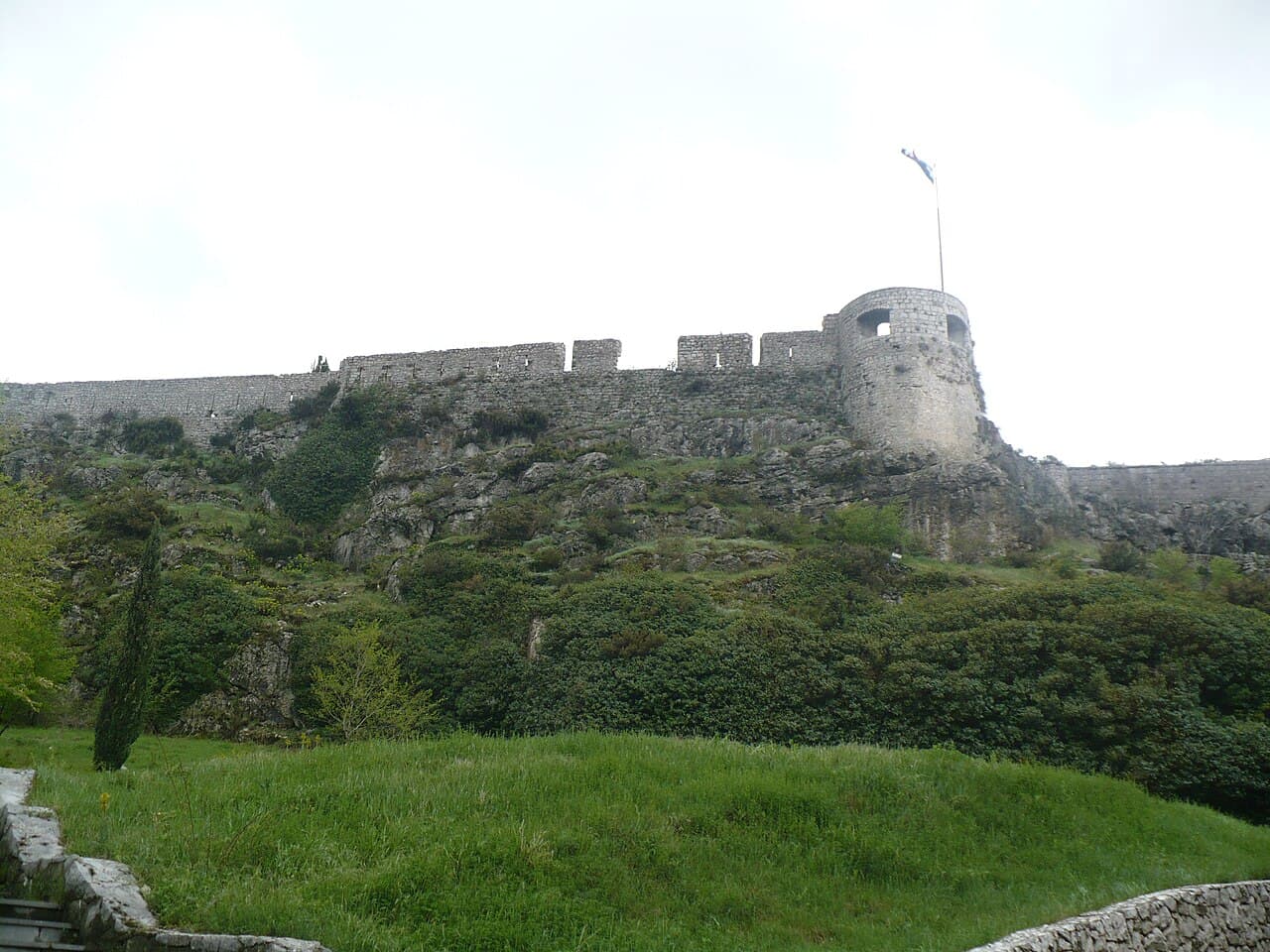
The fortress on a rock ridge in the pass behind Split guarded the road inland for centuries and looks down over the whole city and the islands, which lie to the southwest. 12 euros for adults, 4 for children, including the interpretation centre on the square, the Stella Croatica agro-park and an olive museum; open every day 08:30 to 20:30 on the page updated in June 2026, with winter hours not yet published. Twenty minutes from Split, and the right first stop on the day you collect the car.
 Silverije · CC BY-SA 3.0 via Wikimedia Commons
Omis and the Mirabela fortress
Omis sits where the Cetina river cuts out of the mountains to the sea, and the canyon behind it is where the rafting and zip-line agencies take their groups. The small Mirabela fortress above the old town looks over the roofs, the river mouth and the Brac channel. The City of Omis charges 6 euros from 1 June to 30 September and 4 euros otherwise, with ticketed hours of 08:30 to 22:00 from 15 May to 15 September and 09:00 to 20:00 in the spring and autumn shoulder to 15 October; outside those dates a visit is by arrangement. The August 2026 fire burned the slopes above the town.
 Marko Jukić -Majkl · CC BY-SA 4.0 via Wikimedia Commons
Biokovo Skywalk
A glass-floored horseshoe walkway hung off the cliff of Biokovo 1,228 metres above the Makarska Riviera, reached by a 13-kilometre single-lane mountain road from the park gate, about thirty minutes of driving each way with passing places every 300 metres or so. Tickets are online only, and a car needs a timed slot: the park admits 20 vehicles each full hour, and purchases cannot be changed or refunded. 15 euros for adults from June to September, 10 in April, May and October; the park is open 07:00 to 19:00 in April and September, 06:00 to 20:00 from May to August and 08:00 to 18:00 in October, with the last entry an hour before closing, and is officially closed from November to March. It is a morning trip: the skywalk closes before sunset for most of the season, and it opens after sunrise almost every day.
Biokovo: hours and slots ↗Biokovo online tickets ↗View on map ↗
 Rolf Kawel · CC BY-SA 3.0 de via Wikimedia Commons
Narona Archaeological Museum
Narona was the Roman centre of the Neretva valley, and the museum in the village of Vid shows what is left of it, with the Roman sculpture found on the site as the centrepiece. 6 euros; open Tuesday to Sunday 09:00 to 19:00 from June to September, and from October to May Tuesday to Friday 09:00 to 16:00, Saturday to 17:00 and Sunday to 13:00; closed Mondays and holidays, last ticket half an hour before closing. Twenty minutes off the D8, and lunch at Djudja i Mate across the square.
 Tony Hisgett · CC BY 2.0 via Wikimedia Commons
The walls and saltworks of Ston
Ragusa began walling the isthmus of Peljesac in 1333 to protect the saltworks that paid for its republic, and the Great Wall still climbs the hill between Ston and Mali Ston with towers along its length. The walls are run by the same Society of Friends of Dubrovnik Antiquities that runs Dubrovnik’s, and are open every day except Christmas Day; the society’s site publishes no price, so buy at the gate. Go early or late, as the climb is steep and shadeless. Below Ston, the salt pans are still worked by hand, and the local tourist board lists a 10-euro ticket with a short film, open 08:00 to 20:00 in summer.
 Hilthart Pedersen h3p · CC0 via Wikimedia Commons
Korcula old town
The walled town on its small peninsula is Dubrovnik in miniature, a grid of stone lanes off one main street, with St Mark’s Cathedral on the square at the top and the sea on three sides. The tradition that Marco Polo was born here is exactly that, a tradition, and historians have written about it as an invented one; the town’s Moreska sword dance is older and better documented, listed at 21:00 at the Summer Theatre on several nights a week until mid-October; check the programme. The car ferry from Orebic lands at Domince, just east of town.
 Zekai Zhu · Pexels
Dubrovnik City Walls and Fort Lovrijenac
The walls run right round the Old Town, a walk of an hour and a half to two hours, with the Minceta tower at the high point and the roofs below. The ticket includes Fort Lovrijenac on its rock outside the Pile gate; a Lovrijenac ticket does not include the walls. Children under seven are free, 7 to 18 pay a child ticket, and the walls are open every day except 25 December. The adult price, 40 euros since 1 March 2025 by the operator’s own statement to the press, is repeated by 2026 listings, but the society’s ticket shop needs a browser and its FAQ still mentions the kuna, so confirm at the gate. Go at opening; in summer the walls are a furnace by eleven, and the society counts closing time as the last entry, not the time you must be off.
 Swiss Atlas · Pexels
The Rector’s Palace and the Dubrovnik museums
The Gothic-Renaissance seat of the rectors of the Republic of Ragusa, now the Cultural History Museum, with its arcaded courtyard and the state rooms upstairs. 15 euros for the palace alone or 20 for a combined ticket to ten city museums, including the Maritime Museum, valid for seven days. Open every day 09:00 to 18:00 from 1 April to 31 October; in winter 09:00 to 16:00 and closed on Mondays. The ticket offices take cards only.
 Pudelek (Marcin Szala) · CC BY-SA 3.0 via Wikimedia Commons
Lokrum
The wooded island a quarter of an hour by boat from the Old Town harbour, a nature reserve of pine and holm oak with an old monastery, garden paths and rocks to swim from. 30 euros for adults in 2026, 5 for children 7 to 18, including the return boat; sold at the harbour kiosk from 08:00 to 18:00, and the same 30 euros is charged on the island if you come by private boat. From 25 August 2026 boats leave the harbour at 09:00 and then every half hour from 10:00 to 18:00, and the last boat back is at 19:00. Nobody may stay on the island after it, and in bad weather the boat does not run.
 dronepicr · CC BY 2.0 via Wikimedia Commons
Mount Srd and the cable car
The cable car climbs from just above the Old Town to the top of Srd, 30 euros return or 17 one way for adults, with the Old Town laid out due south below. On top, Fort Imperial holds the Homeland War museum, 5 euros, on the defence of Dubrovnik in the 1990s war, and its terrace looks over the Old Town and the Elafiti islands. The cable car runs 09:00 to 24:00 until 14 September, to 23:00 for the rest of September, to 21:00 from 1 to 20 October, to 20:00 to the end of October and to 17:00 in November, with the last ride up half an hour before closing; it is closed from December to March, when the road up is the way. Strong wind stops it.
 Martin Brož · CC BY 3.0 via Wikimedia Commons
Racic Mausoleum, Cavtat
On the hill above Cavtat’s peninsula, in the cemetery among the cypresses, the mausoleum Ivan Mestrovic designed for the shipowning Racic family. 4 euros, open from 1 May to 31 October, Monday to Saturday 09:00 to 16:00, closed Sundays and holidays. Ten minutes’ walk up from the harbour, and the view from the path over both bays is the reason to go even when it is shut.
 TimeTravelRome / CC BY 2.0 via Wikimedia Commons
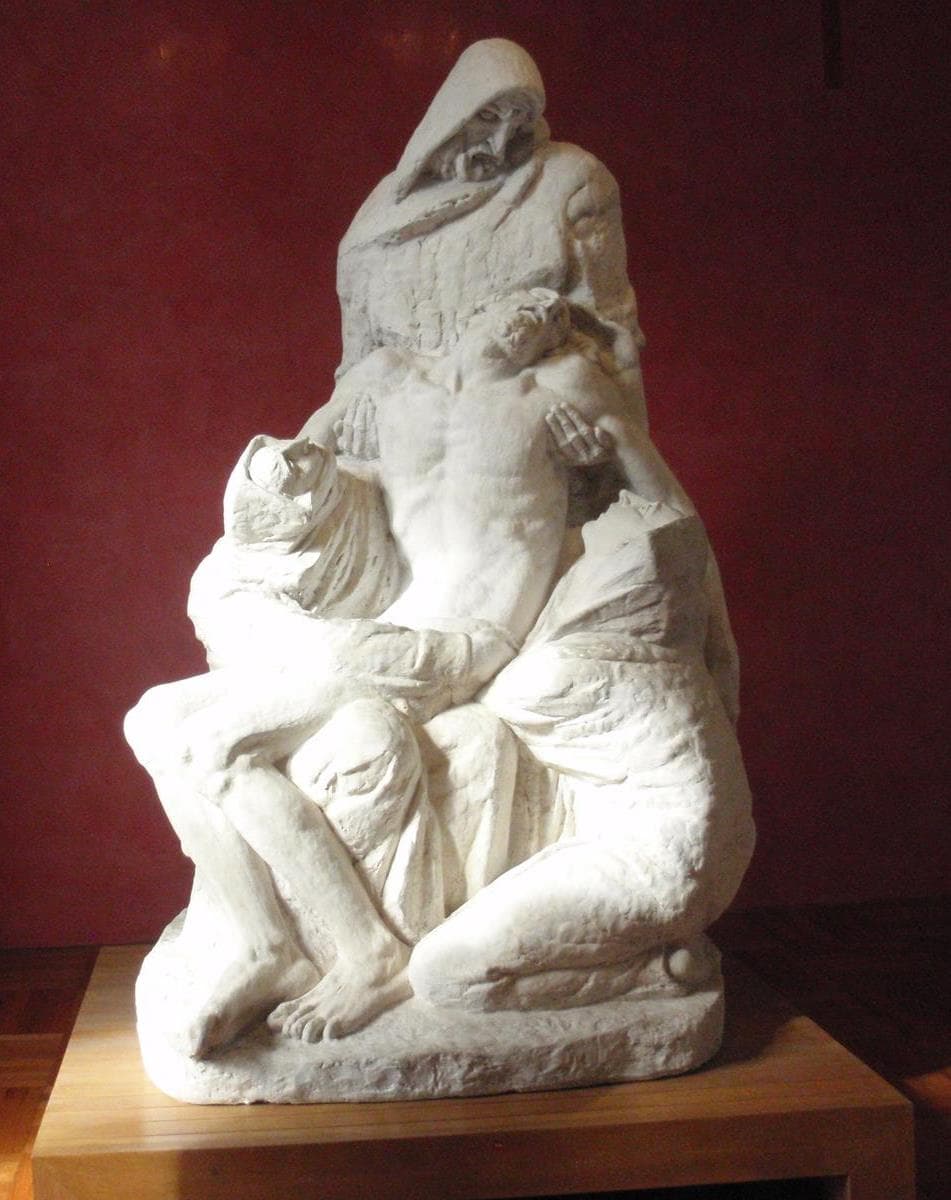 photo originale prise par Claude Gagnon, / CC BY-SA 3.0 via Wikimedia Commons
Food & drink
Ston oysters
The flat European oyster, Ostrea edulis, farmed in the bay of Mali Ston for centuries and protected since 2020 as the Malostonska kamenica, an EU designation of origin. Eaten raw with lemon on the waterfront, or on a boat at the farm itself. Locals say they are best in early spring, around the March oyster days.
 LilKil · CC BY-SA 4.0 via Wikimedia Commons
Pasticada
The Dalmatian Sunday dish: beef marinated in vinegar, then braised for hours with wine, prunes and vegetables into a dark sweet-sour sauce, served with gnocchi. A day’s work in a home kitchen, which is why it is worth ordering in a konoba that makes it properly.
Peka
Lamb, veal or octopus with potatoes, cooked under an iron bell buried in embers. Most konobas need it ordered hours or a day ahead, and it is a dish for two or more.
Neretva brudet of eel and frog
The delta’s own stew, eels and frogs in a tomato and wine sauce with polenta, and the reason to stop for lunch in Vid or Opuzen. Fried frogs are the other version, crisp and surprisingly like chicken.
 Micaela & Massimo · CC BY 2.0 via Wikimedia Commons
Crni rizot
Black risotto coloured and flavoured with cuttlefish ink, on every menu on the coast. Order it where the fish is fresh; it tells you everything about the kitchen.
 Popo le Chien · CC0 via Wikimedia Commons
Soparnik
A thin pie of Swiss chard, onion and parsley baked on an open hearth, from the Poljica villages around Omis, and protected as an EU geographical indication since 2016. Look for it around Omis and in Split’s bakeries.
 Haydn Blackey from Cardiff, Wales · CC BY-SA 2.0 via Wikimedia Commons
Dalmatinski prsut and paski sir
Dalmatian dry-cured ham, an EU protected geographical indication since 2016, sliced thin with sheep’s cheese and olives as the start of almost any meal.
 Quahadi Añtó 09:05, 18 December 2013 (UTC) · CC BY-SA 3.0 via Wikimedia Commons
Plavac Mali, Posip and Grk
The wines of this route. Plavac Mali is the big red of the Peljesac slopes, Dingac and Postup the names to look for; Posip is Korcula’s full white; Grk is the rare white of Lumbarda at the island’s eastern tip.
Rozata and arancini
Dubrovnik’s caramel custard, a cousin of creme caramel, and the candied orange peel that Ston serves with coffee and almonds. Both are family recipes first and desserts second.
Lunch is from about 12:00 to 15:00 and dinner from 19:00; restaurants in the resort towns keep kitchens open late in summer, and many coastal places close entirely from November to March or April. A konoba is a traditional tavern, simple and often family-run; a restaurant is more formal. Fish is priced by the kilo from a tray the waiter brings, so ask what the chosen fish will cost before it goes to the grill. Tipping about ten percent is appreciated and not required. Cards are taken almost everywhere, the Dubrovnik museums take only cards, and a little cash helps at village konobas and oyster farms. Book the starred restaurants and the peka a day or more ahead.
Where to eat
Krug
fine-diningOne star in the Michelin Guide Croatia 2026, on Trumbiceva obala on the Split seafront. A tasting-menu restaurant for the one night you want to spend properly; book ahead.
Last researched 2026-09-14
K.uzina
modernA Bib Gourmand in the 2026 Michelin Guide, meaning good cooking at a fair price, in the old town at Kraj Svete Marije 1. Open from noon to midnight and closed on Sundays, so plan it for another night.
Last researched 2026-09-14
Konoba Fetivi
institutionA family-run konoba in Varos at Tomica Stine 4, in the Michelin 2026 selection without a distinction, for Dalmatian classics and the day’s fish. It has no website of its own; the domain with its name belongs to something else entirely, so call or walk in.
Last researched 2026-09-14
Jeska Fine Bistro
modernRun by the couple Ela Ozic and Ljudevit Blazevic on the main square, and the first Makarska restaurant in the Michelin Guide, new in the 2026 selection. A short walk from the harbour hotels.
Last researched 2026-09-14
Jeny
fine-diningA family-run fine-dining restaurant in the hillside village above Tucepi with five- and seven-course menus, in the Michelin 2026 selection. Its site gives a season of 25 May to 30 September, Monday to Saturday 18:00 to midnight, and says it serves no vegan or vegetarian menu. Take a taxi if you are drinking.
Last researched 2026-09-14
Djudja i Mate
institutionThe Neretva restaurant in Vid, across from the Narona museum, with frogs fried or grilled, eel and the delta’s other specialities, free parking and rooms upstairs. Gault&Millau lists it in its 2026 guide.
Last researched 2026-09-14
Kapetanova kuca
institutionThe best-known seafood restaurant in Mali Ston, on the shore with the oyster beds in front of it, where the chef Lidija Kralj cooks the house seafood risotto and the Ston cake, a pasta-filled sweet. Same family as the Ostrea hotel next door.
Last researched 2026-09-14
Bota Sare
casualA restaurant in a medieval salt warehouse on the Mali Ston waterfront, cooking from two old cookbooks found in the building, and running an hour-long oyster tasting year-round that takes a boat from the harbour out to a floating farm, with wine and candied orange peel. The group also has oyster bars in Dubrovnik and Split.
Last researched 2026-09-14
LD Restaurant
fine-diningThe terrace restaurant of the Lesic Dimitri Palace, one Michelin star in 2026, with a terrace over the Peljesac channel and head chef Marko Gajski in the kitchen. Book ahead.
Last researched 2026-09-14
Konoba Mate
institutionA family konoba in the inland village of Pupnat, 15 minutes from Korcula town, with a Bib Gourmand in the 2026 Michelin Guide. Its own site gives summer service from 19:00 to 23:00 and says it is closed on Sundays in May, June, September and October; park above the bar.
Last researched 2026-09-14
360
fine-diningTables on the city walls above the old harbour, one Michelin star in the 2026 guide and 18 points from Gault&Millau. Tuesday to Sunday 18:00 to midnight, closed Mondays, and the dress code is elegant.
Last researched 2026-09-14
Restaurant Dubrovnik
modernA restaurant in the Old Town at Marojice Kaboge 5, in the Michelin 2026 selection. Closed from November to April. Its real site is restorandubrovnik.com; the English-spelled domain is a parked page.
Last researched 2026-09-14
Gverovic-Orsan
institutionA family seafood restaurant in a centuries-old boathouse on the bay at Zaton, 7 kilometres before Dubrovnik on the D8, celebrating its 60th year in 2026. The right lunch on the day you drive in, before the car goes back.
Last researched 2026-09-14
Pantarul
modernA neighbourhood restaurant in Lapad at Kralja Tomislava 1 with a menu that follows the seasons and produce from farmers around Dubrovnik. Its contact page says open every day while its FAQ talks about Monday closing, so call before a Monday.
Last researched 2026-09-14
Sunrises
 Bernard Gagnon · CC BY-SA 4.0 via Wikimedia Commons
The Riva, Split, at first light
The harbour promenade in front of the palace faces south over the water, so at dawn the sun comes up on your left over the eastern side of the harbour and the mountains behind the city, and the first light runs along the palace’s sea front and the palm trees of the Riva before the cafes open. The bearing of sunrise swings from about 57 degrees in June, over the mountains inland toward Klis, through due east at the equinoxes to about 123 degrees in December, over Bacvice and the low coast beyond it. Because the horizon on that side is mountains, the sun clears them some minutes after the table time. Sunrise in Split is about 05:12 at its earliest in mid-June, 06:31 in mid-September, 07:18 on 24 October, 06:20 the day after the clocks change and 07:27 at its latest on the last day of the year.
Year-round; autumn and winter for the sun over the water rather than the mountains · The palace’s south wall and the Riva palms are lit side-on from the east; face west along the promenade toward Marjan for the warm light on the stone.
 Diego F. Parra · Pexels
Banje beach and the Ploce shore, Dubrovnik
From Banje beach, just east of the Ploce gate, the Old Town lies to the west-southwest, about 250 degrees, across the old harbour, which means the rising sun is behind you and falls straight onto the eastern walls, the Revelin fortress and St John’s tower at the harbour mouth. In summer it rises at about 57 degrees, behind the Srd ridge, which delays it; by December it rises at about 123 degrees, over the coast toward Cavtat, and lights the walls much sooner after dawn. Sunrise in Dubrovnik is about 05:09 at its earliest in June, 06:25 in mid-September, 07:10 on 24 October, 06:12 the day after the change and 07:14 at the winter solstice.
September to April, when the sun rises clear of the Srd ridge · The walls glow for the first half hour; swim before the beach club opens and have the Old Town to yourself from the water.
Sunsets
 dronepicr · CC BY 2.0 via Wikimedia Commons
Mount Srd, above Dubrovnik
From the terrace of Fort Imperial at the top of the cable car the Old Town lies due south, about 179 degrees, straight below, with Lokrum to the south-southeast, so the sun never sets behind the city: it goes down to your right and lights the roofs and walls from the side. The Elafiti islands of Kolocep and Lopud lie at about 288 degrees, and the sun sets over them from about 20 April to early May and again for the second and third weeks of August; in September and October it sets over the open sea to their left, and in December at about 237 degrees, well out to sea to the south-west. The cable car runs until 23:00 in the second half of September and until 21:00 to 20 October, and the museum on top stays open after sunset from April to October.
April to October, while the cable car runs late; August for the sun over the Elafiti · Sunset in Dubrovnik is about 20:29 at its latest in early July, 19:01 in mid-September, 18:31 on 1 October, 17:53 on 24 October, 16:51 the day after the clocks change and 16:14 at its earliest in early December. Stay for the blue half hour, when the Old Town lights come on.
 TAT2 · CC BY 3.0 via Wikimedia Commons
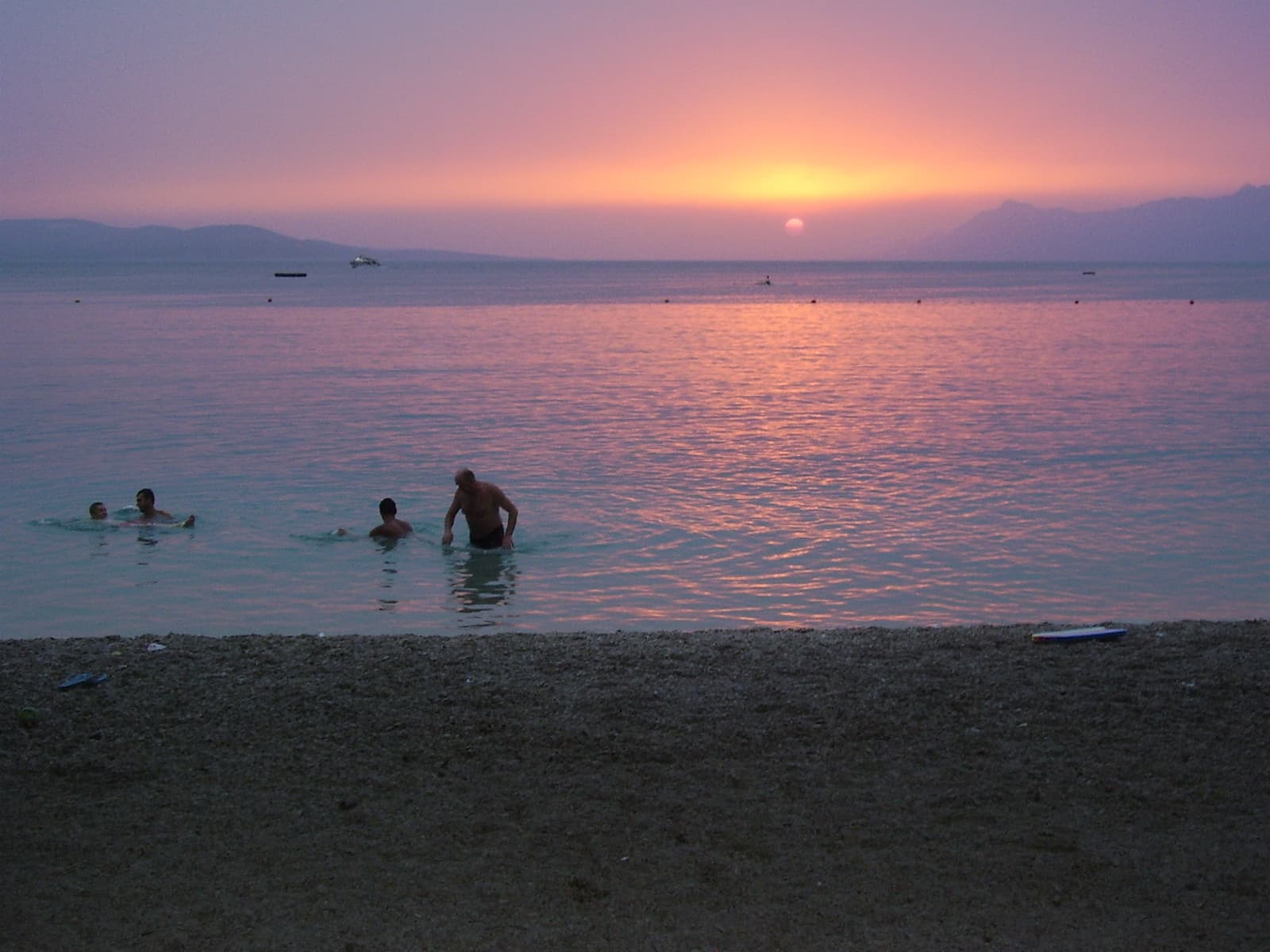
The Makarska waterfront, over Brac
Makarska faces the island of Brac across the channel, and from the harbour the island spans roughly 264 to 286 degrees, from Bol and its eastern tip at Sumartin round to its north coast. The sun sets behind Brac from the end of August to early October and again from early March to about 20 April; from October to early March it goes down further left, behind the long ridge of Hvar; and from late April to late August it sets over the mainland mountains toward Omis, at up to about 303 degrees in June, earlier than the table says. The promenade, the Sveti Petar peninsula at the harbour mouth and any beach toward Tucepi all work.
The end of August to early October, for the sun behind Brac · Sunset in Makarska is about 20:36 at its latest in early July, 19:06 in mid-September, 18:35 on 1 October, 17:56 on 24 October and 16:55 the day after the clocks change. Biokovo behind you turns pink after the sun has gone.
 Tom Forrest · Pexels
The west walls of Korcula
From the western seafront of Korcula old town the channel between the island and Peljesac opens to the west-northwest, between the island’s own north coast at about 282 degrees and the western tip of Peljesac at about 311. The sun sets down that channel, over the water, from mid-April to late August. From September it sets further left, behind the hills of Korcula island itself, and the show becomes the light on the Peljesac mountains across the water. The bars along the western walls fill for it every summer evening.
Mid-April to late August for the sun over the channel · Sunset in Korcula is about 20:34 at its latest in early July, 20:06 in mid-May, 19:05 in mid-September and 16:55 the day after the clocks change. Around midsummer the sun goes down almost straight along the channel at about 303 degrees.
 dominkod · CC BY 3.0 via Wikimedia Commons
Marjan hill, Split
The wooded peninsula west of the old town rises to Telegrin, its summit, where the view goes all the way round: the city and the palace behind you to the east, the islands of Ciovo and Solta and the open channel to the west and south-west. The sun sets over the channel toward Ciovo and Trogir in September, further south over Solta in winter, and over the Kastela bay and its mountains in June. The path up starts from the steps in Varos, past the Vidilica cafe, whose terrace faces east over the town rather than the sunset; keep climbing.
September to April · Sunset in Split is about 20:39 at its latest in early July, 19:08 in mid-September, 18:37 on 1 October, 17:58 on 24 October, 16:57 the day after the clocks change and 16:18 at its earliest in early December.
Day trips
 Carl-Emil Jørgensen · Pexels
Krka National Park from Split
The travertine falls of Skradinski buk, about an hour and a quarter north of Split, are the classic day trip and the park’s own rules now say no swimming there: bathing is allowed only at Roski slap, Stinice and Pisak, from 1 June to 30 September. Adults pay 40 euros from June to September, 30 after 15:00, 20 in April, May and October and 7 in winter, with the boat from Skradin or the bus from Lozovac included from April to October. In September Skradinski buk is open 08:00 to 19:00. Buy online to skip the ticket queue.
About 1 hour 15 minutes from Split by car · Full day
 Živoslav Ilić · Pexels
Trogir and Klis
Two half-days that fit together on the morning you pick up the car, or on a spare Split day: Trogir, the UNESCO-listed island town 30 kilometres west, with the Romanesque portal of St Lawrence’s cathedral carved by Master Radovan, and Klis fortress in the pass above Split on the way back. Trogir’s official pages would not show us 2026 prices, so take cash and check at the doors.
About 20 minutes from Split to Klis and 40 to Trogir · Half day each
 User: Stop_The_Lies · Public domain via Wikimedia Commons
Hvar by catamaran from Split
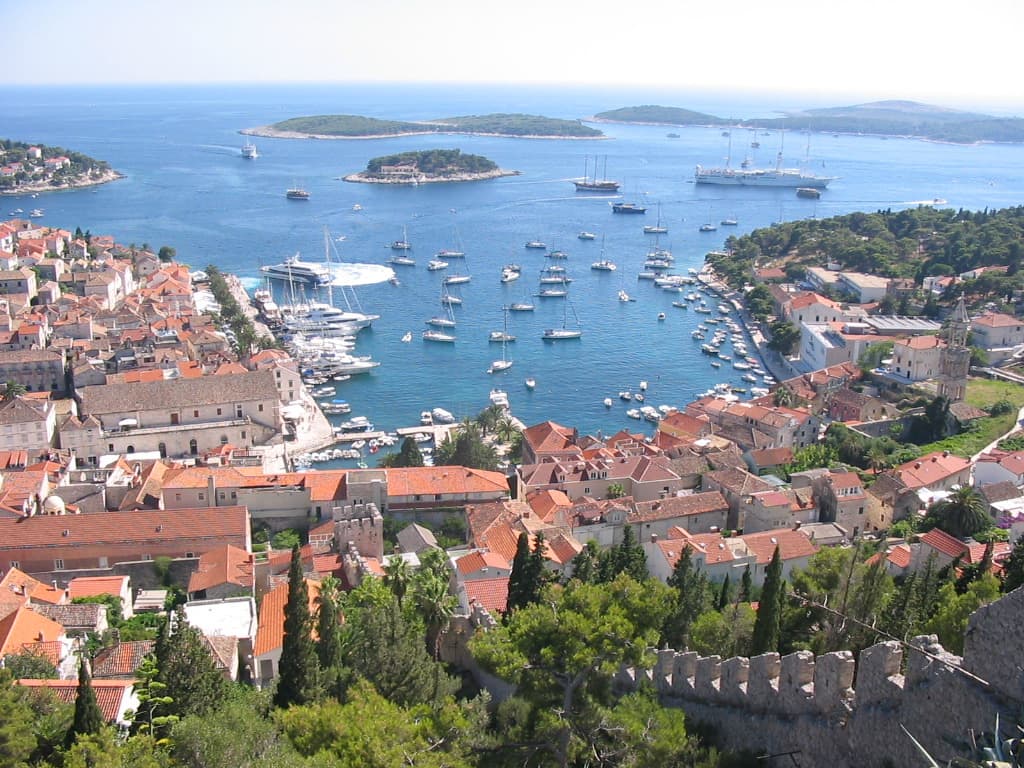
Hvar town, its harbour and its Fortica fortress are a short catamaran crossing from Split: Jadrolinija and TP Line both charge 25 euros one way, with two to three sailings a day in autumn. The Fortica, 12 euros, is open 09:00 to 21:00 and looks straight down on the harbour. A long day that does not need the car. Fires reached the neighbouring island of Brac on 12 and 13 September 2026; check the news before planning any island day.
A short catamaran crossing · Full day
 Jocelyn Erskine-Kellie · Pexels
Kravica waterfalls and Mostar, in Bosnia and Herzegovina
From the Neretva delta, the Kravica falls, 28 metres high and 120 wide, are about an hour inland, and Mostar’s Old Bridge half an hour further. Swimming below the falls is allowed at your own risk, adults pay 20 convertible marks, about 10 euros, all year, and in summer the site is open 07:00 to 22:00. This is the one trip on this guide that leaves the EU: you cross the Schengen border out and back with Entry/Exit System checks, your rental contract must allow Bosnia and Herzegovina, and Israel’s National Security Council rates the country at level 2, which asks for heightened caution.
About 1 hour from Metkovic to Kravica · Full day
 dronepicr · CC BY 2.0 via Wikimedia Commons
Mljet National Park
The western end of the long island of Mljet is a national park of two salt-water lakes in pine forest, with a monastery on the islet of St Mary in the larger one. Adults pay 30 euros from June to September and 20 otherwise, a quarter less after 16:00, including the boat to the islet and the park’s electric train. In summer the park is open 07:30 to 20:30. Boats reach the island from the Ston area and from Dubrovnik, but we could not verify the 2026 timetables, which change by month; check Jadrolinija and the park’s site before you plan the day.
By ferry or catamaran; check the season’s timetable · Full day
 Nikolett Emmert · Pexels
Cavtat and the Konavle valley from Dubrovnik
Twenty minutes south by road or longer by boat from the Old Town harbour, Cavtat’s peninsula walk, harbour lunch and the Racic mausoleum, 4 euros, Monday to Saturday until 31 October, then the villages and konobas of the Konavle valley behind it. Stay the last night here; the airport is five kilometres away.
20 minutes by car or taxi · Half day
After dark
 Zekai Zhu · Pexels
The Peristyle after dark, Split
eveningThe emperor’s courtyard at the heart of the palace, with the cathedral’s bell tower above it, is at its best after the tour groups have gone: steps to sit on, a bar in the colonnade, and sometimes music. Then a konoba in Varos.
Oysters at sunset in Mali Ston
foodA dozen oysters and a glass of Posip on the waterfront at Mali Ston as the light goes, at Kapetanova kuca or Bota Sare, with the farms in the bay in front of you. The simplest and best evening on the route.
 Luka Jačov · Public domain via Wikimedia Commons
The Moreska in Korcula
performanceKorcula’s traditional sword dance, a staged battle with music, listed at 21:00 in the Summer Theatre on several nights a week until mid-October. Listings for 2026 disagree on the nights, so check the programme when you arrive and buy at the gate.
 Irina Grigore · Pexels
The Old Town after the ships leave, Dubrovnik
eveningCruise passengers are back on board by evening, and the Stradun, the harbour and the lanes empty out. Walk from the Pile gate to the old harbour, drink at one of the bars cut into the seaward walls, and eat late.
 Diego F. Parra · Pexels
Srd by night
eveningTake the cable car up for sunset and stay for the lights of the Old Town below; in the second half of September it runs until 23:00, with the last ride up at 22:30, and the Homeland War museum on top is open to 22:00 until 30 September.
Daily itinerary
Eight days, Split to Dubrovnik one way
The plan we would book: two nights in Split without a car, one on the Makarska Riviera, one in Mali Ston, one in Korcula, and two in Dubrovnik, where the car goes back on arrival. About 470 kilometres of driving in all, with the longest day, the fourth, at about four hours at the wheel, the Peljesac bridge rather than the Neum border, and one short ferry crossing, there and back. Three weekday rules: day two should not be a Monday, when the Mestrovic Gallery shuts; day four should not be a Monday, when the Narona museum shuts; and if you want Jeny in Tucepi on day three, it closes on Sundays and after 30 September. Starting on a Saturday makes all three work.
- 1
Arrive in Split
relaxedLand at Split airport, 26 kilometres west of the city, and take the official airport shuttle, 10 euros, which leaves about half an hour after each arrival. Do not collect the car yet. Since 10 April 2026 your first entry into the Schengen area is recorded under the Entry/Exit System with fingerprints and a photograph, so allow the time.On the Riva, or wherever the hotel sends you.The palace on foot: the Peristyle, the vestibule, the Golden Gate, and the substructures, 10 euros, open to 20:00 on summer hours.Marjan hill, up the steps from Varos to Telegrin.K.uzina in the old town, unless it is a Sunday.No car in Split. The old town is pedestrian and the hotels in it have no parking.Estimate: If the flight lands late, skip Marjan and eat in Varos
- 2
Split
moderateThe Riva at first light, then the cathedral and bell tower when they open, and the fish market and the Pazar before the heat.Konoba Fetivi in Varos.The Mestrovic Gallery on the Marjan shore, 12 euros, Tuesday to Sunday to 18:00, and a swim from the rocks below Marjan or at Bacvice.The Riva with a drink.Krug, booked ahead, for the big dinner; otherwise back to Varos.The Peristyle after dark.On foot all day.Estimate: Krka National Park as a full day out instead, by tour bus or a car hired a day early · Hvar by catamaran, 25 euros each way
- 3
Klis, Omis and the Riviera
moderateCollect the car in Split and drive twenty minutes up to Klis fortress, 12 euros, open from 08:30. Back down to the coast road, the D8, and south to Omis at the mouth of the Cetina, where the Mirabela fortress looks over the town.Omis, or soparnik from a bakery on the way.On down the coast to Brela for a swim at Punta Rata, then Makarska. About 110 kilometres and two and a half to three hours of driving with the Klis detour.The Makarska waterfront, with the sun going down behind Brac from the end of August.Jeny above Tucepi, booked, Monday to Saturday until 30 September; Jeska Fine Bistro in Makarska otherwise.The coast road through Omis is slow and beautiful. The August 2026 fire burned the hills above Omis; drive through, and check road news on the day.Estimate: Take the A1 motorway from Split to the Sestanovac exit and drop to the coast at Brela if you are short of time
- 4
Biokovo, the Neretva and the bridge
fullThe Biokovo skywalk on the timed car slot you booked online, 15 euros each until 30 September and 10 in October, with the park gate opening at 07:00 in September and 08:00 in October. Thirty minutes up the single-track road, an hour on top, thirty back.Down the D8 past Ploce to the Neretva delta: frogs and eel at Djudja i Mate in Vid, and the Narona museum across the square, closed on Mondays.Follow the signs for Ston and the Peljesac bridge, not for Neum. Over the bridge and down the peninsula to Mali Ston, about 170 kilometres for the day.Oysters on the Mali Ston waterfront.Kapetanova kuca.This is the long driving day, and the one where the route choice matters: the bridge road keeps you inside Croatia with no border check. Fill up before Ploce.Estimate: Skip Biokovo if you could not get a slot, and give the delta a boat trip instead · Sleep in the delta at Villa Neretva and do Ston tomorrow morning
- 5
Ston, Peljesac and the ferry to Korcula
moderateThe walls of Ston early, before the heat, after checking the day’s opening time at the gate, then the saltworks below the town.An oyster-farm boat tasting with Bota Sare, or a wine lunch on the way west.West along the peninsula through the Dingac and Postup vineyards, with a tasting booked at a winery, to Orebic, about an hour and a quarter. The car ferry to Domince on Korcula runs many times a day: 16.20 euros for the car and 4.40 each until 27 September, 10.40 and 2.50 from the 28th.The west walls of Korcula old town.LD Restaurant, booked, or Konoba Mate in Pupnat, which closes on Sundays outside July and August.Leave the car at the hotel or by the ferry; Korcula old town is car-free. Designate a driver before the tasting.Estimate: Skip Korcula, sleep a second night in Mali Ston and drive to Dubrovnik tomorrow in an hour
- 6
Korcula to Dubrovnik
moderateKorcula old town before the day boats arrive: St Mark’s Cathedral and a swim off the rocks.Back on the ferry and east along the peninsula, then over the Ston isthmus and down the D8 to Zaton for a seafood lunch at Gverovic-Orsan, about two hours of driving.Into Dubrovnik and hand the car back. If the hotel is in the Old Town or Ploce, it registers the car with the city’s traffic system on arrival or tells you where to park; if not, drop the car first and take a taxi. Pile street parking is 20 euros an hour until the end of October.Mount Srd by cable car.The Old Town, after the cruise passengers have gone.The car’s last day. A one-way rental ends in Dubrovnik; confirm the fee and the drop-off point when you book.Estimate: Keep the car one more day for Cavtat and Konavle, and return it at the airport
- 7
The walls and Lokrum
fullThe city walls at opening, adult ticket 40 euros by the operator’s last published figure, with Fort Lovrijenac on the same ticket. Then the Rector’s Palace, 15 euros, or the ten-museum ticket for 20.In the Old Town or Lapad.Lokrum by the half-hourly boat from the old harbour, 30 euros including the boat; swim, walk, and be on the last boat at 19:00.From the boat back, or a bar on the seaward walls.360, booked, Tuesday to Sunday; Restaurant Dubrovnik otherwise.On foot and by boat. The museums take cards only.Estimate: Mljet National Park by catamaran instead of Lokrum, a longer day
- 8
Cavtat and away
relaxedTaxi or boat to Cavtat for the peninsula path and the Racic mausoleum, Monday to Saturday until 31 October.On the Cavtat waterfront.The airport, five kilometres away.Fly.The official shuttle from Dubrovnik to the airport is 10 euros; from Cavtat, a taxi is quicker.Estimate: Sleep the last night in Cavtat at Hotel Supetar and fly the next morning
Ten days, a loop from Dubrovnik for the El Al flight
For readers flying Tel Aviv to Dubrovnik and back: the same stops as a loop, north on the coast road and back south on the motorway, with the car collected after two nights in Dubrovnik and returned before the last night in Cavtat. Rules: collect the car on day three, not at the airport on day one; keep day three off a Monday for the Narona museum, day four off a Sunday for Jeny, day five off a Sunday for K.uzina and day six off a Monday for the Mestrovic Gallery; and check El Al’s days before fixing anything. A Monday, Tuesday, Friday or Sunday landing satisfies all four; if the flight days force another start, swap the order of days three and four or five and six using the alternatives.
- 1
Land in Dubrovnik
relaxedLand at Dubrovnik airport and take the official shuttle, 10 euros, into town. Entry/Exit System registration at passport control.Check in, and walk the Stradun and the old harbour.Mount Srd by cable car.The Old Town.No car for two days.Estimate: Sleep in Lapad for a cheaper room and a beach
- 2
Dubrovnik
fullThe walls at opening, then the Rector’s Palace.Lapad or the Old Town.Lokrum, last boat at 19:00.360 or Restaurant Dubrovnik.Estimate: A day trip to Cavtat instead of Lokrum
- 3
North to Ston
fullCollect the car and drive north on the D8, an hour to Ston. The walls before the heat, then the saltworks.Oysters at Mali Ston.Over the Peljesac bridge and north through the Neretva delta to Makarska, about two and a half hours; the Narona museum in Vid if it is not a Monday.The Makarska waterfront.Jeska Fine Bistro.Take the bridge, not the Neum road.Estimate: Sleep in Mali Ston tonight and do the Riviera tomorrow
- 4
Biokovo and the Riviera
moderateThe Biokovo skywalk on your booked slot.Tucepi or Makarska.A beach afternoon at Brela.Brela or Makarska.Jeny, Monday to Saturday until 30 September.Estimate: A rest day on the beach if Biokovo is sold out
- 5
Omis to Split
moderateNorth on the coast road to Omis and the Mirabela fortress.Soparnik in Omis.Split. Park at the hotel, or choose a hotel with a garage, and walk the palace.Marjan hill.K.uzina, not on a Sunday.About 65 kilometres, under two hours with the stop.Estimate: Klis fortress on the way into Split
- 6
Split
moderateThe substructures, the cathedral, the markets.Konoba Fetivi.The Mestrovic Gallery, closed Mondays, and a swim.Krug.The Peristyle after dark.Estimate: Hvar by catamaran
- 7
Krka
fullDrive to Krka for opening, about an hour and a quarter.Skradin.Roski slap by excursion boat, or back to Split by Trogir.Split.Estimate: Trogir and Klis instead of Krka
- 8
The motorway south to Korcula
moderateThe A1 from Split to its end at Karamatici, near Ploce: 7.30 euros in tolls for a car at the booths, which stay until at least 2027. About an hour and a half.Over the bridge and along Peljesac, with a tasting in the Dingac vineyards.The Orebic car ferry to Korcula.The west walls of Korcula.LD Restaurant or Konoba Mate.The motorway makes this morning quick; the peninsula road after it does not.Estimate: Skip Korcula and sleep in Mali Ston
- 9
Korcula to Cavtat
moderateKorcula old town and a swim.Gverovic-Orsan at Zaton.Past Dubrovnik to Cavtat, about two and a half hours of driving in all, and return the car at the airport, five kilometres on.The Cavtat peninsula.The restaurant at Hotel Supetar.Returning at the airport keeps the car out of Dubrovnik’s traffic zone altogether.Estimate: Return the car in Dubrovnik and take a taxi to Cavtat
- 10
Fly home
relaxedAn early start: the El Al return we saw on the airport board landed in Tel Aviv at 14:00, which means leaving Dubrovnik before noon. A last swim off the Cavtat peninsula if there is time.Tel Aviv.A taxi from Cavtat to the airport is a few minutes. If your flight is later, the Racic mausoleum is open Monday to Saturday until 31 October.Estimate: With a late flight, spend the morning at the Racic mausoleum and on the peninsula path
Getting around
- Dubrovnik is the gateway from Israel. El Al flies Tel Aviv to Dubrovnik this season: on the morning we published, 14 September 2026, flight LY5187 left Ben Gurion for Dubrovnik at 06:20 and LY5188 was due back at 14:00, by the Israel Airports Authority’s own flight board. Search listings describe it as a twice-weekly seasonal route that ends in October; El Al’s site blocked our tools, so confirm the days and the last date with the airline. We found no Split flight on the board that day. Otherwise connect through Zagreb, Vienna, Munich, Zurich or Athens.
- Since 10 April 2026 the EU Entry/Exit System has been fully operational at every external Schengen border, Croatia included: non-EU travellers, Israelis among them, have their face photographed and fingerprints taken on first entry and passport stamps have ended. ETIAS, the online pre-authorisation, was still not in operation when we published. Israeli passport holders do not need a visa for short stays in the Schengen area, currently up to 90 days in any 180.
- Both airports have an official airport shuttle, 10 euros one way, leaving about half an hour after each arrival: Split airport is 26 kilometres west of the city, and the Dubrovnik bus runs to the Old Town and the bus station.
- The car is a one-way rental: collect it in Split on the day you leave the city and return it in Dubrovnik the day you arrive, or at Dubrovnik airport if your last night is in Cavtat. Rental companies charge a one-way fee that varies by company and season; we could not verify a range, so compare it when you book. Carry your licence with an International Driving Permit, which rental desks commonly ask for alongside a non-EU licence.
- If your rental contract or your route takes you through Neum or into Bosnia and Herzegovina, check the contract’s cross-border clause and green-card cover first; some contracts treat the short Neum corridor differently from other borders. On this route you do not need to: the Peljesac bridge keeps you in Croatia.
- Two roads south. The A1 motorway runs from Split (the Dugopolje junction) inland to its end at Karamatici near Ploce, and a car pays 7.30 euros for that section on Hrvatske autoceste’s 2026 price list. The D8, the Jadranska magistrala, follows the coast through Omis, Makarska and Gradac. After Ploce there is only the D8 and the bridge. By OpenStreetMap routing, Split to Dubrovnik is about 270 kilometres via the motorway and 300 on the coast, each about five hours of free-flowing driving without stops, and more in summer traffic.
- Tolls are still paid at booths: take a ticket at the entry, pay at the exit, by card or cash. Croatia plans to switch to barrier-free electronic tolling, with number-plate reading and optional tags for cars, and the most recent report dates the change to 1 March 2027. Nothing changes for a 2026 trip.
- The Peljesac bridge crosses from Komarna on the mainland to Brijesta on the peninsula, and with the Ston bypass, opened in April 2023, completes a road link to the far south that stays in Croatia. No toll is listed for it in the official road information we found. A local report in July 2026 said repairs to surface cracks on some pillars would start in October, after the main season, without a full closure; check road news before you drive.
- Fuel prices are capped by the government and reset weekly: Eurosuper 95 was 1.67 euros a litre and diesel 1.79 from 8 September 2026, with unofficial reports of 1.72 and 1.83 from 15 September. Stations are frequent on the D8 and the motorway, thinner on Peljesac.
- Ferries: the Jadrolinija car ferry from Orebic to Domince on Korcula runs about twenty times a day in September, 16.20 euros for a car up to five metres and 4.40 per person until 27 September, then 10.40 and 2.50. Without a car, TP Line’s daily catamaran runs Split to Dubrovnik via Hvar and Korcula until 31 October, leaving Split at 15:10 and reaching Dubrovnik at 20:20, 55 euros; its Split to Korcula summer line via Hvar ends on 20 September. Jadrolinija’s ferries from Split and Dubrovnik to Italy are suspended until 21 October 2026.
- Parking in Dubrovnik is the problem to design out. Sanitat Dubrovnik charges 20 euros an hour or 250 a day at Pile, the car park by the Old Town, from May to October, and 5 an hour from November to April. The Ilijina Glavica garage, a walk above Pile, is 7 euros an hour or 40 for 24 hours, and the day ticket must be bought within 15 minutes of entering. Under the City of Dubrovnik’s traffic decision of 9 May 2024, the inner centre, the Grad, Pile-Kono and Ploce iza Grada districts, is open only to registered vehicles when its camera system is active; hotels there register guests’ cars, Adriatic Luxury Hotels within three days of check-in. Split charged 4 euros for the first hour and 5 for each after at its central car park in summer 2026, by press reports.
Things worth knowing
- · Following the Neum signs out of habit or satnav default. Take the Peljesac bridge and stay in Croatia: no Schengen exit and re-entry, no two Entry/Exit System checks in nine kilometres, no border queue.
- · Driving into Dubrovnik and looking for parking by the Old Town. The inner centre is permit-only and camera-watched, and Pile costs 20 euros an hour in season; return the car first.
- · Driving the whole route in one day. It is five hours without stops and you see the D8.
- · Turning up at Biokovo without an online slot. Cars are admitted 20 an hour, tickets are sold only online and cannot be changed or refunded.
- · Planning a sunset on the Biokovo skywalk or on Lokrum. The park closes before sunset for most of the season, and the last boat from Lokrum leaves at 19:00.
- · Swimming at Skradinski buk in Krka. It has been forbidden for years; bathing is allowed only at Roski slap, Stinice and Pisak in summer.
- · Walking into Split, Dubrovnik or Hvar town in swimwear or without a shirt. Split and Dubrovnik fine it at 150 euros by press reports, and Hvar more.
Budget
| Low | Expected | Comfortable | |
|---|---|---|---|
| Accommodation style / per night | €90≈ $104 | €200≈ $230 | €450≈ $518 |
| Food style / per day | €35≈ $40 | €70≈ $81 | €150≈ $173 |
| Local transport / per day | €20≈ $23 | €40≈ $46 | €80≈ $92 |
| Estimate / per day | €10≈ $12 | €30≈ $35 | €55≈ $63 |
Estimate · EUR · 2026-09-14. Quoted in euros per person per day, except accommodation, which is per room per night on a double-occupancy basis, averaged across a trip that mixes a Mali Ston family hotel with Dubrovnik, the most expensive city on the coast. The Bank of Israel put the euro at 3.514 shekels and the dollar at 3.023 on 10 September 2026, so the expected daily figure of about 140 euros a head before the room is roughly 490 shekels. Local transport assumes a shared compact rental, fuel around 1.70 a litre over about 470 kilometres, one motorway section at 7.30, the Korcula ferry and hotel parking, and no car in Dubrovnik; the comfortable band adds an automatic and a one-way fee. Attractions reflect the big tickets: the Dubrovnik walls at about 40, Lokrum at 30, the cable car at 30, Krka at 40 in summer, Biokovo at 15. Add the tourist tax, 2.65 euros per person per night in Dubrovnik to 30 September and 1.85 after, and similar amounts elsewhere. · 1 USD = €1 (17 Sep 2026)
Things worth knowing
Frequently asked questions
Should I take the coast road or the motorway from Split to Dubrovnik?
Both, if you can. The A1 motorway runs inland from Split to Karamatici near Ploce, 7.30 euros in tolls for a car, and the coast road, the D8, runs through Omis and the Makarska Riviera. South of Ploce there is only the D8. By OpenStreetMap routing the motorway route is about 270 kilometres and the coast road about 300, each about five hours of driving without stops, so the motorway saves distance more than time. Drive the coast where it is beautiful, Omis to Makarska, and use the motorway when you are in a hurry or on the way back.
How many days do I need for Split to Dubrovnik?
Seven to ten. Eight days gives two nights in Split, one on the Makarska Riviera, one in Mali Ston, one in Korcula and two in Dubrovnik, flying out on the eighth. Five days does Split, a Ston lunch and Dubrovnik. Ten lets you add Krka and a beach day. It can be driven in a day, about five hours without stops, but then you have only seen the road.
Do I have to drive through Bosnia at Neum?
No. Since the Peljesac bridge opened, and the Ston bypass after it in April 2023, the route stays entirely inside Croatia: follow the signs for Ston and the bridge. The old road through Neum crosses a short stretch of Bosnia and Herzegovina, which since April 2026 means two Schengen border checks under the Entry/Exit System, and Israel’s National Security Council rates Bosnia and Herzegovina at level 2 while listing no warning for Croatia.
Should I keep the car in Dubrovnik?
We would not. The City of Dubrovnik restricts its inner centre, the Old Town, Pile and Ploce, to registered vehicles with camera control, street parking at Pile is 20 euros an hour from May to October, and the Old Town, Lokrum, the cable car and the boats to Cavtat need no car. Return it on arrival, or keep it for a last night in Cavtat and hand it back at the airport five kilometres away.
Are there direct flights from Tel Aviv to Split or Dubrovnik?
To Dubrovnik, yes, this season. El Al’s LY5187 left Ben Gurion for Dubrovnik at 06:20 on 14 September 2026 by the Israel Airports Authority’s own board, and search listings describe a twice-weekly route that ends in October; El Al’s site blocked us, so confirm the days with the airline. We found no Split flight on the board that day. With the flight into Dubrovnik, the ten-day loop in this guide works better than a one-way drive.
Is Croatia safe for Israeli travellers in 2026?
Israel’s National Security Council lists no travel warning for Croatia in the government’s dataset updated 6 September 2026, and the Foreign Ministry asks for ordinary vigilance. The day trip to Kravica and Mostar enters Bosnia and Herzegovina, which is at level 2. The practical risks on this route are summer traffic, heat, wildfires and slippery rocks.
When is the best time to drive the Dalmatian coast?
Late May to June and September to mid-October. The sea was 26 degrees at Dubrovnik in mid-September 2026, the crowds thin after the first week of September, and the Orebic ferry and Dubrovnik tourist tax drop to off-season rates at the end of the month. July and August are hot, crowded and dear. From November many coastal hotels and restaurants close, Biokovo shuts and the cable car stops from December.
What do the main sights cost in 2026?
The Dubrovnik city walls about 40 euros by the operator’s last published figure, with Lovrijenac included; Lokrum 30 with the boat; the Dubrovnik cable car 30 return; the Rector’s Palace 15, or 20 for ten museums; Krka 40 from June to September and 20 in October; Biokovo 15 to September and 10 in October; the Split palace substructures 10; Klis 12; the Mestrovic Gallery 12; Narona 6; Mirabela in Omis 6 to 30 September. A couple doing the walls, Lokrum, the cable car and Biokovo spends about 230 euros on tickets.
Is Korcula worth the ferry on a road trip?
Yes, if you have eight days or more. The Orebic car ferry runs about twenty times a day in September, the old town is the best-preserved on the route after Dubrovnik, and the Peljesac wine country is on the way. With a week or less, sleep in Mali Ston instead and give Korcula another trip.
Can I see the sunset from the Biokovo skywalk?
Almost never. The park closes at 20:00 from May to August, 19:00 in September and 18:00 in October, the last entry is an hour before closing, and the drive down from the skywalk takes thirty minutes, so from April until the clocks change on 25 October the sun sets too close to closing time. Only the last week of October, after the clocks go back and the sun sets before 17:00, leaves time to watch it and drive down. Go in the morning, and watch the sunset from the Makarska waterfront.
Sources (26)
- Israeli government open-data travel-warnings dataset (updated 6 September 2026): Croatia, National Security Council: no warnings; Bosnia and Herzegovina: occasional threat level 2, heightened precautions recommended · government · 2026-09-14
- Israel Airports Authority flight board dataset, 14 September 2026: El Al LY5187 Tel Aviv to Dubrovnik scheduled 06:20, departed; LY5188 from Dubrovnik scheduled to arrive 14:00; no Split flights listed · airport · 2026-09-14
- The Entry/Exit System became fully operational across all Schengen countries on 10 April 2026, replacing passport stamps with digital records of entries and exits of non-EU nationals, with facial images, fingerprints and travel document data recorded · government · 2026-09-14
- Hrvatske autoceste A1 price list, entry Split: Karamatici EUR 7.30 for category I · transport-operator · 2026-09-14
- Hrvatske autoceste describes its new toll system as multi-lane free flow combining DSRC tags and number-plate reading, with the device mandatory for heavy vehicles and optional for light vehicles · transport-operator · 2026-09-14
- Croatia is due to switch to the new electronic toll collection system on 1 March 2027; 104 of 212 planned gantries had been installed · reputable-local · 2026-09-14
- The Ston bypass opened to traffic on 19 April 2023, completing the EUR 525 million project of the Peljesac bridge and its access roads · reputable-local · 2026-09-14
- Repair works on surface cracks on some Peljesac bridge pillars are due to start in October 2026, after the main tourist season; a full closure of the bridge is not planned · reputable-local · 2026-09-14
- City of Dubrovnik traffic decision adopted by the City Council on 9 May 2024 restricting the inner centre (Grad, Pile-Kono, Ploce iza Grada) to vehicles registered in the traffic system · municipal · 2026-09-14
- Sanitat Dubrovnik zone 0 Pile: EUR 20 per hour and EUR 250 per day May to October, EUR 5 per hour and EUR 51 per day November to April · municipal · 2026-09-14
- Ilijina Glavica garage, Dubrovnik: EUR 7 per hour and EUR 40 for a 24-hour daily ticket, which must be purchased within 15 minutes of entering · transport-operator · 2026-09-14
- Dubrovnik-Neretva County tourist tax for 2026: EUR 2.65 per person per night in Dubrovnik from 1 April to 30 September and EUR 1.85 in the rest of the year; Korcula EUR 1.90 and EUR 1.40 · government · 2026-09-14
- Jadrolinija line 634 Orebic-Domince 2026: seasonal prices 29 May to 27 September EUR 4.40 per person and EUR 16.20 per car of 3.01 to 5.00 m; off-season EUR 2.50 and EUR 10.40; 20 daily departures in the low season from 31 August · ferry · 2026-09-14
- Jadrolinija will not operate the international lines Split-Ancona, Dubrovnik-Bari and Split-Bari until 21 October 2026 because of a technical issue with the ferry Dalmacija · ferry · 2026-09-14
- Lokrum Reserve: ticket EUR 30 including entry and return boat; boats from 25 August 2026 every 30 minutes, last boat from the island 19:00; staying after the last official boat prohibited · national-park · 2026-09-14
- Krka National Park 2026 prices for all land sites: adults EUR 7 January to March and November to December, EUR 20 April, May and October, EUR 40 June to September (EUR 30 after 15:00); swimming permitted only at Roski slap, Stinice and Pisak from 1 June to 30 September · national-park · 2026-09-14
- Biokovo Nature Park price list effective 1 January 2026 and opening hours: adults EUR 10 or EUR 15 by season; 20 vehicles admitted every full hour; tickets online only · national-park · 2026-09-14
- Dubrovnik Port Authority: measures in most cases limit cruise passengers to 8,000 per day, with joint booking on a 2+1 principle, two large ships at the port and one in front of the Old City · government · 2026-09-14
- DHMZ station climate tables: Split Marjan mean monthly temperature 26.2 C July and 21.6 C September, days with maximum at or above 25 C 17 in September; Dubrovnik rainfall 125.2 mm October and 142.8 mm November; DHMZ sea temperature 13 September 2026 Dubrovnik 26.1 to 26.6 C, Split 25.0 to 26.0 C · government · 2026-09-14
- A fire reported on 13 August 2026 at Lokva Rogoznica spread to the area above Omis, about 1,000 hectares, with bodies found near Omis; a simultaneous fire burned at Kuna Peljeska · reputable-local · 2026-09-14
- Platanus Croatia Airport Shuttle, the official airport bus for Split and Dubrovnik airports: one-way ticket EUR 10, departing about 30 minutes after each flight arrival · transport-operator · 2026-09-14
- The 2026 MICHELIN Guide Croatia was unveiled on 25 June 2026, reconfirming the country’s starred restaurants and adding new entries including Jeska Fine Bistro in Makarska and the restaurant of Hotel Supetar in Cavtat · reputable-local · 2026-09-14
- Ministry of Agriculture register: Malostonska kamenica registered as a protected designation of origin by Commission Implementing Regulation (EU) 2020/1469 of 6 October 2020; Poljicki soparnik and Dalmatinski prsut registered as protected geographical indications in 2016 · government · 2026-09-14
- Bank of Israel representative rates on 10 September 2026: EUR 3.514 and USD 3.023 shekels · government · 2026-09-14
- Split and Dubrovnik fine walking in swimwear or shirtless at EUR 150 and Hvar at EUR 500 and EUR 600, according to reports citing RTL in July 2026 · reputable-local · 2026-09-14
- The City of Dubrovnik said it has not implemented and has no intention to introduce penalties for the use of wheeled suitcases in the historic centre · independent-travel · 2026-09-14


