Turkey · Aegean and Mediterranean coast (Muğla and Antalya provinces)
Turkish Riviera (Bodrum to Antalya)
Spend two or three nights on the Bodrum peninsula for the castle, the villages and the beach clubs, two or three nights around Fethiye and Kaş for the lagoon at Ölüdeniz, Patara and the Kekova boat day, and finish with two nights in Antalya for Kaleiçi, Hadrian’s Gate and Aspendos. All-inclusive travelers can anchor the whole trip at Kemer, Belek or Side instead.
 Jongleur100 / Public domain via Wikimedia Commons
Overview
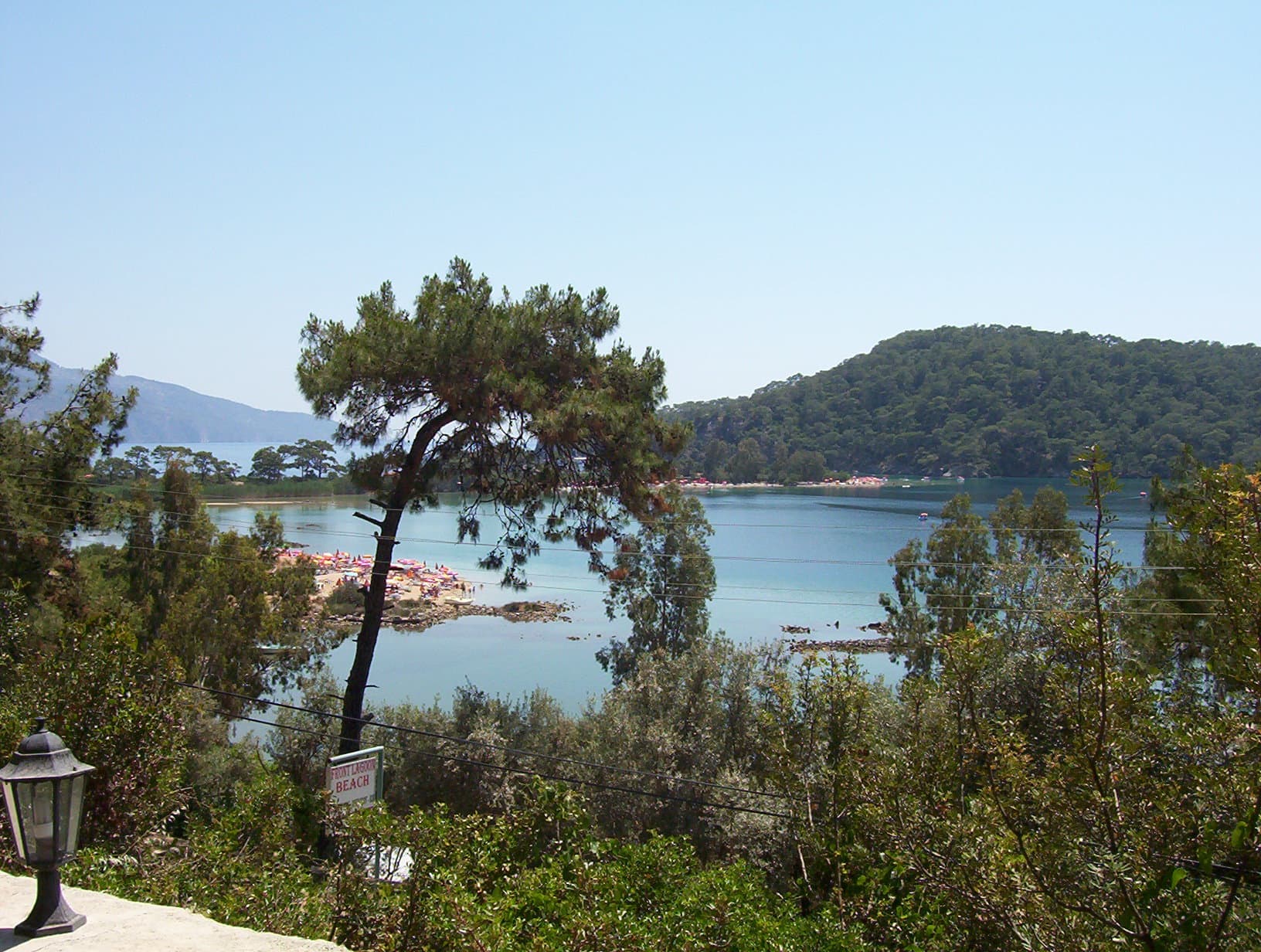
The Turkish Riviera, often called the Turquoise Coast, is the sweep of southwest Turkey from the Aegean around Bodrum to the Mediterranean around Antalya. In one corridor it holds a Crusader castle built with stones from one of the Seven Wonders of the ancient world, the UNESCO-listed Lycian cities of Xanthos and Letoon, an 18-kilometre wild sand beach at Patara, the lagoon at Ölüdeniz that has become one of the most photographed paragliding sites on earth, and a resort coast at Kemer, Belek and Side that hosts some of the best all-inclusive hotels in the Mediterranean.
If you only take one thing from this guide: do not treat Bodrum and Antalya as interchangeable. They are six to seven hours apart by road, on different seas, with different characters. The magic of this coast is the stretch between them, so either commit to the drive or pick the side that fits your trip.
Best for
Beach holidays with real sightseeing attached · Couples · All-inclusive resort travelers · Boat trips and gulet cruises · History lovers
Daily itinerary
7 to 10 days
Nowhere else on the Mediterranean packs this much antiquity into a working beach coast at these prices. Greek and Roman theatres sit behind the sand, Lycian rock tombs overlook harbor towns, and the standard of five-star hotels rivals the Cote d’Azur at a fraction of the rate. It is really two coasts in one: the chic, breezy Aegean scene around Bodrum and the warmer, greener, resort-lined Mediterranean around Antalya.
Best time to visit
May, June, September and October are the sweet spots: hot but not punishing, sea warm from June onward, and hotel rates well below the July and August peak. High summer is reliably sunny everywhere on this coast but regularly exceeds 35C inland from the beach.
- May: The coast wakes up: warm days, cool evenings, thin crowds at the ruins. The sea is still brisk on the Aegean side.
- June: Excellent everywhere: warm sea, long days, and rates still below the school-holiday surge.
- July to August: Peak season: hottest, busiest and most expensive. Book all-inclusive resorts and Ölüdeniz paragliding slots well ahead; plan ruins visits for early morning.
- September to October: The best-value window: sea at its warmest, crowds falling away, and comfortable heat for Xanthos, Aspendos and the Lycian Way.
- November to March: Antalya stays mild with sunny spells between rains; Bodrum is quiet and partly shuttered. Good for ruins and city breaks, not for swimming.
Things worth knowing
- Bodrum Ballet Festival, August: open-air performances staged inside Bodrum Castle (dates vary by year).
- Aspendos Opera and Ballet Festival, late summer: productions in the Roman theatre at Aspendos (dates vary by year).
- Antalya Golden Orange Film Festival, autumn: Turkey’s oldest film festival, held in Antalya each year.
Where to stay
 ugur gurtekin · Pexels
Bodrum Town
The whitewashed hub of the Aegean end: the Castle of St Peter and its Museum of Underwater Archaeology on the harbor, the remains of the Mausoleum of Halicarnassus a few streets back, a marina lined with gulets, and a long bar street that runs late in season.
Best for: First-time visitors · History · Nightlife · Gulet cruises
Town beaches are small and busy; the good swimming is out on the peninsula. August evenings on the bar street are loud.
 Burak Eroglu 🇹🇷 · Pexels
Bodrum Peninsula villages (Yalıkavak, Gümüşlük, Türkbükü)
The reason Bodrum outgrew its town: a ring of coves and villages, from the superyacht marina and polished restaurants of Yalıkavak to the low-key fish-shack harbor of Gümüşlük opposite Rabbit Island, to Türkbükü, the see-and-be-seen bay the Turkish press likes to call the country’s Saint-Tropez.
Best for: Beach clubs · Sunset dinners · A stylish base away from the bar street
You need a car or dolmuş rides to move between villages; Yalıkavak and Türkbükü prices approach Mykonos levels in August.
 Elvin Muradzade · Pexels
Fethiye and Ölüdeniz
A working harbor town backed by Lycian rock tombs, with the famous blue lagoon of Ölüdeniz twenty minutes over the hill. The fish market dinner ritual, the Twelve Islands boat day and tandem paragliding off Babadağ make this the activity capital of the coast.
Best for: Paragliding · Boat days · Families · Value for money
Ölüdeniz beachfront itself is a package-holiday strip; stay in Fethiye town or the hills if you want quieter evenings.
 Zeynep Kahraman · Pexels
Kaş and Kalkan
The prettiest small towns on the corridor: bougainvillea lanes, a Hellenistic theatre above the sea in Kaş, and whitewashed Kalkan terraced over its bay. The base for Kekova boat trips, Kaputaş beach between the two, and the best stretch of the Lycian Way.
Best for: Couples · Diving and sea kayaking · Slow evenings · Hiking
No sandy town beach in Kaş itself (swimming is off platforms and coves); the coast road in is long and winding, which is exactly what keeps the crowds down.
 Ayşegül Aytören · Pexels
Antalya (Kaleiçi, Konyaaltı and Lara)
The Mediterranean metropolis of the coast: the walled Ottoman old town of Kaleiçi above a Roman harbor, Hadrian’s Gate in the city wall, the long pebble sweep of Konyaaltı under the Taurus mountains and the sandy hotel strip of Lara east of the Düden waterfalls.
Best for: City-and-beach combination · History · Winter sun · Food
The Antalya Museum, one of Turkey’s great archaeology collections, is closed for a full rebuild with no confirmed reopening date; check current status before planning around it.
 MUHAMMED TARIK KAHRAMAN · Pexels
Kemer, Belek and Side (the resort coasts)
The all-inclusive heartland flanking Antalya: Kemer’s pine-backed pebble bays under steep mountains to the west, Belek’s golf-and-spa resorts on sand to the east, and Side, where a Roman theatre and the seafront Temple of Apollo rise directly out of the resort town.
Best for: All-inclusive holidays · Families · Golf · Ruins next to the sunbed
These are purpose-built resort zones: superb hotels, but little organic town life outside Side’s old quarter. Distances to Antalya airport range from 35 minutes (Belek) to over an hour (western Kemer).
Where to sleep
Mandarin Oriental Bodrum
luxury · Paradise Bay (Cennet Koyu), Göltürkbükü, Bodrum peninsula
Best for: A no-compromise Aegean resort stay · Couples · Serious dining variety
- A 60-hectare hillside estate descending to two private beaches on Paradise Bay
- One of the largest spas on the coast, spread over two levels and roughly 2,700 square metres
- A dozen-plus dining venues in season, including outposts of international names alongside Turkish tables
- Rates in high summer are among the highest in Turkey
- The estate is self-contained; village restaurants require a drive or transfer
- Sprawling grounds mean buggy rides between room and beach
Six Senses Kaplankaya
luxury · Kaplankaya, Bozbük (about 45 minutes north of Bodrum)
Best for: Wellness-first trips · Seclusion · A spa destination in its own right
- A secluded peninsula setting among olive groves and cypress hills, well away from the Bodrum scene
- One of the largest wellness and spa complexes in the region, the core of the resort’s identity
- 141 rooms, suites and Ridge Villas, most with open sea views
- Remote by design: Bodrum town and the airport are a long transfer away
- Not the choice for guests who want nightlife or village-hopping on the doorstep
- Premium pricing typical of the brand
Hillside Beach Club
resort · Kalemya Bay, Fethiye
Best for: A private-bay resort mid-corridor · Couples and families in separate zones · Watersports
- Its own pine-ringed bay just outside Fethiye, with 330 rooms oriented toward the water
- Three beaches, including two adults-only ones, which keeps family and quiet zones genuinely separate
- Well placed for Ölüdeniz, Babadağ paragliding and the Twelve Islands boat day
- A resort bubble: Fethiye town needs a shuttle or taxi ride
- Full-board crowd in peak season means busy buffets
- Books out early for July and August
Maxx Royal Kemer Resort
family · Kiriş, Kemer
Best for: Top-tier all-inclusive · Families who want luxury and a kids’ club · Mountain-meets-sea setting
- The benchmark for luxury all-inclusive on the Kemer coast, a Leading Hotels of the World member
- Fine-dining restaurants, a restaurant street and round-the-clock service inside the all-inclusive concept
- Kids’ clubs and an aquapark alongside adult pools, in pine forest between the Taurus mountains and the sea
- All-inclusive format means little reason to leave, and outside dining is a taxi ride away
- Kemer’s beaches are pebble, not sand
- Peak-summer rates rival European luxury resorts
Tuvana Hotel
boutique · Kaleiçi, Antalya
Best for: A characterful old-town base · Couples doing ruins by day · Non-resort travelers
- A cluster of restored Ottoman houses, once the home of an 18th-century Ottoman officer, inside the walled old town
- Gardens of orange, plum and pomegranate trees with an outdoor pool, rare within Kaleiçi
- Hadrian’s Gate, the Roman harbor and the old-town restaurants are all a short walk away
- Historic-house rooms vary in size and light
- Cars cannot reach every lane of Kaleiçi, so arrival involves a short walk
- No beach; Konyaaltı and Lara require a tram or taxi ride
Essential experiences
 Muzin Kahraman · Pexels
Bodrum Castle and the Museum of Underwater Archaeology
The Castle of St Peter, built by the Knights Hospitaller from the early 1400s partly with stones from the Mausoleum, houses Turkey’s only museum of underwater archaeology: shipwreck halls spanning the 16th century BC to the 16th century AD and one of the world’s largest amphora collections. Foreign tickets are priced in euros (about EUR 20).
Turkish Museums, Bodrum Underwater Archaeology Museum ↗View on map ↗
 Yağmur Berberoğlu · Pexels
Mausoleum of Halicarnassus
The tomb of Mausolus, one of the Seven Wonders of the ancient world, stood here until earthquakes and the castle-builders dismantled it. The open-air site preserves the foundations and fallen fragments; the reconstruction drawings do the imaginative heavy lifting.
 dronepicr · CC BY 2.0 via Wikimedia Commons
Ölüdeniz Blue Lagoon and Babadağ
The sheltered turquoise lagoon at Kumburnu, protected as a nature park, curls off one of Turkey’s most photographed beaches. Above it rises Babadağ, whose summit take-offs at around 1,900 metres and cable car access have made this one of the most famous tandem paragliding sites in the world.
 Arthur Shuraev · Pexels
Patara Beach and ancient Patara
Turkey’s longest beach: roughly 18 kilometres of dune-backed sand with the ruins of Patara, once Lycia’s main port, right behind it. Development is banned because loggerhead turtles nest here, which is exactly why it feels so empty.
 Bjørn Christian Tørrissen · CC BY-SA 4.0 via Wikimedia Commons
Xanthos and Letoon
A joint UNESCO World Heritage Site inland from Patara: Xanthos was the political capital of ancient Lycia and Letoon its religious sanctuary. The longest known inscriptions in the Lycian language were found here, and the two sites sit close enough to visit together in half a day.
 JamesDavidShoots · CC BY-SA 4.0 via Wikimedia Commons
Kekova, Simena and the sunken city
Boat trips from Kaş and Üçağız glide over the earthquake-drowned ruins of an ancient Lycian settlement along Kekova island, then stop below Simena (Kaleköy), a roadless village crowned by a small castle. Swimming over the sunken city itself is prohibited to protect the ruins; boats swim in nearby bays instead.
 Wikimedia Commons · CC BY-SA 2.0 via Wikimedia Commons
Hadrian’s Gate and Kaleiçi
The triple-arched marble gate built for Emperor Hadrian’s visit in 130 AD still serves as the main entrance into Kaleiçi, Antalya’s walled old town of Ottoman mansions, tumbling bougainvillea and a perfectly round Roman harbor below. Walking it costs nothing and takes an unhurried half day.
 Emrah AYVALI · Pexels
Aspendos Theatre
The Roman theatre at Aspendos, east of Antalya, is among the best preserved anywhere: a 2nd-century AD stage building and cavea still largely intact and still used for festival performances. Pair it with the colonnaded streets and stadium of Perge on the way back. Foreign tickets are priced in euros (about EUR 15 in 2026).
 Muamer Ramovic · Pexels
Lower Düden Waterfall
The Düden river ends its run by leaping straight off Antalya’s travertine cliffs into the Mediterranean near Lara. The clifftop park view is free; the boat trips from the old harbor see it best, from the water.
 No machine-readable author provided. Pat / CC BY-SA 3.0 via Wikimedia Commons
 Wusel007 / CC BY-SA 3.0 via Wikimedia Commons
Food & drink
 Alpha from Melbourne, Australia · CC BY-SA 2.0 via Wikimedia Commons
Aegean meze
Cold olive-oil dishes eaten first and slowly: deniz börülcesi (samphire) with lemon, smoky eggplant, stuffed zucchini flowers. The rakı-and-meze table is the defining meal of the Bodrum side.
 Doğan Alpaslan Demir · Pexels
Grilled çipura and levrek
Sea bream and sea bass, usually charcoal-grilled whole and priced by weight. Ask what came in that morning; harborside menus this good need no sauce.
 Furkan Tumer · Pexels
Antalya-style piyaz
The city’s signature: white beans dressed with tahini, garlic, vinegar and parsley, nothing like the plain bean salads elsewhere in Turkey. Usually eaten beside grilled kofte.
 Berat BAKI · Pexels
Gözleme
Paper-thin dough griddled over a saj and folded around cheese, spinach or potato; the roadside and village-market standard across the whole corridor.
 Şemsi Belli · Pexels
Bodrum mandarin desserts
The peninsula’s famous small, fragrant mandarins show up as candied peel, jams, ice cream and cold-pressed juice; the tourism board lists the fruit among Bodrum’s signature local products.
Dinner is late and long, especially on the Aegean side: meze first, fish after, tea or Turkish coffee to close. In fish restaurants the day’s catch is often displayed on ice and priced per kilo, so confirm the weight and price before it goes to the grill. All-inclusive guests should still budget for at least one harbor fish dinner and one old-town meal out; it is a different cuisine from the buffet.
Where to eat
7 Mehmet
institutionFounded in 1937 and now run by the third generation of the Akdag family, this is the city’s best-known restaurant: a vast menu of Mediterranean meze, grills and Antalya specialties like tahini piyaz.
Last researched 2026-07-22
Limon Gümüşlük
sunset-venueA hillside garden restaurant above Gümüşlük bay, open evenings in season (roughly April to October); tables at sunset are the most contested on the peninsula, so book ahead.
Last researched 2026-07-22
Fethiye Fish Market (Balık Pazarı)
marketThe Fethiye ritual: buy your fish from the central market stalls, then hand it to one of the surrounding restaurants to cook for a fixed per-head fee with meze and salad. Go hungry, go early on summer weekends.
Last researched 2026-07-22
Sunrises
 JJ Harrison (https://www.jjharrison.com.au/) · CC BY-SA 2.5 via Wikimedia Commons
Kaleiçi Roman Harbour, Antalya
The circular old harbor faces east across the Gulf of Antalya, so first light comes up over the water with the Taurus mountains catching pink behind the city; the marina is quiet and open before the day boats start loading.
Year-round
 Nikita Pishchugin · Pexels
Lara Beach, Antalya
The long sand strip east of the Düden cliffs looks southeast down the gulf, and summer sunrises come up directly over the sea, hours before the sunbed rows fill.
May to October
Sunsets
 Ivan Aivazovsky · Public domain via Wikimedia Commons
Gümüşlük harbor and Rabbit Island
The west-facing bay at the tip of the Bodrum peninsula is the coast’s definitive sunset: the sun drops behind Rabbit Island while the fish restaurants light their lamps along the waterline.
April to October
 umut izgi · Pexels
Hıdırlık Tower, Kaleiçi
The 2nd-century Roman tower on the cliff edge of Antalya’s old town looks west over the full sweep of Konyaaltı bay to the Taurus mountains, and the park beside it fills with locals every clear evening.
Year-round
 Olena Sihida · Pexels
Kumburnu spit, Ölüdeniz
From the sand spit that closes the Blue Lagoon, the sun sets behind the ridgeline while paragliders drift down out of the last light onto the beach.
May to October
Day trips
 Valeria Drozdova · Pexels
Kekova and Simena boat day
A full day on the water from Kaş or Üçağız: over the sunken city along Kekova island, ashore below Simena castle, and swimming stops in clear coves, usually with lunch on board.
Boats run direct from Kaş harbor; Üçağız is about 40 minutes’ drive from Kaş · Full day
 Brocken Inaglory · CC BY-SA 3.0 via Wikimedia Commons
Pamukkale and Hierapolis
The white travertine terraces and the spa-city ruins above them, a UNESCO World Heritage Site inland from the coast. A long day, but this is the classic add-on from the Aegean end of the Riviera.
About 3 hours by car from Fethiye, 3.5 to 4 from Bodrum or Antalya · Full day
 Miraç Deniz Kaya · Pexels
Termessos (Güllük Dağı National Park)
Termessos is the mountain city even Alexander the Great declined to besiege: theatre, temples and tombs scattered at over 1,000 metres in Güllük Dağı National Park, half an hour from Antalya. Cool air, pine forest and a fraction of Aspendos’ crowds; the Düden falls sit on the opposite side of the city, so save them for a separate half day.
About 30 to 40 minutes by car northwest of Antalya · Half to full day
After dark
 Muhammed Gündüz · Pexels
Bodrum marina and castle walls after dark
walkThe classic Bodrum evening: gulets lit along the marina, the floodlit castle above the harbor, and a slow drift from meze table to bar street for as long as your night lasts.
 Emin Alper · Pexels
Kaleiçi lanes and a rooftop nightcap
foodAntalya’s old town changes register after sunset: lantern-lit lanes, courtyard restaurants in Ottoman houses, and rooftop bars looking over the Roman harbor toward the dark gulf.
 R. Yasin Asil · Pexels
Kaş harborfront evening
walkSmall-town perfection: dinner in a bougainvillea lane, then joining the whole town’s slow promenade around the harbor under the lights of the fishing boats.
Daily itinerary
Eight days, two seas: Bodrum to Antalya along the D400
Three nights on the Bodrum peninsula, two around Fethiye, two in Kaş and a final night in Antalya before flying home. Fly into Milas-Bodrum, out of Antalya, with a rental car from day 4. Reverse it all if flights price better the other way.
- 1
Arrival and Bodrum town
relaxedArrive at Milas-Bodrum airport; transfer to the peninsula and settle in.Harborside lunch in Bodrum town.Bodrum Castle and the Museum of Underwater Archaeology, then the Mausoleum site.Castle walls over the harbor.Meze and grilled fish near the marina.Marina walk and the bar street if you have the energy.No car yet; taxis and dolmuş rides cover town days.Estimate: Land late? Push the castle to day 2’s morning and keep tonight to the marina.
- 2
The peninsula villages
relaxedDolmus or taxi to Yalıkavak: the marina, the shops, a swim at a beach club.Light lunch in Yalıkavak.On to Gümüşlük: walk the causeway toward Rabbit Island, swim in the shallow bay.Gümüşlük, from a garden table above the water.Fish dinner in Gümüşlük (book the sunset seating).Slow return to base.Dolmus lines connect the villages; a taxi home after dinner is simplest.Estimate: Swap Yalıkavak for Türkbükü if beach-club people-watching appeals more than the marina.
- 3
Aegean boat day or full spa day
relaxedJoin a gulet day cruise from Bodrum harbor into the Gulf of Gökova coves.On board.Swim stops and deck time.Back in the harbor.Türkbükü bay dinner.Quiet night before the driving starts.Boats leave from Bodrum town marina; book a day ahead in summer.Estimate: Non-boat travelers: a full wellness day at Kaplankaya or your hotel spa instead.
- 4
The long hop to Ölüdeniz
moderateCollect the rental car and drive Bodrum to Fethiye (about 4 to 4.5 hours).En route or in Fethiye harbor.First swim at the Ölüdeniz Blue Lagoon nature park.Kumburnu spit as the paragliders land.Fethiye Fish Market: pick your fish, have it cooked at the surrounding tables.Fethiye harborfront stroll.This is the one long driving block of the trip; start by 9am and it stays easy.Estimate: Break the drive at Dalyan for the river and rock tombs if you leave early.
- 5
Babadağ and the lagoon
moderateTandem paragliding from Babadağ, or ride the cable car up for the view without the jump.Ölüdeniz beachfront.Lagoon time, or the Kayaköy ghost village over the hill.From the Babadağ mid-station terraces or the beach.Dinner in Fethiye old town.Early night or a harbor bar.Flights are weather-dependent: book for morning so an afternoon slot remains as backup.Estimate: The Twelve Islands boat day from Fethiye if flying holds no appeal.
- 6
Lycia day: Xanthos, Patara, Kaş
fullDrive toward Kalkan with a stop at Xanthos (and Letoon if ruins are your thing).Kalkan, terraced above its bay.Patara: the ruins, then the 18-kilometre beach until the light softens.From the dunes at Patara or on arrival in Kaş.Bougainvillea-lane dinner in Kaş.Kaş harbor promenade.Hops along the D400 all day; about 2.5 to 3 hours of driving in total, split into short stretches.Estimate: Swim-first travelers: swap Xanthos for a morning at Kaputaş beach.
- 7
Kekova boat day
relaxedDay boat from Kaş harbor toward Kekova.On board.The sunken city, Simena castle climb, swim stops in the coves.Back in Kaş.Meze and rakı in Kaş old town.Last small-town night.Book the boat a day or two ahead in July and August.Estimate: Sea kayaking over the ruins for a closer look, if the group is up for paddling.
- 8
Kaputaş, the drive east, Antalya
fullEarly photo-and-swim stop at Kaputaş beach, then the corniche drive to Antalya (about 3 hours).On arrival in Antalya.Kaleiçi on foot: Hadrian’s Gate, the harbor, the lanes.Hıdırlık Tower over Konyaaltı bay.Antalya classics at 7 Mehmet, or a Kaleiçi courtyard.Rooftop nightcap over the old harbor. Depart from Antalya airport tomorrow; squeeze in Aspendos in the morning if your flight is late.Return the car in Antalya; the old town and airport runs work by tram and taxi.Estimate: Ruins-first finish: skip Kaputaş, arrive in Antalya by early afternoon, and continue east to Perge and Aspendos, saving Kaleiçi for after dark.
Getting around
- Two international airports anchor the corridor: Milas-Bodrum (BJV) in the west and Antalya (AYT) in the east, with Dalaman (DLM) mid-corridor serving Fethiye, Kalkan and Kaş. Flying open-jaw into one end and out of the other saves a full day of backtracking.
- All three airports have seasonal direct flights from across Europe plus year-round domestic connections via Istanbul and Ankara; Havas and municipal shuttles link each airport to its nearest towns.
- Dolmus minibuses are the workhorses of the coast: cheap, frequent in season, and the practical way around the Bodrum peninsula or between Fethiye and Ölüdeniz.
- Intercity coaches (Pamukkale and others) connect Bodrum and Antalya in roughly 6.5 to 7 hours via the inland highway, with stops at Fethiye possible along the coastal route.
- A rental car is the honest recommendation for the middle of the corridor: the D400 coast road between Fethiye, Kaş and Antalya is one of the great Mediterranean drives, and Xanthos, Patara and Termessos are awkward without one. Antalya city itself runs on trams and the AntalyaKart card.
Things worth knowing
- · Booking one base for the whole corridor: Bodrum and Antalya are six-plus hours apart, and day-tripping between them does not work.
- · Assuming the Antalya Museum is open: it is closed for reconstruction with no confirmed reopening date, so plan Perge, Aspendos and Side as the archaeology fix instead.
- · Budgeting museum entries in lira: state sites now price foreign tickets in euros (Bodrum Castle about EUR 20, Aspendos about EUR 15), which adds up faster than older guides suggest.
- · Underestimating July and August: 35C-plus heat at the ruins, and the best all-inclusive rooms sell out months ahead.
Budget
| Low | Expected | Comfortable | |
|---|---|---|---|
| Accommodation style / per night | TRY 2,800≈ $58 | TRY 7,000≈ $144 | TRY 22,000≈ $452 |
| Food style / per day | TRY 900≈ $18 | TRY 1,800≈ $37 | TRY 4,000≈ $82 |
| Local transport / per day | TRY 150≈ $3 | TRY 500≈ $10 | TRY 1,800≈ $37 |
| Estimate / per day | TRY 250≈ $5 | TRY 800≈ $16 | TRY 2,000≈ $41 |
Estimate · TRY · 2026-07-22. Accommodation is per room per night (two sharing), shoulder-season; July and August in Bodrum’s villages and the luxury all-inclusives run far higher. The lira moves fast, so treat these as dated orders of magnitude; state museum tickets and many hotels quote euros directly. Comfortable transport assumes a rental car. · 1 USD = TRY 49 (17 Sep 2026)
Things worth knowing
Frequently asked questions
Bodrum or Antalya: which side of the Turkish Riviera is better?
Bodrum is the Aegean scene: whitewashed villages, beach clubs, boutique stays and sunset dinners, at its best for couples and style-led trips. Antalya is the Mediterranean workhorse: a real city with Roman ruins, long beaches, cheaper flights year-round and the great all-inclusive coast at Kemer, Belek and Side. Families and resort travelers usually fit Antalya better; village-hoppers fit Bodrum.
Where are the best all-inclusive resorts on the Turkish Riviera?
The Antalya side owns this category: Kemer for mountain-backed pebble bays (Maxx Royal Kemer is the benchmark), Belek for sand and golf resorts, and Side for ruins beside the beach. Book July and August several months ahead.
What are the best beaches between Bodrum and Antalya?
Patara for wild 18-kilometre sand, Kaputaş for the famous turquoise cove between Kaş and Kalkan, Ölüdeniz for the lagoon, Konyaaltı and Lara for big-city beaches in Antalya, and the Bodrum peninsula coves for beach-club swimming. Note that Bodrum and Kemer beaches are mostly pebble.
Do you need a car on the Turkish Riviera?
Not for a single-base beach holiday: dolmuş minibuses, taxis and tour boats cover Bodrum, Fethiye or Antalya locally. For the corridor itself, yes: the D400 coast drive is a highlight, and Xanthos, Patara and Termessos are hard to reach without one.
How many days do you need, and can you combine Bodrum and Antalya in one trip?
Seven to ten days makes the full corridor comfortable: three nights in Bodrum, two around Fethiye, two in Kaş and one or two in Antalya, flying into one airport and out of the other. With five days or fewer, pick one side rather than spending a day of your holiday on the road between them.
Sources (5)
- Xanthos-Letoon, capital and sanctuary of ancient Lycia, is a UNESCO World Heritage Site · unesco · 2026-07-22
- GoTurkiye official destination guide for Bodrum, including the peninsula and its signature mandarin produce · tourism-board · 2026-07-22
- GoTurkiye official destination guide for Antalya: ancient cities, beaches and the surrounding coast · tourism-board · 2026-07-22
- The Bodrum Underwater Archaeology Museum in the Castle of St Peter is Turkey’s only museum dedicated to underwater archaeology · museum · 2026-07-22
- 2026 foreign entry fees for Turkish state museums and sites, including Aspendos (EUR 15) and Perge (EUR 11) · independent-travel · 2026-07-22


