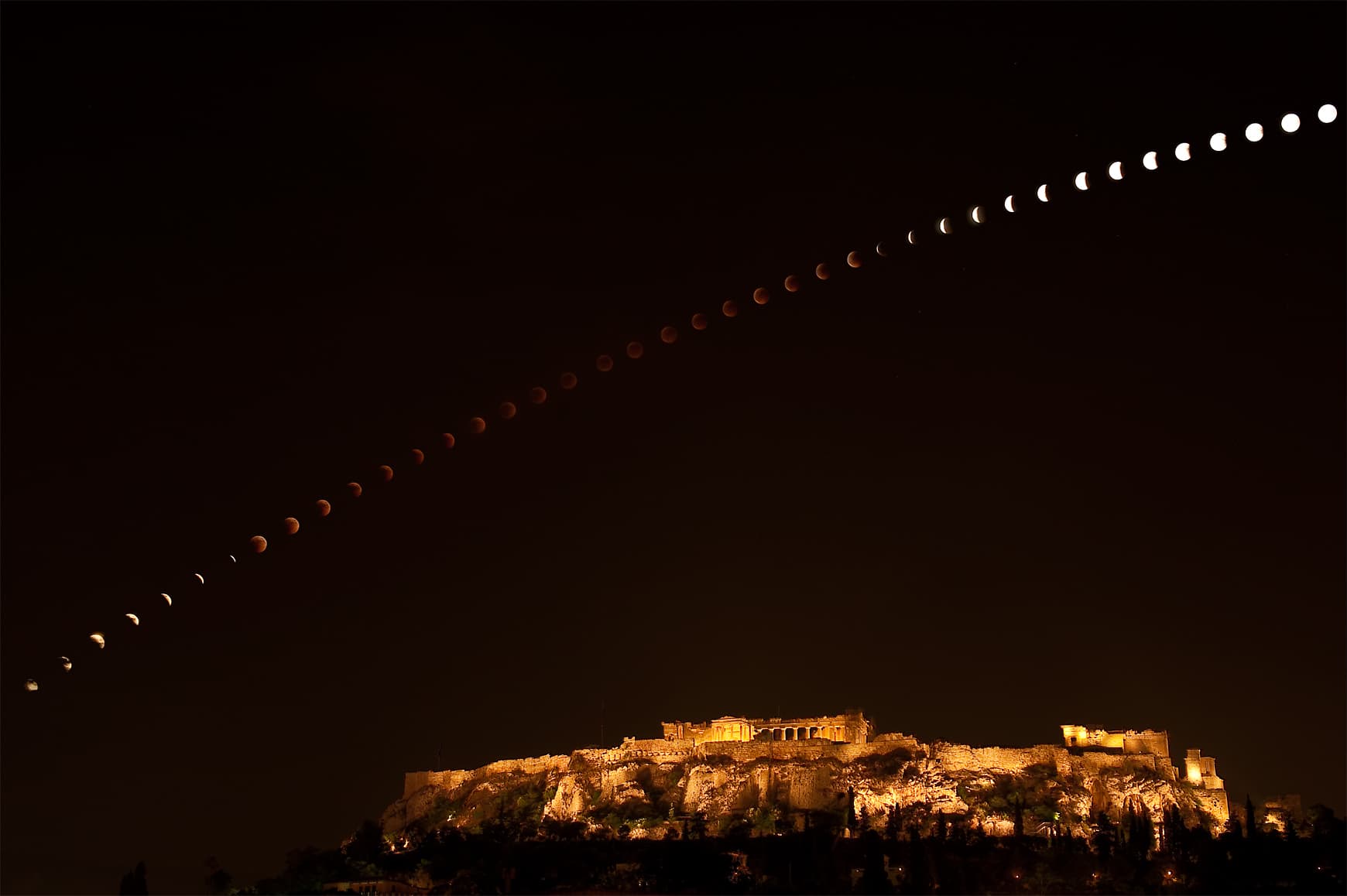
Greece · Central Macedonia
Halkidiki
Land at Thessaloniki, pick up a car, and give Kassandra half the trip: Sani or the Possidi side for the sunsets, Afytos for a village you can walk in the evening, the Kallithea strip if the holiday needs noise. Then cross to Sithonia for the beaches that appear in everyone’s photographs, Kavourotrypes and Karydi and the Vourvourou islets, and set at least one alarm, because from late March to mid-September the sun comes up over Mount Athos at Sarti and along the Kavourotrypes coves. Run the Athos cruise out of Ouranoupoli if the monasteries matter. Book the ancient sites for mornings, note that Petralona is the only site here that shortens its hours through the autumn, while the rest keep 08:30 to 15:30 all year, and do not build a day around Ancient Olynthos, which the Ephorate’s own page says is temporarily closed.
 Kritzolina / CC BY-SA 4.0 via Wikimedia Commons
Overview
Halkidiki is the three-fingered peninsula that hangs below Thessaloniki into the northern Aegean, and it asks about as little travelling as a European beach week can. The Israel Airports Authority flight board carries Thessaloniki as a direct route on five carriers at once, El Al, Arkia, Israir, Tus Airways and Aegean, at about two and a half hours in the air, and the first Halkidiki beach is about an hour from the terminal on a road with no toll booth on it, which is a shorter door-to-sand trip than most of the Greek islands and a longer one than Cyprus. What the brochures flatten into one destination is really three, and they are not variations on each other. Kassandra, the western finger, is the resort leg: Sani and its marina, the nightlife strip from Kallithea down to Pefkochori, and a west coast that looks across the Thermaic Gulf at Mount Olympus. The two Ikos all-inclusives are not actually on it, which the brochures blur: Oceania sits on the isthmus at Nea Flogita and Olivia round the other side at Gerakini, both nearer the airport and neither on the peninsula. Sithonia, the middle finger, has the better beaches, a ring road of coves and pine, and an east coast that stares straight at Mount Athos thirty kilometres away. It is not undeveloped, and the Porto Carras estate alone carries a casino, a marina, a golf course and a vineyard, but the density is a fraction of Kassandra’s and the coast between the towns is mostly empty. And Athos itself, the eastern finger, is a self-governing monastic republic of twenty monasteries where women have not been permitted to set foot for roughly a thousand years, which means that for half the people reading this the most striking thing in Halkidiki is a view and never a visit.
The choice everybody frames as Kassandra versus Sithonia is usually argued on beaches and nightlife, and it is better argued on the clock. Cast a horizon profile from SRTM elevation data and run the sun against it, and the two legs turn out to be opposites. On Sithonia’s east coast, at Sarti, the sun rises over the Athos massif for 168 consecutive days, 30 March to 13 September, which covers all of June, July and August and the first half of September, and on two fortnights a year, 13 to 26 April and 17 to 30 August, it comes up over the 2,033-metre summit ridge itself. On Kassandra’s west coast the opposite happens at the other end of the day: from the Sani shore the sun sets into the Mount Olympus massif for about three weeks around each equinox, 8 to 26 March and 16 September to 5 October in 2026, and from the Possidi lighthouse at the tip the same alignment falls on 29 March to 15 April and 27 August to 13 September. So an August family week on Sithonia buys a mountain sunrise and a flat sea sunset; a late-September week on Kassandra’s west coast buys the reverse. The second thing we would tell anyone booking: Sithonia’s stone village, Parthenonas, sits at about 350 metres, and from that height the Kassandra ridge drops below the sea horizon, so it has an open-water sunset from 5 April to 6 September while the coast below it is still watching the sun go behind something. And the third is a warning. Porto Koufo is a beautiful closed harbour, and a ray cast across its whole setting arc finds nothing lower than 1.7 degrees of hillside anywhere in it, so the sun never once touches the water there. It is a lunch and a swim.
Best for
Families · Couples · Beach holidays · Short flights from Tel Aviv · Resort stays · Drivers who like a coast road
Daily itinerary
7 to 10 days
Most Greek beach trips are islands, which means a ferry, a schedule and a commitment. Halkidiki is mainland: you land, you drive, and if the leg you picked is wrong you can change it in an hour. That flexibility is most of what you are buying. The other thing that separates it is vertical. Two mountains you will not climb on this trip decide what the sky does at either end of the day, and they sit on opposite sides of the peninsula. Mount Olympus, 2,917 metres and about eighty kilometres west across the gulf, is the sunset from Kassandra’s west coast. Mount Athos, 2,033 metres and thirty kilometres east, is the sunrise from Sithonia’s east coast. Almost nothing written about Halkidiki says which coast gets which, and it is the first thing we would want to know before booking a week here.
Best time to visit
Halkidiki is a sea destination and the sea decides. It peaks at about 26C in August and is still around 24C in September and 21C in October, so the swimming window runs from June into early October while the air is at its most comfortable in June and September. July and August are the hot, full, expensive months, and they are also the wildfire months: the Foreign, Commonwealth and Development Office puts the Greek wildfire risk at high from April to October, and on 13 August 2026 a fire at Siviri on Kassandra burned about 350 hectares and the coast guard took 481 people off the beach by sea. The meltemi blows down the Aegean from late June into early September, typically force 4 to 5 and gusting more, strongest in the early afternoon, which on an exposed north-facing shore is the difference between a lovely day and a sandblasted one. Winter is for Thessaloniki, not for here: most of the resort stock closes.
- April to May: The sites go to summer hours on 1 April, the hills are green and the sea is 14C in April and 18C in May, which is swimmable only if you are determined. Worth knowing: the Possidi lighthouse sunset lines up with Mount Olympus from 29 March to 15 April, and at Sarti the sun clears the Athos summit ridge from 13 to 26 April. Clocks go forward on 29 March 2026.
- June: The month we would pick for a first trip. Sea at 23C, air at 27C, eleven hours of sun a day, everything open and nothing yet full. The longest evenings of the year: sunset is 20:58 on 21 June and sunrise 05:58. The meltemi starts making itself felt late in the month.
- July to August: Peak season in every sense. Sea 25C to 26C, highs of 29C to 30C, the driest weeks of the year, and the two festivals both opening on 11 July. Also the fire months: keep the 112 emergency alerts switched on in your phone’s settings, follow @112Greece, and remember that causing a wildfire in Greece, even by accident, is a criminal offence. The Sarti sunrise crosses the Athos summit ridge again from 17 to 30 August.
- September: The exhale, and the best three weeks of the year on Kassandra’s west coast: from the Sani shore the sun sets into the Olympus massif from 16 September to 5 October. Sea still 24C, air 25C, and the site closing times start stepping down on the 1st. The last weekend of the month is free entry at every state site in Greece.
- October to November: The sea holds 21C into October and the light is the clearest of the year across the gulf, but the season is visibly folding: the summer flight schedule at Thessaloniki runs to 24 October 2026 and the clocks go back the next day, dropping sunset to 17:32. Site hours fall to 15:30 from 1 November and most resorts are shut by then.
- December to March: Wettest and quietest: rain peaks at 87 mm in December, highs sit at 9C to 13C, and the beach towns empty. Free Sundays at the state sites twice a month, Petralona and the Polygyros museum open on winter hours, and the Sani sunset lines up with Olympus again from 8 to 26 March.
Things worth knowing
- Sani Festival (11 July to 15 August 2026, Sani Hill, Kassandra): the region’s one serious music festival, in its fourth decade. The 2026 bill ran Robert Plant with Saving Grace on 11 July, James Arthur on the 18th, Galani, Tsaligopoulou and Estudiantina on the 25th, The Waterboys on 1 August, Soul II Soul on the 8th and Vicky Leandros on the 15th. Ticket prices are not published on the organiser’s page; note that sanifestival.gr refuses connections and the live page is on the resort’s own site.
- Sani Gourmet (10 July to 7 August 2026): the resort’s food programme, running alongside the music.
- Kassandra Festival (reported as the 34th edition, 11 July to 28 August 2026, principally at the Siviri amphitheatre, with a second strand spreading events to Afytos, Kallithea, Loutra, Paliouri and Kassandrino). We could not reach a municipal page to confirm the 2026 dates, so check with the Municipality of Kassandra before planning around a specific night.
- European Heritage Days (last weekend of September): free entry at every state archaeological site and museum in Greece, which in Halkidiki means Petralona and the Polygyros museum.
- Ohi Day (28 October): national holiday and a free-entry day at the state sites.
- The Kangeleftos at Ierissos (Easter Tuesday): the village sings a trisagion and then dances a slow dragging round dance that re-enacts the killing of hundreds of local men in the 1821 revolt, passing under an arch of laurel held up by two youths with raised swords. It is the least touristic thing in the Halkidiki calendar, and it is nowhere near the beach season.
Where to stay
 Brian Harper · Pexels
Sani and the Kassandra west coast
The polished end of Halkidiki, and the closest thing in northern Greece to a resort estate: a thousand acres of pine and beach with five hotels, a working marina of up to 215 berths, twenty-two boutiques and a protected wetland inside its own boundary. What makes the address is the direction it faces. This is the Thermaic Gulf shore, and Mount Olympus stands about eighty kilometres due west across it, high enough above the intervening Pieria ridge to be seen from the sand on a clear evening. For roughly three weeks around each equinox the sun goes down into the massif itself.
Best for: Families who want everything on site · Sunsets over Mount Olympus · A short transfer from the airport · Couples who will pay for calm
Estate prices, and the estate is large enough that beachfront means very different things from one hotel to the next. There is no village life here: dinner off site means a drive to Nea Fokaia or Afytos. Sani Beach begins a three-year transformation in 2027 and Porto Sani adds suites in the same window, so a 2027 to 2029 booking should ask directly what is under scaffolding.
 Teodora Spasova · Pexels
Afytos and the Kassandra east coast
Afytos is the one village on Kassandra worth walking in the evening: stone houses on a low cliff above the Toroneos Gulf, a square, a handful of tavernas and a view across the water to the Sithonia ridge. Fifteen minutes south the character changes completely. Kallithea is where Halkidiki gets loud, a strip of clubs and bars that runs on through the night in July and August, and the noise continues down the coast through Hanioti and Pefkochori. On the Kallithea seafront, and almost unmentioned in the middle of it, sits the sanctuary of Dionysus and Zeus Ammon, founded by colonists from Afytos in the late 8th century BC.
Best for: A village base with a car · Nightlife, if that is the holiday · Sunrise over the Sithonia ridge · Mid-range prices
This is an east-facing coast, so the sunset is behind you: it belongs to the other side of the peninsula, twenty minutes away. Afytos village sits above its beach, which means a walk or a drive down. And the clubs of Kallithea are four kilometres from Afytos, which is close enough to matter on a still August night.
 Yassen Kounchev · Pexels
Possidi and the southern tip of Kassandra
Below the resorts the peninsula narrows and empties. Possidi is a small settlement on the west side with a sandspit running out to a lighthouse at the tip, and the open Thermaic Gulf on three sides of it; from the lighthouse the sun sets into the Olympus massif from late March into mid-April and again from late August into mid-September. Round the bottom of the leg are Paliouri, the Kanistro headland with its thermal resort, the thermal springs village of Loutra, and the small marina cove at Glarokavos.
Best for: Long empty beaches · Sunsets with a mountain in them · Thermal spa stays · Escaping the strip
It is the far end of everything: forty-nine kilometres and about fifty minutes from the Potidea canal at the top of the leg, and about an hour and three quarters from the airport. There is little walkable village life, so most dinners will be where you sleep. We could not confirm 2026 hours or prices for the Loutra thermal baths on any page the operator controls, so ring before driving there.
 Kseniya Mazaeva · Pexels
Nikiti, Neos Marmaras and the Sithonia west coast
The gentler side of the middle leg, looking back across the Toroneos Gulf at Kassandra. Nikiti is a real working town with an old upper village, a long beach and a fish restaurant that keeps year-round hours; Neos Marmaras is a fishing town turned resort town at the foot of the Porto Carras estate, which carries a marina, a casino, an eighteen-hole golf course and a 110-hectare organic vineyard. South of them the road runs through Toroni to Porto Koufo, a harbour so enclosed that its ring of hills stands between 1.7 and 10.5 degrees high across the entire setting arc, which is why the sun never reaches the water there.
Best for: A Sithonia base with shops and tavernas · Wine · Families who want a town rather than an estate · Golf and marina life
Porto Carras is a reduced resort presented as a whole one: for the 2026 season only the Meliton is offered on the owner’s own site, and the Sithonia Hotel and Village Inn have no pages at all. Porto Koufo is a lunch and a swim, not an evening: the sun goes behind its hills long before it reaches the water.
 Yassen Kounchev · Pexels
Vourvourou, Sarti and the Sithonia east coast
The coast people come back for: pine-backed coves and pale rock on the Singitic Gulf: Ormos Panagias at the top, then Vourvourou with its scatter of low islets and the sculpted rock slabs of Karydi beach, then the Kavourotrypes coves, then Sarti, then Tigania at the bottom. Straight out to sea, thirty kilometres east, is the pyramid of Mount Athos, and from 30 March to 13 September the sun rises over the massif from Sarti, with the actual summit ridge taking the sunrise in two fortnights a year.
Best for: The beaches most people come for · Sunrise over Mount Athos · Boat days among the Vourvourou islets · Couples and quiet families
There is little large-scale hotel stock here and what exists books early; a lot of the accommodation is apartments. The coves have no shade and no facilities, so bring water and an umbrella. This coast faces east, so the sunset belongs to the other side of the ridge: Parthenonas or the west coast.
 Nikolay Demirev · Pexels
Parthenonas, the stone village above Neos Marmaras
Abandoned in the 1970s when its people moved down to the coast, then restored house by house, Parthenonas sits at about 350 metres on the flank of the Itamos massif with the whole Toroneos Gulf below it. The height does the work. From that elevation the Kassandra ridge drops below the sea horizon, so the village has an open-water sunset from 5 April to 6 September while the coast below it is still watching the sun go behind something, and around each equinox the sun sets into the Mount Olympus massif 124 kilometres west instead.
Best for: Sunsets · A cool night in August · Walkers on the Itamos paths · Couples
Tiny, and the restaurant supply turns over. The road up is short but winding, and there is no beach: every swim is a drive down and back. We found no village taverna with a website we could read, so treat any specific recommendation as needing a phone call.
 drB drB · Pexels
Ouranoupoli and the gateway to Athos
The last town before the monastic border, and the whole reason anyone stays here: the ferries to Dafni leave from this quay, the Pilgrims Bureau hands out the physical permits at an office that closes at 13:00 every day, and the coastal cruises that anyone, including women, can take go out at 10:30 and 14:00 for three hours under the monasteries. The town itself is a Byzantine tower, a strip of fish tavernas and a long beach, with the Drenia islets offshore and two of the region’s most serious small hotels just outside it.
Best for: Mount Athos, seen or entered · Fish on a quay · A final night before flying · Boat days to the Drenia islets
It is the far corner: about 121 kilometres and about two hours from the airport, and an hour and a half or so from Sithonia’s east coast. The sunset here goes behind the Sithonia hills rather than into the sea. And the entire point of the place is closed to women and to pre-school children, which needs saying out loud before a family books it.
Where to sleep
Sani Resort
resort · Sani, Kassandra west coast
Best for: Families who want the whole holiday inside one boundary · A short first-night transfer from the airport · Sunsets over the Thermaic Gulf
- An estate rather than a hotel: 1,000 acres of forest and beach, seven beaches and five hotels, Sani Beach, Sani Club, Sani Dunes, Porto Sani and Sani Asterias, with a protected wetland of about 110 hectares on its edge
- A real marina with berths for up to 215 yachts, open all year, and 22 boutiques along it, plus around twenty-five restaurants across the estate with serious kitchens attached: Water at Sani Asterias is shaped by the two-Michelin-starred Bruno Oger, El Puerto by Andoni Luis Aduriz, Fresco by Ettore Botrini
- Its own festivals, Sani Gourmet from 10 July and Sani Festival from 11 July to 15 August 2026, so the evenings are programmed for you
- A renovation of Water, the flagship restaurant, was flagged for completion during 2026, so confirm it is open before you build an evening around it
- Sani Beach enters a three-year transformation from 2027 and Porto Sani adds 119 suites in the same window, so anyone booking 2027 to 2029 should ask exactly what is being built and where
- Room counts are published for only one of the five hotels, Porto Sani at 267 suites, which makes the scale of the others hard to judge before you arrive
- Sani Dunes is described on its own page as having a grown-up atmosphere, which is marketing language and not an adults-only policy: do not book it expecting one
Ikos Olivia
resort · Gerakini, on the Toroneos Gulf
Best for: All-inclusive that is worth the name · Families · Getting off site without paying twice
- 22 acres of olive grove and 450 metres of Blue Flag beach, with six restaurants and bars and four pools including a lagoon pool with a swim-up bar
- The Dine Out programme pays for meals at selected restaurants outside the resort, which in a region this drivable is the difference between an all-inclusive and a cage, and the Local Drive Adventure lends you a car for the day
- Redesigned for the 2025 season, so it is the fresher of the two Ikos properties in northern Greece
- Seventy kilometres from the airport, the furthest of the two
- The room count is not published anywhere on the official site
- All-inclusive does what all-inclusive does: most guests never leave, which is the opposite of what this region rewards
Ikos Oceania
resort · Nea Flogita, near Nea Moudania
Best for: The shortest transfer of any big resort here · Families with small children · A first or last night on a tight flight
- 350 metres of Blue Flag beach, six outdoor pools and five restaurants, with the same Dine Out and Local Drive programmes as its sister
- Fifty kilometres from the airport, which on a late landing with children is worth more than a view
- An Anne Semonin spa with thermal suites, and Michelin-starred chefs curating the menus
- The Nea Moudania end is the least scenic stretch of this coast: flat, built up and close to the main road
- Smaller than Olivia, with no published room count either
- You are nearly an hour from the beaches that make Halkidiki worth the flight
Miraggio Thermal Spa Resort
resort · Kanistro, Paliouri, southern Kassandra
Best for: A spa holiday with a sea in it · Couples · Eating a la carte rather than grazing
- 13.6 hectares on a hillside above two beaches at the southern tip of Kassandra, with its own small marina and a genuinely remote position
- The Myrthia spa sits above natural thermal springs and runs a thalassotherapy pool connected directly to the Aegean, which none of the region’s other luxury resorts can claim
- Not all-inclusive: eight restaurants and five bars on an a la carte basis with a dine-around programme, so dinner is ordered rather than queued for
- The far end of the peninsula, about two hours from the airport, with little walkable village life within reach
- A hillside site, which means lifts, gradients and a good deal of walking between the room and the sea
- No room count, no season dates and no adults-only zone published anywhere on the site, despite the spa-resort positioning
The Danai
boutique · Nikiti, Sithonia
Best for: Wine · A small hotel on a big coast · Couples and families who want neither a resort nor an apartment
- 56 individually designed suites and villas on a bluff above a 300-metre private beach, family-run since 1976 and a member of The Leading Hotels of the World
- The Noble House holds over 1,700 hand-selected wine labels, which is a cellar worth planning an evening around
- Six restaurants and bars for 56 keys, a ratio almost nothing else here matches
- The old domain danaibeachresort.gr no longer resolves at all, so anything you saved from an older guidebook is dead: the live site is thedanai.com and the hotel now leads with the name The Danai
- A clifftop position means steps or buggies down to the water
- No published season dates and no published rates
Porto Carras Grand Resort, Meliton Hotel
resort · Neos Marmaras, Sithonia
Best for: Golf, a marina and a casino on one estate · Wine travellers · A serious Greek kitchen inside a big resort
- Few estates anywhere put an eighteen-hole golf course, a casino, a marina and a 110-hectare certified-organic vineyard inside one boundary, on an estate founded by the shipowner Yiannis Carras after he found the bay in 1963
- Cikado, introduced for the 2026 season, is curated by Lefteris Lazarou, one of the best-known seafood chefs in Greece, and is built as a modern panigiri by the sea, opening with a shared spread called the Paramana; its page gives its hours two different ways, so ring before you plan an evening
- Fifteen dining outlets across the estate, from the Tsipouraki mezedopoleio to the Crystals fine-dining room
- This is a reduced resort presented as a whole one. For the 2026 season the owner’s own site offers exactly one hotel, the Meliton: the Sithonia Hotel and the Village Inn have no pages and no booking path at all, and an estate built for several hotels running one of them can read as emptiness
- No room count, no season dates and no rates are published; the widely repeated figure of 479 rooms appears only in the trade press
- Ownership by Belterra Investments and operation by SWOT Hospitality are press claims that the resort does not state on its own site. Given a recent history of closures and restarts, confirm any booking directly
Eagles Palace
luxury · Ouranoupoli, the Athos peninsula
Best for: Mount Athos by boat the next morning · A fully renovated hotel in its first clean season · Couples and families who want both
- A three-year renovation was completed on 14 May 2026, the final phase covering the reception and adding the Patio Bistro day bar, with every guest room, suite and bungalow, every dining venue and all the public areas touched across the three years, so 2026 is the first season of the finished product
- Seven restaurants and five bars, several pools including an ocean pool, a spa, a kids club, dive centres and an organic farm with herb and vegetable gardens, on its own sandy beach
- Sister property Eagles Villas, 42 villas on the hill above, so a family group can split between hotel and villa; both are Small Luxury Hotels of the World
- The Athos peninsula is a long transfer, about 121 kilometres and about two hours from the airport
- The Half-Board Premium dine-around excludes drinks and needs a la carte tables booked 24 hours ahead, which in August is a real constraint
- The hotel publishes a 2025 operating season of 1 May to 17 October and no 2026 dates at all, and the Armyra restaurant page that older guides link to now returns a 404 after the dining section was restructured
Avaton Luxury Beach Resort
romantic · Komitsa Bay, Nea Roda, the Athos peninsula
Best for: A bay of your own · Honeymoons · Quiet at the end of a road
- 56 suites, villas and rooms on a private bay, a Relais et Chateaux member, which is a harder credential than most in the region
- Two restaurants, Atelier and Origin, plus a champagne bar, and a wellness programme with yoga, at a scale where the staff know who you are
- Genuinely private: Komitsa Bay is its own piece of coast, with the monastic border a short drive away
- It markets a honeymoon under a name borrowed from the rule that bars women from the monastic territory a few kilometres away, which some guests will notice and some will not
- It markets itself to couples and to families at the same time and never resolves which it is
- Nea Roda and Komitsa are remote even by Athos-peninsula standards, and no season dates or rates are published. The OpenStreetMap node for the property still carries an older name, which is worth a direct check when booking
Achtis Hotel
boutique · Afytos village, Kassandra
Best for: A village you can walk in the evening · Kassandra without resort prices · Couples
- 35 rooms and suites, each decorated individually, inside the prettiest stone village on the peninsula, so dinner and the square are on foot rather than in the car
- Gardens with water features, koi, ducks and peacocks, plus a spa, a gym open 09:00 to 21:00 and the Kaluna cocktail bar
- Small enough to be run by people rather than a department
- Half board excludes drinks at dinner, which is a real cost trap on a week’s stay
- Afytos sits above its beach, so every swim is a walk down and a climb back
- No season dates published
Ergon Beach House Nikiti
unique · Nikiti beach, Sithonia
Best for: People who plan trips around food · A design stay without a resort · Sithonia on foot
- 36 lodge tents and stone cabanas, some with private pools, built under pine and olive within twenty metres of the water, which is as close as design accommodation gets here
- It exists because of the food: Ergon is a serious Greek food house, and the seaside restaurant, the Balboa beach canteen and the deli mean you can eat the dish and then buy the jar
- Thirty-six units means it never reads as a resort, and there is an open-air cinema
- Heat, weather and noise are real at this build type and the site addresses none of it
- A canvas product is very unlikely to run outside high summer, and no season is published
- Nikiti beach is a working town beach, not a private cove
Alexandros Palace Hotel and Suites
family · Tripiti, near Ouranoupoli
Best for: Families on the Athos peninsula · A water park and a dive centre · Value at the far corner
- 120,000 square metres on a Blue Flag beach with a Splash water park, a PADI dive centre, a spa, a mini club and boat rental, which is the value family option on a peninsula otherwise priced for couples
- The dive centre and the water park are both operating businesses, not amenities listed on a sign
- The Athos cruise quay is a short drive away
- Seven kilometres outside Ouranoupoli village, so every dinner out and every boat means a car or a shuttle
- A conference hall for up to 350 people on site changes the atmosphere in the shoulder months
- No room count and no season dates published, and OpenStreetMap does not resolve the property, so use the address rather than a pin
Essential experiences
 Natalia Sevruk · Pexels
Mount Athos, from the water
The eastern leg is a self-governing monastic republic, UNESCO-listed since 1988, covering just over 33,000 hectares of the whole narrow peninsula, with twenty monasteries and around 1,400 monks, self-administered since Byzantine times under a first constitution signed in 972 by the emperor John I Tzimiskes. UNESCO’s own listing describes it as forbidden to women and children; the operative rule at the gate, from the Pilgrims Bureau, is that no female may enter at all, that pre-school children are barred, and that males under 18 come only with their father. The ban reaches out to sea as well: the cruise boats from Ouranoupoli hold 500 metres off the coast under the avaton law. Two different boats do it, and where you are staying decides which. From Ouranoupoli on the Athos peninsula, Athos Sea Cruises leaves at 10:30 and 14:00, runs three hours and starts from 25 euros a head, half fare for ages 6 to 12 and free under 6. From Ormos Panagias on Sithonia’s own east coast, which saves a Sithonia-based reader a good two and a quarter hours in the car, the Menia Maria III leaves at 09:15, runs down to the southern tip of the peninsula past eight monasteries on the west coast, turns for home at 15:30 and is back between 16:45 and 17:00, at 40 euros an adult and 20 for ages 6 to 12. For men who want to go ashore, the permit is the diamonitirion and the quota is 100 Orthodox pilgrims and 10 non-Orthodox a day.
UNESCO: Mount Athos ↗Athos Sea Cruises, Ouranoupoli ↗Athos Cruise, Ormos Panagias ↗Pilgrims Bureau ↗View on map ↗
 Ivan Petrov · Pexels
Kavourotrypes and the Sithonia east coves
A cluster of small pale-rock coves between Vourvourou and Sarti, sculpted enough that photographs of them stand in for the whole region. No facilities, no shade and a scramble from the road, which is why they are worth the effort and why you should bring water and an umbrella. The cove usually sold as Orange Beach is one of these; the name is not on any map. The wider point is directional: this is an east-facing coast, so these are morning beaches, with Mount Athos on the horizon, and at Sarti a few kilometres south the sun comes up over the massif from late March to mid-September.
 Peter Adrienn · Pexels
Karydi beach and the Vourvourou islets
Karydi is the beach of wind-carved rock slabs that run into the water in flat tilted sheets, a short walk from the Vourvourou road. Offshore lies the scatter of low green islets that make this the one stretch of Halkidiki that looks like an archipelago, with Diaporos the largest of them. Boats go out from Vourvourou and from Ormos Panagias to swim off them; the islets are private land in places, so the day is about the water rather than a landing.
 Carlstaffanholmer · CC BY-SA 3.0 via Wikimedia Commons
Petralona Cave and its museum
The prehistoric site that put northern Greece on the palaeoanthropology map, and it is open: the museum reopened on 26 August 2024 after a full re-exhibition, and the cave carries its own ticket. The cave is 10 euros full and 5 reduced, the museum 5 and 3. Hours run 08:00 to 20:00 from 1 April to 31 August, then step down in half-months through the autumn, 19:30, 19:00, 18:30 and 18:00, and 08:00 to 15:30 from 1 November to 31 March, closed Tuesdays in winter. The skull that made the cave famous, cautiously dated to around 300,000 to 250,000 years ago, is not here: the original went to the Archaeological Museum of Thessaloniki, which showed it in a temporary exhibition to 31 December 2025, and a replica stands in its Prehistoric Macedonia gallery.
 G. Fantom · CC BY-SA 4.0 via Wikimedia Commons
Ancient Stagira, where Aristotle was born
Not at the modern village of Stagira but on the Liotopi headland northeast of Olympiada, an hour and a half from the Sithonia coast: a walled city founded in 655 BC by colonists from Andros, destroyed by Philip II in 349 BC and then rebuilt in honour of the man born there in 384 BC, with houses, walls, sanctuaries, an agora and a structure the excavators identify as Aristotle’s heroon. Entry is free, hours are 08:30 to 15:30 in both seasons and it closes on Tuesdays. Pair it with the Aristotle’s Grove in the mountain village of Stagira, open since 2003, where sundials, lenses, pendulums, parabolic mirrors and inertia spheres demonstrate the phenomena described in the Physics above a view of the whole Ierissos gulf.
 DocWoKav · CC BY-SA 4.0 via Wikimedia Commons
The sanctuary of Dionysus and Zeus Ammon, Kallithea
A sanctuary founded by colonists from nearby Afytos in the late 8th century BC, with temples to Dionysus and to Zeus Ammon and Roman-era baths, sitting on the seafront of the noisiest resort town on Kassandra. Free entry, 08:30 to 15:30 in both seasons, closed Tuesdays. In the morning it is usually empty, an Egyptian god’s Greek temple a few hundred metres from where the clubs were still running at dawn.
 Mary papadopoulou · CC BY-SA 4.0 via Wikimedia Commons
The Sani wetland
A 110-hectare wetland inside the boundary of a luxury resort, with more than 200 bird species recorded on it and a university study logging over 215, of which thirty-four fall in the most critical Red List categories. The resort runs the conservation and education programme with the Hellenic Ornithological Society, the BirdLife partner in Greece, and puts on a free guided walk twice a week along a 2.5-kilometre trail. It is the one piece of organised nature interpretation on Kassandra, and it is open to people who are not staying.
 Антон Залевський · Pexels
The Possidi lighthouse and its sandspit
At the western tip of Kassandra a thin tongue of sand runs out into the Thermaic Gulf to a lighthouse, with open water on three sides and Mount Olympus 87 kilometres away on the bearing of 280 degrees. It costs nothing and twice a year it becomes something more: a horizon profile cast from SRTM elevation data puts the sun setting into the Olympus massif from here on 29 March to 15 April and again on 27 August to 13 September. Haze over the Thermaic Gulf in high summer can erase the mountain entirely, so do not promise yourself the view; the sandspit is worth the drive anyway.
 Djamel Ramdani · Pexels
The Archaeological Museum of Polygyros
The one place that gathers the whole region in a single room: representative finds from across Chalkidiki plus the Ioannis Lampropoulos collection, in the inland county town. Ten euros full, five reduced, and note that unlike most Greek museums it does not extend its summer hours: 08:30 to 15:30 all year, closed Tuesdays. It is the honest substitute for Ancient Olynthos, which the Ephorate’s own page currently lists as temporarily closed.
 ale3andro · CC BY-SA 2.0 via Wikimedia Commons
Porto Koufo
A deep bay at the southern end of Sithonia, closed off by headlands so completely that the water inside barely moves. It is a fishing harbour with tavernas round it and a good lunch stop after the Sithonia ring road. One honest correction to what you will read elsewhere: this is not a sunset spot. Cast a horizon profile from the quay across the whole setting arc, 200 to 324 degrees, and the lowest bearing anywhere in it is 1.7 degrees while the worst is 10.5, so the sun goes behind the hills well before it reaches the water on every day of the year. Midsummer it disappears at 2 degrees on a bearing of 300; at the December solstice at 8.5 degrees on a bearing of 230.
 ale3andro / CC BY-SA 2.0 via Wikimedia Commons
 Rosa-Maria Rinkl / CC BY-SA 4.0 via Wikimedia Commons
Food & drink
 Enrique · Pexels
Halkidiki green olives
The big, firm, bright green table olive the region is named for, so large that the trade grades run through jumbo, colossal, mammoth and atlas. The European Commission entered Prasines Elies Chalkidikis in the register of protected designations of origin by Implementing Regulation (EU) No 426/2012 of 22 May 2012, so the name on the jar means the fruit came from these groves. Brine-cured, a little bitter, peppery at the finish, and sold stuffed with almond or pepper at every roadside stall on the Kassandra road.
Malagouzia and Limnio
Two Greek grapes the Domaine Porto Carras helped bring back from near-extinction on 110 hectares of certified-organic vineyard at 200 to 300 metres on the Meliton slopes, farmed organically since 1996. Malagouzia is the aromatic white, Limnio one of the oldest documented red varieties in Europe. The estate also grows Cabernet Sauvignon, and the Melissanthi tasting room runs visits year-round.
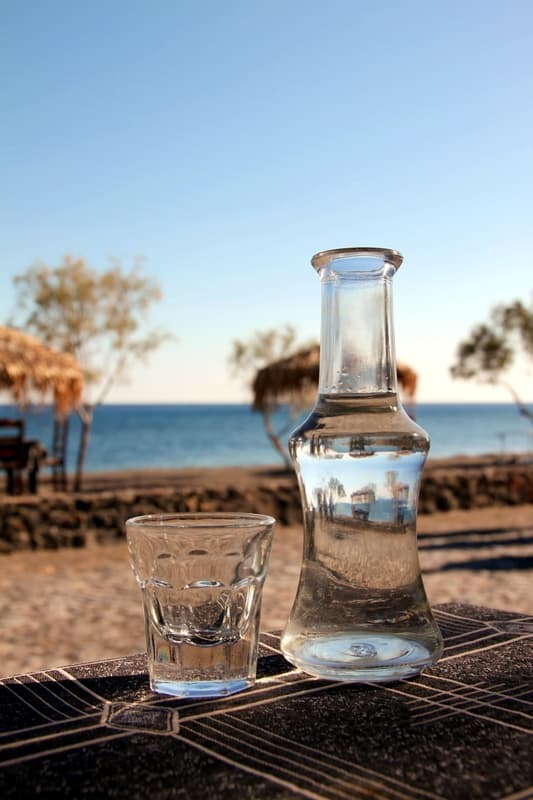 Klearchos Kapoutsis from Santorini, Greece · CC BY 2.0 via Wikimedia Commons
Tsipouro
The northern Greek pomace spirit, and the default way an evening here begins: a small bottle on ice, a plate of something salty, and no hurry. Ordered by the karafaki, with or without aniseed, and the mezedes are the point of it.
 Sami TÜRK · Pexels
Fish off the Athos grounds
The waters south of Ierissos and Ouranoupoli are the fishing grounds the Athos peninsula shelters, and the fish tavernas on that quay keep live tanks by the door rather than a freezer at the back. Seafood anywhere in Greece is priced by the kilo: ask for the weight before it goes on the grill, not after.
 Gu Ko · Pexels
Olive oil from the same groves
The Halkidiki variety is a dual-purpose tree, grown for the table olive and pressed for oil, and the oil that arrives with bread in a village taverna here is usually from a few kilometres away. The new pressing, in November and December, is bitter and green.
Lunch starts around 14:00 and dinner rarely before 21:00, so a taverna that looks empty at 19:30 is waiting, not closed. Menus are built for sharing: order a spread of mezedes and one main between two. Bread and a cover charge of a euro or two are normal. Cards work almost everywhere, but tips left on a terminal rarely reach the person who served you, so carry small notes. In the resort strip on Kassandra’s east coast the kitchens run later and the prices are set for July; a fifteen-minute drive inland or across to the other coast usually halves them.
Where to eat
Arsanas
institutionThe best-documented restaurant in Halkidiki and the one that does not vanish in October: its own site publishes a year-round operation with a single annual break, usually 10 November to 15 December, and daily hours of 12:15 to 00:30. Seafood, on the water at Nikiti. Twelve hours of continuous service a day means there is no locked-out lunch here, which on a driving trip matters more than it sounds.
Last researched 2026-09-20
Melia
fine-diningOpened in 2017 beside Karydi beach and run under Giannis Baxevanis, one of the cooks associated with the modern Greek revival, which puts a serious kitchen on the best beach on the peninsula. The site publishes a phone number, +30 23750 91067, and takeaway, but no hours and no season, so ring. A third-party listing gives weekday hours we could not confirm at source and would not print.
Last researched 2026-09-20
Kritikos
institutionFounded in 1977, a street back from the Ouranoupoli port tavernas, with live shellfish tanks at the door and fish landed from the Athos grounds. Note there is a sister operation in Panorama, Thessaloniki, on a separate subdomain, so check which one a link is pointing at. The site publishes no hours, no season and no prices; the telephone is 2377071222.
Last researched 2026-09-20
Cikado
modernNew for the 2026 season and curated by Lefteris Lazarou, one of the best-known seafood chefs in Greece. The format is a panigiri by the sea: it opens with the Paramana, a shared spread of small dishes, then moves to wood-oven pies, clay dishes and baked recipes, seafood-led with some meat, with tsipouro and ouzo service in the evening. The page publishes its hours twice and disagrees with itself: 12:30 to 20:30 in the useful-information block, lunch 12:30 to 17:00 and dinner 19:00 to 22:00 in the dining list. Either way it starts and finishes earlier than a Greek dinner usually does, so ring.
Last researched 2026-09-20
Ergon Beach House restaurant and Balboa
casualA food house that happens to have rooms: seafood mezedes, salads and locally landed fish from early morning to midnight, with Balboa doing burgers, stuffed flatbreads and pizza on the sand and an Ergon deli selling the olives, preserves and wine at the end of it. As a canvas-built property it is very unlikely to run outside high summer, and no season is published.
Last researched 2026-09-20
Water at Sani Asterias
fine-diningSani’s flagship, on the marina beach at Sani Asterias, now shaped by the two-Michelin-starred Bruno Oger. One caution before you build an evening around it: a renovation of Water was flagged for completion during 2026, and neither hours nor season are published, so confirm it is open before you drive across the estate. The same restaurant index lists Avli and Psaroyiannos on the marina itself, both reachable without staying in any of the five hotels.
Last researched 2026-09-20
Sunrises
 Yassen Kounchev · Pexels
Sarti beach, with Mount Athos in it
The hour we would plan a Sithonia week around, and almost nothing written about the region names it. Sarti sits on Sithonia’s east coast looking across the Singitic Gulf at the Athos massif thirty kilometres away, and the summit, 2,033 metres, stands 3.7 degrees above the sea horizon from here. Run the sun against a horizon profile cast from SRTM elevation data and the result is a whole season: from 30 March to 13 September 2026, 168 consecutive days, first light at Sarti comes over the mountain. After the 13th it clears the massif and comes out of open water instead. For two fortnights a year, 13 to 26 April and 17 to 30 August, it clears the summit ridge itself.
30 March to 13 September for the mountain sunrise; the rest of the year it rises out of open sea · The summit bears 76.5 degrees from Sarti. The sun crosses that bearing in the second half of April and the second half of August; in June and July it rises well to the north of the peak, over the lower ridge, and from mid-September it clears the massif entirely and comes out of open water.
 Quang Nguyen Vinh · Pexels
The Kavourotrypes coves
The same mountain from three and a half kilometres further north, which is enough to move the geometry. From these coves the Athos massif sits on a bearing of about 83 degrees rather than 76, so the summit-ridge sunrise falls on 29 March to 12 April and 31 August to 14 September, a fortnight either side of the Sarti dates. The rest of the year the sun still comes up over something: a profile cast from the waterline finds no bearing in the rising arc that opens onto clear water, because the cove’s own southeastern rock, barely two hundred metres off and only about twenty metres high, stands five degrees up from there. Walk thirty metres back up the beach and the geometry changes, which is the kind of thing only the rock in front of you decides.
Late March to mid-April and late August to mid-September for the summit · The coves face east-southeast into pale rock. In the two summit fortnights the sun clears the ridge at about 2 degrees of altitude, which puts roughly fifteen minutes of low horizontal light on the stone before it hardens.
 Kirill Lazarev · Pexels
The Afytos clifftop
Kassandra’s east coast gets the morning, and Afytos gets it from a low cliff with the village behind. What changes through the year is what the sun comes up over. A horizon profile from the clifftop shows the Sithonia ridge, forty kilometres east, taking the sunrise through spring and autumn, and open water in three windows that sit symmetrically around midsummer: 27 April to 8 May, then the long run of 16 May to 28 July, then 5 to 16 August. So a June sunrise here is sea, and a late-September one is a mountain silhouette with the light behind it.
Three separate runs for the open-sea sunrise, 27 April to 8 May, 16 May to 28 July and 5 to 16 August; late August to October for the silhouette · The bearing swings from 58 degrees at midsummer to about 100 in mid-October. Mount Athos itself is visible from here, 76 kilometres away on a bearing of 85 degrees and clearing the Sithonia ridge by about a fifth of a degree, which makes it a view for clear mornings only.
Sunsets
 Adrian Libotean · CC BY-SA 2.0 via Wikimedia Commons
The Sani shore, into Mount Olympus
From the beach at Sani the Thermaic Gulf runs eighty kilometres due west to the Pierian mountains, and Mount Olympus stands at the end of it. Cast a ray along that bearing through SRTM elevation data and the summit clears everything in front of it by about half a degree, so the mountain is genuinely visible from the sand when the air is clean. Twice a year the sun goes into it: 8 to 26 March and 16 September to 5 October 2026, roughly three weeks each side of the equinox, when the setting bearing sits inside the massif’s arc of 263 to 273 degrees.
Mid-September to early October, and again in March. High-summer haze over the gulf can hide the mountain completely · Olympus bears 269 degrees from the Sani shore at 81 kilometres. The massif reads as a long flat-topped wall at that distance, and it is the last twenty minutes before contact that carry the colour, not the contact itself.
 Uploaded on Flickr by user ale3andro (Αλέξανδρος). Transfered on Wikimedia Commons by user Anthemous · CC BY-SA 2.0 via Wikimedia Commons
The Possidi lighthouse
The same mountain from the tip of the peninsula, sixteen kilometres further south, which is enough to swing the bearing from 269 degrees to 280 and shift the alignment by three weeks. From the lighthouse Olympus bears 280 degrees at 87 kilometres, and the sun sets into the massif on 29 March to 15 April and 27 August to 13 September 2026. The rest of the time the sandspit is simply the emptiest place on Kassandra with water on three sides of it, which is reason enough.
Late August to mid-September, and late March to mid-April · The spit gives you foreground in both directions, which almost nowhere else on this coast does. In the September window the sun reaches the ridge around 19:59 falling to 19:32 across the eighteen days.
 Dmitry Tonkonog and Xenia Fedosova · CC BY-SA 3.0 via Wikimedia Commons
Parthenonas
Sithonia is an east-facing holiday with a west-facing problem: on most of the coast the ridge behind you takes the last of the light. Parthenonas solves it with altitude. At about 350 metres the Kassandra peninsula, thirty kilometres west, drops below the sea horizon, and a horizon profile cast from the village finds open water on every setting bearing from 5 April to 6 September, 155 consecutive days. Either side of that run the village gets the other prize: Mount Olympus stands 124 kilometres away on a bearing of 268 degrees, high enough to clear everything in front of it, and around both equinoxes the sun goes down into the massif from here instead of into the sea.
Late March to late September for the open-water sunset · Midsummer sunset from here is about 20:57 local on a bearing of 302 degrees. The two equinoxes fall on opposite sides of the clock change, so the March one is 18:36 on winter time and the September one 19:17 on summer time, both close to due west; by mid-October it is 18:44 at 259 degrees. The village stone takes the last light before the sea does.
 Nils Rotura · Pexels
Nikiti and the Sithonia west coast
The working alternative for anyone on Sithonia who does not want to drive up a mountain for the evening. This coast looks back across the Toroneos Gulf at Kassandra, which sits low enough on the horizon that a profile cast from the Neos Marmaras quay never finds a skyline much above a third of a degree anywhere in the setting arc, so the sunset is broadly intact all season and genuinely into open water for long stretches of it. On a clear evening Mount Olympus is visible over the top of Kassandra from here, 112 kilometres from the Nikiti waterfront and 121 from the Neos Marmaras quay, clearing the ground in front of it by about four tenths of a degree in both cases.
May to September · Kassandra reads as a dark low line at twenty-two to thirty-five kilometres, which gives the horizon a floor. The colour is in the gulf haze, so this is a coast for the ten minutes after the sun has gone rather than the moment it goes.
Day trips
 My Photos · Pexels
The Mount Athos coastal cruise
The only way most people will ever see the monasteries, and the only way any woman will. Check which quay before you drive anywhere. From Ouranoupoli the boats leave at 10:30 and 14:00 and run three hours, from 25 euros a head with half fare for ages 6 to 12 and free under 6. From Ormos Panagias, on Sithonia’s own east coast, the Menia Maria III leaves at 09:15, goes all the way to the southern tip past eight west-coast monasteries, turns at 15:30 and is back between 16:45 and 17:00, at 40 euros an adult and 20 for ages 6 to 12. Both hold 500 metres off under the avaton law, which is close enough to read the towers and the boat houses and far enough that binoculars earn their place in the bag. Numbers are capped, so book ahead in June, July and August.
Ormos Panagias is 10 km and about 11 minutes from Vourvourou, 23 km and 24 minutes from Neos Marmaras and 36 km and 35 minutes from Sarti; Ouranoupoli is about 1 hour 20 from Vourvourou, 1 hour 40 from Sarti and 2 hours 15 from Kassandra · Half day, or a full day with lunch on the quay
Athos Sea Cruises, Ouranoupoli ↗Athos Cruise, Ormos Panagias ↗View on map ↗
 Nils Rotura · Pexels
The Sithonia ring road
The drive that sells the middle leg: about 117 kilometres around the whole peninsula from Nikiti, down the west coast through Neos Marmaras and Toroni to Porto Koufo, round the bottom, and back up the east coast through Sarti, Kavourotrypes and Vourvourou. Swim three times, eat once at the harbour, and leave the east coast for last so the light is behind you.
Nikiti to Porto Koufo 45 km, about 51 minutes; Ormos Panagias to Porto Koufo 47 km, about 52 minutes · Full day
 Akademie iik http://www.akademie-iik.eu · CC BY-SA 3.0 via Wikimedia Commons
Aristotle: Ancient Stagira and the Grove
North out of the beaches into the oak country and down to Olympiada on the far coast. The walled city where Aristotle was born in 384 BC sits on the Liotopi headland with free entry and 08:30 to 15:30 hours, closed Tuesdays; the Aristotle’s Grove in the mountain village of Stagira is a separate place, a park of working instruments that demonstrate the Physics above the Ierissos gulf. A swim at Olympiada and a fish lunch make a day of it.
About 1 hour 30 from Sithonia, 2 hours from Kassandra · Full day
 Carlstaffanholmer · CC BY-SA 3.0 via Wikimedia Commons
Petralona Cave and the Polygyros museum
The inland day, and the wet-weather answer. The cave is a constant temperature whatever August is doing outside, it is open, and the tickets are 10 euros for the cave and 5 for the museum. Add the Archaeological Museum of Polygyros, which gathers the whole region in one building for 10 euros and shuts at 15:30 all year, and you have a morning that explains everything the beaches do not.
Petralona is 53 km and about 56 minutes from Thessaloniki, under an hour from the Kassandra hotels · Half day
 Rufus210 · Public domain via Wikimedia Commons
Vergina and the royal tombs of Aigai
The great Macedonian site, and an honest warning about distance. The 20-euro ticket covers the central museum, the royal tombs, the necropolis, the ancient theatre and the palace, on summer hours of 08:00 to 20:00 with a noon start on Tuesdays. From Nea Moudania at the top of Kassandra it is 127 km and about an hour and fifty-five each way, which makes a long but real day. From Sithonia or Ouranoupoli it is not a sane day trip: do it on the way to or from the airport instead.
1 hour 55 each way from Nea Moudania; 2 hours 10 from Polygyros · Full day
 Annatsach · CC BY-SA 4.0 via Wikimedia Commons
Thessaloniki for a day
An hour from the top of Kassandra and a different holiday: the waterfront and the White Tower, the Rotunda, the Ano Poli, the markets, and the Archaeological Museum, which is where the Petralona skull went. It is also the city where the Pilgrims Bureau sits, at Egnatia 109, if the Athos permit is part of the plan, and the obvious first or last day of a trip that starts or ends at the airport.
About 1 hour from Nea Moudania, 2 hours 15 from Ouranoupoli · Full day
 Nuni Telo · Pexels
A boat day among the Vourvourou islets
Small boats go out from Vourvourou and from Ormos Panagias into the scatter of low green islands off Sithonia’s east coast, with Diaporos the largest. The day is swimming and anchoring, because much of the land is private. It is the closest thing on the mainland to an island-hopping day, and it needs nothing but a booking on the quay in the morning.
From the Vourvourou or Ormos Panagias quay · Half day to full day
After dark
 DocWoKav · CC BY-SA 4.0 via Wikimedia Commons
The Afytos square after nine
walkThe village fills slowly from about nine: tables out under the plane trees, the walk down to the cliff edge and back, and the lights of the Sithonia coast forty kilometres across the water. It costs nothing and it is the best thing Kassandra does that is not a beach.
A night at the Sani Festival
performanceFor five weeks from 11 July the resort stages its festival on Sani Hill above the marina, and in 2026 that meant Robert Plant, James Arthur, The Waterboys, Soul II Soul and Vicky Leandros closing on 15 August. The site publishes no ticket prices, which means asking, and the festival’s own domain refuses connections, so book through the resort.
 Evgenia Basyrova · Pexels
Tsipouro on a quay
diningOuranoupoli, Nikiti, Neos Marmaras: the same evening in three places. A small bottle on ice, a plate of fried things, the boats coming in, and dinner deferred until the light has gone out of the water. Nobody hurries you and nobody expects you to order a main.
Kallithea at two in the morning
nightlifeIf the holiday needs noise, this is where the region keeps it: a strip of clubs on the Kassandra east coast running through the night in July and August, with a young Greek and international crowd. Venue names turn over fast here, so we name none; the street is the thing, and it is loud enough to find. Sithonia is deliberately the opposite, and the Athos peninsula is neither.
Daily itinerary
Eight days, two legs, one mountain at each end of the day
The plan we would book: three nights on Kassandra for the resorts, the villages and the Olympus sunsets, then the transfer to Sithonia on day four for four nights of coves and the Athos sunrise, one of which can be spent at Ouranoupoli for the boat under the monasteries. It assumes a car from Thessaloniki airport and a return from the same airport. Two rules govern the order. Most of the state sites here shut at 15:30 all year and Petralona steps down through the autumn, so the ruins go in the mornings; and the Athos cruise has capped numbers and two possible quays, 09:15 from Ormos Panagias on Sithonia or 10:30 and 14:00 from Ouranoupoli, so pick one and book it before you leave home.
- 1
Land, drive, and go straight to the water
relaxedCollect the car at Thessaloniki airport. Israeli licence holders should carry an international driving permit alongside the licence: the two countries have a mutual recognition agreement but the rental desks ask, and an IDP ends the argument. A first entry into the Schengen area since 10 April 2026 means fingerprints and a facial image for the Entry/Exit System instead of a stamp, so allow the extra minutes at the booth.On the road, or at the hotel.The airport sits on the Halkidiki side of Thessaloniki, so there is no city traffic and no toll booth: 77 km to Kallithea and 73 to the Sani side, about an hour either way. Check in, swim, and leave the rest of the peninsula for tomorrow.From whichever west-coast beach you are nearest. From 16 September to 5 October the sun goes down into the Olympus massif from the Sani shore.At the hotel on the first night.Thessaloniki airport to Nea Moudania is 51 km and about 45 minutes, Kallithea 77 km and about an hour, Nikiti 88 km and about an hour and a half, Ouranoupoli 121 km and about two hours, Sarti 131 km and about two hours. None of it is tolled.Estimate: On a late landing, sleep at Ikos Oceania near Nea Moudania, 50 km out, and move down the peninsula in the morning
- 2
Kassandra, slowly
relaxedThe beach. If the base is Sani, the free guided walk through the 110-hectare wetland runs twice a week along a 2.5-kilometre trail and is the only real nature interpretation on this leg.On the marina, at Avli or Psaroyiannos, both of which are reachable without staying in any of the five hotels.Swim through the hottest part of the day. On the exposed north-facing shore in July and August the meltemi picks up around eleven and peaks between one and five, so if the wind is up, move to a bay that faces south or west.The west coast again.Drive twenty minutes across to Afytos and eat in the village.Nothing today needs more than twenty minutes of driving.Estimate: The sanctuary of Dionysus and Zeus Ammon on the Kallithea seafront, free, 08:30 to 15:30, closed Tuesdays
- 3
The southern tip
moderateSouth down the leg. Paliouri, the Kanistro headland and the small marina cove at Glarokavos, with a long swim off one of the emptier beaches on the way.At Paliouri or at the Miraggio estate, which is a la carte rather than all-inclusive and takes outside tables.Cross to Possidi on the west side and walk out along the sandspit to the lighthouse.The Possidi lighthouse. Its Olympus alignment runs 27 August to 13 September and 29 March to 15 April, three weeks earlier than the Sani one, so no single trip catches both: if you are here for the Sani window in late September, Possidi is simply the emptiest sunset on the peninsula, which is reason enough.Back north, or at Kalandra.Nea Potidea at the top of the leg to Paliouri at the bottom is 49 km and about fifty minutes. Fuel is dearer on the peninsula than in the city: the ministry bulletin for 17 September 2026 put unleaded 95 at 2.206 euros a litre in Chalkidiki against 2.175 in Thessaloniki.Estimate: The Loutra thermal springs village, though we could not confirm 2026 hours or prices on any page the operator controls, so ring first
- 4
Inland, then across to Sithonia
moderatePetralona Cave on the way out, 10 euros for the cave and 5 for the museum, open 08:00 to 20:00 to the end of August and stepping down in half-months through the autumn. It is the coolest hour of an August day anywhere in Halkidiki.In Polygyros, with the Archaeological Museum beside it at 10 euros, closed Tuesdays and shut at 15:30 all year.Down to Sithonia and check in at Nikiti, Vourvourou or Neos Marmaras. Do not plan around Ancient Olynthos on this drive: the Ephorate’s own page lists the site as temporarily closed.The Nikiti or Neos Marmaras waterfront, looking back at Kassandra with Olympus behind it.Arsanas at Nikiti, which serves 12:15 to 00:30 and is the one fish restaurant here that keeps year-round hours.About 117 km all in with the Petralona detour, and around two hours and twenty minutes of actual driving, so start early. Without it, Sani to Nikiti is 58 km and about an hour.Estimate: Skip the cave and go straight over, arriving in time for a long afternoon on Nikiti beach
- 5
The Sithonia ring
fullSouth down the west coast through Neos Marmaras and Toroni.Porto Koufo, in the closed harbour. Worth knowing before you plan an evening here: the hills ring it between 1.7 and 10.5 degrees high across the entire setting arc, so the sun never reaches the water at Porto Koufo on any day of the year.Round the bottom and up the east coast: Tigania, Sarti, then the Kavourotrypes coves in the late afternoon when the rock goes gold.Up to Parthenonas at 350 metres, which has open water under its sunset from 5 April to 6 September.In Parthenonas or back down in Neos Marmaras.About 117 km around the ring from Nikiti and back, roughly two and a quarter hours of actual driving before you stop anywhere. Fill up in Nikiti or Neos Marmaras; stations thin out at the southern end.Estimate: Reverse the loop and take the east coast in the morning light instead, finishing at Porto Koufo for a late lunch
- 6
The Athos sunrise, then a boat
relaxedSet an alarm, and be honest about what it costs: Sarti is 40 km from Vourvourou and 65 from Neos Marmaras on the ring road, so this is an hour of driving in the dark unless you moved down the coast last night. From 30 March to 13 September the sun comes up over the Athos massif from Sarti, and for the fortnights of 13 to 26 April and 17 to 30 August it clears the 2,033-metre summit ridge itself, between about 06:55 and 07:05 local in August.On the Vourvourou quay after a morning boat out among the islets.Karydi beach and its tilted rock slabs, or the channels around Diaporos.Back up to Parthenonas, or accept that this is a sunrise coast and go to dinner early.Melia at Karydi if it is open, which the site does not publish, so ring +30 23750 91067.An hour each way before dawn if the sunrise is the point and you are not sleeping at Sarti, then very little. The islet boats go from Vourvourou and from Ormos Panagias and are booked on the quay in the morning.Estimate: From mid-September the Sarti sunrise comes out of open water rather than over the mountain, which is a different morning and still worth the alarm
- 7
Ouranoupoli and the monasteries from the water
moderateCheck the quay first. If you are on Sithonia, the Ormos Panagias boat leaves at 09:15 and the quay is eleven minutes from Vourvourou and twenty-four from Neos Marmaras, which turns this from a driving day into a sailing one. If you want Ouranoupoli itself, it is an hour and twenty from Vourvourou and an hour and forty from Sarti: aim for the 14:00 sailing after a late start, or leave at seven for the 10:30.Kritikos, a street back from the port tavernas, family-run since 1977, with the shellfish tanks by the door. On the early sailing this is lunch after the boat rather than before it.Three hours down the monastic coast, 500 metres off under the avaton law, with the west-coast monasteries coming past one at a time. The longer Ormos Panagias sailing reaches the southern tip and passes eight of them; this one turns earlier. From 25 euros a head, half fare 6 to 12, free under 6. Book before you leave home; the boats cap their numbers.From the Ouranoupoli beach, which faces the Sithonia hills rather than open sea.On the quay, or back on Sithonia if you are driving home tonight.Ouranoupoli is 79 km and about an hour and a half from Neos Marmaras. If the day feels long, sleep there: the Eagles Palace came out of a three-year renovation in May 2026 and Avaton has its own bay at Komitsa.Estimate: Men who have arranged a diamonitirion take the Dafni ferry instead and stay four days, which is a different trip and needs booking months out
- 8
A last swim and out
relaxedWhichever beach you liked most. Nikiti, Karydi and the Kavourotrypes coves are all within half an hour of each other.On the road, or at the airport.Back to Thessaloniki: 88 km and about an hour and a half from Nikiti, about two hours from Ouranoupoli. Allow extra at the airport if this is a Sunday in August.Home.No tolls on the way back either. Return the car with a full tank; fuel at the airport is priced accordingly.Estimate: Spend the morning in Thessaloniki instead: the waterfront, the Rotunda and the Archaeological Museum, then drive the last hour out to the airport
Five days, one base
For a short week or a long weekend, unpack once and let the other leg go. Kassandra is the base if the holiday is a resort, a short transfer and something for the children; put the same five days on Sithonia instead if the holiday is beaches and quiet, and accept that the hotel stock there is smaller and books earlier. The version below is the Kassandra one, with a single long day across to Sithonia so you have seen the difference.
- 1
Arrive
relaxedAirport, car, and about an hour to the west coast.Check in and swim. Nothing else.The west-coast beach, with Olympus on the horizon when the gulf is clear.At the hotel.77 km to Kallithea, about an hour, toll-free.Estimate: A first night at Ikos Oceania near Nea Moudania on a late landing
- 2
Kassandra
relaxedBeach, and the Sani wetland walk if the day falls right.On the marina.Afytos in the late afternoon: the stone village, the cliff path, the square.Back on the west side, twenty minutes away.In Afytos.Estimate: The Kallithea sanctuary, free, 08:30 to 15:30, closed Tuesdays
- 3
The long day across to Sithonia
fullLeave by nine. About an hour to Nikiti, then up the neck of the peninsula to the east coast.Nikiti, on the seafront.Up the east coast to Kavourotrypes and a long swim.Parthenonas on the way back, at 350 metres with open sea under the sunset from April to early September.Arsanas at Nikiti, 12:15 to 00:30, before the drive home.About 215 km round trip and close to four hours of driving even without the southern tip, which is why Porto Koufo is not in this version. It is a full day and it is the day that tells you which leg to book next time.Estimate: Sleep one night on Sithonia instead of driving back, and pick the trip up on Kassandra tomorrow
- 4
The tip, or the cave
moderateSouth to Possidi and the sandspit, or inland to Petralona if the forecast is bad or the heat is serious.Paliouri or Polygyros, depending which way you went.A last long swim on an empty southern beach.The Possidi lighthouse.Somewhere simple; the flight is tomorrow.Estimate: A day that is nothing but the hotel beach, which on this coast is a legitimate use of a day
- 5
Out
relaxedOne more swim, then the hour back up the peninsula.Fly from Thessaloniki.Home.Estimate: Two hours in Thessaloniki on the way, which is enough for the waterfront and one museum
Getting around
- Thessaloniki is the gateway and there is no second option. The Israel Airports Authority flight board carried 22 Thessaloniki rows in the September 2026 window, flown by Arkia as IZ 223, 224, 1223 and 1224, El Al as LY 5245, 5246, 5248 and 5447, Israir as 6H 573, 574 and 575, Tus Airways as U8 216, 217 and 2162, and Aegean as A3 548 and 549. That is five carriers on one route, at roughly two and a half hours in the air, and Greece and Israel are both on UTC+3 in summer, so the departure and arrival clocks compare directly. Aggregator schedules put the block time at about 2h25; we could not confirm a duration on any airline’s own page.
- From the terminal the first Halkidiki beach is under an hour. The airport sits southeast of Thessaloniki on the Halkidiki side, so you never touch the city or the Egnatia toll barriers: Nea Moudania is about 51 km and three quarters of an hour, Kallithea on Kassandra 77 km and about an hour, Nikiti on Sithonia 88 km and an hour and a half, Vourvourou 105 km and an hour and three quarters, Ouranoupoli 121 km and about two hours, and Sarti at the far end of Sithonia 131 km and a little over two hours. Those are free-flow routing figures; aggregator estimates run ten to fifteen minutes faster on each, so treat the distances as the reliable numbers and the times as a range. The whole drive is toll-free.
- Since 10 April 2026 the EU Entry/Exit System has been fully operational at every external Schengen crossing, after a progressive rollout that began on 12 October 2025. Non-EU short-stay travellers, Israelis among them, are registered with a facial image and fingerprints on first entry. It costs minutes at the booth the first time and less afterwards. ETIAS, the pre-travel authorisation, was still not in operation when we published, the Commission’s own page says so in those words, and no start date is published; the fee has been set at 20 euros for whenever it arrives.
- Israeli passport holders travel visa-free in the Schengen area for 90 days in any 180. On driving licences, Israel and Greece signed a mutual recognition agreement, but the Israeli Ministry of Transport still advises taking an international driving permit for any trip abroad where you intend to drive, and Greek rental desks ask for one regardless of the legal position. It is cheap and it removes an argument at the counter.
- The season has a hard edge at the airport. Thessaloniki’s own destinations page states that its published flight information relates to the period until 24 October 2026, which is where the airport’s own data stops and is also the end of the IATA summer season. Trade reporting put scheduled seats for the March to October 2026 season about ten percent above the year before, which is the direction of travel rather than a guarantee for any one route.
- A car is the trip. Each leg runs roughly fifty kilometres from its neck to its tip, the good beaches are at the far ends of them, and nothing on this peninsula is walkable from anything else. Book an automatic early if you need one and take the full insurance. Rental desks in Greece normally want a credit card in the driver’s name for the deposit and add a surcharge for drivers under about 23, so check both before you count on a debit card.
- Fuel in September 2026, from the Ministry of Development’s own daily bulletin for 17 September: unleaded 95 at 2.206 euros a litre in the Chalkidiki prefecture, unleaded 100 at 2.444, diesel at 2.202 and autogas at 1.014, against a national average of 2.188 for unleaded 95. Thessaloniki was fractionally cheaper at 2.175, so fill up before you leave the city if the tank allows. VAT in Greece is 24 percent and it is in those prices.
- There are no motorway tolls between the airport and any part of Halkidiki. The Egnatia Odos tariffs matter only if you are approaching from Kavala, Athens or the Bulgarian border; from 1 January 2026 the rate was reset to roughly 0.04 euros a kilometre plus VAT and the EgnatiaPass discount subscriptions were abolished. The published station prices are what to budget against rather than the per-kilometre rate, which applies only to tolled sections: 0.65 euros for a car at the Thessaloniki station, and 30.45 for the full Igoumenitsa to Kipi run.
- Buses exist and they are not a plan. KTEL Chalkidikis runs from its own terminal at the 9th kilometre of the Thessaloniki to Nea Moudania road, not from the airport, so reaching it means a city bus and a change. Frequency is four services a day to Ouranoupoli and two to Nikiti, with Thessaloniki to Nikiti taking a little over two hours. The operator publishes no fares in readable form and its e-ticket portal is JavaScript-only, so we cannot print a price.
- The boats are the other half of local transport. Agioreitikes Grammes runs Ouranoupoli to Dafni on the Athos west coast at 08:45 and 09:35 by fast ferry and 09:45 and 12:10 by car ferry, returning at 11:00 and 12:15, calling at Zografou, Docheiariou, Xenophontos and Panteleimonos among others, with a second route from Ierissos to Morfonou on the east side at 08:35 returning 10:40. Fares are not published. Every sailing carries the note that routes may be modified by weather, and the diamonitirion is entirely the passenger’s responsibility: the company accepts no liability if it is refused at the gate.
- For everyone who is not a male pilgrim, the coastal cruises are the equivalent service: out of Ouranoupoli at 10:30 and 14:00 for three hours from 25 euros, or out of Ormos Panagias on Sithonia at 09:15 for the day at 40 euros. Both hold 500 metres off the shore.
Things worth knowing
- · Booking Halkidiki as one place. Each leg runs about fifty kilometres from neck to tip, and the far ends of two different legs can be two and a half hours apart; pick one as a base, or two if you have a week, and do not try to do all three from a single hotel.
- · Booking a west-facing resort and expecting a sunrise, or an east-facing one and expecting a sunset. Kassandra’s west coast and Sithonia’s east coast are opposites, and which one you are on decides which end of the day your holiday happens at.
- · Going to Porto Koufo for the sunset. The harbour is ringed by hills standing 1.7 to 10.5 degrees high across the whole setting arc, and the sun does not reach the water there on any day of the year.
- · Driving to Ancient Olynthos. The Ephorate’s own page currently lists the site as temporarily closed, and the notice carries no date, so ring +30 23710 22060 before you set out.
- · Assuming the cave at Petralona is shut because it was for years. It is open, with its own 10-euro ticket, and the museum reopened in August 2024 after a full re-exhibition.
- · Turning up at the Polygyros museum at four in the afternoon. Unlike most Greek museums it keeps 08:30 to 15:30 hours all year, and it closes on Tuesdays, as do Ancient Stagira and the Kallithea sanctuary.
- · Planning a family trip around Ouranoupoli without reading what Mount Athos actually is. Women and pre-school children may not enter the territory at all, and the rule reaches 500 metres out to sea.
- · Spending two and a half to three and a half hours in the car getting to Ouranoupoli and back for the Athos boat when you are staying on Sithonia. A cruise leaves Ormos Panagias at 09:15, eleven minutes from Vourvourou, and goes further down the peninsula than the Ouranoupoli one.
- · Booking a seafront room on an exposed north-facing beach in late July. The meltemi peaks in the early afternoon through high summer, and the sheltered south and west-facing bays are twenty minutes away.
Budget
| Low | Expected | Comfortable | |
|---|---|---|---|
| Accommodation style / per night | €70≈ $80 | €180≈ $207 | €600≈ $689 |
| Food style / per day | €30≈ $34 | €60≈ $69 | €130≈ $149 |
| Local transport / per day | €20≈ $23 | €35≈ $40 | €70≈ $80 |
| Estimate / per day | €0≈ $0 | €15≈ $17 | €35≈ $40 |
Estimate · EUR · 2026-09-20. Quoted in euros per person per day, except accommodation, which is per room per night on a double-occupancy basis. The comfortable accommodation band is high because the top of this market really is: the Sani, Ikos, Miraggio and Eagles properties price like resorts, while a family-run hotel in Afytos or an apartment in Vourvourou sits near the bottom of the range. The Bank of Israel put the euro at 3.476 shekels and the dollar at 3.028 on 18 September 2026, so the expected daily figure of about 110 euros a head before the room is roughly 380 shekels. Local transport assumes a shared rental car with fuel split between two, at the Chalkidiki pump price of 2.206 euros a litre for unleaded 95. Attractions are low here because the best things are free: two of the four state sites in the region charge nothing, and the beaches charge nothing unless you take a sunbed. Add the climate resilience fee to every night: under law 5162/2024 it is charged per room per night, not per person, at 2 euros at a 1 or 2-star, 5 at a 3-star, 10 at a 4-star and 15 at a 5-star or villa from April to October, 8 euros for a short-term rental, falling to 0.50, 1.50, 3, 4 and 2 from November to March. A fortnight in a five-star room in August therefore carries 210 euros of fee on top of the rate. The day-trip figure covers the Athos cruise or a boat among the Vourvourou islets plus fuel, and replaces that day’s transport and attraction lines rather than adding to them. · 1 USD = €1 (20 Sep 2026)
Things worth knowing
Frequently asked questions
Kassandra or Sithonia?
Kassandra if you want a resort, a short transfer, infrastructure for children and nightlife within reach; Sithonia if you want beaches, pine, coves and quiet. The tiebreaker nobody mentions is the time of day. Kassandra’s west coast faces Mount Olympus across the Thermaic Gulf and gets the sunsets, including three weeks around each equinox when the sun goes down into the mountain itself. Sithonia’s east coast faces Mount Athos and gets the sunrises, over the massif for 168 consecutive days from 30 March to 13 September. If you have a week, do four nights on one and three on the other; Kallithea to Nikiti is about an hour.
Can I fly to Halkidiki from Tel Aviv?
Directly to Thessaloniki, yes, and this is the strongest practical argument for the region. The Israel Airports Authority board carries Thessaloniki on five carriers at once, El Al, Arkia, Israir, Tus Airways and Aegean, at about two and a half hours. There is no Halkidiki airport: you land at Thessaloniki and drive, which is about an hour to Kassandra, an hour and a half to Sithonia and two hours to Ouranoupoli, with no toll booth anywhere on the route. The summer schedule at Thessaloniki ran to 24 October in 2026, so direct options thin out after that.
Can women visit Mount Athos?
No, and it is not close to a grey area. The ban on women is roughly a thousand years old, formalised by imperial decree in 1046 and carried into modern Greek law, it covers the entire monastic territory, it includes pre-school children of both sexes, and it extends 500 metres out to sea, which is why the tour boats hold that distance. What anyone can do is the coastal cruise, and there are two: from Ouranoupoli at 10:30 or 14:00, three hours, from 25 euros; or from Ormos Panagias on Sithonia at 09:15, back at about 17:00, 40 euros an adult, which goes further down the peninsula and saves a Sithonia base a good two and a quarter hours in the car. Both pass close enough to see the tower houses and the boat sheds on the water. Men who want to go ashore need a diamonitirion from the Pilgrims Bureau in Thessaloniki, against a quota of 100 Orthodox and 10 non-Orthodox pilgrims a day.
When is the best time to go?
June, or September into early October. The sea peaks at about 26C in August and is still 24C in September and 21C in October, so the swimming is barely different, while the crowds, the prices and the fire risk all drop. June gives the longest days of the year, sunset at 20:58 on the solstice. September gives the equinox sunsets into Olympus from Kassandra’s west coast, 16 September to 5 October in 2026. July and August are the hot, full, expensive months and the wildfire months.
Do I need a car?
Yes. KTEL Chalkidikis runs four buses a day to Ouranoupoli and two to Nikiti, from its own terminal outside Thessaloniki rather than from the airport, and nothing else. Each leg runs about fifty kilometres from neck to tip, the best beaches are at the ends of them, and the coves have no bus stop. Carry an international driving permit with an Israeli licence: the two countries recognise each other’s licences, but rental desks ask anyway.
Which beaches are actually the best?
Sithonia’s east coast, more or less uncontested: the Kavourotrypes coves for pale sculpted rock, Karydi at Vourvourou for the tilted slabs running into the water, and the islets offshore for a boat day. Nikiti and Sarti have the long sandy town beaches. On Kassandra the sand is good and the setting is more developed; the empty end is south of Paliouri, and the Possidi sandspit has open water on three sides. None of the coves has shade, water or facilities, so carry all three.
Is Halkidiki good for families?
Unusually so, and the reason is infrastructure more than scenery. Sani is a thousand-acre estate with five hotels, seven beaches and a marina; the two Ikos resorts run an all-inclusive that pays for meals off site and lends you a car; Alexandros Palace near Ouranoupoli has a water park and a dive centre at a fraction of the price. Add a transfer of about an hour from the airport and a sea that is 25C to 26C in August. The two cautions are the fee on every night, 15 euros a room at a five-star from April to October, and that Sani Beach goes into a three-year rebuild from 2027.
What is closed, and what reopened?
Ancient Olynthos is listed as temporarily closed on the Ephorate of Antiquities’ own page, with no date on the notice, so ring +30 23710 22060 before driving there. Petralona Cave is the opposite story: it is open, its museum reopened on 26 August 2024 after a full re-exhibition, and the cave carries its own 10-euro ticket. At Porto Carras only the Meliton is offered for the 2026 season on the resort’s own site; the Sithonia Hotel and the Village Inn have no pages at all.
How many days do I need?
Eight is the number in this guide: three nights on Kassandra, four on Sithonia and one of those given over to the long day out to Ouranoupoli for the Athos boat. Five works from one base with a single crossing to the other leg so you have seen the difference. Ten lets you add Ancient Stagira and Olympiada on the far coast, or a day in Thessaloniki, without the trip becoming a driving holiday. A long weekend is genuinely viable here in a way it is not for most Greek destinations, because the flight is short and the transfer is under an hour.
Will I actually see Mount Olympus and Mount Athos?
Geometrically, yes, and we checked it: a ray cast through SRTM elevation data puts Olympus clear of the intervening Pierian ridge from Sani, Possidi, Afytos, Nikiti and Parthenonas, at 81 to 124 kilometres, and Athos clear from Sarti, Kavourotrypes, Karydi and Afytos at 30 to 76. In practice both are haze-dependent. The Thermaic Gulf goes milky in high summer and Olympus can vanish for days; the clearest air comes with the meltemi and after rain, which is why the best mountain views here belong to June and to late September rather than to August.
Sources (35)
- The Israeli National Security Council rates Greece level 2, occasional threat level, with the wording: escalation in displays of hostility toward Israelis and Jews, harassment, threats, incitement, vandalism and at times physical assault, recommending heightened precautions and close adherence to NSC guidance; the Foreign Ministry record for Greece reads "stay alert, follow the media"; none of the three ministry records carries a date · government · 2026-09-20
- The Israel Airports Authority flight board carried 22 Thessaloniki rows in the September 2026 window, flown by Arkia, El Al, Israir, Tus Airways and Aegean · airport · 2026-09-20
- UNESCO inscribed Mount Athos in 1988 as a mixed property of just over 33,000 hectares covering the entire narrow rocky strip of the easternmost of the three peninsulas of Chalcidice, with twenty monasteries presently inhabited by some 1,400 monks, self-administered since Byzantine times under a first constitution signed in 972 by the emperor John I Tzimiskes, and forbidden to women and children · unesco · 2026-09-20
- The Mount Athos Pilgrims Bureau states that the avaton forbids access to Mount Athos to any female and is enforceable by law, that the daily quota is 100 Orthodox and 10 non-Orthodox pilgrims, that the permit covers a four-day visit on specific dates, and that only adult men and males under 18 accompanied by their fathers may enter, and that the Ouranoupoli office opens 05:30 to 13:00 Monday to Friday, 06:00 to 13:00 Saturday and 08:00 to 13:00 Sunday; the bureau sits at Egnatia 109, 54635 Thessaloniki, on +30 2310 252575 for Greek and +30 2310 252578 for foreign pilgrims, and the Greek page gives fees of EUR 25 Orthodox, EUR 30 others, EUR 10 special categories and free for large families while the English page quotes only EUR 30 and EUR 10 · official · 2026-09-20
- Athos Sea Cruises departs Ouranoupoli at 10:30 and 14:00 with boarding from 09:30, runs three hours, charges from EUR 25 with full fare from age 13, half fare 6 to 12 and free under 6, and states that the boat keeps a distance of 500 m from the coast according to the Mount Athos avaton law · transport-operator · 2026-09-20
- Agioreitikes Grammes publishes Ouranoupoli to Dafni sailings at 08:45 and 09:35 by fast ferry and 09:45 and 12:10 by car ferry, returns at 11:00 and 12:15, and a second route Ierissos to Morfonou at 08:35 returning 10:40, with the note that all routes may be modified due to weather conditions and that the diamonitirion is the passenger’s sole responsibility · ferry · 2026-09-20
- Petralona Cave charges EUR 10 full and EUR 5 reduced and its museum EUR 5 and EUR 3; open 08:00 to 20:00 from 1 April to 31 August, then 19:30, 19:00, 18:30 and 18:00 in half-month steps through September and October, and 08:00 to 15:30 from 1 November to 31 March closed Tuesdays · government · 2026-09-20
- The Petralona Cave Museum reopened to the public on 26 August 2024 after a re-exhibition of its collections · museum · 2026-09-20
- The Archaeological Museum of Thessaloniki states that the original Petralona cranium, cautiously estimated at around 300,000 to 250,000 years before present, was shown in a temporary exhibition from 15 May to 31 December 2025, with a replica on permanent display in the Prehistoric Macedonia gallery · museum · 2026-09-20
- The Ephorate of Antiquities of Chalkidiki and Mount Athos states that the archaeological site of Olynthos is temporarily closed, with a ticket of EUR 10 full and EUR 5 reduced when open, contact +30 23710 22060; the closure notice carries no date · government · 2026-09-20
- Ancient Stagira, on the Liotopi peninsula northeast of Olympiada, was founded in 655 BC by Ionian colonists from Andros, was the birthplace of Aristotle in 384 BC and was destroyed by Philip II in 349 BC; it opens 08:30 to 15:30 in both seasons, closed Tuesdays, with free admission · government · 2026-09-20
- The Sanctuary of Dionysus and Ammon Zeus at Kallithea was founded by colonists from Aphytis in the late 8th century BC and opens 08:30 to 15:30 in both seasons, closed Tuesdays, free admission · government · 2026-09-20
- The Archaeological Museum of Polygyros charges EUR 10 full and EUR 5 reduced and opens 08:30 to 15:30 in both seasons, closed Tuesdays · government · 2026-09-20
- The Polycentric Museum of Aigai at Vergina charges EUR 20 covering the central museum building, the Royal Tombs treasures, the necropolis, the ancient theatre and the palace, on summer hours of 08:00 to 20:00 Monday and Wednesday to Sunday with Tuesday from 12:00 · museum · 2026-09-20
- The Aristotle Grove in the village of Stagira has been open since 2003 with interactive instruments demonstrating phenomena from Aristotle’s Physics, including a sundial, lens, compass, pentaphone, optical discs, pendulum, water turbine, inertia spheres, parabolic mirrors and telescopes; the municipality publishes no hours or entry fee · municipal · 2026-09-20
- Commission Implementing Regulation (EU) No 426/2012 of 22 May 2012 entered the name Prasines Elies Chalkidikis in the register of protected designations of origin and protected geographical indications as a PDO · government · 2026-09-20
- Domaine Porto Carras farms 110 hectares on the Meliton slopes at 200 to 300 metres, certified organic since 1996, growing Malagouzia, Limnio and Cabernet Sauvignon, with wine experiences year round at the Melissanthi tasting room; no 2026 tasting prices are published · official · 2026-09-20
- Average retail fuel prices in the Chalkidiki prefecture on 17 September 2026: unleaded 95 EUR 2.206 per litre, unleaded 100 EUR 2.444, diesel EUR 2.202, autogas EUR 1.014; Thessaloniki prefecture unleaded 95 EUR 2.175; national weighted average EUR 2.188; VAT 24 percent · government · 2026-09-20
- Bank of Israel representative rates on 18 September 2026: EUR 3.476 and USD 3.028 shekels · government · 2026-09-20
- The climate resilience fee under law 5162/2024 is charged per day of use and per room or apartment: EUR 2 at 1 and 2-star, EUR 5 at 3-star, EUR 10 at 4-star and EUR 15 at 5-star and villas from April to October, and EUR 0.50, 1.50, 3 and 4 from November to March, with short-term rentals at EUR 8 and EUR 2; heritage buildings, youth hostels and campsites are exempt · reputable-local · 2026-09-20
- The Entry/Exit System became fully operational on 10 April 2026 after a progressive start from 12 October 2025; ETIAS is currently not in operation and no applications are being collected, with the fee set at EUR 20 and no launch date published · government · 2026-09-20
- FCDO travel advice for Greece states a high risk of wildfires from April to October, that causing a wildfire even unintentionally is a criminal offence, that traffic in larger cities is busy, fast and chaotic and that drivers regularly ignore speed limits and do not always stop at crossings, and gives 112 as the emergency number with a recommendation to register for emergency alerts and follow @112Greece · government · 2026-09-20
- A wildfire broke out near Siviri on the Kassandra peninsula on the afternoon of Thursday 13 August 2026 and burned about 350 hectares, roughly one percent of Kassandra; the coast guard evacuated 481 people by sea, 285 from Siviri beach to Sani and 196 aboard the Speedrunner Jet to Thessaloniki; the fire service deployed 227 firefighters, 57 vehicles, 13 forest commando teams, six aircraft and one helicopter; the deputy regional governor reported seven or eight homes affected and none completely destroyed, with a biological treatment facility destroyed and the open-air theatre damaged; no active front remained by 14 August · reputable-local · 2026-09-20
- Greece expanded its list of sunbed-free untrodden beaches to 251 for 2026, against 238 in 2025 and 198 in 2024, announced on 24 April 2026, to protect beaches of particular aesthetic, geomorphological or ecological value and habitats for loggerhead turtles and monk seals · reputable-local · 2026-09-20
- Sani Resort describes a 1,000-acre estate with seven beaches and five hotels, a marina for up to 215 yachts open year round with 22 boutiques, Sani Gourmet 10 July to 7 August 2026 and Sani Festival 11 July to 15 August 2026 on Sani Hill with Robert Plant, James Arthur, Galani Tsaligopoulou and Estudiantina, The Waterboys, Soul II Soul and Vicky Leandros · event-organizer · 2026-09-20
- Eagles Resort announced the completion on 14 May 2026 of a three-year renovation of Eagles Palace covering every guest room, suite and bungalow, all dining venues and the public areas, the final phase adding the Patio Bistro day bar; the site publishes a 2025 operating season of 01/05/2025 to 17/10/2025 and no 2026 dates; eaglespalace.gr redirects permanently to eaglesresort.gr · official · 2026-09-20
- Porto Carras Grand Resort offers only the Meliton Hotel for booking on its own website for the 2026 season, with no pages for the Sithonia Hotel or the Village Inn; the estate carries a marina, a casino, an 18-hole golf course and the Domaine; Cikado is curated by chef Lefteris Lazarou and its page gives both 12:30 to 20:30 and a 12:30 to 17:00 lunch with a 19:00 to 22:00 dinner · official · 2026-09-20
- The Danai, formerly Danai Beach Resort, operates 56 suites and villas above a 300-metre private beach near Nikiti, established 1976, a member of The Leading Hotels of the World, with over 1,700 wine labels in The Noble House; the former domain danaibeachresort.gr does not resolve · official · 2026-09-20
- Arsanas at Nikiti opens all year with a single annual break, typically 10 November to 15 December, serving daily 12:15 to 00:30 · restaurant-official · 2026-09-20
- Thessaloniki Airport publishes flight information relating to the period until 24 October 2026 · airport · 2026-09-20
- OpenStreetMap carries the Athos summit as a peak node with an elevation tag of 2033 m at 40.1584, 24.3273, Profitis Ilias (Itamos) on Sithonia at 817 m, Mount Holomontas at 1165 m, and a lighthouse node named Faros Poseidi at the western tip of Kassandra at 39.9598, 23.3624 · independent-travel · 2026-09-20
- Athos Cruise runs the Menia Maria III from Ormos Panagias on Sithonia at 09:15 to the southern tip of the Athos peninsula, passing eight monasteries on the west coast at a distance of 500 metres, departing again at 15:30 and arriving back at Ormos Panagias between 16:45 and 17:00, at EUR 40 per adult, EUR 20 for children aged 6 to 12 and free for ages 0 to 5 · transport-operator · 2026-09-20
- A travel-climate table for Halkidiki presented against the Pefkohori station, stating its land data as processed from Climatic Research Unit, Met Office and Netherlands Meteorological Institute sources and publishing a sea-temperature series alongside it without naming that series’ provenance: August high 29C with a sea temperature of 26C, September 25C and 24C, October 20C and 21C, June 27C and 23C, with December the wettest month at 87 mm and July the driest at 25 mm · independent-travel · 2026-09-20
- KTEL Chalkidikis operates from its own terminal at the 9th kilometre of the Thessaloniki to Nea Moudania road, not from the airport, running four services a day to Ouranoupoli and two to Nikiti, with Thessaloniki to Nikiti taking a little over two hours; no fares are published in readable form and the e-ticket portal is JavaScript-only · transport-operator · 2026-09-20
- SRTM 30 m elevation sampling returns 2837 m at the Mytikas summit node of Mount Olympus at 40.0862, 22.3586, and supports a horizon profile along every bearing of the rising and setting arcs from the viewpoints in this guide · independent-travel · 2026-09-20